A day of cricket that most of all resembled the outbreak of a Test match occurred in St Lucia today. It involved England grafting having been put into bat, and finishing the day in a half reasonable position.
It could certainly be argued that the hosts, having won the series, had lost a little intensity, for they didn’t bowl anything like as well as they had in either of the first two Tests, while the absence of the suspended captain may also have had an impact. Whatever it was, the direction and accuracy was a notch down on where it has been up to now, particularly as the day wore on and the frustration began to rise.
It was still good enough to account for the England top order, the perennial problems England have in losing early wickets much to the fore. The selection of Keaton Jennings was bizarre in the first place, and he should have been given out once and was also dropped before eventually being put out of his misery by Holder’s replacement Keemo Paul.
It is hard not to feel anything other than sympathy for Jennings’ predicament. He’s hopelessly out of form, has significant technical flaws in his game, and was on a hiding to nothing being called into this one. It is not in any way surprising he failed, his head cannot be in a good cricketing place right now. Quite what those responsible expected to have dramatically changed is unknown, for this was trying the same thing again and expecting a different result. That’s known as the definition of something or other.
Rory Burns managed to play around a straight one, as did Joe Denly, while an out of sorts Root had an ugly old waft outside off stump. There is a lot of talk about his form, but it is only this winter that he was scoring centuries and being praised for showing signs of overcoming his conversion “problem”. Root is a fine player, and of all of the problems the England batting line up might have, he is the least of them, whatever the low return from this tour might be, and however out of touch he might be at present. He is the one genuinely class batsman in the team.
After that it was the Buttler and Stokes show. Both had a little luck, certainly, but Stokes probably has the purest technique of any of the England players, and has shown before he has the mental aptitude for a rearguard action. He was hardly slow of course, but he wasn’t over-aggressive, and he looked the most comfortable at the crease of any England batsman this series.
His dismissal off a no ball, leaving the field of play, left all but a remarkably smug few non-plussed, the law having changed to allow a batsman to be recalled at any point up to the next delivery to be bowled. Was I aware? Nope. First time I’ve seen that.
Although there was a little rain before lunch, the over rate was once again abysmal, in fact marginally worse than at Antigua. It may be that another West Indies captain is going to be on the sidelines for the start of the ODI series. If nothing else, it quite pointedly thumbed a nose at the ICC, but if there was sympathy in some quarters for Jason Holder, there’s likely to be far less for Brathwaite this time around given a second team offence.
By the end of play the West Indies were looking a little weary, and a four wicket return having put England into bat represents far less than they would ever have hoped or anticipated. This was without doubt England’s best day of the series. Far too late, but a decent one in the end even so.
Even when losing early wickets, England had shown a much greater level of discipline in their approach, and perhaps something can be taken from that for the Ashes, though given how far away that is, the chances are a belated learned lesson here will have no effect. But what it did do was lay at least some kind of platform for the middle order, and that was a first this series.
For tomorrow, this could still go two ways. The pitch is certainly more even than at the Sir Vivian Richards Stadium, and there is no reason why 300 shouldn’t be considered par. England still have a way to go to get to that, and with their propensity for spectacular collapses, it shouldn’t be assumed this is certain to be reached.
Nevertheless, at long last England have been competitive. In itself, that represents a minor victory. As long as it is considered that and no more, they can be relatively content with their efforts.
It probably won’t be a full live blog the way the last Test was, but we’ll open this one to have a place for discussion given how there’s a lot of content on the site at present.
We’ll all chime in at different points during the day, but over by over it isn’t.
Comments below of course!
England have lost the toss and will bat first. What could possibly go wrong?
This doesn’t look a particularly quick pitch at all.
As John Etheridge states…
All the talk about St.Lucia having the fastest pitch in the Caribbean. Three overs in and it looks like a slow s***heap
It’s almost like people expected that from Jennings…
All in all a pretty decent session from England. Jennings went in familiar fashion, but they’ve been a fair bit more restrained in their play, and left better than in either of the first two Tests. Whether they can go on from here, well that’s a different question.
We sit here, patiently awaiting the collapse.
The thing that should really be a cause for concern is that England are trying really, really hard. And then get out the same daft ways. #WIvENG
“From the heart It’s a start, a work of art To revolutionize make a change nothing’s strange People, people we are the same No we’re not the same ‘Cause we don’t know the game What we need is awareness, we can’t get careless You say what is this? My beloved let’s get down to business Mental self defensive fitness (Yo) bum rush the show You gotta go for what you know To make everybody see, in order to fight the powers that be”
Fight The Power – Public Enemy
By happy chance the 9th February, what we call Outside Cricket Day, coincides with the start of a test match. This in a test series that has tested the patience of many in the blogging, journalistic and punditry community. One that has social media scratching its heads – were we really this arrogant, did we think this could not happen – but one that is defying explanation. But as much as I love cricket, and love test cricket in particular, there’s something that rattled my cage more than any England collapse, and indicated to me that nothing has truly moved on since 2014.
For me the series was “marred” with a lunchtime interview held between Sky’s Ian Ward and the ECB’s Tom Harrison – that conversation was referred to in Sean’s piece yesterday and please read it if you haven’t had the chance.. If you want to know why (a) I called this blog Being Outside Cricket and (b) why the name is as relevant today as it was then, then sit back and relax and watch Ian Ward lob marshmallows at an ECB honcho who calls his interviewer “Wardy”, thinks everything is “fantastic” and then goes on to basically tell everyone that he has evidence to suggest the Hundred will work, and you cricket fans know nothing. Oh, and we won’t show you this evidence. Presumably because we are too stupid to interpret it. It was the dancing act of a charlatan – a leader so unsure of the ground he stood on that he convinced us, or at least tried, to say he was on the summit, and we were the plebs at the bottom of the mountain. It should have fooled none of you. Just as the infamous press release five years ago today should not have fooled you. But to some it did. Or ignored it wilfully because the arrogance suited their prejudice.
I have little idea how many are relatively new to this blog, or don’t recall How Did We Lose in Adelaide – my largely (until 2014) ignored forerunner. But the Outside Cricket quote comes from the magical 2014 press release excoriating those who had the temerity to question the dropping of Kevin Pietersen and the motives behind it (because the ECB had imposed gagging orders – the idiotic muppets – and KP’s side agreed to it), and labelled them as some voices “outside cricket” (I’ve referred to a number of posts, and linked them below). Outside cricket became a meme. A rallying cry. A thing to enrage and insult. It didn’t take long to find out the brains behind it.
A scan of the Cricketer’s Who’s Who from the mid-eighties revealed a quote from one Paul Rupert Downton about a life outside cricket, so we put two and two together as to the mastermind behind this release. As a tool to get their point across – that Piers Morgan should shut his trap – it was spectacularly dumb. He brought all the other cricket fans at their wits end under an umbrella of “Outside Cricket” as if we were the tiresome riff-raff with no stake in the game, and rather a noisy hindrance from the real priority of making money, and consolidating power. The inference being that if you weren’t a player, a coach, a manager, support staff or a bloody administrator, you weren’t “Inside Cricket”. You were an unperson. After all.
“But you must know it was about Piers Morgan” said the useful idiots, including some of the media. Loathe him or despise him, Piers Morgan plays club cricket, loves the game (one of us knows that for absolute certain), and has an opinion. The only difference is that he is given a megaphone to voice it, and often, as part of his whole raison d’etre, he does it to self-publicise and to get a reaction. Other than that, he’s me, he’s you. He’s Maxie. He’s Danny. He’s James. He’s Sean. He’s Chris (who has played club cricket against him). He’s every one of you who voices his opinion on the game on Twitter. We may not like him, but he vocalised a lot of our anger. You may loathe what he stands for, but you are, and have been, lumped in with him. Outside. Not really a cricket person. Buy your tickets, pay your subs, and shut the hell up. A more careful crafter of the message may not have given the game away. But the phrase wasn’t a one off. As we’ve showed. To the then director, or whatever he was, viewed cricket as insiders and outsiders.
We followed up a lot on these issues – I spent most of the year doing it and like to think I got outside cricket into the mainstream. In 2014, Maxie also led the charge. I admired the bloke’s sheer gusto and he kept me going – a beer I had with him a few months in was as valuable a session I had had. I work a lot on confidence. James wrote some bloody good stuff then too, which I loved because it was what we were doing. Chris and Arron were doing their thing on below the lines on the Telegraph and Guardian. I was getting insults, but there was a feeling of being in a group that really cared. But Maxie inspired the troops. He’s still missed.
I passed on the Outside Cricket day last year, because I actually felt more outside than ever after the Ashes and the quite mad reaction to a dead rubber double ton – and the fans of the game who disagreed with me. I’m human. Alastair Cook was partly a poster child for the Outside Cricket debate, and that played a part. The whole farewell stuff was interesting in that context. For some, it was the establishment telling us to reward one of their own. For some it was a bridge too far. He was certainly feted. He divided people almost as much as the true victim of 2014. But we always, well I always said, that it was never just about KP. It was about an attitude. A state of mind.
But as we enter 2019, the messages that the powers are conveying may not be as obvious, but they are still there, and alive and well. Their focus isn’t emanating from the strangely silent Colin Graves, who appears to have undergone a removal of his voice box, but from Tom Harrison. I dubbed the guy an “Empty Suit” from the first time I heard him. He came from a sports management firm, he had TV rights backgrounds, he had played county cricket. At least he hadn’t waltzed in from a career in stockbroking. But from Day One, and certainly after the Day of Trust when KP was finally excommunicated, he was on thin ice. His attitude to the new competition, and to the county fans who don’t need the weatherman to tell him its pissing down, has been cut from the same cloth as the Giles / Downton days. “I know best. I don’t need to explain it to you. I have evidence, you can’t see it. I am responsible, you are not. I want to innovate whether you like it or not. I appear to believe I am the font of all knowledge.” Stop me if you’ve heard this before.
So while we burn as Tom Harrison fiddles, and while county cricket gets the blame for not producing test cricketers, so as a reward gets even further downgraded, let us remember that what mattered back on the original Outside Cricket press release was inner sanctums, leaking (by players, certainly not by management, who were like a drainpipe with holes), team culture, ethics, trust, and the best of all…. questioning the rationale of the decision making at the ECB. How very dare you.
Chris has written a number of times on how the recreational game is not even on the ECB’s radar – not counting the involvement of children via the schemes trialled – and there are many passionate defenders of the county game out there doing their thing, appalled at its marginalisation, disgusted at it being sabotaged, repelled by it being blamed when the England team goes wrong.
We are aghast at the muddled thinking in the test team at the moment (I genuinely don’t buy that you have to prioritise one thing over another) so an awful lot of eggs are being placed in the World Cup basket (anyone who thinks the third test selection is clarity should call their doctor on Monday morning). Any decent organisation knows that concentrating risk onto one unpredictable entity is a recipe for disaster, but that’s what the World Cup appears to be. Maybe they believe home advantage will win the Ashes. It would be very foolish not to question the ECB’s rationale, wouldn’t it, with their track record of ignoring setbacks and jumping at any success.
Years of invisibility, caused by short-sighted greed, behind a paywall has meant the cache of a World Cup win is needed to kick-start their precious Hundred. There’s no other strategy in play. We’ve won the last two Ashes and it didn’t push the needle, no matter how hard they seemed to try. The farewell of Cook was responded by the BBC TV SPOTY jamboree virtually ignoring it, no matter how hard Agnew tried, no matter how appalled he was at the snub. Instead of us being Outside Cricket, maybe cricket itself is on the outside, and the way back is not a clear path. Acknowledgement of the errors of the past would be nice – it would show some humanity – but it might be a bit too late to do anything about it, other than desperation. And desperation is not the hallmark of competence. Or of the ability of that entity to insult anyone.
So commemorate the day, remember the rubbish we’ve put up with, and recall how our questioning of the rationale employed, such as it is, by the ECB has been carried out by a clown show including Giles Clarke, Paul Downton, James Whitaker, Colin Graves and Tom Harrison. If you are content with this, I admire your fortitude. To me it looks like a load of overpaid, over-egoed, over sure of themselves, know-it-alls who think the only evidence you need is their word. I’m not saying we have all the answers. But acknowledging the questions from us, and all those on social media who so deeply care, would be a start. We really have never been anything other than outside to them.
Proudly Outside Cricket.
The piece ends here, but I did add some extra information below from the time. Three blog posts. One from me, one from Wrong ‘un at Long On, and one from Maxie. Call it the notes to the piece if you want. I call it vital context.
—————————————————————————————————————
And don’t come back….
Below are a few excerpts and pieces from the day (and just after) itself. They are well worth re-reading, even if I say so myself. I miss both the other two writing.
Appendix to piece – “Know Your Place” – 9th February 2014 (from How Did We Lose In Adelaide)
KNOW YOUR PLACE by Dmitri Old
I stumbled across a Tweet from the Cricket Magazine, suggesting that a Press Release from the ECB was imminent on L’Affaire KP. Muppet Pringle seemed a little put out that his Sunday afternoon was being disrupted, as was the terminally annoying Jeremiah Agnew. As 3 pm passed, there was no Statement; Pringle then questioned who said it was 3pm? Leveraging his sources at the ECB, who have been leveraged quite a bit in the last few weeks it seems, Pringle announced a couple of deadlines later in the day. When the statement finally arrived on the Twitter feed, all the cricket bloggers, eager for news, were matched by the press, who seemed somewhat tired of the whole process.
Anyone not paying attention to this saga can’t get the real time feelings this wait exposed. We’d seen the Sky Sports programme, where Steve Harmison gave a player’s perspective, as a man who shared a dressing room with KP, against a journo and Bob Willis, who has decided KP is just the sort of charismatic maverick, tired of authority and false prophets, that he obviously never held against Ian Botham. The same old arguments rehashed. The establishment side saying KP can’t be trusted, the counter view being he should be managed better.
Then there was the poll on Sky – 87% or so saying it was wrong he should be dropped. This is not something on which only one side is passionate, and thus skewed. The comments against KP are every bit as vicious as those supporting our batsman and attacking those who made the decision. Less than 1% of those commenting know anything about KP other than what they’ve seen in media controlled settings or how he carries himself on the field. He hasn’t said a word, other than a couple of tweets/facebook posts since his sacking, yet is accused of waging a media assault on the decision. Whichever way you look at it, those who are the paying public who have spoken out are miles more in favour of him being kept than ditched. In the absence of a sackable offence, which is being played down by all and sundry, then we are left asking “can’t we at least try to keep our best batsman” (and no, no, no – Ian Bell is not better than KP. Please stop that now.)
So, with baited breath we read the KP statement from the ECB. And to a man, the blogosphere were gobsmacked. It wasn’t that this was never going to say anything that would dump on KP. Strauss had played a not too subtle card earlier in the day with his “lack of trust” speech, which was absolutely no way encouraged by the ECB, former colleagues and or anyone linked with Team England. Despite the floods, I’m sure he’s very happy talking to the Flowers. It was several of the more hissy-fit statements, and a couple of belting statements that had gasps of derision from the cricket blogging fraternity.
First – the future:
However, the England team needs to rebuild after the whitewash in Australia. To do that we must invest in our captain Alastair Cook and we must support him in creating a culture in which we can be confident he will have the full support of all players, with everyone pulling in the same direction and able to trust each other. It is for those reasons that we have decided to move on without Kevin Pietersen.
We MUST invest in our captain Alastair Cook. England only sack captains these days if they rock the boat. Literally in the form of Andrew Flintoff, who copped it after Fredalo, and figuratively in KP’s case. Being a laugh, or having a forceful opinion is grounds for sacking. Being widely condemned as clueless, unadventurous, and out of his depth in Australia is not reason to sack the captain. A captain needs full support with everyone pulling in the same direction – yes, everyone loves Michael Clarke in the Australian dressing room, just ask Shane Watson – and because KP might think that the winter’s farce was down to an overbearing coach passed his sell-by date, and a dutiful captain out of his depth, that’s it. As Ian Chappell said yesterday, if players weren’t making comments about Cook’s captaincy, they were doing the team a disservice.
Following the announcement of that decision, allegations have been made, some from people outside cricket, which as well as attacking the rationale of the ECB’s decision-making, have questioned, without justification, the integrity of the England Team Director and some of England’s players.
This is the bit that really riles me and my ilk. Outside cricket here is a catch-all for the ECB to rather peevishly have a go at Piers Morgan. Number one, the ECB should just ignore a man who feeds off the oxygen of reactions. Secondly,by casting a tent over the ECB, the players and those in the press privy to these going ons, you are not inside, you are outside. As someone, rightly, said, four days before this announcement Paul Downton was “outside cricket”. There in lies the true inner feelings that the ECB have stated loud and clear. Pay your ticket money, your sky subscriptions and shut the fuck up.
Secondly, with this bit, is the laughable line about attacking the rationale for the ECB’s decision-making. James Whitaker’s laughable first interview as Chairman of Selectors didn’t exactly put the doubters to bed about his integrity, ability and decision-making skills. A controlled interview he failed to control, a phone going off which the ECB have got mad about with Sky because they broadcast the interview as live, and weren’t totally in compliance with their demands, and evasion and obfuscation hiding behind legalities was not an auspicious start. Downton has said nothing in front of a camera. Cook has gone to ground. Flower has been quiet sorting out his new role. Giles wants the England job, so isn’t going to be talking. In the absence of anyone talking, we’ve basically been asked to trust an organisation that is keeping on in some capacity the coach that lost 5-0, is backing the captain that lost 5-0, and sacking a player who scored the most runs for us in Australia (albeit, at a poor average). I watched the collapse at the MCG on the 3rd day that handed the game to Australia. I saw player after player play stupid shot after stupid shot. If I’d have been KP, I’d have been pissed off, given the light shining on him at Perth. The rationale? How can we question it, when all it seems to us is that KP’s a bit awkward, and we don’t want our lame duck captain to be any more lame than he already is.
But then, I’m outside cricket.
Clearly what happens in the dressing room or team meetings should remain in that environment and not be distributed to people not connected with the team. This is a core principle of any sports team, and any such action would constitute a breach of trust and team ethics.
I’ll reproduce my Tweet when I get the chance. This is hilarious. The ECB is a source of so much stuff it is untrue. Players leak all over the place. Freddie Flintoff, not a man I have a ton of time for, tweeted that if this was such a source of angst, maybe they should have fired Duncan Fletcher and some of his team-mates for their comments about him in 2006. The fact is that we all see the stories out there which go something like “The Telegraph understands that….” or “The Mail can exclusively reveal that…” These are players and officials briefing out of school. For the ECB to get pissy because KP told Moron before the announcement that he’d been fired is hilarious. It seems that instead of players and officials leaking about a fiery team meeting, they are somewhat interestingly, putting the blame elsewhere. KP hasn’t said he slagged off Flower. Moron is accusing Prior and/or Cook of doing it. Or are Muppet Pringle, Mike Selvey and Paul Newman integral parts of Team England? Has anyone extricated Nick Hoult from the ECB canteen yet?
Whilst respecting that principle, it is important to stress that Andy Flower, Alastair Cook and Matt Prior, who have all been singled out for uninformed and unwarranted criticism, retain the total confidence and respect of all the other members of the Ashes party.
You need to back Cook, and yet feel KP won’t. Who thinks he won’t. None of the players seem overly fussed. Graeme Swann, and reportedly Stuart Broad, hardly two founder members of the KP Fan Club, have said KP has been fine. Cook said he should go on for quite a while on Boxing Day, and then Ashley Giles called him a Million Dollar Player. Only when Cook was questioned about KP’s future later on in the tour was the temperature changed. To say that our criticism is uninformed, is because you’ve not informed anyone about what he’s done that’s so heinous that you need to ditch your most attacking player. Whether this criticism is unwarranted, frankly, is not for the ECB to judge. Again, one can’t get away from the smell of the educated officer class telling the plebs to shut the fuck up.
If KP has done something so terrible, then have the courage of your convictions and fire him. You’d have no shortage of media lickspittles to do your bidding. Because you can’t produce a smoking gun, you let us decide what the motivation is when you say nothing. To me it seems that you back a yes man like Cook, who is insecure because a popular (with the people) maverick like KP, not frightened to open his mouth when things go bad, and instead of saying get on with it, you’ve thrown the best batsman out with the bathwater, and instead of strengthening Cook’s position, you’ve made him look weak. The conclusion is that KP was a customer to hot for Cook to handle. Instead of this being an indictment on Cook (and Flower’s) leadership, you treated it as time to part. Yet again, we are the only cricketing nation who doesn’t give its top players a chance to bow out on their own terms unless they are good little boys. As was rightly said, somewhere on line, if Shane Warne were English, he’d have been booted out before 200 wickets. We can’t produce another Ian Botham, because one “gin-swilling dodderers” remark would have him out on his ear.
This statement was all about Know Your Place.
The citadel needs to be stormed. Not for KP, but for the next talented player with an opinion and ambition.
Appendix 2 – Wrong’Un At Long On (of this parish) has more of the press release – and his comments:
It has been a matter of great frustration that until now the England and Wales Cricket Board has been unable to respond to the unwarranted and unpleasant criticism of England players and the ECB itself, which has provided an unwelcome backdrop to the recent negotiations to release Kevin Pietersen from his central contract.
“Unwarranted”? ….”unwelcome backdrop”!?
Those negotiations have been successfully concluded and whilst both parties remain bound by confidentiality provisions the ECB would like to make the following comments.
“successfully”!!!!?!!!
The ECB recognises the significant contribution Kevin has made to England teams over the last decade. He has played some of the finest innings ever produced by an England batsman.
FACT.
However, the England team needs to rebuild after the whitewash in Australia. To do that we must invest in our captain Alastair Cook and we must support him in creating a culture in which we can be confident he will have the full support of all players, with everyone pulling in the same direction and able to trust each other. It is for those reasons that we have decided to move on without Kevin Pietersen.
There are a lot of hints to be gleaned when reading between the lines here. Nothing concrete, of course, let alone an example.
Following the announcement of that decision, allegations have been made, some from people outside cricket, which as well as attacking the rationale of the ECB’s decision-making, have questioned, without justification, the integrity of the England Team Director and some of England’s players.
“People outside cricket”, like Paul Downton was 3 weeks ago?
“Attacking the rationale of”…getting rid of your best batsman?
“Questioned without justification”…try seeing our best and most exciting player be sacked without justification.
Clearly what happens in the dressing room or team meetings should remain in that environment and not be distributed to people not connected with the team. This is a core principle of any sports team, and any such action would constitute a breach of trust and team ethics.
Clearly.
Whilst respecting that principle, it is important to stress that Andy Flower, Alastair Cook and Matt Prior, who have all been singled out for uninformed and unwarranted criticism, retain the total confidence and respect of all the other members of the Ashes party.
“Uninformed and unwarranted”!?!! 0-5.
These are men who care deeply about the fortunes of the England team and its image, and it is ironic that they were the people who led the reintegration of Kevin Pietersen into the England squad in 2012.
Oh, the cruel irony.
—————————————————————————-
A statement which can ONLY have been designed to add fuel to the fire. Nothing new therefore pointless and frustratingly uninformative, not to mention being really rather rude to anyone with an opinion which goes against the actions of the ECB.
I don’t necessarily want Pietersen back if he is going to be a disruptive nightmare which makes the 10 other players in a cricket team play shit. I do however want some form of good reason behind ditching our best batsman other than shoddy management. From the outside looking in, the combined trio of Flower, Cook and Prior had a lot more to do with the shambolic 5-0 loss than Kevin Pietersen, yet they are being backed to the hilt whilst Kevin Pietersen is the fall guy.
The ECB should treat it’s customers with more respect and either give us something or just shut up – Kevin Pietersen’s silence has played the situation x10 times better than they have. This is playing wildly at a ball they really should have left; it is a terrible start to Paul Downton’s tenure, another failure from Andy Flower, and hardly a strong chapter in Alastair Cook’s book.
“Allegations have been made, some from people outside cricket, which as well as attacking the rationale of the ECB’s decision-making, have questioned, without justification, the integrity of the England Team Director and some of England’s players”.
Herein lies the kicker, the real giveaway. “People outside cricket”.
Three little words which acutely betray the ECB’s insularity, elitism, snobbery, and self-interest.
“People outside cricket”.
Those may well be the three most revolting words ever uttered by a sporting body. Because what they mean is this: unless you are an insider – attached to the ECB, or an ally, or a sympathetic journalist – you’re not allowed to hold a view.
What is “people outside cricket” even supposed to mean? Who is entitled to define that? Does it mean anyone professionally engaged in cricket, or just players? Do retired players count? Commentators? What about Michael Vaughan and Steve Harmison – both critical of the ECB and no longer connected to it.
I’ll tell you who it certainly doesn’t mean: us. You might think that by following a county and the England team, and paying for the privilege, and expending our time and passion, that that makes us “inside cricket”. Oh no. We are the ignorant proletariat, incapable and unworthy of a valid opinion about cricket.
Those three words lay bare the ECB’s feudal despotism and egomania. They translate as: know your place. Keep quiet. Respect your betters. Just keep buying the tickets.
Many have deduced that this paragraph was aimed solely at Piers Morgan, but I suspect not. It is the ECB’s attempt to quell a rebellion – their canister of tear gas fired into a rioting crowd, their rolling of tanks into Tiananmen Square.
But if it indeed it was only about Piers, then how petty and self-indulgent of the ECB to use their statement purely to get their own back against a single critic, rather than actually provide supporters with the answers we deserve.
And seeing how Piers is a regular England spectator and has played club cricket in Sussex all his life – is he really “outside cricket”?
In truth, the ECB are incandescent with rage at our insolence and disobedience, and in their fury, have resorted to blaming everyone but themselves. They never anticipated the deluge of anger and vitriol they received via social media. In response, the ECB’s PR operation – outraged at the scale of the insurrection and their loss of control – have performed the equivalent of running their keys down the side of Piers Morgan’s Jag.
It’s been a busy old week for the site, and Sean’s piece about the ECB, the Test team and the county set up has attracted lots of deserved attention. For those yet to read it, it can be found here .
For England, there is the small matter of a Test match in St Lucia to deal with. Having been comprehensively walloped in the first two Tests, England will go to St Lucia knowing it is likely to be the quickest pitch of the series, as the hosts finally appear to have realised that playing to their strengths reaps dividends, especially against teams who have shown a marked dislike for pace and bounce. Whether it is as uneven as the Antigua surface is to some extent beside the point, England have struggled badly on perfectly flat quick, bouncy pitches in recent times, and the insistence of the ECB on producing slow, low tracks at home, allied with the pushing to the margins of the red ball county game mean it is hardly surprising that England batsmen react as if stung by a wasp when they come across bounce and pace. Still, that’s no kind of excuse, given it’s entirely of their own doing in the first place, and the lack of preparation – or more specifically the apparent preparation and selection for the kinds of pitches seen in years past are a failure of planning that hasn’t attracted as much attention as it should have. England’s first Test selection was utterly wrong, and how they got it that wrong should receive more scrutiny, beyond simply blaming captain and coach.
This time around, they at least don’t have to deal with trying to bowl to Jason Holder for a day at a time, banned as he is from the match for a slow over rate. There has been much sympathy for him, but in principle the decision is fair enough – it is the lack of consistency that is the problem. However, it needs to be said that much noise concerning slow over rates comes from the likes of us, while anecdotally, it can’t be said that it is a pressing concern for most, which perhaps puts us as outliers.
To replace him, the West Indies have called up an all rounder in Keemo Paul as a direct replacement, and another fast bowler in Oshane Thomas. Which they go with will say a lot about how fragile they believe England to be after their previous drubbings.
For England, unless injury forces a change from Stokes and Foakes, if they do change anything it is most likely to be to bring in Mark Wood, who whatever his shortcomings in his career to date, and injury has plagued him, is certainly the only member of the squad who might have the pace to match the West Indians. It really is like being back in 1985 – all we need is for someone to talk about meeting fire with fire. If this is what England go with, the player at most risk is Sam Curran, keeping up the fine tradition of England replacing a bowler when the batsmen fail. Wood himself directly commented on that, in a delightfully off message observation that will not have endeared him to the England hierarchy.
“I think I’ve got a chance. It’s very harsh to leave a bowler out when it’s the batting that’s failed but that always seems to be the case, doesn’t it?”
Optimism is in short supply, but it is always possible that England will have learned some lessons from the series to date. Perhaps they’ll bat more responsibly, and not assume they are in a one day international. Perhaps they’ll consider occupation of the crease to be a valid aim. Perhaps they’ll bowl to do more than try and invite the kinds of reckless shots that England batsmen make. But the evidence to date suggests it unlikely. Still, that’s the beauty of sport.
The absence of Holder would make any England win slightly hollow, and it could be argued that for England to really look properly at what has happened on this tour and why they need to be resoundingly beaten so no one can try and look for the positives. Yet the ECB in recent years seem to care not a jot for reverses (away Ashes whitewashes are brushed off as being of little consequence, especially when they can’t blame the same person again) , content to win mostly at home and occasionally away if playing an understrength opponent. This tour will be forgotten quickly when the World Cup comes around, though that does highlight the importance of England winning it to remotely justify the sidelining of the Test team, and the selection of a near on one day batting line up in the Test arena. 2019 does have the potential for the ECB to claim all is well and pat themselves on the back for their brilliance, but there will undoubtedly now be a few nervous glances over a shoulder or two at Lord’s, and so there should be. It’s been a high stakes gamble, one which requires everything for the remainder of this year to go right . The problem is that their concern is on the basis of how it reflects on their strategy, not a care about the game of cricket as a reason in itself.
None of this should be a surprise to anyone. It still isn’t that England are an awful team – faced with friendly conditions they are a match for anyone. But they have been found out away from home, and their limited approach does not serve them well in alien surrounds. Whoever would have predicted that?
Whilst Sky are intent on portraying the English cricket team as pariahs entering a brave new era with their white ball team, they do have advertising slots to sell for the World Cup this year after all, many of us are not feeling quite the same bonhomie with this English cricket team. Chris’ review of the 2nd Test was as great as it was cuttingly brutal, quite simply this England team is the weakest team we have had in living memory and one that is arguably not fit for the Test arena. This is not a surprise to any of us as those who have followed the Test arena for a long time and we know that the spin that is trying to be spun by the powers that be are simply empty words from a clueless board and those that are in cahoots with them; words to try and dupe the public this is a but a mere blip and those in-power do know best. After all, who can forget the insightful words from our so-called Managing Director, that winning or losing doesn’t matter; it’s absolutely about attracting a new ‘audience to the game’
The England teams are very clear that part of their responsibility in playing this bold and brave cricket – this commitment to playing an exciting formula of cricket every time they go on the park – is linked to this. “Joe Root and [one-day and Twenty20 captain] Eoin Morgan understand their responsibility to be playing exciting cricket for future generations to connect with and for fans of the game to get behind us. It’s a very deliberate strategy. It doesn’t work every time you go out on the park. But we understand that it’s more likely you’re going to be forgiven for having a bad day if you’re doing everything to try to win a game, as opposed to not trying to lose it, which is a very key difference in positioning.”
So that’s that then. The whole art of playing Test Cricket, which has been successful for over 100 years has been deemed not good enough and then redesigned by a clown in an expensive suit who is desperate to embrace the whole hit and giggle side of cricket to make some more cash for himself. Get beaten by an innings, no worries it was an entertaining collapse. Play for the draw, I’m afraid Tom has said no way. This is the new and best ever approach to this format now as prescribed by the ECB. No wonder the England coaches seem even more confused and clueless than ever before.
Tom Harrison’s new outfit – copyright Danny Frankland
I must admit that I watched very little of the 2nd Test as the result seemed to be beyond doubt after Day 1 when England once again hopelessly collapsed on a pitch doing something. I did turn on to see the late rites being issued by the West Indian bowlers but I admit I was more interested in the post match response than seeing another cravenly poor display from our batsmen and bowlers. Will they try to say it was a one-off incident though they did that last week? Will they admit that they are a poor team playing poor cricket (unlikely)? Will they call out Tom Harrison for being an incompetent idiot who shouldn’t be meddling in the Test Team (hopefully but not going to happen)? Or will they do what they always do and mutter something about working harder and a determination to turn it around in the next Test (of course that’s what they did). Joe Root’s speech was naturally non-committal but the reflections from Nasser & Mike Atherton were the ones that really did get me to giggle, especially when Nasser insightfully exclaimed:
There is a real problem in county cricket, where there is no real depth of top-quality, top-order batsmen. The red-ball game is being played predominantly in April and May, and then right at the end of the summer, on spicy pitches with a Duke’s ball.
“If anything, people are hiding away from batting in the top three. If you look at someone like Jason Roy, who some say is the next cab off the rank, he bats at five for Surrey. England have to go and see Surrey and Alec Stewart and say ‘we’re looking at him for the top of the order, can you get him up to three?’ Why would you want to move up to three in county cricket when it’s moving around? James Vince at Hampshire is slowly sliding down the order where it’s easier to bat.
I can’t have been the only one who laughed in slight disbelief that Nasser had only just grasped this now. Surely the succession of failed openers might have given it away? Or maybe the fact that most of the batsmen are averaging low 30’s with the bat? Or even the fact that England has been trying to cover their batting vulnerabilities by selecting as many all-rounders as they can possibly fit in the team? The fact that Nasser finally pointed out that there is an inherent weakness in our structure is something that most people with any knowledge of the red ball game have been banging on about for years and hardly puts his ‘insight’ in a good shade. We all know that the county cricket is something the ECB would very much like to get rid of, in fact if Test cricket didn’t make them so much money in London, they’d probably like to get rid of that too for some ridiculous bastardization of the game featuring beach balls and unicorns. What was particularly amusing about the interview is that he managed to say all of this without once suggesting that this is the fault of the ECB and Tom Harrison’s ‘let’s all have a slog, it doesn’t matter if we lose’ mentality. The reason why we struggle to find quality players in the county system these days is that access to the game is at an all time low, cricket remains hidden away from the public like some kind of deformed cousin and those that do make it to the county game are being forced to play red ball cricket out of season and are no longer given the time or coaching to hone their skills if they can’t hit the ball out of the park. So why is it again that we struggle to find quality Test batsmen Nasser? The answer is staring you in the face in the form of Tom Harrison and his rest of his not-so merry men, but then again they pay the bills of the Sky commentators, so naturally one can’t go and bite the hand that feeds you. Nasser though wasn’t quite done in making himself look like a prize turnip:
“We have a fundamental problem in England in that we are not producing top-quality number three batsmen. We are not producing a batsman who can play that innings that Darren Bravo played for Windies.”
Really Nasser, I guess that’s why they pay you the big bucks for insight like that and in other news the world is still round and the sun continues to heat the earth. One bonus from Nasser’s groundbreaking news though was that this did facilitate one of the best come backs on Twitter ever by a certain Nick Compton, which is worth dealing with the hassle of Twitter on its’ own:
Lol I did that and I was too slow according to you! Tell batsmen to play like that, make it clear what their role is, back them to do that and I can tell you more will! Nothing to do with the start of season .. should be more reason to have a better technique!
Yes that man who was routinely vilified by our friends in the media (and sometimes Alastair Cook when he wanted to get rid of any heat after a poor series) as some kind of weirdo who didn’t fit in with the team nor fit the ethos of the English mentality. How dare he try and bat himself in when some mothers and kids might be watching? A word to the wise Nick, lose the defence and try and slog a quick bowler over cow corner, after all this is Tom’s new vision of English Test cricket. Now I’m not saying that Compton was the answer, but it would have been nice for the media to give him a chance, especially after a match winning knock in Durban second time around, before they decided that his card was marked and that he was ‘not one of us’. Not that this is the first or will be the last time that this has happened.
Mr Harrison mind you hadn’t finished making himself a laughing stock. In his interview with Ian Ward which was aired on Sky during the First Test and I do use interview in the loosest possible sense, Harrison managed to confuse and contradict his own statements in classic fashion. Mind you, Ward’s interview technique more resembled that of a craven apology and could only have been more accommodating if he had been fellating Harrison during the whole interview. I genuinely don’t know how anyone with even a remote sense of cricketing knowledge would have been able to stand there with a straight face when Harrison said:
We have got fantastic county competitions in this country, we’ve got a thriving international game, but what the ECB and I have to do is ensure we’re keeping an eye on the future and making sure we are doing as much as we can to make the game as open, available, and accessible as it can be to wider audiences. “There is plenty of evidence out there to suggest that while we have been doing very well with our county competitions, there is much more we can do to get those wider audiences in the game, which are going to be important in the future for this game to thrive throughout this country.
Sure that ‘fantastic’ county competition that you are trying your best to destroy, the one that has been pushed to the very margins of the game so that it is almost impossible for the counties to prepare players with the technique and skill set to thrive at Test Level. Ah yes, the county game that you and your associates are continue to take a knife to in the hope it finally keels over. It’s like praising an Olympic sprinter then sticking a bullet in both his knees, well he still has hands to stumble to the finish line on after all.
We also had the wonderfully timed piece by Ali Martin warning of the creation of Super Counties whilst England were thrashing away to another humiliating defeat – https://www.theguardian.com/sport/2019/feb/02/pca-hundred-super-counties. I genuinely am not too sure about which thing to be most worried about, firstly that Ali felt he needed to post a piece that was so stunningly obvious to most cricket and county fans or the fact that the PCA has only just woken up to this fact despite the huge red flags. Daryl Mitchell, who is the Chair of the PCA or as it’s known, the ECB’s subservient lapdog, explained:
“You run the risk of the game going towards eight super-counties and end up with a situation where it leads to player bias in terms of recruitment.”
Now what Daryl has said is completely correct, the franchises will no doubt hog their key franchise players to the detriment of other cricket going on concurrently; however my real concern is that the body who are supposed to represent the interests of all English players has only just realised that this competition will no doubt alienate those players who are not picked for the hundred and consequently make all other cricket going on at this time into a 2nd rate competition. Now I may be an old cynic, but surely this is not rocket science to anyone in or outside the current system. The rich will get rich, the poor will get poorer and those counties who are not identified as a ‘franchise’ will be left with a 2nd rate product that no-one wants to watch, all for the hope of a promised cash windfall of £1.3 million, which will likely get reduced when the Hundred flops horrendously. Certainly, it’s not enough to sell your soul and local team down the river for. The only way that the counties had a chance to stop this unwanted juggernaut then and to a lesser extent now was to stand together and reject the ECB’s model out of hand, yet the only 2 counties who decided to vote against the ECB’s blood money were the unlikely duo of Rod Bransgrove of Hampshire and my own beloved Middlesex. I may support Middlesex but even I wouldn’t trust the Middlesex board to boil an egg let alone lead the fight against the ECB especially as they are so thin skinned that they make Mike Selvey look like he is impervious to criticism. Even now, with the wolves at the door, many of the county chairmen are still convinced that sticking their head in the sand is the best way to approach this threat. Take the Chairman of Somerset, who by all means are extremely competently run county, but equally are the exact model that the ECB would like to rid itself of and his so-called thoughts on the upcoming challenges:
“Like it or not, some counties need the £1.3m a year,” Cornish was quoted as saying by the Somerset County Gazette of the money each club will receive once The Hundred is up and running.”
“We feel working with the ECB is the best way to drive growth in cricket. It is important to remember that it will be the Chairmen of the 18 First Class Counties who take the vote on the subject of the Hundred. “What matters more than anything is the future of the game as a whole. Getting young people to participate, and then nurturing that love of the game is what is key here.”
This is stupidity of another order, like having cattle walk voluntarily into the abattoir to be killed in the hope of receiving some greener grass just beforehand. Somerset are likely to be one of the major losers in this battle and their Chairman is rolling around hoping for his belly to be tickled by his paymasters? It’s quite frankly unbelievable. Once the Hundred is implemented, these counties won’t just be phased into feeder clubs for the so called Big 8, they will simply wound down until they no longer exist anymore. The ECB cares not for the county model especially in the red ball game, which is not making them enough money and doesn’t attract the right sort of cricket fan. All in all, this format is quite frankly an annoyance to the paymasters of English cricket even if the format still remains popular with many of the olders fans. What better ruse than to gradually make them as inaccessible as possible so they eventually are made redundant, so they can change the name of those counties who have a Test Match ground to the ‘Nottingham Ninja’s” or “North London Lions”. This is the new marketing game according to Harrison and his lackeys, after all who doesn’t want to a watch a game where there might be ninjas or lions in it? Talking of Somerset and people associated with the club, I have been an interested spectator following the posts of Andy Nash, who has turned from ex ECB Director and corporate man to social media pariah. Now there is no doubt that Andy is a very intelligent man and that many of his Twitter posts are absolutely spot on, but there is the cynic in me that asks:
Why did you not do anything to fight this as a Director of the ECB?
Why did Somerset vote for the additional short ball competition if you knew it would irrevocably damage the red ball competition?
Now there might be a very straight forward answer to this, but without knowing the background it seems more than a little hypocritical to take it upon yourself to act as the ‘mouthpiece for change’ even if what you are saying is correct, a bit like an armed robber lecturing a kid who has been caught stealing penny sweets. I have asked this question of Andy more than once on social media without response, so perhaps we can all gather together to ask him this the next time he tweets about the subject. Naturally Andy is very welcome to come onto this platform to share his views and experiences, but I won’t be holding my breath on this.
Of course, I could be missing the point entirely with this post. The English cricket team may resemble the worst team we have had in Test Cricket in living memory, the future for the majority of our domestic game and for the production of Test Players looks darker than it ever has been before and that the fans of the game have been relegated to nothing more than an occasional annoyance and not the right sort of consumer for their product, but all is good and healthy in the English camp. After all, a few pithy marketing campaigns and demanding that the players go out and have a slog (sorry play an aggressive brand of cricket) to keep little Gregory entertained is what our game really needs in the minds of the ECB.
Cricket is staring down the precipice, the only question is will those who have the power to drag it back from the edge, finally wake up before it’s all too late. I’m unfortunately not very hopeful.
I love a good anniversary. On 6th February 2015 I shut down How Did We Lose In Adelaide, and started up Being Outside Cricket. Within four years we have established ourselves as part of the cricket blogging furniture, given opportunities for others to use our blog to get their messages across, been a blog that tried to allow the malcontents a voice, and I think we did that, and most of all, to convey how much cricket did mean to us, and to an extent still does.
While HDWLIA is still where I thought I did my best work, because it was visceral and because at the time life was massively tumultuous, both in terms of work and the strain the blog was putting me under, I am immensely proud of Being Outside Cricket. Within three months of BOC starting, Chris came on board, and we’ve never looked back. Sean started guesting in 2016, then came fully on board later that year, with Danny following in 2017. As a foursome, we try to keep up with the blog while holding down very busy jobs. Even last week, I was wondering how much I could continue to commit to the blog going forward.
While we won’t ever really reach the hits heights of 2015, there is a steady flow when we write. Great commenters have come and gone. People have got bored with us, and with cricket. It is inevitable, but it is also a great sense of joy when those test matches come around and the blog gets a stack load of comments. For we know this is a test match blog. Our regulars are appreciated, and the passion of debate is well known. I have loved being part of it. Four years on, with some trials and tribulations, Being Outside Cricket is still one of the best things I’ve ever done, and I’m sure my co-writers think exactly the same.
In those four years I’ve seen the standards slip elsewhere. Too many writers seem to want to make professions out of it. It’s the way it is. Friends of the past are now no longer interested in us, and in turn, we’ve tired of some of their antics. This isn’t about recrimination, but it is about my blogging ethos. In my “angry” posts, you sense the frustration and I’m not going to sugar coat it. In my longform writing, you must sense what love I had for the sport. In the brilliant wordsmithery of Chris, you see the passion for the game, and the clear sense of what frustrates him, while keeping it measured, but real. In Sean, there’s passion and anger, with Danny, clarity and precision. They are all tremendous colleagues. Without all of them, this blog would not have made 4 years.
So what for the future. Year 5 looks to be a really busy one. We get a little downtime while the IPL bores us senseless, but then we have the lead up to, and the playing of, a World Cup in England. No matter what we feel about 50 over cricket, this is a time to rejoice in the game in this country. We kicked off the 4 years with a World Cup, and that launched BOC.
Then we have the Ashes. It is going to be a really interesting series, shunted to the back of the summer. We have been a very Ashes focused blog because it draws the traffic. In turn that inspires us. If time is on our side, we’ll continue the live blogging, the daily reports and perhaps some new ideas. Who knows. The end of the year has two more test series. Oh, and not forgetting England v Ireland, which has banana skin written all over it.
Somehow, through it all, I doubt the ECB will deny us material, and nor will this England team.
I wanted to write a cricket blog, because I wanted to write. I wanted Chris, and Nonoxcol, along with me because I loved their comments on the varying newspapers, and so 1 out of 2 wasn’t bad. I then wanted to be a voice for those angry at the ECB and in turn the media. It then got a bit too big for me. It became my life. I obsessed over critics. I took some stuff far too personally. Now I am in a better place. I feel a lot stronger, more valued in my real life, and in turn it brings me to a better environment to write. I am so proud of this place, so protective, so amazed at what we’ve done, and I’m not ashamed to admit it. On this, our 4th birthday, we are as relevant as we have ever been, in my view, even if the flow isn’t as strong. We’ve been proved right a lot more than we’ve been proved wrong. We will prove that this was never a pro-KP blog, or an anti-Cook blog. It is a vessel to write what we feel about cricket. And in many ways, we are just getting started.
This will be a pretty short post, I promise. By my standards.
Something has caught my eye on Twitter the past couple of days – a post from Football 365 on the so-called Sky Revolution of football in England, via the behemoth that is the Premier League:
We, in Outside Cricket land, are not going to be strangers to this argument. The fact that the game has been hidden from view on pay TV is a common thread of comment over the past four years – five if you include HDWLIA. The sheer fact that in the new deal for the Hundred (and other associated packages) that the ECB has felt compelled to put some of the sport on so-called Free-to-Air is an admission of error. The sport left that medium in 2005, and has paid dearly for it. It isn’t the only reason we are in the mess we are in with the game – envy, greed, stupidity, stubbornness, short-termism have manifested themselves in other ways over the years. But there is no doubt that keeping cricket locked away on Sky has been a real problem. They are prepared to pay the big bucks, but for how long? Viewing figures don’t seem to justify it, even for football. For instance, when Millwall played Blackburn on Sky, who outside of the fan-bases of those two clubs would have given a stuff about it? I can’t imagine viewing figures were much above 20000. Yet the deal pays the clubs quite a bit of cash. I don’t bet, so all those adverts are a total waste of time for me.
Cricket is not a visible. There’s a great part in Ali Martin’s piece last August which sums up where we are…
On the Friday before England’s defeat at Trent Bridge the BBC staged a smiley and slapstick Twenty20 match between Test Match Special and the Tailenders Podcast, with a few famous faces thrown in. Though fun, it was barely benefit-match standard. But it drew 5,000 to Derbyshire’s County Ground and, more eye-catchingly, a television audience of around 400,000 via the red button.
The BBC had similar numbers for the first TMS match in Leeds last year, too – 400k plus another 100k via the iPlayer (around as many as watched the last day of the first Ashes Test in 2015 live) – such that the comedian Miles Jupp in his speech at the Wisden dinner in April quipped about the “frightening statistic” that more people had seen him play cricket on terrestrial TV than Joe Root.
And make that Alastair Cook, who’s entire career was played behind a paywall. If you did not watch the highlights, or the Sky live coverage, Kevin Pietersen probably still has that badger haircut and bad teeth!
At the weekend the US played its most prominent sporting event, the Superbowl. Each weekend during the season a game is played live on CBS, Fox and NBC. An additional game is played on ESPN which most, not all, cable households have in the US. NFL Network also has a game, but it’s not always a top drawer and each team can only play live on it once a season. The thought the whole sport could be stuffed onto a pay TV network would be seen as ridiculous. Unless you do what MLB does, which is offer a brilliant, almost total online package for £100 for the season, and you can watch what you like when you like (with very few exceptions, and with local black-out rules for local TV).
I have heard people like Selvey moan at the likes of us for saying that the return to FTA would not be the cure-all we suggest. Well he’s sticking up more strawmen than a Wizard of Oz rehearsal in that sort of argument. It’s a bit like a smoker who has given up for a week moaning about a lung cancer diagnosis because he’s quit. The long-term damage has been done, and while packing in was a good idea, it’s not going to cure the sins of the past. The audience for cricket has moved on, while the audience for live sport has still got legs, as proved by the ratings for the Six Nations – wisely kept largely on FTA for the duration.
If there were a vision, and if there were a way, the 2019 World Cup would be on FTA. Sky should open it up to all, all the time if they give a crap about the sport, and want to keep their superior production values that everyone bangs on about (hey, didn’t Channel 4 do a really good job too?). We spoke with a journo before Christmas who asked whether we thought if England made a great run to the World Cup Final, if it would capture the nation. While we (Chris and I) both thought it would not do any harm, we were doubtful that the nation (outside of cricket fans) would care. Because they would not be able to see it. I’d love Sky to announce that if England make the semi-final, that they would broadcast their remaining games to all.
I am not a fan of the Sky Sports Cricket Channel. I’ve seen the re-run of that T20 Final and Carlos Brathwaite an inordinate amount of times. They have cut the number of countries they are taking cricket from instead of increasing them. They have endless loops of repeats. If the ECB won’t give up all the old England highlights, then they are more myopic than I give them credit for. Same with any board not wanting to give the game cheap, free publicity from the derring-do of the past. There’s not a market to watch re-runs of Lara and Tendulkar, Warne and Murali, Curtly or Hadlee? Really? Better than that Legends of Cricket stuff of nonsense.
Cricket needs all the help it can get, and while the Premier League is cited as the example of the success of Pay TV, it remains to be seen how successful that has been in terms of engagement. The playing fields near my house certainly have a lot fewer games on them than when I saw as a kid.
This is just a think-piece at this point, but it also gives me another opportunity to plug one of our great guest pieces by Andy, who took the viewing figures apart in a post two years ago. It has not aged badly for the passage of time. His conclusion is utterly relevant now we see the Hundred and its proposed TV regimen:
The ECB need to decide what they want from their cricket. Do they want Sky’s (or BT Sport’s which is another topic) pounds, or do they want to get more people watching it (live and on TV), more people talking about it and ultimately more people playing it.
“We were all wrong, of course, and when Gatting played that shot, and the ball ballooned up and over to Dyer, there was a cathartic roar that had wrapped in it all the injustices suffered by the good Bengali: The Raj itself, the transfer of the capital (political) to Delhi, Partition and the flight of capital (financial) out of Bengal, maybe even a premonition of Ganguly being axed.” ESPN Cricinfo
In a routine increasingly, and annoyingly, used by many films these days, let’s start at the end. Let’s give a taster of what’s to come by embracing the epilogue. The Cricket World Cup of 1987 coincided with my leaving home and running off to Liverpool University to study, in the loosest sense, and to actually grow up as an individual. I was the one member of my floor in the Halls of Residence to have a colour portable TV, and so immediately gained many friends. The first month of my “study” coincided with the first World Cup outside these shores, and England, somehow, someway, managed to make the Final. A final against Australia. How could we lose? We’d defeated India in their own backyard, with a majestic, sweep-fest hundred by Graham Gooch. We’d won ODI competitions for fun against the same Aussie team just 10 months before – the Perth Challenge and then the World Series Cup. Sure, 1987 wasn’t the best domestic summer on record, but we’d still won the highly charged ODI series against Pakistan. How could we lose? So they had won in Pakistan to clinch their place in the Final? So what?
Inflection Point – a point of a curve at which a change in the direction of curvature occurs. (in business) a time of significant change in a situation; a turning point.
We left the last piece after the heroics of Headingley. A slog gone right, a pitch gone bad, a win for the ages, a DVD and TV repeat for many a rainy day. Up there with Edgbaston 2005, and if it had been played when we were awake, a test to follow around 18 months later – but we’ll get to that. At the time England won that game, the direction of the series seemed to turn, but then we had Edgbaston 1981. This was a very curious test match in more ways than one. Botham with the bat was largely anonymous, but to be fair, so were most others. The stat Richie Benaud seemed most keen on was that no-one, on either side, managed a half-century in the match. England made 189 first up – Brearley top scoring with 48, Botham next best with 26 – but on what looked a good surface, this was inadequate. Or so we thought. Australia took a first innings lead with a score of 258, with Hughes (47) and Martin Kent (46) making the largest contributions. John Emburey, in the side for this game took four wickets. England made 219 in their second innings, and it would have been a lot worse but for John Emburey scratching out 37 from number 10. But 151 runs to win. Lightning could not strike twice.
This test match had Sunday play, and what I distinctly remember from an early part of the day was Peter Walker, who used to get the first 20 overs of the Sunday League coverage that BBC had in those days, got a short commentary slot. It was enough for him to get a wicket – well Willis probably did, but who is complaining? It was the important one of Kim Hughes. However, Australia never really looked out of control, and again England needed to get out both Hughes and Border for me to believe they had a shout. Border had been promoted to number 3 and looked solid. He and Yallop put on a 50 partnership for the 4th wicket before the former captain was caught by Botham off Emburey. Martin Kent took the score to 100, and slightly beyond, but then Border went. There’s a great photo of the appeal, I recall. So 40 odd to win, Benaud saying that no-one would now make a 50. And then, if my memory doesn’t betray me, BBC went off to another event – looking up on Wikipedia, the German Grand Prix was on.
After an interlude the BBC came back, and I believe they were midway through “the spell”. So we were treated to a catch-up (please forgive me Beeb if I’ve got this wrong). ooooh. Marsh bowled by Botham. We’re into the tail, I thought. Wait a minute, he’s got Ray Bright too, first ball pinged LBW. Game on. Hang about, they are showing ANOTHER Botham episode, what happened here? Blimey, Dennis Lillee has nicked it, Bob Taylor’s doing a juggling act, but held onto it, wait, why isn’t Constant giving this out, oh yes he has? Bloody hell. And then they went live….
Or I’ve just made this nonsense up. Sunday Grandstand was possibly in its first year – I don’t know, look it up (I did, it was) – and they were doing it because things like the Wimbledon Final were moving to that date (but didn’t that year, because that was the last Saturday final) and Grand Prix were also on Sundays.
Anyway, the denouement was live. Botham steaming in, and cleaning up Martin Kent. Steaming in, and cleaning up Terry Alderman. Stump plucked out at both ends, Botham charging. Me just loving it. You don’t get better than that.
On to Old Trafford. Don’t remember much about the first day, and also recall knowing sod all squared about Paul Allott, who was making his debut. Tavare was also in, and his batting became a watchword for slow – he went into childhood cricket vernacular. Play defensively and you were called a Tavare. Which was worse than being a Boycott. Anyway, it was Allott’s batting the following day that I remember.
When I was a kid, mum and dad used to go shopping at the very fancy, at the time, Riverdale Centre in Lewisham. This Friday morning we were dragged along for the ride, with the promise of something nice from the new world of Sainsbury’s. However, I do recall, while my parents were somewhere else, sticking myself infront of an electrical store that had the TV on. It had England on. I caught the end of Paul Allott’s riotous debut half century. The last two wickets, one of which was Tavare who had batted nigh on five hours for 60 odd, put on nearly a hundred. Returning to the TV store a little later, I watched Australia collapse in a heap. Hilarious. Richie Benaud moaning about Australia batting for a ridiculously small amount of overs (30.2). Once Australia were dismissed, England set about adding to their unexpected lead, and we were treated to epic Boycott and Tavare. I went out and did something less boring instead. Why don’t you?
The following morning I think we scored around 28 runs in the entire session, losing wickets. Except Tavare. No, he stuck to it. No attack, shotless, dull. This was Saturday Grandstand on the Beeb, and this meant horseracing, so the afternoon session was broken up by whatever meeting was on at the time. So we missed the start of the Ian Botham fusillade.
Now several innings throughout the time I’ve watched cricket have stuck with me for their brilliance. Viv in the 1979 World Cup Final, Viv’s hundred against Surrey in the B&H Final, KP at The Oval, Thorpe’s Barbados knock, to name a few. But this Botham hundred is up there. As a 12 year-old I was transfixed. The sixes swatted off his eyelashes with no helmet on. The utter carnage as the mighty DF bat smashed shot after shot. People stopped to watch. This was the way to entertain. Match in the balance, play massive innings, match no longer in the balance. We lived in different times then, but people talked about it. My mates who I played cricket in the street with wanted to talk about it, to play like it. It was great because it was exceptional, and because there were fewer avenues of entertainment to pursue, but we are not comparing like with like. It was important because this was Australia. This was Dennis Lillee, the scourge of 1974-5. This was an Australian side there for the taking. Little did I know, then, that such joy against the old enemy would be so rare. If I did, I’d have appreciated it more.
But what to appreciate? I remember Mike Whitney being plucked from county cricket on one of those sponsorship programmes (and had been on TV a week or two before in the Sunday League playing for Gloucestershire) and being the poor sod under a steepling shot from Botham. It went miles up in the air. He circled around, hopelessly clutching, and it went down. I also remember, with that pedantic picking-up of any error, Jim Laker saying for the shot that got Botham to a hundred that it was a marvellous way “to get to a six”. Or was it wonderful? But other than that, it was the smashing Lillee to the scoreboard without actually looking at the ball when he hit it. And then there was Tavare. At the other end for the entire innings, unfurling a wonderful cover drive, then hibernating again. And as if that wasn’t enough, recalled Alan Knott made a fifty, and it was the first time I’d ever heard the phrase “that’s a good hand” in terms of a batting performance. Another Benaud-ism. All this and we were packing to go away (Portugal this time).
I went on holiday the following day, and had a long wave radio. We found out on the Monday that the game had been extended, but that we finally won – Rodney Marsh had me nervous on the one spell I caught on the World Service – but the Ashes were ours. No big deal, we were used to beating them. The sixth test was memorable for a couple of reasons. Paul Parker made his debut, Dirk Welham made a hundred which Kim Hughes almost certainly delayed the declaration for (and for which I experienced, for the first time, Aussies tut-tutting about a personal achievement over team goals – more of that to come), and then using the whizz-bang Sanyo Music Centre to record my own commentary of the final day, which I soon got bored with.
And that’s the point of the detailed recollection of 1981. I played a poor standard of school cricket, we were a lousy team, but I had got a reputation as a doughty, boring, opening bat. Watching your heroes, those stars of the screen, play made you love the game more as you strived to succeed in your own performances. It gave you something to love. County cricket, in the form of the Sunday League and the Gillette/NatWest Cup and the B&H also raised profiles, and gave visibility to other talent. But England v Australia seemed to captivate those older than me, and you sort of wondered why. There was no sign of Aussie self-confidence. That would come soon, though. Australia contributed, but they were nice because they were beatable, and England beat them. Nothing more, nothing less in this 12 year-old eye.
1982-3 was the next series. Let’s skirt through the first three games. England got on top at Perth, but couldn’t win. I remember it only for the radio commentary on Terry Alderman’s injury, and the outrage that poured out. I also remember being completely turned off by Alan McGilivray’s commentary, in a way subsequent Australian commentators haven’t done. We lost in Brisbane because South African Kepler Wessels made a century on debut. Now this was funny. I remember the news showing the 30 second clip, and me thinking “hang about, he’s an Aussie? Didn’t he play for Sussex?” Remember him, Malcolm Conn, remember him? Then we lost in Adelaide, and were 2-0 down, a test match I only recall because Greg “only play at home now” Chappell made a century. So to the Boxing Day test.
England needed to win both games to retain the Ashes. I remember only snippets of Day 1 from the news reports. I used to stay around my Aunt’s pub for Christmas, so play took place over Christmas night, and so when I woke up in the morning, the score was announced on Radio 2. No Ceefax in that house. Listening to the match reports, and then catching those ever so wonderful highlights, it appeared as though Tavare had gone, by his standards, berserk, and Allan Lamb joined him for the ride. We scored 280-odd. I remember nothing of the Aussie first innings, except, I think, they scored 280-odd. Same again with the 3rd innings, where England scored, if I recall, 280-odd. Setting Australia 280-odd to win. Actual scores 284. 287, 294 setting 292 to win. Not bad if I say so myself. It has been 36 years!
The fourth day was one of those legendary radio listening under the bedclothes nights – given it was school holidays – and trying to sleep in between. In no real order I recall Norman Cowans getting Greg Chappell caught in the covers by a sub fielder who was our reserve wicket-keeper. Yep, checked it up and it was Ian Gould. I remember hearing a wicket after a bit of a partnership where Bob Taylor took a phenomenal catch off a bat-body combo. It looked to be Kim Hughes. I heard England get to 8 down and settled down for some sleep. When I woke up, and heard the news that Australia had lost their 9th wicket soon after, but that the game was not over, because Allan Border and Jeff Thomson had put on 40 of the 75 or so they needed to win, I thought uh-oh. Because Border had been in no sort of form that series, and it appeared as though we had played him into it.
So we remember the next day. There was no live TV coverage, so radios at midnight it would have to be. Mum and Dad even put it on the main “Music Centre” for us all to listen, except my brother who went to sleep. He wasn’t a cricket fan. It was unbearable. And the runs ticked off. I got more upset that we were throwing this away. Hardly a hint of anything. And the runs ticked off. Thomson not looking like getting out, Border being his dogged self, taking the target down. Cowans, so great the day before, getting no joy. And the runs ticked down. 10, 5, 4.
Willis was the skipper, and there was much cursing under my breath. Certainly no swearing. They’d let the crowd in for nothing, could only have got a ball. In modern ECB world, that behaviour would be laughed at.
Then. Nick, Smack, time stood still, Miller, catch, what the hell happened. We’ve won. Bloody hell. What happened. Botham bowled, it was nicked, Tavare dropped it but Miller caught it. Pictures painted in my head. Australia would have to wait. Damn them. Then you had to wait until the following day’s LUNCHTIME news to see the dismissal. Kids, you don’t know you were born. Imagine watching Kenneth Kendall for 25 minutes, to catch the sport at the end. Yet that less, was more. Hanging on a 30 second clip. Now I sensed what Australia v England really meant. How those fragile muppets from 1981 would scrap. How they would not give in. Allan Border became a nemesis. That, people, is what test cricket is all about. The greatest game I had heard about. The most tense I’d been at listening to cricket.
There is a common misconception that the first time that overseas cricket was covered live in the UK was by Sky in the West Indies in 1990. That’s not right. The fourth day of the final test at Sydney, if I recall, certainly had some live coverage on the BBC. But what this match will always stick in my memory for, and why January 2nd was on my old cricket calendars “Mel Johnson” day was the run out of John Dyson early on the first day. He was out by a yard, yard and a half. Mel never gave it. It’s in here… https://de-visions.com/detail/top-10-worst-umpire-decisions-in-cricket-39N4eE-Rqj4.html
I’m not saying it was important, but Dyson went on to make a few, and any chance at a really quick start went. The first few days had some inclement weather around, Kim Hughes and Allan Border put the game out of reach on Day 4, and Eddie Hemmings made a 90-odd as nightwatchman. But Australia had the Ashes, and we would need to wait until 1985 to have a chance at getting them back.
It was possibly 1985 that truly got the Ashes ingrained into me, and Australia as primary foe. Because until a controversial decision saw off an obdurate partnership at Edgbaston, it was quite possible that a poor Australian side might retain the Ashes, and that would have been a travesty.
In between those two series Australia had had their tough times. First, in 1983, at the World Cup they failed to make the semi-finals – losing to Zimbabwe and also to a West Indies team where Winston Davis took seven wickets. There then followed a winter (for England) where they played 10 tests against the mighty West Indies. After the big three retired in the home summer (Lillee, Marsh and G Chappell), Kim Hughes took his squad to the West Indies and lost 3-0 in five matches. Competitive at Guyana until a declaration setting the West Indies 300+ to win saw Greenidge and Haynes make an unbroken partnership of 250, and threaten an unlikely win in just over 4 hours. The 2nd Test was drawn too, with Border’s unbeaten 98 in the first innings, and 100 in the second got Australia to safety. Tests 3, 4 and 5 were routs. A competitive 420 in the 1st innings in Bridgetown was followed by 97 in the second and a 10 wicket defeat; an innings defeat in the 4th test at Antigua, where Border was resistant, but no match for Richards and Richardson; and another 10 wicket defeat in the final game in Jamaica meant a 3-0 defeat. They had not taken a single West Indies second innings wicket in the entire series. But one man came out with his chin up, chest out, and reputation intact, and in fact enhanced. He would become more prominent, and a key Australian figure for years to come.
The winter of 1984-5 saw the West Indies visit Australia. Having just annihilated England in the first of their two Blackwashes, the West Indies were on top of the world, and people were openly talking about changing the rules for them. Australia may have laughed at England’s plight, but they were soon to get a taste of the medicine. At Perth, in the 1st Test, West Indies made 416, and then Australia responded with 76. It was a hammering. 228 runs after following on, and the Aussies had succumbed by an innings again. At Brisbane, the visitors won by 8 wickets, losing their first second innings wickets against Australia in 7 tests chasing 26 to win. The match is probably most memorable for Kim Hughes resigning in tears. In an era where men crying left people very uncomfortable it was painful to watch, but sympathy was in scant supply. Some of us asked “what did Australia expect?” for they were playing generational greats. At this point we got the view that the Aussies didn’t exactly live in the real world, every bit as much as the English media.
The new captain was Allan Border, who reportedly wasn’t overly enamoured by the task facing him. From the other side of the world he looked the only choice. His first test in charge was another heavy defeat at Adelaide, and an Aussie blackwash looked on. But at Melbourne there was an unlikely hero. It looked bleak – Viv making 208 in a first innings of 479. However, recalled Andrew Hilditch (70) and Kepler Wessels (90) set a foundation, and then another shocking partnership for the 10th wicket between Murray Bennett and Rodney Hogg, took the Aussies from 27 runs short of the follow-on to 16 runs past it. West Indies still set the Aussies all but the first 25 minutes of Day 5 to survive, which they did only just, losing 8 wickets, but with the new hero, Hilditch making a legendary century. The West Indies winning run came to an end. To everyone’s shock, on a spinning pitch at Sydney, the unbeaten run ended as well. Kepler Wessels made 173, the West Indies made 163 and 253 and beat the mighty visitors by an innings in the final test. Bob Holland, a leg-spinner, took 10 wickets in the match, Murray Bennett 6, both getting on the plane to England as a result, and with someone like me from the other side of the world thinking, simply, that a 3-1 home defeat was a lot better than our 5-0 smashing.
1985 was eagerly awaited. By this time I was our school’s scorer, so was in the scorebox, with my radio, listening to the test matches while watching my school team. It was a lovely summer once the O Levels were out of the way. There was now something alluring about playing the Aussies. Maybe Botham would lift himself, as he always did. The apartheid tourists would be returning after bans, so that meant Gooch for definite, but who else? And then there was the India issues. England had won a tremendous series in India the preceding winter, coming from 1-0 down. As Gooch was coming back, someone would have to make way as an opener, where Graeme Fowler and Tim Robinson had had excellent tours. Mike Gatting had come of age as an England batsman, with a super hundred in defeat in Bombay (Mumbai) and then a double hundred in the amazing win in Madras (Chennai). He was nailed on a place. Allan Lamb was ensconced at 5. Botham at 6. Downton was the keeper. The bowling had places up for grabs.
The ODI series set some ominous messages. Allan Border was going to be a right royal pain in the derriere that summer. There are always those players that seem to have an air of invincibility about them, and he was that in 1985. His 59 was a key element in the run chase at Old Trafford – Botham having made his return after missing India with a 72 and a reverse sweep SNAFU – and then at Edgbaston in the second game his 85 not out covered Gooch’s return century to see the Aussies home. The pressure was on Gower who was now struggling for runs, but he and Gooch made hundreds at Lord’s as England won the third game comfortably. All set for the opening test.
Having started the piece intending to get it to 1987 and the World Cup Final, I know it’s going to be 10000 words long before I get there, so let me put this first part up now, and pick up the 1985 series in the next one.
But before I do, this era, from 81 to 85 was slim pickings for England, and going into the Ashes the win in India, not as coveted as it is now, was still a mighty achievement when England went into it without Ian Botham, The preceding four years without the talents of Gooch had been frustrating as the Essex opener pummelled county attacks but could not play for England. As a young kid, I had no comprehension of precisely what South Africa meant. Why would I? It was a vastly different world and newspapers at the time, especially at the one my dad printed, were telling me it wasn’t a bad thing. It was truly like that. Of course as I matured and learned, I felt that the decisions were absolutely correct, but at the time it felt like we were harming ourselves. Then the Aussies had it happen to them. So while 1981 was a triumph, a series we all recall if we are old enough, 1982-3 was a series where overnight listening on small radios wasn’t a cliche, but actually was what I did, and awaiting those half hour highlights programmes on BBC 2 was something exotic, and had that Melbourne test match, the 1985 Ashes looked like two quite evenly matched, if not brilliant quality compared to the West Indies, and the season whet the appetite. Six test matches, a summer of Ashes cricket. It felt like it had meaning.
4 February 2014. Chinbrook Road bus-stop. The news came through. England were sacking Kevin Pietersen. It had been trailed. It had been hinted. It had been whispered. The behind the scenes briefing. The hints, the allegations, the rumoured bust-ups, the spurious rumours, the aftermath of a tour that will live in infamy. The world leading team falling apart at the seams, and to make sure the ruins were complete, the decision was to sack the top run scorer on the tour.
Left To Play Silly Cricket – At Least I Saw The Last 50
So what?
Let me take you back to the How Did We Lose In Adelaide post (to those new(ish) on here, this was my (Dmitri) site before Being Outside Cricket). My reaction was initially meant only as a diary entry, expecting only my friends to read it. And they did at first. Then it caught on, and then it got attention, and linked, and more attention and before I knew it, I had a “thing” going. But the post on the day of the sacking is worth re-reading (the old blog still exists out there, but is password protected).
What The Hell Are We Thinking?
It was a rainy night. I’d had a pretty asthmatic couple of days and was wending my way home. The commute was as lousy as usual. The trains were packed as the Tube strike beckoned. I saw a tweet from Mike Selvey of the Guardian saying a decision on KP was expected within an hour. I then tried to access BBC sport, Cricinfo et al on my crowded train. That tweet was well over an hour old. The news was out, and so I wanted it confirmed. You don’t prep a news story like that unless it’s the controversial outcome on the way. But my smartphone wasn’t playing ball. No internet. Nada.
I got off the train at my stop and still no joy. I rebooted it and walked out towards my bus stop. It was raining, I was wheezing. I got to the stop, got under cover and switched on BBC Sport. KP had been sacked. “You are having a laugh” I exhorted.
And that’s how I will remember it. Where I was, the date (Trevor’s birthday) and the poxy weather.
Since that announcement much has been said and written. I’ve been prolific on Twitter, which is where you can catch my ill conceived views on a more regular basis. So you know the following:
This is an idiotic decision.
If there is an excuse for this idiotic decision, no-one seems to know it
If there is an excuse for this idiotic decision, no-one seems to know it, why aren’t we being told, as paying punters, why our best batsman, and he is, despite people saying Cook or Bell is, being excluded.
Has he breached his contract – well, evidently not as they are supposedly settling it.
Someone has been talking out of school, because Pringle, Hoult and Selvey in particular have been privy to some information and Paul Newman of the Mail has been calling for KP to be dropped since January.
I have never been convinced that sacking your best player is a recipe for future success.
The cricket authorities have treated the public with barely-concealed contempt. Did they expect a pat on the back for this stupidity?
The meme that we should wait until we know more before we pass judgment is an insult to all our intelligence. Iain O’Brien, the former New Zealand bowler re-tweeted Alan Tyer’s response to that.
Alan Tyers
✔@alantyers
What is more insulting to the reader than “don’t have an opinion because you don’t know the facts. I do, but I’m not telling you plebs”?
The awkward squad of ex-pros are united, almost, in their agreement. Boycott has been vociferous, in an example of such craven hypocrisy I’ve failed to see equaled. A man who never voluntarily left any team at the end of his career other than to benefit himself, saying KP should go for “daft shots” or whatever. Lord. Willis chimed in, and what respect for him I had went out of the window. Tufnell on 5 Live seemed to agree, another treated abominably by the suits in power. Only Aspergers [Ian Botham] has come out with all guns blazing from an England perspective.
No-one, but no-one, is asking for KP to be liked by his comrades. Michael Clarke was openly despised by a number of his team-mates, got stuffed 4-0 in his first full series on the road in 2013, and yet now is a hero and I never, ever, heard the Aussies call for him to be dropped.
Brian Lara was always a solo impresario in a team, and was actively undermining the captain at times. But, he went out on his own terms. While they had some success without him, who could deny he wasn’t deserving of a place?
Australian teams famously never got on that well off the field. Warne despised Buchanan, his team manager, yet was never seriously in the frame to be dropped.
This is a country where a quality player was left out of a team because the selectors adhered to a view “what does he bring to the table, except runs?” That was Graham Thorpe. We’re idiots.
There will be more, much more. But readutter fuckwittery like this and then ask yourself, is this a case of the toff tendency in the officer class putting the riff raff infantry in their place? It contains absolute up your own arse shite like this…
As every sensible medieval king figured out, the way to deal with a rival king in exile is to govern well at home. Then the appeals of the exile’s advocates fall on deaf ears.
I’ll translate that for you out there. You plebs will soon forget KP when those new charges come in and score all those runs that he might have. Why you have to put it into some sort of highfalutin old keg-meg like this, only Ed “I’m really very clever, just ask me” Smith knows. But then, it’s his kind of people making the decision.
This Tweet made me smile…
Sir Jacques Hobbs@TheReverseSweep
We lose the Ashes 5-0, the Captain stays and our best player is fired. You’re not working in the City now Downton #KPSacked
We look at the team we are sending to Bangladesh for the World T20s and the ODIs in West Indies and we see someone like Jade Dernbach rewarded for perennial failure (and a massive gob when we lose), and yet somehow our team ethic is enhanced by him and not KP?
There’s a lot more, I know, and I will be commenting soon. Take this as my opening gambit. I’m not impressed.
I always commemorate this date, as I do Outside Cricket Day (the 9th), because the fact is that the attitudes surrounding this decision are still as relevant today as they were then. You don’t think so? Look at the media strategy, the interaction with punters, the paying heed to the paying customer that Tom Harrison has when talking about the Hundred. You don’t matter. You don’t have the right to an open dialogue. You don’t have a veto on my decision making. You don’t have to be consulted. You sit there, you pay your ticket prices, you pay your subscriptions, you sit down, you shut up. You are the means to me, Tom, getting paid. You are not entitled to be in the loop. You are not MY STRATEGIC PARTNER.
Easily Replaceable….
Yes, I know KP would probably be on board with some new T20 competition. That really isn’t the point. This site has not, and never will be, a KP Fan Site for all he does, for all he did, for all he entertained me and many others. Did I love him as a batsman? Well of course I did – but I’m not judging his opinions on the game, like some have always wanted me to do in their vainglorious search to justify what was done by Downton, Clarke, Cook and Flower back five years ago. While all we have had to say to the form issue is that he still scored the most runs for England on that tour – a terribly inconvenient FACT no matter how badly we performed – it has had to be something else.
At the time he was in our best XI, and we picked on something other than that. That we weren’t told may be all fine with idiots like Ed Smith (as linked in the article above – the link in bold), but the one thing he did say that was correct is that we’d be ok with the decision if we found a great replacement. We are still looking. What we have now is a load of flotsam, threatening good stuff, while producing fitfully. Remember how Whitaker latched on to a few centuries by Ballance as if he’d found “the one”. Just as they latched on to that, they clung to the raft of Cook’s captaincy as it collapsed in a heap as we lost at home to Sri Lanka, all to help themselves be convinced about the dropping of KP. Let me put it this way, there was no shortage of information and ammunition for How Did We Lose In Adelaide to write about.
As evidenced by wrote another piece in the immediate aftermath..
That’s what is getting to the general England cricket supporting public. The latest dispatches from Mike Selveyand Muppet Pringle are lacking in any journalistic insight at all. Selvey rambles on about a blank canvas and Cook’s steely determination, as if we should not really bother ourselves with what happened, but be excited about what is about to take place. Selvey gives the game away in this paragraph:
In addition, how will he be considered by the cricket-watching public who, deprived for whatever reason of information, see only the ECB outmanoeuvred in terms of public relations by Pietersen’s acolytes and sympathisers. In this, a distraction as it may be from the main debate, Cook through no fault of his own has been done no favours.
The cricket-watching public, conservatively, are 70% in the KP camp judging by retorts on Twitter and comments pages on newspaper sites. They haven’t waited for ECB statements, nor have they been influenced by these so-called “acolytes and sympathisers” as if such a pejorative term is appropriate for Piers Morgan and a neatly timed interjection or two by the people operating KP’s Twitter and Facebook feeds (or KP’s wife, who tore Dominic Cork a new arsehole).
There’s more excusing of Cook:
This, though, is genuinely the start of a new era. Cook may have been Test captain for 18 months but it has largely been Andrew Strauss’s team he has been leading.
Rubbish. The reason Australia were so successful in that golden era was because it didn’t really matter who captained them. Captaincy was a seamless transition from Border to Taylor to Waugh to Ponting. All four were very different captains in style and substance, but all kept their team on a winning trajectory until the top players retired. There were no “blank canvases”. There were no “Border Teams” or “Waugh Teams”. It’s a red herring. What is important to note here is how certain players regressed alarmingly over the past two years, and how even our best batsmen lost what they had in 2009-2012 – the big hundred. That’s not as a result of this being “Strauss’s Team”.
Now Cook is charged with the responsibility of helping to rebuild the Test team, if not in his image, then according to his strategies and ethos. He, and the team director, have a blank canvas with which to work, the process already starting perhaps with the decision of Eoin Morgan to withdraw from the Indian Premier League auction.
He’s been running this team for 18 months, and if he hasn’t input his strategies and ethos already, then he is not the man for the job. Pure and simple. This is puff pastry journalism. Plus, aren’t you all thrilled about Eoin Morgan replacing KP in the test team. That’s going to work. (Filed under, we’ve tried that already).
This all builds up to Selvey’s conclusion:
That Cook is a cricketer of the highest calibre brooks no argument. Nor does the fact that he is as mentally strong as any who have taken the field for England. The challenge in Australia was the first to which he failed to rise either as batsman or leader. He has been learning and, while cricket education never ceases, he cannot hide behind that any longer. Cook held up well in Australia in spite of everything thrown at him. He is held in the highest esteem by those left, respected both as a single-minded, driven player and as an individual, the most important elements.
I said when he was appointed captain, with the same lack of captaincy experience that is totally held against Ian Bell, that we may live to regret this, as Cook was young enough to be given the captaincy later in his career, that all England captain’s batting seems to fall off a cliff when under pressure, and that we were risking a prize asset with a career already littered with some real losses of form. As much as this is hindsight, I’d have given the captaincy to Graeme Swann. Selvey’s piece is hokum. Cook mentally disintegrated with ridiculous dismissals – if this was holding up well, the bar was set incredibly low. His batting certainly didn’t making it 10 Ashes test without a ton. His captaincy, by general consensus, was poor. He showed extreme lack of faith in players (a trait he shares with another dour opener to captain his country, Mike Atherton). As for the held in high esteem comment, we only have Selvey’s word for that. The amount deserting the sinking ship seem to indicate otherwise. Do you think Panesar, and most criminally, Steven Finn hold Cook in high regard?
So if we move on from Selvey, to the laugh that is Muppet Pringle, the PR man for the Essex Mafia (Marlon Brando (Gooch), Al Pacino (Flower), Robert DeNiro (Cook)) who has come down off his party weekend to give his backing to the Chelmsford Cosa Nostra.
Alastair Cook has been widely criticised for being too meek in the face of Australia’s onslaught this winter but once the England and Wales Cricket Board confirmed it wanted him to continue as captain he responded by making the most ruthless decision of his career.
Who said Cook made a decison, had an input or whatever? Someone been telling Muppet things out of school? It’s Cook who pulled the trigger, eh?
Cook is unworldly despite his travelling the globe these past nine years so he may not have considered the potential effect his decision to deselect Kevin Pietersen will have on his popularity as captain. If a poll conducted by Sky Sports this week was accurate, an overwhelming majority (88 per cent) felt it was wrong that Pietersen should have his contract terminated, an execution Cook had the power to stay.
Once Flower had shown his hand, as he did, indiscreetly in January (don’t you just laugh at the inference that KP is a serial leaker breaching the trust of the inner sanctum – ho ho ho) reported by Paul Newman which seems very true to life now, Cook was in no position to say he wanted him if he wanted to keep his job. Flower may have been moved from Team Director role, but he still has clout. Gooch still has clout. Pringle seems to know a lot about this process. One wonders how….
Others will have baulked at the prospect at facing the boo boys who will inevitably greet him next summer, but Cook is so steeped in his belief of the primacy of the team that he would not have considered his personal wellbeing for one moment.
He might look like a wide-eyed innocent but Cook is tough. You do not score more than 8,000 Test runs as an opener without being able to cope with brickbats and bouncers. With his faithful team-mates beside him he should be fine.
A few digs at KP without the courage to say he isn’t a team man. The last line seems to indicate an individual leading a team who need to bolster him up. Isn’t it the other way around. How can these faithful teammates help when they fear speaking out against him, or playing their natural game to the chagrin of automatons like Gooch, and make everything fine. Are you really saying, Pringle, that KP brought this team to its knees? Really?
The best antidote to any woe in sport is winning and England have managed that before without Pietersen. Indeed, the batsman in possession of the highest average in England victories over the past 10 years is not the departing swank but Ian Bell.
They call this stat-mining. Please don’t take this as an anti-Ian Bell rant, but I’ll wager there’s a lot of narrowing of any gap in these averages when you take into account their contrasting records against Bangladesh, who we’ve beaten every time. Bell averages 158 against them, KP 68. Someone re-evaluate this after taking that nonsense out of the equation. And, again not belittling Bell, but there was always that stat attributed to him that he never scored a ton unless someone else did in an innings for quite a time. In addition, we rarely won tests when Collingwood got a ton. Anyone having a pop at him, while we’re at it? Garbage stat. Mumbai and Colombo just passed Pringle by, didn’t they?
Whether or not you agree with Cook’s decision to end Pietersen’s association with England it remains a courageous one even if he did not speak to him during the fateful meeting in London that decided the latter’s future eight days ago.
How you contradict yourself in the space of one sentence. Sack someone by press release. Really courageous.
While not against the outcome…..,
Understatement of the century.
….my only dispute is whether England’s captain was thinking clearly when he made his conclusions. Cook had been back home less than a week when the meeting was held. Emotions from a tour in which Australia pounded England in all forms of the game would have still been raw. Far better, surely, for him to have taken his decision after a month’s rest on his farm. That way he would have at least known that head and not heart had made it.
One, you aren’t a player in this. At least I hope you are not. So your dispute should be irrelevant. Also timing forced people’s hands with two squads to be announced, so Cook wasn’t master of his own destiny even if this codswallop is to be believed. Third, Cook really is getting a free pass for all he did wrong on this tour, isn’t he?
It is a gamble by Cook. Australia was his first Test series defeat as captain but the feeble nature of the loss means this will be his final chance to make his leadership work. To take it on without your best batsman, albeit one who appears in decline, shows that he prizes team unity more than individual brilliance, though that does tend to be the English way.
Why is KP the only one deemed to be surplus requirements AND in decline. Who the hell performed on that tour? Anyone sacking Prior (not that I want that to happen) and Anderson? What about the regression of Root, is he in decline? Ian Bell had a poor series, is he on the way out? And what about the captain himself. Ten Ashes tests with no hint of a hundred. Is he over the hill. No, KP is in decline. And is Cook not responsible for the feeble nature of the loss in any way? His supposed treatment of Compton without giving him the chance to open against Australia? What about his captaincy when Australia were chasing 200-odd to win which had seasoned captains despairing at how he treated his bowlers and field placings? How about how we got the top boys out, but could never kill off the lower order? What more evidence do you need? Scoring runs, and even winning against the relative pop-gun test attacks he’ll face this year is no proof he’s the man to lead us into the challenging 2015 series, with lots of tough teams to play. England used to be desperately hard to beat. We’ve lost that.
Even so, Cook must still have felt betrayed by Pietsersen, especially after he had been the one who had pushed hardest for his reintegration following the messaging scandal with South Africa in 2012.
He’s been leaked something, but ain’t telling. This is pissing everyone off. The comments to this article say it all. There’s no smoking gun but there’s talk of betrayal. His reintegration should not have meant that KP should be mute, grateful for forgiveness. His big ton in Mumbai did all the talking. Without that, we may go 2-0 down. You can thank him later.
Pietersen repaid his new captain’s faith then with a brilliant innings in Mumbai but not this winter in Australia where a combination of soft dismissals on the pitch and hard words off it against the leadership trio of Cook, Andy Flower and Matt Prior, were considered destabilising.
So his dissent is the key here. Blind obedience. You owe me one. All nonsense. Like all should be sweetness and light when you’re being humped 4-0 on the way to an embarrassing 5-0 defeat. Did this not happen on Cook, Flower and Prior’s watch?
This is where a more worldy man than Cook might have sorted it out.
Flight not fight is not the sign of a good leader. And Pringle goes on about dressing room enforcers as if physical battles are all that matter. If I’m KP, where I’ve been rightly destroyed after what I did in Perth, and played like I did in Melbourne to see my supposedly morally superior teammates balls it right up, and not get the level of abuse KP did, I think I’d blow a gasket and I defy any human to think otherwise.
The proliferation of coaches and management in modern teams means that players have become used to seeking solutions to their problems from others and not themselves. In the past, the team member with the biggest muscles would have pinned Pietersen up against the nearest wall and told him to behave. It used to be surprisingly effective and nearly every team possessed such an enforcer.
No-one ever accuses KP of not working hard on his game, and often he needs to seek solutions from others, as does Cook with Gooch, for technical issues. I really haven’t got a scooby what this idiot is on about other than that. You wanted someone to hit him? Cook hardly held the moral high ground, and nor did Flower, after their abomination of a tour.
It is too late now and perhaps such a direct fix would not have worked on Pietersen anyway. His departure has meant the creation of a vacancy, one Eoin Morgan is eyeing following his withdrawal from the Indian Premier League auction which begins on Wednesday.
There is a neat irony about Morgan’s decision. Morgan knows, as Pietersen once did, that Tests are the format where legacies are made.
This sickens me – the phrase “as Pietersen once did”. It seems to go from Cook got rid of KP to KP wanted to go to play in the IPL. Jesus. How clear has he been that he wanted to play for England, get to 10000 runs, score a ton in South Africa. How clear? Yet you throw out the “he wanted the IPL money”. Morgan, who chose to play in the IPL rather than fight for a test place, that is done something KP NEVER did, is held up now as a moral beacon. This is odious stuff.
The comments are magnificent. Not that the likes of Selvey and Pringle care a jot. They, and Agnew, all get really uppity when they are called Embedded at the ECB, or not journalists. By their action should they be judged. Be a journalist and tell us the whole story, not “we know more than you, and you have to believe us when we say the ECB is right”. That’s just not washing at the moment with the public, the ex-players and those outside the loop.
More to follow, especially on the ECB and their hideously ridiculous excoriating of KP for breaching the inner sanctum.
I said on Twitter last night that I don’t want to fight the war before last, and I mean that. But there are always battles to fight which have their gestation in the treatment of others. England, and its cricket in general faces a crisis of focus. In its prioritisation of this year’s World Cup, it is in danger of rendering test cricket a poor second party. It is diminishing the county championship – sticking it to the margins, then blaming it when it doesn’t produce the oven ready players. And then, on top of that, it wants another trinket, gazing in envy as it did at the Big Bash, and wanting that, here, in August. Instead of just that, they had to try to be too clever. We are now just over one year away from it, and we are all pretty much none the wiser. It’s a deliberate strategy, and yet outside of some vociferous noises on Twitter, the odd broadsheet broadside, it’s all quiet. All of this is a symptom of how we were treated over KP’s sacking. I hope the useful idiots at the time, who put their hatred of KP over the sheer vileness of the decision and what it meant, and who now loathe the Hundred realise we are on their side, and always have been.
Any Regrets At All?
The 4th of February should be a significant day. We might call it KP Sacking Day, but it should really be ECB Think We Are Worthless Day. Because that is what it meant. KP wasn’t the illness, he was the symptom. And we have not, by any stretch of the imagination been cured. We had the supine media doing the bidding. We had them use people’s animus towards a player to justify their own malfeasance. We saw who was on the cricket-public’s side, not the ECB’s side. We got to know more about the class-ridden, snobbery inherent in the game. We got to know ECB’s mouthpieces.
For me as a blogger, it was the launchpad. I often look back at those times as the glory days, but they really weren’t. They were hard graft, at a difficult time, and the blog was a vent for my anger. Five years on and I’m, sort of, still here. We have a great blog, maybe not quite up to the levels of anger from that time, but still definitely capable. To those who have supported me along the way, thanks.
If the first Test was one sided, England were quick to say that such underperformance wouldn’t be repeated in Antigua, and they would be a side transformed. Perhaps it was the necessary self-confidence any team ought to have in itself, their ability to match and exceed the opponent. But perhaps instead it spoke of a wider hubris about where they sit in the cricket hierarchy, an inability to accept that they were being outplayed by a team who, in these conditions at least, were simply better than them.
Certainly England didn’t appear to have learned anything, nor did they change their approach with the bat. The same carefree certainty that they could dominate from the off, the same puzzled confusion that it didn’t just fail to work, but instead actually got worse, as scrambled minds struggled to deal with what was happening to them. If one thing has marked England out over recent years, it is an inability to think on their feet and respond to changing circumstances and a different challenge in front of them. Their difficulties faced with pace have become clear, their technical limitations dealing with a quick pitch that bounces even more so.
To a considerable extent it shouldn’t be surprising. The first class game is confined to the margins of the season with tracks that are either green or tired, the home Tests are played all too often on turgid surfaces where the ball rarely gets above knee level without additional effort, while the bowlers focus on getting swing rather than seam, and high pace is neutralised. The lack of genuine quick bowlers in the domestic game isn’t a coincidence, it is a product of the system and the conditions. It always, without exception, is that way. And they have become adept at playing in the conditions created at home for them, while appearing lost when faced with something different.
The misreading of the first Test selection smacked of a structure that expected the pitches in the Caribbean to be as they had been on previous tours – a failure of intelligence gathering if nothing else, as well as one of judgement. The second Test put that right to an extent, but the West Indies smelled blood by that point. No longer was it a case of sneaking a 1-0 lead and preparing dead pitches to hold on to it. This team had England on toast, and were going to demonstrate it again. From here, 3-0 looks far more likely than 2-1.
The selection of Keaton Jennings alone indicated England’s expectations, a player who has had modest success on slow surfaces, and looks technically short on anything else. That was changed here for Joe Denly, but expecting him to put right the problems in the England batting order was always optimistic to say the least.
The quartet of West Indies bowlers tore into England from the start, and it was abundantly obvious that England couldn’t cope with it. Certainly the pitch wasn’t the best, but it’s not hard to imagine previous generations of England batting line ups handling that rather better, and even the much maligned late 1990s version would have attempted to graft rather than hit their way out of trouble.
The folly of the approach was shown by how the West Indies batted in reply. Stuart Broad is one of the more thoughtful observers on the game in the England ranks, but while he was correct that England didn’t have a great deal of luck, there was unquestionably a difference in the chosen line of attack and how they were trying to get the batsmen out. The home team targeted the stumps, England bowled in the channel outside, passing the bat repeatedly for sure, but also limiting the kinds of dismissals possible.
Broad, by far the most impressive of the England bowlers, slightly gave the game away after day two, suggesting that the batsmen had indicated fuller deliveries were easier to score off, but that he felt they should have pushed it up further anyway. Once again, it’s about run prevention rather than wicket-taking as the central mindset, and while Broad is often guilty of that too, with him at least it feels that his mentality is to want to bowl people out. The spell on the second day had all the feeling of being on the cusp of one of those irrestible ones, and that the West Indies survived it is deeply to their credit. That’s not to say for a second that bowlers with 1,000 Test wickets between them don’t know what they’re doing, but there is a default to fall back on, and England do it repeatedly, and when it doesn’t work, it’s striking.
Jonny Bairstow had explained his first innings thrash by saying he never felt in on the pitch. Understandable perhaps given it was the first, early sighter. It was far less so second time around after Darren Bravo had provided such an object lesson in crease occupation. But here again, England were guilty of millionaire shots – expansive drives to straight, good length balls, flailing furiously at anything outside off stump.
Of the top order only Root could be said to have been got out, making him doubly unlucky after the unplayable one he got in the first innings. The others were all guilty of playing T20 shots in a Test match, or leaving a straight one – another indication of mental struggle.
England were certainly beaten by the better team, and there is no disgrace in that. There is in the manner of doing so. Hidebound, narrow minded and incapable of either considering or applying a different method. If they refuse to do so, that is poor. If they are incapable of doing so, that is worse. For it speaks to the very structure of the game the ECB have administered, with few obvious alternatives out there. Cause and effect. Always cause and effect.
As for the West Indies, if this is to prove the start of some kind of revival, however modest, that is cause for celebration. Cricket has too few teams to be casual about losing any more (ICC take note), and the manner of their victory and their style of play spoke to a deep pride in who they are and how they play. The clear burning anger at the perceived lack of respect given to them suggests as much. They have been a joy to behold, and if nothing else, the genuine and slightly bewildered delight of the locals is heart warming.
England have it all, money, a system that could be honed to produce the best that is possible. A deliberate strategy of sidelining that in pursuit of filthy lucre brings us to where we are now. It isn’t that England are a terrible team, but they are a one dimensional one, and one incapable of adapting. The express strategy of focusing on the one day forms of cricket is bearing fruit there, but at the expense of Tests. And when Anderson and Broad call it a day, the naked exposure is going to be even more obvious.
Results like this aren’t catastrophic in themselves, but they are the canary in the mine. The ECB approach has been to euthanise the canary rather than investigate the gas. And that’s why things won’t improve. Get used to it.







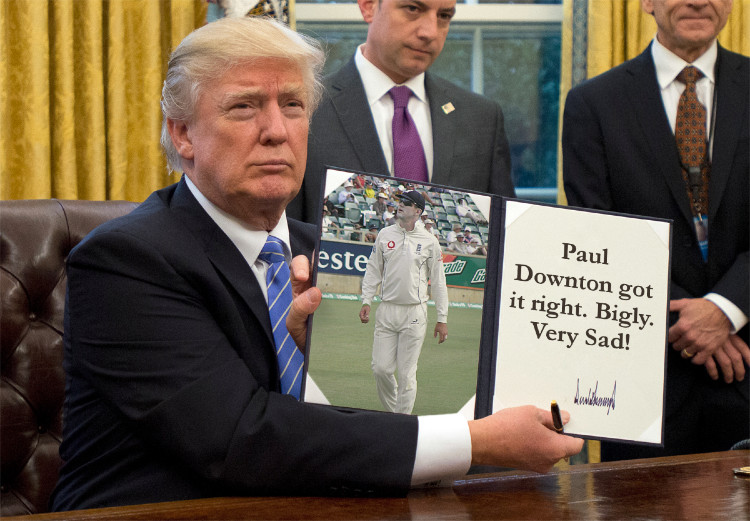






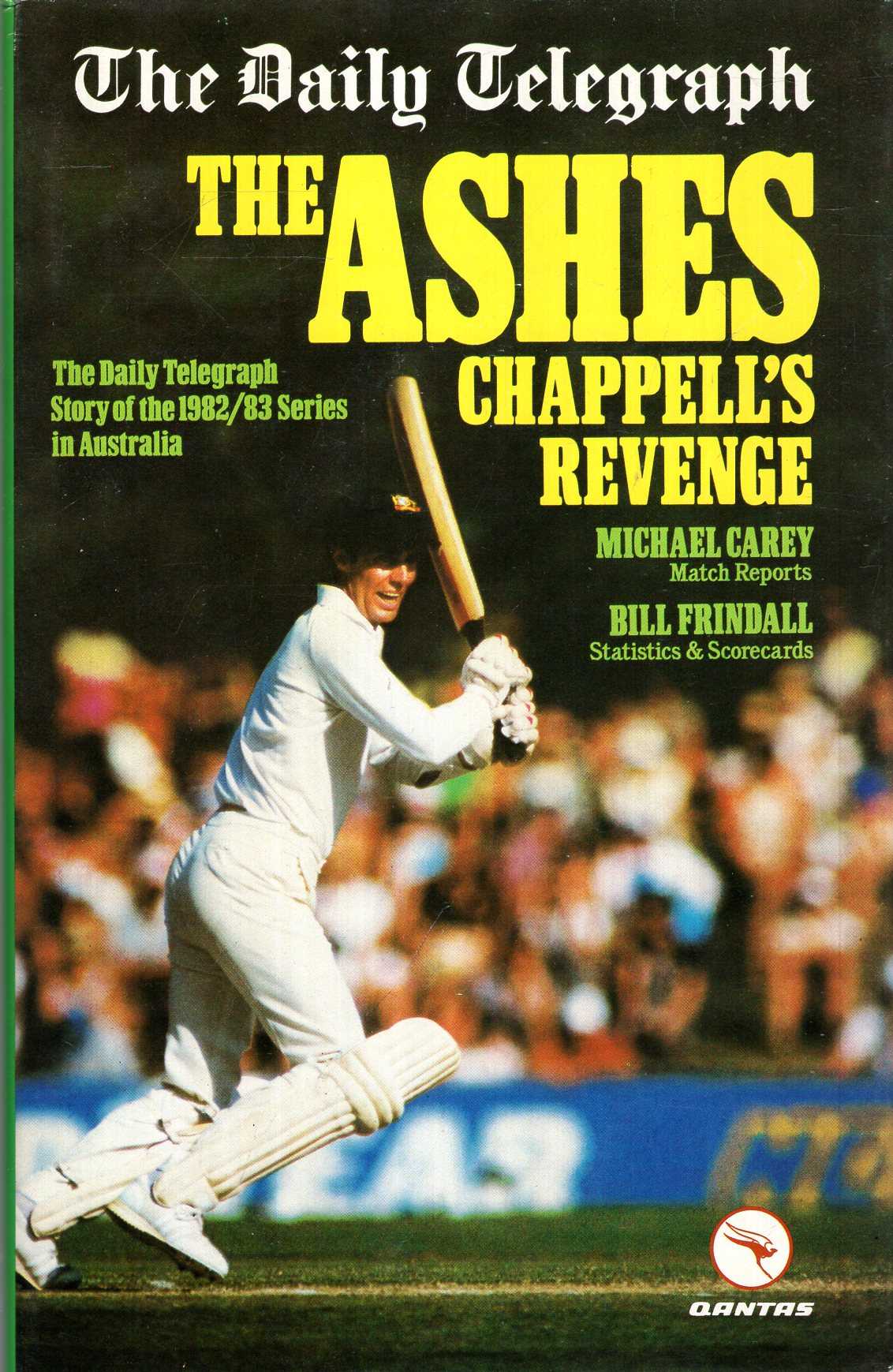
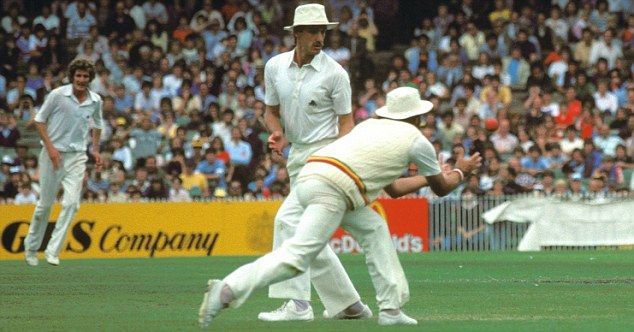

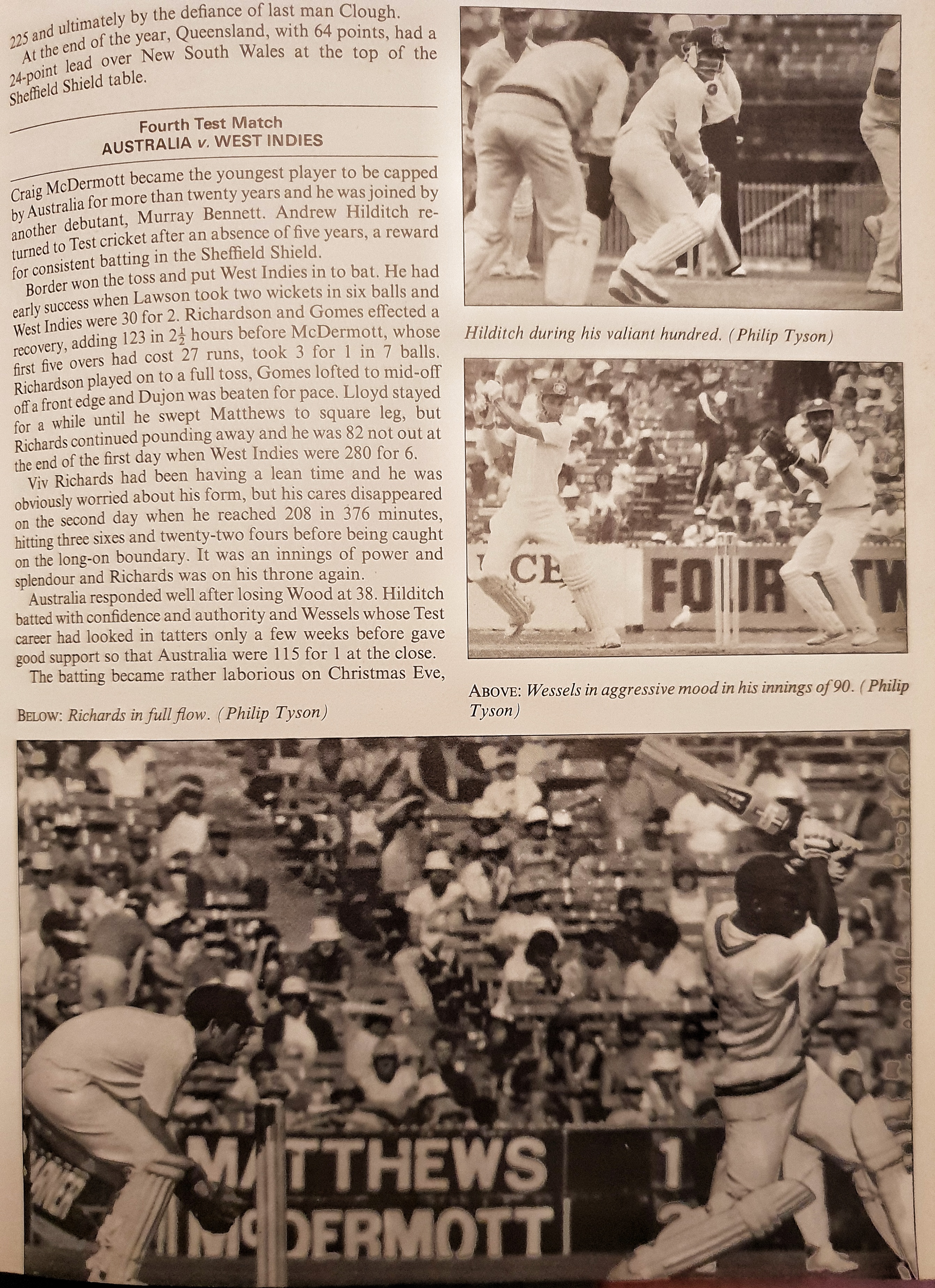


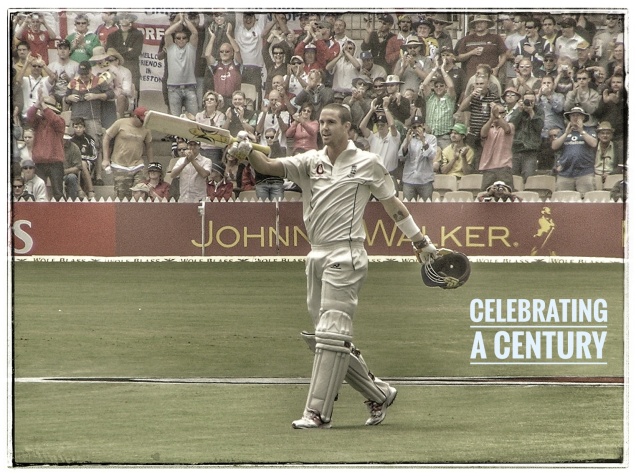
 Being Outside Cricket