You’d think I’d learn. That I would learn that England’s test team would always have done this. It’s not unprecedented. Put themselves in a decent spot, and then go down in flames. I kept harking back to Brisbane 1990 – where we got skittled, we skittled them for an unexpected lead, but instead of consolidating, we flumped again, and Aussie won by 10 wickets.
Truth is, it feels as the quality of the oppo goes up, the more we need the experienced pros to step up with the bat. Stokes and Root mainly, but the rest have been in the side for a while now. We had the best all round opener in the world in the summer (Ben Duckett, and he never was that), we have the prodigal plonker in next captain Harry Brook (I mean, seriously, how could you follow a bloke that bats the way he does) and by far the best player in county cricket in Ollie Pope, except he isn’t even that any more. And seriously, if Jacob Bethell is the answer, it’s a pretty daft question. I am just going to ignore Zak Crawley at this point, because the Aussie scoreboard did.
Not watched a ball today, and as soon as we didn’t get Travis Head early, England were done for. We all, in our heart of hearts, knew this was going to happen. Hope is not a strategy. Getting lucky twice is not a game plan. It might come off once on this tour, this might even have been it “coming off” for at least one madcap day, and lord did it get the Aussies worried (they are all being ever so cocksure today, but they were worried) but in the end, cricketing gravity worked itself out. This does feel like two bald fellas arguing over a comb, except they are high on meth, roided up and drinking Red Bull by the gallon.
I think there is some sort of madness at play here. All last night there was the sort of fevered excitement that recalled my time as a child on Christmas Eve, except I was the grumpy parent who had to pay for all the effing presents this time. Outside looking in. People who had their TNT contracts in place, not really caring that the company has just lost its crown jewel and will probably go the way of test match batting, but moaning at the commentators, when Sky hasn’t shown an Ashes tour since KP was in the England team. Or if you hate him, Graham Swann. There’s a choice of two shrinking violets for you. I think cricket lends itself to professional broadcasters, not cricketers who can talk. There’s a huge difference. I have no idea how good the comms were, so I’ll leave it to anyone who cares.
So I first woke up at around 4am. I am a dodgy sleeper, as my wristband tells me most nights, but I had gone a full 4 hours asleep so that is quite rare. I flick on the phone and I see England are 74 for 3. No idea if we won the toss – I don’t miss the stream of Tweets to tell me that from everyone and their mutt – but my first reaction was “not awful”. A quick bleary eyed look to see Crawley was out in the first over. Hey, the last time we won the Ashes overseas we lost a wicket in the first over, (let’s not mention the last time it happened though, Rory). Also noted that Pope had 36 not out and had held the top order together. Hmmm. And Hmmmmmmmmmmm. Joe Root got a duck. Even more hmmmmmmmmmmmmmm.
So I tried to go back to sleep and then started wondering if I’d imagined anything, and the sleep was restless, but I had to get into a rhythm of not staying awake all night. My job is so much harder than the earlier days of the blogging (one of the deals I am working on at the moment made BBC News World page lead – a bit tense – this week) so I need the rest and had another call this morning. But in between dreams of buying bags of crisps at a mythical supermarket at the end of Grove Street, Deptford (analyse that!) where they were giving away free Honey Nut Cornflakes (who is the nut here) I give in and at 7 I pick up the phone.
England (32.5) 172
Australia (4.1) 0/1
WHAT!
172 in 32 overs. Is Smith batting three, Labuschagne opening, where’s Khawaja (answer appeared to be “on the toilet”) and why haven’t they got any runs? Who is Weatherald? How many did Pope get?
I have a call at 9 am, at home, the only thing vital today until my client loses his shit, so stay in bed as it is too cold to get up, and go back into another doze, where I find out that my desire for crisps and honey nut cornflakes meant I forgot the beer, and then wake up to see it is Aussie at 61/4. Hmmm. IS SMITH OUT?????
The live comms says the batsmen are Head and Green. Good. No Smith. Try to doze a bit more. Not getting anywhere, and they are in the 70s now. Doze again, alarm is at 8:30 – the joy of home working – but sleep is difficult. Wake up, and it is 100/6. Er. Game on. Then each time I look another wicket. “ALEXA, what’s the England cricket score. 117/7. It’s 8 by the time the coffee is made. 9 by the time I have finished the call, I switch on BBC Sounds for the last over at 10 to 10.
This made Day 1 at Lord’s 2005 look like the Vicarage Fete. But not by much. That day it was 282 for 17 wickets in 77.2 overs – today it is 295 runs for 19 wickets in 71.5 overs. “C’est l’Ashes, c’est la folie” as might have been said.
I am not going to analyse something I haven’t watched, but will try to catch BBC IPlayer later. From the outside the twitterverse went loony at half-time, and punch drunk and staggering around at close. Probably like my mate who got this as his first day’s test cricket overseas. (Mine? 364 for 2, Nasser’s toss, the Aussie screaming “Wanker” at Matthew Hoggard all day, Simon Jones). If he’s not off his head by the end of the day, he’s not doing it properly.
The tale of the tape is that Mitchell Starc took 7 for 58. Always thought he was a really decent strike bowler, and that others got the plaudits, and he’s been around a while. This is his 101st test? 400+ wickets. Fair player in this era. England contributions was from “Daft As A Brush” Harry Brook with 52, Ollie “Bad Body Language” Pope with 46 and a bang crash 33 from Jamie Smith.
England got a wicket with the second ball of the innings, to dismiss debutant Weatherald, and Ben Stokes came on later on to brush up the middle and lower order, no doubt to be ribbed by Josh Tongue at the end of the day. Our FIVE seamers, almost heresy to the Twitterati, seemed to be the plan here. In the limited comms I heard, Tuffers was going on about how this was perfect for Stokes, a true piece of “after the fact” punditry that I had to admire the brazen cheek of. Next, I am going to tell you that it was a brilliant idea that with four rocket paced seamers, and Greenidge, Richards and Haynes in my line-up, I wouldn’t be preparing dust bowls in the Caribbean.
So basically, glass half empty, rather than my usual “what glass” attitude, the game is still very finely balanced. It is giving me flashbacks of another Ashes opener – Brisbane 1990. Not in pace. England were bowled out for 194 in a snail-paced 78 overs (imagine that!!!!) and England fought back to bowl the hosts out for 152 in a barely quicker – actually less RPO – 63 overs. Let’s not talk about the rest of it, or how Australia ended up winning by 10 wickets now.
So the day is over, and all that remains is to see how the Doorman is taking it. He’s had a pop at Stuart Broad for being his favourite word “sanctimonious”. I don’t think he knows what the word means, but he does love using it. He thinks Mitchell Starc will be filthy for having to bat 2 hours after he’d bowled England out, but I am sure he must have had a shower, or does Doorman know too much about their ablution habits (the Aussies think Poms avoid the soap dish, just ask them). He was a little cocky at the start of the subsidence
Nicely tagging in the ECB, who probably wonder who this frightful fellow is.
He retweeted this bloody con… you get lunch, see one ball, listen to a one eyed commentator who seems one of the few jobless at this point, and then you are turfed out.
UPDATE…. WE HAVE A DOORMAN SIGHTING! It is as insightful as it is churlish. Did England bowl well, Malcolm. Come on now, you can say it, it won’t hurt. I promise…
Just as well Cummins and Hazlewood were missing or the Test may have been over today… #Ashes#Ashes2025
I mentioned in my last post that I don’t have the TV subscription for TNT Sports to watch the Ashes. I don’t want to look for dodgy streams or such like, and given my sleep patterns are all over the shop, more disruption to them is the last thing I need. But I will still want to know what is going on and how, so the aim, and that’s ambitious in itself when my long-term planning is about a week in advance, is to jot down some thoughts as this series rattles by in the 45 days or so they plan to play it in. Not so much match reports, because of course I won’t be watching, but thoughts. Hopefully short. But I doubt it….
My first one, and this comes as little to no surprise is why is Malcolm Conn still gainfully employed. I see he has an article in The Cricketer this month where he has a go, hold on to your hats here, at England. Pick yourself up off the floor. Right now, well actually he’s been for a while, the equivalent of the Arthur Bostrom character in Allo Allo as the gendarmerie that went “Good Moaning”. Marginally funny the first time, but ten series later, absolutely ball achingly tedious. Today he has risen to the challenge of Steve Smith’s honour as Monty Panesar takes the role of “sanctimonious” Pom for daring to mention that Smith’s team got caught banged to rights with cheating and squealed about it.
The press conference bouncer for those lachrymose mea culpae was Conn. He thought us laughing at them tearing apart was us being sanctimonious, whereas we were just wetting ourselves. Our Conn has a bit of a thing about urination – his jibe back was Monty’s “let it rain” moment on a night club attendant, which of course was preceded by Conn losing his bladder control over England celebrating the Ashes at OUR Oval. He’s a strange one. He genuinely thinks he winds us up. There’s a difference, doorman, between winding us up and pitying you.
I remember my first Ashes tour of 2002, when Vaughan got a century pre-Brisbane, and the doorman called it the luckiest century he’d ever seen. He berated Caddick for taking a wicket at The Gabba on England’s comeback (temporary) 2nd day in whatever pamphlet paid his wages, to which in a holiday tour video my quote was “If Conn says one positive thing about England while I am out here, I’ll eat this hat I’m wearing.” If you want a laugh about this guy’s cricket knowledge, catch him on the Cricket Writers On TV he appeared on – I could not stop laughing! Out of his depth.
When we got hammered in Brisbane in 2006, and started at Adelaide with a promising Day 1 score of around 275 for 3, the whingeing conn accused England of killing cricket. A clown. Why did The Cricketer think giving him a space when more talented writers like Derek Pringle or Paul Newman are about. By the way, on my hiatus from blogging, and at the suggestion a number of years ago from Nick Hoult, I read Pringle’s book. It’s good. Yes, you read that, it’s good. Not great. Good.
The sandpaper thingamy is hilarious. We don’t necessarily think that we are angels, but when the Aussies sanctified their own conduct about the line while talking about breaking fucking arms, to be so gloriously hoisted on their own petard was quite enthralling. Keep it going. They clearly don’t like that up ’em.
As for the first test, a great friend is out there, flaunting Little Creatures, stadium tour of the WACA and lovely weather while I freeze in my Hampshire bolt-hole. Jealous, but not. My days of this have passed due to the anxiety and mental health stuff. But there have been frequent pauses to think of those tours, especially the first one. There is nothing like an Ashes overseas. Although Adelaide in 2006 was traumatic for many reasons, including having my wallet stolen in Glenelg, it is still a memorable match. I was there. Oh God, I was there.
England might name a spinner, but probably won’t. Ollie Pope is in the hot seat for his batting place, and while I can see why, I think Crawley should be too. I was tickled by the reaction to Harry Brook’s madcap dismissal in the knockabout game as being “daft as a brush” “not enough brains” etc., but if a certain batsman from over a decade ago did that his loyalty to the team was questioned. Still the stinking hypocrisy grates.
As for Australia, the bowling looks a bit thin on paper, but it won’t be. Unless Dougie Bollinger has been revived, or Michael Beer/Ashton Agar/Xavier Doherty is in the wings. As for the batting, they will score runs, enough runs, to beat us. Smith will be Smith, Head will make two tons, Khawaja will have the test where you never look like getting him out, Labuschagne will come to some sort of form, Cam Green will become Mitchell Marsh, and Alex Carey will get one ton. England have had two, I think, century makers in the last two tours and neither are playing – Jonny Bairstow and Dawid Malan. Don’t think there is anyone else. I’m trusting my failing memory now.
Look, as the Aussies might say, I don’t expect a welter of hits. Not going to happen. But I do still love the writing of stuff, and this is me trying to work back some enthusiasm for a sport that has treated me, and many others, like total shit. The sport does not deserve us, but we are where we are because cricket is great, especially the longer forms. The Ashes is overhyped, but over there this time. The journos out there, all nicely expensed up, are showing us just how nice it is, and us poor hardworking souls are left in the bitter cold to wonder just what is happening and how the hell does BBC Sounds work? I feel so old. I got my hopes up when it said it was on Discovery + but then discovered (geddit) that my subscription for that channel, that I’ve never watched, doesn’t extend to this. So are there highlights somewhere? Or am I relying on Twitter Clips?
Whatever. Let’s see how this goes. If you have read this, thanks. Judging by the hits, you won’t. C’est La Vie. Got to take the rough side with the smooth. I’m not here to con you.
Not really an Ashes preview, but I thought it was as good a time as any to pick up the keyboard.
It’s the Ashes Down Under. The pinnacle of the game in my eyes. The ultimate location for the oldest test contest. The one that brought the mysticism of Radio 3 coverage, the “how did they get the highlights from Australia to England in that short a time” wonderment (I was a kid, I didn’t know about satellites) and being concerned that neither Hobart or Darwin got a test match when all the other state capitals did, and Melbourne twice in 1978/9. The memories of watching the first live coverage – no, not Sky in 1990, but BBC in 1983 – from the warmth of home and that decision against England when Mel Johnson blatantly cheated in not giving John Dyson out.
Sadly not where it will start – I was there in 2006
These memories are lost in time, like tears in rain. To quote Rutger Hauer. What do we have now? A farce within a charade within a comedy. An England team turning up, playing one practice match against themselves, and then straight into the first test. I seriously do not care if they somehow get it right on the night. This is bizarre stuff. You can give me all the assurances under the sun that you are taking this seriously, but that doesn’t exactly ring true. Hope is not a strategy.
For the first time since the Ashes were fully televised live I will not be able to watch. I don’t have TNT or Discovery + or whatever, and have no intention of getting it. Sky Sports is so infrequently switched on in my house it actually makes no sense keeping that. It’s not that I’m not interested in cricket, far from it, it is just that I am not THAT interested. I have had practice of following other series on text or maybe the radio, so not that arsed to see it. This isn’t just for cricket, but pretty much all sport these days. I was a total sports nut, now, although still of interest, I just can’t raise the enthusiasm any more.
A dozen years ago we were setting out on the test series that changed my life, and I never left my home to watch it. In fact, I really couldn’t watch us get annihilated. I think the most I got out of that actual series was liking one of the songs used in a montage. What happened after, well, the impacts are still being felt by me on a personal level even now. Even after a long time out of the cricket blogging game.
There is a lot about How Did We Lose In Adelaide and Being Outside Cricket of which I am immensely proud. I stood up for a lot of people, and realised I wasn’t alone in the way I felt about how cricket was run and the scapegoating of Pietersen after a diabolical tour. I don’t regret feeling the way I did, even though KP has been a less than sympathetic “hero” since that day. Indeed, another crass tweet which had the unfortunate problem of being true confirmed this. The establishment pulled in favour of the nice boy, and not the temperamental one. It promoted the posh figure and demonised the ostracised. It turned cricket supporters against each other. It put me on the path to mental gymnastics that I could not fathom. I’m paying for it now. One of the contributors if not the cause.
When I think of what went on, it seems mad. Like being woken up at 8am on a Sunday morning by a DM from Jonathan Agnew saying “Ha! You missed that didn’t you…”. Like one prominent journalist asking for a meet up, and for me to name the location, and I couldn’t be 100% sure if it wouldn’t involve violence. Like another meeting me for a drink and saying “I don’t know why you let Pam Nash bother you. No-one who matters reads her. They read you.” The interactions with clowns like Andy Bull, Russell Jackson, the chap from Liverpool Echo, Harry Gurney (now that was a man with an outsized opinion of his own genius), Derek Pringle and more besides. The mystery blocking by Simon Wilde. The friends on the up and then turned on you when you weren’t looking which included a lot of those who took the instruction to “move on” when told, lest it disrupt their ability to make money out of the game. Revolutions that lasted as long as their attention spans, and who were about a quarter as funny or perceptive as they thought they were. Their little clique, where we weren’t so much a noisy neighbour, as the nuisances to tell them they were who we knew they were.
I am ashamed of a lot I did. People who know me will tell you I am an introvert, someone who doesn’t like people feeling bad vibes towards me. For me to invite the attacks was massively out of character and the attention I got was as powerful a narcotic as any cigarette or alcohol. I wanted the anger to fire my anger, because my writing was better as a result. But did I need to be so bloody arrogant? So off with people? So trenchant. Nice pieces, things I genuinely loved about the game, never resonated. My rage machine did. I was, even I confess, a really good angry writer. I am a pretty decent emotional writer. When neither matter, I am ordinary. The fact is, I’m bluffing now. Although I love to write, I don’t and never have, thought I am any good. Other people tell me I am.
What I suspected at the time, and which has been confirmed, certainly post-pandemic, is I have mental health issues. I suffered a breakdown during covid, and since then I have had bouts of chronic and serious anxiety. It is a terrible feeling knowing that unless a miracle occurs I will never be able to go to a test match in England again – it was hard enough going to a county game last summer. I am terrified of crowds. Of Waterloo Station. Of people bumping in to me. Of queues. Of people. That means I just can’t face a test match, nor the airport for a tour if I could afford it. It’s absolutely crippling, and I hope solvable, but the issues have been with me for a long time now.
What I recognise now from the post Ashes in 2014 was a mania borne out of anger, and I was out of control. I knew that this wasn’t me, but the focus I put on it turned me into a character that I wasn’t. The amount of people who looked at the actions through their prism telling me I wanted attention, I wanted to be a journalist, I wanted fame, were so wrong. I wanted attention from my crowd, no-one else. I never wanted a job in cricket, and as most of the snipers appeared to want to be in the game they couldn’t understand why I was doing what I was doing. As for fame, Lawrence Booth will tell you how I had to be convinced to meet him, and he wasn’t what he expected. That first meeting with him terrified me. I’d been horrible to him, and he was kind to me. I felt worse than I expected. The same with Nick Hoult and Chris Stocks. Both really good company, both I had been rude to as a keyboard warrior.
I changed my writing as my interest in test cricket waned, and the Tom Harrison, Andrew Strauss and all the others revolution has put in place the utter fustercluck we have now. Test cricket is still the best form of the game, and it’s not even close, but T20 and its bastard offspring the Hundred have led pretty much where we thought they would. 50 over cricket is arguably in worse shape than tests. In ten years, tops, we’ll probably see next to no test cricket, and we’ve been so conditioned to the arguments that we probably won’t be bothered when it happens.
I went to non-league football. I persuaded myself I really cared about it, but then the club that I fell for stabbed me in the back. I deserved it, for being a sucker enough to believe them. With it friendships were shattered, the seven or eight of us who went with the club through a couple of turbulent seasons were cast aside. The board has since been replaced with a soulless entity that has no clue what that club meant. While I had moved away, I still went up to see them, but when I was told to leave in October 2024 (or get a thump, if I didn’t), I saw two things. My angry writing (and believe me, it was toned down compared to before) still strikes nerves in a way I never understood, and that I can’t do that any more. I like my team down my way, but in the words of a song “I’ll never fall in love again” with something that can stab you in the back and the heart.
Which brings me back to the Ashes. A friend of mine is on the aeroplane out as I write to get his first taste of the Ashes in Australia. There are pangs of jealousy. I did that 20 years ago, and while the first trip was great, the second one was after both my parents passed away and I was a human wreckage. Then there is huge huge embarrassment. Even if I wanted to, even if I had the money, I could not do it. I could not get on the aeroplane, not because I am scared of flying, I am scared of the crowds at the gate. I would breathe faster. I would shake. I would shiver. I would get emotional. I would feel pain in the chest, nausea, stomach pain, ankle pain. Pure panic. It hinders my work, it hinders my recreation. If I don’t know where to park for a football match, I don’t go. I have become someone who can’t take advantage of what life has to bring.
Do England have a chance? Probably not. There is a lot of hopium about, but I don’t see it. Maybe the first test is a good opportunity, but there will still be four more. The bowling looks weak. Both in terms of recent performance (Gus Atkinson has to revert to mean) and in durability. Sure, Australia are down Cummins and Hazlewood, but they still have home advantage. The batting will do well for Australia, but there are too many question marks on this England team. I think it is more likely to be 5-0 than it is a 3-2 win to England, for example. We don’t play for draws, the weather probably won’t save us anywhere, and when the wheels fall off this England team, away from home, it becomes a procession. Especially in Australia. I hope I’m wrong, but hope is not a strategy.
The other stuff that surrounds it is dull to me. Malcolm Conn is still an irredeemable arse, and how British journos don’t just ostracise him, I will never know. It’s not an act. It’s the show. TNT’s coverage will probably be as awful as everybody else’s. The tests will probably last 4 days apiece, unless we make Australia bat again. We’ll see, as always, that we might be the whingeing Poms, but christ, it takes one to know one. They are still moaning about murray mints and ball changes. No, we aren’t moaning about a run-out. Without fail, Aussies seem to mention it first. No Australia, facts are facts. We may have been humped on out last three visits, but we have won an Ashes series overseas more recently than you have, But yes, you are a better cricket nation than us, which will always make us underdogs.
A mixture of me and cricket. Always what blogging was about. Deeply personal, life impacts, the pleasure, and there was some, and the pain. The pleasures have been working with Sean, Danny and Chris to make BOC required reading for a while, knowing it had a limited shelf life. The pleasures were the commenters, who saw what we were doing, who were fiercely protective of the “brand” and would provided a ferocious response to anyone brave enough to challenge us. You had to have your A game. Of course, this became “why would I bother with those idiots” in some quarters. We know. We saw you. We got to know what type of people you were. The pleasures were the camaraderie with certain bloggers and social media types. The pleasures were in watching test matches and knowing that this blog brought daily reports to you of them. Of our attempts to cover the women’s game. Of live blogging opening days of series. Of being a source of our views, that we knew resonated.
I am ashamed and proud at the same time. I know I did things I should not have, I know I was playing a role. I was scared and excited. I feared reaction, and yet needed it. All contradictions. If you asked me now would I have done it if I’d known what would happen? I honestly can’t answer that, but probably yes. Knowing that what praise we got was through gritted teeth, like getting pages in the Almanac. That was decent. I remember I pulled HDWLIA and was on the bus home when Lawrence DM’s me to ask me what the hell I was doing, as he’d just sent the Almanac to print, and we had a large part of the blog report. No word of a lie, I told him to delete it. He ignored me, but he did edit it! Because it mentioned that HDWLIA had gone. Crazy times. The shy attention seeker.
So it is time to sit back and watch the cricinfo score updates and see stupid stuff on Twitter. That’s the Ashes now. For me a sideshow. An outlier. A game that matters to someone who doesn’t. As the title of the song from the lyrics of this article bame goes, I am just spinning around. My head is all over the shop. Life is really nice outside of London, but the hubbub is not when I am in it. That’s where we are right now. If you are still excited I am truly envious of you. I wish I could care as much as that again. Maybe I will if it is close. But life is so different now, sport is so commercial and so not for me any more, that it just doesn’t seem likely.
Thanks for reading my self-indulgent claptrap. Be well everyone. I can be found on my various non-league blogs, a load of nonsense called Stuff, and on Twitter. Thanks to all. Not goodbye, but maybe more of see you if it gets better. The prospect of that is slimmer than my chances of getting back down to under 92kg (which I did 18 months ago).
It has been a while since I posted anything on here. Not a deliberate or conscious decision not to, more that I simply didn’t have anything to say that I hadn’t said before. So it came as quite a pleasant surprise to be thinking about something this morning and feeling the need to post about it. You lucky people.
And it is this. The Women’s Cricket World Cup is on, and I am really enjoying it. A resounding “so what?” is an entirely fair response to that statement, so I shall qualify it and explain why. Perhaps it says more about me than anything else, and certainly I do not confuse my own response with anything wider, but perhaps I am not alone and others may have the same kind of response. You see, I didn’t say I am enjoying it, I said I am really enjoying it. And this is new.
Of course, the rise of women’s team sports in the last years can be viewed as a wonderful thing in its own right, both in terms of the profile and as a social good, but you cannot force people to truly want to watch, no matter how much they are harangued to do so, or if social acceptability depends on it. It is an emotional response, to move from “oh the cricket is on” to “ooh the cricket is on”, and that this time around seems to be the personal difference. It isn’t format, it isn’t location, it isn’t because England are especially good, meaning there is a supporter stake in it; it is because the sport, for its own sake, is generating a significant appeal and desire to watch it. I can tell myself I am a modern man, who passionately believes in the equality of opportunity for female sport, and my brain will insist that is true, but I cannot help the fact that I find women’s football unappealing (while absolutely enjoying women’s rugby immensely) as a spectacle. Sorry, it just leaves me cold. You can call me names for that if you like, but I don’t care, it just isn’t something I seek out particularly. Cricket on the other hand, I have most definitely watched and enjoyed for years. But this time around it is more. I am going out of my way to watch the games. All of the games. It has made a personal step up in my desire to see it.
Why that might be, well that is the reason for the post, and I am trying to rationalise it and in truth largely failing. Perhaps it is that familiarity has taken me to the point where I do care what happens, but it certainly isn’t that national pride from English success is raising it in my awareness, because for one thing it is not just their games I am seeking out, for another the flaws in the England team are irritating me and for a third England have won World Cups before. To have an emotional stake in what is happening to the point of irritation is the essence in caring about a sport. The reason I have zero interest in the Hundred is not the format, which is just a game of cricket whatever the attractions or otherwise of it, but because I don’t care who wins any particular game, let alone the competition. Same applies to the IPL. I have no emotional stake in it, male or female teams. International tournaments are in any case different, for you can identify with all the nations whichever of them you might support.
It is dangerous and also rather arrogant to assume that this personal response is shared widely, or indeed by anyone, so perhaps it is a me thing solely, and if so that too is fine. TV audience figures would show to some extent if this a growth area (I suspect so, just because it is growing anyway), but even those do not show the degree of engagement, only that the engagement exists. Caring about outcome, checking the table and working out scenarios, being annoyed that the rain is falling, laughing at how damn lucky England were (and feeling bad for Pakistan at the same time) that the rain did fall – all of these are examples of feeling a connection to what is going on that is greater than background passing interest, and it is a new sensation.
Does this even mean anything? Perhaps not. But it was put to me that A list of commentators – particularly the male ones – at the tournament is in itself an illustration of reaching maturity, that this isn’t a secondary women’s World Cup, it is a World Cup. Posting something like that is inherently risky, for it invites comment that this is how it should have always been, and I can accept that criticism, but I would refer again to the point that you cannot force engagement or interest, only hope that it develops. For me, it has done. And I am pleased. If it is the case for others too, I would be even more pleased.
Today marks the second phase of the process to sell The Hundred’s teams. As news has trickled out of the recent days and weeks, I have started to ask myself the question: If I was a billionaire investor and was offered the opportunity to buy one of the eight Hundred teams, how much would I be willing to pay?
We have been given a unique view into what investors have seen behind the scenes, thanks to an extraordinary leak of confidential ECB projections by IPL founder Lalit Modi. It includes the ECB’s estimates for both revenue and costs up to the year 2032, as well as (perhaps more importantly for us) the actual figures from 2024.
2024
The leaked ECB projections over the course of the next eight years become so positive that even their media partner the BBC has labelled them “overly optimistic”. However, the 2024 figures are presumably fairly accurate and so these are the first things I would look at.
Team
Central Revenue Distribution (£m)
Total Revenue (£m)
Total Costs (£m)
Total Profit (£m)
Birmingham Phoenix
4.5
5.9
5.0
0.9
London Spirit
4.5
6.8
5.8
1.0
Manchester Originals
4.5
6.0
5.0
1.0
Northern Superchargers
4.5
5.8
4.5
1.3
Oval Invincibles
4.5
7.7
5.5
2.2
Southern Brave
4.5
6.1
5.6
0.5
Trent Rockets
4.5
6.2
4.7
1.5
Welsh Fire
4.5
5.4
4.9
0.5
There are two things which leap out at me here, regarding the two London teams. Oval Invincibles appears to have twice as much profit as almost all of the others, whilst London Spirit is only the fourth most profitable franchise due to having the highest level of costs.
So, in the hypothetical scenario in which I have enough money to buy these teams, how much would I pay for these teams if I expected to make a profit based purely on these figures? That would depend on how confident I was about the long-term viability of The Hundred. It’s like the difference between renting out a house or investing in cryptocurrency. People are happy to accept lower rates of return on houses because they can be fairly confident that the asset will still be around in twenty or thirty years time. The same is not true of cryptocurrency and NFTs, so investors want to make as much money as they can as quickly as possible.
For the sake of argument, I will use 8% and 15% gross profits (ie before taxes and other costs) as the two benchmarks. At 8%, I would expect to have earned my stake back within thirteen years. At 15%, that falls to seven years.
Team
Total 2024 Profit (£m)
15% Valuation (£m)
8% Valuation (£m)
Birmingham Phoenix
0.9
6.0
11.3
London Spirit
1.0
6.7
12.5
Manchester Originals
1.0
6.7
12.5
Northern Superchargers
1.3
8.7
16.3
Oval Invincibles
2.2
14.7
27.5
Southern Brave
1.0
6.7
12.5
Trent Rockets
1.5
10.0
18.8
Welsh Fire
0.5
3.3
6.3
Bear in mind that these valuations are for 100% of the teams, and not just the 49% minority stakes which the ECB is currently attempting to sell. The ECB reportedly believe that the teams are collectively worth around £1bn, including the 51% stakes being gifted to the hosts, but the sum of 8% values here is just £117.5m.
2025
Of course, the 2024 season has already been and gone. If I were to buy a team, the first opportunity I would get to actually do anything would be in 2025. This is important because most of the contracts agreed from the beginning of The Hundred expired in 2024; The Sky and BBC TV deals, the KP Snacks sponsorship, the hosting agreements, and the County Partnership Agreement which governs how much professional cricketers are paid in England to name a few. The ECB slides leaked by Lalit Modi gives hints to how some of these are going to change.
There are two possible rationales for how both can be true. One is that Sky and the ECB signed the contract covering these years in 2022, before the second edition of The Hundred, under the assumption that audiences would increase year-on-year. They have in fact fallen in each successive season, but the perceived value to Sky in 2022 might have been higher than it would be now. The other possible reason is simply that Sky pays for everything in a single block payment, and it is the ECB which arbitrarily assigns values to each individual asset. I have written before about how they appear to intentionally and systematically undervalue women’s cricket in these calculations, for example. The ECB are trying to sell The Hundred teams to investors, and so they stand to make more money from this if the TV value of the competition is higher.
Despite the growth in central revenue thanks to the domestic TV rights, the ECB’s projections show decreased profits for each team by over 40% in 2025 due to increased costs. Hosting fees more than double for each team, whilst team wages increase by over 80%. Both of these costs appear to be written in stone and non-negotiable (presumably already agreed with the host grounds and players’ union), which means that any new owner cannot avoid taking this hit.
Team
2024 Profit (£m)
2025 Profit (£m)
Birmingham Phoenix
0.9
0.4
London Spirit
1.0
0.6
Manchester Originals
1.0
0.4
Northern Superchargers
1.3
0.7
Oval Invincibles
2.2
1.7
Southern Brave
1.0
0.4
Trent Rockets
1.5
0.8
Welsh Fire
0.5
0.4
Total
9.4
5.4
These figures look terrible, but if I was an investor then the one thing which would leap out at me is that teams in The Hundred are currently making a loss in terms of live attendance. The total projected ticket revenue for the group stages in 2025 is £10.9m, but the total costs (excluding hosting fees, because teams need a TV-capable cricket ground even with no fans) are £14.3m. That is the sum of Ticketing (a small and unavoidable cost), Event Delivery (fireworks, live music, and other non-cricket entertainment) and Marketing. If you cut the last two by 90%, which would align both budgets with typical costs in the T20 Blast, then that frees up roughly £12m across the eight teams.
If each team did this, resulting in higher profits than the ECB’s 2024 figures, then the projected team values almost double as a result.
Team
Total Profit (£m)
15% Valuation (£m)
8% Valuation (£m)
Birmingham Phoenix
1.9
12.9
24.1
London Spirit
2.4
16.0
30.0
Manchester Originals
1.9
12.9
24.1
Northern Superchargers
1.9
12.5
23.4
Oval Invincibles
3.3
22.1
41.5
Southern Brave
1.9
12.9
24.1
Trent Rockets
2.2
14.3
26.9
Welsh Fire
1.8
12.3
23.0
From a total team value of £117.5m based on the 2024 figures and an 8% annual return, this increases to £217.1m if owners cut costs for the 2025 season. It is still a long way short of the ECB’s stated £1bn valuation for the eight team franchises, but at least demonstrates a potential upward trajectory.
On a related note, a few teams might see an opportunity to increase ticket prices in order to make even more money. This isn’t viable for everyone (Welsh Fire had half the ticket revenue of any other team in 2024, for example), but Oval Invincibles could arguably gain a few hundred thousand pounds every year.
A Volatile Future
As with almost any prediction, the ECB’s projections become less and less reliable the further into the future they go. The general consensus, not just from people with obvious motives to talk down the value of the competition like Modi, is that ECB’s long-term expectations in terms of overseas TV and sponsorship revenues appear virtually unattainable. Given the lack of Indian men’s cricketers and the unfavourable time difference between the UK and India, there is a natural cap on how much widespread interest The Hundred can attract in the Indian public. There will be some, and is already, but a large portion of that will be based around gambling rather than any actual affinity for the competition. This can be seen in some county Youtube feeds, where the comments are often overrun by Indian bettors
The financial foundation of The Hundred is the domestic TV revenue from Sky and a Freeview partner (I say “a Freeview partner” because the BBC has yet to indicate whether they will be broadcasting any English cricket on television next year). The ECB predict this will be worth £85.0m in 2029, which equates to 64% of the ECB’s income which is distributed to the teams even with a projected 1050% increase in overseas TV revenue and 390% increase in sponsorship revenue from 2024 which many people consider unrealistic.
Is £85m a year an attainable sum? Possibly. UK sports broadcasting deals are amongst the most valuable in the world, which is one reason why American sports leagues like the NFL court UK broadcasters with games in London and contemplate hosting teams here. It isn’t a wholly ludicrous amount, if The Hundred can gather some momentum in the next few years.
Aside from increasing the number of viewers, there are a few other factors which could boost the value of any UK TV deal. Competition is a big one. The TV rights for English cricket from 2020-2024 experienced a big increase thanks to a bidding war between Sky Sports and BT Sport. In 2022, when the next contract was signed, BT Sport was about to be taken over and not interested and so Sky were able to get the rights with no increase at all. If the ECB were able to have TNT Sport or streamers such as Amazon become serious contenders then it would almost certainly increase how much money they would expect to get.
There is also the most obvious path to securing more TV money: Play more matches. If The Hundred lasted 6 weeks then it would clearly be worth more to a broadcaster. It would be unpalatable to the counties and probably make the existence of an English international window untenable, but if the ECB was desperate to finance The Hundred then it would be an option.
All of this assumes that Sky will want to bid for The Hundred in 2029 at all. The number of viewers has fallen in every successive season of The Hundred. If this continues then at some point it will fall below the threshold of profitability for Sky. It is an expensive competition to produce daily coverage for, relative to the T20 Blast for example, and a lot more expensive per game than the Blast (or other T20 leagues) in terms of the rights.
One question which might ring alarm bells for potential investors is whether the ECB’s projections include all of The Hundred’s costs. A review of the ECB’s accounts by Fanos Hira in 2023 suggested that there was an additional £14.5m per year of expenses which the ECB didn’t include in their internal project budgets. This might include the use of the ECB’s offices, central ECB staff spending time working on the competition, the promotional materials attached to the All Stars and Dynamos programmes, amongst many other things. If The Hundred is spun off as an autonomous entity, one in which the majority of counties no longer have a financial stake in its success, then there is little reason to suppose this extra support will continue.
With this level of uncertainty about The Hundred’s main source of revenue and the dubious nature of the ECB’s other projections, the level of risk goes up for potential investors and therefore the value of the teams goes down. In order to counteract this, I suspect that the ECB will have to give specific guarantees to buyers about both the central financial payments and maintaining the broader ecosystem of support around the competition.
Put simply: If I was buying a team, I would insist on a contract where the ECB guaranteed to pay me £5.3m per year from 2029 to 2032 (as the ECB’s projections state), regardless of whether The Hundred’s TV deals and sponsorships were sufficient to cover this amount or not. If that has to be subsidised from the ECB’s Test revenue, so be it. In fact, I’d probably push for a contract lasting at least a decade and possibly more.
Don’t Forget The Women
Most articles about the sale of The Hundred teams, and the sale itself, seems to completely forget about the women’s competition. This is a mistake, for a number of reasons.
The Hundred has a claim to be the premier domestic women’s cricket competition in the world. It has the greatest attendance of any women’s cricket competition, including ICC World Cups. It has a very high standard of play, which only stands to increase next year as every single player will be a full-time professional. Only the WPL, with its vast TV audience, overshadows it in terms of financial performance.
The gap in UK TV viewership between the men’s and women’s Hundred has fallen by roughly 60% between 2021 and 2024, suggesting that the women’s competition is gaining in terms of popularity (or at least declining less quickly). In fact, if this pattern continues then the women’s Hundred could overtake the men’s as the most valuable aspect of the TV package within the next decade. I am not joking.
So, despite the fact that a lot of people consider women’s cricket to have zero commercial value and the proceeds of selling eight women’s teams won’t send an extra penny towards women’s cricket in England and Wales, a speculative investor might well look at the women’s competition and see an opportunity to get in on the ground floor before its true value is realised.
It’s Not Just About Money
The whole of this post has assumed that the reasons for someone buying a team in The Hundred are purely financial. There are a few other considerations which may push the value up for some investors.
If someone already owns a number of T20 team franchises, then an English team offers a chance to scout and hire English players for their overseas teams. It also promotes their team’s brand in what is a lucrative sports market, even if this particular competition isn’t the most successful.
It has been suggested that some overseas investors are attracted by the idea of owning a bit of English cricket. The after-effects of being part of the British Empire, followed by the dominance of England and Australia within global cricket until the 21st Century, means that a number of Indian billionaires see this as an opportunity to ‘stick it to the man’. To impress on the ECB that it is India and Indians who hold reins of power now.
There is also the possibility of buying political influence. Anyone who buys a team becomes, at the very least, a business partner with the ECB. If you consider how obsequious the ECB is towards Sky, then it certainly appears to be the case that the ECB will bend over backwards to support the interests of companies they work with. If you’re a billionaire who can afford to lose the money, why not spend £50m on a sports team which coincidentally increases your chances of getting measures you support through ICC meetings?
But even with all of the intangible benefits, the potential of the women’s teams and the cost-cutting I’ve listed above, I cannot fathom why anyone would think the total value of the teams could be worth more than £400m or so. Even that figure feels highly generous. If the ECB and counties are expecting a billion pound payday, I expect they will be disappointed.
Richard Gould has said that he won’t sell the teams for less than he thinks they’re worth, but the pressure from nearly-bankrupt counties like Yorkshire for extra cash will be too much to withstand for long. The Hundred’s teams will be sold, soon, for whatever amount the investors offer. If cricket wasn’t something I loved watching, I’d be eating some popcorn whilst watching the slow motion car crash of what used to be the most popular sport in the country self-destructing through its own hubris and incompetence.
As it is, at this point I’m just hoping English cricket survives a little longer than I do.
Thanks for reading this cheery blog post. If you have any comments on it, or anything else, please leave them below.
There have been many, many tributes to Graham Thorpe. Mine is going to feel inadequate compared to others. But I wanted to put pen to paper about someone I loved watching.
The news, when it came last week, was not a massive surprise. I had been told about events two years ago, and there is always that feeling that “recovery”, whatever that is, can be fleeting, it can be jeopardised. I do not put myself in his category of mental health issues that Thorpey suffered with, of course I do not, but as someone suffering from anxiety, and feeling the world cave in on you at times, that helplessness, that void is real. Very real and massively illogical. I sort of understand, I sort of rationalise what happened – I seek logic, and can’t find it, and circle the drain. I have my own issues.
But I don’t know. I just really don’t what Thorpey was going through. We all worshipped him. His team-mates clearly loved him to pieces, they are breaking down when talking about him. It really hit me when Athers cracked. Athers doesn’t crack. He just doesn’t. Arguably the toughest cricketer mentally I have ever seen, and his voice audibly breaks talking about him. We, excuse my language, fucking loved him. He was so many people’s favourite England player of the 90s and early noughties. Mental health is a vicious beast. It truly is,
I met Thorpey once. It was at a book signing in The Glades in Bromley. I had got two copies of his fairly dark autobiography, one for me and one for Sir Peter, my travelling colleague to Ashes tours and South Afirca (his last tour for England). As I queued up I thought it would be mildly amusing to ask him to sign them to Lord Lynch and Sir Peter. I was incredibly shy at the time, and felt somewhat in awe of the great England player I and my colleagues in our club side adored and revered. Our late great club bowler, Neil Grindrod (who passed away in 2001) was a huge fan. I got to the front and there I was, in front of my favourite England player. “Hello Graham” I said as I handed two books to him. “Hello Mate” he replied. “Can I ask a favour, can you sign the first one to “Sir Peter”, and the second to “Lord Lynch”?” I thought I was asking him to face guard against Glen McGrath…. Thorpey smiled. “Sure, what’s that all about” he asked. “Oh just some nonsense a friend of ours used to get into a place in Australia” I said (it’s true, a friend of Peter’s did it to get a car park space in a hotel. “Yeah mate, I get that. You need to have a good blag to get in to places (I think he thought we were trying to get into a club or something).” He signed, gave me a “thanks mate”, I mumbled something, and felt like a giddy teenager. I was in my mid-30s.
I have had a lot of memories at cricket, but that day in August 2003, when Thorpey returned to the test team against South Africa, was one of the best. It was the first Saturday test at the Oval that I had ever been to, marking the end of the Millwall on a Saturday era, and the need to not miss test cricket at my home ground. As he came out that Friday night, the crowd sensed the moment. Tense and wanting him to get through the end of the day. He did. The next he completed that magnificent, redemptive century. I cannot tell you the joy we felt as our Old Jos contingent participated in and were one of the last to stop the standing ovation as Thorpey celebrated his hundred. A wonderful moment. Just wonderful.
I wasn’t always so lucky in my times watching him, but that one made up for pretty much everything else. The last time I saw him bat in person I think was in April 2005, when Surrey played Sussex, I think, but just can’t be sure without checking. He always had that aura, the walk, the confident air. The memories are more from TV viewing. I followed his double century in Christchurch all night when he and Freddie put the Kiwis to the sword, and in his book he says he barely remembers any of it, in such mental strife he was at the time. There is that epic, magnificent, wonderful hundred in the West Indies in 2004 at Barbados, with an ovation I have rarely seen matched when he got there. A test winning knock. Often he seemed the foil to someone else – even his South Africa tour de force supported Tres getting 219. His hundred at Edgbaston in 1997, in support of Nasser’s double. His hundred on debut was also a lovely moment to cherish. There were the moments against spin, where his performance in the decider in Colombo in 2001.
That was an angry series, and England went into the decider 1-1. Under pressure to match Sri Lanka’s first innings, Thorpey did his thing. Russel Arnold describes his mental capacity in this excerpt from Cricinfo..
We always had a lot of respect for Graham Thorpe, a high-class batsman. He was extremely calm after the failures in Galle, and Kandy and Colombo were not easy pitches. But he was a batsman who was trusting his defence and just willing to let the bowlers keep coming, absorbing pressure, and accumulating runs, which is very, very unusual for overseas batsmen. A lot come out there looking for demons that don’t exist. But Thorpe just played his own game without worrying what was happening around him. He was happy to play the line that the ball spun past [him] rather than panicking and trying to smother the ball.
It was brilliant because of the whole series situation:
It was probably one of the top three knocks I played for England in a Test, because of conditions, because of the position of the series, because it was Murali’s backyard, because the match went the way it did.
No hyperbole, no giving it all that. Just understated and calm analysis. A team man, individually driven, and brilliant technically. Nasser Hussain summed his performance up:
Thorpe played like an absolute genius on that trip. He was your go-to man. In those situations, in that cauldron, playing Murali on a spinning pitch, without over-attacking him, he was absolutely monumental. And it was old-school: the knocking and nurdling and nudging at which Thorpe was so gifted. He gave everyone a masterclass.
I pick on that winter because it was the one that I felt started to turn the tide. Thorpey was there at the end in Karachi, there at the end in Colombo. He was the man we turned to when the chips were down. As with the England team of that era, he didn’t often succeed, but he succeeded more than most. While people ridicule that era of test cricket in England, I don’t. Look at the bowling attacks. Look at the talent around in the Aussies, Sachin, Lara, Inzy etc. And we had Graham Thorpe. Not maybe the true great of those giants, but our man for a fight, and my favourite England player of the time.
I wish he’d got to play in the 2005 Ashes, but it wasn’t to be. I didn’t like some of the arguments that he wasn’t picked due to the scars of failure, but it came down to him or Bell, and that’s history. He may have left the scene with 100 caps, and lots of memories, but it wasn’t a fairytale. Sport rarely is.
So when it was confirmed how his life ended yesterday, I think only then did it truly dawn on me how much this one matters. How much a man’s suffering would lead him to do this. A man clearly loved by so many. By so many peers. By so many in the game, team-mate or rival. They clearly respected the hell out of him. “What did Thorpe bring to the party except runs” was one comment made by an ex-skipper. The answer was hope. That’s what he did.
You are a legend, a hero, a star in my eyes, Graham. One of my favourite players, one of my favourite characters. It hurts to know you suffered, you were in that place, but his family’s courage to come out and say it is nothing short of incredible. Again, I don’t compare to what he went through, but I have had mental health struggles, probably for about 10 years. I was too stubborn to talk about it, every slip came with a bounce back, until they didn’t, and the slips became more frequent and the bounce backs less high. I had a breakdown, a blackout, in June 2020, another serious one in 2021, and did nothing. Then in 2023, knowing thoughts were getting darker, I got help. I got counselling. I saw a doctor. I feel better now. But I know so many don’t and can’t. I still have massive anxiety – it is why I can’t face large sporting crowds at the moment, and every trip away from home brings stress related issues – so can empathise a bit. Please, please, please people, seek help if you feel like this. Please. DMs on @dmitriusold always open. I know my colleagues on here would say the same.
Thorpey. You were loved. Thank you. Just thank you.
England have crashed out of a second ICC white ball tournament in just eight months. Whilst reaching the semi finals in this T20 World Cup looks a lot better than finishing seventh in last year’s ODI World Cup, the performance levels were around the same. England won just one out of four matches against full ICC members in this competition, and two from eight in last year’s.
It is customary after such results for heads to roll. Let’s go through the candidates:
Matthew Mott
It’s tough to see how he survives this. Since he took over, the England men’s white ball teams have a losing record overall against ICC full member teams; 12-18 in ODIs and 20-19 in T20Is. Victories against the Netherlands, Oman, Namibia and the USA help burnish his record, but England have not been very good for a while now.
At the same time, he is the least-connected person in this list to the people who could protect him. Being an Australian who spent seven years coaching women’s cricket before being hired means that he probably doesn’t have too many friends either in the English cricket media or the ECB itself. English cricket often resembles a private gentlemen’s club (which makes sense when you remember that one is the ECB’s landlord), and Mott is not a member. Director of Cricket Rob Key has specifically refused to guarantee Mott would still be England’s coach in their next white ball series, which is second only to receiving Key’s ‘full support’ in terms of suggesting Mott is as good as gone.
Jos Buttler
Buttler is most visible person in the England white ball setup, and also ultimately responsible for any decisions made on the field. He was England’s top runscorer in this competition, so there is no questioning his selection in the team, but his captaincy might well be in the balance.
The problem with making a change here would be that there are no obvious candidates in the team to replace him. The current players most likely to compete in the 2025 Champions Trophy and 2026 T20 World Cup besides Buttler are Phil Salt, Harry Brook, Reece Topley and Adil Rashid. None of them scream ‘leadership material’. Neither are there necessarily any players outside of the current squad who would justify selection for the England team based on their batting or bowling whilst having a lot of experience as captain.
Buttler’s best defence is that there are no alternatives, which doesn’t say much for English cricket.
Luke Wright
A lot has been made of England’s aging squads, with several players seeming past their prime. If the issue is selection, then it makes sense to look at England men’s head selector. The problem with that for someone like myself, someone “Outside Cricket”, is that Wright has had virtually no interviews since he took the job in 2022. Unlike some of his predecessors, who would happily tell the media every thought which went through their head (or which they stole from others), I genuinely have no idea what Wright does in his role. A Daily Mail article (so take with a pinch of salt) from 2022 even suggests that Wright’s main function is to discuss scouting data with the coaches and captains rather than necessarily selecting the squads and teams himself.
Freddie Wilde
Wilde is the lead data analyst for the England men’s white ball teams. Data analysis is an ever-increasing part of how cricket teams operate, both in terms of selection and in-game tactics. Senior people within the ECB appear to place great weight on the importance of data, particularly with regards to ball tracking, and so Wilde’s work can have a significant impact on the team.
I am highly sceptical of the way ‘data’ is used in cricket, and despair at the way in which it is presented as incontrovertible science rather than a highly subjective and limited tool. There is very little overlap between people who run cricket teams (or broadcasters) and people with a strong maths background, and so claims from people with a laptop claiming that they have a programme which has ‘solved cricket’ are not questioned as much as they should be.
If Matthew Mott is the least well-connected person on this list, then Wilde has a claim to being the most. The son of a cricket correspondent, he has held a wide array of jobs across the English cricket media before spending a few years at CricViz and then the ECB. It is highly unlikely that any criticism of him or his role would be picked up in the English press. Several analysts and journalists have already defended Freddie Wilde tangentially, saying that tactical ‘mistakes’ from England (Not picking enough spinners or left-handed batters) proves that the data must have been ignored and replaced by the neolithic gut instincts of the England coaches and captain.
This would be very out of character within the ECB. Ball tracking has been rolled out across county cricket specifically to gather more data to aid with selection, leading to players like Shoaib Bashir being selected not on the basis of bowling average or economy but more esoteric measures such as release height. The England women’s teams are using ‘AI’ simulations to pick their teams. English cricket as a whole seems all-in on doing what a computer tells them, and so it seems unlikely that they would be consistently going against their lead analyst’s guidance.
Ed Barney
Ed Barney is the England Men’s Performance Director, essentially responsible for preparing current and future England players at the Loughborough training facility.
I am not a fan of the ECB’s facility at Loughborough or their approach in previous years. There is a long list of promising bowlers who were sent there for remedial training to make them quicker or less prone to injury who came out in a lot worse condition than they went in. That said, I’m going to give Barney a pass on this one seeing as he was only hired in March. His predecessor, Mo Bobat, has taken a job at Derby County (the football club) to work in a ‘sports intelligence’ unit alongside former England cricketer/selector Ed Smith.
Rob Key
The big cheese. The head honcho. The person who hired or appointed every other person in this post.
“The white ball sides, actually, just needed to keep on going. Just evolve. Just keep on moving forward. And the reason we’ve done that, I don’t think is Matthew Mott and Jos Buttler’s fault. […] We’ve had some honest conversations about how we can all improve but I have myself accountable more than them. Every single time that we’ve had discussions about the team, whether it’s been Test team or fifty-over team or T20 team, I’ve always said to them (and they haven’t complained once) “I’m sorry, you’re not getting your best team here, now”. When it goes right the way back to after the World T20, when we played the fifty-over series against Australia. “Like, sorry. All your best players are going to the Test team in Pakistan”. The same when the Test team were in New Zealand and we were in Bangladesh. The last series, really, in these conditions. I was the one who said “You’re not having your best team here. I’m very sorry, you’re going to have to make do”, to the point where people returning down that tour (You had people like David Willey, James Vince) all these not wanting to go on that trip.
So actually, it’s very hard for me now, the first time it all goes wrong to turn around and say “By the way, that’s all your fault”. You know, I’m accountable for that as much as they are. Sorry, more than they are.
And their job is to work out how they can then get this thing back on track and start moving it forward. I’m watching India play and miss in their own conditions, as you know it’s been a benefit to be the country playing the World Cup in their country, but India… You look on paper, they look a better side than us at the moment. So we’ve got to get past them again. So the next time round, the Champions Trophy then into the next World Cup, we’re the ones that everyone’s trying to catch up. And I believe they can.”
If someone says that they are more accountable than the people everyone expects to get fired, should they not also be fired? Of course, executives and directors will often talk about personal responsibility in public whilst firing all of their underlings in private. We know how this game is played.
It bears saying that the excerpt above seemingly makes clear that Key would override the coaches and captains regarding selection, at the very least in terms of balancing the needs of red and white ball priorities. If you consider poor selection as an issue for the white ball teams, particularly the reliance on underperforming veterans rather than trusting the younger players coming through, then who outside those selection meetings could say who supported or opposed those picks? If Key is the most powerful person in that room, the final arbiter, then it would seem unfair to blame Mott or Wright for selecting cricketers who seem past their best.
Key’s image in the media is still that of a genius. He’s obviously a good communicator, honed through his years as a commentator, and he is widely credited for bringing Bazball cricket to the Test team. On the other hand, the England men’s teams have a losing record in all three formats over the last eighteen months and have just crashed out of two successive World Cups where they lost against 75% of the full ICC members they faced. If he wasn’t as popular as he is across the English cricket establishment, both within the ECB and the English cricket press, he would probably already be gone.
This level of protection from English journalists is rare, and not without limit. If England lose in Australia this winter, typically the graveyard of English coaches and directors of cricket, it seems unlikely he will survive.
No One
Apart from anything else, firing Matthew Mott and hiring a new coach will cost a lot of money. Money which the ECB doesn’t really want to spend. He is halfway through a four-year contract. There may well be a sentiment within the ECB that it is worth letting everyone involved see their contracts through regardless of results on the field. English cricket is increasingly run as a business which prioritises money rather than either a sports team or a governing body, so this wouldn’t necessarily be a surprise.
There is also the typical executive avoidance of admitting a mistake. If Rob Key was the person who hired everyone in this post, it was Richards Gould and Thompson who hired Key and signed off on everyone else. If these people collectively failed in their jobs, it could be argued that that it is those at the very top who are truly culpable. In many ways, it seems better for everyone if they just ignore the results and keep everyone in place for another two years.
After all, it’s only T20. No one really cares about that in England anyway.
Thanks for reading. If you have any comments, please leave them below.
The ECB has been encouraging children as young as five to play with their balls over the course of seven years, and recently discovered that it may have been illegal to do so.
There’s probably a better way to put that…
The ECB runs two large junior participation programmes; All Stars and Dynamos cricket. Both of these schemes offer at least eight one-hour sessions of cricket training based on a single centralised format. Children in either programme also receive their own personal kit which includes a bat, stumps, T-shirt and other accessories. Clubs have also been encouraged to purchase their own All Stars and Dynamos-branded equipment for their junior sections from an ECB-hosted website.
It is important to stress that children who attended junior cricket last year (or indeed in previous summers) are not in immediate danger and this news should not be used to engender panic in children or parents. Regulations typically set limits on potentially dangerous chemicals far below the point at which they can actually cause harm. The ECB have consulted Trading Standards and the Office for Product Safety and Standards, neither of whom appear to think that there is a need to recall the items.
At the same time, the ECB has rightly informed clubs and possibly parents of their critical mistake. This has the potential to not only devastate the All Stars and Dynamos programmes, but damage junior club cricket across the country. Many parents will think twice about sending their kids to sports clubs when they might be using equipment which does not meet basic safety standards.
The ECB’s public statements are not helping in this regard. For a start, there is no ownership of the problem. The ECB are the ones who contracted whichever factory made the plastic cricket balls, and they are the ones who sold those balls to parents and clubs on the basis that they met the relevant UK safety standards. It would seem a basic moral imperative that they should replace any affected equipment free of charge, and I would be a little surprised if it wasn’t a legal imperative too. It would also have helped mollify club administrators, many of whom I would guess are furious right now, if the ECB had immediately committed to supplying alternative free cricket balls before the start of the season.
The press release is also confusing when it comes to the issue of the dangers and risks the balls pose to children. On one hand, the fact that neither Trading Standards nor the Office for Product Safety and Standards appear to believe that the test results merit a mandatory recall would imply that there is no significant danger posed by the chemicals. On the other hand, the ECB has advised “that the [plastic] balls should no longer be used” by either individuals or clubs which makes it seem like the risk may be higher than they are letting on. This is either incredibly poor communication or a very inept cover-up.
Where did it all go wrong for the ECB?
The most obvious cause of this fiasco is having the kit produced in a country with different, lower safety standards than the UK because it is ‘cheaper’. It would be virtually impossible for this to occur in a UK or EU factory because the laws in these countries wouldn’t allow any products with these plastics to be sold legally. By saving some money and cutting corners, they are now in a position where they may have to replace every All Stars and Dynamos ball they have ever sent to a club or kid at their own expense.
It bears saying that this is actually the second problem that contracting manufacturers on the other side of the world for All Stars and Dynamos has caused the ECB this year. They had already announced a postponement due to “experiencing some delays to the usual kit delivery process”. Given recent geopolitical events, it is not unlikely that a container ship with the ECB’s equipment has been redirected away from the relatively quick route through the Suez Canal due to increased risk in that region. This would not be an issue if it were being made closer to home.
On paper, the plan looks great. Going with the lowest bidder for making the kit saves everyone money which can be spent elsewhere. A Just-In-Time logistics setup where the equipment arrives just as kids are due to get their packs in the post means that the ECB don’t have to shell out on storage. If everything works as expected, it is a cheap and elegant method of distributing kit to almost 100,000 children and their clubs.
If.
It clearly never crossed anyone’s mind, at least in a position of power within the ECB, that any part of this masterplan could fail. But it did, and it has left not only the ECB but thousands of amateur cricket clubs in a real hole. The situation is vaguely reminiscent of when COVID-19 hit English cricket in 2020. The ECB had neither insurance to cover such a calamitous global event, nor any reserves to speak of after having used them to bribe the counties to support The Hundred in the previous years.
One issue that consistently dogs the ECB is a critical lack of diversity. I don’t mean in terms of gender, race, religion and so on (at least in this particular case), but of mindset. There is a culture within the sport’s governing body which seems to actively discourage dissent. People in positions of power hire their friends or, if they don’t apply, people with similar backgrounds and viewpoints to themselves. Experience, professional standards and an extensive track record are seen as secondary to being loyal and ‘fitting in’.
The upshot is that the ECB has all of the characteristics of an echo chamber. There are no questions raised about potential problems, no outside views sought, because there is no one in the decision-making process who disagrees with what is proposed. ECB employees tend to look alike, sound alike and think alike.
No one at the ECB appears to have asked the questions: “If the deliveries are delayed by a week or two, wouldn’t that massively harm the hundreds if not thousands of clubs who rely on these programmes to launch their junior cricket season every year?” or “Is the reason why the the plastic kit is so cheap because safety has been compromised?”
At the same time, there seems to be no sense of individual accountability either. This can partly be explained by the homogenous nature of the ECB. No individual can be blamed if everyone agreed, after all. More broadly, the simple fact is that club cricket is such a low priority within the organisation that a catastrophic failure leading to dozens or even hundreds of clubs disappearing probably wouldn’t be seen as a reason to fire someone who was otherwise liked by their bosses.
The person currently in charge of the All Stars and Dynamos programmes is former Cricket Wales chief executive Leshia Hawkins. She was, in fairness, only appointed last October which means that it would be unfair to hold her liable for the production issues which were certainly in place before she started. Her predecessor, Nick Pryde, has already left to work for an investment bank in their sports division. The response from the ECB after they discovered their mistake, which has somehow managed to be simultaneously fearmongering and totally ineffective, does fall on Hawkins’ shoulders.
One of the successes of the All Stars programme was that it offered clubs with few members, few volunteers and few resources a ready-made kit for running a junior section. It is more or less the only aspect of club cricket which is well-advertised by the ECB with its own website, its own social media accounts and a plethora of both physical and digital marketing materials made available to clubs. This means that many of the clubs who will be most affected by the delays, lack of equipment and negative publicity are the ones which are least able to absorb these blows. And the ECB appear, from the outside, to be doing nothing to help them.
Which brings us to the place we almost always end up in articles about the ECB: Their failures don’t really affect anyone within the organisation as they shrug it off and claim they ‘tried their best’, but cricket fans across the country end up suffering the consequences.
It really would be great if we could try something different.
Thanks for reading. If you have any comments about this post, the women’s T20Is or anything else please leave them below.
Today is International Women’s Day. Considering that the ECB have yet again posted their usualself-congratulatorysocial media posts patting themselves on the back, it seems worth examining why they consistently pay women a lot less than men.
The main argument that the ECB employs to justify their actions is money. Women’s cricket makes less money than men’s cricket, and therefore women’s cricketers must be paid less money than men’s cricketers as a result. To quote ECB chief executive Richard Gould from his recent appearance in front of a select committee:
“We are investing around £25 million ahead of revenues currently. If you look at the commercial revenue for the women’s game, it is around £10 million or £11 million. We are investing about £35 million or £36 million into the women’s game at the moment. That is something that we want to be able to keep doing.”
From this description, someone would get the impression that the ECB are being incredibly generous with regards to women’s cricket to the point of being practically charitable. As is often the case with figures released by the ECB, they do not tell the whole story.
The first thing which must be acknowledged is that women’s cricket does bring in a relatively small amount of revenue when measured against men’s cricket in this country. However, this is far from being a fair comparison. Test cricket accounts for something in the region of two thirds of the ECB’s total revenue, and the England women’s team barely play any matches in that format. When comparing the financial draw of the men’s and women’s international white ball sides or the men’s and women’s Hundred, it is a lot closer than many people would expect.
When a women’s game is played second in a Hundred doubleheader, which has only happened once in 2022, it attracts a virtually identical TV audience to a men’s game. The women’s opener that year had an average of 510,000 BBC viewers compared to 520,000 for the men’s opener a couple of weeks earlier. This women’s match also had visibly more fans in attendance than the men’s game which preceded it. It is almost certainly the case that if the roles were reversed and every women’s match was played second in a doubleheader, then they would attract more TV viewers and higher attendances than the men with little-to-no reduction in terms of overall revenue.
This post has concentrated on players so far, but they are by no means the only women who are arguably underpaid in English cricket. Female coaches, administrators, umpires and so on are all paid considerably less than their male counterparts. This is broadly for the same reason as the cricketers, that jobs in women’s cricket have lower salaries than the men’s equivalents, but with an added twist. A female player doesn’t have the option to play for a men’s team in order to find a higher paying job, but women in other roles can work in men’s cricket and just don’t get the opportunity to do so.
This can be illustrated by the umpires used in last year’s The Hundred. On-field umpires were paid a match fee of £1,000 for each men’s group game, but only £300 for a women’s match. Thirty-two games in the women’s competition featured a female on-field umpire, but none in the men’s. The ECB might argue that the men umpiring women’s matches were paid the same as the women but this misses the point.
It is almost universally accepted by people ‘Inside Cricket’ that being successful in men’s cricket qualifies someone for a role in women’s cricket, but someone whose only successes are in women’s cricket can’t make the ‘step up’ to the men’s game. This would explain why only one woman (Lisa Keighley from 2019-2022) has held the role of England women’s head coach since 2000, for example. The last two men to hold the position, Mark Robinson and Jon Lewis, appear to have had no experience regarding women’s cricket before taking the job. It is so rare for women to receive similar opportunities that when Alex Hartley was appointed as spin bowling coach for the men’s Multan Sultans team last year it was considered headline news.
The ECB’s justification for paying people less within women’s cricket than men’s relies on the fundamental premise that women’s cricket only generates £11 million per year on its own merits, and so any additional funding must be provided from a finite pot of Test match money. The viewing figures don’t obviously support this viewpoint, with women’s T20Is and the women’s Hundred appearing to attract roughly half as many viewers as the men (or a third of the overall viewing hours, to put it another way). However, it is far from unheard of for people to view something as less valuable purely because it was done by a woman. Perhaps it has nothing to do with the ECB, and it is Sky who have only paid the ECB £3 million or so for the rights to all women’s cricket even if that sum appears to be insultingly low?
This is not the case. The TV rights for English cricket are sold in a block. The ECB offers a tender with the ability for a TV broadcaster to show more or less all professional cricket played in England and Wales, and the TV companies respond with a single bid for everything on the table. Sky Sports has not gone through each competition and said “We will pay £150 million for men’s Test cricket, £20 million for men’s white ball internationals, £35 million for the men’s Hundred, £10 million for the T20 Blast and £5 million for all women’s cricket.” That is not how the process works.
Damian Green: Within the various media deals you do, does that mean that effectively the broadcasters are paying more for men’s Hundred matches than women’s Hundred matches?
Richard Thompson: I think it is packaged.
Richard Gould: Yes, our rights are sold in a collective manner. They are all sold together and that gives us the ability to invest where we think the future markets are going to be. We do think that the future market will be women’s cricket and women’s sport. It is the collectivisation of those rights that gives us the ability to get money where it is most needed.
So it is the ECB which is ascribing a very low value to women’s cricket matches within the £220-million-per-year Sky Sports broadcast deal, it is the ECB who appear to consider a viewer of women’s cricket to have less financial worth than a viewer of men’s cricket, and it is the ECB who grudgingly pay women from money those women earned and then expect to be applauded for it.
So to answer the question in the title: Why are women paid so little in English cricket?
Because the ECB think they can get away with it.
Thanks for reading. If you have any comments on this, the Test match or anything else please leave them below.
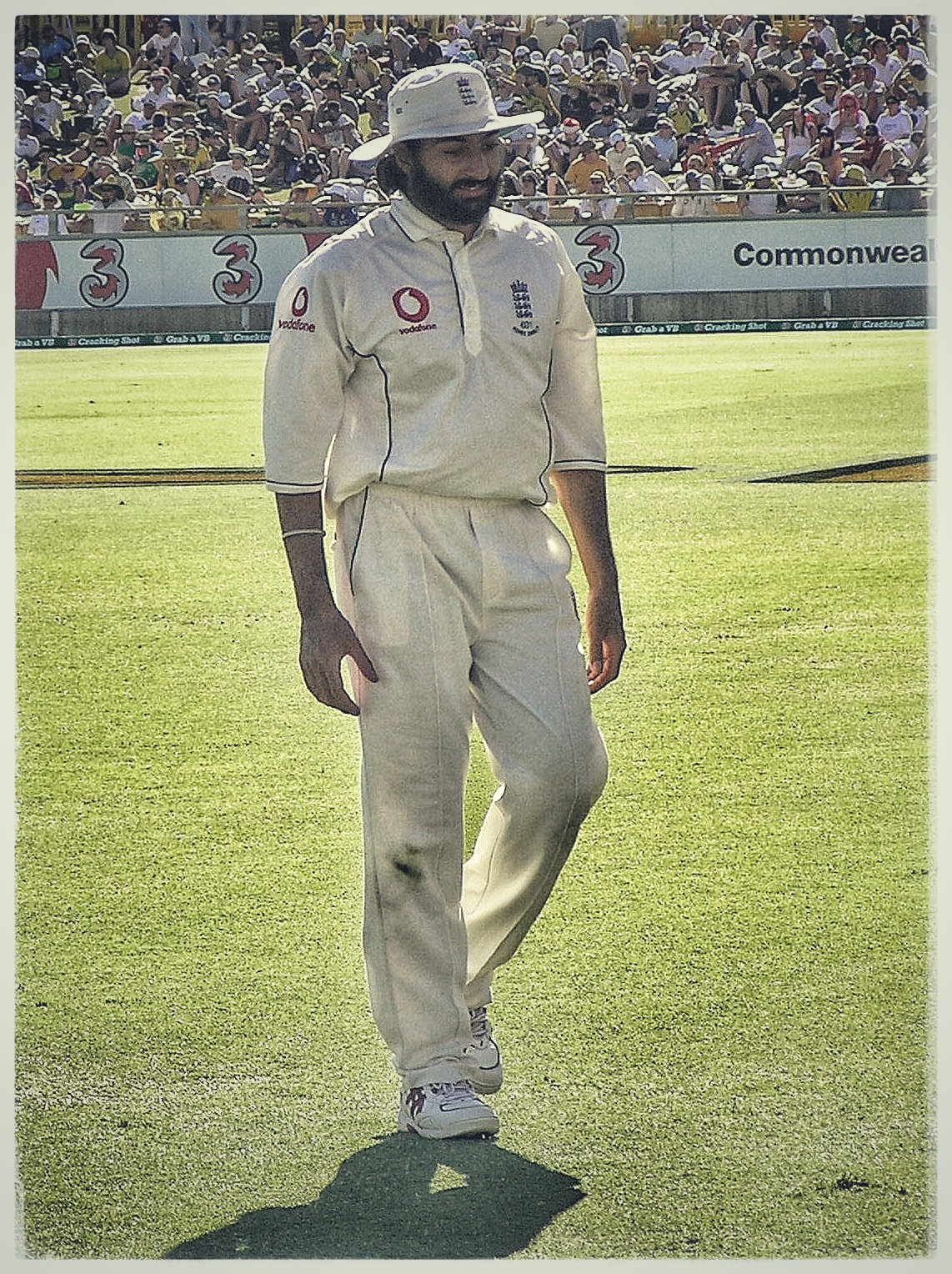

 Being Outside Cricket