The Story of Adelaide 2006 – Day 1

OLYMPUS DIGITAL CAMERA

Day 1

This will be an abridged version of the full one I will write in due course. But let’s go through what I remember of it and how the day panned out. It might be abridged but it isn’t far short of 4000 words. I hope the intro goes up before this, which is deeply personal and probably not what the blog is used to, but if not, never mind. So, take it away…. (UPDATE – It isn’t. When I’ve completed this, I’ll stick it on The Extra Bits, and possibly as a separate page above).

So let’s start the story….

After my Adelaide mate, who had my tickets, and who I would be spending the day with decided that a little wind up would be in order that morning, and told promptly by myself to eff off, all four of the merry men headed down to the tram stop in Glenelg. Shock number 1. The old trams had been replaced by something akin to the Croydon tramlink. That was disappointing, but I suppose modern functional operational stuff trumps nostalgia. The tram pulled up at the stop I remembered and we commenced the walk through the centre of Adelaide’s business district and across the bridge over the Torrens. We were very early as I’d been advised by Adelaide Exile that although we had membership passes, securing a useful seat would be first come, first served. So a full hour and a half before play I met with Matt, while the other three took their places on the grass banks in front of the scoreboard.

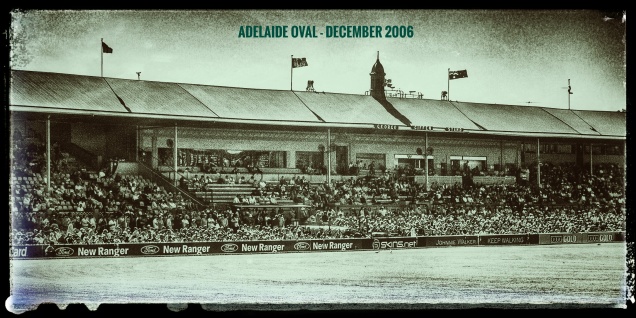
Matt was right about the seats. All those anywhere near central to the wicket were taken, with bags, stickers, papers stuck on them. As you will tell from the photographs, we were miles away and quite high up in the old members stand, and with a bloody great post in the way. This wasn’t the luxury I expected for seriously paying guests. Once we’d plonked the stuff down on the seats we would take, we headed back outside the ground for some breakfast, while the other lads got comfortable. After an hour or so, and just after we’d heard we’d won the toss while standing on the “hill” with the three lads (and a great big cheer rang out), we re-entered the member’s stand and hoped (and prayed) that we’d see a great day’s batting from England.

So what was I thinking about the test match? I will confess now that even at this point, I feared 5-0. This was because (a) I’m naturally pessimistic and (b) Australia do not draw test matches. There would always be a result, it seemed. Thirdly, the only way England could win the tests was to bowl Australia out cheaply, and the first test had shown little signs of that. On a more positive note, after an awful start at Brisbane, England’s batsmen had seemed to play themselves more into the game. I recall, as the previous piece mentioned, getting off the plane at Singapore and receiving a text telling me we hadn’t lost on Day 4! In fact, KP was still there in the 90s and Collingwood had also made a 90-odd. So we had two men who had got something going. Pietersen still had that aura about him, that made him a feared foe in the eyes of the home team.

So to me, aim number one was not to lose. I’m not writing this in hindsight, it was how I felt. The one thing England could not do was to go 2-0 down. Stop the bleeding, hold the fort, stem the tide, any other bloody cliche you could come up with. Also, while great store was put on the team batting first having the advantage, with the perception that Day 5 was for the spinners, and listening to every media pundit saying it, I thought back to the test a couple of years before where Australia racked up 500+ and lost, getting caught out in their second innings, not really knowing whether to stick or twist.

We also lived in an era with a stubborn old sod running the team. The clamour, after Brisbane, was for Monty Panesar to play, but it was clear as day that Duncan Fletcher didn’t want to play him, and so Ashley Giles kept his place. There were also calls for Chris Read to play instead of Geraint Jones, who had seen his batting go a little south, but I doubt that one was seriously considered.

England have named an unchanged XI for the Adelaide Test, a decision described by the BBC’s Jonathan Agnew as “disappointing but not astounding”. Australia are giving a late fitness test to Glenn McGrath – he bowled three overs in the nets about an hour ago – but the word from those in the know is that he’s in. – Cricinfo

England lined up with Strauss, Cook, Bell, Collingwood, Pietersen, Flintoff, Jones, Giles, Hoggard, Harmison and Anderson. Australia were unchanged with Hayden, Langer, Ponting, Martyn, Hussey, Clarke, Gilchrist, Warne, Lee, Clark and McGrath. The umpires were “Homer” Rudi Koertzen and “Slowhand” Steve Bucknor. The weather was glorious, the forecast for the entire test was excellent, and so to the game.
OLYMPUS DIGITAL CAMERA
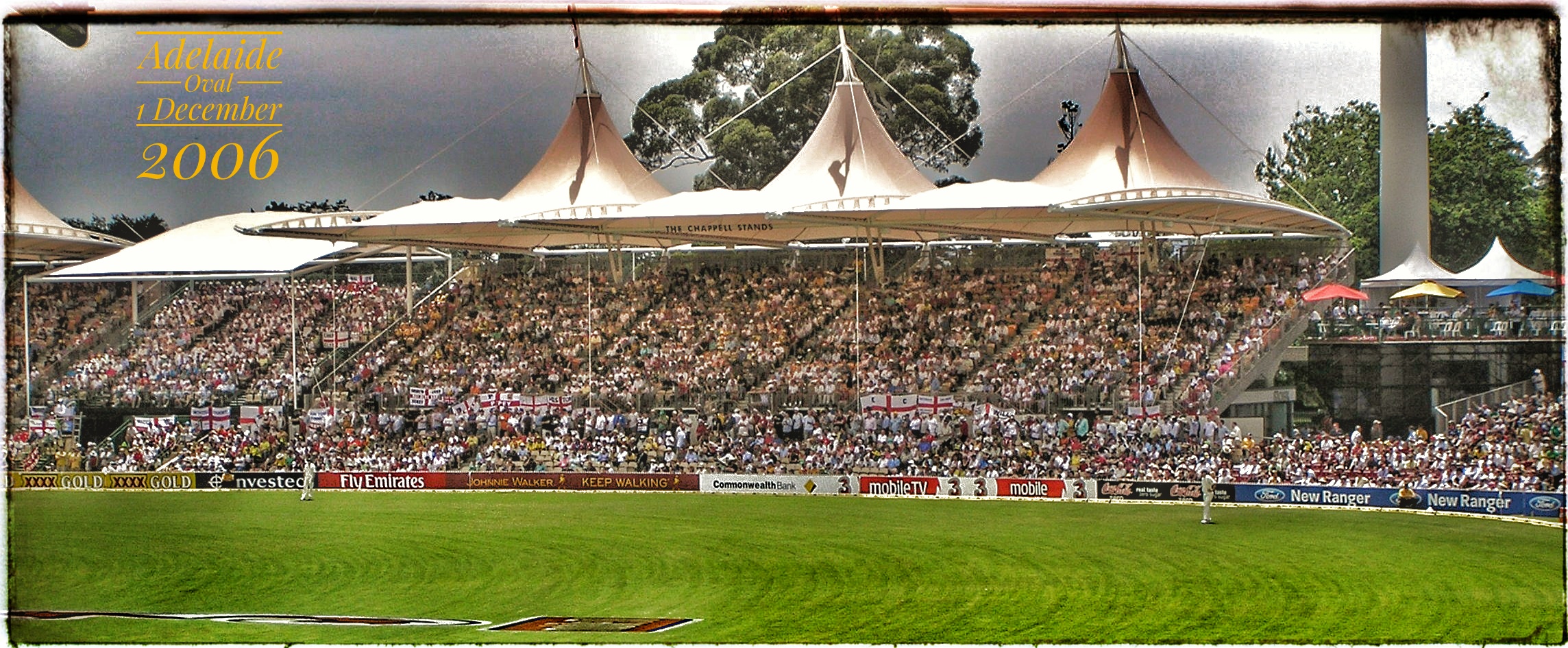
They Weren’t There The Last Time I Was There, And They Ain’t There Now….

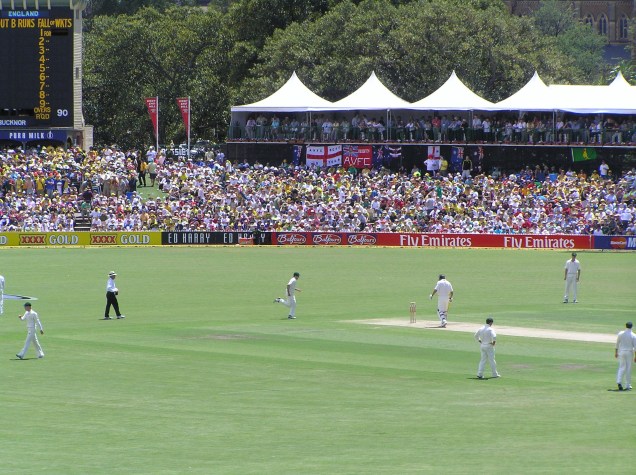
Strauss and Cook went out to open, amidst a packed house, and with palpable tension. England needed to post a score, and both of these players had not had a bad run in the test team since their debuts. Strauss, in particular, had given off distress signals in the first test, and there was still a question mark about Cook with the pace and pressure beyond anything he’d faced thus far (with all due respect to the Pakistan team that visited in 2006). The other question mark bugging me was how would my bloody camera cope with being in the shade, and miles from the damn action!
OLYMPUS DIGITAL CAMERA

OK at a distance, but the zoom might be tricky.
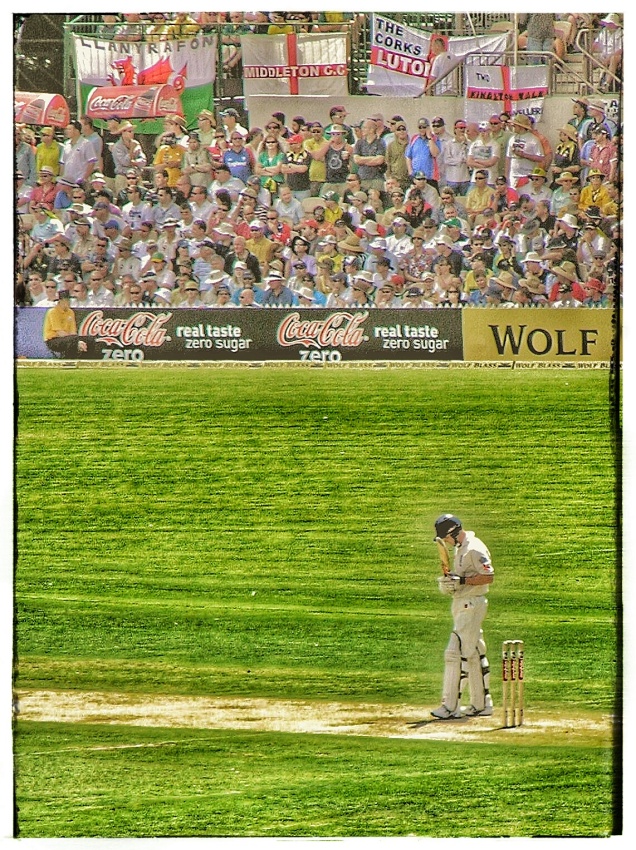
australia-2006-sim-1-163-02.jpeg.jpeg

The opening pace of play could best be described as sedate, except the tension was ratcheted up so high for England fans that sedate isn’t probably the best word. The first over was a maiden. The second over had a single from Cook. The third over had one run each for the openers. Steady, a little playing and missing, some tight bowling, but England keeping their heads. Six overs in it was 9 for no loss. The first boundary coming from Cook in the seventh over, with an edge through the 4th slip area (commentators since, most notably Nasser, keep saying gully and wide slips got a lot more than the narrower slips – 2010 may have been an exception with the new ball). The second boundary came in the 10th over with a back foot shot from Cook. At drinks, after 14 overs, England fans could partially exhale. England hadn’t lost a wicket, had 32 on the board, and despite a little bit of issue with Stuart Clark, had looked solid.

The relief lasted three balls.

Clark to Strauss, OUT, oh dear, shocking shot. Strauss expects one on off stump, instead it pitches on middle-and-leg and he tries to steer it into the leg-side but mistimes it completely and it carries to Martyn at short midwicket – and that’s Clark’s 29th wicket in just seven Tests. Yet again Strauss is dismissed on the leg-side

It was right in my eye-line if a bloody long way away. Strauss tried to tuck the ball off his legs through midwicket, a shot that had got him a ton of runs in his early test career, but got through slightly early, got ahead of the ball and it chipped to Damien Martyn at a wider mid-on. The video suggests that the cricinfo scribe thought Martyn was a lot closer than he was.

32 for 1. Not so good. Out came Ian Bell, who always gave the impression to me he was a bit flaky, and yet he’d been the man to stand up in the first dig at the Gabba. It took him two balls to tuck a lovely shot through the leg side to get him off the mark with a couple. Stuart Clark was looking threatening all the time, bowling at a decent nip, with accuracy and no little skill. Cook, in particular was finding it tough to make any headway. In the 21st over, Clark got his man:

Clark to Cook, OUT, gone. Cook flashes an off-drive at that one which nips across the left-hander’s off stump and gets a thick outside edge. A classic set-up: Clark had been working towards that one for a while. Click here for a picture

This looked ominous. 45 for 2 was a poor start on this wicket, and we’d looked not to impose our will on the game, but rather crease occupation. The play had been a little soporific if truth be told. I’d sat there wondering how we’d break this impasse, and I have to say I had little faith in Paul Collingwood being the man to do it. Sure, he was a redoubtable, gritty cricketer (before the Brigadier Block stuff – more of that later) but you thought he was the sort of England cricketer Australia have for breakfast. He might do something half decent, but he’d never be a game changer. Would he?

OLYMPUS DIGITAL CAMERA

Collingwood, first ball, away for two runs. Nice start. Clipped through midwicket. Shane Warne had come on just before the second wicket and had looked dangerous. The thing with Warne is he always looked dangerous. I don’t believe there has been a psychologically more frightening bowler for England spectators, let alone batsmen. What you have with Warne is the fear that any ball might take a wicket. He’d fizzed a couple past Bell early in the piece. But the remainder of that session was all about the survival game. England managed to do it, but not with any great security. 28 overs gone, 58 for 2.

I really don’t recall a lot of the lunch break other than going to the floodlight pylon on the scoreboard end of the ground, wondering if the two guys I met under there four years ago would return. They didn’t. Maybe they hadn’t signed up for the Australian Cricket Family. More of those two in the fuller version if I ever write it.
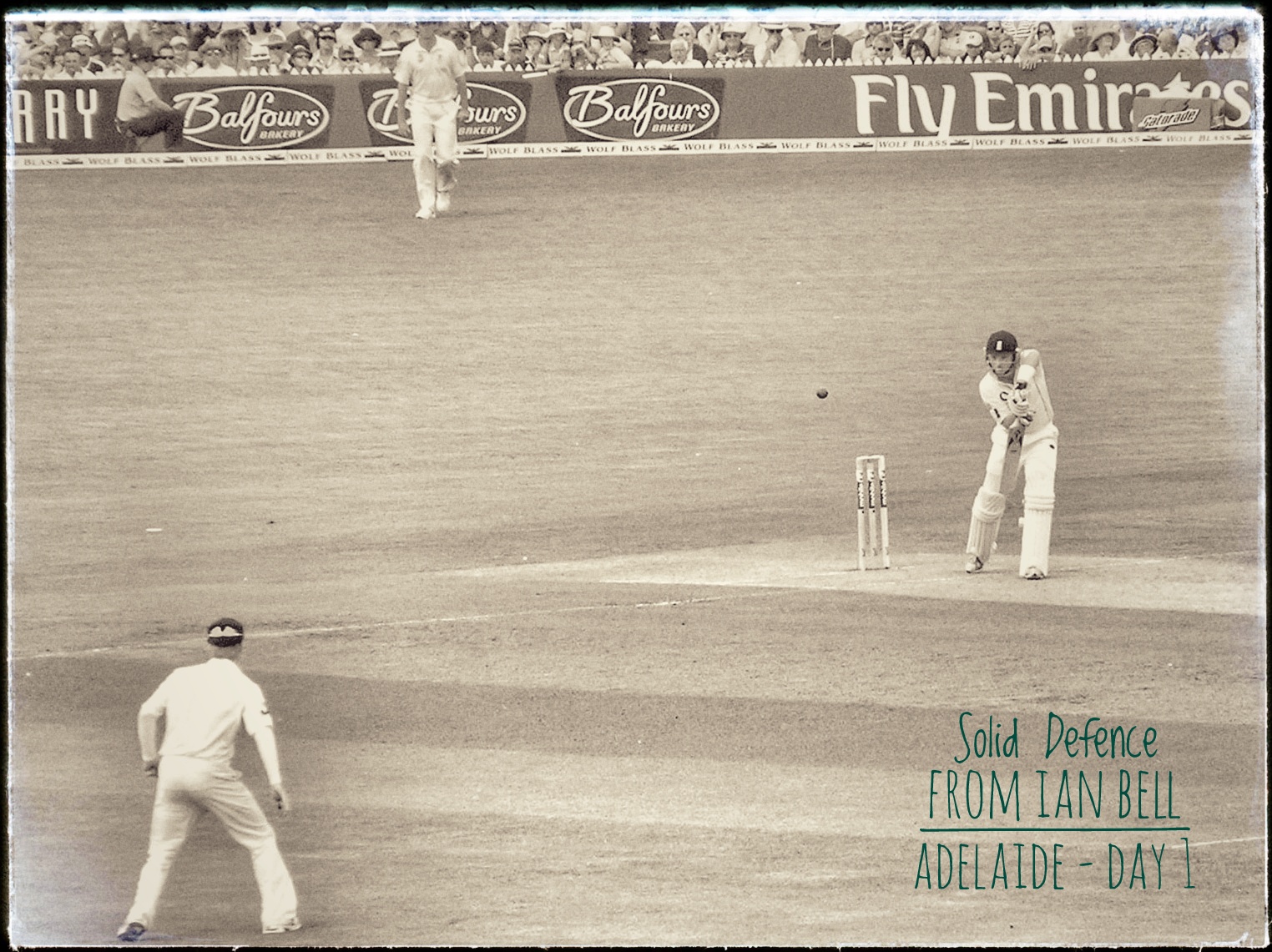
OLYMPUS DIGITAL CAMERA
Blocking For England

The afternoon session was, in many ways, the same as the first except for the fact we didn’t lose any wickets. But it was two hours of incredibly attritional cricket. The first boundary came five overs into the afternoon. Ian Bell got into double figures with his 62nd ball of his innings. 100 came up in the 43rd over, with Collingwood slightly more fluent than Ian Bell. But the wickets weren’t falling. I could pretend I have a lot of memories from this session, but I don’t. I know we’d moved from the high up spot in the gods to nab two seats nearer the front, and that the play was tense, but the chuntering about our run rate was quite noticeable among our Aussie colleagues. In fact, many of them were so turned off by it, they’d gone to the gardens behind the main stand for food and refreshment!

Tea came with England on 144 for 2 after 59 overs. The runs flowed more fluently in the second hour as the two England batsmen had their own private race, if that wasn’t too strong a word, to 50, Collingwood got there in the over before tea, and was immediately followed the ball after by Ian Bell. After their dilatory start, they had, at least, got the scoreboard ticking a little.
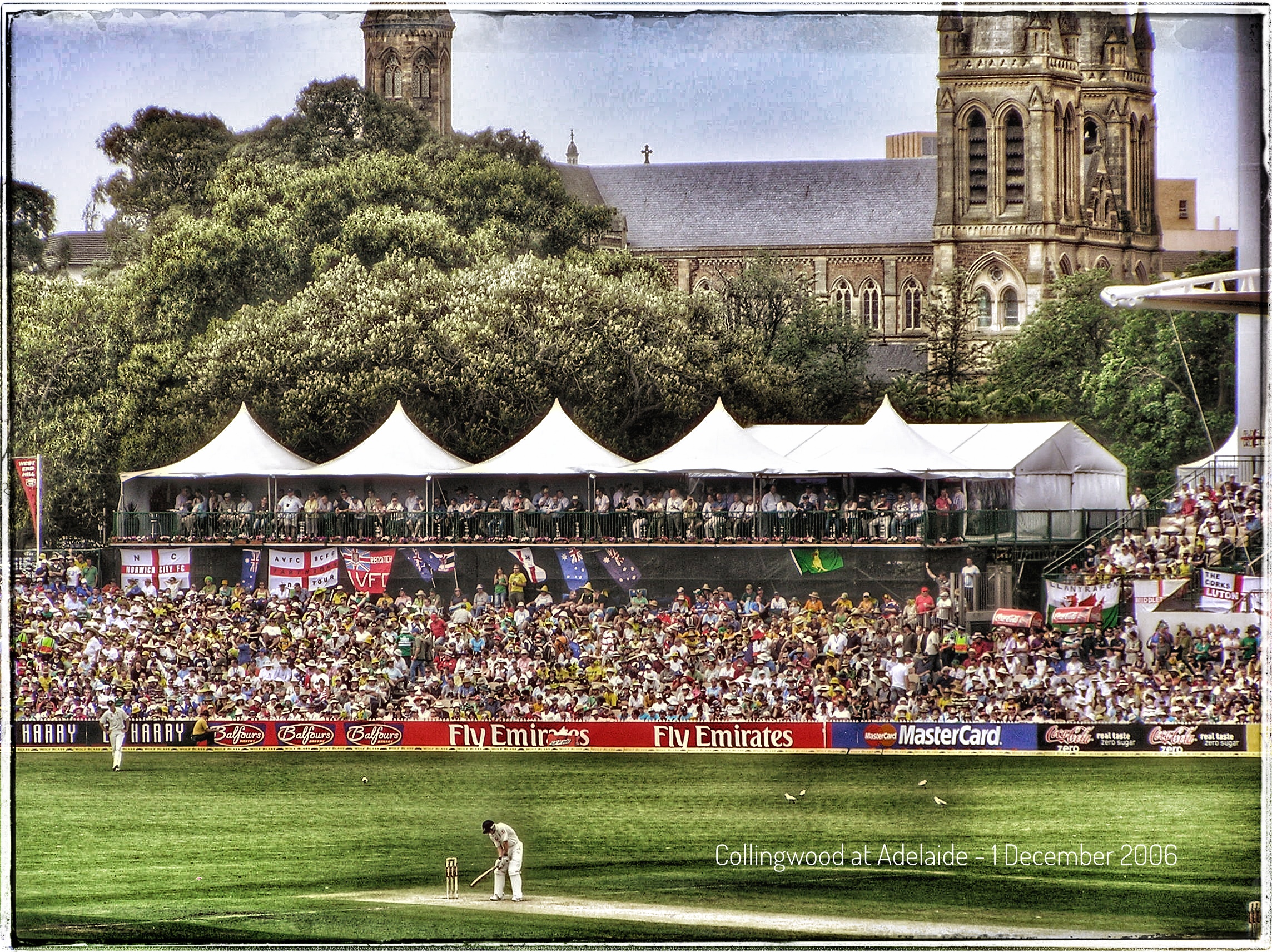
OLYMPUS DIGITAL CAMERA
A Lovely Ground, A Fighting Batsman

Tea saw some obstacle race between and England fan and an Aussie on the field of play, but then that took on added significance with the events of the following day.

Out on the field for the evening session, the game was very much in the balance. England would be pleased to have stuck on 99 runs for no loss since the dismissal of Cook, but under no circumstances had England come close to dominating. I thought back to Day 1 four years ago, where Michael Vaughan transcended everything and played a different game to anyone else. Hussain, at the other end, had been very one paced, but very determined. This time out, it was hard graft. Bell had taken 140 balls to get to 50, Collingwood 114.

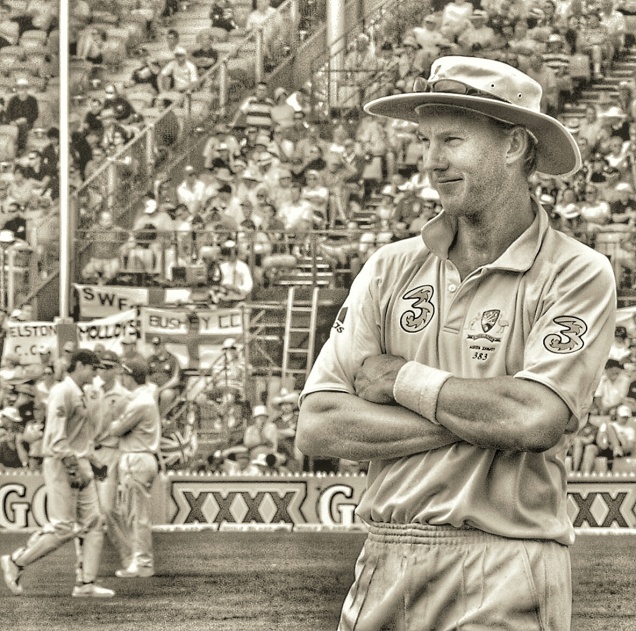
Six runs came off the first two overs after tea, but then what followed was pure Ian Bell. The start of the 62nd over by Lee, and saw Bell hit a full toss for four off the first ball, hit the next one for four too, and off the fourth ball of the over he went to pull a short one, and Bell just smashed it up in the air. Brett Lee took the catch off his own bowling, and did so despite Langer trying to get in on it.

Lee to Bell, OUT, the bouncer does the trick. Lee bangs it in hard and it’s on to Bell too quickly, who shapes to hook but merely sends the ball directly up in the air. ‘Miiine’ calls Lee, as he nearly collides with Langer, but there was nobody getting in his way as he grabs on easily. Lee’s face said it all at he ran into bowl that one, and Bell’s face tells a story, too, for his moment of impetuosity

Now I am going to confess here, if you didn’t already know. I was not an Ian Bell fan. I’d seen his debut at The Oval and thought “wow, a talent. A real talent”. But all I saw afterwards was flattering to deceive. Great shots, stupid dismissals. Hard work, chucked away. The sort of bloke who if he went back to county cricket, would dominate easily. Maybe a Ramps for the easier generation. This was pure Bell.
OLYMPUS DIGITAL CAMERA
Brett Lee, Satisfied….

The position was precarious, at 158 for 3, as in came Kevin Pietersen. There was absolutely no question I would be missing any of this. By now KP had become the main man for me, even if part of it was a parody, a wind-up. The ooohs and aaahs as he played were a joke with my mates. It was because he was so un-English in his approach that I liked him. None of this stodgy old fear, but a mission to attack. Ian Botham had it when he played for us, and that’s what I liked about him. KP harked back to that sort of thing.

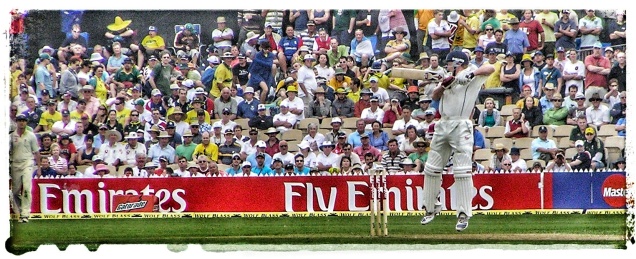
Like his second ball. After a solid defensive shot to his first, Lee dug a ball in short for KP’s second ball. Pietersen stood tall and dismissed it through mid-wicket for 4. It was bowled at a mere 93 mph! In one shot you realised we had a different player playing a different game. He continued fluently, taking a boundary off one of the first balls he faced off McGrath, all with that front foot game and confident shot making. Collingwood played his own game, at his own pace, but just kept the score ticking over. Not flashy, as we know, but something to truly admire at the time. I have to say I was waiting for it to end, but he was also a remarkably difficult batsman to get shot of when he got in. A nudge there, a slap there, a nurdle there, a clip here. I don’t think his batting can be put into poetry, or some florid prose that gets awards, Collingwood was an English batsman adapting to Aussie conditions on the fly and doing very very well. If we had money on who would be struggling, we’d have put it on him.
OLYMPUS DIGITAL CAMERA

Pietersen, meanwhile, was looking very fluent. It was as if his reaction to a precarious position was to take the front foot and look to take control. It wasn’t reckless, but it was pure skill. He wasn’t going to let Warne dominate, and with the score in the 180s, he belted the legspinner over long off, dancing down the pitch in so doing. We simply weren’t used to England batsmen having the guts to do this. This just did not happen. This man was different. He may have lived dangerously at times, but among all England batsmen he had the best gameplan to their most lethal weapon.

OLYMPUS DIGITAL CAMERA
A More Circumspect Kevin Pietersen

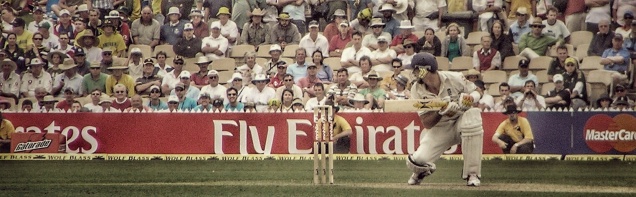
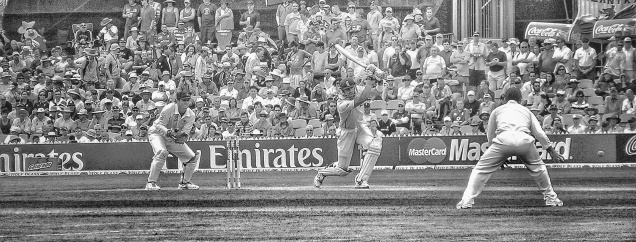
Drinks came at 205 for 3 – Collingwood on 73, with just four boundaries, and KP on 26 off 29 balls. Thoughts now were that in the 18 overs remaining, could Collingwood get to 100? However, it was Pietersen taking to Warne that had me smiling. Rocking back to smash him through the covers, then smacking one finer the following ball (of course I’m using cricinfo to prompt me), and now the thought was how long would it take for him to get 50. Of course, the 230 in a day pace was being accelerated, but as a true pessimist, I just wanted the day over with three down and no risks!
OLYMPUS DIGITAL CAMERA

Pietersen wasn’t slowing down, and had the Aussies calling him “the ego” according to cricinfo. The final hour saw England dominate proceedings as the heat of the day took its toll and the wicket was well and truly flat. The second new ball produced no reward, and to some consternation wasn’t taken as soon as possible. Michael Clarke got a bowl, and looked quite promising, but he was also the bowler when KP brought up his 50, off 66 balls. I was mildly content. But the thing that worried me always watching him was the potential to let that ego get slightly out of control, but thus far, he’d seemed relatively under control. You might say that the 50 was inevitable. From the outside you might say the hundred looked it too.

OLYMPUS DIGITAL CAMERA
50 Up

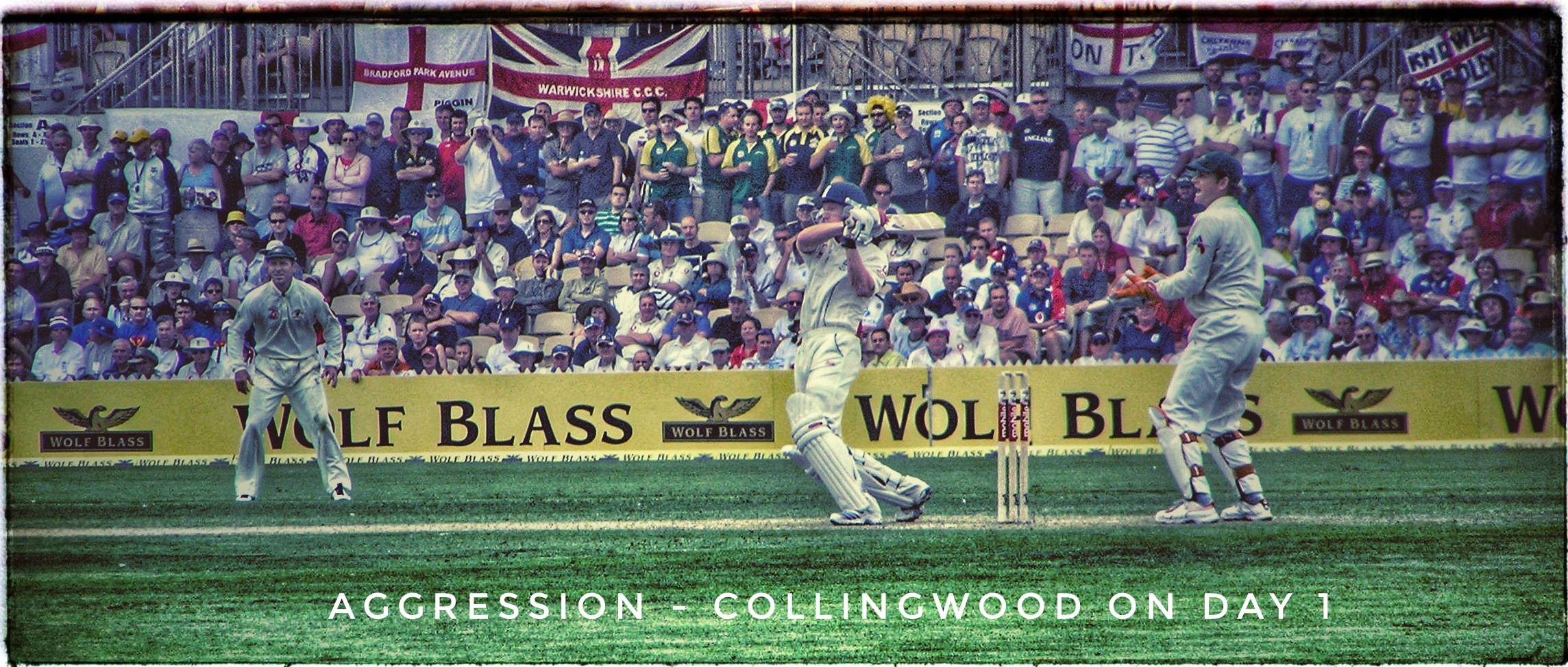
The new ball was taken four overs after it was due, and like any England fan I was working out whether Collingwood had enough time that night to get to three figures, while hoping the day would end there and then. I took a picture at nearly 6pm with the score 257 for 3, and Collingwood on 91. Colly got stuck there because KP was increasingly dominating the strike. In the third to last over Collingwood smashed a four off a no ball to move to 95. This was on the edge stuff now. We’d seen Collingwood get out in Pakistan being overly aggressive in the 90s. Could he rein himself in? Or should he go for it? I was getting worried. It’s not as if he had a calming influence at the other end to keep his head straight! No concern, as he took a single later in the over. Now a boundary away with two overs left.
OLYMPUS DIGITAL CAMERA
KP on the Drive – Day 1

Wily Stuart Clark bowled the penultimate over, and played the tempting game, hanging it just outside off stump and shaping the ball away as much as possible. Collingwood resisted temptation. We all wanted him to. Clark had been the best seamer all day and the best at the Gabba (what I’d seen of it). With the penultimate ball of the over, Colly secured a couple to move to 98, but he did not have the strike for the last over after a defensive shot off the last ball. Now this put his fate into KP’s hands…. would he try to give him a single to let him try for the ton?
Collingwood attacks!

The last over was purgatory, and one ball is seared in my memory, and pretty much anyone there. KP had tried, with little effect and a little risk, to try to get Collingwood the strike, but it wasn’t happening. The second to last ball from Brett Lee was a little short, KP went for the shot, didn’t get to it. hit it straight up in the air…

“You fucking idiot…..” I said, watching the ball soar in the air having got the shot in question on camera. Fear, loathing, despair…. but then you will the ball away from fielders, looking in forlorn hope that this would not go to an Aussie hand. Wait…it might not. This isn’t a dolly….It’s a knackered McGrath after hit. Hit the ground, HIT THE FUCKING GROUND.

And it did. And I still called him a fucking idiot. After a puff of my inhaler.
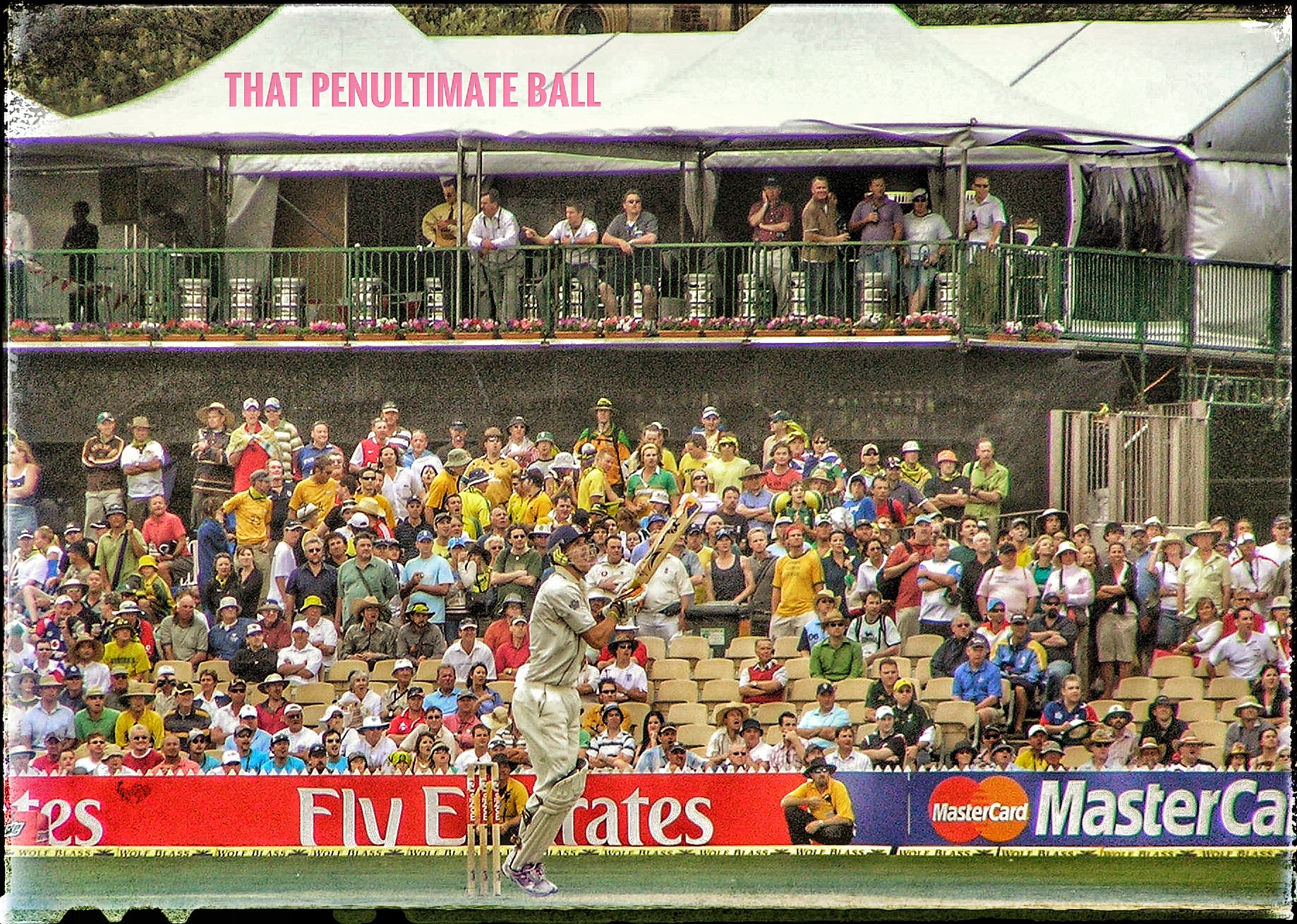
You "Bleep Bleep" Idiot...
You “Bleep Bleep” Idiot…

One run was taken and Collingwood was on strike for the last ball. Would he be our Steve Waugh / Sydney moment. The answer was no. A fall ball was blocked out, and England finished the day on 266 for 3.

The reaction as the England players walked off was one of great relief, a little pride and not so pessimistic. We are in this series. We had our luck today but we rode it and we are three wickets down on a good wicket, with four days to go, two players set – Collingwood two from a ton, KP on 60 and hopefully threatening a lot more – and for the first time I could recall, we could hang 400 on the Australians in the first innings of a match in their backyard.

I would be remiss not to mention my companion for the day, and indeed, the rest of the test. Matt was a Millwall fan who I “met” via a message board and who set me up with my tickets. A top bloke he had moved to Australia to be with his Missus, and when divorced, stayed there to be with his kids, although he’d love to come home to Tunbridge Wells. He spent the day rebuffing every Aussie jibe at him, me wondering how he didn’t get his head stoved in in doing so, but knowledgeable about the game and patient with my stupidities. Like my co-writer Chris, he’s a bloody wicket-keeper. Must be something about me attracting these loons (our club keeper was on this tour as well).

We ended up in a hotel bar, might have been the Regency, and had a couple of beers before retiring to the bar in Glenelg, where we engineered a reunion between a former club man of ours and our keeper, who hadn’t seen each other in a good few years (we’d met Mark four years ago – we being me and Sir Peter, who you’ll become familiar with). It had been a lovely day, a successful one for England, and yet we’d had a similar day four years before. But on that day our dominant performer lost his wicket with the last ball. Today, our dominant player had got away with it. With KP, it just felt different.

Day 2 to follow. I hope you enjoyed this piece. I will try to keep up as the days go by, but it’s a massive task, and it is testing my memory! A true labour of love.


On This Day – 30th November

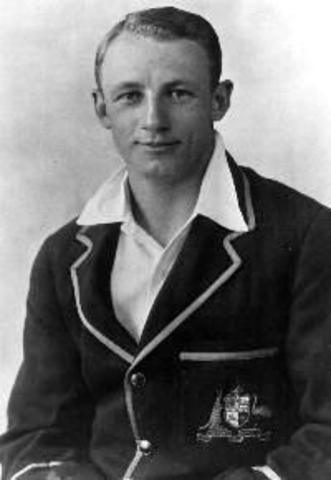
I won’t go into great depth for the 30th November “On This Day”. I’ve put together part of my epic plan for another piece, previewing tomorrow, as an On This Day special, and so energy is a bit scarce. But the 30th November is a very important date in the cricket calendar because it marked the debut of a very special player.

Image result for don bradman debut

Yes, on this day Don Bradman made his debut (in 1928).

http://www.espncricinfo.com/ci/engine/match/62562.html

He didn’t get to bat until the 3rd December, as England batted most of the first two days and the third was a rest day. He made 18 in the 1st innings, dismissed by Maurice Tate, and 1 in the second, by Jack White. England ended up winning a close, hard fought contest by 675 runs!

UPDATE – I forgot it was also Bert Ironmonger’s debut. Cricinfo suggests he was 45 years old when he made his debut. But if his birthday was in April 1882, and the match was played in November 1928, that makes 46, doesn’t it?

India vs England: 3rd Test review

As it turned out, England probably did a little better than some might have expected, but the end result was entirely predictable.  To have made the game interesting, another hundred runs or so were needed, and that was would have required something spectacular.  Even then it probably wouldn’t have been enough on a surface that didn’t especially deteriorate, and with a bowling attack that have at no time looked like skittling India.

There was the odd bright spot, Joe Root batted well, although he once again fell between 50 and 100, a habit he needs to break sooner rather than later if he really is going to be as good as he has threatened to be, while Haseeb Hameed scored an enterprising unbeaten 50 from number 8, batting that low due to a finger so badly broken he is to return home to have an operation and a plate put into the bone.  There has been much discussion around the decision of England not to send him for a scan immediately, but to wait.  It’s one of those where the logic behind it – to not make it clear to India that it was badly broken in advance of him batting – is open to question in terms of the player’s welfare, but the rationale can be partly understood, and it mattered little in the wider picture.  The team medics would have had a pretty good idea how badly it was hurt, and it’s a side issue to the bigger problems England have – except in the sense that he is unquestionably a loss to the team.

What it did explain was the three net sessions yesterday; Hameed attempting to amend his technique to find a way to bat with the injury.  He emerges with nothing but credit, for he appeared in little discomfort in the middle and did a fine job in trying to drag England up to a total that with a very fair wind they might have defended.  Indeed, he apparently had to be persuaded to return home to have it treated, insisting that he wanted to play the last two Tests.  In a series where the collective batting has been little short of dismal much of the time, he’s an unquestioned bright spot – even if some of the praise has gone beyond reasonable and into the hyperbolic.

Aside from that Woakes scored runs, but it was never likely to be enough.  Any highly optimistic hopes of an extraordinary win were heightened when Woakes himself dismissed Murali Vijay with seven on the board, but it was plain sailing thereafter, with Pujara’s late dismissal allowing national hero Virat Kohli to come in for the denouement.  Parthiv Patel completed a fine comeback match with an unbeaten and rapid fifty.

For India, the series is going swimmingly, only the form of Rahane offering up succour for England.  In itself, that is a lesson for those picking on the latest England victim, for Rahane has had a miserable time, but the rest of the team have performed more than well enough.  Blaming one player for all the woes of the batting is ridiculous, as many did when Duckett was dropped, for most teams have one player out of form at any given time.  It doesn’t for a second mean that changes shouldn’t be made, but it does mean that focusing on one doesn’t excuse the others when the side fails to make runs.

If it is little surprise that India have the superior spin attack, it is more of one that their seamers have consistently outbowled England’s.  Only Ben Stokes can be considered to have bowled well, although his five wickets in the first innings comprise all but two of those he has taken in the three Tests to date, so he has hardly been exceptional throughout.  Woakes was below par here, though doubtless playing, being dropped, then playing again does little for his consistency, while James Anderson looked entirely innocuous.  This may well have something to do with only bowling six balls in the entire match that would have hit the stumps, for nothing reassures a batsman so much as knowing that he only needs to play at the ball when he wants to score runs.  Anderson was economical alright, as is often the case when players leave the ball alone most of the time, but did not threaten a wicket.  Whether this is a deliberate tactic on his part is impossible to know, but it needs to be addressed urgently.  Mistakes are created when the batsman is unsure what to expect, at the moment they know all too well.

Stuart Broad may well return for the next Test, and at the moment it should probably be Anderson who makes way based on this match, though that is unlikely to be how it pans out, and given his record, probably rightly.  England need to work out how to take wickets, and Anderson is obviously more than capable.  But if he persists in a safe line outside off stump then it’s nothing other than a waste of a seam spot.  Harsh indeed, for whatever the criticism that can be levelled here, Anderson is and has been an outstanding bowler for England.  Which is exactly the reason for the frustration.

Cook and Bayliss were honest enough to say afterwards that they had misread the pitch, with nothing like the amount of turn on offer late on that they had expected.  With all mistakes, it is a matter of whether it could have been foreseen in advance, and few criticised the three spinner approach based on it not turning enough before the match started.  The lack of assistance meant that England had one spinner too many, with Batty and Moeen sharing light duties.  However, Mumbai is much hotter, and the pitch there expected to be more conducive to spin – it would be a serious mistake for England to replay this match and drop one of them on the basis of what happened here.  Conditions may well be different, though whether two or three is best is open to debate.  If one does go, it will probably be Batty.  His return to Test colours hasn’t been an unqualified success by any stretch, but he is what he’s always been, a solid pro who doesn’t let anyone down.

There is latitude however, simply because England have a six man attack.  In itself, this is a good thing, made possible by Stokes and Ali being frontline batsmen and Woakes and Rashid not too far off the all rounder category either, in other words, England aren’t specifically picking six bowlers as such.  Rashid has been excellent all series, and has taken two thirds of all the wickets to fall to bowlers.  Moeen has been adequate as back up but no more.  Rashid is a match winning bowler, Moeen is a useful converted part-timer who has at least done better than either of the other specialist England finger spinners on this tour, and is probably the best England have.  But while Rashid has more than contributed his fair share, for the spinners to really have a chance to impact a match, they require runs on the board to defend.  Which brings us neatly on to the batsmen.

In England’s two defeats this series, they have failed to reach 300 on any occasion.  While last time around they certainly had the worst of the conditions after losing the toss, the same can certainly not be said for Mohali. They won the toss, the pitch was good, and everything was in their favour.  The match was lost in the first innings, indeed was lost on the first morning, with a collection of poor shots aiding India in dismissing England for a woefully sub-par 283.  From there, even with a spirited fightback on day two, the match had a sense of inevitability about its ultimate conclusion.

It is the failure to be disciplined, and the failure to build partnerships that is the major problem.  Jonny Bairstow is top of the batting averages this series, but on each occasion he has come in with a rescue job to do.  That he has managed to do so on a couple of occasions is to his credit, but it doesn’t change the course of the game, it merely keeps England in the match.  Some batsmen have made a big score and done little of note apart from that – Cook and Moeen in particular.  In the latter case, his tendency towards feast or famine is well known, though it’s an especially fine effort this time around, in the former, without him having a strong series England were always going to be in trouble.  Cook’s record this series aside from the hundred is not materially worse than anyone else’s, the difference is in how critical his role is to England being competitive, and in the first innings as well.  In this match, appearing totally at sea to the spinners was a startling sight – he always has been a fine player of slow bowling.

And yet none of the batting order as constituted in this game are having a terrible time of things.  The left handers are struggling against Ashwin, which may cause some cogitation when considering Hameed’s replacement, but all in all they are scoring runs to a reasonable degree.  What they are not doing is putting it together at the same time.  Cricket is a mental game, and in many ways batting is about mentality more than any other discipline.  The problem of not building partnerships is not a new one, the same problem has been apparent over the last couple of years.  For whatever reason, England seem unable to consistently build totals, even if the individuals themselves are making scores.

What should be a major worry, with England needing to win both remaining matches to share the series is that no pitch so far has been a raging turner of the type they struggled on in Bangladesh.  Indeed, given how the tracks have played, England ought to have been comfortable with them, for India’s groundsmen have been exceptionally fair.  It’s a psychological issue rather than a technical one, for apart from the unfortunate Duckett, no player has looked out of their depth on this tour, they merely keep finding often daft or lazy ways to get out.  In some ways that’s a good thing, for the claim from Cook that England are not that far away from India is not completely unreasonable, but the margin of defeat in the last two games is so large there’s only a so long before such a claim becomes absurd rather than hopeful, and it’s pushing it now.

There are two spare batsmen on this tour, Duckett and Ballance.  It appears neither of them is selectable, which begs the question as to what the point of them staying on the tour is.  There is the possibility one of the batsmen from the Lions in the UAE could be called up, with the debate centring around whether that should be an opener.  Joe Root could move up to open with Cook for example, and with England so often being 20-2 the appeal of putting the two senior players out at the start and getting them to take responsibility for the innings is clear.  If England went down that path, then Sam Billings may be the favoured option to slot into the middle order.  If so, at least there would be no concerns about Bairstow hurting himself keeping wicket – there’d be two other players who could take over, quite possibly for the first time in Test history.

Over the three Tests to date, it’s not impossible to see England winning the next match if they get it right, but the trouble is that over the last two games, they’ve not shown that much evidence that they can. India is not an easy place to tour, as the repeated wallopings handed out to visitors have tended to show.  England might play well and still lose, such is the challenge in front of them.  But it would be nice if they did, they’d then at least have given themselves a chance.


On This Day – 29th November


Image result for jack richards surrey

If yesterday’s On This Day reflected a truly awful day at the WACA, then today’s version is much more upbeat. We journey back 30 years to the “Can’t Bat, Can’t Bowl, Can’t Field” tour, and Day 2 at the Perth cauldron. England had had a magnificent Day 1 to reinforce their 1-0 lead in the series. Resuming at 272/2, with Broad Senior on 146 and Mike Gatting on 11, England looked poised for a mammoth score. But not all went according to plan early on. Gatting went with three runs added to his and the start of play score, and although Gower and Broad put on a 58 run stand for the 4th wicket, both Broad (164) and then Ian Botham (0) went in quick succession.

Enter Clifton James Richards, Surrey legend, and second test cap man. This was to be his day, as he and David Gower took the Aussies apart on a sound batting deck. The partnership was to tally 207 runs, when Gower was dismissed for another brilliant century (136), and Jack Richards was the last man out for 133, as England declared on 592/8. England then had time to bowl a few overs at the home side, and Dilley sorted out David Boon for 2, to leave them 19/1.

The match would subsequently be drawn, as Australia passed the follow-on score, England batted quite curiously on Day 4, and never looked like having enough time to bowl the hosts out on Day 5.

The Almanack reports on Day 2 as follows:

Australia lost their faint chance of recovering lost ground on the second morning when, shortly after Gatting had cut C. D. Matthews to gully, Broad was dropped by Ritchie at third slip in Lawson’s best spell of the innings. Broad added only 15 more before Reid had him caught at the wicket, his innings having spanned 435 minutes and included 25 fours; but by then Gower, given the easiest of starts by C. D. Matthews with two loose balls on his legs, was in full stride with 35, pulling and off-driving with severity and perfect timing. After Botham, pushing on the off-side, had been caught off Reid at second slip, Richards in his second Test played with the such assurance that Gower was content to let him dominate a sixth-wicket stand of 207, during which Richards became the first Surrey player since J. H. Edrich to make a hundred for England in a Test. They had been together 212 minutes when Gower (277 minutes, nineteen fours) was caught at cover after completing his sixth hundred against Australia and his second at Perth. Half an hour later, with a declaration imminent, Richards (sixteen fours) was caught at mid-off, 2 runs short of the highest score by an England wicket-keeper against Australia – A. P. E. Knott’s 135 at Trent Bridge in 1977. Australia’s attack, with the exception of Reid, was short of both accuracy and penetration, Richards relishing especially the off-spin of G. R. J. Matthews in a four-hour innings well attuned to England’s aims.

They were fun days…. Tomorrow we go back into time. A fair old way back, but a very significant one.

All the above and more can be found here..

India vs England: 3rd Test, Day Three

If yesterday was a good one for England, hauling themselves back into contention having wasted first use of a flat pitch on the opening day, then today was the antithesis.  It’s all very well to lament the advantage India had in the last match in winning the toss, and there’s no question at all that it very definitely was an advantage.  But you have to make use of it.  India did and England didn’t.

Day two was certainly a recovery, and at the start of play there would have been hopes that the damage done could be contained; bowling India out fairly cheaply would have evened up the game and allowed England a chance to win the match.  As it turned out, it wasn’t quite a horror day, but it wasn’t too far off.

Ashwin, Jadeja and Yadav all cashed in on a surface that remained placid, with the England bowlers unable to get much purchase.  Eventually, they reverted to attempting to bowl dry, with a degree of success sure, but by then the damage was done.  Ben Stokes and Adil Rashid were once again the pick of the bowlers, the former ultimately picking up a five wicket haul with the two of them taking all nine to fall to bowlers.  The temptation will be to blame the bowlers, which would once again be an example of making them responsible for the failures of the batsmen.  417 is far more than they would have felt India would score in their bleakest moments, but it’s still nothing more than around par for the conditions.  Bowling dry can work sometimes, but with so much time remaining, India were perfectly content to accumulate, while England looked a team out of ideas.

If a deficit of 134 was about 100 more than England would have hoped for, a difficult position was not beyond redemption.  The pitch remains flat, with little spin and little movement.  The occasional ball is keeping low, but nothing more than could be expected on day three.  There is the pressure of the situation to take into account, certainly, and India’s spin attack is overall better than England’s.  This is no surprise, and is as it should be given the native conditions in the respective countries.  Rashid has been excellent, Moeen and Batty a bit limited, though it’s worth noting that kicking stool Moeen has over twice as many wickets this series as specialists Batty and Zahari combined.  Moaning and complaining about them is as pointless as moaning and complaining about the conditions themselves.  What do those whining expect?  A sudden superstar off spinner to appear over the horizon?  There aren’t any, and while a case can be made that others represent a marginal improvement (Adil Rashid is rather more than that – not that it would have been apparent from the slating he received from those who should have known better), it doesn’t mean that these matches would be radically different, and nor does it alter the truth of the matter that England’s problems in this series are down to the batting not the bowling.

Being so far behind didn’t mean England were completely out of the game, they just needed to bat well to give themselves some kind of chance.  And once again they fell short.  Cook is a terrific player of spin bowling and has been throughout his career, and it is only two Tests ago he scored a fine hundred.  Yet he’s also a player who can look thoroughly out of sorts in no time, and here he was all at sea more or less throughout his innings, twice surviving reviews before being bowled through the gate by Ravi Ashwin.  Cook is getting stuck on the crease, neither properly forward nor back, and feeling for the ball.  In this case he was beaten by the flight and simply played down the wrong line.  For England to be truly competitive in this series they needed Cook to bat exceptionally well.  It’s not worked out that way.

With Hameed injured, Cook’s opening partner was Joe Root, and despite some issues with his back, he proved to be the only light amid the gloom of an entirely expected clatter of wickets.  After Cook’s dismissal it was Moeen Ali’s turn.  There’s a curiosity that should come as a surprise to no one, in that Moeen tried to use his feet, was thoroughly beaten in the flight by Ashwin, and chipped it to mid on.  Not a great shot by any means, but the usual queue of suspects lined up to attack someone for apparently being irresponsible when they get out using their feet.  Given how thoroughly stuck England became against Jadeja and Ashwin in particular, almost strokeless at times, the intent was correct, if the execution was flawed.  Immediately, Moeen was heavily criticised.  The problem is this – it’s that a player who hasn’t exactly had a great tour with the bat but has scored not far off a thousand runs this year with an average in the mid forties is once again being singled out for criticism based more than anything on the fact that he was out to an attacking shot rather than a defensive one.   Cook’s shot was at the very least just as poor, and probably worse, but it was a defensive one, and therefore given a free pass.  Any batsman will say that they hate being out to a defensive shot most of all, for it is a concession of defeat to the bowler.

With Moeen’s dismissal in came Jonny Bairstow, a mere 20 overs after he’d stripped off the wicketkeeping pads.  It certainly doesn’t follow that his failure to score an unbeaten triple century is due to that, but there’s a reason keepers tend not to bat high up the order – it’s difficult.  He looked decent enough though, and was undone by one that kept low from Jayant Yadav.  Bairstow did pretty well to get an edge off it, and no blame can be attached to him.  Where he was unlucky was in Parthiv Patel taking an outstanding catch behind the stumps.  It’s been a regular on here to whinge about the cluelessness of most commentators bar the obvious exceptions when it comes to the life of the man with the gloves.  “Good catch” was about as far as the praise went, although James Taylor in the studio afterwards certainly got it, making up for the lack of effusiveness in the comm box.

The reason why the catch was so good is because it was low.  It might not seem to be a big thing, as coming up with the ball is an article of faith amongst all wicketkeepers.  The trouble is that all human beings anticipate based on what they expect to happen rather than what actually does.  It’s why batsmen edge or miss the ball when it seams, spins or doesn’t spin – anything different to what he might expect.  When coming up, it’s far easier to cope with additional bounce, as that’s the direction of travel for the hands anyway.  If the ball keeps low, then changing direction is nigh on impossible given the miniscule time between noticing the bounce and having to catch it.  As a keeper it always amused to be praised highly for taking a catch stood up where it bounced more than expected – it looks magnificent, but it isn’t that special a catch.  Taking one low down like that is a truly fabulous piece of technique.  Patel will be fully aware of how good his catch was, and his celebration made it clear that he rated it.  It’s a shame not too many others do, for it was better than any number of spectacular diving one handers.

Stokes was the final man out today, again beaten by Ashwin who has bowled beautifully.  He’s simply been too good today.

It’s hard to see how England will get out of this. It’s not easy to see how they will even make India chase more than a nominal total.  It’s possible, for while Root is in all possibilities are there.  But it will require him to get a very large score indeed, and at least one of Hameed and Buttler to do very nearly the same.  Possible doesn’t remotely equal plausible, and the expectation has to be that India will go dormie two some time in the middle of day four.

Day Four Comments Below

On This Day – 28th November

There are first days, there are bad first days, and then there are really, really bad first days. Taking you back to this day in 1998, England had a weapons grade awful first day at the WACA in Perth. Having got out of jail with the rain in Brisbane, England travelled across country and promptly collapsed in a heap on the first day of the Second Test.

http://www.espncricinfo.com/ci/engine/match/63815.html

I think I’ve said this a few times on this segment, but you really do wonder what BOC would have been like on days like these! England lost the toss and Mark Taylor stuck us in to bat. 39 0vers later, England were dismissed for 112. These were pre- the pace like fire days of Brett Lee, but the Aussie attack of McGrath, Gillespie and the relatively unheralded Damien Fleming ran riot. We didn’t have to worry about, Warne, because he was injured (and brought back for the most blatant homer wicket in recent Ashes history at Sydney – they have no right to moan about The Oval in 2009, but Australian media stars do).

Image result for damien fleming

Butcher started the collapse, and within another seven and a bit overs, Atherton and Hussain had joined him. Stewart top scored with 38, but was fourth out at 62. Most others perished in a feeble manner as Fleming took 5/46.

Australia didn’t exactly take pity on England, finishing the day on 150 for 3. Taylor made 61, Slater 34 and England looked for mercy. This was the day one Alex Tudor made his test debut, and he would make his impact the following day. It would matter little. England lost by 7 wickets in three days.

Personally, I remember waking up and seeing the Aussies were batting and thought that we had been given a chasing seeing as Slats and Tubs were at the crease. Then I saw the graphic with England: 112. Joy. We were quite used to it in those days.

On This Day – 27th November

Image result for phillip hughes

Before I do the usual on this day piece, we must also recall something that was so sad, so utterly terrible, on this day. Two years go we all woke (in the UK) to the terrible news that Phillip Hughes had passed away after that awful incident a couple of days before. It still seems scarcely believable that it happened, it still remains out of the ordinary when watching him play on DVDs that I have, knowing he was taken so young. I can’t really say any more.

So a brief On This Day today.

Six years ago today, at the end of a long hard day, that had seen Michael Hussey and Brad Haddin complete a 307 run partnership for the sixth wicket that had appeared to have wrested the initiative for good in the opening Ashes test, Alastair Cook and Andrew Strauss went out to open England’s second innings. Ten hours and twenty five minutes play later, and England had posted a mere 517 for 1, with Cook batting the whole innings for 235. Strauss made a century, Trott made one too, and England left Brisbane with a commanding performance in securing a draw. But six years ago today was the start of the journey…. and we all know how it ended.


India vs England: 3rd Test day two

On balance, England will be pleased by their efforts today. If yesterday was a case of throwing away an advantage through carelessness, today was about grabbing opportunities when they arose. Good Test matches are about ebb and flow, and today was a perfect example, with India dominant for the first half, England fighting back superbly, only for India to put themselves in a good position by the close.

Any hopes England could extend their innings vanished the moment Adil Rashid was dismissed. 283 all out is enough to be in the game, but no more than that. All those saying that the toss determined the outcome of the previous match forgot to mention that the toss only becomes critical if a team takes advantage of it. England didn’t, and ended up on the backfoot as a result.

With India 148-2 in reply, and Pujara and Kohli well set, it appeared that England were about to pay the price for their profligacy. A brilliant catch by Woakes to dismiss Pujara from a Rashid long hop, a timely googly from the same bowler to dismiss the luckless Rahane for a globe, and a magnificent piece of fielding by Jos Buttler to remove Nair and England were right back in it, indeed they were if anything on top and hopeful of a surprising first innings lead.

That really proved to be as good as it got though. Removing Kohli was a bonus, but Ashwin and Jadeja’s unbroken 67 run stand has got the hosts within 12 of England, and with two such dangerous players in, it could yet be an uphill task from here.

Throughout this series England have been playing catch up cricket, clawing their way back into the game by undoing the self-inflicted damage of the day before. Today was no different, for the pitch looks good, and Ashwin in particular looked in trouble whatever.

Yet there is an opportunity here. If England can get reasonably quick wickets and face no more than a small deficit, then if they bat well second time around – and they need to bat far, far better than they have so far – then there is ample time to bat at their leisure, wait for the pitch to deteriorate and get themselves into a strong position. It is all ifs. India will feel they are capable of a decent lead and bowling England out cheaply, and it’s hard to disagree that is a serious possibility.

But the point is that England have a chance of winning this Test. It’s up to them whether they take it, but there should be no hard luck stories or complaints about getting a raw deal. England have had the advantage here; so far they haven’t made use of it. So far.

A decent day today for the visitors. A decent one tomorrow will do nicely.

Day three comments below

India v England – 3rd Test, 1st Day Report (of sorts)

Today is the sort of day that keeps the venerable profession of sports psychologists in business. They could have a field day with this England team and the entourage around it. For example, the importance of a good first impression means that instead of being totally unable to cope with a difficult delivery, you have, in fact been “got out” and it really wasn’t your fault. You have a dismissal like Stokes’ and it’s all out with positive intent rather than a reckless cavalry charge. You have a dismissal like Cook’s, and instead of it being a reprehensible shot in the circumstances, it is just a “soft dismissal”. You want to try to imagine all three of those dismissals if the victim was end of career Jonathan Trott, or Nick Compton, and certainly in the case of the last two, he who can’t be mentioned. Being in credit with our media is certainly of benefit on days like these. Because, on first look, while not dead in this match by any manner of means, it does appear we have tossed the advantage away.

The consensus, despite the fact we haven’t won batting first at Mohali, but never lost batting second (small sample size), was this was another good toss to win, and Cook did. England named a side with three changes – Broad replaced by Woakes, Ansari by Batty and Duckett by Buttler. Now, with the note that I’ve not seen much of the game, and writing this while watching the highlights, the impressions I have is that this could have been the wicket to pick four seamers, which we might have done had Broad been fit, but I have zero problem with three spinners (and I’ll wager Zafar has played his last test for England). India’s fielding is so poor, especially in catching, that they are having to take 14 wickets per innings, and yet England still adopted a frenetic approach to batting. I think it might just be one of those days where the attacking shots went to hand, where the good intention went awry, but saying that we weren’t over positive. After all we managed 268 runs in the day. Us amateur psychologists are trying to work out if this team is mentally shot, not capable of playing in India, but two weeks ago we were piling on 500+ at Rajkot.

The fact is, we aren’t sure what 268 for 8 really is. The ball is reverse swinging which brings our bowlers well and truly into the game. But you also think that the Indian batsmen, when they get in, will not be so profligate. That one of them will make the big innings that is going to decide this game. So while we hope for the best, I fear for the worst. I think we are certain of a result here, and if England’s bowlers do their thing, it could set the match up nicely (a bit like the match in 2006, except for the second innings England subsidence, eh?). This is another test match set up well, just as the Adelaide one is if De Kock and Cook stick together, and although a bit more one-sided, the Hamilton test is in play if the weather behaves.

But still I see people talking down test cricket, as if it is undergoing some sort of crisis. This meddling generation of ours needs to pipe down. TVs won’t show test cricket if there is no interest, and the companies still have it on. Sure, we’d like to see more fans through the gates, but let’s accept that this isn’t going to happen and we’ll all be a lot happier. If we use T20 to kill test cricket, and if we use the God of money to undermine 140 years of history, then we deserve all we get. T20s are fluff. I don’t know who won the last IPL, and I give even less of a shit who did. It’s rebootable cricket – one season, a fleeting moment of glory, and then erase for next season. Gideon Haigh in Death of a Gentleman gets it right – T20 needs to be shorter than something – and by constantly sniping at the top form of the game is to undermine it to the cost of us all. ODI and T20 didn’t bring me to cricket. It was Viv Richards making 291 at the Oval that did a lot (double centuries were a lot less common). Yes, this part was prompted by a Piers Morgan tweet, who was at his attention seeking, clickbaiting best. When the world works out that T20 is here today, gone tomorrow, one night stand cricket, and the world gets bored with itinerant players with no affiliation to anything other than their paycheck, then what will we have.

We will have lost test matches poised like this one. Day two comments below.


On This Day – 26th November

Yeah. We can all do the Ashes for these dates now until the middle of January, but  let’s look at something a little more obscure today. On this day 90 years ago, Leo O’Connor took a Queensland state team on to the field for the first time in Sheffield Shield Cricket against New South Wales at the Exhibition Ground.

Scorecard

Queensland would lose what looks from the scorecard to have been a cracking game of cricket. New South Wales posted 280 and conceded a first innings lead to the home side, only to fight back with 475 in their second innings, and Kippax completing a century in both innings. I note that the supremely talented Archie Jackson (born in Scotland) made 85 in the second dig – he’s a cricketer that has always intrigued me, dying so young, but so talented.

Image result for Leo O'Connor queensland
Leo O’Connor

Queensland chasing 400 to win, got to 391, and skipper O’Connor led from the front with 196 before being run out eight runs short of winning the match. There’s a piece on Cricinfo about the game.

Despite the occasional absence of the later Australian international star left-arm bowler, Percy Hornibrook, the Eleven was a strong one. O’Connor immediately performed magnificently as wicketkeeper while only a classic 127 innings by NSW captain Alan Kippax saved his side, who totalled 280. O’Connor opened the innings and saw schoolteacher Cecil Thompson score Queensland’s first Shield century in the first innings and the remarkable allrounder Ron Oxenham push on with a fine match record of 62 and 57 while also taking 7 for 132. A great NSW recovery was led by Kippax with another century and the home State was set 522 to win in the final innings.

Undaunted, Queensland set about the task. Three batsmen, including Thompson, went cheaply and then Oxenham helped his captain in a long partnership. O’Connor showed all his dour fighting spirit and concentration and, after Oxenham’s dismissal, battled on grimly with Brisbane medico Dr Alec Mayes to reduce the gap from 22 to 14 runs. Last man in, H. D. (Bill) Noyes, defended strongly as O’Connor slowly reduced the margin by deftly placed on-side shots-a necessity occasioned by all fieldsmen being placed on the off side to contain the flashing cover shots. Noyes desperately survived the last four balls of an over from Ray McNamee to give O’Connor the strike.

Unfortunately, the famous run-out story has to be recalled. O’Connor – batting with great confidence and with 196 runs against his name – was facing the bowling and on sure placement shots had reduced the runs needed for victory to eight; he had instructed Noyes to run on the last ball of the over. O’Connor steered the ball slowly just to the off side and ran with the ball . . . then tragedy struck as Noyes forgot to do so in the excitement of the occasion! A desperate O’Connor raced back to his crease from more than halfway up the wicket but, alas, just failed to make ground ahead of the throw of Gordon Amos.

“Some people blamed me for that mistake,” said a thoughtful Leo O’Connor, “but, after all, I had scored 196, in first and last out, and Alan Kippax later expressed his opinion that, in any case, I had even then beaten Amos’ throw home!”

Read the full article here.

It would take Queensland a long time to win the Sheffield Shield, but it seems good to commemorate their start in state competition 90 years on…