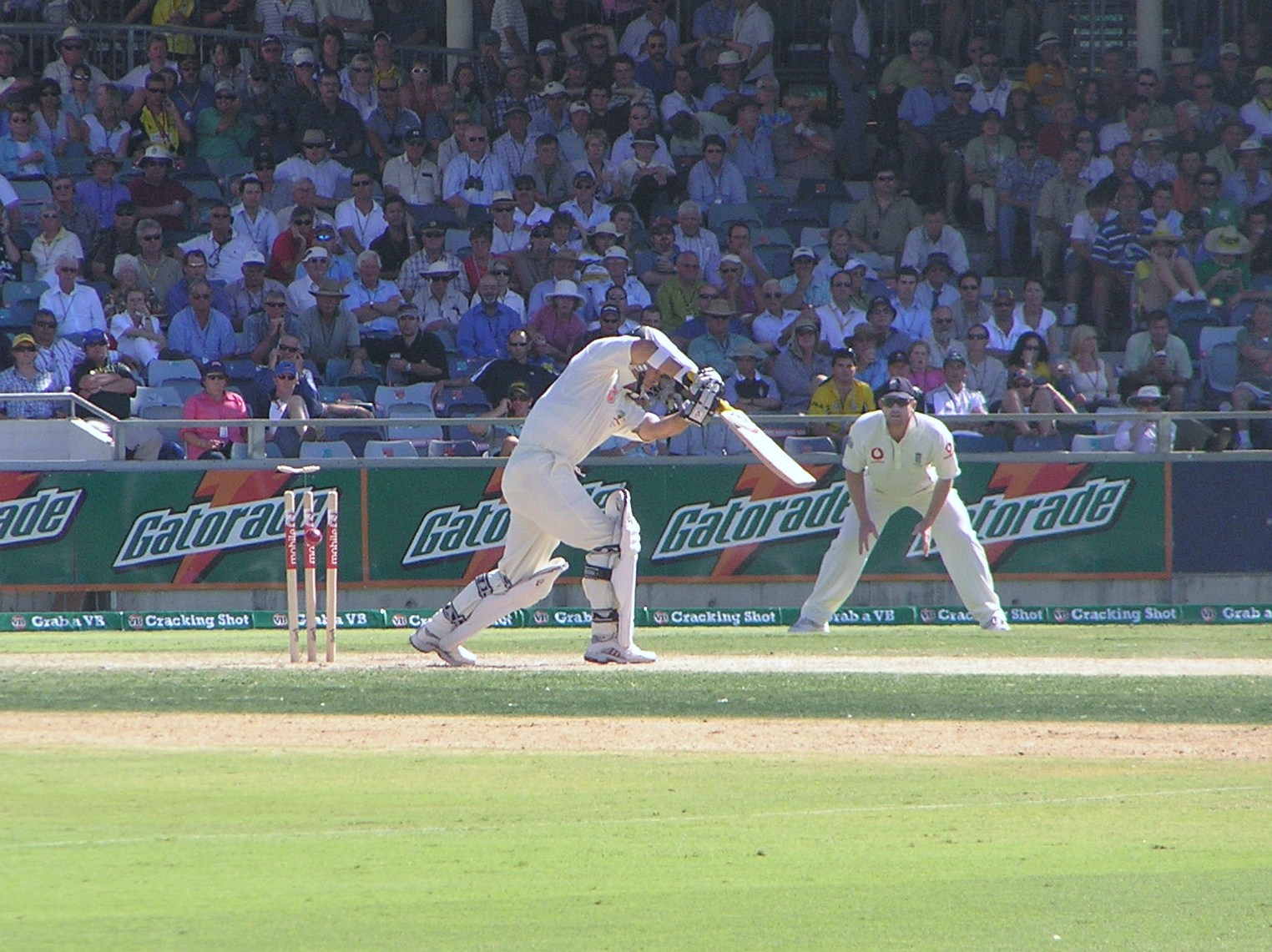
The Ashes: Fifth Test preview

And so, barely moments after the home international Test summer began, it’s nearly over.  If anyone had said that the Oval Test will begin with nothing riding on it, it would hardly have been a surprise.  That it is a dead rubber because England have already won, well that is more of a surprise.

And as a result, when the dust settled on the hammering handed out at Trent Bridge, the focus has been more on Australia than an England team justifiably enjoying the moment.  It has been a peculiar and somewhat subdued build up.

Australia themselves will be saying goodbye to at least two players, in Rogers and Clarke.  In reality, even though they are unlikely to play, Haddin and Watson can be added to that list, for it is hard to see how they will be selected again.  There’s every chance Voges is playing his final match as well, while Shaun Marsh must be a considerable doubt for the future given he’s failed to take his chance at the highest level.  Since Australia lost Ryan Harris before the series began, it amounts to a quite extraordinary end of an era for the Australian team.  Of the squad of seventeen first chosen for the series, you can make a case that seven or even eight (depending on what future Fawad has) will be gone from the Test team by this time next week.

Moreover, Australia have lost little time in moving on, Smith has already been announced as the next captain, with Warner as his deputy – which is an interesting choice in itself given his brushes with authority over the last few years.  It could be the making of him.  Likewise, Smith has been talking about moving to number four in future, all of which suggests that Australia just want this over with and to move forward.

It’s a rather sad way for Clarke to finish.  The last real link to the great Australian team of the noughties, he is going out with a whimper rather than a bang, captaining a side who have already moved on, in a series already lost, with a team comprised of many who will saying their own farewells.  Sport can be a cruel business, and few get to time their departures perfectly.   As both player and captain, there’s a temptation to believe that Clarke is more honoured abroad than he is at home, and a warm reception when he walks out to bat for the final two times is guaranteed.  And thoroughly deserved.

For England, it is the chance to deliver four Test wins in a series against Australia for the first time since 1978, and in circumstances that few would have expected.  Given England’s inconsistency, and the end-of-era nature of the Australian team, it’s as hard to call as any of the previous Tests.  The series has been so unpredictable that it would be a brave person to make the call on what will happen this time.   Perhaps what most fans of both sides would like more than anything would be a close match.  There hasn’t been a truly close game between these sides since the Trent Bridge Test of 2013 – even the Oval last time which ended up tight was down to a contrivance more than genuine competition.  That Oval Test incidentally was only the third time since five Test series became the norm that the Oval Test was a dead rubber in England’s favour.  That this is the fourth instance one series later says a lot about recent series.

To that end, what does this say about England’s win?  It’s fourteen years since Australia won in England, and in that time England are 10-3 up in Tests.  Yet since England won that first series in years in 2005, England are 11-3 down in Australia.  Each side is being well beaten away from home, with few close matches, that has to be a concern.

For England, there seems little point in risking Anderson – there would have been little point even if the series was on the line – so the debate surrounds the question of the pitch and whether a second spinner is needed.  If so, then there is at least the possibility that Moeen could be moved up to open to create space for Adil Rashid.  If that is how England go, then Lyth too could be facing the chop as far as his Test career is concerned.  Lyth has hardly been a stellar success in this series, but then neither has his opening partner, one innings excepted.  It would be a sour note were England to continue to go through openers not called Cook at a rate of knots.  That is of course making the point before it even happens, and England may well retain Lyth to give him the chance to cement his place.  A score of any sort would probably do that.

Of course, if Lyth does keep his place, then it seems hard to see how Rashid could be given the nod.  Wood is troubled by his ankle, but the indications are that Plunkett is favoured if he doesn’t make it.  There is of course no point selecting someone for the sake of it – that is what happened two years ago when Kerrigan and Woakes were called into the side and promptly discarded for the following series – more understandably in the case of Kerrigan, whose handling can still be questioned.  Yet with the series in the UAE coming up, Rashid will certainly be required.

In all, this is a subdued build up to the final Test match.  At the end of it, Alastair Cook will be presented with the urn, and all will be well with England cricket.  Of course, the reality is some way from that, the previous 18 months has created a schism amongst cricket lovers like little seen in living memory.  The win has papered over the cracks, but failed to resolve them.  The ECB have a big job on their hands to re-create love for England, but if they do intend to try and do so, then this is no bad platform on which to build.  It is now up to them.

@BlueEarthMngmnt

Dmitri’s Ashes Memories – Perth 2006

It seems somewhat apt to return to posting with a low moment. I’m returning to an era where we were getting our 2005 win rammed back down our throats by a hostile foe, for a time where I felt low about the game, but for different reasons to those now. It’s ironic that I probably feel more low now than I did back then as England are on top. It’s not about the winning and losing, it’s about the fans sticking together, and on that fateful tour of 2006/7, I never saw fan division. We supported the team, no question.

This was not only support against a juggernaut team, it was against a Cricket Australia organisation that made it desperately hard for English supporters to get tickets. It was support an erstwhile disinterested Australian public, who couldn’t give a stuff for the Ashes in 2002/3 when I was out there, but were now making sure the games were played in a hostile atmosphere. It really wasn’t pleasant. It was a lot like football. I’m not sure it was for the best, really, but who am I to say?

Absolute Nonsense With The Old Jos....
Absolute Nonsense With The Old Jos….

At least at that time we got abuse from the opposition fans. I’m a lad from working class roots, born into a council estate in SE London, moving to another one where I still live after 36 years in the same house, and never that well off that money was no object, but able to do some really good things when the economy and the relative purchasing power of my wages allowed. No-one from my family had ever done this sort of thing. Never gone to Australia. I absolutely thanked my lucky stars at how I’d been able to do this. It is something I never took for granted. You know, it’s why the somewhat silly barbs about being anti-England and not a cricket fan actually do hurt. You have got to me effing kidding me.

The only Ashes century Alastair Cook has made outside of 2010-11. He worked incredibly hard for it.
The only Ashes century Alastair Cook has made outside of 2010-11. He worked incredibly hard for it. You know who applauds.

I only turn on people who turn on me, and I have always been one that recognises that other people have different views. Back in 2006, there was a clamour for Monty Panesar which although not of the modern level for another player, was firm enough. This time, though, it was the media leading the charge. It was the dog days of Duncan Fletcher and he wasn’t for picking him if Giles was fit. He got all sorts….

I was ambivalent. I’d had a disastrous time in Adelaide, and I was in pieces. Confidence shot. Holiday proving to be a trial. The cricket depressing.

Flickers on Day 5 - They wouldn't last
Flickers on Day 5 – They wouldn’t last

I’ve always got the Adelaide test up my sleeve for a piece, but the one thing I do recall about Perth is our hopeless optimism. On Day 4, with England up against it, Ian Bell and Alastair Cook gave us hope that we might get out the mess we were in. KP was in decent nick, and had a 90-odd, a 158 and a first innings 50 under his belt, and with Flintoff and Jones following behind we had a sniff of getting out of the game. It was ridiculous optimism. But when we were three down, there still remained a little hope, and that’s when Perth announced the prices of fifth day tickets. The man we call Reg went round to the ticket office to get them, and we still tried to believe that there was a shot. Cook got to a hundred, a horrible knock, hopelessly out of nick, but absolutely an example of temperament and courage. Yes, the iron rod, the steely core. But this was Perth. This was heat. Towards the end of the day his concentration wilted, and a combination of that and the new ball did for him. Hoggy came out as a nightwatchman. Brett Lee, fielding in front of us, where there was a large corps of England support, mocked us “Where’s your skipper now, boys? Hiding is he? Scared?” Hoggy lasted no time….

It didn't go well
It didn’t go well

As the day drew to quite a cloudy close, we wandered back to our apartment block, about half a mile from the WACA and thought we were quite mad to have bought the tickets. Our flight out of Perth Airport was for 1:30 a.m after the 5th day, and we had to pack our bags and go to Scarborough for our last night in Australia that evening. We wondered what precisely we were doing going up there, and then back down again for the last day.

But we did, because we thought we needed to be there for the team. Well, I did. However that didn’t last. Flintoff and KP saw off the early attacks and both made half centuries, but once Freddie went, and then Jones for a pair in his last ever test, the tail failed to wag. One wicket left at lunch, we thought there were better things to do than watch the Aussie apply the coup de grace, and went for a beer somewhere in the Perth city centre. We heard the winning wicket on the radio. We were spent.

Time to leave....
Time to leave…. Gilchrist starts out on his record-setting century. We’d seen enough.

That trip was an emotional experience for me, and I’m going to go into more depth when I do Adelaide as to why. After Adelaide we flew out the morning after (the infamous flight where Pringle sat two rows behind me), and headed down to Augusta on the far South West coast of Australia. It was gorgeous. We then spent a few days in Margaret River, did a bit of winery stuff, had a few beets, watched some football on the TV, and then headed to Fremantle, where four of us squeezed into a bijou apartment and we couldn’t wait to get out of it. Then we went up to Perth the day before the game, but still caught a train on one evening for a night out in Fremantle!

I’d also met up with a Millwall friend, Jim, who now lives out there, but had generously popped round to my brother’s house in London to pick up a credit card (after I’d had all mine nicked in Adelaide), and bring it out to me. I met him for a drink in Subiaco, whereupon I promptly left the card and the new wallet in the pub we were in. Thankfully, I realised, and some lovely honest people had handed it in to the bar-staff and a second disaster was averted. I was in an absolute state by this time, an emotional and unsure wreck (both my parents had died in the preceding 18 months).

England were obviously 2-0 down going into Perth, and the Adelaide scars were raw. There had been a lot of comment in the England fans area at Adelaide about Duncan’s stubborness over Monty Panesar, and the poor performance, and then sad news around Ashley Giles, had meant his inclusion was a certainty. Saj Mahmood also came into the team, a player, I have to say, I really rated (cracking judge, me). Perth underwhelmed me as a ground – I don’t know what I expected – but it was a decent atmosphere and they had put in extra seats.

The WACA - pre-game
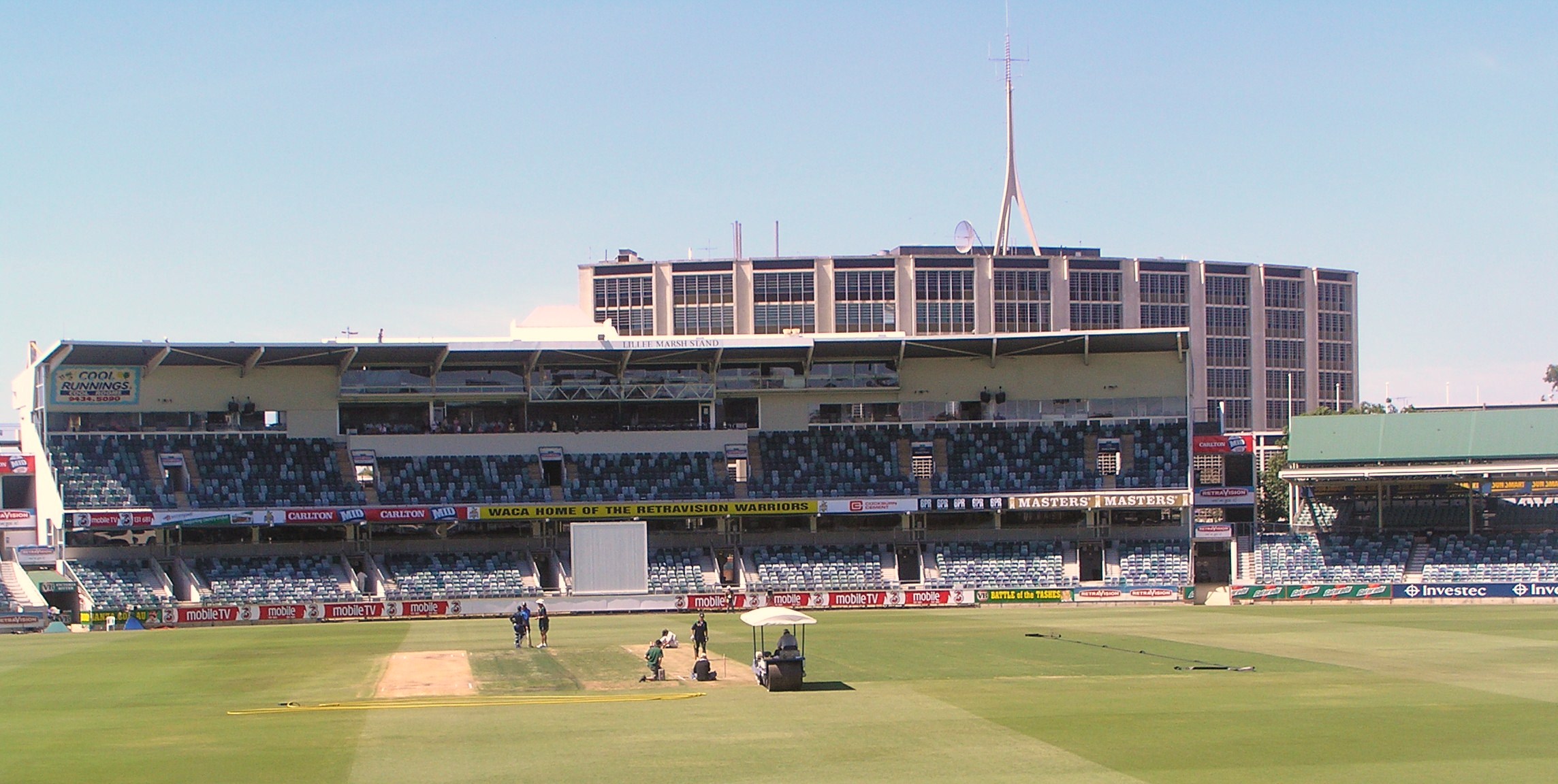
The WACA – pre-game

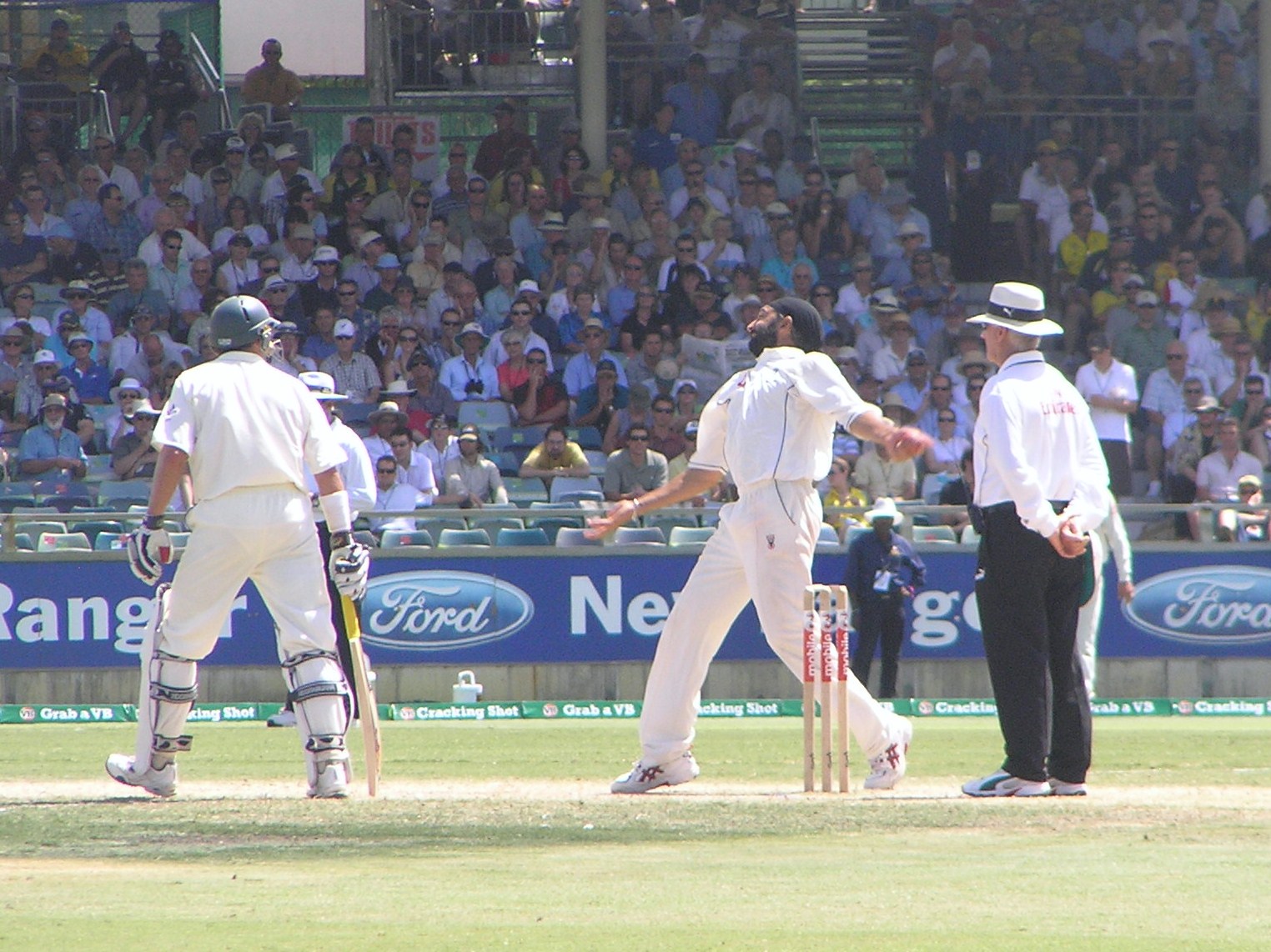
England had a good first day, and Monty made an immediate impact. Sadly, as was to be the case frequently in his Ashes career, Mike Hussey was a royal PIA. He saved the innings and took Australia from real strife to mediocrity. Monty claimed five-for, and Englan fans started to believe again. Maybe we could be competitive and make a real fist of this. After all, we’d fought hard in both the previous test matches, hadn’t we? At times…

Despite bowling the Australians out for 244, there was a sense of foreboding. Had England got that last day collapse at Adelaide out of their minds. Well, Cook got out cheaply, and Bell followed for a duck, and 51/2 wasn’t a firm base for us to launch. It looked even less firm when Collingwood went very early on day 3, and although Pietersen steadied the ship at #5 (people started to comment he should go up one, despite Colly making a fine fist of number 4 until then), Strauss also went to a dodgy old caught behind. No-one stayed with Pietersen, who got increasingly desperate towards the end of his knock and was ninth out for 70 with 175 on the board. There was a knockabout last wicket stand of 40, but the sense of fear was such that you thought “jeez, it looks easy for them, what are Aussie going to do!.

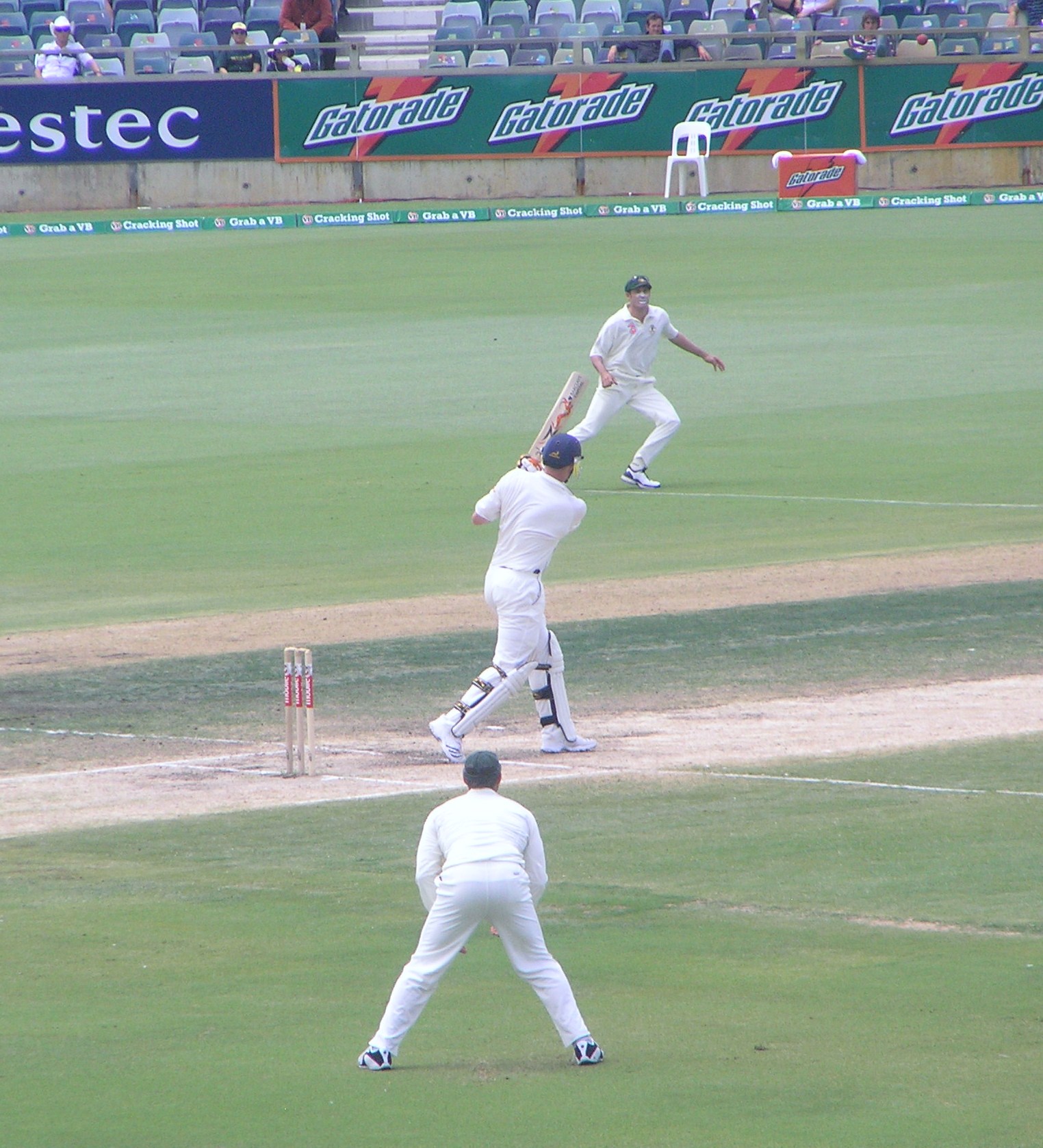
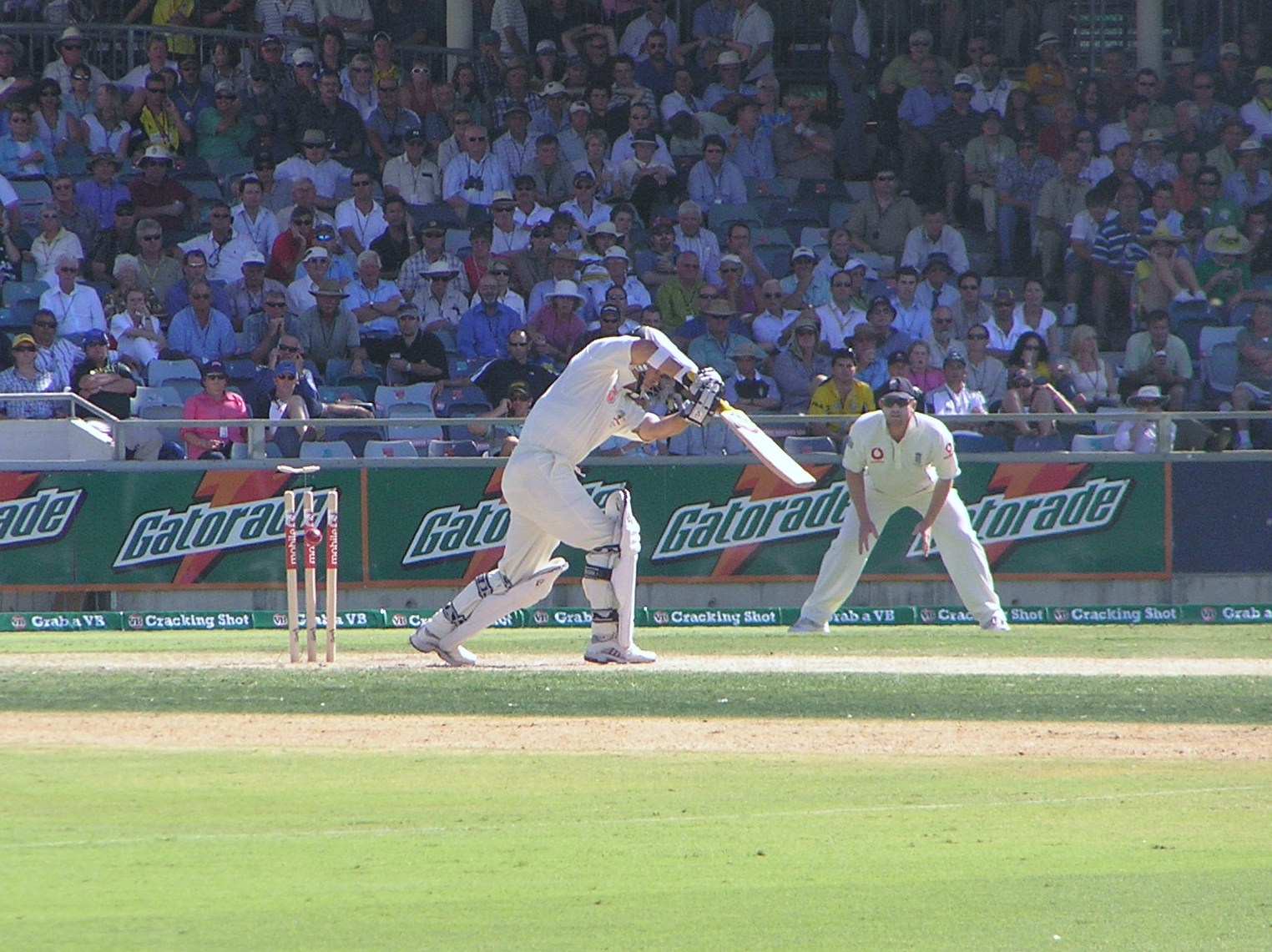
With a lead of just 29, England probably tasted parity when Langer went first ball of the second innings, and I took one of my best ever pics….

Perfect Timing
Perfect Timing

It never lasted. Ponting and Hayden steadied the ship, and by the close Australia were 119 for 1 and the Ashes felt gone. The third day, a Saturday was not one I saw a lot of. It was 40 odd degrees plus, and Sir Peter and I did a bit of early morning Christmas shopping to take home, and turned up after lunch. We saw England open that morning with KP. It was desperate. Panesar couldn’t weave his magic. We turned up after Ponting and Hayden had gone, and we fried. I mean we absolutely fried. Hussey made a century, Michael Clarke did too, and then, memorably, did Adam Gilchrist. We were so hot, being belted around so much, that we left with Gilchrist in the early stages of that knock. Beaten, and depressed, we stomped back, hearing cheers for every boundary, sensing something. I remember saying to Sir Peter as we left the ground “this is the sort of situation that Gilchrist could go off and do something mental.”  We sw him get to his ton back at our apartment. I’d changed to go for a swim, and cheered Hoggy’s very wide, but not called, ball that denied Gilchrist the chance to equal the record held by Viv.

The water was lovely.

Of course, Strauss immediately got an absolute shocker of a decision once the Aussies had declared, so there was nothing to it but to head out for a nice meal in Northridge, and a serious session in the Brass Monkey. I pick up Day 4 above…..

What did Perth mean to me? It was the end of an era. I’ve never seen England away again, and never likely to, if truth be told. It was a holiday that I can’t look back on and say it was the greatest ever, but I learned a lot about myself and my inabilities and weaknesses. I’d say that the world was vastly different then, and the cricket world was too. I think it is interesting to contrast how much fire was aimed at Duncan Fletcher after that tour and not the players, and especially the captain, who let him down (in my view). There was much focus on his stubborn approach to Panesar, but in an interesting read across to the recent 5-0, the players quitting the tour through injury or lack of form weren’t to play again at all. The captain never skippered England again. KP batted well, as did Colly at times, but Bell was Bell.  In his second innings knock at Perth, he was pure Ian Bell. He looked superb, then played a loose drive and got out. He flattered to deceive.

But the fans never turned on the team, and they never turned on each other. It’s a different world. Some say the likes of me are to blame. We created the divide. We are the reason. But stop for a minute and just think. Please. Just think. We had incredible trouble getting tickets for the games we went to, but we got them. This was an expensive trip to watch a team collapse, but we wouldn’t have missed it for the world. This was a team that fell apart, but we stuck with it, when the media were throwing missiles at the coach. I haven’t changed as a cricket fan, so maybe something else has.

Monty - The saviour that wasn't, really.....
Monty – The saviour that wasn’t, really…..

For a test that I don’t relive that much, it’s quite an important one in my cricketing life. I was sort of there when the Ashes were clinched. I’d seen 40% of a whitewash on my travels, and seen a team collapse in the heat – that third day was brutal. I had a ton of admiration at the time for Cook, as he battled so hard for his hundred, and yet now I view him in a much different vein. It’s my last day touring. But at that time, I loved the sport unconditionally. It had me. Now, I feel it’s pushing me away. The media turning on fans for the past 18 months. The fans turning on the fans (I genuinely believe I only retaliated when attacked – others may differ). It’s not England cricket as I remember it. It’s a sad look back, to a sad test, and a sad outcome.

Oh, and I did this. Count the chins…..

Too much sun....
Too much sun….

Hope you enjoyed the above. I am feeling rather cheesed off, and hope that writing the memory stuff works for you lot, and gets me back. It’s been a rollercoaster. Feeling up, and then down. Angry tweets, repentant deletions. I am fed up feeling I need to justify myself, when I got to do things like this. I’m not special. I’m just a bloody ordinary cricket fan, who writes a blog. Some may not like what I write, some may be envious of the traction it got, some may call me a broken record. But it’s mine (and TLG’s).

Have a good night.

Open Thread

I said on Twitter earlier that I was taking another night off, and at the moment, I’m not sure what to write even if I did. Real life is a bit of a grind, and I’m incredibly disheartened by the aftermath of the Ashes.

As you all know, I go through these little troughs, and I pop back up. So be patient, and I’m sure TLG might fill in some gaps when he has time.

So in the absence of something to hang your hats on, please comment away on all things cricket below.

See you shortly.

Dmitri / LCL

Colley Street

So. I was walking out of the office, down to the station, and on the train home, and I’m wondering. What do I write tonight? Anything? Leave things alone and have a night off?

I don’t think I can. The atmosphere among cricket circles is, certainly, from what I can see, venomous. The vast majority of England cricket fans don’t give two hoots about how the game is run, and just want to enjoy the game. There is, I know, widespread ambivalence to the ins and outs of cricket administration, office politics, personal disputes. But I’ve been on this trip for a while, and I know others feel like me.

Now. Let me get this straight. I didn’t want to do this, because it is a bit like dick waving, but here goes. I’m going to set down, in words, my cricket life.

  • I’ve been a member of Surrey CCC for about six or seven years. Gave up because I had to make savings.
  • I went to the Oval test for 15 years, often organising all our group’s tickets, outlaying the cash when I could afford to do so. Plus ODIs. Plus visits to Lord’s. Plus Trent Bridge. Stopped
  • Two Ashes tours of two tests each – Brisbane and Adelaide 2002; Adelaide and Perth 2006. Took the chance to see the SCG (NSW v South Australia) and MCG (Victoria v Queensland) on those trips.
  • A tour to South Africa in 2004-5 – Cape Town test and two days of Joburg (days 2 & 3, worse luck).
  • Played cricket at school. Scored for England Schools (one game – Mark Ealham, Chris Lewis, Mark Alleyne all played, and Paul Farbrace kept wicket for Kent). Played club cricket for 16 years. Captain of my work team for a few years, occasional social player until injury finished me off.
  • I used to record all cricket that I could. I had a library of VHS tapes with cricket (no, none of that, please) on that, once the DVD age came and the video they were recorded on died, I couldn’t play any more because the tracking was f*cked. I could have rivalled Rob Moody on Youtube, except copyright freaked me out. I still have most of England cricket on DVD since 2005 (first series was Pakistan), and as much of the international stuff that I can record. I’m a cricket nerd.
  • I have Wisdens dating back to the early 70s. I have mountains of cricket books. Lots and lots of them. I scour bookshops for some old accounts of tours gone by. Love bargains.
  • I keep all my ticket stubs, my match programmes, those silly things they hand out at games.
  • I yearn to be able to go on England tours again, or any cricket, but money is a lot tighter these days.
  • I’ve been cricket blogging for 5 or 6 years, first on HDWLIA and now here.
  • I blogged on a previous host, frequently talking about cricket on there too.
  • As you know, I’m a mad keen photographer of the game. Every game I go to, I try to take pictures of the action, to get that great shot. Like this one….
Justin Langer bowled first ball - 2nd Innings, Perth 2006
Justin Langer bowled first ball – 2nd Innings, Perth 2006
  • I have written about how I hated nets. I have written about the traumatic experience of making a diamond duck. I have written about bad press well before the incidents of early last year. I’ve written of my tour to Australia in 2006. I’ve written pieces on here about how the 2005 Ashes were so important to me because of family events (and I want to send out my thoughts to one of our regular commenters, not naming them, but they know who they are, going through some awfully tough times at present). I’ve made lifelong friends, like Sir Peter, Danno, and the many, many top guys at Old Josephians, and with the business colleagues we play against.
  • I owe this sport a hell of a lot.

DON’T

ANYONE

EVER

F*CKING

QUESTION

HOW

MUCH

I LOVE

THIS

SPORT

I do not question those who do not agree with me on their’s. I do not hold myself up as a better or worse supporter than anyone else, just that I love the sport of cricket and care deeply about it. I really didn’t want to list this, but it needs saying, as evidence of track record, of loving the game, especially tests. For once I’ve done it. If you’ve been a long-term reader of this blog, then you’d know it. I don’t need to tell you, you don’t need to tell me.

I muted someone on Twitter – yes, I know – who absolutely gets on my tits. I don’t block. This wouldn’t piss me off as much except that I know that a number of others feel the same, but won’t say it. I warned Maxie not to talk to him, but he did. When he’s not telling someone they are beyond parody, he’s churning out this line.

and again

and again

He’s an insignficant little so and so, I know, but I’m not letting this lie, and he can spout off all he likes on his Twitter feed. But this is my home ground, and I’ll comment here. I don’t give a shit if he’s an “England supporter”. So am I.

Oh, I got this:

Look, I know. I shouldn’t give this pathetic excuse the oxygen of publicity he so certainly craves. The effort, the sustained effort to put logical thoughts into words to craft posts etc. is something we can all look forward to from him when the time comes, although, like me, Jack Byrne, James Morgan and Maxie Allen, it’ll be beyond parody. And no, none of this was directed at me, but it was directed at some of our blogging comrades, and I’m not having it. Je Suis Maxie and James and all that.

You see, we attack the ECB.  I’ve given up trying to get into rational debate about Alastair Cook, every bit as much as I am about getting into a rational debate about KP. As for Strauss, well. Let’s see on this one, eh?

Some can separate the ECB from England.

I UNDERSTAND

HOW

YOU

CAN

DO

THAT

Now, when we attack people from having the opposite point of view, its usually aimed at journalists, ignorant people on social media or, most importantly, the ECB.

When they attack someone of the opposite point of view, they attack us. Nice. And when we go back at you, we get that drivel.

James Morgan, today, tried to tread the middle path. I tried that last year when I was sick of all the rows, and nothing happened. Of course it didn’t. The schism remains, and neither side of it can wish it away. Wounds run too deep. They aren’t petty, they are deep. To see my blog described, and it’s mine and Maxie he’s having a pop at, as “anti-England”, I just get angrier and angrier. I do not see life through your damn prism, so don’t keep telling me you have it right.

I am royally pissed off. If people take pleasure in that, that’s up to them. I don’t. There’s no hint at rapprochement here. People want blood. I’m not pretending for one minute that I’ve been a model citizen, and I’ve lost my rag every now and again, but I see precious little of that from the opposing view.

I say “beware the man who claims he is honest, because he’s usually a liar, and that’s his first one”, but you get honesty on here from me. If someone cheeses me off, then I react. Big or small. I’d fisk Dominic Lawson’s dog whistle article if I could be arsed, but he’s a toffee nosed prick who thinks there’s not a sliver of difference in KP and Cook’s commercial attitudes, and then denigrates an entire England legend’s career. You haven’t found me doing that to Cook. I’d rage on about Ed Smith, but he’s just ingratiating himself with authority, and he’s definitely their kind of person. See SeanB, who knows a thing or two about Middlesex, about that man’s credentials. Then there’s the BTL buffoons.

I return to James Morgan’s piece. Can’t we all just get along? Public Enemy, in my one culture reference of the piece, in their track “Whole Lotta Love Goin’ On” say “Rap is a contact sport”. This has been a contact sport all right. Some are sick of it. I think it’s just starting. I’m prepared for it. I’ve been doing it for a long time now.

I wish I could be more positive, but it ain’t happening. We were always going to be attacked, and we were always going to respond. I wanted to let the situation breathe. It hasn’t.

Anti-England. You precious idiots. Bring it on…..

Have a good evening.

Only Ashes Test – Canterbury

The Ashes resume tomorrow with England trailing after the first three ODIs and really needing a win to take control of the series.

The game will be played over four days at the St. Lawrence Ground in Canterbury, and here is the place to post your comments over those next few days.

Given the prominence we will be giving to Death of a Gentleman, I regret that this post will be below that one for a while, but you lot have the gumption to find it.

All the very best to the England team, and I’ll be keeping a firm eye out when I can during office hours tomorrow.

Death of a Gentleman

We’re hardly the first to have our say about this most important of films, but given that importance, it remains essential that the message it conveys continues to be discussed and promoted.

It’s striking that the media reporting of this film has been extremely muted; some might say that a cricket documentary is hardly mainstream, but Fire in Babylon received far more attention. Amongst the written press, the ones who have talked about, or reviewed it, are those one would expect to see do so.  Yet of the major newspapers, the relative silence has been striking.  Even at the time of the Big Three’s effective takeover of the world game, the press was largely silent.  In this country, Scyld Berry and Lawrence Booth more than had their say, while in Australia Gideon Haigh was voluble in his criticism.  That’s not an exclusive list, but that so few “journalists” put their heads above the parapet says an awful lot.  Failing to hold the ECB to account over the way they manage the England cricket team is one thing, failing to hold the ICC and constituent boards to account for actions massively detrimental to the whole game is another entirely.  They could even hold a contrary view and express why they think it is a good idea – that at least would be something.  Silence is not.  It is an absolute disgrace, and the cricket press as a body should hang their heads in shame over it.

The broadcast media too has barely even mentioned it, with Test Match Special tiptoeing around the issues raised, and Sky not so much as acknowledging its existence.  Giles Clarke would have you believe it’s because administration isn’t of interest to anyone, only teams and players are, but the film details how when the ICC discovered the story being told, Jarrod Kimber’s press accreditation mysteriously went missing, while potential interviewees were warned off.  That it is a tale the various boards don’t want told is obvious.  The lengths they go to in order to prevent that is a different matter, and the silence from so much of the cricket press about a film that is central to the future of the game more than suspicious.

There are some telling asides away from the main narrative, such as Andrew Strauss bemoaning the rise in the number of short Test series, presumably an opinion given long before there was any possibility of him beingwithin the same ECB who were party to it.  Maybe someone will ask him.

The invention of T20 cricket in 2003 (by which we mean the professional invention, that club cricketers have known the game for years doesn’t count), and the subsequent creation of the IPL is often blamed for the threat to Test cricket, but it didn’t need to be.  As Haigh points out, for T20 to have an attraction, it has to be shorter than something.  There is absolutely no inherent reason why they couldn’t co-exist.  Indeed, the potential was and is there for T20 to support Test cricket while taking the game to brand new places and countries.  It was an opportunity to grow cricket, to nurture it and also to make money for the game.

The powerful argument Messrs Kimber and Collins build instead is of a venal, self-interested group who care little for the game except as a means of building power and making money.  Lots of money.  The IPL is central to this, as businessmen spied the opportunity to make a fortune.  Yet it would be too easy to simply blame India for everything, and there is a danger that the film will be dismissed there as nothing but an attack on an India that has been on the receiving end of a patronising attitude from the English and Australians through cricket history.  In that they certainly have a point, yet a second wrong doesn’t right the first one, and in any case blaming India solely would be to miss the point being made.

The IPL itself has undoubtedly become a monster, but one which is extremely popular, and on its own merits that should be a good thing for the game.  The trouble, as is apparent throughout the film is that it is run by those who don’t care about the wider game of cricket.  It is a means of enrichment, and when those in charge of the sport don’t have that innate love for it in its own right as a game, the dangers are clear.  That is why sporting governing bodies are meant to be neutral – or at least relatively neutral – in such matters, their role is to be the custodians of the wider sport, ensuring that naked commercial interests don’t damage the integrity of the sport itself.

For that is the fundamental central point.  The ICC is not a governing body in the true sense and never has been.  One of the striking things while watching the film is that it is so reminiscent of the goings on at FIFA.  And yet even FIFA have managed to expand football and have distributed serious wealth around the world, no matter how dubious the morality behind it.  The ICC in contrast, have a woeful record of furthering the game.  The example illustrated on screen was of the pathetic £30,000 funding given to China, a nation of such size and potential growth that it would be thought a country ripe for development and support.  Perhaps it is one degree of cynicism too far to think that cricket in China would be entirely against the interests of the current establishment, for whom a new market of over a billion people represents nothing but a potential threat to their power base.  Perhaps not too cynical after all.

The film makers did at least manage to get interviews with many of the major players in the drama – though Cricket Australia manage to come out of it rather better through the simple method of refusing all co-operation.  N. Srinivasan is consistently smooth, while failing to answer a single question, and Giles Clarke manages the impossible, by coming across as even more repulsive than normal.  If he’d been born Australian, he’d be called Sir Les Patterson.

Indeed, while Srinivasan stonewalls thoughout, it is Clarke who is the undoubted star of the drama, though not in the way he probably imagines himself to be.  Lord Woolf’s report into governance at the ICC – which was rejected by the ICC itself – is dismissed by Clarke in contemptuous and self-reverential terms.  Woolf had been scathing about the lack of accountability within the organisation in his own report, stating that the ICC behaved like a “members club” for whom the development of the game was secondary, and whose boards acted in their own self-interest rather than the overall good of the game.  Giles Clarke in the film actually inadvertently proved this by stating “I have every right to put my board’s interests first” – a comment that is notable for putting the interests of his board ahead of the interests of English cricket, let alone cricket more generally.

Woolf’s criticisms were  aimed at the old ICC, yet it was known at the time that India in particular were strongly opposed to his recommendations, which amounted to a democratisation of the organisation and the prevention of conflicts of interest.  A summary of those recommendations can be found on this link:

http://www.espncricinfo.com/ci-icc/content/story/551836.html

Far from approving the report that they had themselves commissioned, the three richest boards decided to go in the opposite direction.  India, England and Australia in great secrecy put together a plan whereby they would take effective control of the whole of the ICC.  The middle portion of the film covers the meeting held in Dubai, in secret and without being minuted, to put this plan together.  Kimber and Collins are rightly appalled at this, the behaviour of an autocracy with plenty to hide, not those supposedly appointed to be the custodians of the game.

“There is a paragraph which says: It is proposed that the ICC executive board forms a new committee of the ICC called the executive committee, which under new terms of reference will act as – and I emphasise this word – the SOLE recommendation committee on all constitutional, personnel, integrity, ethics, developments and nomination matters, as well as all matters regarding distributions from the ICC.

“I have never seen anything of that sort in a body of this nature.” – Lord Woolf

When the details of the carve up actually became apparent, it was worse than anyone could have imagined.  Over half the revenues of world cricket were to go directly into the back pockets of the three biggest boards, with India taking the largest share.  That could be argued to be reasonable enough in principle, given that India generate the largest amount.  Of far more concern and fully detailed, was the fait accompli presented to every other cricket nation to accept it, with each other Test nation to receive a mere 5% of the pot.  Former ICC President Ehsan Mani calculated that $300 million over 10 years would be cut from the ICC Development Programme, to be redirected to the coffers of the already wealthy.

At the same time, the plan to reduce the size of the World Cup to 10 teams makes the ICC the only sporting body to actively try to shrink their game globally – a truly astounding policy.

And here is where the initial concept behind the film – the fears for Test cricket – are beautifully brought into focus.  For the other Test playing nations were neither consulted, nor given any real opportunity to object.  One of those happens to be the side who are currently the best in the world in the form of South Africa, but it applies whether or not they are good on the field.  The flexing of muscles extended to making it abundantly clear that any opposition and those countries could forget about getting lucrative tours from India.  Bullying is rarely an edifying sight, and had already been seen in India’s response to Haroon Lorgat becoming the Chief Executive of Cricket South Africa.  Earlier than that, Tim May had been ousted from the ICC Cricket Committee, with it being reported in the Australian press – and repeated by Tim May – the BCCI had put pressure on Test captains to vote for Laxman Sivaramakrishnan instead.  Sivaramakrishnan is an employee of India Cements, whose Managing Director is one Narayanaswami Srinivasan.

Test cricket outside of the big three nations was thus put on life support, with other nations unable to make it pay, except through the largesse and exceptional and well known kindness of India, England and Australia.

“The intention to entrench a privileged position for ‘The Big Three’ appears to be an abuse of entrusted power for private gain, giving them disproportionate, unaccountable and unchallengeable authority” – Transparency International

N. Srinivasan was duly made the Chairman of the ICC, the proposal was passed, and what Scyld Berry called “the worst thing that has ever happened in our sport” was made real.

If India’s dominance wasn’t leading to a good outcome, the acquiescence, nay roaring approval, of England and Australia was worse.  Instead of looking at the wider interests of the game, they instead decided to grab as big a piece of the pie themselves and stuff the rest of the world.  England’s own conduct is entirely reflective of that – the much vaunted return of five Test series for iconic opponents quickly and silently excluded South Africa from the list, for reasons that have not been disclosed.  England decided to focus almost entirely on matches against India and Australia instead.  Bangladesh, a nation new to Test cricket will likely go a decade between tours of England, and while they may not be currently the greatest of draws, the reality is that they never will be under this global regime.  In discussions on these boards, D’Arthez did the mathematics on England’s recent schedule, and as such deserves to be quoted in full:

Since the start of 2011, there have been 47 matches between Australia and England across formats. A few of those were in World Cups / Champions Trophies T20 World Cups, but still. Compare that to the number of England / South Africa games which stands at 14. An eye-watering three of those were Tests. Pakistan stands at 10 (mostly all from the UAE tour of 2012). Bangladesh stands at 2 games in the World Cup, both games won by Bangladesh.

Australia has played 47 games against England in that period. They have played 6 against New Zealand. 4 against Bangladesh, and 3 against Zimbabwe.

India have played 42 games against England. 31 against Australia, and also (surprisingly) 31 against West Indies. 12 games against Pakistan, 11 games against Zimbabwe and 10 games against New Zealand.

Now I am aware that this snapshot may not be fair, but scheduling is not rational: we have had 3 Ashes series since the last time Australia played Tests against New Zealand for instance, or England played against Pakistan. So it is impossible to take a “fair” snapshot courtesy of the ICC.

Schedules are simply becoming increasingly dominated by teams of financially similar standings to make more money. Yay for the scrapping of the FTP. So you get a group of India, Australia, England, who dominate the fixtures between each other. England plays close to 50% of its ODIs against Australia and India for instance.

It is only going to get worse.  The other nations seeking the scraps as they are dropped from the top table, and playing more lucrative ODIs or T20s against each other when they have no one else to play against, rather than Tests.  Furthermore, what is the point of a nation like Ireland seeking Test status when this is environment in which they will be operating.  They have already been kicked in the teeth over the reduction in size of the World Cup – reduction in number of teams that is, the number of games will be barely affected, and now the Tests they hope to play will be thoroughly devalued, if not scrapped entirely, except when the Big Three deign to notice them.

Clarke attempted to make the claim that he was acting for the good of cricket, and in a nauseatingly self-justifying section pointed to his being unpaid in his role.  Curiously enough, this writer is on an industry board, also unpaid, and does so partially because of the professional advantage it gives him.  It’s best left there.

Clarke also refused to answer any kinds of questions about the Stanford affair, an example of sacrificing the values of cricket and the integrity of the England team on the altar of naked commercialism.  That it was arranged with a criminal is actually the least of the sins involved, for a national team is meant to be representative of that country, not a play thing for filthy lucre.  He not only survived that episode, but went on to create his own position of President (sarcastically referenced in the end credits) responsible for ECB dealings with the ICC which both indicates an awareness of where the real power lies, and a complete lack of any kind of integrity or conscience.  Clarke also managed to demonstrate his familiar sense of timing and old-fashioned courtesy so evident at the Wisden dinner (a note here: Lawrence Booth’s rebuff towards Clarke was sufficiently stylish and acute that it will doubtless be noted down for future retaliation by the great man) by not realising he was on the ICC’s own cameras when noting about Collins “that idiot Sam is outside”.

When the viewer is watching so aghast at the naked greed on display that even Lalit Modi appears to be something of a good guy in arguing against what is happening, the trouble the game in is clear.  It is more than right to be deeply sceptical of his motives in suddenly discovering the soul of cricket, but the news today that he intends to set up a rival governing body to the ICC ironically represents the kind of challenge that is not appearing from any other quarter – our film making heroes notwithstanding.

An interesting comment made is that his intention is that it be affiliated to the Olympic movement, and another strand of investigation in Death of a Gentleman is the refusal of the Big Three to countenance the idea of cricket being an Olympic sport.  Clarke tries to defend this on the utterly preposterous grounds that it would disrupt the English season.  And so it would.  Every four years.  When it would disrupt the season in the same way that Tests and One Day Internationals do.  What he really means is that it wouldn’t earn the ECB any money.

T20 would be perfect as an Olympic sport; it would massively raise the profile of the game, it would allow countries all over the world to appear at a major sporting event on a level playing field.  There is no downside for cricket whatsoever, there is only a downside for those who would not be able to control it as it would be organised by the IOC, and it would not make any money for those who care about little else.  Quite simply, they cannot make any kind of rational argument against it, so resort to bluster.

And in all of this, what of the cricket fan?  What of the supporter, who pays his hard earned money to watch the greats of the game?  One of the most pointed comments in the film is that the fans are there to be monetised, and that the broadcasters and boards are the only ones who matter.  The objections to the conduct of the ECB need to be seen in the context of this, for in all the documentation and comment about the changes to the ICC, there is no mention whatever of the interests of the spectator.  Not one word.  Nor is there any reference to the amateur game – which shouldn’t be any kind of surprise when the associates and the affiliates are so roundly ignored and disparaged.

Jarrod Kimber and Sam Collins have made a film that every single person with an interest in cricket needs to watch.  This is all being done in our name, by an organisation that is meant to have the interests of the game we love at heart, by constituent cricket boards who are meant to look after the game in their home countries.  It is nothing other than the complete theft of an entire sport by a self-appointed oligarchy bent on advancing their own interests.   When the English cricket fan watches this international summer, he or she basks in the enjoyment of beating the Australians but laments that only two Tests were scheduled against New Zealand.  It is all part of the whole rotten edifice.  The ECB claimed that the Ashes needed to be rescheduled because of the World Cup in order to prevent players being burned out for the premier one day competition.  It would then revert to a four year cycle.  Oh really.  Is that except for the plans in the 2020s when it doesn’t?

From the village green to the barest patch of ground to packed out stadiums, the subject of this wonderful film affects every single person with a passion for the game.  It is polemical, it asks the right questions, and that it doesn’t get all the answers is not down to any shortcomings on the part of the makers, but entirely due to the reluctance of those in and below the ICC to have their dealings exposed to public scrutiny.

You need to see it.  And you need to digest it.  And tell your friends.  The makers have set up http://www.changecricket.com/ to campaign to get our game back.  It’s up to us all to support them in that, because while we may not succeed, if we don’t try then we have no chance.  And we will deserve all we get.

TLG

Dmitri View – I too have watched the film. I did so last week, but wanted TLG to cast his eye over it too. I’m sure you’ll agree, he’s done an amazing, thorough review. I know Arron is also watching it tonight, and I’d seriously recommend the film to all of you.

This is not about this blogger, or those of you on here, switching horses to another narrative, because the ECB and the way it interacts with us and other bodies in our name is part of the discourse on this blog nearly every day. Jarrod and Sam undertook this venture to discuss test cricket and instead saw the writing on the wall when they started delving deeper. Cricket is another sport being milked for cash, with corporate parasites getting their millions of pounds of flesh in an orgy of self-interest, short-termism and blatant profiteering. Sport shouldn’t be about supply and demand, it should be about equal access. Sport engenders great things in people, makes them strive, better themselves, set themselves targets they may never reach. It encourages camaraderie, spending hours with people, making lifelong mates. In the world we live in that is abused. That love of playing is there, as Gideon Haigh speaks so eruditely, to be monetised.

I can bark at the moon all I like, but cricket is just like all the rest. While the heart-strings are pulled a little by the Ed Cowan portions of the film, the rest did not shock me. Not in the slightest. I sat there getting more and more angry at a world governing body that runs the sport firmly behind closed doors. At an ECB that plays its full part in keeping it that way. It may be in our players short-term interests to trouser more money for playing for England, but who are they going to play against? Australia and India ad infinitum? I remember the 2003 series v South Africa, and the one in 2004-5 too. Five test series, absolutely brilliant cricket, entertaining and thrilling. We’ve not played them in a five test series since, but in the past three years have had mind-numbing, one-sided (results) series. This isn’t growing the game in this country, it’s putting on endless repeats.

I can’t add much more to TLG’s piece, except to finish up with Giles Clarke. I refuse to believe this man still does not hold the wheels of power in English cricket. You barely hear a peep out of Colin Graves, but Clarke still bestrides world cricket like a colossal oaf. Only oafs can be innocent. He isn’t. In no way. The contempt, the disdain, the arrogance, the sheer affront that these two “journalists” should have the gall to question this Ozymandias? How very dare they! England, we are told, are not in his grip any more. The ECB isn’t his. I don’t believe them. Because the same attitudes persist. I’ve not seen a change from them. Not really. Still sticking to the Big Three, still no apology for “outside cricket”, still no recognition of the fans. Clarke sums it up with his advice, which I’ve heard before, that no-one is interested in cricket administration. Jarrod and Sam bring this dripping condescension through. Loud and clear.

It’s a terrific film, has its rough edges, but you can’t deny that the message is clear, despite the critics saying there is no smoking gun, no silver bullet (how ridiculous is that in the context of something else we all remember). It shows the ICC and the three organisations that now dominate to be unaccountable, have no transparent governance, and they’d wish questioners away without a care.

I ain’t going nowhere, sunshine, and nor are Jarrod and Sam. #ChangeCricket could do a lot worse than #AGilesClarkeFreeECB.

@DmitriOld    

@BlueEarthMngmnt

Together, The Leg Glance and Dmitri Old/LordCanisLupus are “Being Outside Cricket”

@OutsideCricket

See more information on Death of a Gentleman at the website – http://deathofagentlemanfilm.com/ – as well as following their Twitter page – https://twitter.com/doagfilm.

ChangeCricket is their new portal, so check that out – http://www.changecricket.com/ while Jarrod Kimber and Sam Collins are both on Twitter at @sampsoncollins and

You can watch the trailer for Death of a Gentleman here:

King William Street

What do the Ashes mean to you? The wrapping up of the extremely one-sided Trent Bridge test has brought the majority of English fans out into raptures of delight. To see how the worm has turned, one only has to look at the headline of Tom Fordyce’s piece on BBC Sport. “Have the Ashes become to predictable?” he asks. Really? Very few predicted England would win this series, and now we’ve gone full circle. I was tempted to throw in a spurious Twelfth Night reference (as the only Billy play I’ve read, and that was out of educational necessity) but that would be pretentious. However, if this Ashes series is anyone’s idea of the food of love, then I would quite like the band to stop playing.

Oh dear. Am I being a frightful curmudgeon?

Who’s that Greek fella who rolls the bloody stone up hill? That one. I feel a bit like him. So let me please do this one more time just to make sure those who want to use my words against me, as some elegant escape narrative for the constant misrepresentation of my points. So, as the bullets were so effective in the last post, let’s play it again Sam, as Humphrey Bogart.did not say in the 1942 film Casablanca, directed by Michael Curtiz, and did you know Casablanca is not the capital of Morocco, and Rick Blaine is not the brother of David Blaine. Anyway, bullets (not rubber, as 10CC sang about in their 1973 single):
•    KP is not the illness, he is the symptom of the high-handed treatment the ECB showed towards those they need to build the sport;. The fans. Some of you were OK with it. I was not.
•    Outside Cricket is not just about Piers Morgan. Carry on believing that if you wish. This ia about a toffee-nosed, self-selecting elite telling the people who pay their wages that they are not to be concerned with the important things. Like THEIR national side.
•    I think Giles Clarke needs to be completely relieved of all duties for cricketing reasons. This is the clean break most needed in the sport in this country. He is, in my view, a malign, contemptuous, entitled charlatan, with about as much empathy as the desk fan I have next to me.
•    As certain ECB personnel leaked like my cistern, they are complicit in this episode. To suddenly forget this is not on. Absolutely not on. This may, or may not, be linked to the bullet point above.
•    The print media acquiesced and now, after 18 months, they believe the furore has passed. An Ashes win has been a pleasant surprise to them, and now they’ll milk it. And in some cases, settle scores.

TLG wrote a very good piece about his reactions to the Ashes. It was, as usual, excellently put together, brilliantly argued, and he can pay me a bit more if he wants any more nice words. As I said, I  can never want England to lose to Australia. That is not in my DNA. I walked down King William Street after the 5th Day in 2006. It was a walk of utter despair, total humiliation and a recognition that a week that started with decent expectations, and indeed with two excellent days to start the test, had gone downhill and then collapsed. It was pitiful. I’ve seen my team lose to a last minute goal at Wembley, a last minute goal in a play-off semi-final and an FA Cup Final, and I’ve never been gutted as I was that day. It was a day long torture session. English angst and passivity powerless in front of mental disintegration. It was a day we were stripped bare. So I’m not in this for the glory or the kudos, and I’ve seen the bad times, and paid a ton
of money to do it. Don’t attack my credentials. To be labelled, as we were in that wretched buffoon Ed Smith’s piece as akin to desperate students trying to garner support for a cod-Marxist rally, I say this. I’m fucking delighted to have been at your last test match, and seen your last test dismissal. The termination of your test career. As Arnie didn’t say “I won’t be back”. (I don’t like being this churlish, but stuff it. He goes on like he’s the world’s brightest light. Arrogant in the extreme).

I’ve seen one tweeter in particular, who Dave Tickner and Dan Brigham gave more house room to than he was entitled, keen to rub people’s noses in it. That an England fan thinks the upshot of the last 18 months is to gloat into other supporters’ faces is an acceptable conclusion, then well. I never meant to gloat in front of other fans unless they were being arses to me and people I give a damn about, and it wasn’t even gloating – it was despair. I would aim my points at the press, the ECB and their enablers, and yes, that included Alastair Cook. Try finding a bad word on this, or my previous blog, about Joe Root, Gary Ballance, Moeen Ali, Mark Wood, Steven Finn, Jos Buttler, Ben Stokes, Adam Lyth, Sam Robson et al. You won’t, unless it’s about cricket performance. This “I’m a better supporter than you” bollocks is that. I have a view, and people read it, but I never claim to be a better supporter. People who oppose my views, and slag me off, are supporters. The difference is, I acknowledge that. They don’t. Oh – the tweeter concerned shares the same surname as the England captain. A nice coincidence.

There’s a long KP related piece in the works to give people the ammunition to call me an obsessive, but that will be released on an appropriate date. What I want to do in the remainder of this ramble is to just set out my feelings on the Ashes triumph.

Supreme indifference.

You want to know why? You know why if you’ve been reading this blog, and it has naff all to do with Kevin Pietersen. Just watch the last Giles Clarke interview in Death of a Gentleman about journalists and administration. Just read Maxie’s incredible piece on The Full Toss. Just read How Did We Lose In Adelaide. Just read @jamiecook1988 and his twitter chat with Tickers and Brigham. Just read Mike Selfey. Just read Paul Newman. Just read Stephen Brenkley. Just read FICJAM. Just attend a speaking engagement with Lovejoy. Just buy The Cricketer. Just read anything by either Alec Swann or The Analyst. Just read Derek Pringle. Watch Paul Allott on Cricket Writers on TV. 

The malcontents are treated as the enemy without, not even within – hence the name of this blog. Not once do those who criticise really try to understand why we are like we are – and I am being presumptuous on my clientele here, so do permit me to use “we”. They think we are that fickle that an Ashes win will bring us back into the fold. Fact is, we never left. We were just stuck in the naughty corner of the pen, and the only way to get in with the crowd is to come back with our tail between our legs. Admit we are wrong. Say we are sorry. Bow down to our masters. We are supplicants who need to know their place. WE WERE WRONG. ADMIT IT.

Ain’t gonna happen. I’ll be around for a while yet. So get used to it FICJAM and others. I ain’t going away. I remain, for now, firmly Outside Cricket.

Reflections

It took as little time as anticipated for England to wrap up the fourth Test, and with it the series and the Ashes.  It has been an extraordinary win, all the more so for being so unexpected.  Yet in that sense it isn’t quite so different to last time, when Australia won 5-0, a result no one (apart from Glenn McGrath, who always forecasts that) expected either.

England are rightly celebrating, they thoroughly deserve to as well.  With the exception of Lords, which looks ever more peculiar in retrospect, they have battered Australia.  England did something in response to that defeat that much of the media failed to, which was to accept the pinch and move on.  England’s resilience following that hammering is something that they can rightly take pride in, and is the sign of a good team, or at least one that might become a good team.

Yet the danger in responding to this victory is in being wise after the event.  It isn’t vindication of the last two years because England didn’t play how they’d played over the last two years.  Cook is to be thoroughly praised for his captaincy because he didn’t captain the side how he’d done so up to this point.  That isn’t proof that those backing him as captain previously were right in any way, but it is a recognition that for whatever reason, he seems to have dramatically improved – something those supporting him didn’t demand he do.   And that is a fascinating development.  Cook was dreadful in Australia, he was worse against Sri Lanka, desperate against India, and a disaster as one day captain before his more than slightly hamfisted sacking.  In his interview after the game’s conclusion, he acknowledged that, admitting to being stubborn (not necessarily a bad thing), and to having made an effort to be more proactive and positive in this series.

Trevor Bayliss too chose his words carefully, saying that Cook had been excellent in this series, with a fairly clear implication when talking about how this had been done that he didn’t think he had been previously.  And that is about right – the only rational way to to respond to any situation is to adapt a view as the facts change.  Cook has been really good as skipper this series, and it is immensely to his credit that he has been prepared to take input from outside and learn.  After having been captain in the same rather plodding and defensive manner for quite a long time, that is perhaps the most welcome and unexpected development.  Being wise after the event means refusing to admit that no one saw this coming – and no one did.

Bayliss himself had come into the England set up at the start of this series, but he wasn’t present for the New Zealand one, which gave the first hint at Cook’s England adopting a different approach.  It was such a sudden switch after the West Indies series and the miserable World Cup that the removal of Peter Moores would seem to point to that being the major change.   Yet it is probably a little more than that – Moores’ style of coaching was similar to Andy Flower’s in one area, that it was prescriptive, with the coach directing the team rather than the captain.  That was seen time and again where England would come in after a session, and resume with entirely different tactics – the captain was the cipher for a coach telling them what to do.

The appointment of Bayliss, and the retention of Farbrace, indicated that this type of coach was not how Strauss saw the best interests of England – and that decision was a wise one.  Whatever anyone thought of Cook’s captaincy, it was frustrating to see him not actually captain the side himself.   It is therefore a possibility that the change in coaching set up allowed Cook for the first time to captain the side how he wanted to.  England have been the only side where the coach has been given such power, and Bayliss and Farbrace are more in the Fletcher model, where the coach stands in the background to support the players and the captain runs the team.

It’s no coincidence that England players have quickly felt the freedom to back their own ability under this kind of structure, nor that the previously rigid set up limited that freedom.  Playing without fear is an easy thing to say, but it requires a system where players aren’t berated for their failures.  England under Moores and Flower certainly had success, but the team became ever more hidebound, negative and restricted, terrified of making a mistake – and it was that attitude that Australia pounced on in 2013/14.

Equally, the early season series against New Zealand may have acted as the dropping of the scales in front of English eyes; if that is the case, then England may well owe a debt of gratitude to Brendon McCullum, though perhaps Australia would have been equally well advised to have had a chat to Kane Williamson about how to play the moving ball.  The one day series too, with England playing scintillating cricket, showed a break with the shambles of the past, in intent if nothing else – which is why no one greatly cared if England lost that final match, they were far too wowed by the style of play.  The point is that it is easy to blame Moores, but he was simply continuing an approach that he himself started and Andy Flower continued.  It worked for a while too, but signs of problems were there long before the implosion in Australia if only some had paid attention to those pointing them out.

The hardest part of coaching is being able to keep out of the way.  Bayliss, when responding to questions about Cook’s captaincy, demurred at the idea he’d given instructions, saying all he had done was to offer options, and it was up to Cook to then choose – and that he chose wisely.

What happens next is the key, because harder challenges lie ahead, in the UAE and South Africa.  At the start of this series the feeling was that this would be Cook’s last as captain – the appointment of Root as his deputy and the end of cycle feel about Ashes series indicated that win or lose, it might be time to move on.  The nature of England’s win has changed that somewhat, though Cook may still feel that he could go out on a high by doing so. Yet the change is that he now can choose himself, rather than circumstances dictating.  It isn’t the win that has done that, it’s the way England won, and the way he himself led the side.  Let’s make no bones about it – it was quite impressive, and all the more so for being so unexpected.

There has been a clear shift in so many other ways too.  The England players made a point of going around the ground after each win and meeting the supporters, posing for selfies, signing autographs.  The interviews have been much more open and honest – all things that have been areas of deep criticism for the England of the last 18 months and beyond.  There is not a chance of the ECB ever apologising for anything that they’ve done, but this at least is a start and a move in the right direction.  Whether it is mere lip service or something more, is down to the ECB.

One of the most striking things about this England side is the clear joie de vivre that the young players have brought to the team.  There has been a changing of the guard in many ways beyond the obvious, a recognition that in order to get the best out of them, letting them free to do their thing is the way to do it.  Stokes, Root, Moeen and Wood have been the most evident examples, and even the grumpy old curmudgeons like Broad (OK, that’s a touch unfair on him) and Anderson have bought into it.  The England dressing room appears a much better place to be than it has been for quite a long time.  The idea that this win is a put down of all those who have been calling for exactly this is somewhat bizarre.  This is not the England team approach that received so much criticism.  It’s hard to avoid the conclusion that one particular player would have thrived in such an environment, given it is exactly what he wanted to see in the first place.

Certainly Joe Root has benefitted, and has gone to number one in the Test player rankings as a result.  It may be that it is a purple patch of form and nothing more, but there are signs that he may be becoming a genuinely fantastic batsman.  He scores so quickly, without apparent effort.  Technically, he is getting out to the ball much better than he did when he was dropped in Australia, where he hung back in the crease.  His weight distribution now comes forward into the ball, hence the glorious drives – but more than anything, his approach is one where he is first and foremost looking to score runs.  This too is an expression of a change of mentality in the side, and one in which he’s thriving.  That England now have a set up that is seeking to get the best from their players rather than berate them and keep them in line, amazingly enough seems to work.

The bowlers too have performed admirably.  Broad has been underrated for quite a while; yet his record in recent years has been very good, even in the Ashes meltdown of 2013/14 where he along with Stokes was pretty much the only player who could hold his head up high; the biggest issue with him is when England insisted on playing him through injury.  He is now number two in the bowling rankings, with Anderson just behind him.  Yet those two are a known quantity, what is welcome is seeing how the support bowlers have performed.  They’ve not always got the results that might mark them out as being special, but they have shown immense promise.  Stokes blows hot and cold, as young players tend to do, Wood looks like he has pace and the ability to move the ball.  They have potential, if correctly managed.  As for Finn, one fine match and one quiet one is fine as long as he continues the upward trajectory.  He too is indicative of a different approach from the England side, allowing him to bowl rather than micro-managing him.  Again, it is to be greatly welcomed, and with a degree of luck, the results should follow, and the pace return.

All of the others contributed.  Lyth may not have had a great series to date, but the way he set about the small target at Edgbaston extinguished Australian hopes early, while his catching was very good.  He won’t be content with his series, and nor should he be, the Oval may signal a last chance for him, but he has had an effect on the outcome.  Bell batted superbly at Edgbaston but has had a quiet series outside of that.  The jury remains out for Bairstow, but he did bat well at Trent Bridge, while Buttler has had a poor series with the bat, but kept extremely well.

And Moeen, well Moeen has bowled just about adequately, but batted very well indeed.  Which probably shouldn’t come as a surprise given he’s a batsman first and foremost.  Two spinners will be needed in the UAE, and while Moeen might well be the best off spinner England have (depending on whether Panesar can continue his rehabilitation), the Oval could well be the opportunity to introduce Adil Rashid.

For Australia, the big news was the announcement of Michael Clarke’s retirement.  At many times he has been a prophet not honoured in his own land, but the warmth of the reception he got from the Nottingham crowd showed the esteem in which he is held.  He has had a year of unimagined highs and tragic lows, and perhaps that finally proved too much for him, in which case that would be completely understandable.  He has been a fantastic player and an often inspirational captain.  But over the last year, what he proved more than anything else was that he was a leader with whom few could compare.  When Phillip Hughes was tragically killed, Clarke managed to speak not just for a nation in shock, but the whole cricketing world.  He became everyone’s captain, one who all who have picked up a bat would have followed to the ends of the earth.  In terrible circumstances, he stood tall.

Sport is cruel, and doesn’t often allow fairytale endings.  But Clarke will undoubtedly receive a standing ovation on both his last visits to the crease in international cricket, and few England supporters would begrudge him a century if the cricketing gods were to smile just once more on this supremely talented player.  There is so much more that can be said about him, but one must defer to Jarrod Kimber, whose article captured it perfectly.  It is outstanding:

http://www.espncricinfo.com/the-ashes-2015/content/story/908005.html

In this series, Clarke himself was a paradigm for the batting woes of his team.  Apart from Chris Rogers, and to some extent David Warner, they all struggled.  Steve Smith had one fabulous Test, but apart from that looked horrifically out of form, demonstrating how quickly confidence can turn to despair in a batsman.  The middle order has had a calamitous series, with only Adam Voges’ unbeaten half century in heavy defeat offering up any kind of contribution.  He did enough to save his career for a further Test, but beyond that, given his age, he may not have much further to go.

Rogers will finish at the Oval, and with Clarke going too, plus Haddin’s and Watson’s careers being likely over, there will be major changes to the Australian team after this series.  Shaun Marsh has yet to look a Test cricketer, and is 32, while Mitchell Johnson absolutely is a Test cricketer but is nearly 34.   And perhaps that was always likely to be the case even if they had won.  Right at the start of this series, this blog made the argument that you never know if it is one tour too many until it actually happens.  This has indeed turned out to be one tour too many, yet although that possibility was acknowledged pre-series, there wasn’t much in the way of evidence that it would happen, more a feeling that there was the potential for it, and nothing stronger than that.

With so many players likely to move on, the management of that shift is going to be critical.  The reason for including Johnson in the above list is that it would be criminal to lose him at the same time as all that experience elsewhere.  He is bowling quickly and well, and has shown little sign of age catching up with him.

The home summer coming up for them comprises New Zealand and the West Indies.  It’s going to be a tough first half for a new team.  The blow of losing Ryan Harris on the eve of the series perhaps did more than anything to wreck the plans for a last hurrah for the older generation.

For England, it has the potential to be a firm base from which to build.  The talent has always been there, it’s how it was harnessed, and the reality is that it was harnessed extremely badly for much of the preceding 18 months.  That they have managed to get a basic grip on it now is to the credit of all those behind it.  But it doesn’t excuse those 18 months, and it certainly doesn’t excuse the ECB for their wider failings.  If used properly from here, they could genuinely reclaim their position in the hearts of all England fans, but it would be a mistake to think this Ashes win will do it and make everything in the garden rosy.  Cricket in this country is in trouble.  Cricket in the world is in trouble.  The alignment of England’s undoubtedly rousing victory with the release of Death of a Gentleman makes it foolish to believe that this solves everything, because it doesn’t.  But it could be a first step used wisely.  The doubt is whether that wisdom exists, that it will be used as a smokescreen to cover all the other issues that exist.  England have won, but those Outside Cricket have been merely waved at from the ivory towers.

For now, let us appreciate the return of the urn, and the efforts of an England team who have surpassed expectations.  For a Sunday, that is more than enough.  But the wider issues will not go away.

@BlueEarthMngmnt

Ashes: 4th Test. Day Three comments

Here it is, the big day. All in here…

Dmitri Comment – Congratulations to the England cricket team for reclaiming the Ashes from Australia. They have taken their opportunities with ruthlessness and vigour. The bowling has been very very good, and the batting has been mostly solid where the opposition’s has been rickety.

We can discuss everything that surrounds this series in due course. The fact is that we’ve hammered Australia in two successive matches to put Lord’s behind us. Only subsequently will we find out if this is the start of something special, or a false dawn. I have no problem at all with people celebrating. I’m sorry I can’t feel the unbridled joy of 2005 or 2009 (when I was there when they were won).

Feel great for most of those players today. They did England proud.