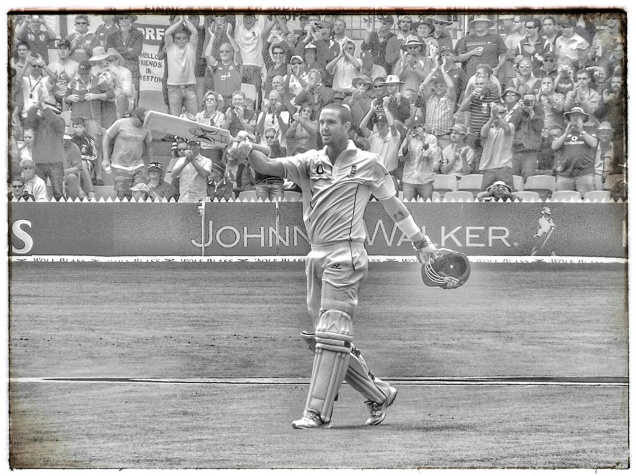
Kevin Pietersen – The Test Hundreds

australia-2006-sim-1-305-02.jpeg.jpeg

A while ago, a good year or so probably, in one of our editorial meetings Chris and I were pontificating – because we pontificate well – as to what we could do for future pieces. I mentioned that although a massive fan of all that KP did for England (well, nearly all), it’s got to the point where the very mention of him has some of our supposed cricket lovers rolling their eyes, but that there were things that I would like to do around his career and put up as posts.

Chris, in his sage like way – because he sages well, a Yoda figure – said something along the lines of “you should write a series of articles on his great innings for England” but advised I should leave it “for a bit”. We discussed about how his innings impacted on English cricket, the important moments, the approach, and that I should do something in the vein of the piece I did on Thorpe’s centuries.

The thing is, I have nearly all of KP’s centuries on DVD. In either highlight form or in the case of two of his Ashes tons, in full. A number of them are also on youtube. So there’s plenty to look at and review in terms of material. Then there are the books written around the time of some of them, including KP’s tomes, varying as they are in usefulness for the purposes of this set of pieces (Glenn McGrath, on a speed read of his book, barely mentions the 2005 Ashes!). But throughout the review of the hundreds there’s nearly always that sense of utter brilliance that was, by pretty much common consent of all his peers in the team, beyond their comprehension.

Good friends of mine, who’ve known me decades, cannot understand why I am such a fan of Pietersen’s. He seems, in their eyes, to embody all I hate in sport. The flashness, the assuredness, the flamboyance, the appearance of I above Us. But I’m not sure that’s necessarily true. It can’t be abrasive characters because I’ve always sort of liked Nick Faldo. It can’t be talented geniuses who rub team mates up the wrong way because I love Brian Lara. I think they reference across to my “hatred” of Manchester United and especially David Beckham, but that was because I hated (and still do) United and he was the epitome of why. Pietersen was playing for my team, and in fact Beckham, post United was nowhere near as loathed when he played away from United and was a key player for England.

So for this series of pieces, which will take some time, and I may never finish, I’m going to look at all KP’s test hundreds. I may take one in one piece, may couple some together (going to struggle with that one to set up a declaration in the West Indies), but I’ll do it looking at the footage I have and discussing each one. Of course, that means the first is the 158 at The Oval in 2005, and books could be written on that one alone. As always, I’ll intersperse these pieces with personal recollections, photos if I have them (I saw three in the flesh, and the start of a fourth) and anything else that comes to mind. Pietersen is a divisive figure, putting it mildly, but it is because of what we saw, and how he did it, that makes those of us who were furious at the end of his England career how we are. How can you not want to see him do “this” again?

So…Part 1 – Century #1 v Australia at The Oval – September 2005… Coming Soon. But in the meantime, let’s get the introductory part to prepare for it.
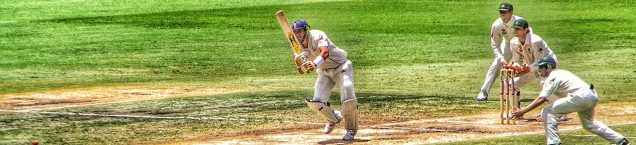
cropped-australia-2006-sim-3-384-02.jpeg

To go into the story of the 158, you probably have to go back a long way to the way Pietersen’s career unfolded. But I’ll spare you the county details which you can read in Paul Newman’s ghost-written autobiography of Kevin Pietersen which came out soon after the Ashes victory. Instead the true beginnings were in Zimbabwe, at the tail end of 2004. All through that summer I recalled that Kevin Pietersen’s name was in contention for the A team, unconstrained by full country qualification requirements, and he’s played his part in a massive England A innings in India that also ended in a massive run chase by the home team to win the game. I’d seen Pietersen play at Whitgift School for Nottinghamshire against Surrey, and although remembered some clumps to leg, and a couple of big shots, I also recall falling asleep on the grass bank! That game pre-dated my Olympus Ultra-Zoom camera so no shots of the man from them.

Pietersen was picked for the Zimbabwe ODI tour which attracted, shall we say, a fair bit of controversy. I think, and I could be corrected here, that it was the last international tour not covered at all on live television in this country. So what came back were news reports and scorecards. In his debut he made 27 not out to steer England home to a relatively small total with a couple of overs to spare. Ian Bell had made his ODI debut too, and done very well, making 75, whereas the only report I could find on KP’s debut was:

Pietersen eventually hit the winning runs, but not before running out Collingwood and twice almost doing the same to Jones.

Some might say there was a warning right there. The second ODI, also in Harare, saw KP deliver a more substantial return. He made 77 not out in 76 balls, including three sixes, to get England to a very competitive 263 – he and Geraint Jones put on 120 in 13 overs and put the game out of the hosts reach.

Pietersen and Jones hit maiden one-day international half-centuries in a rollicking stand of 120 off 80 balls, which stood for four days as an England record for the sixth wicket against any opposition. Pietersen’s innings had the air of an announcement. Arriving in the 26th over with England stuttering on 94 for three, he was initially studious, taking 40 balls over his first 16 runs, before opening up to finish with 77 from 76, including four fours and three sixes.

As the Almanack expressed this as an “announcement”, the thought that KP might actually play for England in the next Ashes probably seemed fanciful. But Vaughan was beginning to be convinced, and maybe this is in hindsight, he thought KP had that “something” that was different. In the Third ODI, Pietersen wasn’t needed as a century from Solanki and 50s from Bell and Vaughan meant England chased down a total for the loss of two wickets. Game 4, also in Bulawayo (where the 3rd was played) saw KP get a first ball duck. But he’d done enough to convince the selectors he was worth a go for the ODI series in South Africa, and we pretty much all know what happened then.

That series, where Pietersen made three centuries (although none in a winning cause) ranging from the bravado of Bloemfontein, where one might say he went a little over the top in celebrating, to the rapid but ultimately fruitless explosion at East London, and the worthy but let down by his team mates 116 at Centurion. Pietersen had proved a point, and none more so than his international TV debut at Johannesburg where he confronted the hostility of a crowd and an opponent he had riled, stared them down, and held firm to assist a D/L win.

Nobody seemed happier than Pietersen, who was there at the end after being loudly booed while walking out for his first innings against South Africa, the country he abandoned in frustration at a perceived lack of opportunities. His initial exchanges with the always theatrical Nel provided the most dramatic moments of the game, with Pietersen struggling nervously for 11 balls before getting off the mark.

Pietersen weathered a hostile reception from the crowd, and the odd word from the fielders. After a nervous start – he played and missed at his first ball, at Nel – he proved a worthy replacement for Strauss, as he and Vaughan moved seamlessly through the gears. Vaughan brought up their fifty partnership from 73 balls with a forceful cover-driven four, while Pietersen’s thumping on-drive took England past 100.

The centuries and the attitude that was reported to come with it seemed to indicate a coming force, and conjecture already surrounded how he could be fitted in to the test team. Michael Vaughan claims that his mind was made up that in some way he had to be selected for the Ashes. A lot of weight was being put on whether you had “mental scars” from too many Ashes beatings. Here was a man, unburdened by history, it seemed, fearless and relentless. It seemed too good to be true. It probably was.

Seasoned cricket fans on this blog need few reminders about the events of early 2005. England’s test team had won in South Africa, without Ian Bell who had made his debut at The Oval against the West Indies the previous year. The England team that finally won in South Africa contained a line-up of Trescothick, Strauss, Key, Vaughan, Thorpe, Flintoff, Jones at the top of the order, and with Freddie being a clear choice at six, the main vacancy appeared to be Key’s. This was despite an impressive innings at The Wanderers, and a double ton in the home series before. Bell was clearly earmarked for three, judging by the press statements (Butcher had been injured in South Africa and never played another test) in advance of the home series against Bangladesh. There seemed little threat to Thorpe, who although creeping on in years, had been a vital cog in the previous series (his century in Durban making the game totally safe in a famous fightback, and also vital in the West Indies the winter before). Whispers started to surround Thorpe. He was too old, too many scars, going to retire soon etc. etc.

Those whispers weren’t made any louder by his form in the Bangladesh series, where I don’t believe he was dismissed, but also got little chance to make an eye-catching hundred, while Bell did at Chester-le-Street. The batting line-up seemed settled then, and in truth there was not a lot of noise for Pietersen. Then came that Sunday afternoon in Bristol.

I was out watching my club side that afternoon (my Mum was in the last throes of her cancer, and I took the chance to meet some friends as a brief release), and so have only seen the very repeated highlights on Sky. The innings that won the game had all the same bravura of South Africa. He dismantled Jason Gillespie in particular, and gave off that self-assured, confident demeanour that would delight and enrage in equal measure. He also had narrow escapes on run outs. But this was totally un-English in its approach. It reminded you of a more developed, more accomplished Ben Hollioake at Lord’s. It wasn’t really true until he did it here. Sure, he had played well in the T20, but this was nearer “proper cricket”. The crescendo grew.
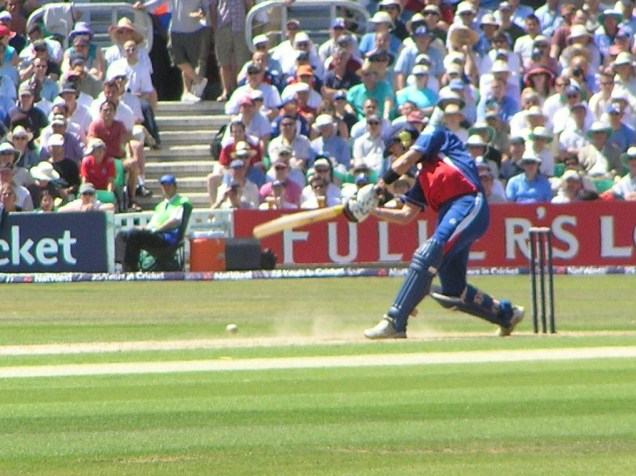
OLYMPUS DIGITAL CAMERA
In action v Australia at The Oval – 12 July 2005

I was at The Oval to see his 70-odd pull England to semi-respectability and it was the second time I’d seen him in the flesh. I really can’t remember a lot. My mum had passed away 11 days before it, and her funeral was the next day. As a release it was great, but as a day’s cricket, Australia’s win passed me by. My mind was more on what would happen the following day, putting the ill-fated eulogy into my head, worrying about my Dad and all that. Compared to the events of the following day, the effects of which persist to this day, seeing a KP 70-odd hardly resonates. But where it did, it mattered. Now the calls for Pietersen to be in the test team were unstoppable. And in the firing line was Graham Thorpe.

Now, as you may know, if you’ve read the blog long enough, Thorpe was/is one of my favourite ever players. His hundred in Barbados in 2004 is still one of the greatest innings I have ever watched for England. When he got to the hundred, that shot of adrenaline, the thing that makes your hair stand up on the back of the neck, was amazing. The ovation at Kensington was incredible. He had fought so hard, and you’d think that fighting that hard would be what was needed against Australia. We thought wrong.

When Pietersen was up for selection there was absolutely no doubt that Ian Bell would play. None. In hindsight we all say “well, he shouldn’t have played instead of Thorpe, it should have been Bell” but that was not on the cards. Thorpe was in danger. Pietersen batted in his position in the side – number 5. Thorpe was the oldest. Thorpe wasn’t mobile in the field. Thorpe had back problems. He looked vulnerable, and when the axe fell, it was on him. He’d just had his 100th test match, and it seemed a neat end. But there still are the pangs of “what if”?
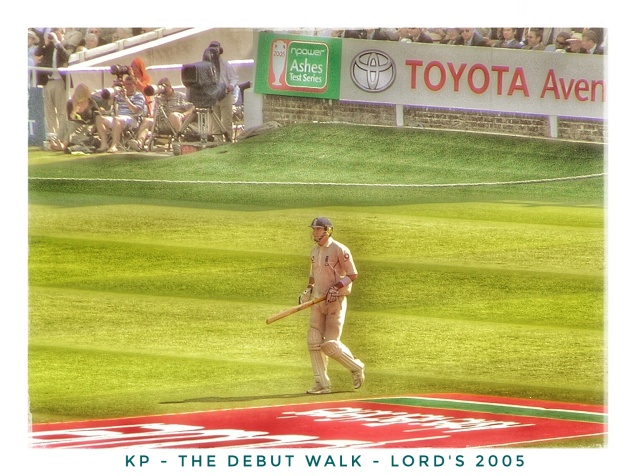
ashes-day-1-21-july-2005-187-02.jpeg.jpeg

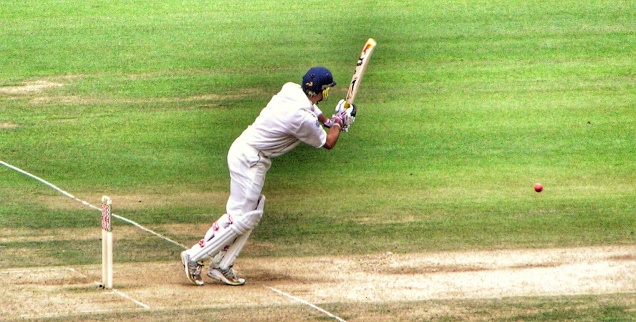
I was fortunate enough to be at Days 1 and 3 of the first test match. Again, anyone with a passing interest in cricket does not need a reminder. KP came into bat at 20 for 3, saw two more wickets fall quickly, rebuilt the innings to a degree with Geraint Jones, and make a fifty, including smashing McGrath into the Lord’s Pavilion for 6. In the second innings he made another 50 in a totally hopeless cause, and despite a soul-crushing defeat, loads of dropped catches (although he did effect a run out) and all round feelings of “here we go again”, the man with the mad hairstyle had announced his arrival.
ashes-day-3-23-july-2005-387-02.jpeg.jpeg

The Edgbaston test saw KP play his part in the rollocking 400 in 80 overs first day, with a quickfire 70-odd in concert with Freddie, and then a 20-odd in the second dig. Diminishing returns at Old Trafford, including his first test duck were lost in the tenseness of the test, and he did not pull up any trees at Trent Bridge.

So to the Oval. Here is where we pick up the story of Kevin Pietersen’s test centuries. The next instalment will be along when it is written. Keep your eye out…..
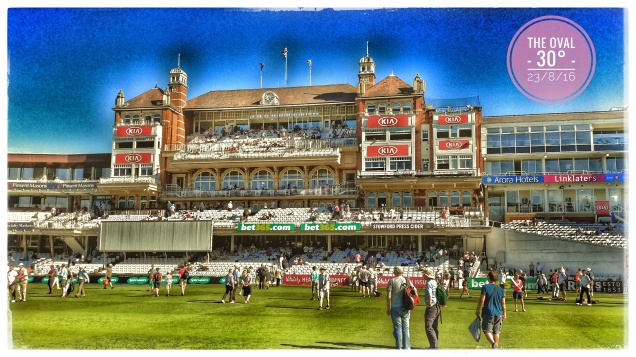
Four Sessions, 30 Degrees, Two Currans, One Sanga

20160823_162609-02.jpeg

I used to be a Surrey member. I’ve been a supporter since the 1970s, when I followed my deceased grandfather’s teams rather than my Dad’s (Dad was Kent), and thus can’t be accused of the old “bandwagon” tag. But I did become a member for about six years from 2001 onwards, and spent some great days at The Oval, as well as going to Guildford and Whitgift over the years.

I had some leave to take and thought the Lancashire fixture looked like one to be at. For me Surrey v Lancashire will always bring me back to a magnificent tense Day 4 back in 2002, when Ramps took us home against a pretty decent Lancashire attack (Chapple, Flintoff and Hogg). This year’s match saw two teams looking up and down, as the table is very congested in the middle, with only Middlesex, Yorkshire and Nottinghamshire really sure of their fate (safety/relegation). All eyes look at Hampshire and what one win might do to the competition, so although Surrey lay in third place, they had played more and could not afford a slip-up. A win would guarantee survival, more or less.

Continue reading

ODI #2 – Match Review

England won by 4 wickets. I think.  Pakistan were 2 for 3 and that was pretty much it. Sarfraz made a hundred, and really enjoyed it. England chased down the runs, Joe Root hobbled to a score of 89, Moeen Ali played enough shots to get people doing the ritual purr, Jason Roy played a shot that said “open in tests in India”, and a tedious 50 over “contest” played out in front of a crowd that had little to ignite it.

For the record, I fell asleep for 45 minutes during it.

I’m not sure the game merits much more comment.

Dmitri.

OOOOPS! 12-8 IN THE SUPER SERIES.

England vs Pakistan: 2nd ODI

No form of cricket can guarantee close matches or excitement, and the first game somewhat petered out in a drizzly mess.  But even though England’s win was ultimately confirmed by Messieurs Duckworth Lewis and Stern, there was little doubt which way the match was going anyway.  It was a curiously old fashioned game, at least as far as Palistan were concerned, as their innings brought back memories of England under Flower and Moores as much as anything.  260 may even be a “winning score” as far as the statisticians are concerned (probably not) but England were in complete cruise control throughout.

The second match therefore will be interesting to see how the visitors look to approach it, for England look a real force in the one day format, one who seem quite capable of reaching another hundred on top of that.  That’s not to say they can’t fall in a heap, for the shorter the game, the higher the level of risk, and the greater the opportunity for collapse.  One of the more pleasing things about this England side is that when that does happen, they regard it as an occupational hazard, shrug it off and continue in the same vein.

Yet if the batting is doing well, it was the bowling, or more specifically, one element of the bowling, that caught the eye.  Mark Wood has shown he has ability and pace before, but his entire England career to date has been while labouring with the presence of an ankle problem.  Having been away for quite some time getting it sorted, he is now back – and my, how he is back.  His pace is right up there with anyone, and it was startling to read that he feels he’s not fully there yet and could get quicker.  It may yet be the best news of the summer providing he suffers no reaction.

In the days between these matches England confirmed that they will tour Bangladesh this autumn.  The ECB rarely earn praise from anyone – well, apart from one or two for whom they can do no wrong no matter what – but while it is impossible to judge the rights and wrongs of this particular decision, they do deserve praise for at least trying wherever possible to ensure these tours go ahead.  It’s not the first time, back in 2008 after the Mumbai terror attacks, England returned to the country, ensuring that normality was restored in sporting terms.

Again, we must trust the Foreign Office and the ECB’s own advisors that this particular decision is the correct one, but assuming it is so, it would still have been easy to use the security situation to cancel it.  Indeed, there must be a suspicion that other countries may well have done so, and thus with the proviso that we do not know the reality of the decision, the ECB do deserve credit for not using it as an excuse to avoid going.  Notwithstanding Pakistan’s wonderful rise to the top of the Test rankings, it would have been crippling to Bangladesh had it got the go ahead.

The ECB have told England’s players that they can drop out of the tour with no effect on their careers, but whilst this is a good thing to say, the truth of the matter is that for all but those absolutely certain of their place, it means nothing.  Players who do well are always going to be in pole position, the man in possession has the advantage.  It means that for some, there will be some soul searching about whether to make themselves available or not.  It is hard to think how else the ECB could have done things, they may be many things, but they are not fools, and they will be as aware of this as anyone.

Finally in other news Somerset have announced the prices for the T20 international between England and South Africa next year.  It is the first time they will host an international in 30 years, and they seem determined to make the most of it, by announcing ticket prices of between £60 and £80.  It’s not the biggest ground, it is a big event for them.  But it is still an outrageous price.  There seems little doubt they will sell out, and therefore in commercial terms it’s justifiable.  Yet once more it is those who support the game being used as a cash cow and nothing else.  Commercially sensible yes.  Grasping and greedy, also yes.  I trust they’ll use the financial bonanza wisely.

2nd ODI comments below

England vs Pakistan: 1st ODI preview

It’s excitingly poised at 8-8 in the Super Series as we go into the ODI portion of Pakistan’s tour.  What?  You weren’t aware? Come now, this is what makes cricket relevant and modern, this is how we provide context for the game.  Perhaps it was lost in pointless discussion about such things as the extraordinary achievement by Pakistan in going to number one in the world Test rankings.  I mean, who cares about such irrelevancies like that?  Who would note that a side who haven’t been able to play so much as a home match in years have gone to the top of the pile?  No, no, there are bilateral trophies, and Super Series that are far more important.

OK, although the sarcasm mode is deserved, in reality we do have some more cricket coming.  And somewhat peculiarly historically, we go into an ODI series where England are the ones who have been playing vibrant cricket, while Pakistan are much less certain about where they are and what they’re doing.  A comfortable enough win over Ireland gave them a decent warm up, but with good weather forecast, it’s more about whether Pakistan can match England’s batting firepower than anything else.

There’s no question that as far as this blog goes, Test matches are where it’s at.  In the baldest terms, the number of hits received for ODIs is far below those of Test matches.  Personally, I find them enjoyable enough to watch, but rather instantly forgettable.  That’s illustrated as much as anything by having to remind myself of how England have done in recent outings, and vaguely trying to remember who the hell is playing.

It’s not to say that the shorter forms of the game are unimportant, for the financial realities are always that 50 or especially 20 over cricket is where the finances are most supported.  There’s an article in there which I will return to at some point soon about why there’s no excuse for one form of the game to be in trouble, it can only be through lack of care or deliberate action, it’s just that World Cups aside, they don’t live long in the memory.

It’ll be on, I’ll pay attention to it, and I’ll likely enjoy it.  Just don’t ask me in a week what the scores were, because I won’t remember.

Comments on the game below!

Pictorial Interlude

Another set of pictures for your enjoyment / amusement / couldn’t give a stuff about… All using various Snapseed effects.

p1050463-02.jpeg
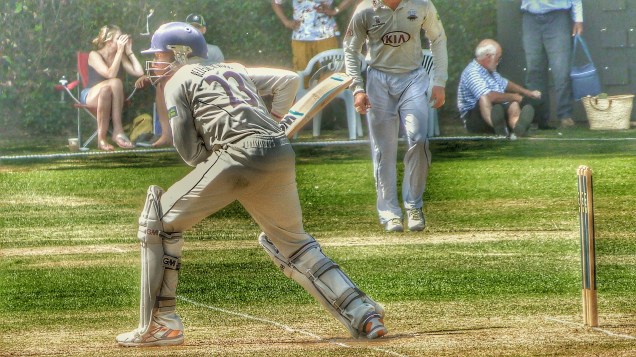
Brendon Nash for Kent v Surrey at Guildford. Rory Burns in interesting pose….
p1050414-02.jpeg
Dilshan – Surrey v Kent at Guildford
p1060790-02.jpeg
Derbyshire bat v Surrey at The Oval last summer
p1070436-02.jpeg
Malan down the wicket v Surrey a couple of week ago at Lord’s
south-african-backup-164-02.jpeg.jpeg
Matthew Hoggard – Newlands – 2005
p1070534-02.jpeg
A Curran….
p1050375-02.jpeg
Daniel Bell-Drummond
p1060707-02.jpeg
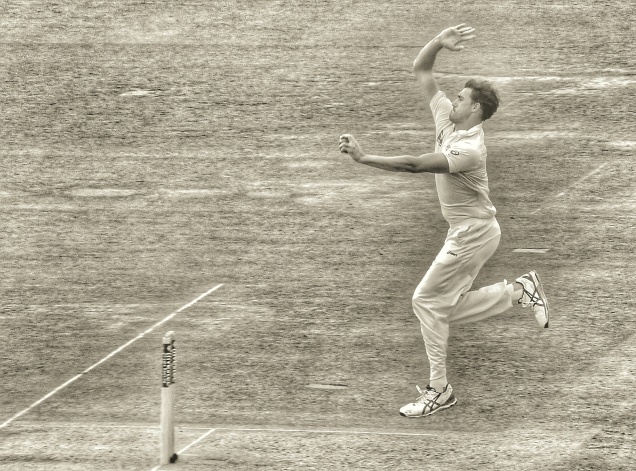
Mitchell Starc at Lord’s in 2014

Around The World – Part One

An update on world cricket in three parts. Today, part one on India, Pakistan and Australia. A brief review of where we are, a look forward to the winter and other assorted comments.

The World Game… Test Cricket

This blogger loves test match cricket. You know that. But there is not enough time in the day, or the week, to keep up with it all. Not while holding down a full time job, and keeping up with all my sporting interests. But I can take an overall view of what’s happening, subjecting myself to the greater experts out there, but putting down a starting point for a discussion. Hopefully.


India (Latest Series – Leading 2-0 v West Indies (a))

The Indian cricket team, on paper, doesn’t strike fear in the hearts. This may be because I take a rose-tinted view of the past teams, with the Sehwag-Laxman-Dravid-Sachin-Dhoni axis at the top of the order, and with a quality seamer in Zaheer Khan. Spin also seemed more daunting with Kumble and Harby over the past couple of decades. The team is currently playing the West Indies in a four test series (and by the time this goes to print, it will all be over) and they have handled the hosts quite comfortably. The batting revolves around Virat Kohli, who has looked good on this tour at times, with solid citizens like Rahane to back him up. The opening slots look to be between 3 players – KL Rahul, Murali Vijay and Shikhar Dhawan – while Pujara, who looked awesome a couple of years ago, seems to have really gone off the boil. In this series India have played Ashwin as a number 6 bastman (and he has rewarded them with two centuries) but that has to be an unlikely gambit to play at home against England, one would have thought. Saha appears to have nailed down the keeper-batsman slot, which leaves the bowling. We’ll see three spinners I would imagine (given the quality of Ashwin’s batting, we are talking a potential all rounder here) in the series against England, and hoping that Ishant and whoever else is doing the seam work can do their share.

Before England visit India, there is the small matter of a three test series for India at home to New Zealand. These will be played at Kanpur, Kolkata and Indore, with the first starting on 22 September. The five test series against England will start on 9 November in Rajkot, with the following four matches in Vizag, Mohali, Mumbai and Chennai all being wrapped up before Christmas. India are also scheduled to be playing a one-off test against Bangladesh at home – that’s taken them just the 18 years – at Hyderabad in February. I refuse to believe that India will then let their international players twiddle their thumbs until the IPL starts, but Cricinfo has not got them playing anyone until then (but it looks like Australia will be visiting – see below). Surely Sri Lanka are available for an ODI series?

england-v-india-august-2007-3rd-test-212-02.jpeg.jpeg
Zahee Khan – the last truly fearsome Indian seamer?

England fans are always going to wonder about India. It’s terribly hard to shake the memories of the Indians last two tours to this country. Firstly the 2011 tour, when a keenly fought first test gave way to a downward slide in performance was put down in part to a dying of the light of the old pros (although Dravid gave a lie to that), part due to Zaheer’s injury and part to boredom on the part of India – and a bloody decent England team playing just about as well as they could. 2014 was different only in that the performances lasted until the second test, before the remainder of the test tour descended into performances of atrocious quality. India will be back here in 2018, and with the different style of Kohli as captain, I don’t expect phlegmatic shrugs and devil-may-care attitudes. Not sure Kohli hasn’t seen a situation he doesn’t see as a competition, and I put the brilliant but undervalued Ashwin in the same category. Both are fine cricketers. Many love to watch Rahane, while I’m quite partial to the traditional opening skills of Murali Vijay. The bowling will always be a hostage to the conditions that home matches are played in.

Many think that the five test series will be played on similar surfaces to the ones that took South Africa down last winter. Some on here were particularly scathing of those wickets. We’ll get an idea when New Zealand visit. England know what is coming. India do to. They can reinforce the number one position in the world this winter against two good foes.

PAKISTAN (Latest Series – 2-2 away v England)

The English summer, as Chris said in his recent piece, was a magnificent one for Pakistan, and for England fans who craved a competitive series with committed and competent foes not from the Big Three. It wasn’t 18 months ago that New Zealand had provided an albeit short quality series, but Pakistan’s longer series was much to enjoy, and greatly received. They stand on the cusp of World #1, and yet this may be elusive as India may well reinforce their lead. Their core is quite old, with two key batsmen nearer pensionable age than school age (allow me some poetic license with Younus, eh) and the quite experienced tier underneath looking good at home, but not so much on the road. However, I mean Asad and Azhar in particular here, both adapted and made test hundreds in England to add to their excellent home records. Like many world teams, the openers are not settled, but they may have found a good one in Aslan (a lion heart – sorry), and I suppose Hafeez may come back for home conquests. It was interesting that Azhar opened in the final test, and whether this may be his new position we’ll see in the fullness of time. The bowling was up and down in England, but is going to be useful in its “home environment”. Actually, Yasir Shah is probably a bit more than “useful” in the UAE, while Amir will be good for the run-out in England, and Wahab, Sohail and Rahit all looked decidedly decent at times. They’ve got some great talent.

According to the cricinfo page on future series, Pakistan will not be playing tests in UAE this winter, but they have two test tours lined  up. The first of those is the abomination that is a two test series, which makes no sense still, in New Zealand, with the matches being played in Christchurch and Hamilton. These take place in November. This is followed by a tour of Australia for three tests – the first, in Brisbane, is a day-night match, with the second and third at the traditional Boxing Day and New Year’s venues of Melbourne and Sydney. International duties are fulfilled by the end of January in Australia, and there then seems a gap. Maybe the path is being cleared for the PCL, or whatever it is called? The ICC Future Tours programme (stop laughing Simon and D’Arthez) suggests they’ll be contesting a four test series in West Indies. As if. It also suggests that they’ll be playing a two test home series against the West Indies in October, but I haven’t seen a lot about that, have you?

Pakistan were impressive tourists, but we could see their flaws in the way they were thrashed at Old Trafford, and let a great position slip away, in my view due to an abundance of caution, at Edgbaston. When on the front foot they can be excellent foes, and at Lord’s they won a close game by keeping their heads when England were losing theirs. The team’s core is old, and when they go, which won’t be long, it’s going to need Azhar, Asad and Sarfraz in particular to take up the cudgels of senior pros and lead from the front. They have the ability, but whether they have the sticking power is debatable. But their ability, their flair and their personalities shone through and the long-awaited renaissance of Pakistan cricket looks to be on track. Whether it is sustainable, and whether it crosses into other formats, is a matter of wait-and-see. The world would be a better place for a firing Pakistan playing regular international cricket.

AUSTRALIA (Latest Series – Lost 3-0 in Sri Lanka)

What on earth is going on? We know that for non-Asian teams, winning away on alien surfaces is a treasured prize, but the same goes for Asian teams on their visits overseas, and very little slack is cut for them (see my views on India in 2014). This Australian team is an absolute mess when it leaves the shores of their beloved home. It folded any time there was movement in England in 2015, and now, in Sri Lanka, a team rebuilding after star players have left the stage, who looked dreadful for large swathes of their previous series, turned over Australia in three hard fought matches. Their bowling didn’t let them down, it was the batting putting their bowlers into various states of Mission Impossible. On paper, with Warner, Smith and Voges an experienced trio anchoring the batting this should not happen. Joe Burns and Usman Khawaja are supposed to be talented batsmen. But there is something about Australian selection that is harking back to the hilarities of the Hilditch regime, where bits and pieces players are popping up at number 5 (Moises), and talents like Burns are given a couple of bad games before they are fired out of a cannon into limbo. Australia used to be the benchmark when it came to shrewd considered selection. I’m wondering if Ted Dexter is secretly running the show.

Australia will fall back on their success at home as they attempt to get over yet another Asian shambles. They go to South Africa for some ODI nonsense, before hosting the Proteas in Australia for three tests in November (South Africa want Boxing Day matches of their own, not bowing down to Australia, so it seems unlikely Sydney and Melbourne will see them much in the future). Those matches take place in Perth, Hobart and finally Adelaide (a day-nighter it seems) and will probably end up in a comfortable home win with lots of players looking really good. This will then be followed by another three test series against Pakistan (see above), where we will see if normal service is resumed, and Australia dish out a beating. After some ODI action, the FTP has them playing four tests in India in the early part of 2017. No details of venues yet, but Bengaluru, Dharamsala, Ranchi and Pune are mentioned as the potential hosts.

p1060707-02.jpeg
Another Mitchell – Impressive in Sri Lanka. Can he stay fit?

But what of the team? The flow of ready-made, top quality batsmen, with almost flawless techniques seems to have passed. Australia, rated number 1 until recently, are a pale shadow of past number 1 teams – hell, if you need a benchmark from 10 years ago, they are it – and are something we’ve never associated with them, brittle. From losing the first test having bowled the hosts out for 117 in the first innings, to contriving to lose a test match in Colombo where the hosts were 26 for 5 in their first innings, and the visitors were 267 for 1 in their reply is staggering. These players appeared mentally bereft. The old tenets of international cricket were ripped up. Australia losing their composure? Really?

Selection for the first home test is going to be fascinating. Joe Burns had two ordinary tests and was replaced by Shaun Marsh, who promptly made a ton, but has let Australia down before. David Warner is secure, but he went another Asian series with no real success. Steve Smith was a centurion in Colombo, and made starts in the other two tests, but he’s not convinced as a leader as yet, and may find himself in a position that Clarke inherited, but without a Mitchell Johnson to bale him out. Voges had a low-key series, Khawaja, having looked a million dollars last winter, was dropped again as soon as he failed in a couple of games. The bowling was fine, although Lyon wasn’t the success that was hoped on wickets where Herath made hay. But it was Australia’s sense of throwing selectoral mud on the wall and hoping some would stick that mystified. Heaven knows what happens when they go to India next year. It might not be pretty.

One senses with Australia that they will maintain home dominance and still falter when not expected to away. Despite weaknesses against spin, and the apparent discomfort on Asian surfaces, no-one expected that latest reverse to be so dramatic. Their handy dismantling of the New Zealand good news story last winter is evidence that this is a quality side. Where they concern me, if I can be concerned about Australia, is that this team needs selection patience, and they aren’t doing it. It’s fine and dandy to have a hair trigger when your team is dominant and your 2nd XI would probably give you a better game than most test teams (as in the early 2000s), because the top boys need to maintain their standards. In a team bedding in new players, that’s not sensible. I mean, seriously, who envisages Moises Henriques becoming a test stalwart? We saw this in 2010-11, albeit a bit more laughable, but the portents aren’t good. Burns and Khawaja are quality players. Faith is needed. Perhaps the most interesting country to watch this winter. It might be bipolar in the extreme.

Read All About It – Written Media Review

I thought I might take a look, in a bit more detail, at how the domestic (to the UK) written media has evolved and changed over the past couple of years. While I don’t have the in depth knowledge of the commercial metrics that some of the contributors here retain, I do think I know a little bit about the message drivers. I’ll also go into some of the social media developments – blogs, Twitter etc. – and what I think of the future for BOC.

Dobell Spy Dossier

This blog, and its predecessor, made its presence felt when it commented upon the journalist corps and its attitude to the events of 2013/14. I had always had an eye on the writing corps because I saw them as our window to the play when we weren’t there, and also a little bit inside to tell us the latest goings on. I’d always been a bit of a sceptic, probably since the Hold The Back Page days, when the personality of the journalist seemed to be more important than the story. Mark’s take on that always makes me smile. There was always a thought that this was a dying trade, as the internet and cheaper writers were available, and cricket, like baseball in the US, seemed a sport open to “new media”. I never thought I’d be part of it, writing away, with no-one paying attention. 2013/14 might have been the Year Zero, but it had been building up to a crescendo for a while. Did the print media care more about themselves than they did about the readership. That’s been the question for me.

Jarrod caric
Wasting Time The Right Way

Despite a journo telling me that we are wasting our time talking about the press because no-one gives a shit about them, the evidence on hits and responses shows this not to be the case. Since the end of that ill-fated Ashes tour. there has been some interesting interaction with a number of the print media, and some of the television/radio gang too, but while quite frequent in 2014, and early 2015, in the past few months that has slowed down to a trickle of comments. But it is funny how pieces about journalists seemed to get traction. We’ll see how this goes down. What I do know is that the old media don’t come around here much no more.

For example, I can’t remember the last time Etheridge got enraged, Selfey called us bilious inadequates, Pringle called us irrelevant, and Paul Newman said we are “nothing important”. In some ways this is a shame. Our penchant for investigating their writing was at times great fun, but also headbangingly annoying. It provided the fuel to run much of this blog, but was also something that needed writing about, and some of them cared what we did. It is evident that quite a few of the journalists are fully aware of some of the things written about them. For example, I was told categorically that Newman never read this blog. I’ve never abused him, as far as I know on Twitter, but he blocked me, and has done for a while. Did someone read it to him? He knows enough about it to deem it “nothing important” which isn’t really the point, but if it keeps him happy, who am I to complain.

Interaction has diminished because, most definitely, the heat is off, for now. In much the same way as Ed Smith is riding out the current plagiarism accusations by saying nothing and hoping it will all go away, he has a precedent in the way the press had time on their side with the fallout of 2014, knowing, that at some point, the main cornerstone, a recall of KP, would become impossible for even the legendary fruitfly to pull off. It’s no coincidence that some of the media who spoke to me in 2014, and who I struck up reasonable conversations with, now barely bother to feel out how the proles are taking things. That’s fine. But if there is a future storm, we’ll be a little bit more guarded than we were before. Others, who were testing us out, taking the temperature, and even getting involved, see no need now despite claiming they wanted to have an interaction. Again, that is absolutely their call, but again allows us to look at them as a “cosy little clique”, with us not sure what side they are on. Actually, we know full well, but let’s be polite here.

There has been a decided trend in cricket reporting. As the sport gets less and less visible, so paying the big beasts large sums in a crowded media market becomes more anachronistic. It has been evident this year. The departure from the scene of two key players, following on the release of Pringle a year or so before that has confirmed it.

The noticeable journalistic news of the past season was the moving on of two of those behemoths. The first was Stephen Brenkley, aka Bunkers, of the Independent, who appeared to be a casualty of the Independent’s decision to go online only. Bunkers filed his last piece as the season was about to begin, and I have to say, I have no idea what he is up to now. Bunkers will always, in my eyes, be associated with the “aplomb” verdict on Moores and Downton’s first presser. Bunkers’ removal / resignation was the canary in the goldmine as a cut-down, online newspaper was not about to keep the payroll of a minority sport specialist on the books when it could source copy from cheaper sources. Bunkers is a good writer, and I disagreed with a lot he said, but he had a turn of phrase that was clever but not, in the main, patronising. Deep down, I quite liked his persona, but he backed the wrong horses on the ECB front and for that he will not be judged favourably. But as I said at the time, we should not be rejoicing, firstly on a personal level, but also on our wish to see cricket in the spotlight.

Selvey Retirement Card

The departure of Selvey is definitely more seismic. This is the biggest of cricket writing beasts, and he is being moved on, and given his Twitter pronouncements, it appears against his will. This sends out the message that few are safe – is it new media and new audiences, or just the reticence not to pay over the odds? The game is losing visibility and although we may not like what he writes, his departure is a bad sign for the game.

Selvey’s not been shy in reminding people he is on his way, a decision that did not surprise your writers on BOC who had heard from multiple sources that this was on the cards, but maybe the timing did shock because we thought there was a natural fin de siècle at the end of the next Ashes series. Selvey is the cornerstone of the Guardian’s cricket coverage, and the feeling is if he could be dumped, so could anyone.It’s a chill wind blowing. England may be on the up, but if the game is so out of the public eye, the top people might as well be reading out the stock market prices.

On this blog the consensus from our commenters is that Selvey had it coming, and there are few tears being shed. I can’t celebrate people losing their jobs, but Selvey made sympathy tough for me. I’m sure there would be little sympathy if the situation were reversed.  He’s certainly dismissive of this “newer form” of cricket writing, and much was based on a snobbish “requirement” of having played at the top level to be an aficionado of the game. When being a former pro appeared to be the main reason for employment, things looked shaky. He thought our passionate criticism of his positions taken were an affront to his professional sensibilities. He reacted not with engagement, but with hostile fire. We’re not ogres here, and we believe a vast majority of the upset fans weren’t either. But it was either you were with him, or you could Foxtrot Oscar. Incidentally, exactly the same attitude a certain fruitfly has towards his detractors! Those that come in peace and constructive dialogue find we are what most of the readers of blogs and newspapers are – cricket fans. That care.

What we have, or at least had, in my view were three classes of national journalist (there are others, but lets deal with the three main sectors).

  • There were the old pros reinventing themselves as writers – we’re thinking Selvey, Atherton, Marks and Pringle. Athers is newer to the genre, and as he’s hidden behind a paywall, and I’m not walking conspicuously to the newspaper rack in the office to read him, is a little blindsided to me. Athers is not a source of any heat, nor, on most occasions is Marks. But the other two have been lightning rods.
  • There are the experienced writers, a genre being phased out, including Bunkers, to a lesser extent Etheridge (not really a call to be a writer in The Sun, not that his role isn’t skilled), Wilson and Newman. These are the hacks, the day to day sloggers, the test match reporters who weren’t former pros. They’ve done the hard yards to get where they are, and they stay there.
  • Then there is a third section – a newer breed. The likes of Dobell, who has been around a while, Kimber, to a lesser extent Hoult, (Booth crosses hack and new school), who don’t seem to treat their audience with contempt, and attempt to approach things in a more open manner. This isn’t to say they are not “hacks”, but they get “newer media” and its opportunities, and yes, its threats. That they are of the generally “younger” generation, may, or may not, be a coincidence.

wp-1468270250323.jpg

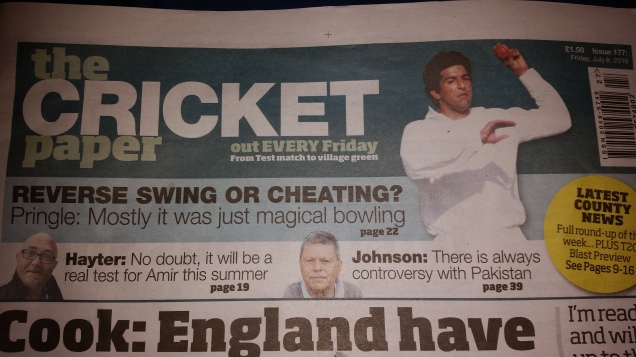
Of course, there are other areas of reporting I’ve not touched yet. The Cricket Paper, out every Friday, is a really worthy attempt to bring the old newspaper type reports into a distilled weekly package. It’s not perfect, of course it isn’t, but if it wasn’t there I’d miss it. It allows talented new reporters like Tim Wigmore to have an outlet, for which he is getting wider viewing as a result, and although I have my issues with the way Chris Stocks is going about things, and that it gives Derek a chance to air his misery, it is generally a good read. How viable it is in the long-term, I have no idea.

The Cricketer magazine has had a revamp, it looks quite good, but I can’t quite get past the Simon Hughes thing. He is one of those who effects to be a “man of the people” and in with “new media” but in practice I never see it, with his interactions quickly breaking down when challenged and reverting to “I know more than you because…” responses. He, and others, don’t have to read blogs like ours, or TFT or whoever, but there’s a good deal of journalistic snobbery in the Cricketer – Henderson and Selvey each month for example. Again, though, the failings as I see them are outweighed by the fact that there is a cricket magazine on the market and it can be worth a read. I don’t intend giving up my subscription just yet, though do note that I used to renew each September and now that auto-renew seems to have moved forward to June. They have given airtime to some bloggers – most notably our old friend Tregaskis – but it’s a toe in the water, and a risk. It was interesting that T’s most recent piece, a short one, about how close journalists were getting to players, sparked the ire of Jonathan Agnew, for instance. I thought that interesting. Maybe the Cricketer could try that approach again?

Then there is blogs, and blogging. While there is a twilight zone between papers and the bloggers, where the likes of Peter Miller and others inhabit, with a foot in both camps, I’m obviously interested in how they are working, but to do so, we need to consider what is being reported, and how/

How do people consume, if that’s the word, their cricket reporting? As you know, Chris, Sean and I do reports on test matches, previews etc., but we see them as part report, part opening up comments to the visitors here. We do not see ourselves as the alternative to cricket reports in newspapers and magazines. I rarely read those reports on newspapers, often, these days, scrolling through a Selfey tome to visit the resident muppets BTL, looking to see who can put out the most ridiculous or obsequious comment. The Telegraph website is an absolute disgrace, and I’m finished with it – a shame. It’s where I chanced upon the comments of Chris, where Nick Hoult resides, and where I used to draw a lot of material. The Telegraph has become a horror to visit and it really does Nick, an absolute trojan in the game, no favours whatsoever. Nick is an example of how studying and looking at things more changes minds. I used to be quite scathing. Now I know more, he’s a great example.

The Independent was only worth a look when Bunkers was there – and then only for laughs. No idea who writes for it now, and don’t know what they are saying. The Mirror and Sun are only read when someone leaves me a copy. The Express is a joke. Which leaves the Mail.

Newman Dossier

This is the only online site where I read the writing and ignore the comments. The focus, of course, is my perennial favourite, Paul Newman. He’s either excellent at his job, or the worst out there depending on your metrics. But, to contradict myself within one sentence, I think it is a bit of both. The articles, at times, are absolutely designed to provoke a reaction (aka blatant clickbait). His anti-KP screeds in 2014 were by far the most intense in their dislike for the controversial one from a journo – or gave the impression that he did. But the comments followed in droves. His defence of Alastair Cook, the England hierarchy and his attacks (the Bell one in particular) on potential rivals were seen as lacking integrity. It has been noted, that in my perception, he has been more vociferous against Colin Graves than he ever was against Giles Clarke in the Great Leader’s later years at the ECB. Graves made the cardinal sin of trying to finesse the KP situation when it wasn’t called for in Newman’s eyes. From that day it seemed as though Graves was in Newman’s cross-hairs. Not that he’s wrong to do so (especially over the four day test nonsense). I’ve been about as unimpressed by the Costcutter Clown as I was Downton. But Newman’s motives are absolutely not those I share, and he’s attacking Graves as an affront to the old ways, not some desire for a new broom.

While the Mail employs a stream of writers, including Booth, Lloyd and Hussain, Newman is the focal point here. After a quiet period where things had calmed down post KP and World T20, he got the interview with Andy “Dignified Silence” Flower in what seemed a barely concealed pitch by our former Team Director to have a more prominent role with the main England team. That that was followed, not long after, by an attack on the selection panel revolving around playing, or not playing, not fully fit players (Stokes broke down in his first test match back – something not noted anywhere near as readily as the row over the first test), which again was construed as a pro-Flower supremo piece. We can be accused (well I can) of tin-foil hat conspiracy theories here, but isn’t as if we don’t have form here with Newman and his sources. As you know, we have seen plenty of “good journalism” round these parts.

So, with a couple of small exceptions, this summer has been pretty quiet on the journalistic ire front. We saw the treatment of Nick Compton by some, which seemed to be borderline personal in places, as if Compton, who has as two test hundreds to his name, two more than Alex Hales, for example, was the first intense batsman to fail in England colours. There barely seemed an article by Pringle passing by where Ramprakash, who had a better test career than Muppet in my eyes, was not used to compare Compton. But in the end, the fact that Compton wasn’t, or isn’t up to it, was “proved” on the cricket field. His performances in the Sri Lanka series weren’t good, while Hales had a decent series so someone has to be on the hot seat. But the vitriol, and it seemed it from Stocks in particular, was something I’d not seen in a while.The calls for Vince seem slightly more muted to me – there’s an England player there but with mental blocks – is odd. He’s never looked like making a big score. I guess personalities matter.

Cricinfo remains a reassuring constant presence. I have a post on them alone in my head, so may well leave it until then to go into detail. The Ed Smith nonsense will pass – he’s not some ordinary OBO person so making a stand is harder – but the journalistic and writing chops of Dobell, Kimber, Hopps and Andrew Miller for starters, with all the others who contribute means it is a much better force for good than bad. We are really lucky to have such a vehicle covering our sport so well.

So to social media, and blogging. How does it look from my perspective after the test summer has ended? I have to say I don’t read anywhere near as much as I used to, as time pressures and other interests make a play for my spare time. The perception is that there is not as much to see. My “must reads” were always Maxie Allen, Tregaskis, Yates and The Old Batsman. Of course, there is also the Full Toss, seen by a few in the media in times gone by as joined at the hip with us – which wasn’t correct. That is not so much the case now, as James has taken the blog in a slightly different direction, which is absolutely within his right and he still produces fine work. But there is no doubt, if ever there was one, that we are two different entities now (not that we were that similar in the past – just we attacked the same targets) and I do miss Maxie’s takes.Long may they continue. James is a bloody hard worker and the site has some crossover and some distinct areas we don’t approach. Their presence is important.

Tregaskis plays his cards very astutely, posting little, but substantial and tenacious when he does.His jumping on the golf interaction in the UAE and the follow up non ODI with Hong Kong is the main time we saw the press truly interact with us in the past 12 months.

Yates doesn’t update his blog any more, but is still an astute and acerbic commenter on Twitter (if you can get through the darts stuff), and I’d love to see him get back on his horse. The Old Batsman, aka Jon Hotten, has gone from strength to strength and has shown how blogging can get people to notice good writing, but his blog is now neglected for other outlets.

The blogging environment is getting somewhat more scarce – I’m more interested in blogs delivering messages rather than trying to win writing awards (T does both, and I’m envious) – and quite often the biggest “enemies” of the writers are those who frequent BTL and put their own views prominently on newspaper comment sites, but seek to deny or decry those who take the time out to create their own space. Never understood that thinking. I see BOC as my home venue, and you know where to read what I think. I know where to go to find out where my antagonists comment, so I choose to avoid them. I see no point in going out of my way to say what I think. I’ll never understand them, even as my two co-conspirators tell me not to try! Which takes me on to the Danger Zone…

Twitter has its behemoths as well. Peter Miller is obviously quite a prominent figure, and he appeals to some and not others, in his double act with Dave Tickner – I’ve interacted a lot less in the past year as it does feel like too much of an in crowd. Fair enough. They are doing bigger and better things. Lizzie Ammon, who veers more to the journo side than blogger, given she is a journo, also caters for that audience, but not for my tastes as I stopped following a while back.

To me, the biggest question on Twitter is when does Innocent Bystander sleep. If you go on Twitter, he’s a must follow, and also, as much as you can judge someone by Twitter interactions, a top bloke. His coverage of the game is amazing. I’ve singled him out but there are loads of top people to follow, and in my view some to avoid, but I don’t doubt all their sincerity and love for the game, even if that is sometimes not reciprocated and my motives in particular are questioned. I’m not going to comment on Dennis Does Cricket. I really am not!

Now to us. Sean being brought on board was brilliant for us, and I’d like to thank him for all his work. He’s shown he can do this, and so can you! So we all met for the first time as the Glum Boy Three. As you may know, we had an Editorial Meeting on Wednesday, and the minutes have been recorded as follows:

MINUTES OF BEING OUTSIDE CRICKET EDITORIAL MEETING – 17 AUGUST 2016

  1. Attendees – Dmitri Lord Canis Lupus Old, The Leg Glance, Sean Great Bucko B

  2. Apologies – We apologise to no-one

  3. Items for Action – 2 x 3 rounds of beverages.

  4. Actions Going Forward – Write more articles

  5. Items for Discussion – Two of the editorial committee have made club hundreds. One has made double figures in hundreds. Bastard.

  6. Date of Next Meeting – Some time before Christmas.

It has been a curious summer. I think the first thing that needs to be noted is that for a blog like this to run as it does, it needs some commitment and a lot of hard work. It also has to be enjoyable to do. This year, from my perspective, the enjoyment has waned a little, but not enough to pack it in. Those who read this blog regularly and comment on here know this. They really get what we do, and what it takes, and I feel the same way about our commenters. We genuinely regret seeing some old faces go, but we are happy when new ones appear. We are particularly concerned that genuine newbies are allowed to dissent, without there being too much rancour. We’ve seen a few come along and stick, and that’s good. We do not want this being an echo chamber. We will maintain our policy on moderation – that is there really isn’t one, just behave yourselves.

In the same way an Ashes summer boosts TV viewings, and controversy drives hit spikes, we know there is a solid core of people who visit nearly every day, and even when we don’t post there are still a core amount of hits per day. No-one is confusing us with a national circulation, but we have our niche. It would be lovely to grow it further, but we will not do it by compromising our values and beliefs. We write because we enjoy it, we write what we want, we do not try to court hits via blatant clickbait, and we love interaction and comment. If you are prepared to come on here with that in mind, you’ll find me sticking up for you. If you question my motives, I’m afraid that’s not the way to keep me onside. Question what I say, by all means. Don’t impugn motives that aren’t there.

Here ends the ramble through the written media this summer. Hope there is something in it for all of you, and would welcome, as always, any views. Being Outside Cricket remains, and will continue, to provide comment, analysis, reporting of sorts, and a forum for you to discuss cricket. We will provide nostalgia, anecdotes and a platform for anyone who wants to write things on here that fit with our concept. We loved it when Andy and Simon provided us with pieces, and we’d like some more! The future looks busy – we have seven England tests scheduled by the end of the year, five of which are in India. There are some key anniversaries for series to go through, as well as a number of international matches that are sure to be interesting. There appears a dead spot for a couple of months next Winter, but then the following 12 months looks full on. Sean B, TLG and I are looking forward to it. Hope you are too. Where the print media is at the end of the next 18 months is anyone’s guess. Where the blogging world is, who knows? Maybe some new players can come on the scene and hit it off. Where English and test cricket is too is going to be interesting and with the flaws in all teams, plenty to debate. Let’s hope there are plenty of sources to read and talk about it.

UPDATE – I came across this piece in an old edition of Wisden Cricket Monthly from 1987. Amazing how the same themes come through three decades on, especially the bit about team selections (below the header “Briefed In Advance”. We’ve done a bit of EM Wellings before, I think, and he might have been a spectacular curmudgeon, but this certainly is something worth reading.

Wellings Press

Also, great to see Yates back on his metaphorical horse with a new blog post. Read him here.


Dmitri


Hand me Down a Solution – Series Review

In the early 1980s when growing up, summer holidays meant tuning in to BBC1 at 10:55 to watch the Test matches.  Come the end of summer, the feeling of melancholy at the conclusion of a series was always strong, with the only subsequent cricket being the end of season Lords one day final, which was akin to pretending to enjoy the sloe gin from the drinks cabinet when everything else has been consumed.  Times change, and cricket now is unending, where the finish to the Tests is merely a pause before the one day internationals begin, and then England go on tour somewhere.  In the same way that the end of the football season is a mere pause in hostilities, the end of the Test match cricket summer no longer normally carries so much power to create sadness.

And yet with this one, perhaps there is a little more in the way of regret at the passing of the season.  This is probably as much as anything due to Pakistan, who have been exceptional tourists, and thoroughly merited their victory at the Oval to draw the series.  Four Tests also offered up the reminder as to why a five Test series remains the best possible format, provided the series is a competitive one.  Few cricket fans would object to a decider for this one, yet it is a lament that so often is heard and never acted upon.  It was at least better than the ridiculous two Test “series” against New Zealand last year.

What the drawn series did do was silence those who were quoting the article of faith about England holding all the bilateral trophies.  It isn’t that doing such a thing isn’t a meritorious achievement, it’s just that something that no one had ever noticed or paid attention to before somehow became the highest possible achievement in the game in their eyes.  As with so many things, the context is all, noting success is a good thing, going overboard about it is not.  Doubtless, the bilateral series record will now return to being what it always was – a minor matter.

Given their troubled previous tour to England, Pakistan clearly intended to win hearts and minds this time around, and in that they succeeded.  It is a remarkable turn around for a side who it is probably fair to say were one of the least popular touring sides in England; they played with a joie de vivre that reminds everyone that cricket – even in its modern, money is all important guide – is a game, a pastime, and above all fun; the reason all of these players first picked up a bat or a ball in the first place.  The repeated press ups may have irritated the England players, but it amused the spectators every time.  Quite simply, the Pakistan team looked like they were enjoying themselves.  One particular moment comes to mind, a catch by Hafeez (who didn’t exactly have many high points) caused a young boy in the crowd to wildly celebrate, being picked up by the TV cameras and leading the player to end almost doubled over laughing, and applauding his young supporter.  It was a delightful moment, and one that re-inforced the image of a team comfortable with where and who they are at last.

Misbah ul-Haq remains under-appreciated in his homeland, but elsewhere he is approaching hero status for cricket fans.  The achievements are verging on the extraordinary, with Pakistan now having the most successful period in Test cricket in their history under his leadership.  It is quite exceptional in itself, and given his age, truly remarkable.  Misbah has made Pakistan competitive, and above all given his team their self-respect.  If it has to be that it is something more recognised for what it is abroad, then that is a pity, but it is still worth recognising.

So what of England?  The first part of the summer was routine enough, a Sri Lankan side shorn of its great players was despatched with little difficulty, but Pakistan proved to be something of a harder nut to crack.  This in itself came as something of a surprise to some, with many predictions of a comfortable England win before the series began.  Yet Pakistan were always going to be a threat, and in advance of the series the assessment of it being between two sides with good seam attacks, and patchy batting proved to be ultimately more or less right.  England had the advantage in the middle and lower order, while Pakistan had a (much) better spinner at their disposal.

Statistics can be gleefully misleading at the end of a series though: take the comparison between Moeen Ali and Yasir Shah, both of whom averaged over 40 in the series with the ball.  Yet Yasir was instrumental in both Pakistan wins, while Moeen – with the ball at least – certainly was not.  This isn’t a particular surprise of course, for Yasir is an outstanding bowler, and even the most adoring fan of Moeen would never make that claim.  But it does highlight the point that players can have an impact in a game disproportionate to their overall figures, perhaps we could call it the Ben Stokes effect.

England did have some real successes in the series, Moeen himself batted absolutely beautifully, that dreadful slog at Lords proving to be very much the exception.  It’s notable in his case that that particular dismissal didn’t stop him from using his feet to the spinners, most gloriously on that final morning at Edgbaston where in the first over of the day he served notice that England were going all out for the win.  That Moeen can bat is not especially surprising news, that his batting improves out of all recognition when given one of the batting spots rather than being in the tail perhaps is.  Either way, and given that England have limited spin bowling options – presumably Adil Rashid will come in for the India tour – his series will count as a success, albeit with a couple of major caveats.  One item of note with Moeen’s bowling is that although his average is certainly not the best, his strike rate is quite decent, comparable with Nathan Lyon for example.  Batsmen do try to attack him, and do get out to him.  In the absence of a truly top class spinner of the calibre of a Graeme Swann, replacing Moeen with another off spinner is unlikely to deliver markedly improved results.  It doesn’t mean defending Moeen irrespective, but it does mean cutting England’s cloth according to what they have.  A decade ago Ashley Giles received no end of criticism for not being Shane Warne, but he did a job, and did it well.  Chasing rainbows is not the means to a successful side.

Joe Root finished top of the batting averages, largely due to that astounding 254.  Aside from that it will represent a mildly frustrating series for him, getting in and getting out with annoying frequency.  An illustration of just how good Root has become is shown by the feeling that the series was a slightly unsatisfying one despite over 500 runs at more than 73.  Such is the penalty for excellence, for brilliance is expected every time.  But Root himself alluded to the irritation of getting out when set, so it is less a criticism, and more a matter of the player being so good now that he can deliver even more than he currently is.  He has a decent shout of being England’s best batsman in many, many years.

Cook too had a mixed time of it, despite a strong set of figures over the series.  He looked somewhat rusty in the first Test, but thereafter his biggest problem appeared to be that his form was too good if anything.  He rattled along, having the highest strike rate of anyone bar Moeen, a most un-Cooklike state of affairs.  He was fluent and even playing cover drives, which tends to be one of the best indicators of an in form Cook.  That would then bring about his downfall – seeing him caught at point off a skewed drive, or dragging pull shots onto the stumps is not something that is expected.  Most batsmen will tell you that they score the most runs when they are just shy of their very best, where there is a degree of caution in the strokeplay.  When feeling on top of the world, more chances are taken, and getting out is more likely.  It is impossible to measure, but the suspicion has to be that this was the case with Cook this time.  Still, a good series for him.

Jonny Bairstow was the other major plus point in the batting order.  He’s the leading run scorer in Tests in the world this calendar year (by dint of having played far more than anyone else, it has to be an Englishman) and scored heavily without ever going on to a truly match defining innings at any point.  Four fifties and no hundreds represents a decent return from a player in excellent form, but perhaps his most notable achievement was muting the comment about his wicketkeeping.  He hasn’t turned into a great ‘keeper overnight, and probably never will, but it is tidier, and with fewer errors than in previous series.  He pulled off a couple of decent catches too.  His wicketkeeping remains a work in progress, but the reality is that his runs balance that out; the age old debate about a specialist keeper versus an auxiliary batsman who keeps has long been settled, in favour of the batting.  Bairstow will make mistakes, but the more he keeps – and it does need to be remembered that much of his career he has been essentially part-time – the better he will get.  There have been some suggestions that he move up the order, effectively to compensate for the flaws in England’s batting, but it would be a big ask to expect him to do that, especially in the heat of India or Bangladesh.  Weakening another player to make up for the failures of others has never been a solution.

England have become something of a team of all rounders in the last eighteen months, and the player who was widely felt to be more of a bits and pieces player than a true example of the breed is Chris Woakes, who probably had the best series of anyone.  He batted well enough, making a maiden half century, but his bowling was a revelation to many.  Yet Woakes has an excellent first class record with both bat and ball, and he was hardly the first player to find the transition to Test cricket a challenge.  The demand for instant success clouds the reality that an immediate impact guarantees nothing, and other players can take time to adjust.  One fine series doesn’t mean that he’s a fixture for the next few years, but he’s started to look the part with the ball for a while; in South Africa he bowled with very well yet was spectacularly unlucky.  This time he got the rewards.  By all accounts he has worked exceptionally hard on his bowling, putting on an extra few mph and improving his control.  Players can and do learn – it is not unlikely that James Anderson is a rather useful resource – and Woakes’ success is a reward for being patient with him.

Stuart Broad is a bowler who attracts considerable ire and much comment, despite a record over the last couple of years that compares with anyone.  This series certainly wasn’t his best, and mutterings about his apparent habit of coasting resurfaced.  Yet 13 wickets at 28.61 is hardly a catastrophic return, and if that now counts as coasting, then it merely demonstrates what a fine bowler he has become.  It was a relatively quiet series for him because he didn’t have one of those spells where he becomes completely unplayable, rather than because he struggled at any point.  Broad is the focal point of the England bowling attack these days, despite Woakes having a better time of it this time.  Criticism of Broad is absurd, he is a fine bowler who had a series that was quiet by his standards.  The “by his standards” is the key.  Where there can be severe disappointment with him is with his batting.  It has completely fallen apart, and the pity of that is that for so long he looked like someone who, if never destined to be a true all rounder, looked a player capable of meaningful contributions on a regular basis.

Anderson too had a reasonably quiet but still moderately effective series.  He didn’t take a whole lot of wickets, but maintained excellent control throughout.  He made more headlines for having a preposterous strop at being rightly sanctioned for running on the track than anything else.  What can be said about him is that at 34 he remains an outstanding athlete, with few obvious signs of diminishing powers.  Assuming he carries on for another few years he will doubtless get slower, but he is a clever bowler, and one who will use the skill developed over a career to take wickets.  At the veteran stage of his cricketing life, he is still a valuable asset.

As for Steven Finn, his raw figures look horrible, but at times he bowled well and with pace.  He’s a difficult one to assess, forever making progress and then regressing.  At 27 he should be coming into his peak, but the nagging worry that he is not going to fulfil the potential he first showed is very much there.  Two away series (assuming Bangladesh goes ahead) in Asia are unlikely to show him at his very best, given that the rampaging, lightning fast Finn of the past now appears to be something we won’t see again.  He is once more at the crossroads, and which way his career goes is open to question.

The bowling overall looks in reasonable shape, the nucleus is there as it has been for some years, and if the spin side of it looks a bit thin, it’s an issue that applies to the English game as a whole more than anything.  Unfortunately the same can’t be said of the batting, for despite the good performances of those mentioned, that they were required to do almost all of it as the rest of the top order had poor series.

Ballance was the best of them, and he at least has a strong record to fall back on.  His return to Test cricket doesn’t appear to have shown any major changes in his technique, beyond batting a little more out of the crease than he used to.  He didn’t appear out of his depth, did get a few good deliveries and made one score of note.  Of all the players who had weak series, he still appears to be best equipped for Test cricket.  Yet the jury remains out on him, as to whether that slightly idiosyncratic style is going to allow him to make a true success of the longest form of the game.  He probably did enough to retain his place in the side, if only because others did worse, but he needs significant runs soon if he is not to be another to shine brightly but briefly.

Hales and Vince are the two who are most at risk, yet for differing reasons.  Hales doesn’t have the purest technique, but was brought into the side to provide a contrast with Alastair Cook’s accumulative style of batting.  Yet it was Cook who was by far the more fluent, while Hales appears to be attempting to bat like a traditional opener.  It’s hard to understand the thinking behind this, for Hales is never going to be as competent at that as others are, his strengths are in playing his shots, taking the attack to the bowling and giving England a fast start.  Once in, he is one of the most destructive players around, but whether it is his own decision, or it is pushed from above, it seems to be the worst of all worlds, a pedestrian style and a technique that doesn’t stand up to the rigours of Test cricket.  It would be easier to comprehend if he was trying to be England’s answer to David Warner, and whether that succeeded or failed, it would at least be an experiment worth trying.  As things stand, it’s hard to grasp what the intention is.

Vince in contrast looks lovely, full of gorgeous and stylish shots, only to fall repeatedly to a fundamental weakness outside off stump.  The health enforced retirement of James Taylor created a vacancy in the middle order, but it wasn’t a position that had carried much strength anyway.  Vince looks every inch the Test cricketer right up to the point he gets out, then rinse and repeat next time around.  Michael Vaughan for one has insisted that Vince be given more time but the ISM factor there lowers the credibility of someone whose views ought to be credible.

What that means is that there are three players in the top five not pulling their weight, an impossible situation for any team.  The only reason it hasn’t proved catastrophic is because of the strength of the middle and lower order.  When England’s top five (with two obvious exceptions) are collectively referred to as the “first tail” it’s clear there is a problem.  Of course, not for the first time the selectors have made a rod for their own backs.  As with the Pietersen situation it requires replacements to be notably better than those that have been dropped, and the discarding of Ian Bell can hardly be said to have been an unqualified success.  The problem here is not the dropping of a player, it so rarely is.  Bell had struggled for a while and not selecting him for the South Africa tour was a decision that could be justified.  Where England go wrong is in at the very least implying that at no point could they ever have made a mistake, and ignoring any and all criticism that they may have done so.  All teams have to create a space for new players to develop, the issue England have is that 60% of the top five are in that position, something completely unsustainable.  The rather transparent attempt to undermine the selectors in the media by the coincidence of several articles at once proposing the creation of a supremo (like we haven’t been here before) don’t alter the truth that the selectors themselves have a fairly patchy record.

Looked at that way, it is something of a miracle England managed to draw the series at all.  With the five matches in India to come, it is difficult to see how they could get away with these flaws.  The one bright spot is that Ben Stokes will return, and while his batting is not entirely reliable it is at least more so than some currently in the side.  It may well be that by bringing in Rashid and dropping one of the seamers (presumably Finn at this stage) they have a ridiculously strong middle order with Stokes, Bairstow, Moeen, Woakes and Rashid comprimising numbers 5 to 9.  Whether that then compensates for the top is another matter.  There are whispers that Adam Lyth may be recalled to top of the order, or it could be that another young player is thrown in.  Eventually no doubt they will find the right player, but repeated discarding of batsmen doesn’t give too much confidence in the method.

A few last items: It has been a regular topic of complaint on here, but this was surely the summer in which poor over rates finally caused the ICC to take action and stop the theft of spectators’ money.  It would take an extraordinarily insular governing body who didn’t have an issue with it, one that considered paying spectators as nothing other than a resource to be exploited.  Perish the thought.

According to the press, should the Bangladesh series go ahead it will be left to the players to decide whether to go, with no adverse reaction should they decide not to do so.  Nice words, but the reality is always different; it may not be deliberate, but a player has a chance to get into the side by making himself available – equally few but the most comfortable will want to take the chance that someone else comes in and takes their spot.  It’s not meant to be critical, the ECB’s position on this is a reasonable enough one.  But reality intrudes on this – there will be some reluctant tourists.

After that comes India, and a huge challenge for the team.  While it is entirely for monetary reasons, it is still welcome to have a five Test series over there, but 2012 is a long time ago and England will do will to escape with a drawn series, let alone anything better.  Cook will need to be at his very best for one thing, but the batting will need to do far better than it has shown itself capable of in recent times in order to compete.

England are not a bad side at all.  The Test rankings show nothing more than that several teams are capable of beating each other on their day and (especially) in their own conditions.  But for all the talk about whether England could get to number one by beating Pakistan, it’s of no importance if they might drop down the series following.  There is no outstanding side in world cricket quite simply, and the focus on being the best is quite some way away.  Although there is necessarily going to be an England-centric focus on that, it’s no bad thing to have a number of competitive sides.  A bigger issue is the difficulty of winning away for anyone – which is why Pakistan drawing this series is such a creditable result.  They have been delightful visitors.

Oh yes one last thing.  It’s 8-8 in Director, Cricket’s  Big Plan To Make Cricket Relevant Idea.  You hadn’t forgotten had you?