When you have low key series like this one, there’s a temptation to re-use an old post title, asking whether a tree does fall in a forest if no one is there to witness it, but there is an unquestionable appeal to cricket in the West Indies in its own right, not least to the thousands of British tourists who use the opportunity of a cricket tour to get some much needed sunshine at the end of winter. For the journalists too, it’s still a plum posting to get following the England team about, irrespective of the cricket on offer. That’s not to criticise them for that, we all have elements of our employment that are rather better than others, and it’s understandable enough to want to go.
Although England are talking a good game about this tour being an integral part of the warm up for the Champions Trophy (which is something of a stretch) there is some importance for the West Indies given the psychological – but not cricketing – shock of failing to qualify for the tournament. Moreover, there’s no certainty whether they’ll make the next World Cup given the determination to restrict it to as few teams as possible. As an aside, it would thoroughly serve the ICC right to lose the West Indies if they didn’t make it just to highlight the stupidity of making the premier one day tournament such a restricted affair. That being said, it would diminish the tournament if they were not there.
Therefore there is something riding on the series, at least for the home team who have only a further five matches to cement their place in the competition before the September cutoff. Cricket fans around the world have watched in distress as the administrators and players collided repeatedly and often idiotically over the years. The former powerhouse of world cricket had enough structural problems to deal with without constantly making things even worse. The blame game got to the point that for many outsiders, they know longer understood what each spat was about, and more damningly they no longer cared. Across the Caribbean positions were naturally more entrenched, but at the end of it the despair over the collapse of the international team never seemed to concentrated minds sufficiently to the point where all involved actually felt they needed to do something about it.
Given the conduct of the ECB over the last couple of years it’s easy to be cynical about all attempts of governing bodies – who tend to be anything but – to profess a new dawn in how they will run the game, but at some point the civil war in West Indies cricket will have to end. It might be too much to hope that they will go from their current mess to back challenging all and sundry in the foreseeable future, but any signs of progress have to be welcomed. If the ICC’s Big Three takeover is properly reversed, there might even be an opportunity to make the most of doing so, but it will require an alignment of the all the planets to happen. In England, Andrew Strauss’s title of “Director, Cricket” has been much mocked, yet his role unquestionably has value if done properly. For the West Indies, the slightly less marketing department inspired Director of Cricket position has been taken up by Jimmy Adams, who is at least a figure who ought to generate widespread respect for his achievements.
George Dobell interviewed him for Cricinfo, and while words in themselves mean little, his desire to have the best players available – no qualification, no hedging – as a straightforward statement of intent, and that all sides need to give ground is perhaps one of the more promising signs for some time. Whether it ultimately means anything at all, or whether he becomes another in a long line of people to leave in frustration at the Kafkaesque machinations of all sides is still to be seen, but any and all cricket fans around the world will hoping against hope that perhaps he is the one to really push the vested interests into looking after the wider game in the region.
In terms of the on field action most attention has been directed at the reunion of Ben Stokes and Carlos Brathwaite, following the spectacular end to the last World T20 final. Brathwaite has spoken about his struggles to live up to that day, and it’s perhaps unfair to have expected him to. There’s every chance it will be the highlight of his career when he comes to look back on it. If so, there are worse memories to have.
Stokes himself might be worth keeping an eye on, if for no other reason than it’s either in the Caribbean or with Caribbean players that seems to define so many of his actions, from punching a locker to the repeated clashes with Marlon Samuels – which Samuels, it must be said, won.
As far as conditions in Antigua for the first match are concerned, the pitch appears grassy in places and bare in others, but with a 57 metre boundary at one end, the bowlers are going to have their work cut out to stop it being carnage. As is so often the case with one day or T20 cricket, much discussion is had about bats, fielding restrictions and so on, whereas actually giving the bowlers a chance in the first place tends to be ignored.
England were pretty well beaten in India – in all formats – and perhaps their desire to put right some of those frustrations will make for a watchable series. But let’s not pretend it’s essential, because it isn’t.
Part Two…Simon H kindly wrote out his memories of this important, but often overlooked but for the battering the old guard got, test match in 1976. In part one we had the build up and the first day’s play. Now let Simon take you through the rest of this match.
The memory has every day of the summer of ’76 sunny and hot but in fact Friday at OT was cloudy. However overhead conditions had little to do with England losing 8 wickets for 34. A pitch that had something for medium pacers and spinners turned out to have a whole lot more for bowlers who delivered the ball at searing pace. Roberts bowled impressively from one end probing Edrich on off-stump until he finally knicked one and then getting one to rear off a length to have Hayes caught at fourth slip. But it was Holding at the other end who was electric. Running in from near the sightscreen it was athletic and thrilling as only great fast bowling can be.
If I may digress for a moment, it is one of the beliefs of the moderns that fast bowlers of the past weren’t really fast. After all, haven’t all objectively measured sporting performances got better over the years? Fast bowlers of the past seemed fast at the time but they’d be medium pacers now, some say. I have to say that , from the little footage I’ve seen of Frank Tyson, he doesn’t look that quick. But look at the film of Holding in this match and he looks quick, very quick indeed. The 1970s speedmen were also tested in early speed-guns and Thomson was found at 99 mph with Holding (who wasn’t then at his peak) not far behind. It isn’t rheumy-eyed nostalgia that imagines this was ‘pace like fire’. It was.
Nightwatchman Pocock soon edged Holding to first slip. However it was an unplayable lifter to Woolmer that knocked the stuffing out of England. Greig tried to counterattack but it had a hint of desperation about it. Daniel replaced Roberts and with his wading-through-water run-up and muscular action produced an in-ducker that bowled the England captain. For all the talk about bumper wars that was about to erupt, West Indies realised Greig’s weakness was to the full ball and didn’t make the mistake of Lillee and Thomo in 74/75 when Greig goaded them into losing their length. Knott couldn’t salvage this England innings and edged to second slip. Underwood got an alarming bouncer and then was bowled as was Hendrick. The bouncer at Underwood was genuinely scary but he had made 31 in the previous Test (without which West Indies might well have won the game) and English bowlers inflicted some nasty injuries on tailenders in the 1970s (Snow to Jenner in 70/71, Willis to Iqbal Qasim in ’78 and, most famously, Peter Lever to Chatfield in ‘74/75). Holding had 5-17 and West Indies a lead of 140.
England needed quick wickets to keep a toe-hold in the match but like all great sides West Indies sensed the moment to attack. Greenidge launched a second furious attack on the England seamers who looked tame in comparison and although never at his best Fredericks chipped in with fifty before treading on his wicket. When the opposition are effectively 256-1, seeing Viv Richards striding to the crease was just what England needed! Richards survived a few early alarms and at the close West Indies were 163-1.
So far the match had had great batting, great fast bowling, some decent spin bowling and good catches. What it hadn’t had was major controversy. The last hour on Saturday changed all that.
Most of Saturday’s play was actually the dullest part of the match. That one can say that when it featured Viv Richards making a century says something about the rest of the game! Richards had been a little scratchy late on Friday but here he was at his masterful best and some of his late cutting of Underwood was a delight. It was only slightly dull in the sense that a century was so inevitable. Greenidge hit some more thunderous drives on the way to his second century but then Selvey knocked his middle peg out – a moment captured in a photo that Selvey doesn’t like to show every chance he can. Clive Lloyd tried to bat himself into some form and was looking more like his old self before he holed to mid-on to give Selvey his sixth wicket of the match (and the last of his Test career). Otherwise Kallicharran, King and Murray scratched around to no great effect and started to remind everyone that this wasn’t an easy pitch to bat on. A bored eleven year old drifted off into the garden to play some cricket with his brother (cooking apple tree trunk for wicket, Gunn & Moore bat, don’t loft it on the on-side as it would go in Mr Fry’s garden and he was a bit scary) and he missed what was about to kick off……
Lloyd declared leaving England 80 minutes that night to survive and then a further two days to hold on or 552 to make. What happened next Martin Williamson recounts here:
As has been a fault of mine too often, I could see both sides. England were to blame for preparing such an unfit pitch and selecting such an unsuitable opening partnership. As I said earlier, English fast bowlers dished it out in the ‘70s and West Indies’ batsmen took it without (as far as I can recall) any complaint. Complaints about nasty fast bowlers usually boil down to “why haven’t we got any?” There was a nasty tinge to some of the complaints that denied the skill of the West Indies and tapped into some unpleasant stereotypes. But….. Holding did go too far that evening and Lloyd was too laissez-faire about it. That bouncer that just misses Close’s head is a genuinely frightening moment.
I should perhaps say here that I was always immune from the cult of Brian Close. Perhaps I was just too much of a confirmed Southerner? Mostly, I wanted an England batsman to hook like Greenidge. John Edrich was something of a hero though – I liked a dashing opener like Greenidge but a nuggety opener was okay too and anyone with eyes could see that Edrich was having to face some tough bowling. At the time, Surrey weren’t too good and didn’t keep beating Hampshire which also helped.
I don’t have any recollection of watching day four on the Monday. Was I still at school? The match started on July 8th and I remember watching the first day live – did we break up that early in those days or had I pulled a sickie?
Anyway, the records show that West Indies reduced England to 125-9. After all the focus the day before on Holding (and Daniel) it was Andy Roberts who stole the show. Roberts was also one of Hampshire’s and, if he wasn’t as high in my affections as Greenidge, he was still one of ours. Later in his career Roberts cut his pace and became a more English style bowler relying on accuracy and seam movement. In 1976 he was still genuinely rapid, if not quite in the Holding league.
He was twice on a hat-trick and the second time he was denied when Greenidge at second slip dropped Selvey. I can remember watching that but it was late in the day so I’d obviously come back in from whatever I’d be doing. At the time it didn’t seem such a big deal – didn’t hat-trick chances come around quite often? Poor Frank Hayes who’d been picked as a bit of a dasher (he hit 34 off an over once) who might take the fight to the West Indies hung on the longest. His reward was to be promoted to No.3 for the next game where he made 7 & 0 and was dropped never to play again. He played all his nine Tests against the West Indies and ended with an average of 15 despite hitting an unbeaten century.
Rain ended play early on day four so the teams had to come back for ten minutes on day five. Selvey edged Roberts to Greenidge again who didn’t drop this one. West Indies had won by 425 runs. It was the fourth worst defeat in Test history at the time (there have been two worse since) and England’s second worst:
The next Test at Headingley was in some ways even better. Unfortunately, the family holiday got in the way of watching most of it and I spent several days in the Cotswolds trying to find a TV or radio so I could find what the score was. We got back in time for the climax and I remember being incredibly upset when Knott was caught behind and any realistic chance of an England win went. Fortunately, the decks were cleared for the Fifth Test and a game of three monumental performances (Richards 291, Holding’s 14 wickets, Amiss’s 203) could be enjoyed in its entirety. The moaning about bouncers became moaning about over rates and about crowd noise and I wanted to become a cricket writer/commentator who would write/talk about his love of the game and not just moan all the time (!).
It would be 14 years and over 20 Tests before England would beat the West Indies:
West Indies’ global domination perhaps wasn’t confirmed until they beat Australia in Australia in the first post-Packer series in ‘79/80 – but in retrospect the domination had started at OT. A cricketing dynasty was founded.
England recovered some pride by winning the winter tour in India. West Indies hosted Pakistan in an epic five Test series at home and, with Holding and Daniel injured, discovered two new bowlers in Colin Croft and Joel Garner. (Ironically it was David Holford’s leg-spin that won them the final test and the series 2-1). The West Indies’ reservoir seemed bottomless and the game became increasingly dominated by pace (or at least seam). Mike Brearley wore a skullcap under his England cap to protect the temples in 1977 and on the tour of the West Indies in 1977/78 Graham Yallop became the first batsman to wear a helmet.
This youngster joined one of those cut-price book clubs so he could buy cricket books cheaply. CMJ’s ‘MCC in India 76/77’ was I think the first. Tony Cozier’s ‘Fifty Years of West Indies cricket’ soon followed (with its cover picture of Clive Lloyd driving while Greig stood helpless at slip). I replayed the matches endlessly in garden cricket or on the indoor cricket games I had. I don’t remember listening to the India tour on the radio so either it wasn’t covered or I wasn’t doing that yet. I only listened to TMS when there wasn’t TV coverage and there was no Richie. Richie was impossibly exotic and didn’t keep telling us it was better in his day. I loved listening to him and felt transported to a different, more exciting place. The Centenary Test was shown on TV in a highlights’ package and in the epic Lillee-Randall duel, England at last a batsman who could take on a great fast bowler and win. Australia arrived in 1977 – the Ashes were supposed to be this great thing but it soon became clear this Australia weren’t very good. Lillee had stayed at home and the fearsome Thomo of legend wasn’t so fearsome. And they weren’t the West indies.
My thanks to Simon, for a brilliant account of a very interesting test match. Feel free to comment, and to share any memories if you are old enough!
Gordon Greenidge – 1984. Although the post deals with 1976, Gordon needs to be in colour!
One of our loyal commenters has offered up his first main cricketing memory for a piece. SimonH, international governance monitor, statistics maestro, memory man for the game has put together this piece on his first test match memory.
I’ve decided to cut it into two pieces, with the first part the build up to the game and the events of Day 1. The second will finish off the game report, and the aftermath of the match.
As always, I’d love to get pieces from you out there on your cricketing memories, or on anything that catches your eye or you want to talk about. We don’t take anything, as it has to be within the blog’s remit (don’t ask me to define it), but we do certainly like pieces like this.
So, SimonH…. this is your test!
FORTY YEARS ON – ENGLAND V WEST INDIES, 3rd TEST 1976
We all have matches that are particularly dear to us. Some of these are dear to most fans because the game is such an obvious classic – Headingley ’81 or Edgbaston 2005 spring to mind. But others are more personal. Often it’s a first that sticks in the memory. My first ‘live Test was bloody awful. England lost to India at Lord’s under leaden skies.
However the first Test I can remember specific moments from watching on TV has stayed with me and it’s a shock to find it was forty years ago this month that it took place……
SOME CONTEXT
Cricket and me – I had been hooked on cricket the previous year by the first World Cup and my father’s love of the game. It was a love that dare not speak its name at school though (a West Sussex rural comprehensive) where football was king and cricket was seen as dull and posh (if it was noticed at all). This eleven year old was desperate for the game to show it was pretty cool. I’d watched some of the 1975 Ashes but can’t really remember any of it if I’m honest. I don’t remember the first two Tests of this series either (although I do remember watching the ‘Grovel’ interview on ‘South Today’). The Third Test at Old Trafford is the first Test I remember watching – and it turned out to be a game with everything the sport has to offer, except a close finish. It was also one of the most significant games of the modern era, marking the formation of a dynasty that would rule the cricketing world for two decades.
England – England had been the dominant side of the early 70s in world cricket, at times holding all the trophies (TM). What had seemed a settled side inherited by Mike Denness from Ray Illingworth had capitulated in the original ‘difficult winter’ of 74/75 and I got a clear impression from my father that English manhood had somehow been found wanting. Tony Grieg had taken over the captaincy in 1975 and the side recovered some pride as David Steele stood up to Lillee and Thomson. Although Boycott was in self-imposed exile, the team had Edrich’s reassuring presence at the top, SPOTY Steele at No.3, Bob Woolmer fresh off 149 against the Aussies and the new Cowdrey we were told in the middle order, Greig and Knott to halt any collapses at six and seven and plenty of bowling options that seemed to cover all eventualities (pace from Snow and some bloke called Willis if only he’d stay fit, plenty of English type seamers, spin was in the capable hands of Underwood). There was no winter tour 1975/76 so the team was somewhat unproven but there was little sense that this was a team heading for the slaughter.
West Indies – West Indies had been through a rocky patch after 1967 when the great 60s side started to age. From 1967-74 their only great series’ win was in England in 1973 but around that were some poor results. The middle order batting (with Kanhai, Sobers, Lloyd and new bloods Kallicharran and Rowe) and the spin department with Gibbs still looked strong but (ironically, given what was to follow) they had no reliable opener to partner Roy Fredericks and the pace bowling had lacked any real speedster. It all started to come together for West Indies on the 1974 tour of India as new batsmen Greenidge and Richards established themselves and the attack found a new spearhead in Andy Roberts. However that appeared a false dawn as the team went to Australia in 75/76 and were mauled, both on the pitch by Lillee and Thomson (Kallicharran vomited on the pitch after being hit on the head by one bouncer, Bernard Julian had his hand broken by another) and off it by some crowd behaviour that shocked some of the younger players who’d never encountered such blatant racial taunting. West Indies tried to fight fire with fire on that tour and kept losing wickets to hook shots that reinforced the stereotype of ‘calypso cricketers’ who couldn’t knuckle down under pressure. New captain Clive Lloyd, one of the few to sustain his personal performance on that tour and now able to put his stamp on the team with the Sobers-Kanhai-Gibbs generation departing, was determined to change all that.
Cricinfo recently interviewed some of the participants here:
GROVEL – had there been any previous series more famous for what was said to the media more than any of the actual play? And has there been a more infamous line by a Test captain than Greig’s:
Greig’s choice of words, and his delivery in that unmistakable accent, hung over that tour. The fact that there was some reasonable thinking behind it was obliterated by his crassness. West Indies had just lost 5-1 in Australia. England had beaten them on the 73/74 tour by hanging on in a series of draws until West Indies collapsed, apparently under pressure and to Greig’s own bowling, in the final Test. Greig himself had been involved in the controversial run out of Kallicharran and seemed to thrive on confrontation. My memory of it at the time is that it was controversial but more for Greig’s brashness and impoliteness than for its racial sensitivity. That only became clearer (at least to a white schoolboy in rural Sussex) as the summer unfolded.
What few had noticed was that in their last series before coming to England, West Indies had taken on India at home. Some fellow called Richards (mainly up until then famous for his fielding in the 1975 WC Final) had scored a stack of runs at No.3. The last Test seemed to have some odd goings on with half the Indian team marked down as ‘absent hurt’. There were accounts of fearsome pace from new bowlers Holding and Daniel – but then hadn’t India been bowled by England for 42 only a couple of years earlier by Old and Hendrick? Perhaps Holding and Daniel were as quick as those two? India had also chased a then-world record score to win the Test before Kingston – so it looked at worst as if the West Indies were still crazily inconsistent. Nothing too much to worry about……
The West Indies played warm-up matches against all bar one of the counties on that tour. Win after win didn’t set many alarm bells ringing. The few who saw them thrash a strong MCC side at Lord’s (including a century for Richards and seven wickets for Holding plus putting Denis Amiss in hospital) warned this was a formidable team. Still, Yorkshire had come within 19 runs of beating them and Chris Balderstone had nearly scored two centuries off them for Leicestershire.
THE IMMEDIATE CONTEXT
Given what was about to happen, it’s still slightly surprising to realise that the teams went into the Third Test after two draws. Not only that – the matches had been quite even. West Indies had the best of the first game after Viv Richards made 232 (I think I remember him saying that was the best innings of his career) but England held on for the draw relatively easily. Steele and Woolmer made runs which seemed to show their performances against Australia were no one-off. England had the better of Lord’s with Underwood skittling the tourists in the first innings and West Indies had been only four wickets from defeat at the end. The match had ended with Greig resisting Lloyd’s call to call things off early and with England fielders clustered around the bat.
However….. West Indies had not been at full strength for either game. Holding and Daniel had missed the First Test and Richards the Second Test. At Old Trafford, they had everyone fit. England, on the other hand, had problems, especially with the bowling. Snow and Old were injured (possibly others too) so England’s pace attack lacked a cutting edge. However, West Indies had collapsed against spin at Lord’s, had collapsed against spin in 73/74 and OT had a reputation for turning compounded by rumours that, as the hot summer of ’76 took hold, the pitch was dried and cracked. England went in with two English-style seamers in Hendrick and, on debut, Mike Selvey, two support seamers in Woolmer and Greig and two spinners in Underwood and Pocock. There was an issue in the batting too – the openers at Lord’s hadn’t convinced (Mike Brearley had looked out of his depth, Barry Wood had been injured by Roberts) so 45 year old Brian Close (who had top scored at Lord’s) was pushed up to open and local hero Frank Hayes (who had made a debut century against 1973 West Indies) was called up. There were promising young batsmen emerging on the county scene like Gooch, Graham Barlow and Randall but the selectors held off picking them (perhaps remembering Gooch’s tough baptism against Lillee and Thomson the year before). Randall was made 12th man which was one of the few times in his career the selectors did him a big favour.
THE MATCH
DAY ONE– Clive Lloyd won the toss and batted. That was what you did in those days. It was the right decision – and made precious little difference. The start of that day is etched on memory. In his first over, Selvey bounced Roy Fredericks who hooked it straight down Underwood’s throat at long leg. Fredericks falling on his wicket in the WC Final hooking was my first cricket memory and now Fredericks getting out hooking was my first Test memory. I’ve never seen Selvey explain why he bowled that bouncer. In his next over, Viv Richards played his trademark walking on-drive to a big in-swinger, for the only time in his career that I can remember missed it and was bowled. Almost immediately , Kallicharran (who like Lloyd and Rowe was never in any great form on that tour) played on. Lloyd was soon caught at slip off Hendrick and West Indies were 26-4.
What followed was one of those times when you know you’re watching something special. When it’s one of your heroes doing it, it’s something even more. As a young Hampshire fan (although I lived about 800 yards over the border in Sussex I was born in Hampshire, all my family were from Hampshire and there was only one team I was ever going to care about), Richards and Greenidge were my heroes. Greenidge in particular was one of ours. With Greenidge and Roberts playing for West Indies and considerable resentment that Hampshire players (despite the team winning the CC in ’73 and coming second in ’74) were ignored by England, I could feel nothing but enjoyment at what Greenidge was doing. A lifetime of not seeing England as ‘us’ and the opposition as ‘them’ was born. West Indies were more ‘us’ than England to me. I liked him because he hit the ball hard. Very hard. And he had the coolest of cream pads. Later the pleasure would be deepened by discovering Gerenidge had not had an easy upbringing and was a complex and at times difficult man. But mostly he hit the ball hard. When the bowler pitched up, Greenidge waiting on the back foot, would throw his whole weight into the drive in a way that wasn’t textbook, and would get him out sometimes, but was mighty thrilling when it came off. Even better when bowlers pitched short, he took it on. If it was wide, he’d cut – and what a cut! If it was straight, he’d hook – and it very seldom seemed to get him out. No ‘high to low’, no rolling the wrists – he’d try to hook it out of the ground and he usually did. He was everything I wanted to be, but wasn’t. If I couldn’t be it, I could damn well appreciate it in others.
In bald stats, what Greenidge did that day was score 134 out of 211 (193 while he was at the crease). He gave no chances – the nearest he came to dismissal was a top-edged hook that landed between Knott and Underwood. Only Charles Bannerman in the very first Test had scored a higher percentage of his team’s runs at the time (three more have since):
It wasn’t quite Roy Fredericks in Perth – but it would do. Greenidge’s main support came from one of the great unrealised talents in West Indies’ cricket, Collis King, who on debut reined himself in to make a handy 32. King would only play nine Tests but would have his moment in the 1979 WC Final when he eclipsed even Viv Richards for a time. He never seemed forgiven after Packer and ended up a banned SA tour rebel. These days he’d have made a fortune in franchises.
England ended the day on 37-2 with Close and Steele out. Batting had looked tough but the match seemed evenly poised. The next day saw a power-shift in world cricket that would last two decades…..
—————————————————
The second part will be put up in the next day or so. My thanks to Simon for all the effort put into this. I don’t remember this test myself, but do recall Viv’s 232 at Trent Bridge and 291 at The Oval.
England have played pretty well since that opening game against their final opponents. I’ll bet if you asked the experts which group might produce both finalists, you’d have said it might have been the one with India and Australia in, but it didn’t. Now the question might be are England over the mental scars they might have picked up from the first meeting in Mumbai?
Both teams had shockers in one form or other against Afghanistan. England won their match while the WIndies had little to play for and got caught out. The WIndies saw off the remainder of their opposition in better style than we managed, so on form, it has to be the West Indies, doesn’t it?
England, though, put it all together against our almost perennial ICC tournament nemesis New Zealand, in a complete display. The form of Roy, the clinical bowling, the coolness under pressure all augur well.
You cannot argue. England have taken many strides forward in the limited overs formats, and bat all the way down, with the bowling improving game by game. To argue against that isn’t going to have evidence on your side. This really appears to be Bayliss’s strength, and made the selection of him as coach quite a prescient one (oh dear, another knock on Downton). I think bringing in Strauss as some guru is stretching it a bit – after all, I don’t remember the hosannahs for Hugh Morris when we won the same competition on 2010 – but the philosophy appears the right one. If it is still within your heart to forgive the ECB and all that surrounds it, and cheer on this England team with all your might and heart, things look really rosy. Enjoy the game.
Me? You know where I stand. I wish Jason and Jos, Alex and Joe, Chris and Moeen, good finals. I like these guys. They embody the new England. They seem decent guys. I don’t wish them ill. I just can’t stand their employer. Not quite Teddy playing for Manchester United but not far off it!
Personally, I think England will win. I think they are on a roll, qualifying comfortably through their semi, rather than the fraught, but awesome run chase the WIndies had to pull off. Bit like 2010 – we (relatively) cruised through the knock-out games, the other finalist pulled off an escapology act in the semi – we pulled things together.
“Barbadians come not to see if the West Indies win but, rather like the informed spectators around the Madrid bullring, to judge the style and efficiency with which it is done”
Robin Marlar – Sunday Times
I rummaged around the detritus in the spare room to see if I had any back issues of WCM to refer to. I knew I had a lot of late 80s stuff, but not so sure about this season. I found one. And what a cover.
I’m never one to belabour a point! But imagine if the front cover of the prominent cricket magazine pictured your best player in friendly pose with the opposition’s iconic captain were reproduced today. Lord almighty there would be vapours. Especially if that best player was surrounded by acrimony, salacious stories and accusations of a poor attitude.
There are a couple of things about this cover. I think any lip reader out there recognises what the word is that’s just about to come out of Botham’s mouth. Second, good job there weren’t mobiles around and Strauss/Flower weren’t running the show.
Anyway, we left the gallant English team 2-0 down, battered and bruised, but not without some fight after a 7 wicket defeat in Trinidad. Thirty years ago we didn’t have large amounts of rest and recovery. Two days after the test finished, England left Trinidad, flew to Barbados, and commenced a fixture against the island. Not surprisingly, England were knocked over for 171. More symbolically, and man alive we were clutching at straws, was the return of Mike Gatting. He’d come back to the team from the UK, having sorted out his nose, and he took his place in the batting line-up. There was hope…. until he broke his thumb in this game and his tour was over. It was probably a good tour to miss out on! (Only it wasn’t the end).
England kept the game competitive but ended up losing on the final day by three wickets. Ian Botham bowled just three and a half overs in the match, but was to be declared fit for the upcoming test. The island of Barbados would go down in infamy for our all rounder, as the location for the most salacious story of the winter.
I see Boycott, Cozier and Engel….. The media at Kensington
Before the third test was the third ODI at the Kensington Oval and with the series level at 1-1, an interesting diversion from the test trauma. It was normal order restored – West Indies made 249 on the back of a pair of 62s from Sorcerer (Viv) and Apprentice (Richie), and then England collapsed in a heap from 42 for 1 to 89 for 9, with only a little cameo 10th wicket partnership getting us into three figures. WCM suggests Botham bowled as impressively as he had all series. That wasn’t saying much. Joel Garner’s bowling figures were 6-2-6-1; Malcolm Marshall 6-2-14-3. You don’t get to win with figures like that.
The edition of Wisden Cricket Monthly I managed to locate covered the second and third tests (so apologies it wasn’t included in the last piece), but David Frith’s match report and editorial are worth their weight in gold.
“Like fools, many of us thought England were back in the series after the second day’s play in Bridgetown.”
We’ll come to that in the process of this post.
England won the toss and put the West Indies in. After a solid start, Neil Foster, in the team by popular demand it seemed, struck in his first over to remove Gordon Greenidge (for 21). I’ll let David Frith take up the story:
“…..and Richardson played and missed at his second ball, from Foster. Botham then let him have a ball which in line and length was perfect…for the hook. The Antiguan was on his way. Capless and with hair-parting and slitted eyes of an Everton Weekes [not sure you could write that now], he carved into England’s toilers with the dash that reminded some of the late Collie Smith, driving assuredly and raking his characteristic cut to anything the slightest bit short.”
The day’s play ended with the hosts on 269 for 2. The English fought back very well on Day 2, with the last 8 wickets falling for 132. Richardson made 160, Dessie Haynes a patient 84 and Viv a typically aggressive 51. Greg Thomas took 4/74, Neil Foster 3/76.
Down, but definitely not out. Richie Richardson makes 160
So with 418 on the board, every pessimist around was looking at 219 as the magic number to at least extend the game. But the clue here is in Frith’s pre-amble… things actually went well, for a while. Sure, Tim Robinson’s desperate tour continued with another cheap dismissal at the hands of Malcolm Marshall, but that would be the Windies’ only success on the second day.
“That blissful evening we went back over the scores. West Indies, an ominous 269 for 2, had crashed to 418 all out, and England were not 66 for 3, as might have been anticipated, but 110 for 1. Gower 51, Gooch 46. Clearly England’s best day of this uncomfortable tour.”
It wasn’t all plain sailing. Got to love 1980’s writing. Can’t see Newman writing this (perhaps Bunkers), but a certain journo may appreciate the commas…. I love it, by the way!
The captain had survived one particularly torrid over from Patterson, flashing a no-ball to the third man boundary and swishing at the next, standing meditatively, guiltily, not, in the time-honoured imagery, like a boy caught stealing jam, but rather like a marksman whose own ear had just blushingly been clipped by a bullet.
I actually remember my feelings of optimism, but then recalled one day’s play in particular. I thought of the Saturday in 1984 at Headingley. England had held the West Indies to a lead of 32, and their main man, Malcolm Marshall had a broken hand. We lost two early wickets but Fowler and Gower took us to 100 for 2 and all seemed great. We were in a car going to Rotterdam for a cricket tour at the time (and not getting in to our first choice camp site) and as we pitched the tents ready for the second party in the minibuses we then heard the wickets fall. 104 for 3, 106 for 4, 107 for 5, 135 for 6. Close of play and our dreams ruined. England would subside further on the Monday, Marshall took 7 wickets. Positions of strength were ephemeral against this team. They were more positions from which England would collapse. It was just a question of degree.
And collapse we did.
“Next morning grim reality returned. In the fifth over, Gower took four off Marshall with that same hook stroke he executed to his first ball in test cricket, nearly eight years ago. But then he felt for the next ball and was caught behind, his stand with Gooch worth 120….”
“Gooch went to a lifter four overs later. Willey to a static response three overs after that, giving Dujon a hat-trick of catches in seven overs.”
126 for 1, 126 for 2, 134 for 3, 141 for 4, 151 for 5, 168 for 6, 172 for 7, 181 for 8, 185 for 9, 189 all out. 63 runs for 9 wickets. You’ll be delighted to know Aplomb got 11. Marshall claimed four top order wickets, Patterson brushed up three lower middle order scalps. It was painfully familiar. All hope had gone. Looking to get on terms at the start of the day, England were batting for the second time after lunch, and six down at stumps. If Day 2 had been the day of miracles, day 3 was the day of misery.
“Lamb edged to second slip.”
“Botham, having staggered from the crease gasping for breath after a crack in the ribs from Holding, skyed an attempted hook off Patterson to give Dujon his fourth pre-lunch catch while becoming England’s fifth casualty of a disastrous session.”
The second innings started promisingly. An opening stand of 48 between Robinson and Gooch gave fleeting hope. But it was always only that. Gooch played on for 11 and Robinson for 43, both off Patterson, but then the resistance, such as it was, disintegrated in what Frith called a range of “one day strokes or reactions”.
“Botham’s kamikaze approach would have been extraordinary in any other batsman. His aim in this hopeless crisis seemed to be to smash a rapid 149 not out and let Thomas or somebody – his desperate self? – follow up with 8 for 43. We all continue to suppose this to be an impossibility. Ironically Botham died feebly with an offside waft after having thumped 21 off 4 balls.”
In researching this post I came across an excerpt from Botham’s autobiography – I have no idea which one as he’s written three to my knowledge – in which he revealed his mental state. There’s the infamous incidents that I might deal with later (or in the next post on this) but he comes into the dressing room after a dismissal and is absolutely livid. He screams out something along the lines of “how the hell are you supposed to play on a wicket like that? It’s dangerous” which would have done wonders for all that followed. According to his book, Gatting, who presumably had stayed on (he did, he played the 5th test) took him to one side (he was the vice-captain) and told him he was bang out of order and should not have done it. One of the commenters on the second part had a recall that Botham had had a poor attitude throughout. In my eyes, at that time, he was our superstar and people were out to get him. There was that feeling, in your logical self, that he was simply not a good enough batsman against extreme pace, but you tried not to think that. This was our hero.
“In the evening session, they had succumbed to their own low morale as anything else. Botham had come to the wicket with 20 minutes remaining, the score 108 for 4, and a rest day beckoning, but he played an innings totally out of context with that situation. It left the impression that the ship was rudderless, a view that was enhanced by the lack of demand on players to practice. ” B&H Yearbook
“The Way I Play” anyone?
It rained on the rest day. Aplomb and Embers batted a while, but it was a hopeless mission. England were finally dismissed for 199 and losing by an innings and 30 runs. It was 3-0. But if people thought the storm was over, it was only just beginning.
In the next part, I’ll deal with aftermath of the defeat, and the next test. I hope people are enjoying it. I think the quote below summed up how we all felt playing the WIndies….
“A gloom several shades deeper than the overcast sky itself descended over the England camp and its several thousand holidaymaking supporters. The pattern of West Indian dominance which had driven British writers and spectators to the edge of despair had reasserted itself, with no realistic prospect of its ever being lifted for more than the odd estatic hour”
“Deprived of the batsman who had been far the most impressive in application, technique and temperament, and accorded inadequate practice facilities on a tour of increasingly murmuring hostility from politicians and demonstrators, England entered the first Test Match with unease. The victories over India and Australia seemed far distant, and the Indian medium pacers and the Australian bowlers of average county standard were recalled with the nostalgia of blue remembered hills. Certainly the present reality of Patterson, Marshall, Garner and Holding offered darker mountains and threatening storm.” B&H Cricket Year – 5th Edition – First Test Match – Jamaica
Sabina Park. Even as a kid it sounded like a proper test venue, in much the same way that the WACA does, and Eden Gardens doesn’t (it sounds like a bloody flower show venue). Once the televising of overseas tests became the norm, then seeing what Sabina Park actually had to offer was a reaffirmation of those thoughts. Especially when you saw the pitch, rolled so much that it actually looked, at the start of a test, like a gymnasium floor, all polished and smooth. And bloody quick. Now, of course, it’s like all the rest. A bloody pudding.
Sabina Park – West Indies v England – 1986
But Jamaica would be where the test series started, and for some reason the Sabina/Caribbean tour experience seemed new to me. I don’t believe the 1980-1 series was on the radio, and I might be wrong, but I don’t really recall it and in any case, first year of secondary school was a bit of a mare that I try to erase. This test serues I do recall a bit more. It started on a school night, and as we were driving home we stopped at the shops. Mum left the keys in the car so we could listen to the radio as Gooch and Robinson got us off to an unexpectedly solid start. England had won the toss and batted.
There then followed what we’d all become used to. A procession of wickets. Robinson went for 6 and it was 32 for 1. Gower played a bit more fluently but went for 16. David Smith, making his test debut, went for 1. Two of the three falling to the new tyro, the man with pace truly like fire, Patrick Patterson. Doing homework, eating dinner, watching TV, I dipped in and out. Gooch and Lamb appeared to effect a recovery, but it was small in scale and Gooch went for 51. The innings fell away. Lamb made 49, no-one else made a thing. 159 all out. Patterson 4 for 30, Marshall 2 for 30. Garner was relatively expensive, with 2 for 58 in 14.3. Big Bird at 4 an over? Standards had slipped.
Three players made half-centuries for the hosts, Greenidge top-scoring with 58, Gomes with 56 and Dujon 54. Greg Thomas took the first scalp of the innings on his debut, taking Haynes. But his appearance miffed the B&H yearbook writer, who believed the omission of Neil Foster was “as cruel as it was incomprehensible”. The Essex Mafia were as strong then as they are now! Carlisle Best, making his debut too, began his test career hooking Ian Botham for 6. It would be a turbulent tour for Beefy. The star of the show had been Richard Ellison, fresh off his amazing end to the 1985 summer. He took 5 for 78, four of them LBW, and including Richards and Greenidge. However, with the WIndies, from my standpoint then, unless GG or IVA were spanking the runs (and RR to follow) I wasn’t that interested. Their bowling made them, their batting fed off them. The lead of 148 was imposing – in truth, in modern cricket that lead would look like 400 with that attack, on that pitch, and with that skill.
England made 152.
Alas Smith and Gower. Or The Despatch of the Two Daves.
The Yearbook mentions a lead of “manageable proportions”. Looking back at that now, even with the gift of hindsight, that looks very optimistic. Marshall, Garner and Patterson took three each. Robinson and Smith added ducks to their paltry first innings totals. Peter Willey made 71, in some part justifying his place, in others showing the hopelessness of it all. Promoted up to number 4, he showed why he was picked. But it was never going to be enough.
“Four of the best fast bowlers that the game has seen bowled at the top of their pace on a wicket which gave them assistance, and they were unfettered by any consideration for Law 42. Nothing should detract from the West Indian superiority, nor from their greatness of their fast bowlers, but this was cricket without subtlety and if one had only little sympathy for English batsmen of uncertain technique, one had great concern for the future of the game at international level.” B&H Yearbook
I’m not sure if this Bill Woodfull-esque or a reverse make them grovel. Bloody hell, it seemed pious and not a little unsporting. We were getting humped by a much better side in their own backyard. An all-time great team. And they knew it, both that team and the writers of the time. It was bellyaching.
Only while Gooch and Robinson batted without undue difficulty in the first hour of the match did England promise to give West Indies a harder fight than in 1984. Of the five West Indian victories in that series in England, two were achieved on the fourth day: at Sabina Park, after two England collapses, they had almost an hour to spare on the third when Haynes and Richardson completed the formality of scoring the 5 runs needed in West Indies’ second innings.
Once again the cause of England’s defeat was their inability to play exceptional fast bowling, much of it short-pitched. Their problems were accentuated by a fast, uneven surface and the presence in the West Indies ranks of Patterson, a 24-year-old Jamaican who, after failing to make much impact in a handful of games for Lancashire in 1985, forced his way into the West Indies team by his performances in the Shell Shield. Described before the Test as the fastest bowler in the Caribbean after Marshall, Patterson left no doubt in the England batsmen’s minds that the order should have been reversed. A heavyweight of 6ft 2in, with a sprinting run and powerful delivery, in England’s second innings he bowled at a pace comparable to that of Jeff Thomson of Australia in his prime. Deprived of the new ball by the prior claims of Marshall and Garner, he none the less took seven for 74 in his first Test and won the match award.
And yes…we were bad losers then…
England went into the game weakened by Gatting’s injury in the one-day international. (He returned home for further treatment after two days’ play.) Lamb was the only other batsman in true form following four games on sub-standard pitches, and the England batsmen were further incommoded by an inadequate sightscreen at the Southern end, which was too low to frame the hands of bowlers more than six feet tall. The Jamaica Cricket Association had been unable to grant England’s request to have it raised, lodged after their problems facing Walsh and Holding in the Jamaica match, because to do so would have obscured the view of an estimated 200 spectators to whom tickets had been sold. All Patterson’s wickets were taken from that end.
The English team licked the wounds of their 10 wicket beating and moved on to the Queen’s Park Oval for a tour match, an ODI and a test.
The writer of the piece in the Yearbook, and I’m assuming it was David Lemmon, must have been pleased to see Neil Foster take 6 for 54 in that match as in reply to a score of 229 made by England, Trinidad and Tobago were skittled for 109. In trying to set up a game due to bad weather early in the fixture, England didn’t pull off a win, but were reminded of the phenomenal depth in the home side’s fast bowling resources. Tony Gray, who played with some merit for Surrey, took 5 for 50 and if he were around in any other era might have picked up a regular berth. In the WIndies he was just another pace bowler.
The second ODI was a slightly different affair. Played on the 4th of March, West Indies were without Jeff Dujon who was replaced by Thelston Payne. For some reason, and I do not know why as I never saw him play, I always liked the thought of Thelston Payne playing for the West Indies. The surname…..the surname. The match was reduced by rain to just 37 overs a side, and the Windies struggled in the on-off conditions. After 28 overs they had 106 for 2. Now in the modern era 117 off 9 overs is still quite a lot – in that era it was almost unprecedented, and you know who, the King himself was the destroyer.
“Botham was brought back to bowl when Richards came in and the West Indian captain greeted his friend with a 4 through mid-wicket. This was a mere prelude,”
82 not out. 39 balls. Botham’s last over going for 23. Game Over.
In West Indies’ innings, Richards was in the form that makes him impossible to bowl to. The length of the ball, and especially its line, were immaterial as he scored his runs out of 117 in nine overs, overtaking Richardson who had a start of 38. The biggest of his 6s was a straight drive off Botham out of the ground, a hit of more than 100 yards.
Now, if there were TV coverage of the England innings existing, I guarantee it would be played in one of those dewey eyed montage talking head way for generations to come. England started by thinking outside the box. They needed over 6 an over, and so sent out Botham. It didn’t work (although Botham would open in ODIs soon enough), and Wilf Slack, out as a replacement for Gatting, came in at three. Together with Gooch he added 89 at over 5 an over, so for once, we were in the game. After one failure (and a glorious Ashes summer) this was enough to threaten Robinson’s place already. Despite Gooch going well, England needed 50 off the last 5 overs and only Smith as a recognised batsman (Downton was outside batting) remaining in with him. Gooch went for it. Smith played the odd shot to keep it going.
Now with an over or so to go comes my bizarre memory of this match. In those days big boxing match ups were rarely shown live on TV. They were held on midweek nights, and the fight shown the day after on Sportsnight. This game took place on a Tuesday, if memory serves, and Frank Bruno, the up and coming, glass-jawed hero of British heavyweight boxing (I’m being unfair, but most of us loved Frank) had a poster match-up as a final eliminator for the World title. Never mind Bonecrusher had knocked his lights out the year before, Frank got reinvented… That night he was due to fight Gerrie Coetzee at Wembley Arena. The thing was, the fight was due to start on Radio Two at the same time that Gooch was doing his thing in Trinidad. No red-button or digital channels in those days. The ODI was not on Radio 3 and it was a reporter (it might have been Pat Murphy, yes even that long ago, but I’m not sure) doing the commentary from Port of Spain. Nine was needed from the last over. Gooch had passed 100. This is what we’d really missed in his three years away.
First ball, single. Second ball, single. Third ball, four. Gooch pulls one through mid-wicket. 3 to win from three. Fourth ball, single. Fifth ball, Smith on strike, he swings, he missed. It’s a bye as they ran through to the Payne Man. One off the last ball. Patterson bowling. Gooch swings, the ball squirts off his pad, they run, the throw….
MISSES.
England win….the result is announced to the fervent boxing crowd at Wembley Arena. There’s a cheer. We feel good. C’mon Frank. Coetzee was knocked out in the first and many thousands of people bought tickets to watch Bruno get larruped by Tim Witherspoon later that Summer in the early hours of a July morning – or was it June? It seemed to sum up England actually. A brief feel-good, and years of futility.
The Second Test was played a few days later and Wilf Slack made his debut in place of Robinson who was injured. Smith, according to the Yearbook, had struggled with sunstroke in the first test and so Emburey played in his stead. This looked off, given he played in the ODI and the tour match against T&T. Still no Foster.
One of my memories of the pre-series build up was John Emburey saying he was looking forward to playing at Port of Spain because he reckoned the wickets would take spin. I raised my eyebrows at that one. Doubt there’d be much prep to that end for this tour, Ernie? But he wasn’t miles off the mark. He took 5 for 78 in the first innings – West Indies reply to another outstanding team effort of 176 in 44 overs – and two in the second innings as well. Peter Willey never got a bowl. Looks odd in hindsight.
Richie Richardson – 1986 Style…
England were asked to bat, which probably sounds like being asked to slice your own arm off, but the Yearbook suggests there was little about the pitch that influenced the decision, just our state of mind. Gooch got smacked by the second ball of the match, scampered two off the third and sent on his way with the 4th. Slack soon followed, also the Maco, and Willey hung around for a bit, before he went with the score on 30. Gower and Lamb then rebuilt the innings.
It’s something that always gets me when people think about David Gower and the West Indies, and I know that crap show with Lee Hurst, Nick Hancock and Rory McGrath had something to do with it, but if you actually look it up, Gower had a pretty decent record in the Caribbean. He wasn’t the waft outside off and casual nick off of repute. That’s just home televised laziness. In nine test, with us usually being thumped, he scored 746 runs at an average of 43.88 in the West Indies. That’s the equivalent, I kid you not, of averaging 60 now. These were wickets with pace, seam movement, in alien conditions against top bloody notch bowling. Sneer at his more lame home record against them, but never over there. Never.
Gower and Lamb (who played 79 tests and barely averaged 36, which isn’t a knock on him, but showed how damn tough it was back then – and averaged bang on his career mark in the Caribbean over 9 tests too) effected a more than decent recovery posting a century stand and taking England to 136 for 3. Now the mantra goes these days that you add two wickets to the score to get the true position of the match. With the West Indies, you added 2 runs per wicket remaining to get the true scope. OK, I exaggerate. 4. Four hours after the innings commenced Gower (67) and Lamb (62) were the only players to reach double figures and we were dismissed for 176. Marshall 4, Garner 3, Patterson a very expensive 2 and Walsh, in for Holding, 1. And what a one. Paul Downton. Walsh was outside medium pace bowling. If you are keeping tabs, Downton currently had test scores of 2,3 and 8 and had been picked for his batting. Yeah, I know…
West Indies then did their usual. Solid opening start. Greenidge first to go for 37. Haynes took them past 100, and then 200 with the mighty Richie Richardson (fast on the way to becoming one of my favourite ever players – god, I wanted to play like in. Played more like Robert Robinson). Richie made it to a century and then got out to spin, and he was followed by Haynes. Downton missed a straightforward stumping according to the yearbook, and so proved he was outside glovework, but it didn’t really matter. The West Indies didn’t collapse, Malcolm Marshall made one of those all too frequent lower order 50s the so and sos used to make when you thought you had them, and they almost got to 400. At this point Downton might have been asked what his ambitions for the tour might have been. He could have said “oh, 100 runs, 20 catches and making a little stumping here or there” to which we might have replied “I was hoping you’d say getting a drawn test.”
So, a deficit of over 200 against this lot. But there was to be a little bit of resistance. Slack made a duck to have us 2 for 1, but Gooch and Gower played well, putting on 80. Both were dismissed in their 40s, and both got out by the supposed weak link of the attack. When that weak link is Courtney Walsh, you sort of know you might be in a bit of bother. At 109 for 3, England remained 116 behind with seven wickets in hand, but the surrender wasn’t forthcoming. Another stand of 81 was built between Willey and Lamb, and this little brain was hoping this might be the start of something. Maybe a lead of 150? A chance to put some pressure on. Then logical brain told me to stop being an idiot. The stand went over a fair old time. Bad light ended play on day 3. Rain delayed Day 4. But crash, Lamb went LBW to Walsh for 40, Bang, Willey was bowled by Marshall, and then Wallop, Botham was caught by Thelston Payne, that man again, for 1 off Walsh and the hope died. As if it ever lived. 190 for 3 became 214 for 8. Downton showing he remained outside double figures with 5. Edmonds and Ellison took England past the humiliation of an innings defeat, and Greg Thomas joined the Kent man at the crease.
Things started to happen. Suddenly the bowlers seemed less threatening. The 9 and 11 were becoming entrenched. They could not be moved. The scoreboard wasn’t screaming round, but they weren’t getting out. I remember setting off to the Den to see my lot play Wimbledon and they were still batting. I had a portable radio, yes kids, a portable radio not the effing internet that ruined things, and kept on listening as the partnership passed 50. England reached 300, which wasn’t frequent against the great team. Extras brought up a stunning half century, with no balls and byes making up 47 well made, compact runs, for which Mr Aplomb must have dreamed. The fun had to end, but not before Les on the tannoy at the Old Den gave us updates. Sadly, like England, our night was to end in disappointment as Wimbledon won 1-0 through a Carlton Fairweather goal on their way to the top flight, taking with them one of our best players. No more Fash the Bash. No more Ellison and Thomas.
“….and proceeded to play with a resource and determination that must have shamed some of their colleagues. They added 72 runs, full of fight and energy, and West Indies were left to make 93 to win. It was an easy task but at least England had made the match last into the fifth day.”
The West Indies lost three wickets in reaching their goal, including Gomes for 0. But it was 2-0. There was no getting away from that. All the little bits of fight were just that. Little. Inconsequential. Nothing to worry our pretty little heads about. Take some consolation, but we were being battered. Absolutely battered.
The game was played against a background of demonstrations from a small group of anti-apartheid protesters, but there was no trouble inside the ground and, without being large, the gates were satisfactory. Marshall, who completed 200 wickets in his 42nd Test when he dismissed Downton, won the match award.
With three tests still to come, it didn’t, shall we say, look good. And nor was the off the field stuff….
The poignancy in writing this is overwhelming. In 1986 England travelled to the West Indies for a tour where, surprisingly, England were being built up to give the hosts a run for their money. Now, three decades on the common themes I encountered when researching this seem painful. The mention of the never-ending production line of rapid West Indian quicks. The verve and power of the batting, under the power of Viv Richards, the human tour de force. The packed crowds, jamming every corner of every ground, climbing trees to watch at homely stadia across the region. It’s almost cliche to look back like this now. But it’s painful. They were, really, that good. Put them on their own wickets, with conditions in their favour, they were invincible when at their best.
The anniversary of that tour clicks to number 30 this weekend, and I thought I’d do a little, or long, recap on thoughts of the time, and in hindsight. I’ve read up on the tour using the relevant B&H Yearbook (the 5th edition) and Wisden. The first part deals with the run-up to the series, the second starts at the first test and I hope to complete over the weekend. So, after that intro, Part 1…..
On 1 February 1986 England started their ill-fated tour of the Caribbean with a warm-up match on the island of St.Vincent. What was to ensue over the next few weeks was the cricketing equivalent of a mismatch. Unlike, for example, David Haye’s recent victim, England had to keep getting up after being knocked out, ready to take another pummelling from a far superior foe. The captain’s ship wasn’t just sinking, it was being ripped apart at the seams. We shall never see the like from those shores of the Caribbean ever again. So I thought I’d just write a few personal memories of the test series that confirmed that lightning really could strike twice. I was a schoolkid, keen as mustard on the sport, and hoping for the best, but fearing the worst.
Let’s put this into the context of the times. I’m guessing most of my readership are more than aware of how we got to where we did, but it does no harm to look back. Mid-80s English cricket had major heroes like Gower and Botham, but were looking down the barrel. Rebel tours took out some good players. The production line wasn’t exactly rolling top players into the team. We started losing to foes we never used to, such as New Zealand and Pakistan. Then, in a painful series, England were hammered 5-0 at home by a rampant West Indian force in 1984. The Blackwash series. They slaughtered us by an innings at Edgbaston, chased down 340 odd in just over two sessions at Lord’s, handed out a one-handed beating at Headingley, had Greenidge, Dujon and Davis take us apart at Old Trafford, before applying a routine coup de grace at The Oval. If England managed to get through the top order, the lower order helped bail the West Indies out. Even if they did, no-one thought we’d match their scores anyway. Defeatism reigned. Once Larry Gomes punched that ball to the boundary at Lord’s to chase down that 340 odd for the loss of 1, we really did put the dead into dead rubber. Hell, we got excited at Headingley because Paul Allott bowled well.
But there was a significant but. England were without their Apartheid Tour players and the bans were soon to be lifted. This meant the automatic reinstatement of Graham Gooch, probably the insertion of John Emburey, and maybe Peter Willey as well. The England selectors of the time certainly didn’t hold this betrayal against the various participants, as the 1985 Ashes series saw Gooch, Emburey and Willey in the team, and with Sidebottom and Les Taylor also given a shot. It always brings a smile to my face when you see some of the outlandish stuff now about “team culture”. Our keeper at the time was Paul Downton…..he didn’t rebel tour. Just thought I’d throw that in.
There was a definite whiff of optimism in the air going into 1985 and the “strengthening” of our team because a redoubtable band of men, without Ian Botham, went out to India and won 2-1. Tim Robinson, one of my favourite bats at the time, making a magnificent 160 in Delhi to set up a levelling win, and then Fowler and Gatting making double hundreds in Madras, as it then was, to back up Neil Foster’s excellent bowling to put us 2-1 up. Fowler made 201 there, and was dropped, never to play for England again, after the next test. He could probably feel a bit more peeved than most at the forgiveness shown to rebel tourists.
We won the Ashes 3-1 against a pretty feeble Australian team, kept afloat by Allan Border and Craig McDermott. It was a great summer of batting, England winning the last two test matches by an innings, including 300+ partnerships in both matches. Tim Robinson made two hundreds, so did Gatting, Gooch got a 196 at The Oval and captain Gower made three tons, all over 150, including a 215. As a kid watching that partnership at Edgbaston between Gower and Robinson, I was transfixed. My old favourite with my new.
So we were hopeful going into the next tour, the hardest tour. I was in the A Level years at school, so I was no callow youth, but I do recall reading all the previews and the suggestion was prevalent, if I’m correct. “Although no-one underestimates the strength of the opposition, one thing is certain. It won’t be another blackwash.” The old logical gene was going off the charts – they are at home, the wickets are fast, their bowling is miles better than ours, and their batting isn’t exactly crap, especially now Richie Richardson is established and looking good. But then hope over-rides that (and why that first test win in Jamaica in 1990 was so special) and you think about those writing these things “well, they must know what they are talking about…..”
These were the days before live TV coverage of cricket overseas. BBC would dabble with a little live play from Australia if it got interesting on an ad hoc basis, and we’d get the Channel 9 highlights (and those from New Zealand too with Peter Williams, I think, about as unbiased an anchor man you could ever have) for those tours. But there was nothing from the West Indies other than what the news would show you for five or ten seconds each night. On some occasions there wasn’t, I recall, total radio coverage because BBC with just a few stations weren’t prepared to have key slots taken up with the cricket. It is why one of my recollections of the first test was tuning into LBC (a London radio station where Jeff Stelling cut his teeth on football score coverage) every half hour to hear the Sunday score.
In these days of wall-to-wall coverage of pretty much all international cricket, you’d think the situation back then would be hell, but it really wasn’t. Sam Collins (yes, a name drop) said to a number of people talking to him after the DOAG screening I went to earlier this week, that it was like Stockholm Syndrome. We were grateful, extremely grateful, for whatever we got. There were no campaigns to get this live on the TV, because we had four channels. The technology did not exist. It was radio or nothing. When that coverage included the tones of Tony Cozier, it seemed absolutely dreamy. Exotic. Brilliant.
The tour, commencing on 1 February at the Arnos Vale (not Grove, you muppet. That’s on the Piccadilly Line) ground did not start auspiciously. The weakest team in the West Indian domestic competition bowled England out for 186, yet England fought back and bowled themselves to a small lead. This was not to prove vital. England barely scraped into three figures on their second dig, and the home team knocked the runs off for the loss of 3. This did not augur well. The one half century in the match was a 77 made by Mike Gatting, who at least had shown he was up for the challenge. The top score in the second innings? 18 by David Smith and Phil Edmonds. Desmond Collymore, the chief destroyer in the first innings with a career best 5-34, averaged 38 with the ball in the Shell Shield that year. We weren’t talking Marshall or Garner.
On to the Leeward Islands and another sketchy performance, but decidedly better in the first innings. The hosts made 236 with the wickets being shared around, and although no England player made three figures, they scored over 400 and set up the match. Leewards got to parity with 4 wickets down but Ralston Otto, a cousin of Curtly Ambrose, made 92 not out and set England 116 to win. The Leewards used two bowlers for the 34 overs that it would take to get these runs. At one end was Leicstershire man Winston Benjamin, and at the other, bowling superstar Richie Richardson! The latter actually took five wickets as England collapsed in a heap and finished grateful for a draw with 8 wickets down and 94 on the board. Tim Robinson, with 32, was the only one to hold his head up high. It wasn’t good.
The third prep game was against Jamaica, and England sealed a victory against one of the stronger sides in the West Indies. Gatting and Lamb made runs in the first innings, Lamb again in the second but still no hundreds, while the Jamaican wickets were well spread, with Les Taylor taking a lot of the top order scalps. England registered a 158 run win.
Of course back then England’s test and ODI teams were picked from the same squad and the fixtures were inter-mingled. The opening match against the full national side would be an ODI fixture at Sabina Park. A match that will live in infamy for the introduction of Balfour Patrick Patterson to an England team, and a projectile from Maco into Mike Gatting’s septum.
“A bad injury to Gatting, whose nose was broken when he missed an attempted hook off Marshall from a ball which cannoned off his face into the stumps, did far more damage to England than West Indies’ easy victory. They won with thirteen balls to spare in a match reduced by eight overs by their own slow over-rate, four fast bowlers and off-spinner Harper managing only 46 overs in the allowed 200 minutes. After England had been sent in, Patterson made immediate inroads by dismissing Robinson and Gower with his fourth and eighth balls in international cricket. Marshall prevented a full recovery by bowling Gatting and Gooch, and though Lamb and Willey added 62 off sixteen overs, England could not put West Indies under pressure. But for careless strokes by Gomes and Richardson with 7 runs needed, the margin would have been eight wickets.”
The ODI had been a disaster. All the fragilities we feared were exposed. The batting could hardly score at a pace to make us competitive, 145 off 46 overs. Marshall, Patterson, Garner and a young Courtney Walsh (Holding had been injured in the Jamaica match) gave us nothing. Then the West Indies scored patiently to win with a couple of overs to spare. The tests were just around the corner. The foreboding, immense. One thing was certain, 5-0 was a possibility all right.
Australia are forced to play a Day Four. Will Smith (geddit) get two centuries in a Boxing Day test?
England 250+ up with Root en route (geddit) for a ton in South Africa.
Comments thread for the evening and morning’s action. Glad to see the West Indies put up some fight, and in Carlos Brathwaite they have a real character (the celebrations of his first wicket were brilliant). Smith is playing the party pooper and looks sure to get another hundred if they don’t declare.
England are in almost total control of this game, South Africa are falling apart at the seams, and if we were ruthless, this could get ugly. However, we’ve also seen how South Africa play if they can’t win. They are harder to dislodge than….. (fill in the blanks).
Meanwhile…new FICJAM. From “Intelligent Life”. I don’t think I’ve seen this before, but then, I think I have. It has that ring of familiarity.
WHY DO VIOLINISTShave mentors, sportsmen have coaches and doctors (usually) have neither? That was the starting point for Atul Gawande’s examination of his career as an elite surgeon.
Don’t ever change, FICJAM. Please.
Also. Came across this tonight. Match report for the 5th test in 2007. Matthew Engel. Rather good I thought.
West Indies resume on 91/6 and look absolutely doomed, trailing Australia by the width of the Pacific Ocean
South Africa resume on 137/6, 166 runs behind England with Dean Elgar on 67* and the tail tantalisingly close
Two contrasting tests, but worrying noises coming from each of them. The action in Melbourne is sadly predicatable. Australia’s top order made hay, compiling four centuries, and then routed the top order. I’ve seen a lot of comparisons to Bangladesh here, but this is more worrying than that. The decline is precipitous. There are good players here, playing incredibly badly. Samuels is no muppet but is playing like one. The bowling isn’t great, but it isn’t these record partnership or appalling scores bad. What is going on here? I’d be dead surprised if, on waking up tomorrow morning, this game isn’t over. It would take a resistance not seen thus far. Here’s hoping, but this lot look shot. That’s shot.
Meanwhile in Durban there are worrying noises about AB and Steyn packing it in after this series. AB is 32 in February. He’s brought so much joy to us in the past couple of years in particular. He’s the little guy who can do unbelievable things. If he is to retire to the circus of T20 and ODI, I fear for tests. The story reportedly is being denied, but would you think it is outside the bounds of possibility?
TLG has done his thing below – if you haven’t read his round-up, please do – but I’d add a little comment on Dean Elgar. His innings has been incredibly important, and looks even mores so given the travails of two of the home team’s rocks – Amla looks a pale shadow of the colossus of three years ago, and Du Plessis is so far adrift, he could be disappearing over the horizon. Elgar, unheralded, largely unloved and certainly not one for the purists has grafted, had some luck, but is still there. He’s scored at a pacier clip than Compton who has come under some stick from many quarters, but is doing much the same job.
This test is a slow burner, but you must praise the way Stuart Broad has bowled. Now the brains of the outfit has little time for us bloggers, but we aren’t all bad, and his dismissal of AB was a work of beauty. I could almost hear Glenn Gregory’s most famous concentration as the leg cutter induced AB to poke his bat out to it, and the nick might have sealed South Africa’s fate. Elgar and Bavuma resume tomorrow with the hopes of the Proteas on their shoulders. After these two, there’s Duminy and the bowlers. This could get ugly, this could get decent. As TLG says, that’s why we watch test match cricket.
The next Dmitri Award post will be up on the blog during the day (I have two more on the stocks), and TLG will be on day review duty. Keep the comments coming.
Almost forgot, there’s an ODI too in New Zealand. Sri Lanka have won the toss and are batting.
Australia – 345/3 (Khawaja 144, Burns 128) v West Indies
England – 179/4 (Taylor 70, Compton 63*) v South Africa
The two tests could hardly be a greater contrast. In Melbourne Australia are participating in what looks like another total mismatch, as Burns and Khawaja picked up centuries, and there’s probably at least another one in them hills for either Smith or Voges given their propensity these days in cashing in. The West Indies seem further and further away from competitiveness. I must confess that I was watching the Cavaliers v Warriors NBA game rather than this lack of a contest, but what I did notice was David Warner setting off like a train and getting out quite quickly. I saw one of my Aussie-based Twitter followers had something to say about that.
England find themselves in a much better position than 49 for 3 suggested, especially as the “two rocks” had both been dismissed. Nick Compton looked very solid, not offering much in the way of chances, and ground out 63 from 179 balls. It’s 300 ball hundred pace, which while is important in situations like this, it’s not match-winning stuff. That sounds harsh, I know, and he’s played the situation magnificently. But that question will remain until we see something slightly more multi-faceted.At this stage England need to take solidity and composure any which way they can. We’ve been spoiled on Tres, Vaughan and even Strauss who could keep the scoreboard ticking over. My fear is Compton is going to be too one paced. Today, that’s not a problem.
But look, this has been a top innings today and probably one in the eye for a few people (including me, who has never been convinced he’s the answer). I’m a bit different on Taylor who looks like the least worst option in that position, and again played well in a tight situation. He has that attitude of persistent motion, an energizer bunny, reining himself in before he fires off at all different angles. This is his second 70-ish score and yes, they’ve been accumulated in the right way and tight situations. A shame he got out just before the close, but he has been a bright spark today.
It’s too soon to make a comment on Hales – of course it is. That’s a lot different to people “thinking” he’s not up to it as a test opener, because I know, like others, those that think that way want to be proved wrong. If you want to know the ultimate example, you should have seen the text messages between me and a Millwall mate after HIM was dismissed in the first innings at The Oval. I’d love Hales to do well, I really would, but already you can hear the jungle drums. “Compton open, Compton open, Compton open”.
A couple of other observations. I see it’s a mixed South African / English team under the SuperSport banner. I thought, for the larger series, and I thought this was one, that we had the full Sky treatment. What with the car park settings for the BBL, are there serious cost-cutting measures on board at the home of England Cricket?
Also, the game will be poorer when Dale Steyn isn’t playing it. What a champion. Also self-deprecating in his interview afterwards, saying he’s not as skilled as Jimmy Anderson. Hogwash. They are different types of bowlers, and Steyn has skill in abundance. A top player. It’s a disgrace he’s not been seen playing against England in his home country since 2010, and in this country since 2012.
Happy to have all your comments on the games today and those for the play tomorrow. The beloved is dragging me down to the Garden Centre in the morning – I’d rather have an hour of James Brayshaw if truth be told – so I won’t be around for all of it.
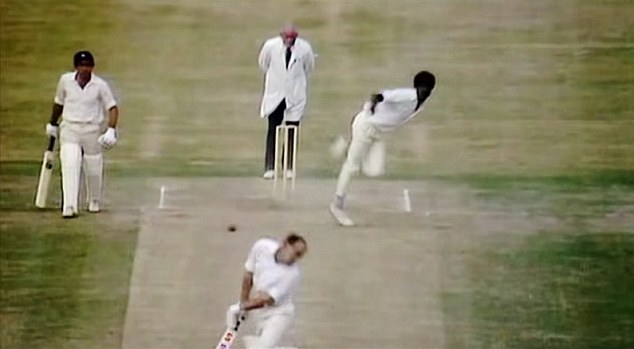


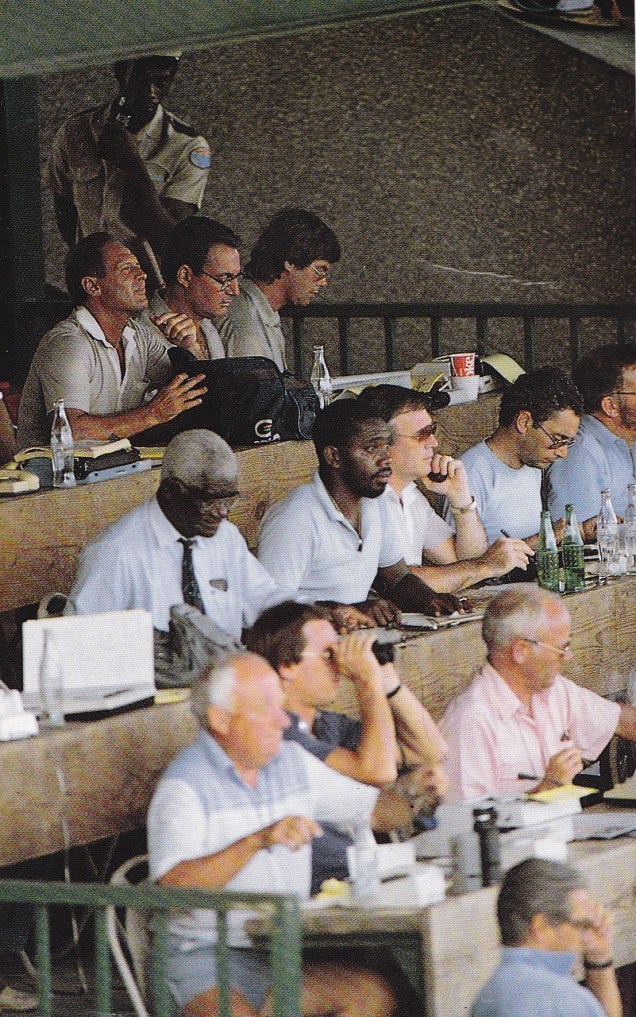
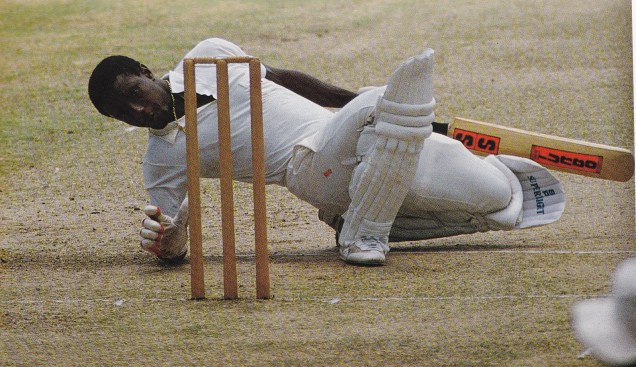


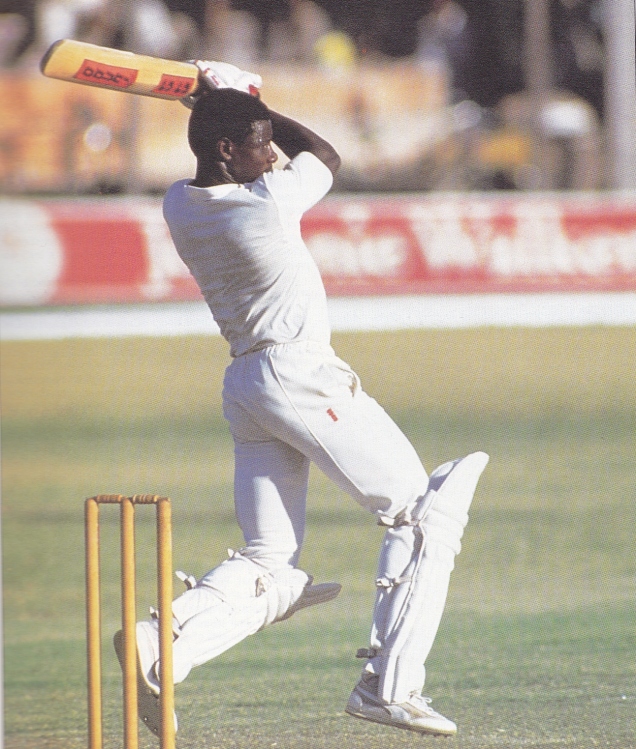
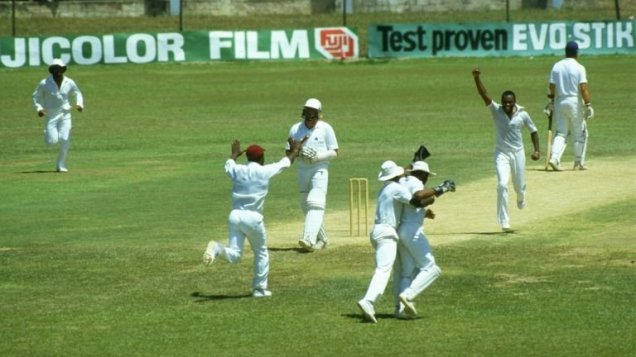
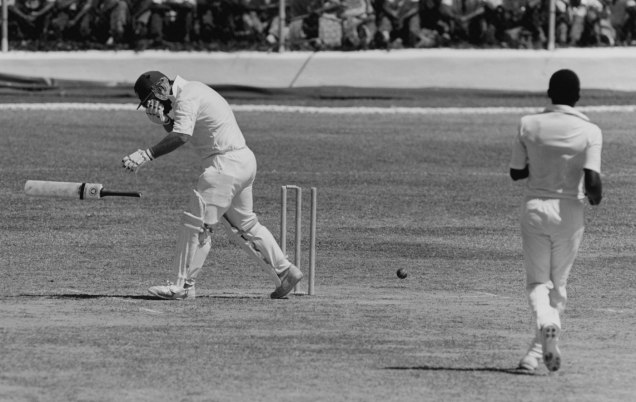

 Being Outside Cricket