2nd Ashes Test: Day Four review

It’s one thing to lose, it’s entirely another to offer no resistance whatever, on a docile pitch, in good conditions.

This was as bad as anything on the Ashes from Hell tour, because this pitch offered absolutely nothing for the bowlers even on day four.  England at the start of play were clearly likely to lose the match, but few would have expected any side – not even Bangladesh – to surrender meekly in 37 overs.  This was abject, pathetic and spineless.  Sure, collapses happen, but with England they happen a lot, and they happen against Australia all the time – indeed even ignoring the three for not very many at Cardiff, it’s happened in 6 of the last 7 Tests against them.

That England went through the motions with the ball this morning is almost forgivable, given the match position.  Australia were so far in front even skittling them wouldn’t have made much difference.  But it did betray a side who knew their fate and didn’t rage against it.  The declaration when it came didn’t change the reality of what England needed to do, and what England knew they needed to do right from the start of play.

Instead, once again they flopped horribly.  Two of the first three wickets at least came from decent balls, though Lyth and Ballance both betrayed flawed techniques in how they got out.  What was extraordinary was how the Sky commentary team focused on these two dismissals and actually claimed Cook’s was a good ball at the time (Hussain in contrast did at least call it a “lazy little waft”).  It wasn’t, it was a dreadful shot, a short wide one that he went after and edged.  Getting out to a bad shot happens, it’s an occupational hazard of batting, but to seek to excuse it by crediting the bowler beggared belief, and merely fuelled the suspicion that Cook cannot be criticised on Sky.  Let’s get something clear here, players make mistakes.  They are human beings, and flawed intrinsically.  Pointing out a bad shot doesn’t lessen the person, it’s called being honest.  Stop making excuses.

England had lost their first three wickets for fewer than 52 for the 8th time in their last 12 innings.  It’s been repeatedly pointed out that the middle order will not always bail them out, and the horrible muddle England have got into over the last couple of years is still the same, even with different personnel.  Of the top four, the only one who is in any kind of form is Cook – and Cook the batsman is doing fine – indeed Cook the captain still didn’t have a bad match in the field, England certainly didn’t flop horribly because of his actions. Once again, the problem is not with what Cook does as a batsman, it is the way it is treated as though he’s Bradman reincarnated whenever he gets a few, while saying his dismissal was down to him being “desperately tired” as Mike Selvey put it – a tiredness that didn’t seem to afflict Rogers or Smith who scored far more runs.   And in mentioning Rogers, all cricket fans will have seen his dizzy spell with some concern.  Let us hope it was unrelated to the blow on the head he took at the start of day two.

And so once under way, the procession continued.  Bell again got out cheaply, and again in unconvincing fashion, managing to edge a ball that didn’t spin to short leg.  Stokes had the kind of dismissal that will haunt him for days to come, failing to ground his bat for an easy single.  Whether that was a simple matter of brain-fade or evidence of the kind of scrambled minds in the England team probably depends on how one wishes to think of them.

Buttler once again edged behind hanging his bat out to dry, and Moeen did absolutely nothing to prevent the addition of another piece of evidence that he can’t play the short ball very well.

By this point, not only were Australia rampant, but England were skulking around like a little boy who knew he’d been caught stealing.  Broad at least decided to go down fighting, throwing the bat.  That was another reminder of the dire displays in 2013/14, Broad reacting by trying to hit fours and sixes in a game long since gone.

Root’s dismissal as ninth man out was neither here nor there and entirely irrelevant to anything, while there was something apposite about the way Anderson’s stumps were shattered to end the torture.

The various Mitches had blown England away, and all credit must be given to them.  They will only get better having scented blood.

The only way of reacting to this omnishambles is that with the final wicket, Australia had gone into a 1-1 lead in the series.  It is scarcely credible that England had managed to fall apart so abjectly on such a placid wicket.  Yet they’d managed to, and shown no bottle whatsoever for the fight.  It is therefore ironic that the pattern of England wins and losses recently can be seen to be one of them being metaphorically flat track bullies, able to put sides away with aplomb when in front in the game, but collapsing in on themselves when challenged.  That is, except on non-metaphorical flat tracks where they aren’t just bullied, they are whipped, chained and thrashed.

The inquest will of course begin now, but there’s not much that isn’t already known and has been known for some time.

Bell is in awful form, and has been struggling for a couple of years.  Yet England set the precedent of standing by Cook when he had his drought, and they can rightly point to his form this year as being a justification for that.  So they’ve made a rod for their own back where Bell can legitimately say he deserves the same patience.  Whether he will get it or not is another matter, as is whether he should.  But missing straight balls as he has been isn’t terribly reassuring.

Lyth is perhaps one of two players under most pressure, but dropping him now would betray the same kind of muddled thinking that the ECB under Strauss have absolutely promised is a thing of the past in this brave new world.  Having not picked him in the West Indies when they should have, he then scored his maiden century only two Tests ago.  Lyth may not ultimately prove to be good enough, but that there is such a chorus for his replacement after two quiet Tests, and only four in total would be a return to the chopping and changing of the nineties.  And that worked so very well.

Ballance on the other hand has – at least for the time being – been found out.  He is clearly a highly talented player, and also young enough to improve, but his sophomore season is proving to be a nightmare for him.  The problem is that his place in the side is the critical number three position, and so the question of moving players around comes up.

Here is the rub though, moving Root up to number three is obviously an option, but Root didn’t perform particularly well as an opener two years ago, and there’s no pressing reason why he should do better now so high up the order.  Yes, he’s batting extremely well, but treating the symptom rather than the cause has never been much of a medical solution to anything.  Putting Root there would be to risk getting less out of England’s best batsman, not because of a certainty he would do better there, but solely because those above him currently are doing so badly.  That isn’t a justication, it’s negative selection.

Nor does it in any way address the problems Lyth and Bell are having, so while rearranging of deckchairs would give the selectors something to do, it doesn’t address the bloody great hole in the hull.

Naturally, as this was discussed, the elephant in the Sky studio hovered.  At one point Hussain talked about England needing a “Kevin Pietersen type” player in the top four, without a shred of irony.  At another, Ricky Ponting came dangerously close to saying the name of He Who Must Not Be Mentioned, and Gower flapped in utter horror (“don’t say it, don’t say it”).  This was extraordinary behaviour, but not necessarily for the reasons that might initially be thought.  There’s no reason to assume Pietersen would have made any difference in this Test, and no reason to assume he would be a panacea for England’s batting woes.  That’s not the point.  The ECB have made their decision and that is that.  But.  It is not for Sky to endorse that decision by refusing to even acknowledge the point, it is not honest to pretend it isn’t there.  An honest response is to point out the obvious that one player England could select is in the cold and then move on to the alternatives.  Each and every time this sort of thing happens, the recognition of what has been done is critical to the debate even if that decision is agreed with.  Pretending it isn’t there is ludicrous, no matter which side of the debate someone might be.

Once again, the fundamental point is that Sky’s editorial line is not meant to be at the behest of the ECB’s internal policies.  It’s a basic journalistic tenet, and one they have failed time and again.  It shouldn’t need stating, that’s the point.

More realistically in terms of England’s options, apart from moving those players around, Johnny Bairstow is the likely candidate to come in.  Should they do so then that certainly means changing the order as well, with Bell and Root at three and four.  A second spinner is also an option, if they also drop Lyth and move Root up to open.  That would be a lot of changes.

England were plainly unhappy with the pitch at Lords, which was more than obviously a chairman’s one, intended to last the full five days – so Australia (and England in a funny way) denying them the revenue from day five serves them right.  That’s somewhat ironic, because in one sense England were right to be.  Australia’s faster bowling attack is always going to be better on a very flat and slow surface where England’s fast medium offering is going to be akin to cannon fodder.  Yet this very flat, very slow surface was one on which England were shot out for 415 across two innings.  That’s woeful even on a green seamer, which if Cook has his way based on his post match interview is what we will get at Edgbaston.  The problem for him is that the Chief Executive of Warwickshire probably thinks otherwise.

Yet Cook was correct that for England to have a chance, their own bowlers need to have a chance in the game.  Over the last few years Test pitches in England have followed the same pattern, slow surfaces intended to stretch the game out to the full extent.  It is this tendency that Colin Graves was quietly referring to when he raised the idea of four day Tests – another example of treating the symptom incidentally.  That this has had the result of spectacularly biting England on the arse is exactly what they deserve, for it has been a long time since England produced the kind of quick pitches that might actually prepare them a little for facing the two Australian fast ‘n nasties, and even allow England to develop one or two of their own.

This match was nothing but total humiliation.  It is striking that in the Tests between these two sides, there are very few close ones, one side absolutely batters the other albeit Australia batter England rather more than the other way around.  To that extent England will feel that there is no reason they can’t win the next one, and they are of course right.  If anything has been demonstrated in previous Ashes series, momentum is a rather overrated thing.

Yet England did have a real chance to put Australia under huge pressure in this match.  After Cardiff there were definitely cracks in the side.  Not large ones, and as has been seen in this game, not critical ones.  But had they produced the kind of English pitch we used to get before they started trying to be clever and extract even more money from the poor spectator, it likely would have worked to England’s advantage.  Not so much to guarantee a win of course, but at least to give them a chance.  The Test against New Zealand at Lords was of course a fantastic one, yet that was so unusual compared to the ones we’ve seen in recent years that one can’t help but feel it was some kind of happy error. Certainly the two prepared in 2014 were every bit as lifeless as this one, and note that England could not bowl Sri Lanka out in one, and lost badly to India in the other.

Once England had lost the toss here, their chances of winning were very low.  The difference is that there was no reason why they should lose the Test.  And no reason whatever that they should lose the Test by the margin of 820-10 to 415-20.  Or to put it another way, based on this, England would have had to bat a whole additional Test to reach Australia’s match total.

And finally we come to the media in general.  At the risk of repeating a common theme on this blog, they went completely overboard once again after the win at Cardiff.  It was a terrific win there’s no doubt about that, but the “fickle” people in such places as here and at the Full Toss, repeatedly cautioned that England had a habit of losing their next match badly after a win, and that triumphalism was both premature and more than a bit ridiculous.  It didn’t stop them.  From writing a homage to Andrew Strauss as the architect of England’s success to saying Ian Bell was back, to long paeans of how the new England under Cook would go on to terrify all and sundry, this thrashing is matters coming home to roost.  Again.  Doubtless they will now swing the other way, demand wholesale changes and assume England will be blown away in the remainder of the series.  And that is indeed a possibility, and unquestionably a fear given this implosion.  It’s just not guaranteed.

England may well recover from here, it doesn’t mean they can’t win from here.  It does mean there is concern about how they will react to it – that is up to them, to decide whether there really are scars from 2013/14 or not.
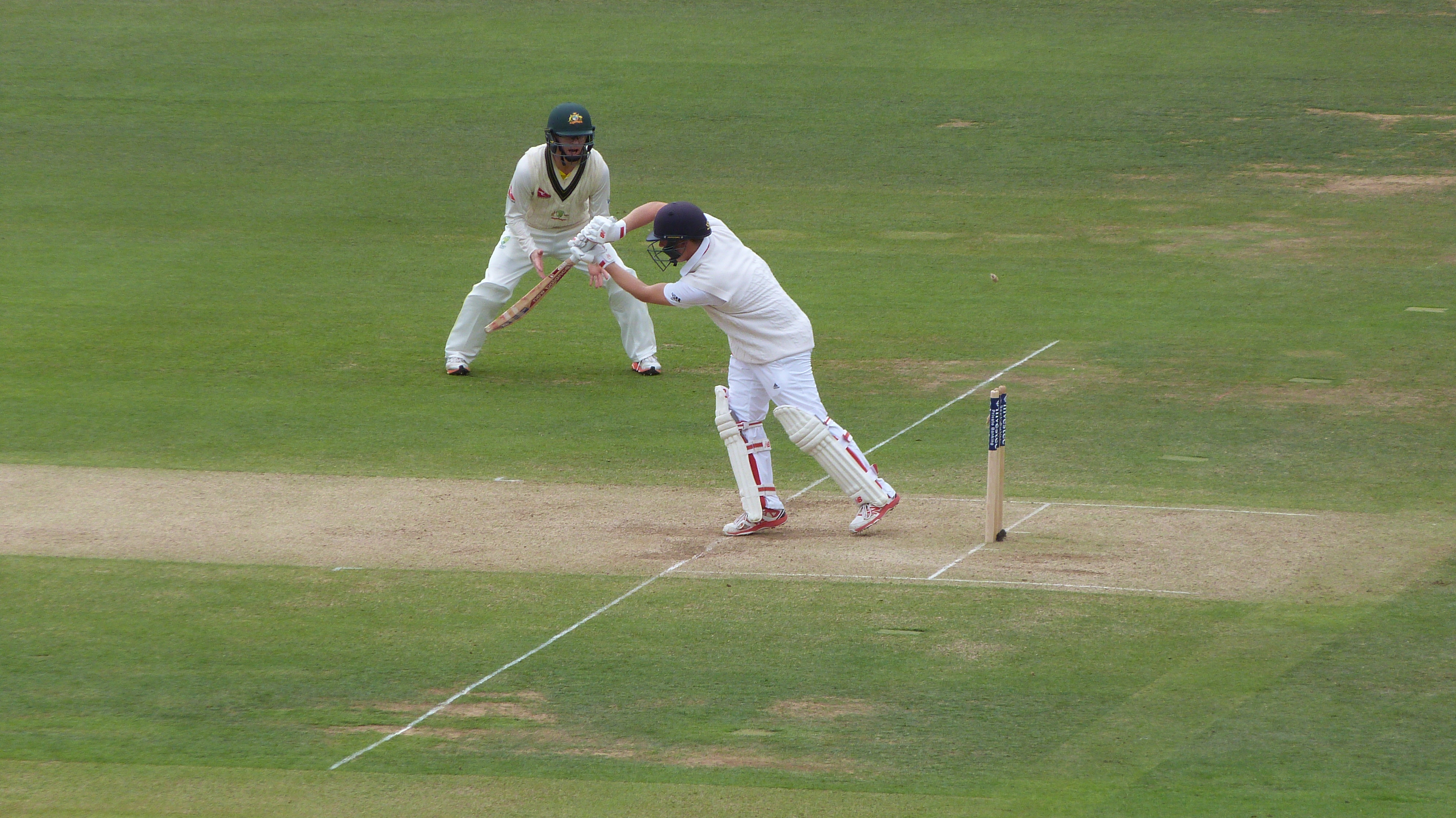
Ashes 2nd Test: Day 2 review

P1060682
Ballance is bowled by Johnson – look closely and you will see a bail in mid-air….

Now what was I saying about all those who piled in to complain about the pitch after one day?  In the Australian press it was all about England doctoring the surface, which apparently means creating one that Australia rack up a huge score on, and then rip through the England top order.  Indeed, it was wryly amusing to hear Stuart Broad imply that the surface very much aided Australia and not England.  Spin on both sides.

Meantime, the English press went big on the idea that it was a nailed on draw, that the groundsman should be shot and that it was impossible to get wickets on.  The old adage that you shouldn’t judge a pitch until both teams have batted on it is as true as it ever was.  Australia have bowled superbly on it, and have put themselves in prime position to square the series.

There did seem to be a little bit more in it today, but it remains excellent for batting, as Australia demonstrated all too well in their innings. Steve Smith led the way with 215, and as fabulous as that innings was, it was curiously less assertive than normal, and slightly more sketchy than at his best.  Which if anything should cause serious alarm in the England dressing room.  For Chris Rogers, it’s quite possible that his 173 is his last innings at a ground where he has served Middlesex so well.  If so, it’s quite a way to finish.

From there, the scorecard looks like Australia fell away somewhat, which is a good example of a scorecard not conveying a match situation.  Australia were pushing on and trying to score quickly.  Slow surfaces are often quite hard to score rapidly on, and the wickets fell at regular intervals.

England’s reply was a shambles.  As has been pointed out England keep finding themselves three down for very little, and sooner or later Joe Root wasn’t going to bail them out.  Adam Lyth’s poke at a wide ball was fairly typical of what often happens when a team has been in the field for the best part of two days, but it doesn’t make it any better a shot.  Ballance was again undone by a full ball, and while it is good to keep faith with a player, it’s at the point now where he’s not going to get anything else, so transparent are his difficulties.  He needs to work this out and fast.

Bell too was undone by a full ball, and once again this has become a notable weakness in his game.  Any player can be beaten by a full swinging ball, but not time and again. As for Root, he failed today.  It’s going to happen sometimes. From there, Cook and Stokes batted extremely well.  Broad again made a rather telling slip in the post play interview saying that it looked much better when England batted in a more disciplined way.  The implication of that was fairly clear.

There’s no reason whatever England can’t continue to bat that way, this remains a very easy paced, very flat surface. The trouble is that having lost four cheap wickets, they are 481 runs behind.  It is a huge ask for them to even reach the follow on point, no matter how flat the pitch might be. About the only positive they have is that they have frontline batsmen down to number eight in the form of Moeen Ali.  But to even get to within 200 runs, more than one player has to score a century.  All hopes really rest on Cook going very big and batting through.  It’s a big ask, but it’s what’s necessary.

England have got themselves in a horrible hole, and have been completely outplayed in the first two days.  The reality of their plight is that they can’t afford to lose so much as a single session if they want to get out of this one.  1-1 seems almost inevitable given the time left. @BlueEarthMngmnt

Ashes 2nd Test: Day One Review

If there’s any amusement to be had from Australia closing on 337-1 today, it’s that it has once again made an awful lot of journalists look silly.  They don’t need much help in order to achieve those lofty heights, but their continued lack of awareness when jumping on a single victory as a harbinger of the future generates as much amusement as ever.  One wonders if today’s play was mainly down to Andrew Strauss as well, for example.

Instead of reacting with pleasure to England’s victory at Cardiff, but noting it was a single Test match and that Australia hadn’t become a bad team overnight, several once again got giddy – just as they did in the West Indies, and then just as they did against New Zealand.  After one outbreak of egg-on-face disease, it might have been thought that a lesson would be learned, but oh no, they did it again after England beat the Kiwis, and then a third time after Cardiff.  There’s not a thing wrong with offering an opinion, or making a call on what might happen – the risk that you will be wrong is an occupational hazard – there is a lot wrong with going over the top repeatedly and failing to learn the lesson that baseless hyperbole tends to bite back.  Doubtless the scurrying back over the bridge and pretending none of it happened will be in evidence tonight.

Now equally, it shouldn’t go too far the other way (place your bets on how doomed the fourth estate will consider England after today), it’s day one of five.  Lords is what it has been for quite some time, an excellent batting surface lacking in pace and movement.  It shouldn’t come as any kind of surprise that Australia, having won the toss, have had a good day.  It shouldn’t even come as that much of a surprise that they’ve had an exceptional day.  They’ve simply made the most of conditions, which is what decent sides do.

The irony is that over-reaction is one of the charges continually aimed at the bilious inadequates, yet it is the established press (one again) who are most guilty of it time and again.

No doubt also there will be some complaining that the pitch is too flat and that it is therefore some kind of anti-cricket surface.  That may yet prove  to be true, but it is a faintly ridiculous line to take after a single day.  Much will depend on how it plays over the remainder of the Test – should it prove to remain entirely flat, then such comments will be justified.  If it deteriorates – and let’s be clear, Lord’s usually produces a result – then there’s no reason for any such claim.

What today’s play does mean is that Australia are in a very strong position to dictate terms for the next couple of days at least.  England didn’t bowl badly, and while they missed a couple of half chances they couldn’t be said to have performed badly – not that they were outstandingly good, just not bad – it was benign conditions for batting and Australia just cashed in.  At this stage it’s already going to be key how England bat in response.  Even with everything going right, England are going to be facing 450; more realistically somewhere around 550 and above is probable.  Rogers and Smith deserve immense credit for maintaining their discipline, and should they survive the first hour, England will unquestionably be chasing leather.

The pitch at that point is if anything likely to be even better for batting on, so there’s no reason for England to have a problem on it.  Except that thing called scoreboard pressure.  Australia will have their tails well and truly up, and negating the early stages will be critical.  Cook had a quiet first Test, but he will be needed to play one of those long innings in reply.  There’s no reason whatever he can’t.

For Australia, the one person in the team who may need to be kept away from sharp implements is David Warner.  Being positive against the spinners is one thing, and players who take a chance in order to dominate always risk looking foolish when it goes wrong, but the nature of the three shots in an over against Moeen Ali were outright slogs at the ball.  First one was fair enough (a full toss), the second was wild, and the third was downright rash.

Cook rotated the bowling well enough, trying different things, and attempting to find a combination that worked.  Sometimes you just have one of those days.  What we do not know yet is whether that is an example of England lacking penetration on flat surfaces or simply a result of the conditions.  Certainly the ball barely swung, and definitely didn’t seam.  England tried to counter this by bowling dry, which was exactly the right approach, but weren’t able to maintain the pressure.  If one was to be critical, that’s perhaps where it might lie, a few too many four balls.  It’s quibbling, they worked hard.

Short of having a disaster and being bowled out for 150, day one is a set up day, with limited certainty about what is to follow.  It has always been that way and always will be that way.  Australia have had an outstanding day today, but whether it is a decisive one, it is impossible to say.  There’s no doubt though that England are up against it as things stand, and will have to play well to get a result.  They are quite capable of so doing, and if they do, there is the potential for a borefest.  The additional pace in the Australian bowling order will make them feel that they can get something out of the surface that England didn’t, and they may be right about that too.

Today is one day.  And a very good one for Australia it was too.

@BlueEarthMngmnt

The Ashes: 2nd Test preview

Brad Haddin won’t be playing in this match for personal reasons – there’s nothing else that need be said about that except to wish him well.  Cricket is just a game.

Few realistically expected England to arrive at Lords 1-0 up, and even fewer to have been so dominant at Cardiff, a venue where Australia were thought to hold all the cards before the game.   Reports indicate that Shane Watson will be jettisoned from the team, and if so it is hard to escape the feeling that it will be the end of his Test career.  It seems exceptionally harsh to do so after one match, given he was downright unlucky in both innings but especially the first.  Selecting Mitchell Marsh for the first Test would have been a perfectly reasonable choice; but having gone with Watson, to then drop him after a single outing carries the whiff of panic about it, both scapegoating him for the team’s failings and effectively an admission it was the wrong call in the first place.

Furthermore, it is hard to see a way back for Watson now, meaning a player who is likely to be somewhat disgruntled is in the squad for the remainder of the series with little chance of selection ever again.  It’s the kind of muddled thinking that we’ve seen all too often from England in recent times.

Peter Nevill will make his debut as ‘keeper for this match, and by all accounts is a batsman/keeper rather than a wicketkeeper/batsman.  Lords has made more than one highly competent wicketkeeper look foolish with the ball moving after the bat, so it will be a tough challenge for him to start his international career there.  Perhaps many England supporters too will hope he has a decent game.

It seems likely that Starc will play, demonstrating that Cricket Australia now operate a Mitchell quota system.  There’s been little said about continuing to bowl him so extensively at Cardiff, but there must be question marks about his fitness over five days.  The enforced retirement of Ryan Harris was clearly a blow, but the ineffectiveness of the seamers has produced ripples of concern about the depth of the Australian bowling stocks.  More than anything, it is a response to the result on a very slow pitch rather than a real problem, Starc, Hazlewood and Johnson remain a major threat.

The same can be said for the batting, and it is striking how a single result can change the perception and the reading of the two sides.  Australia’s batting is now fragile, Warner is having difficulty with the pitches and the swinging ball (as an aside, it is quite impressive how Warner can so consistently say the wrong thing – why on earth would he come out with that?), Chris Rogers’ failure to score a century is reaching crisis proportions, Clarke is all over the place against Broad, Steve Smith’s technique is questionable in English conditions, while for England Cook has become a great captain, Root is the best batsman in the world, Bell is back, Stokes is devastating, Wood is the heir to Simon Jones and so on.

It’s nonsense of course, Australia’s batting isn’t necessarily their strong suit, but little has changed since before the series began except that they played appallingly in one match – more than anything, getting in and getting out is something batsmen view as the ultimate crime, and they did it spectacularly across the board.  What has changed is that they’re under a little more pressure to perform than before, because defeat at Lords and the prospect of the team unravelling comes into view.  The records of the players involved means there is no reason why they shouldn’t come back with a vengeance, and although the Lords surface is likely to be fairly slow again, it’s usually an excellent batting wicket and one they should find to their liking.

For England, it is likely they will name an unchanged side.  Moeen Ali was the big doubt, but Adil Rashid’s endless wait for his debut will continue, as he has been ruled out by injury.  That Moeen was set to miss the match clearly means he isn’t going to be completely fit, and thus his selection is a considerable gamble.  From this distance it’s impossible to know how serious it is, but for a player to be considered unfit to play, and then magically sufficiently fit when his replacement is unavailable hardly seems like good management of resources.  It should also be remembered that if the injury flares up during the game, England will not be entitled to a substitute fielder, and one would imagine Australia will be very aware of that – of course the same applies to Starc.

Although England’s batting performed very well at Cardiff, they have been prone to falling over in recent times, and not always in hostile conditions.  Early wickets were lost in the first Test for not very many, something that they have become rather prone to, and they aren’t always going to recover from that.  Cook had a quiet game with the bat, and despite Root’s heroics, he remains instrumental in drawing the sting from the seamers.

It’s extremely hard to call this game.  It will likely go near the distance, as Lord’s is the epitome of a chairman’s pitch.  Australia have a slight hint of disarray about them, but that will be swiftly put aside if they play well here.  England have the opportunity of opening up some major cracks in the opposition, but they will have to play better than they did at Cardiff to do that.  Should they do so, then all bets are off for the remainder of the series, and the howls of protest from Down Under will be loud and long.

I’ve said before that you don’t know a team is past it until it actually happens, and they often spectacularly implode when it does (viz. England 2013/14), but equally one defeat doesn’t for a second mean we are there yet.  For that reason, this Test is completely pivotal.  An Australian victory sets the expected balance of the world back on its perceived correct axis.  An England victory, and it’s crisis point.  It will be a fascinating five days.

@BlueEarthMngmnt

Warping out*

One of the differences between those who write on cricket in the media and the poor blogger is that they get to see all the play, are spoiled rotten in the media centre, and are paid for the privilege.  In contrast, the likes of us have to work for a living – and that’s why the dire quality of some of the output from the usuals is so deserving of contempt.

To that end, I was away all of last week, didn’t see a ball of the first three days, saw only the highlights on Friday and finally got to watch some play yesterday.  I did get to listen to a fair bit, while driving around the country, but it’s not quite the same.  And so following the match was somewhat awkward, lots of reading of reports and updates, and generally trying to keep abreast of what is happening.  Since then I’ve gone back and reviewed the highlights to try and get a proper feel for the Test.

I can’t say I’m totally surprised that England won the match, it very much depended on whether England played in the same manner as they’d indicated in the New Zealand series for both Tests and ODIs.  The scale and dominance of the victory on the other hand, that was somewhat unexpected.

Australia’s performance was dire throughout.  More or less anything they could get wrong they did.  As ever, the question is how much of that was their own doing, and how much was down to England’s performance.  What can be said is that after a single Test conclusions shouldn’t be drawn, and yet again we see the crowing from certain quarters.  We’ve been here before, in the last two Test series there was exactly the same arrogance (from the press, not the team), only for England to fall flat on their faces the following game.

First let’s take England.  Cook unquestionably led the side well and captained well.  Good.  Very, very good.  If this is the new captain Cook, then there won’t be too many complaints, he was proactive in the field, changed his bowlers well and generally looked in command throughout.  And this is the point – when the facts change, so does my opinion and perspective, and I don’t have the slightest issue recognising it.  It’s those who blindly insist on a particular view in defiance of what is in front of them that have the problem.  It’s true too that generally there’s been an improvement in how he’s managed the side over this summer.  Quite why that might be is somewhat curious, in terms of what has changed, the only thing that stands out is the replacement of the coach.  I’ve long called for Cook to be in control of the side and live and die by his own actions, not fall back on the backroom staff.  If he’s doing that and doing it well, that is great news.

Nevertheless, it doesn’t mean that the various meltdowns in Australia and here can be forgotten, no matter how some like to pretend they didn’t happen, preferring to stick their fingers in their ears and say they weren’t listening.  What it does mean is that he can look back on this Test with a fair degree of pleasure.  And if continues to captain in that vein then he will reap the plaudits and rightly so.  It’s a matter of whether he does or not that is the question.  He won’t ever be a great captain, but if he’s an adequate one then that is good enough, because up to now he hasn’t been.  Plaudits for this one Mr Cook.

What was particularly striking about the approach was in the second innings.  England were determined to get to a 400+ lead as quickly as they possibly could, and continued to attack even as wickets began to fall.  The sheer jaw-dropping astonishment of seeing an England team do that can’t be overstated.  It certainly seemed to take Australia by surprise.

Initially it didn’t look that way, as England got off to a somewhat sedate start and lost wickets.  In a single Test, that can happen, but it’s something that has occurred a little too often for comfort.  The dropping of Root by Haddin (more on him later) turned out to be fairly critical, as Root took the game to Australia in a way that’s now becoming somewhat familiar.  Before the series began Root was largely written off in much of the Australian media, based on his troubles down under last time.  It was a strange rationale, given that on the same basis Steve Smith could be written off for his performances to date in this country.  I rather doubt it came as a great shock to the Australian team just how good he is looking, but it certainly seemed to elsewhere.  Root’s success has led Ian Chappell to call for him to be pushed up to number three at the expense of Ballance.  I never see the case for this.  If a player is performing outstandingly well in the middle order, where is the benefit in moving him?  It’s treating a symptom rather than a cause and risking weakening the batting if the player doesn’t have the same success in a higher position.  It doesn’t matter where Root bats if he is going to average nearly 60, wherever he goes in, he is going to drag the side to a higher total.  Leave him where he’s comfortable.

Ballance himself scored a fairly scratchy 60 in the first innings, but that will do him the power of good.  An ugly knock does more for the confidence than anything else, because the time at the crease allows the player to rather literally find his feet.  Of course he needs to kick on, but that innings was deeply valuable both to him and the team.

Stokes and Moeen also contributed, and the latter case is important.  He certainly bowled well in the match, but having a batsman of that quality at number eight is a major strength for England.  It has been argued it’s a waste, but it makes for an immensely powerful middle order, IF he can hold down his place as the spinner.  Previously I’ve argued that Moeen is being unfairly compared to the best spinner England have had in the last forty years, and I maintain that he is doing well enough in his primary role to more than justify his selection.  He isn’t going to run through too many sides, but he is certainly useful and his batting frees up an additional spot in the side.  His bowling is improving, but like anything it isn’t a linear trend, there will be peaks and troughs.

Stokes himself is contributing too with both bat and ball.  Both will improve over time, and the very selection of Moeen creates the space in the team for what might be called a luxury player like Stokes.  Patience is required, but England have a genuine five man attack with this line up, and that is a major advantage, perhaps best seen in the way that despite so many fears about it, Anderson is not being bowled into the ground thus far.

Bell scored a few runs in the second innings and looked much more like himself.  Yet it is indicative of the knee jerk response that his 60, a well constructed and fluid innings, was treated as though it was 150 and justification for keeping him in the side.  Personally, I don’t believe there was ever a case for dropping him, and certainly not after the selectors maintained faith with Cook for two years.  But as ever, a single innings proves nothing at all except that if you keep them in the side long enough they will eventually get a few.  That doesn’t mean it wasn’t extremely welcome, and nor does it mean that he didn’t look much better.  It does mean that trumpeting success on the basis of a single fifty is as downright idiotic as it ever was.  He will want more, and hopefully this innings will have got the monkey off his back to the extent he can get more.  It’s no more or less than that.

Jos Buttler failed both times with the bat, which is neither here nor there in a single match, but he did keep very well, and the only reason for mentioning it is that every all rounder who has ever played the game will talk about how difficult it seems to be to get both disciplines operating at full capacity at the same time.  It seems to go this way mostly – one works very well, the other malfunctions a little.

As for the bowling, Wood looks a threat every time he bowls, and perhaps more importantly, for all the wishful thinking about getting a left armer into the side, he provides balance.  Anderson, Broad, Wood and Stokes are all different kinds of bowlers.  That they’re right arm doesn’t in itself matter, it’s not a samey attack.  And while on this subject, it didn’t go unnoticed that it was mentioned as a problem that England have seven left handers and thus provide Lyon with a line of attack given the rough outside off stump.  It’s quite true, but the same applies the other way around given that Australia have two left arm seamers.  Sauce for the goose.

Turning to Australia, this one is a match for them to forget.  While refusing to form definitive views after one match, I hold by the view that you never know a side past its sell by date until they actually become so – just as with England in the last Ashes.  There might be cracks, but complete collapse isn’t anticipated.  This game Australia were truly awful.  Most batsmen are far more annoyed at getting in and getting out than they are being dismissed cheaply, which is considered an occupational hazard.  And yet for the first time in Test history, all of numbers three to six were dismissed in the thirties.  This is both good and bad for Australia, good because all have had time in the middle to get used to conditions, bad because they then got out and mostly to poor shot selection.

Much of the talk around how Australia move forward has centred on the future of Shane Watson.  His playing around the front pad has got him into trouble throughout his career, yet in this game I have a mite of sympathy for him.  The first innings decision was a rotten one, made worse by a proper understanding of how Hawkeye works.  It didn’t show the ball clipping the leg stump, it suggested it was possible it might have done, and at a low probability.  Yes, by all means uphold that decision from the umpire, I don’t have a problem with that; I do feel sorry for Watson because when he gets hit on the pads now, umpires are seemingly predisposed to giving him out when they likely wouldn’t give out another player.  His second innings dismissal was certainly closer, but still an umpire’s call.  Another player would have got away with that one probably, the first innings one certainly.   He may be facing the end of his Test career, and while that may be the correct decision for the Australian team, he was thoroughly shafted in this match.

Warner and Smith both exhibited signs of where they are likely to be vulnerable in English conditions.  Warner’s style of stand and deliver batting is always going to be vulnerable to the ball seaming or swinging.  This isn’t new, and it isn’t in itself the end of the world, because he showed in the second innings that he can fight through the hard times.  Smith has a quirky technique and that is why he finds it more difficult in English conditions, something he’s struggled with since he first broke into the side.  He is more than talented enough to learn how to cope.

Haddin looks like he is reaching the end of the road.  Both his keeping and his batting look frayed and have done for a little while now.  Of course, he could just be out of form, something rarely granted to older players, but this series could well prove decisive for him unless he improves significantly.

As for the bowling, the surface effectively nullified the pace of Starc and Johnson.  Despite some whining in the Australian press, it was a fairly typical Cardiff surface.  What did surprise was that England’s attack handled those conditions so much better.  Johnson had fairly miserable figures for the match, but didn’t bowl too badly.  Starc looked a fine bowler, but I can’t be alone in struggling to understand why when he was clearly injured Clarke insisted on bowling him again and again.  By the second innings the game was already disappearing over the hill, it seemed bizarre to watch him limping over after over and still being kept on.  If he isn’t fit for Lords some questions need to be asked about why they made it worse.  If indeed that is the case, then all of a sudden Australia have some problems.  Siddle is an honest enough workhorse and won’t let anyone down, but he’s not in quite the same class.  Cummins is highly promising, but hasn’t played a first class match in two years, and it’s asking an awful lot for him to come in and play a Test.  Hazlewood on the other hand, looked very good indeed, and will be a handful on other pitches.

Nevertheless, Lords should be a little more conducive to the pace bowling than Cardiff was while not exactly a seamers paradise, and thus triumphal writing off of Australia is highly premature.  It is hard to believe Australia will be so poor in the next game, but if they are, then this tour could go horribly wrong for them.

After one game England will feel it went about as well as it possibly could have done.  Australia will feel it went about as badly as it did in their worst nightmares.  They are more than good enough to step up their game, while England have flattered to deceive on more than one occasion.  What it does though is to provide the most perfect start to the series from the perspective of the spectacle.

One other thing I noted: At the conclusion of the Test, the England players made a point of going around the ground and signing autographs and posing for photos with the supporters.  I don’t remember them doing that before, so whoever has come up with it as a means of engagement deserves a pat on the back.  Is it lip service?  Maybe.  Is it welcome anyway?  Definitely.

*It’s always amused me that this term immediately makes people think of Star Trek and high speed.  In times past, warping out of harbour involved rowing the anchor out ahead in a boat, and winding the capstan in to make progress when there was no wind.  It was backbreaking work and an incredibly slow process.  It seemed appropriate.

@BlueEarthMngmnt

An Ashes Exchange Of Views – Part 2 – Dennis asks, Dmitri Answers

dennis_banner_11701

So you’ve read part one….. Now on to the questions set by Dennis of Dennis Does Cricket to me. These are my honest views, and feel free to take them to pieces if you wish!

1) Australia has the Brutal issue of having to squeeze four world class quicks into three spots. Who are the lucky three and why? 

England fans cannot believe you won’t pick Ryan Harris. He appears to have achieved that status reserved for a few Australians, in that I get the sense he’s really liked! I think we all love to see a bowler who suffers for his craft. That said, England have had enough experience of relying on old crocks with injury issues to know you should always go with the younger fitter model (I recall 2002/3 all too well, waiting on Gough and Flintoff) so unless Hazlewood gets monstered in the early tour matches, you should go with what you had in the West Indies. So it’s Johnson, Starc and Hazlewood, and Harris and Siddle up your sleeve. Of dear lordy.

2) Fawad Ahmed and Nathan Lyon lead the Shield wicket taking table last summer. Should the leg spinner be used in tandem with Nathan Lyon at any of the grounds? What about instead of Lyon?

My blog has Nathan Lyon’s number 1 fan (outside Australia) so I’m not ever suggesting he should not play. Nathan Lyon is a bloody good bowler, and the problem is that when you’ve had superstar spinners in your team, you always shoot for the moon (something we should remember now Lovejoy* isn’t in our team). Fawad Ahmed is an interesting wildcard, but none of the venues we are playing at are going to be raging Bunsens because we don’t have Swann any more. I think our allergy to leg-spin is overplayed a bit, but also the other reason for playing them – that they are great at getting tailenders out – is our problem rather than yours. You seem to take great pleasure in a 90mph left armer coming in to the lower order players and smashing them out. I don’t think there will be any “two spinners” wickets and I cannot see you dropping the lead singer in the Under the Southern Cross ensemble.

*Swann is called Lovejoy on here because of his remarkable similarity in personality to a much loved, sorry much loathed, football geezer of the 90s, called Tim Lovejoy. It’s a running joke.
 
3) How should Australia attempt to reduce the influence of Joe Root? 

I put the same question to you! We’re all going a bit mad about Joe Root, and why not? He has this knack of making big hundreds now, so once he’s in, and past the century mark, he’s not satisfied. The drop down to number 5 has been huge, but it also left a major hole we’ve not filled yet at opener. I’m a little disappointed, to be honest, because I’ve always felt 5 is the armchair position in the batting line-up; you’re not likely to be up against the new ball with fresh bowlers, and you get time before the marshalling of the tail (which Root is good at).

I think Root has the same sort of weaknesses as many other player, i.e. good bowlers, bowling well. Also, Australia will play on the mental side of things. He was dropped in the last series. He also, one innings apart, didn’t cut it as an opener in 2013. He has “mental scars”. We’re comparing him a lot to Steve Smith and I see much the same sort of characteristics in the two players. If they get in, watch out.

4) What tactics by Australia will cause the biggest headaches for the captaincy of Alastair Cook?

What was it Ricky Ponting said about the 2005 series? “Win the first test and let the British press do the rest”. That worked. 🙂 It needs something more tangible than that. He had a point at the time, though.

The one thing that 2014 and the fall-out from the whitewash proved is that Cook is, at the moment, unsackable. I’m aware not everyone agrees with me on that, but look how long we held on to him as ODI skipper against all the evidence. Now he’s scoring some runs again, he’s the saviour returned. He’s leading from the front. We can forgive his tactical abominations. The world has changed in 10 years – the press were complicit in the retaining of Cook – and now the British press are more likely to rally around a losing captain than bury him.

Cook’s series depends on him scoring runs. You’d think, by the way ECB-TV goes on, he’s only ever played one Ashes series, because every time he needed bolstering, the 2010/11 series is mentioned. If the Aussies pray on that off stump weakness, don’t feed his outlet shots, and bowl him to a standstill, he’s not going to hurt you. Whether the public will turn on him, I don’t know. The one side effect of this New Zealand ODI series is that without our behemoths, the new team looks like it is enjoying itself and playing like it. How much that attitude seeps through if we lose early will be interesting. If Cook is scoring runs and we are losing, the press over here might blow a gasket. 

5) Should Shane Watson’s position at 6 be in question?

Do you have anyone better? I’m a believer that if you don’t perform, you shouldn’t have a divine right to play – see Alastair Cook, 2014, see Ian Bell 2015 – but also that if he’s the best player and isn’t letting the side down, for his role, you can lose a lot of ground trying to find someone better. His last test here saw him make his career best, he’s used to the role, and although we laugh about his LBW review skills, he still appears a formidable presence even if he probably doesn’t back it up with stats. His bowling is also really useful for the team as he does perform an important role for Clarke.

Put it this way – if he’s one of your best players, you’re in trouble. If he’s one of your worst players, we’re in trouble. 

6) Will this be Clarke’s final Test series? If so, is Smith ready to fill his shoes? 

You’ll know that better than I, but the mood music appears to suggest Clarke’s coming to the end of the road, and it’s another couple of years before we go out to Australia to get smashed again. He’s won the World Cup, he’ll have another Ashes win in all probability so why not go out on top? I’m not sure what drives him these days.

I don’t really have a feel for Smith’s captaincy, and part of me thinks it is a little too soon. You have a tendency to not play retired captains, and he is just 26. If Australia will stick with him for 8 years even if the results turn for the worse then fine. I don’t think the captaincy has such a corrosive effect on Australian captains than it seems to on English ones in terms of batting form.

You can’t fail to be impressed by his attitude, his mental strength and his results. Wind back to our commentary teams (and yes, me) in 2010/11 when we laughed at his selection! Eating humble pie now.

7) The last Ashes series in the UK saw Australia constantly at 5/150 and requiring Haddin to save the day with the bat. Is this likely to happen again? 

Our propensity to go spectacularly off the rails when it comes to lower order batsmen is gaining legendary status. I have genuine fear that this will be a major difference in the two teams. We are simply not good at blowing away the tail. We don’t have express pace, not really, and we don’t have a spin bowler on form who can tease them out. If you want Exhibit A of this monumental inability, we refer to Day 4 at Headingley – this year it was at New Zealand tailenders, last year it was Angelo Mathews and Rangana Herath. We were pitiful. Haddin was a key last time, but he also, often got a lower order player to stay with him once the top order man he was with got out. It takes two to make partnerships.

So the ball goes into Brad Haddin’s court. Is he the same player as 18 months ago or are there now too many miles on the clock? Are the manner of his dismissals the sign of the twilight of a career? Was the 2013/14 series just a freak?

Frankly, I don’t think you’ll be 150/5 (this is an England piece, so not putting the numbers the wrong way around) very often. I think we’ll make pitches to make it a batting contest, and not feed your strengths. It’s why I fear what David Warner might do.

8) Haddin is averaging less with the bat that Nathan Lyon over the last 12 Test matches. Should Australia be worried about this, given his keeping is at the top its game? 

As long as he’s not keeping a Gilchrist-like figure out of the team, and he’s not a total liability with the bat, then fine. To turn the debate around, we brought Prior back into the test team last summer (with a tear in his achilles that turned out to be career-ending) and held back Jos Buttler. We all thought it was madness at the time, and were proved right. Prior wasn’t the same batsman, and was as mobile as a wheelie-bin behind the stumps. Who is backing up Haddin these days (hastily checks tour squad)? Peter Nevill, it seems, who is 29 and not exactly a young gun, but appears to have been picked on a good batting season for New South Wales.

If Haddin gets blown away early in the series, I’d be interested to see if any pressure is exerted from your press.

9) How should Australia play Anderson? Attack or defence? 

You seemed to have little trouble with him last time out. In fact there’s a school of thought that his tour de force at Trent Bridge in 2013 marked the high-water point for James, and it’s been a lot, lot tougher since. If Anderson isn’t taking wickets, we’re in trouble. You were pretty positive against him last time out in Australia, and rather more cautious over here. I don’t think Warner or Smith in particular are going to let him tie you down.

I know Anderson is a source for much of your “bantz” Dennis, but he’s quite a divisive character on the blog. I believe he’s one the diehard, love England regardless section adore, while some of the more cynical, jaded among us believe he got the record because he stayed upright longer than any of our other decent bowlers in the past 20 years.

I think my attitude to him could best be described as “tepid”. I find him remarkably dour and uninteresting, although I can’t ignore 400 test wickets -it’s a fact and he did it. My belief is that if he were around in 2005 bowling like this, I wouldn’t have picked him in our team. There’s a debate over whether he would have replaced Matthew Hoggard, but not for me (as he’d won us the South Africa series with his spell in Jo’burg). The first test will be key in setting the tone. Let Anderson get on top of you, and your batting might struggle to free the shackles. See him off, weather him at Lord’s where he usually performs, and I think you’ll have got the better of him.

10) Is Stokes capable of stealing a game or two off his own bat? 

No. And I like Ben Stokes. We see Stokes as a KP figure. He doesn’t appear to march to the disciplinary drum. We had someone like that recently.

The rub on KP, and you knew I’d get him in somewhere, is that individual performances are all well and good, but you need to be a team player, a team man, as if individuality doesn’t count as much in jolly old England. Stokes is almost the ultimate individual. He will play the most idiotic shots to get out, or bowl a load of old nonsense. That is the way he plays. He will get drunk on tour, or he’ll punch a locker, and the old heads and the stuffed shirts will sniff and snort, and want to teach him a lesson. I fear for him. He’s not nice amiable Jos, who won’t say a controversial word. He’s brash. He’ll give it a go.

Stokes had a brilliant Lord’s test against New Zealand, and immediately it’s “Flintoff this” or “Botham that” from our hyperbolic press or ECB-TV. There was great focus on his record paced 100, but it wasn’t even his best innings of the match. It was the 90-odd he made in the first innings, pulling us out of the 30/4 mire we were in. He got the two big beasts of New Zealand batting in the second innings, but his bowling is erratic, and while there is a lot of promise there, he’s still not a key cog in the bowling wheel as the other two mentioned above were. He’s the fourth one used, and there is no doubt that is his place.

That said, he’s exciting, he’s got talent, he has an attitude, he plays with passion and his heart on his sleeve. We’re a nation that loves that, when we’re winning, or when that individual is successful. But once that individual has a dip in form, watch out. As we saw last year when the media piled into him over his locker-punching incident and his inability to provide anything last summer. They’ll take the good times and be over him in the bad. That’s us. I think you call it “tall poppy syndrome”.

11) Which Englishmen are likely to quit mid series this time?

Ah. Damien Martyn syndrome, you mean? Well, if we’re 3-0 down I would imagine Alastair Cook might have to quit as captain, but then again, I thought he’d have gone ages ago. Anderson would be the likeliest, or maybe Broad, but they would be extreme long shots. I think Bell is more likely to be dropped than quit.

That tour was such a disaster it makes you wonder what was really going on. We are still wondering!!!!

12) Swann was the difference last time in the UK. Is Moeen any chance of getting close to having Swanns impact? Why no Rashid?

Ian Bell was the difference in the last series, and Stuart Broad too (as well as a one man show with the ball by Anderson at Trent Bridge) so I don’t agree with the immediate contention. Moeen Ali is, by most people’s definition, a decent county bat and a decent spin bowler, but he’s nowhere near Swann’s level. We did what we usually do as a media in this country – blow too much smoke up his arse when he has a couple of decent performances, and then say we told you so when he struggles. He now bats at 8, which is scandalous for a man with his ability if not results, and his bowling has been disappointing if you compare it to his early days.

Rashid is an unknown quantity to me in the long form of the game. I’m not a Yorkie, my county plays second division cricket, and I don’t like judging spin bowlers on one day form? Why no Rashid? Well, ask the brains trust out in the Caribbean that. He wasn’t played in the first game, supposedly, because he bowled badly in the nets. And boy, were we told he bowled badly in the nets. Again and again and again. That’s the way we roll. After that, Moeen came straight back into the team, and not pulled up any trees. It doesn’t look promising.

My thanks for Dennis’s co-operation, and he has expressed an interest in being on the Ashes panel this summer. It was a lot of fun for me putting the questions and answers together last weekend. Remember, Dennis can be found on his blog – http://dennisdoescricket.com/ – and on Twitter https://twitter.com/DennisCricket_ or @DennisCricket_ – so follow his unsubtle (unfunny, always!) japes at our expense……

So To The Ashes

On 8th July, weather permitting of course, the Ashes will commence. The venue for the first match is the SWALEC Stadium in Cardiff, host of the opening salvo in 2009, and famous for England wriggling off the hook to draw the match. In the run-up to the 1st Test, and if we can keep the momentum, hopefully beyond that, we (Vian and I)would like to make the blog even more interactive than it is now.

I know the Ashes are being milked to death, but there is still that energy behind it that even the clowns running the game can’t kill. They’ll have a damn good go, though.

I’ve been trailing some of the stuff already, including a mutual Q&A session with Dennis Freedman of Dennis Does Cricket fame. He’s suitably “honest” in his appraisal of the series coming up.

I’d also be interested if any of you would like to be on an “Ashes Panel” before and after each match to answer some questions posed by your genial hosts. I’ll also do some personal stuff on Ashes matches I’ve attended, or watched on TV.

We may not like the fact it is 18 months since the last series, but the blog is here to cover cricket, and that’s what we need to do.

By way of a starter, and we’ve done this before on a previous blog, I have five questions for you to answer to (re) introduce yourselves to the braying public that populate our comments section. No compulsion, but it would be great if you could fill this in:

1. Commenter Name / Location (we have some odd ones register on our location page)
2. What brought you here, and what keeps you here?
3. Be honest – what would you like to see more of (no promises but it is interesting)
4. Your unsung Ashes here of days gone by? If not into the Ashes, your unsung cricketing hero.
5. Your Ashes series prediction.

If you’d like to appear on the forum e-mail me at dmitriold@hotmail.co.uk . Would love it if you could take part, as I think it would stimulate huge debate, which is what both TLG and I want, believe it or not.

Have a great day everyone.

Unmoved

I didn’t watch a ball.

That’s a really poor confession by a cricket blogger who has been going on about how important ODI cricket is to this country and how we can’t take it seriously is holding us back. But I didn’t watch a lot of the 2011 Final (shopping), 2007 (at football) and 1999 (playing cricket). I woke up several times to see this was a pretty one sided final, so I stayed in bed. Well done Australia, but it was a bit like Germany winning the football world cup. You recognise their brilliance, their technical and mental superiority, their will to win and their drive, but you can’t help but hate that it’s your most accursed rivals doing it. It’s a bit like cheering on the dealer at the blackjack table.

What is clear, from the re-run, is that once again Australia were the best at taking wickets. For all the talk about the batting, the sixes, the big bats, small boundaries et al, it was Australia who didn’t look like conceding 300 and facing difficult chases, or taking on water in major chases of their own. Their only loss was the only one away from home, when they walked into a maelstrom in Auckland, and were beaten by New Zealand. I don’t think many seriously believed that result would be repeated last night. We hoped, but at the end, we never got the performance we wanted to see. But they were the stars of the tournament for me – their no fear attitude, their resilience in many games, and their sheer joie de vivre is an example to many nations.

Australia have much of that energy and passion too, and they have the better players (for now) in the crunch. This has been a sobering tournament for many outside the ANZAC region. These two teams had the best bowling line-ups. India took a lot of wickets, and won a particularly impressive victory over South Africa, but once up to one the top two, they were easily beaten. It may be an interesting debate to see if India would have beaten New Zealand in a game of importance, but that’s by the by. This format only really gets interesting when it comes to the knockouts.

Which goes against the grain, I know. While watching Ireland play really, really well, ultimately this competion is about who wins, not who does well early. Colombia and Costa Rica and Chile all played some superb football in the World Cup last year, but they never made the semis. Ireland, sadly, have to face the commercial realities. India, and therefore the ICC, don’t give a shit. We can moan and complain all we want, and I really want to moan and complain, but there’s little point. Sport has been stolen from us by TV companies, sponsors and big businesses. By businessmen who care about the bottom line. It’s of no interest to them that the associates had certainly moved a step forward, even if the results of all but Ireland didn’t reflect that. As a supporter of a lower league football team, I’m still livid about the Premier League. There’s only so much resentment I can have in my heart. Of course it’s wrong what they are doing to the World Cup. I would be stunned if anyone gave a crap about the views of any fans outside of India. If they kicked up, then maybe, just maybe, there might be a change.

I see there is a debate about this being an outstanding tournament. It was pretty good, but not outstanding in my eyes. I’m with those who say there weren’t enough iconic matches, close fought contests to live in the memory. Too many hammerings. So the Irish wins over West Indies, UAE and Zimbabwe are only really joined by the New Zealand v Australia game and the iconic match, and shot, of the tournament – New Zealand v South Africa and Grant Elliott’s six. That was a MOMENT. I have nearly all that game recorded, and I’ll be keeping that, I can tell you.

We’ve got this far without mentioning England. We were a monumental embarrassment. The passage of time has not eased my anger. Not in the slightest. I see invocations that we should “build for 2019” and that this means a certain player should not be picked. Stuff that. I couldn’t trust this lot to build a six inch wall with lego bricks. They were meant to be building towards this, but some rocket scientists couldn’t tell our decent team was getting old, and that of all of that team to back in an ODI format, a beautiful batsman with 3 ODI hundreds up until end 2014, and a captain with all the invention and flexibility of a steel cage, rather than a bloke who may not have smashed it out of the park but seemed to make scores and a maverick with a penchant for being a bit out of line. In my opinion Root, Buttler and possibly Ali are the only three who are certain to be in our 2019 team, injury permitting. The rest requires inventive thinking, patience, skill and a bit of luck. It will need the second of those in abundance. The mob in charge only have patience when they might be proved embarrasingly wrong. That’s the management skill of a dinosaur.

Many times last year we were angry at the way the Ashes had been thrown to the wind, how there was no proper review of the failures, and that history should never forgive those people for this if they didn’t do well in the World Cup. For this was what we had cleared the decks for. To have a proper go at the World Cup. Oh yes, I know the Aussies wanted it moved too, but we were the only country not to play tests in the run up to the World Cup. We had the plans, the opportunity and the schedule that the ECB wanted in the run-up to the most important international tournament. The rest is history. We made it about a captain’s retirement gift, which we decided not to give him anyway. We made it about undermining players like Woakes and Taylor by changing their roles on the first day of the competition. We made it about data. We made ourselves a laughing stock. My Aussie mates are laughing at me for giving a stuff about this lot. They see our lot as a class-ridden, public schoolboy, pampered secluded bunch of people you’d take home to your mum. They see us as an establishment team. A team for the toffs. Good grief. Up until that last Ashes tour, they were beginning to get a bit cheesed off of us beating them. We’ve fallen miles.

So that’s the World Cup in the books. I had a good time, the blog was well populated with excellent comments, and great insight on many occasions. We now move forward to England’s tour of the West Indies, county cricket and more KP. I’m sure there’s still a lot of fuel in the tanks.

As for the competition, I’ll try to do the calculations this week. I know I got the highest team score of the tournament spot on (417) so maybe I should just declare myself winner!

Carry on…..

UPDATE – Lead picture and story on the Mail’s cricket page…. dog whistle anyone?

Mail Obsession

2015 World Cup Final – Australia v New Zealand

Well. The Final.

I’m not one for previews, as I think the hype of these things gets too much. Too many people getting far too carried away, with silly press, silly angles and me being world class Mr Grumpy.

I want New Zealand to win. It’s anti-big three, the Aussies need something like this in their own back yard to go spectacularly wrong (with apologies to my Aussie mates), and well, the Black Caps appear to be nice guys playing above themselves.

But the Aussies are going to win. Just feel it in my bones. They needed to be got shot of before the Final for me, and they never really looked like being defeated in the knockout phase.

Comments as and when. I’ll be on, I’m sure, in the morning. Good luck New Zealand.