See Nothing, Hear Nothing, Do Something!

I doubt that it would have escaped many of our eagle eyed readers that the squad for the tour of New Zealand was announced on Wednesday, nor would it escape many that it was another tremendous let down. Indeed it smacked of the fact that it had been cobbled together in 5 minutes over a pint of Fosters in a dingy bar in Sydney. Toothless bowling attack – check, flimsy batting attack which is likely to collapse at any moment – check, lack of spin options – check, well that’s that then, all good to go. It almost seems that the selectors decided to totally ignore the failures of the last series and just stick with jobs for the boys, no matter how they perform. Of course there were some casualties, Gary Ballance paid the price for carrying the drinks in such a disengaged manner that he had to be dropped. Jake Ball and Tom Curran also paid the price for not being able to bowl at 90mph or for not being Jimmy and Broady. England on the other hand have decided to injure Mark Wood again and also call up Ben Stokes (yep remember him) and also Liam Livingstone, no doubt for when Stokes is ruled out of the tour on the grounds that there is still a criminal investigation going on!

The thing that really gets me though is the complete lack of imagination of our selectors. Anyone in their right mind can see that James Vince doesn’t have the technique for County Cricket Division One, let alone for batting at number 3 in Test cricket against a world class swing attack. Vince may have shiny toy locked in his corner, but one feels that he must also have some explicit pictures of someone at the ECB to account for his continued inclusion in the squad. Likewise Moeen Ali, who is a rotten trot of form at the moment both with the bat and with the ball. I wrote before the Ashes series that I felt Moeen had to decide whether he was going to become a batsman or a bowler and not be the jack of all trades and master of none if he was to make a success of Test Cricket. It would be fair to say that to most seasoned cricket viewers that this experiment has failed dramatically, yet here we are again, heading to another away series with a part time bowler likely to lead our spin bowling attack because he can bat a bit at 7. I also feel that Messer’s Broad and Woakes are incredibly lucky to keep their respective places. Broad has looked weary and jaded for the past year and Woakes is the epitome of a home track bully – brilliant in English conditions, but truly terrible when the ball doesn’t swing away from home. To be honest, very few of the team with exceptions around Anderson, Root, Malan and to an extent Bairstow could’ve put together a cohesive argument at their treatment should they have been dropped for the upcoming series.

So what are we actually paying the selectors for? The continued reward to failure is simply breathtaking. Do they actually watch any cricket? I agree that whilst being an England selector is not an easy job at the moment, such is the paucity of the talent waiting in the wings; however, surely English cricket deserves more than sticking with a plan that is pretty much doomed to failure. What do they say about the definition of madness again? Now I’m certainly not advocating that England blows the whole thing up and starts again, but surely there is merit in trying to invest in players with the right mental fortitude than players who look nice and then get out edging to first slip EVERY. SINGLE. TIME. Dawid Malan is an example of this, as was Marcus Trescothick as was Michael Vaughan, players that didn’t have outstanding county careers but had the mentality that they deserved to be on the biggest stage. What we would give for another Trescothick or even a Vaughan (the batsman and not the man obviously). Whilst I’m in agreement that there is a general paucity of talent around, England is not totally without some talented players and I would prefer them to test that on the biggest stage than settle for a mediocre 22 or 1-150 from a Test player that has proved that they are not talented enough to play Test Cricket time and time again. Some individuals who have not been capped or been capped briefly, that I feel worthy at looking at are:

  • Dan Lawrence
  • Haseeb Hamed
  • Sam Robson
  • Nick Browne
  • Daniel Bell-Drummond
  • Sam Northeast
  • Joe Clarke
  • Ben Coad
  • George Garton
  • Jack Leach
  • Olly Stone
  • Tom Helm

Now I’m not saying that any of these are guaranteed to have success in an England Test Shirt and I’m certainly not advocating the hire and fire culture of the 90’s, but I’d certainly have been a little more excited about the NZ tour than watching Cook fiddle about on anything but a flat pitch, Vince edge another delivery after a breezy 20, Moeen going for 4 an over and Woakes looking completely toothless. After all we have just been stuffed 4-0 for the second consecutive winter, surely alarm bells should be ringing somewhere in the selectors heads?

Alas no. we’ll have more of the same please, lets give these players another 10 Tests to prove what we knew after 5 Tests, that they aren’t good enough to play Test Cricket. Where is the accountability though? Whittaker is joke no doubt who is actively stealing a living, and Messer’s Fraser and Newell hardly seem to be the dynamic duo that we need, whilst our own Head Coach who wants out after 2019, freely admits that he doesn’t have a clue about county cricket. Hardly the recipe for success is it? Still no doubt, they’ll still be here in the summer, still making the wrong decisions and still benefitting from a complete lack of accountability from a board that couldn’t care less about the results on the pitch. After all, if you stick your head in the sand for long enough, you can almost pretend to see the positives.

County Cricket: Is It To Blame?

In light of England’s performances this winter, a particularly Difficult Winter some might say, it will surprise no one that people are looking for someone to blame. Whilst alcohol and team discipline have been strong contenders, it looks like county cricket will ultimately be the designated scapegoat to cover the ECB’s embarrassment.

The argument is this: County cricket is not creating world-class batsmen, fast bowlers or spin bowlers. The selectors are choosing the best players available, the coaches are doing the best they can with what they’ve been given, and therefore it isn’t the England team’s fault that they are losing.

Is It The Responsibility Of County Cricket To Develop Test Cricketers?

I don’t believe that developing players for England is a priority for county teams, nor should it be. The main focus of every county is to win their next game and ultimately to win the competition. The County Championship is a competition which has run for 127 years and winning it means a lot to the players, staff and fans.

The emergence of Test-ready players has always been a side product of the counties finding promising young cricketers to improve their own team, and then the players reaching close to their potential through training and playing in competitive domestic games. It has never been the counties’ goal.

Is It In The Counties’ Interest To Develop Test Cricketers?

There’s two aspects to this question: Does it help them win games, and does it make a profit.

It could be argued that developing Test-quality players isn’t advantageous for county teams. The current county champions are Essex, who haven’t developed a Test-quality player since Alastair Cook over a decade ago. Yorkshire have produced two world-class batsmen in Root and Bairstow and are essentially punished by having both only play in two games each this season.

So a county which develops a batsman for England gets perhaps 2 years of above-average returns from their player before their England call up, at which point they’re forced to rely on a second-string player to fill the gap. It would arguably be better for them to grow or sign a player who is marginally better than most county batsmen but not so good as to be in contention for an England spot. At least that way they are virtually guaranteed to be able to pick their first choice XI.

There’s little financial incentive to work on development either. There have been three genuinely world-class players to debut for England in the last 10 years: Joe Root, Jonny Bairstow and Ben Stokes. Durham have in recent years provided a world-class allrounder to the England team, as well as their current opener and perhaps their two best fast bowlers. Rather than getting a generous stipend from the ECB for Stokes, who is possibly the lynchpin of the whole England team, they have had their Test status revoked and massive points penalties after having to accept a bailout. Yorkshire have developed two world-class players and yet they probably have the most debt of any county. Including their planned ground redevelopment, they now owe something like £40m.

Neither county is benefitting financially in any significant way from these players. It probably costs a lot of money to find talented youngsters and train them from junior cricket through to the cusp of the England team. It almost certainly makes more sense financially to simply hire journeyman cricketers from other teams, or indeed other countries like Australia and South Africa, than to grow your own.

What’s The Solution?

Firstly, I’m not entirely convinced that debutants coming into the side are necessarily of a significantly lower quality than players in the past. It is the nature of sport that players are rarely playing at their full potential when they are first picked for the national team. Instead, they typically improve by playing against a higher calibre of opposition and by being fine-tuned by the team’s coaches. The players who are on central contracts have very little to do with their respective counties once they enter the national side, and so how can domestic cricket be to blame for them not performing or becoming better cricketers? If players aren’t improving (or even regressing) whilst in the England setup, that has to be an issue of selection and coaching.

The ECB also takes a huge role in attempting to develop the most promising young players in English cricket. Through the England under-19s, Loughborough and the England Lions teams, they get their hands on most of the promising young players long before they’re in contention for the national team. Therefore, one obvious solution would be for the ECB to fix what appears to be a broken system. Andy Flower became the Technical Director Of Elite Development at the ECB in 2014 after he was fired as coach of the England Men’s team, which means that he is ultimately responsible for both the England Lions and the ECB academy at Loughborough. If he has failed to produce one “elite” player in his four years working there, surely questions have to be asked about his effectiveness.

Even if you accept the premise that county cricket needs to do more to create world-class players, it’s not immediately clear what could be changed to make that happen. I would guess that the ECB’s plan of replacing the county youth academies with their own regional youth academies will resurface, having been shelved to placate the counties before they voted in favour of the new T20 competition. This may be the dumbest idea known to man. The national academy at Loughborough has not only failed to develop an elite player in recent years (or ever, as far as I’m aware), I’ve honestly never even heard it being credited for improving a single player. Not one. And they want to take over the county academies, at least some of which do actually work.

There are some suggestions about dramatically changing the structure of county cricket which will quite simply never happen. Some people suggest that the quality of the Championship would be improved if the number of teams was reduced to eight or ten. Whilst this may be true (I personally doubt it), this would require half of the counties to essentially vote themselves out of existence so I can’t see it happening. Likewise, the competitiveness of Division 2 might be improved if it was possible to be relegated to the Minor Counties. There are some clubs which perennially sit at the bottom of the league whilst still cashing their cheques from the ECB, but again for this to occur some teams would have to vote against their own interests. They’re dumb, but I don’t think they’re quite that dumb.

There are always murmurings about the large number of foreign players in county cricket. Commenter StephenFH did some research last year which suggested that 111 players in county squads weren’t qualified to play for England, 26% of the total number. Some people say that if you got rid of these players then there would be more opportunities for English players to be selected and develop. This might be true, but if the foreign players are better than the homegrown players they are keeping out of the team then getting rid of them would also lower the overall standard of the competition. Isn’t it a good thing that English players have to earn their place in the first XI, and have to compete against the best players available when they get there?

All of which leaves the usual tinkering around the edges that happens in county cricket. Moving more games to the middle of the season, cutting the number of games, changing the points system, redistributing teams between the two divisions, minor changes to the playing conditions and so on. Basically what happens every year or two anyway. It seems unlikely that such small changes would reap big rewards for the ECB, but it will at least allow them to reassure themselves that they are doing something.

Not that it really matters. After all, we all know it’s really KP’s fault…

The Four Horsemen of the Apocalypse

“In Affectionate Remembrance of ENGLISH CRICKET, which was mortally wounded at the SCG on 5th January 2014 and then through the greed of its administrators, was finally killed off on the 8th January 2018. Deeply lamented by an ever-smaller circle of sorrowing friends and acquaintances. R.I.P.

N.B.—The body will be cremated and the ashes taken to The ECB’s headquarters and buried in its vault of gold”
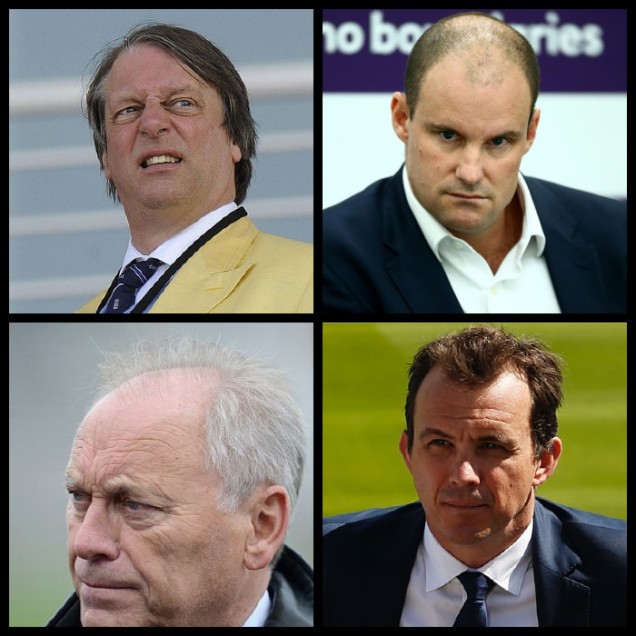
image1

It may just be me, but I remember certain promises of a New England team after the humiliation of 2013/2014 Ashes. The difficult and unpopular South African batsman who had batted at number 4 was removed due to an overwhelming dossier of (soon to be published) evidence. We were promised a new start under the welcome leadership of the darling of English cricket. We were promised that there would be a review and something like that would never happen again. There was a promise of a fresh start with a new, young and exciting team that could unite the nation; plus administrators who acknowledged the pain that the English supporters felt and would take steps to ensure that our voice would be heard and that they would right past wrongs.

At least, that’s what the ECB and many of their complicit associates thought they were saying. Instead, they managed to split a cricketing nation down the middle, insult the fans by saying anyone who didn’t agree with them was from “outside cricket”; who then alienated those fans by hiking up the costs and by refusing to put the interests of the true fans ahead of their own financial lust. Every time they told us they knew what they were doing and to have faith in them, they immediately plummeted to new depths. They first marginalised and then penalised county cricket and many of the counties themselves were soon staring down the barrel of bankruptcy and at the mercy of handouts from their increasingly iron-fisted administrators. Durham were docked 48 points and relegated for having the misfortune of producing a number of young English players whilst having to build an international stadium that the local economy didn’t need or warrant. They’ve seen participation in the sport disappear to an all time low thanks to hiding it away on pay for TV and investing the princely sum of £2.5 million for grass-roots cricket. They’ve turned a significant number of loyal England fans against the team and away from cricket who in all likelihood will never return to the sport.

The ECB did all this and for what? A mediocre white ball team and a Test team that has once again been humiliated in Australia, after being humiliated in India, with a team lacking in basic talent and a future pipeline that resembles a dry well . Well done to the ECB, you’ve achieved so much in the last 4 years that many others who were deliberately trying to destabilise the sport wouldn’t be able to do in 10 years. I hope you’re proud.

So after this embarrassment of a series, those few fans that remain are waiting for what comes next, yet we all know what comes next – nothing. Nothing at all. I’ve seen many of the media say that we shouldn’t ‘sweep this under the carpet’ after this series’ calamity yet that’s exactly what will happen again. Boycott had some good questions at the end of the series but took out his frustrations out on the wrong person in the absence of any management. Instead, if lucky we may get the odd staged interview where Tom Harrison dictates to us why English cricket is in a such a good state of health. We may get the odd dissenting question from the likes of Jonathan Agnew (whose last interview was more Graham Norton than Jeremy Paxman), yet I’m sure Harrison will be allowed once again to gloss over these things and nothing will be said or done, after all it’s not particularly in the interest of the media to shoot the golden goose.

Yes there have been exceptions, George Dobell has posted some fine and cutting articles about administrators both in this series and before, but what about the rest of them? The fact that some of the ‘establishments of the media’ are talking about a need for change only now just makes me laugh. Literally where have you been for the past 4 years? It’s been staring you in the face all that time and you have only just woken up and smelled the coffee? If that’s your idea of hard hitting journalism, then perhaps you should consider a career at the Cricket Paper?

Naturally, there will those that blame the team, the coaches, the selectors and probably  the boogie and yes, all of these need to share in some of the responsibility (well perhaps not the boogie, but it has often proved to be an efficient scapegoat in the past). The best thing that could be said about the team is that they kept trying their best to the end, though the worst that could also be levelled at them is that they are a talentless bunch of egotists who can’t handle their alcohol. The coaches have hardly covered themselves in glory either, Trevor Bayliss couldn’t find most of the counties if you gave him a Sat Nav, let alone identify most of their players. Farbrace seems to appear when things are going well, has a large chuckle with the media and hides when they’re not. Ramprakash has been given a contract extension when half the team don’t seem to know which side of the bat to hold and I’m not even sure who our bowling coach is these days! As for the selectors, well let’s just say you could fill a bag with the name of every cricketer in county cricket and pick the team at random and they’d probably be more successful than most of England’s selection in the past 4 years. It’s a mess and whilst the above should all cop their side of the blame, it’s our four protagonists who deserve the most attention and the most recrimination. It’s these four in particular that have taken our once beloved sport and brought it to its knees.

I’m not going to focus on Strauss too heavily as rightly his focus has to be the health of his wife at the moment. Cancer is an awful illness and looking after her and the whole family must take priority over everything else. Another reason that I’m not focusing too much on Strauss is that he is simply the Company Man, employed by those above him to do what they say and to do it in the correct manner. There was talk before his appointment about the role being one where he would have the opportunity to make changes to the structure of the English game to ensure success in all formats and if that was indeed his mantra, then he has failed spectacularly.  My own personal view at the time was that Strauss was the hired hand: get rid of KP for good and be the face of the regime so that no-one looks too closely at what’s going on behind the scenes.  Not a lot has changed my opinion in that regard.

Sure I dislike Director Comma immensely especially by the way that he is able to embrace leaving his faculties at the door so that he can have a fairly cushy job of giving ‘short buzzword-loaded statements’ that the media will lap up in exchange for being part of the Establishment. In truth though, Strauss was part of the establishment long before he retired. He was from the right type of family, had the right look and was willing to adapt to situations that suited him at the time and then to dump those no longer useful. Sure, the ECB would’ve liked Strauss to have a team performing on the pitch to remove any investigation about what was going on behind the scenes but that never was a mandate. The mandate all along was keep the media happy and get the punters paying whilst saying the ‘the right thing’. It is impossible to tell whether Strauss would have copped much heat after this disastrous series if his personal circumstances were different, but I certainly have my doubts, after all why would the ECB want to remove their head boy?

It can also be rightly pointed out that all of this started way before 2014, under the stewardship of a certain Giles Clarke. Clarke is without the doubt the bogeyman of English cricket, a man who has always been so singular in his own quest for power and the riches that come with it that he isn’t worried about destroying anything in his way. I know a few of the hacks had pieces on Clarke that never made their way to print, such has been the fear of offending him and his lawyers. One can quite easily recall his reaction to Lawrence Booth after a mildly critical piece appeared in the Wisden Almanack alongside his haranguing of former ICC President Ehsan Mani at the same gala dinner. Whilst no-one in the press had the cojones to actually quote what Clarke said to either Booth or Mani (I’m guessing it wasn’t that he was a ‘‘man of great judgment’ unlike Paul Downton); however Mani acerbically commented afterwards that:

‘I’m very used to Giles being utterly irrational. He always thinks it’s just about him when there’s a far bigger picture of three countries sharing 52 per cent of income between them.’

Giles, we know – much like some of those who have followed him into power – was always about the commercials and pretty much stuff everything else. He got into bed with a soon to be convicted criminal – Alan Stanford, strengthened ties with Sky and took more pleasure in boasting that he had increased the ECB’s revenues up to £140 million than he did speaking about on the field success. Clarke created the revenue model whereby counties had to bid for Test Matches rather than the ECB distributing them as this lowered the ECB’s risk and accountability for a poor attendance or rain ruined Test. Indeed it was reported in the Telegraph some time ago:

“Giles’s agenda was all about financial imperatives, keeping the counties alive,” says one former county chief executive, who preferred not to be named. “He was very clever at making sure that he kept at least 10 of the 18 onside, and he was re-elected twice on that platform. Plus, some people became too scared to vote against him. If they did so and didn’t win, he found out, and he was a great one for punishing you.”

“Some people feared he wouldn’t give them a winter cash-flow loan [which many of the counties use to keep the creditors off their backs] or an international match.”

Ah yes, the fear factor the Clarke actively cultivated is well and clearly shown by the above. Back me or I take the money away and give it to someone else who will. It was Clarke’s obsession with money and power that laid the groundwork for the carve up of cricket and the absolutely despicable  “Big Three” revenue agreement, though it seems that Clarke had very little intention of sharing this money with the wider English Cricket community, this was the ECB’s money after all.  Clarke failed to get his hands on the most powerful job of all in world cricket, yet he’s still there, hovering around the halls of the ICC and ECB and no doubt leaning on those in the front line to carry out his mandate. I could write many more words about Clarke, but many of these have been written before and there are some new boys in town ready to take up the mantle.

Then we come on to Colin Graves, either a bumbling fool who has got in far too deep than he thought or some kind of evil genius that the world has never seen before. I’m genuinely torn between the two statements personally because he has shown both sides of this at times, sometimes even in the same press conference. We all know that Colin’s favourite word is mediocre (though surprisingly not when talking about the England Test team), West Indies cricket is mediocre, our current T20 competition is mediocre, I would probably guess that he describes lunch in the long room at Lords mediocre. Surprisingly enough, the reaction to this wasn’t what he had anticipated (i.e. pissing people off and motivating the opposition). However we have also seen a more cut-throat side from Graves, marginalising many of the counties that helped him come to power and survive through his initial appointment when Clarke still had a say on English cricket. He then went completely postal on Durham, a county that had unfortunately no rich benefactor and who were at the mercy of the ECB.  One only has to remember that this certain Colin Graves had helped Yorkshire out of a massive financial hole with a number of loans in the past as County Chairman – conflict of interest, what conflict of interest sir? This is the man, who has single handedly led the charge for a franchise based T20 when there was no support from the fans or the counties and looks to be around 5 years too late to make a major difference. This is the man who has decided to relegate red ball cricket to the very margins of the county season and then wonder why our Test team continues to fall apart when not faced with green seaming pitches. Still Graves is always good for the odd catch-all statement:

‘Everyone is very disappointed. Everyone gave their all, but we have to do things better going forward. There is no specific review.’

‘We have Andrew Strauss as MD of the England team and [ECB chief executive] Tom Harrison in charge, and I trust them completely to make the right decisions. There will be no witch hunt. We have to look at it and see how we can improve, so in four years’ time we are better placed to win [in Australia] than we were this time.’

Ah yes, no witch hunt this time, after all we’ve only been thrashed 4-0 this time with only a dead dog of a pitch in Melbourne saving us from a whitewash and since there’s no Kevin Pietersen to ‘sort out,’ then we can rightly sweep it under the carpet. And Colin, whilst you’re there, I’ve got news for you: if you truly believe that Director Comma and the Empty Suit that is Harrison (more on him later) are deserving of trust to make the right decisions for English Cricket, then you are even more deluded than I even thought. Colin Graves: unfortunate idiot or world class baddie?  I guess the answer will be left to the cricket historians…

Finally this brings us on to the Empty Suit, Tom Harrison – the bean counter, the money man and the dangerous one. Let me just make this abundantly clear, Tom Harrison would organise a game of cricket on the moon, with a basketball and flippers if it made him some extra money. Tom Harrison does not care one jot about the game of cricket, the development of youngsters, grass roots cricket, how the Test team performs and what the future of English cricket will look like. As far as he is concerned, cricket and those who love it are just an unfortunate annoyance that sometimes gets in the way of him making money.  Nothing and I mean nothing else matters. NOT ONE SINGLE BIT. Whereas Downton was both incompetent and stupid, Harrison is unfortunately highly competent in his singular goal of making cash and will ruthlessly destroy those who dare get in his way. I have published this a couple of times in the last week or so, but let’s just look at this statement one more time:

The health of the game is more than just Ashes series overseas.  We’ve had a successful entry into the broadcast rights market out of which we have secured the financial future of the game until 2024.

“We are in a process of delivering cricket across three formats. They’re making huge strides across the white-ball game, up to a place where we’re winning 70% or so of our white-ball matches – the ODI side in particular – and the T20 side is making good progress.”

In other words, yes we’re crap but look at the money, just look at it!  Look how much money I made out of Sky and everybody else! Yes, Harrison deserves some credit for selling a pretty crap product to Sky and others for £1.1 billion from 2020 to the end of 2024, but equally it would have been pretty embarrassing if he hadn’t managed to get a significant cost increase bearing in mind his background in selling TV rights.  Still even with the ECB breathing a huge sigh of belief, having postponed the inevitable financial precipice until 2024, Harrison once again let slip his key motivations:

‘You’re not thinking about the deal that you’re doing, you’re always thinking about the next deal.’

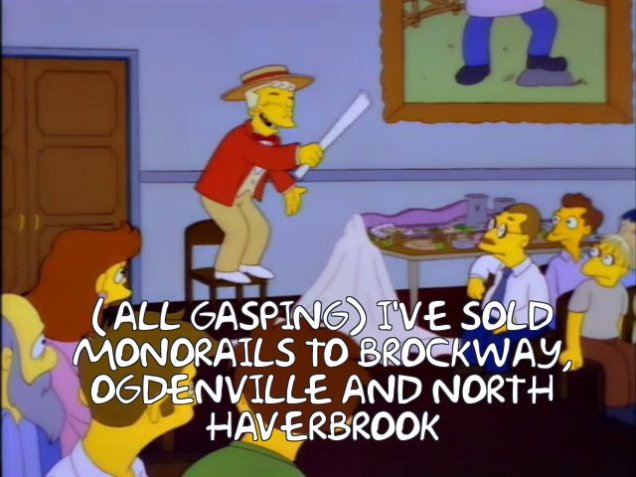
Stop me if I’m wrong, but it appears that the future of English cricket has been solely handed over to a greedy, ruthless, ex-car salesman type who has masqueraded as the answer to all of the ECB’s prayers. The snake oil salesman, who has rocked up from nowhere with supposedly all of the answers and none of the nasty drawbacks, does it remind anybody of someone else??
1057288

And there we have it folks, we don’t matter, because once the next generation has finally discovered the note with ‘there’s no money left’ our four protagonists will be long gone with their riches and so will be what’s left of the money.  The game will be up, every single decision that the ECB has made during the last four years has ensured that English cricket in the future will be nothing but a rotting carcass, mourned by the few but largely forgotten by the majority and we have Clarke, Strauss, Graves and Harrison to thank for this.

I thought after 2014 the ECB had reached the nadir, covering up a truly despicable performance, sacking our best player, labelling anyone not employed by the ECB as outside cricket and showing almost no regard for the fans  Unfortunately I was wrong, this was just the start. The ECB have done all of this and more over the past years, and whilst we were furious four years ago, this time there is simply no-one around that cares enough anymore. And this is their most damning failure of them all.

Fifth Ashes Test: Day Five – Humiliation

Defeat came as expected, and the scale of it was every bit as huge as anticipated, as England collapsed to lose by the small matter of an innings and 123 runs.  In some ways it offered the perfect conclusion to the series, for despite England being well beaten, indeed thrashed, there was also the smallest morsel for some to point to as the latest excuse – in this case the loss to illness of the captain, Joe Root, who at least deserves credit for trying to bat when clearly and visibly extremely poorly.  No doubt if he had been fully fit, England would have saved the Test and started the year on the same kind of high as they finished 2017…

Analysing the final day of the series is pointless, it went as expected, and with little fight beyond Root.  The series as a whole is a different matter, and as the dust settles somewhat, then the questions that won’t go away will come to the fore.  To some extent, Paul Farbrace was rowing against the tide when asking the kinds of questions that ought to be obvious, but which seemingly are buried beneath a wave of ever more desperate explanations.  It is striking that it was the first time anyone associated with the England set up even dared to say anything of the kind, and offered a marked contrast to Tom Harrison’s ridiculous collection of platitudes insisting that all was well.  How Farbrace’s call for “brutal honesty” goes down among his superiors remains to be seen, but the signs aren’t good.

The press certainly aren’t going out of their way to answer them, or even properly consider them.  Two elements immediately spring to mind, firstly that Alastair Cook is consistently highlighted as being one of the more successful elements of the series.  One genuinely superb innings in Melbourne on an officially poor pitch cannot be used to mask the remainder of the series where he scored just 132 runs in 8 attempts.  By all means salute that one knock, but rarely has a series average of 47 proved so misleading or irrelevant.  It isn’t dismissing him or belittling him to acknowledge that, and he’s openly expressed his frustration – why others make excuses that he doesn’t is exactly why some cricket journalists attract such contempt.

Secondly, the response to Mason Crane’s performance has been nothing short of extraordinary.  He’s a 20 year old kid, playing in his first Test, and to that extent expectations were entirely minimal, and his match figures of 1-193 aren’t terribly relevant.  First Test, dead rubber, let’s see what he can do, and he bowled nicely at times.  But it certainly can’t be considered a success, and to highlight him as being so is downright peculiar. No seam bowler would receive such plaudits for that kind of debut, and certainly no off spinner, no matter how young.  It isn’t about hammering him for not having a good match, it’s about being realistic about what it was, and acknowledging him for what he is – a young player learning his game, who may or may not go on to have a good career.  Adil Rashid must wonder just what it is about him that deserved such an entirely different set of headlines throughout his seemingly finished Test career.  On that point, what England would have given in Australia for a spinner who could bat and was capable of taking 23 wickets in India.

The parallel universe of cricket reporting and administration continues to amaze.  A 4-0 defeat is hailed as being better than the last attempt four years ago on the grounds that England managed to draw one on the flattest pitch ever seen in Australia.  Nominally, that’s true, but denial of the horror of this tour against an Australian side that hasn’t been particularly outstanding over the last couple of years is a remarkable exercise in putting heads as deep in the sand as possible.  One draw and four heavy defeats as progress isn’t the highest of bars at which to aim.  At that rate of improvement, a  flippant observer might think England could just possibly look forward to a very dull drawn series round 2034.

Any cricket supporter can acknowledge and accept being outplayed by a better team, but they also have the right to ask why that is, especially when it keeps happening.  This series defeat is worse than any of those in the 1990s, when Australia did have an exceptional side and England a poor one, yet at no point during that era was there such insouciance in the press and within the ECB about it.  Even the 2006 thrashing, while shocking, had some mitigation in being at the hands of a magnificent side bent on revenge.  2014 might well have been a disaster, but at the end of it the sole response was to kick out one player and insist that it wouldn’t happen again.  Well, it has done.  What the bloody hell have the ECB been doing for the last four years and why will so few in the media hold them to account for it?

The truth is that they don’t care.  The money is rolling in from TV deals and T20 cricket in particular, though they’d be wise to realise that catastrophic performances (and it’s only a year since the same thing happened in India) tend to kill interest quicker than anything else.  Cricket is in deep trouble in England, not because of one series defeat, but because of the policies adopted that have led to it.  Viewing figures are down, participation is down.  Sponsors tend not to align themselves with invisible sports that are failing, and kids most definitely don’t take up sports they don’t see and don’t have any heroes in.  Yet because finances look good at present, there is much backslapping at Lords, and those responsible will be long gone by the time the reality of the disaster they’ve overseen in the game manifests itself.

There are so many elements to this, and barely any of them are ever even acknowledged, let alone addressed.  The ECB have already stated that there won’t be major action taken over it, so just like last time around, the structure will remain the same – only this time there’s no obvious scapegoat to blame for everything.  The county championship will remain marginalised at each end of the season, limiting opportunities for fast bowlers and spinners, and continuing to ensure that medium pacers who do a bit off the seam can thrive – and be entirely unsuitable for higher levels.  Darren Stevens’ success last season was a beautiful thing, but the fact it could happen at all is not.

The fast bowling academy at Loughborough, which has been spectacularly unsuccessful will carry on as though nothing of import has taken place. The bowling attack will continue to be carried by two veterans who have done sterling service over the years, but who have so little behind them to challenge their positions.  The batsmen will carry on being drawn from the ranks of those averaging in the thirties in first class cricket, who may or may not be capable of making the jump to the top level.  The administrators will remain in position with no accountability whatever for what has transpired on the field.  The players will be developed from the tiny pool of the public schools which demonstrates a genuinely impressive level of wastage amongst the 93% who do not.  The people who care for the game will continue to be dismissed as “obsessives” in favour of those who wander along to a T20 match.

The worst part is that none of this is going to change.  None of it.  This is how it has been set up, in fact this disintegration of English Test cricket (it isn’t going to get better as things stand) is the exact outcome from the policies set in place over the last decade.  Removing all cricket from free to air television in favour of a financial drug fix was a disastrous decision.  It doesn’t mean that had they not done that all would be well, but it does mean that it set the game on a path of dwindling relevance and interest that the ECB then compounded with their other decisions.  To that extent, this is what they’ve achieved, and it was pointed out at the time.

The ECB consistently talked about the four year cycles, and did so after the last drubbing.  What have they achieved in that time?  The refocusing on short form cricket has delivered precisely zero titles, and the current team is mired in the middle rankings of the ICC tables, just as they were four years ago.  They approach it rather better than they did, and they’re certainly more exciting, but it’s hardly been an obvious road to success.  The Test team in that four year period has been “rebuilt” to the point where the only players secure in their places are the ones who have been there since then, and in most cases, years before.  Jonny Bairstow is the single exception to have come through and he was on the fringes then anyway.  England don’t even have the excuse of being  young side.  They arrived in Australia with doubts over three of the top five batting positions, the spinner in Australian conditions (and who openly regards himself primarily as a batsman anyway) and the entire seam bowling attack apart from two who have been around for a decade and more.

The biggest crisis the Test team face right now is the sheer poverty of what is behind the veterans, with very little sign of anything truly exciting coming through.  That this will get worse, not better.  When people say England will miss Cook, Anderson and Broad when they’re gone, they don’t realise just how right they are.  Home series against Pakistan and India may well paper over the cracks somewhat – though should England lose, as well they might, perhaps the alarm bells might finally penetrate the heads of the assorted establishment figures – but not to anyone paying close attention.

England have lost 9 of their last 12 away Tests – two thrashings in India and Australia, and a drawn series in Bangladesh that frankly, they got away with.  But it’s ok, Tom Harrison says all is well.

A small housekeeping note:  Sharp eyed visitors will have noted a new link at the top of the home page where you can contact any of us, to have a rant if you feel the need.  We will do a final Ashes panel over the next few days, so if you’re interested in being part of it, drop an email to tlg@beingoutsidecricket.com


Australia vs. England, 5th Test, Day 4 – Meltdown

The day began as the last one ended, with the Marsh brothers punishing some ordinary bowling from England’s spinners Moeen Ali and Mason Crane. Fortunately, English viewers only had to endure 3 overs before the third new ball was taken. In a surprising turn of events, Root kept Crane bowling with the fresh Kookaburra rather than going with Broad. Anderson at the other end managed to get Shaun Marsh to edge the ball, but it flew between 1st and 2nd slip to the boundary, and then having two LBW shouts in his next over.

The reasons for the odd bowling choices became clear when Moeen Ali and Stuart Broad replaced Crane and Anderson after just a few overs each. The heat in Sydney was exceeding 40°C, and England’s bowlers in particular were feeling the strain. Both Marshes managed to get their hundreds, a galling moment considering the derision the two brothers are considered with by English fans and journalists. England have been so bad at bowling that even the Marshes have prospered. There was a brief bright spot for the tourists as Tom Curran managed to bowl Mitch Marsh with an offcutter in just his second ball of the day. After the wicket fell, England set the field back to restrict Australia’s scoring although a preponderance of loose balls meant Australia were still progressing steadily towards a declaration at Lunch.

After Lunch, the Aussies upped their run rate and with it started to take risks. Shaun Marsh paid the price for reacting slowly to Tim Paine calling for a quick single, and Stoneman managed a direct hit which dismissed Australia’s number five for a mere 156. Mitchell Starc came out swinging, looking to score quickly for a declaration, but after hitting Moeen for six he skied the very next ball to Vince at mid-off. Amusingly, this wicket in an almost completely pointless phase of the game meant that Moeen Ali technically had the best bowling figures of England’s bowlers because he was the only one to have 2 wickets. Cummins came in to partner with Paine, and together they managed to score 36 runs in just 26 deliveries which took Australia’s lead to 303 runs. Steve Smith called the batsmen in from the dressing room, which left England with 46 overs to survive in the day. More importantly, they had to quickly recover after spending the first half of the day in 40°C and having fielded for 193 consecutive overs.

Having spent half of the day fielding in the sweltering Sydney heat and the having to bat with just a few minutes rest, it was perhaps unsurprising that England’s openers did not stay in for long. Stoneman left in the third to a plumb LBW from Mitchell Starc, wasting a DRS review in the process. Amusingly Cook agreed with his decision to ask the third umpire, perhaps reminding himself of the two times he has effectively lost his partner’s wickets by persuading them not to use a review.

Fortunately for England, we all know that Alastair Cook is made of ice-cold steel. He laughs at sweltering heat, he doesn’t sweat, he always delivers in pressure situations, he…

…was bowled by Nathan Lyon for 10 in the 6th over. Cook played on the back foot to a delivery pitching on middle and spinning out to hit the off stump. Cook played an exceptional innings in Melbourne, but it has proven to be an exception to his form in this series. His match totals this winter have been 49, 244*, 21, 53 and 9. This is hardly the form of the greatest opener of all time, and his lack of consistency has put pressure on England’s already shaky middle order. To put this in context, Stoneman outscored Cook in each of the first three games. The three live rubbers, you might say. Not that I’m suggesting that Cook should be dropped, but neither is he playing the kind of cricket which deserves the volume of praise likely to be heaped on him at the end of the tour. He has had simultaneously a great game in Melbourne and a poor series, but due to one massive score he averages 47.00 and that’s all anyone will talk about.

James Vince looked in good form, until… Well you know what happened. The only surprise was when the umpire gave him out for edging a delivery from Nathan Lyon to the wicketkeeper and Vince successfully reviewed it. Even the umpires have been conditioned to assume that if he plays loosely outside off stump then he’s probably nicked it. In the very next over after his reprieve, Pat Cummins managed to get Vince to edge it twice, and the second one went straight into Steve Smith’s hands at slip.

Of England’s batsmen, James Vince is probably the least likely to make the tour to New Zealand. Although he has outscored Stoneman, the repetitive nature of his dismissals makes Vince seem particularly vulnerable. In his 9 innings in Australia, he has edged the ball to the wicketkeeper or slips 6 times. Every team he is likely to face in the future will know to just hang the ball outside off stump and just wait for him to get himself out.

This brought in Dawid Malan, the surprising success of the series. Well, it was a surprise for me. Sean, being a Middlesex fan, probably expected it. Together with Joe Root, the pair attempted to block out the remaining 25 overs of the day but Malan was given out LBW after being hit in front by a straight ball from Nathan Lyon. Not a great dismissal, being stuck deep in the crease playing on the back foot, but he has been England’s highest run scorer so far in the series. Of course, being England’s top scorer in an Ashes defeat isn’t always a guarantee that you won’t be dropped.

Which left Root and Bairstow at the crease. Considering Moeen Ali’s form in Australia this winter, it’s probably fair to say that this is England’s last partnership before the tail begins. The pair of Yorkshiremen safely navigated the following 12 overs to see England through to the close of play. At stumps, England were 93/4 and still 210 runs behind Australia.

It seems fair to say that it would take a miracle of epic proportions for England to even make Australia bat again. More realistically, by the time most of us wake up tomorrow England will almost certainly have lost the series 4-0. Australia have outplayed them with both bat and ball throughout the series, and only a great innings from Cook and a truly abysmal pitch at Melbourne saved England from back-to-back whitewashes.

Talk has already begun on who might lose their job in the aftermath. Perhaps Worcestershire know something we don’t, because they’re apparently chasing Paul Farbrace to be their new head coach. On the field, it would be surprising if Vince, Ball or Curran made the Test squad for New Zealand in a couple of months. Beyond that, I’m not sure much will change in the England camp. All of the public statements from the coaches and Tom Harrison have been to support the current players and staff, attempting to reassure people that everything is fine. If nothing is wrong, then surely no one can be to blame?

As always, please comment on the game (or anything else that comes to mind) below!

Australia vs. England, 5th Test, Day 3 – Shambles

Pathetic, Embarrassing, Shambolic, Amateur. These are all words that can be used to describe England’s performance in this Test and for most of the Ashes series. This is a decent Australian team in home conditions, but this Australian team is absolutely not a world beater and not even on the same page as previous Australian teams, yet England have time and time again been made to look like a clueless bunch of county pros. I feared the worst when the squad was announced and the performances of England during this series has simply confirmed what we all feared. This has been an absolute hammering, no ifs and no buts and no polishing the so called ‘turd’, this has been a one-sided embarrassment of a series.

There were times in the past when I would have been angry, extremely angry at such a performance, this was when the fire burned brightly from within, but not any more. I simply do not care enough about this team nor about a board who couldn’t give any less of a monkey’s whether the team performs well or not. We have a national performance centre, national bowling and batting coaching leads, enough money to make many other cricket playing countries green with envy, yet we took the field in Sydney with a number 3 who is not cut out for Test Cricket, a spin bowling, batting all-rounder who can do neither task particularly well, a slow and ageing new ball attack, a bog-standard county medium pacer and a 20 year leg spinner with a first class average of over 46. Did anyone really expect anything different from what we have seen in this Test??

The crux of the matter is that none of this will count in 3 months or so. There will be no report, no investigation, just a large ‘sweep it under the rug’ job from the likes of Harrison and Strauss. There may be the odd superficial change such as the selectors getting the bullet or Bayliss being moved sideways, but in essence nothing will change, it will just be referred as another ‘difficult winter’. If you don’t believe me, then take it from the horse’s mouth instead:

“The health of the game is more than just Ashes series overseas,” Harrison said. “We’ve had record-breaking attendances in domestic and international cricket, changed our governance structure, hosted two global events, won the women’s World Cup and launched a participation initiative for kids. We’ve had a successful entry into the broadcast rights market out of which we have secured the financial future of the game until 2024.”

“We are in a process of delivering cricket across three formats. They’re making huge strides across the white-ball game, up to a place where we’re winning 70% or so of our white-ball matches – the ODI side in particular – and the T20 side is making good progress.”

Ah yes, when in doubt mention how secure English cricket is and how the white ball game and in particular T20 is going so well. After all, we have a new T20 competition to sell. Stuff the traditional game, that is only useful when Tests are being played at Lords (anyone else find it hilariously funny that every England commentator praises the Barmy Army to the hilt, yet these individuals wouldn’t be allowed within a 5 mile radius of a Lords Test Match). I have always had a particular dislike of the way that the Premier League has been run, trying to rip every single pound possible out of every fan and in the past I would look at cricket and was thankful for the way it was run. Yes, the ECB have always been incompetent and an old boys club, but their various terrible decisions always smacked of sheer incompetence rather than anything more sinister. Of course, this is no more. It started in 2014, when they decided to fire a rather good, South African born batsman because he was a bit difficult and because they supposedly had a dossier of bad behaviour against him (though naturally this never saw the light of day). That was just the beginning though, nowhere near the coup d’état that are currently witnessing. These last 4 years have seen the rise and rise of naked greed from our administrators, indeed it seems that the ECB are no longer even bothered to cover up their true intentions anymore. It’s not my game, your game or our game anymore; it’s their game and if you don’t like it then tough, you’re obviously not from the right type of family. It doesn’t matter to them that the Test side continues to fall from grace, with the same issues that we have had for the past 4 years. It doesn’t matter to them that most of the counties are dying a slow death, nor does it matter that many don’t want a new T20 competition. Sky have said that they quite fancy it and are willing to pay for it, so therefore it is gospel according to Tom Harrison. Always remember it’s the money stupid.

And what hope do we have? Almost none. We at the blog are some of the few dissenting voices out there and we are just 4 cricket junkies who do this in our spare time. The rest are either having their palms greased by the ECB or are so desperate to be ‘inside cricket’ that they are happy to leave their morals at the door. This is the new world, not for you and I, nor for the fans of our once beautiful game, but for those who are happy to line the pockets of our administrators. This in particular, breaks my heart. I’ve followed England for over 20 years and many of our readers have done so for much longer through the good and the bad. I’ve personally been to at least one home Test match every year for the past 17 years, I’ve also paid from my own pocket to watch England in Australia, West Indies, Sri Lanka and in the UAE, yet I am deemed not a true fan because I dare to ask why our beautiful game is heading down the toilet.

Quite simply, I’m done with this series, I’m done with this team and nearly done with English cricket altogether. The moment that I was no longer classed as a fan but a consumer was the point of no return. I’m sure there are plenty of others out there with deeper pockets than mine that can take my place, but the moment that you turn true fans away from the sport is the moment that no amount of spin or bluff can prevent the death spiral that English cricket will soon find itself in. If this is the future of cricket in this country, then you can count me out for good.

For those who are more committed than myself, then comments on Day 4 below. I won’t be watching mind, 8 hours of sleep seems a far better idea than watching this non-contest….

5th Ashes Test, Day Two

Australia in a strong position – check

Steve Smith in and looking ominous – check

England’s bowling looking toothless – check

Here we go again.  Despite Tom Harrison’s proclamation that all is well and the only reason England are marginally losing this series is because they haven’t taken their opportunities, two days of cricket at the SCG have once again emphasised the gulf between the teams.  And this after England did fairly well with the bat in the morning too.  In a better balanced series, Australia finishing on 193-2 would mean that with a deficit of 150 still to be made up, the game was in the balance, and if England bowled well in the morning then they would be in a decent position.  The problem is that repeating this in the face of all previous evidence is the kind of thing only the empty suits at the ECB do, to try and ensure that wherever the blame goes, it doesn’t go to them.

Sure, it’s possible that by the time the third day is complete, this post will look ridiculous, as England skittle Australia and start building on their sizeable lead, but the exceptionalist nature of such an outcome, and the way that you, dear reader, have almost certainly scoffed at that possibility is exactly the point.  England have now reached the point where the feeling of inevitability about the outcome has taken hold, a pattern in every Test, apart from the one where the pitch was officially rated as “poor” and allowed England to escape with a triumphant draw – one that sealed the Ashes into eternity according to the response to it in the media.

There can be surprises, certainly.  The weak looking England tail did rather well, aided by some extraordinarily brainless bowling at Stuart Broad, and some impressively inept catching.  Maybe the Australians weren’t quite feeling the intensity with the series well and truly won, not that anyone is allowed to mention that of course.  Still, Tom Curran and Broad rode their luck and made decent contributions, as did the out of sorts Moeen Ali.  Yet while 346 represented a much better total than it could have been, it still looks lightweight in context.

England gained a quick success in dismissing Bancroft, a fairly routine delivery from Broad breaching his defences, which merely goes to highlight that the idea that England are up against a great team remains as absurd as ever – the controversy over their lack of batting depth seems a long time ago.  Perhaps it is the case that Australia do indeed have a very fine bowling attack, but given England’s inability to cope with many others around the world, it’s hard to tell for sure.  Even allowing that, it doesn’t provide an excuse: either England are totally outclassed, in which case why is that; or they are, just unable to grab the moment (Harrison), in which case why are they being battered repeatedly?

After the early success, there were few alarms; Warner compiled a well made fifty, Khawaja closed in on a century, and Steve Smith seems to have been at the crease for the entire series.  And there’s the problem, James Anderson has done fairly well this tour, but while he has received some criticism for being defensive and containing, the question needs to be asked as to what else should be expected of him?  He’s 35 years old, is unquestionably one of the cleverest bowlers around, but surely at this stage of his career he ought to be a support bowler of extreme skill rather than the one carrying the entire attack.  Broad at the other end has had a mixed tour by his own admission, and that’s fine, because it happens.  Last time around he was exceptional even as the side disintegrated around him.

George Dobell is one of the few journalists pointing out the reality of England’s position, the abysmal failure of the ECB to produce fast bowlers, and the seemingly counterproductive fast bowling programme allied to the sidelining of first class cricket.  England’s current pace bowling attack has the feel of the West Indies in the late careers of Courtney Walsh and Curtley Ambrose.  Those who respond to criticism of Anderson and Broad by saying England will miss them when they are gone are exactly right – for when they do go there is so little behind them except a collection of medium pacers without their level of exceptional ability, or crocks.  Cyclical problems can afflict any country, but the utterly blasé response of Harrison’s insistence that all is well highlights Dobell’s point about the complete lack of accountability.  When it is said that this is a golden era having Anderson and Broad, the sad truth is that they are almost certainly right.  A 35 year old and a 31 year old should not be leading the attack with no rivals for their position in a healthy structure.  Don’t blame them, blame the administrators who have created the position where they are not only the best we’ve had in the last 20 years, they are also the best we will have for the next few years as well.  Ambrose and Walsh indeed.

The same can be said to apply to the spinning role.  Moeen Ali has had a miserable tour of it, and once again failed to impress here.  Yet earlier in the series he was apparently being played as a batsman only (only to then bowl) because his finger was so badly damaged, and was also suffering from a side strain.  In the rush to beat him up for this series, this no longer seems to be mentioned at all, in which case it either wasn’t a problem in the first place, or he’s being slated for playing badly when he’s not fit – it has to be one or the other.

Like clockwork, now there are calls for him to be replaced.  Fine.  No player should have a sinecure when they are out of form, or if they ultimately aren’t good enough to stay in the team, but here it still smacks of thrashing around in the death throes.  Drop Moeen Ali by all means, but be sure that the replacement is going to be better.  This doesn’t mean you don’t try things of course, otherwise no one would ever be selected, but in the last 15 months England have used Moeen, Rashid, Ansari, Dawson, Batty and now Crane.  Six spinners in just over a year, discarded one by one as not being good enough, with the last a left-field punt that doesn’t offer huge confidence for a long term selection, which is absolutely not his fault.

As Dobell points out, Adam Riley, meant to be the answer to England’s spinning woes, didn’t play a county championship match last season, and even Crane only appeared in some of them.  They can give Ollie Rayner a go, presumably based on his average of just under 40 last season that just screams “pick me”, but it isn’t going to magically change things.  Moeen might well have been very poor away from home (again, let’s emphasise he was meant to be injured for this one, because this seems to be constantly ignored) but he has been good at home, both with bat and ball.  Is that remotely ideal or acceptable?  Absolutely not.  Is it probably as good as is likely whoever they pick?  Yes.  It might even be better.  This is not a defence of Moeen Ali or a call for him to be retained, but it is pointing out that the idea that things will magically change for the better when a player is dumped is wishful thinking.  England do not have ready made replacements to slot in and improve the team, nor do they have a production line of young talent.

The same applies to Cook.  In his poor spells, it can’t possibly be said that he came under true pressure for his place, not in this case because of the media, although that is true, but because with a lack of a successful opening partner, how could he possibly have his own place questioned?  Cook horribly out of form was still England’s best opener.

Irrespective of how this match unfolds, the true horror of England’s position is that this really is their best team, and most of their best players are in the later stages of their career.  Perhaps some will magically seize their opportunities, but it’s not something you’d put the house on.

This is where the ECB have led the English game to.  Invisible, unimportant, hidden away, wealthy (for now), not very good, and likely to get worse in future.  Well done chaps, drinks all round.

Day Three Comments Below


5th Ashes Test: Day One

OK, hands up:  who’s really surprised?  Perhaps that England had a pretty decent day up until the last five minutes, yes, but the close of play score?  Unlikely.  A middling total, encompassing a promising position thrown away, with the prospect of that lengthy tail to come, and a new ball in Australian hands.  It’s possible that England will go on to make a fine first innings score, for Dawid Malan is still there, and of all the England batting order is the one who exudes a degree of permanence when at the crease.  Equally, Moeen Ali could be said to be due for some runs – forever the last kind of unreasoning hope to be extinguished.  But after that, there’s not much at all, and while 350+ is always possible, so is 250 all out, and the probabilities lean closer to the latter than the former.

Of course, much of the comment will be around Root passing fifty and failing to go on to a century yet again.  That it’s a problem he’s more than aware of was shown by his despairing reaction to his dismissal, but as ever, it’s something that gets commented on in isolation about him, and never should it be mentioned that Cook has more than a slight issue over the last few years with the same thing; occasional huge scores don’t alter that.  England throwing away promising positions is hardly new, but nor is it down to just the captain.  Oh, and nor is this conversion problem something that’s afflicted him since he became the skipper, it’s been a problem for a while.  Still, it doesn’t mean that it shouldn’t be mentioned, for Root’s dismissal didn’t look great, and was compounded by Bairstow being quickly dismissed afterwards.  In the peculiar way cricket is sometimes looked at, Bairstow’s dismissal is apparently Root’s fault.  228-3 is a decent position, 233-5 is Australia’s day.

The lack of a nightwatchman on Root’s removal also became a topic of debate.  As ever, it’s being wise after the event.  Given how many times Bairstow has been left marooned as the tail fell apart around him this series, it’s not too surprising he didn’t want to bat any lower than he had to.  This time, it just didn’t work out, but Australia went some years having abolished the role entirely.  As ever, decisions like that are often only good or bad in retrospect – Bairstow backed himself to get through the last two overs.

The last five minutes apart, England had done fairly well but with all the same flaws they’ve shown all series.  Stoneman started well but failed to go on, Vince looked pretty but got out for the same kind of score that he tends to get out for, and Cook was dismissed for 39.  Two things about that, firstly the Daily Mail’s description of it as “a convincing 39” is preposterous, and does Cook himself no favours, and nor was his lbw, given on review, in any way controversial, no matter what his number one fan Paul Newman might claim.  It was too much to hope that Cook would repeat his Melbourne innings, but it can be said that he looked technically very good here too, which is promising from his perspective as long as he can maintain it.  That’s not meant to be dismissive of him at all, Cook when he has his game sorted is a fabulous opener, but he also drops off alarmingly at times in terms of his technique.  As he gets older, this will become ever more important, but he remains quite extraordinary in the divergence between when he is fully sorted, and when he isn’t.

Dawid Malan is England’s batsman of the tour, which may seem to damning him with faint praise, but three fifties (including his current one) and a big century represents a better return than anyone else, and if this innings was a careful one, he still very much looked the part.  And bringing in batsmen who do look the part has been in fairly short supply recently.

And so we move into day two.  Any feelings of impending disaster are entirely to be expected, which is probably just the time they’ll confound us all and bat out of their skins.

Fifth Ashes Test: Preview

If ever there was a measure of how far sights had fallen on this tour it was to be found in the way that a draw at Melbourne, on a pitch so batsmen friendly it was rated as poor by the ICC, was treated as a triumph by some.  3-0 down, a series and the Ashes gone, but apparently England ended the year well.  Perhaps in some ways that’s true, when you’ve lost the last seven away Tests and the last eight away Ashes Tests anything better than that is something to take note of, in the same way that just because the ship has gone down doesn’t mean you can’t appreciate the piece of wreckage to which you’re clinging.  Yet denying the disaster that this tour has been remains as pathetic as it was after the Indian tour.  In that case, few expected England to come out on top, but being battered repeatedly and insisting that it was nothing other than the expected – all is well, don’t worry – was a low point for a group of cricket journalists who haven’t been afraid to plumb the depths in recent years.

Here too, the same has happened.  Cook’s unquestionably excellent innings at the MCG doesn’t mean Brisbane, Adelaide and Perth didn’t happen, and pretending that it does invites the contempt it deserves, and not just from the Australians either.  Claiming that it is irrelevant because it’s a dead rubber is nonsensical, ignoring the 3-0 scoreline and a series thrashing is preposterous.  It counts.  Of course it counts, it always did.  But it also always had a slight note against it. Indeed, the England coaching staff clearly didn’t get the memo, for when Trevor Bayliss was asked about selection for the final Test, he said “with the series lost it gives us the opportunity to look at some different people”.   Of course, this shouldn’t need saying, as it is blindingly obvious to anyone paying even a cursory degree of attention, but apparently it does, even though England on the other side of the equation did exactly the same thing when selecting Woakes and Kerrigan at the Oval in 2013.  Writing on cricket is a matter of opinion, but refusing to acknowledge reality in favour of hagiography remains as intellectually dishonest as ever, particularly given the same people were talking about retirement precisely one Test earlier.  Even allowing for finally having something positive to write about, it went much too far.  England played better at Melbourne, the seamers in the first innings were very good, Cook absolutely batted beautifully, while Australia probably lost some intensity, but still saved the match with something to spare.  Fine.  It was better, give Cook plenty of credit.  Move on and don’t overdo it.

Thus, for this game Mason Crane will make his debut.  The SCG pitch is expected to offer some assistance for spinners (interestingly, Nathan Lyon doesn’t have as good a record there as the traditional expectation for turn might suggest) and as a result, Moeen Ali is expected to keep his place.  He hasn’t had a good tour, either with ball or bat, and so this represents something of a reprieve given the initial expectation it might be a straight swap.  Much comment has been made about him not getting overspin, which does raise a few questions:  Firstly whether this is something he’s always had a problem with – the lack of any discussion prior to this tour suggests not – and if it’s just in Australia, why that might be.  He’s clearly not been fit for much of it, with talk of both side strains and finger damage throughout.  If that is the reason why, then England have done him a serious disservice by repeatedly playing him, and then seeing him get a kicking for not performing.  The player narrative shifts from week to week, with no reference to what has been said before, so perhaps the injury claims were overblown instead and he really has just been poor, but it would be nice to once in a while have some degree of consistency in appraisal without the need for excuses first, then a hatchet job.

Crane himself represents something of an unknown quantity at this level.  His first class bowling average is nothing to write home about, but he’s also young and promising.  The biggest fear with him has to be that if he doesn’t have an exceptional time of it, he’ll join the list of those brought in for the final dead rubber of a series (oh, that again) and then never heard about again.  England’s management of leg spinners who fail to be the next Shane Warne doesn’t engender too much confidence.  Maybe it’ll be different this time.

Chris Woakes misses out, having suffered a recurrence of his side injury.  England are saying that it’s precautionary, and hope that he’ll be fit for the ODI series following the Tests, but scepticism about their injury management is probably second only to scepticism about their selection strategy.  Side strains don’t tend to clear up quickly; it seems hopeful to say the least that it will properly heal in such a short time, and risky to then bowl him if it is a problem so soon after being out for so long with the same issue.

Woakes’ absence means that Tom Curran will play, saving him from the possibility of being a one cap wonder, while Jake Ball is nowhere to be seen in the discussions, except to point out that he’s nowhere to be seen.

This will leave England with a line up that requires the top order to get all the runs, for after Jonny Bairstow at six will come a hideously out of form Moeen and a tail that might be nowhere near as abysmal as the legendary Caddick, Giddins, Mulally Tufnell one, but does have the particular distinction of being just as long.  It will be fascinating to see if Cook’s technical work continues here, while Root and Malan too will need to have good Tests.

For Australia it’s easy – Mitchell Starc should return in place of Jackson Bird, although there are suggestions he’ll be rested for the ODI series in preparation for the South Africa Tests, an illustration of their priorities if nothing else.  They have their own batting issues in the top order, but also have Steve Smith, who has been imperious for so long  it has masked the other problems.  How to get him out remains a conundrum that has proved beyond England and might well be the single biggest difference between the sides.

The surface is by all accounts well grassed, and should provide a better contest between bat and ball than last time out.  The trouble is, that looks like very good news for Australia and very bad news for England.  English optimism is in short supply, but always remember Tom Harrison’s soothing words:

“It’s a pity that we’re not in a position to take the Urn home with us, but there’s a lot more to play for over the course of this winter. The health of the game is more than about Ashes series overseas. This is not the moment for kneejerk reactions or rash decisions in respect of performance.

“We have a plan. We’re making progress on that plan. England have been very competitive for large parts of the Ashes series. Those marginal periods of play where you can turn a game, we haven’t been able to do it which has been the difference between the teams in each of the Test matches.

“We understand that it’s extremely disappointing. But this team will be learning from every experience they have on the field and we’ve got a lot more to play for over the course of the one-dayers and the Test series in New Zealand.”

The lack of any critical coverage of what he has said is quite simply remarkable.


The 2017 Dmitris – Number 2 is Kumar Sangakkara

This was a post that had been on the stocks for a little while, but then Christmas and Tests got in the way.  So here we go with Dmitri’s introduction:

“I might have had Kumar down for a Dmitri on HDWLIA in 2014, but I can rewrite my own rules, because no-one takes this that seriously anyway, and nor should they. I’m a  Surrey fan, and it’s been a slim old time the last decade or so. But every so often there is a shining star. This year, more than ever, it was Kumar Sangakkara. There seemed a need for me to recognise just what the great man brought to the County Championship this summer.

For the early part of the century I had the good fortune to watch the best county championship batsman of his generation, Mark Ramprakash, make hundred after hundred for Surrey. This year, on the two occasions I saw him in the flesh, Kumar batted out the tea session of the opening day, and had a rare failure at Guidlford. I missed all of his hundreds, and his double hundred, and yet I felt satisfied just to have seen him in his final season. Eight centuries, 1491 runs, 106.5 average. Speaks for itself. Brilliance.

But instead of me waxing lyrical on the Sri Lankan genius, I thought I’d hand it over to The Leg Glance himself to do the man justice. Call it a love letter, an homage, call it what you want, but Kumar pressed the buttons, and we have a massive fan to see him out….”

June 14th 2014 was a fairly special day for me.  It wasn’t that I was at Lords, for that is hardly uncommon, and my love-hate relationship with the place (on the one hand all the history, on the other all the snobbishness) doesn’t make going there for a Test match anything that special.   But it is usually a pleasant enough day, even if the early Test series of the summer rarely offers up anything exceptional.  England had racked up 575-9, with Joe Root scoring a double hundred, but the hammering in Australia (oh, the irony) and the fall out with the ECB deriding those “Outside Cricket” was still fresh in the memory.  For the first time in my cricket going life, going to watch England didn’t mean hoping to watch England win – I simply didn’t care.

But on the Friday evening for the end of day two there was another, and definitely meaningful consideration.  Sri Lanka had replied well to England’s score with Silva and Sangakkara at the crease in the final session. Now, Sangakkara had always been one of my favourites – possibly because I am both a left handed batsman and a wicketkeeper (similarities end around about there), and even as long ago as Nasser Hussain’s tour of Sri Lanka in 2001, he was a player I watched with interest, and with a deep liking for how he played the game (lippy for a start, mostly with Hussain, who subsequently expressed how much he enjoyed their sparring) and especially how he batted.

This was to be almost certainly his final Test at Lords, a place where he had a peculiarly poor record, as indeed he had in England generally.  That Friday evening as he began his innings was one of those fraught occasions where watching on television is to desperately hope he doesn’t get out, and is still at the crease for when you arrive in the morning.  The close of play with his wicket intact was a moment of quiet celebration – I’d finally see him bat in the flesh, and on a good batting strip to boot.  Setting off that morning it was the principal, perhaps even the sole motivation for wanting to be there.

Towards the end of his career Sangakkara was just starting to get the praise his career deserved.  He’d always been somewhat overlooked – in an era of Tendulkar, Dravid, Kallis and Lara, he was the one whose record matched anyone but was rarely mentioned in the same company.  A fine record as wicketkeeper/batsman had moved into the stratospheric once he gave up the gloves, and still few would talk about him as being of the highest calibre.  The raw figures bear this out; his overall Test batting average was 57.40, a number to bear comparison with anyone not called Bradman, but without the gloves – as he was for most of his career – that rose to an extraordinary 66.78, with 31 of his 38 Test hundreds coming as a pure batsman.  He did it almost everywhere too, and if it was better at home than away, it was only by a small margin, and his away record remained phenomenal.

Stat-mining is a dangerous game – it can be used to ignore those elements that don’t suit a narrative, but identifying a difference between him as all rounder and as pure batsman, given the substantial volume of data for both, is perhaps not an unreasonable way of highlighting just how good at the crease he really was.  There are some qualifications of course – his keeping period came when he was a younger player, and perhaps it might be that the biggest difference was an improvement with experience rather than the demands of the gloves, but the difference remains startling.

Even with such a record, some innings of his stand out, his 192 in Hobart when chasing an impossible 507 to win in 5 sessions perhaps most of all, because the eventual 97 run defeat might have been different had he not been wrongly given out by a subsequently contrite and apologetic Rudi Koertzen.  It’s a rare feeling to have that you’re watching someone play an entire team on his own, but that day it was the one many had – it was extraordinary.  And above all else, he did it with style.  Left handers are often generalised as being elegant, but for every Sangakkara or Gower there is a Graeme Smith or Gary Ballance, but his was a cover drive to match any who had ever played the game, a shot of exquisite beauty and timing, year in, year out.

Of all the top ten leading run scorers in Test cricket, Sangakkara has the highest average.  Such a statistic may not be the be all and end all, but nor is it something that should be ignored.  Indeed, it is not until going down the list to Sir Garfield Sobers that you find anyone with a better one, an indication of just how great a player Sobers was as much as anything.

At Lords, as Sangakkara passed 50, then 60, then 70, a curious feeling came over me.  It was nervousness.  Here was a player I had watched for years, had got into arguments over every time he was ignored when discussing the greatest batsmen in the game, and now I was being teased mercilessly by friends well aware of how much I wanted to see him get that hundred, how much I’d berated them for failing to fully appreciate this most special of players.

His team mate and friend Mahela Jayawardene said afterwards that he had rarely seen him so nervous as he was when in the nineties, and perhaps in the smallest way, the way only a fan can have, I shared in that, for rarely have I wanted a player to reach a landmark quite as much as I did then.  And if I’m honest, not for altruistic reasons.  I wanted to be present when the great Kumar Sangakkara scored a Lords’ hundred.

Of course he did so, and received as warm a reception from the crowd as anyone could hope for.  Except me.  A few people stayed in their seats, and more than anything I wanted to go around the ground and drag every single one of them to their feet, to scream in their faces that they have been particularly privileged on this day to see a player so good they should be telling their grandchildren about him.  That standing ovation (mostly) should have gone on for at least another minute, genius should be fully appreciated.

He was out finally for 147 – when I was out at the bar, rather wonderfully – but he’d done it, he’d “ticked the box” as he put it, and I was lucky enough to be there.   Cricket is a collection of memories, and that was one to file away in the Very Special mental drawer.

Maybe that day was the final piece in the jigsaw in England for recognition, for it seemed to be from then on that he was placed in the great category in this country more widely than he had been before.  Certainly fewer people needed to be convinced by the army of statistics I had memorised by then to show how badly he’d been under-appreciated.  His extraordinary “Spirit of Cricket” speech at Lords three years earlier had certainly gained attention and praise, so perhaps that made the most difference.  And for those few cricket fans who haven’t seen it, here it is – put an hour aside and watch it:

The gift to cricket fans was his last couple of seasons in English county cricket, a run of form that was scarcely credible, but which offered up the opportunity to drink in the chance of seeing a modern great, no, not modern, an all time great.

It’s been said by a few that Test cricket could do a lot worse than put Michael Holding, Rahul Dravid and Kumar Sangakkara in charge of the game.  Watching all three play was a privilege, but this is Sanga’s piece, so this is for him.  Sri Lanka’s greatest batsman, who ultimately belonged to the world.  What he does from here is up to him, but if he does it with the grace of his batting and the class of his oratory, there’s little doubt it will be truly special.