The White Ball Syndrome

My Last ODI - Did Anyone Care?
My Last ODI – Did Anyone Care? – A Dmitri Old Picture

Following on from yesterday’s piece on the Strauss interviews, I thought I’d do a little bit on the other issues that surround the game in this country. The chief of which is the curious case of mismatch of interest.

All through the World Cup there were people on the Twitter feed saying that they really didn’t care about how England did, because, in their words, we’ve always been useless at this sort of thing.  Yet, whenever there is an ODI match in the UK, in the main (not always, I know) these are really well attended. People do like watching them, but at the end of the day, do they care? And it is that care that makes the task of Strauss very, very tough indeed. There are going to be no campaigns to sack a one day captain – and as I write that I recall Alastair Cook, but let’s treat that as a special case – and one day form is seen as being somehow inferior to being in test form. Whereas the rules of test cricket have not changed hugely, barely a year goes by without some tinkering with field placements, powerplays and, of course, the hugely lamented supersub is inflicted on ODIs. The format itself seems insecure.

We seem alone in caring so much about test cricket, but are we really? Are we equating attendance at a fixture with the amount the people care about it? After all, T20 matches are ten-a-penny, but are well attended, but are you as awfully upset if your team loses one of them, as you would be if your team lost a key longer-form game?

Test cricket does not have a world championship, so the idea of who is the best is determined on a rolling basis, which people find incredibly hard to understand how it works. At the moment the world ranked number 1 team is South Africa, who are being given a bit of a beating in India. England were number 1 for a year, in which their first series as top of the tree brought about a 3-0 defeat in the UAE. We are now ranked number 6. Whenever the reign of Strauss and Flower is brought up. being number 1 test side in the world follows. But at the same time, England were ranked number 1 in the world at ODIs too, and that’s never mentioned at all. We reached the final of the Champions Trophy, and choked in a T20 final masquerading as an ODI, and yet that’s dismissed. No-one placed any value on it.

Because, let’s face it, in ODI cricket all that counts is the World Cup. It’s the importance of that once in four years championship that conquers all. The main reason, one could call it a priority reason, Strauss gives a stuff about white ball cricket, if you ask me, is that we are at home in 2019 (and the CT in 2017) and failure there would make him (and not the suits above him) a laughing stock. It’s why the next world event, the World T20, is barely given a passing mention. It’s in India, we don’t play well there, so who cares?

Can you make people care?

The grave danger is that you might not be able to. Caring is about losing, not about winning. Everyone feels nice when their team wins, but caring is about how you feel when they lose. I’m a Brian Lara fan, so when Warner was 244 not out after one day, and playing like a God, and he’s a player I’m not that fond of, I would care immensely if he lost the record to him. If it were Hayden’s 380, I’d be willing Warner on, but only to make 381. I’d care because I loved Lara. Now, as you know, what the ECB have done over the past 18 months meant that I have ceased to care about how England perform, so that on many occasions, my sense of misery after they lost has diminished. Getting that caring back is much harder than losing it.

But even during my peak times of fandom, did losing hurt that much? In tests, oh yes. If asked what was my lowest moment in sport while I was at the venue, it probably would have to be Stern John’s goal in the Play-Off Semi in 2002. I gave enormous amounts of time and money to my club, knew that goal would likely mean the break-up over time of that squad, and we lost our shot at the Premier League. But running it close was the Adelaide test of 2006. While some make light of it with their “it never existed” meme, the agony over six hours of watching that demise is still immensely painful. There are pieces to be written about it still, but it was shattering.

He never bloody hit this, Bucknor
He never bloody hit this, Bucknor – A Dmitri Old Picture….

I have been to a few, not many, ODIs, and the most memorable, if you will, was the England v New Zealand game at The Oval in 2007. This was the Elliott/Sidebottom game, when Collingwood upheld an appeal, but New Zealand somehow won by one wicket in the last over. It was an exciting game, it was won off the last ball, I believe, and yet….. I’ve never been back to an ODI. Both Sir Peter and I were of the same mind. It was a great game, but it never mattered. It’s almost fandom-lite. You can watch a spectacle, admire it’s good parts, tut-tut at the bad, but you never gave a stuff. Not really.

This is where the fandom gets personal. I watched the Ashes series this summer with a bit more detachment, and thus found it hard to fathom why fans were going so mad over two wins on green tops (I think the Cardiff wicket was fine for both teams, actually, and was a superb win by England). I would have been more delighted if we’d won in UAE as that would take some doing, just as India in 2012, Australia (for all their faults) in 2010-11 and the wins in Pakistan and Sri Lanka 2000-01. And yes, Australia at home in 2005 with that team, which, remember, one tweeter memorably said he’s wished had never happened! All supporters are different.

Care does need to be taken, because ODIs are too frequent, too many played with not enough riding on them, quite often without main stars who are rested. If authorities treat them like this, then why should anyone care? While people go on about tests lacking context, the only context that seems to matter on ODIs is how often can we put them on while keeping grounds nice and full. When you have a billion people across India, with ODI grounds a plenty, that special occasion might be a local thing. In England, the ten or so we put on a year are often tucked on to test series, and seen as the dying embers of a tour.

I come from an era when the county final on the first weekend of September was a massive occasion. Then, when people pointed out that bowling first nearly always won you the game, people found holes in it. The glamour of the occasion died. It’s now a sad, pale imitation of what it once was. Yet that is the format of the game that gets the crowds in at international level! It was failing well before the T20 era, before anyone lays the blame firmly at that door.

It’s not just cricket. Millwall, my team, got to the FA Cup Final in 2004. For a fan like me, the win at Old Trafford against Sunderland was a highlight of my supporting life. Never has 45 minutes passed so slowly. We were well beaten in the final, and as we got our buses back to the car parks in Cardiff, a load, and I mean many, Manchester United fans walked past us, almost solemn, almost disinterested. I said to them “cheer up, chaps, you won the FA Cup!” because people of my age saw this as a highlight of any season. One snapped back “We’re supposed to win this sort of competition”. Clearly, in Arsenal’s invincible season, winning the Cup wasn’t enough. It didn’t matter to them. In one instant, the new football was laid bare. I’d denied it was really true, denied it when I went to cup ties and the attendance was shocking, denied it when clubs played reserve teams, but it was true. Something I cared about, didn’t matter. I’ve scarcely cared about the Cup since (I do believe Manchester United have never won the Cup since).

So, to get back to cricket and the ODI priority. Strauss has seen 50 over cricket’s importance diminish over the last 15-20 years, so there’s no domestic base to give a stuff. T20 matters a little, but does it really? You’ve got 14 games a year to play of that. At international level, the series have on context, with players often rested due to crazy schedules. The competition only seems to matter when there are a mass of teams on your shores battling it out, and even then you constrain who can play there. Why make such a fuss over something we don’t seem to give a fuss about? Why prioritise something that the people who watch may never think is a priority? Good luck Andrew.

What do you lot think?

White Ball Priority

You're our only (choice) hope...
You’re our only (choice) hope…

I was researching a piece I intended to write last night, when the news from Paris started to filter in. I find, like most of you no doubt, that stories like this consume you, so the piece took a back seat. Now I’m struggling to remember what I’d heard, so if this doesn’t have some flow, forgive me. Naturally, last night’s events hit home. That’s us out there, eating and drinking, going to concerts, watching sporting events. The world is a potentially horrible place.

This piece is on Strauss and his ODI comments.

I wasn’t concentrating on cricket much towards the end of the week, which is a bit of a problem for a cricket blogger! Work and social stuff took over, but I couldn’t help but notice some of the reactions on here, and on Twitter, to a round of interviews that Andrew Strauss conducted during the 1st ODI (or just before). So last night I listened to the Agnew interview and the one with Nick Knight.

The confusion I had was I thought the line to take from these interviews was that Strauss would prioritise (and he used that word a lot) “white ball cricket” because if we didn’t we would fail again in the World Cup in 2019. Many of you on here took this to mean that players could miss tests to play in the IPL or perhaps the Big Bash to get experience of top quality, pressure-filled cricket (Mike Walters in the Mirror certainly did). This certainly wasn’t dampened down immediately, but then, yesterday Strauss made it clear that he was not suggesting that England would weaken their test team to allow this to happen.

 “I can’t foresee any circumstances in which we would weaken our Test team in order to allow a player to play in the IPL or any other franchise-based competition.” Strauss…BBC

The cynical among us, and that numbers me, might note that the two day period between the airing of these interviews, when the position wasn’t made crystal clear, and the clarification offered yesterday was deliberate, to see how the position went down when allowed to float, or Downton-esque and a cock-up. Whereas Downton was a buffoon from the outset, I’m absolutely convinced that Strauss is, if nothing else, a sharp operator. Leaving that position open (ish) was probably quite an astute move to see if some of the big beasts roared. I don’t think, for one minute, Andrew Strauss wants Joe Root and Ben Stokes to play in the IPL (the only two test certainties that will play international white ball cricket and possibly get picked). Jos Buttler might also be sought to play in the IPL but his status as a test player is in jeopardy. The test team is our money-spinner and to mess about with that, even in the early season test series, opens the door to much in the way of consternation. Remember when we rested our bowlers against the West Indies at Edgbaston a few years ago? Some people went mad!

KP’s interjection at this point, while understandable, probably wasn’t well judged. I’ll leave it there at this point and may return to it later.

The thing that concerned me was Strauss and his non-stop mentions of the word “prioritise”. What does this actually mean? Strauss claims that the model to follow appears to be the Australian one, where they can play well in both formats of the game at the same time. He takes the message that Australia prioritise the game in the right way and his takeaway is that we should seek to specialise our white ball cricket. This, clearly from where I am sitting, means two almost separate units, with very few players playing in all formats of the game.

Let’s leave T20 cricket as an outlier at this time. That’s a format of the game Australia have never succeeded in because they seem to play another different team entirely for that (and pretty much have treated it like a joke – but a productive one – see David Warner). Australia’s ODI winning team lined up as follows:

Warner (current test opener), Finch (specialist), Smith (current test batsman), Clarke (then the test captain), Watson (then the test middle order bat), Maxwell (played tests, but seen as specialist), Faulkner (played tests, in their thoughts), Haddin (then test keeper), Johnson (test bowler), Starc (test bowler), Hazlewood (test bowler).

Arguably Australia had two out and out white ball specialists, and one (Faulkner) who has made his name in that game (but I’m sure is in their thoughts for test cricket). This may change given the retirements – Wade will probably be ODI keeper instead of Nevill, Khawaja isn’t, I think, seen as an ODI batsman, and it remains to be seen if Burns can force his way into the white ball arena. Voges isn’t an ODI player for the future. But what is clear from the above is there isn’t the separation of powers that Strauss seems to think is vital.

Looking at their opponents in the final, New Zealand, the specialists were Ronchi and Elliott. Vettori was playing ODIs to end his career (having been a prolific test player) but all the others are in the test reckoning. There really aren’t that many “specialists” like a Kieron Pollard or a Quentin de Kock.

Strauss wants to bring this specialism to the fore and I think it is dangerous. One of the names he mentions is Jason Roy. At this stage he’s shown ODI promise without delivering the big innings, and it is a great credit that England are going to stick with him. I remember how we treated Ali Brown, and I still get livid about it. We wanted a pinch hitter, but when it went wrong he got slagged off. I think it is too soon to give up on Roy as a potential test player. I don’t think he’ll get there, but in red ball cricket, he has been a bloody important player for Surrey. He plays that innings in Surrey’s line-up that demoralises the opposition. He will fail, but sometimes he will succeed. Strauss appears to be pigeon-holing him as a white-ball specialist very early. The same may happen to Alex Hales. What if we have a new player who comes in as an ODI player, is whisked off to T20 competitions, and yet he could be a test player in the making? All through this I look at how we’ve treated James Taylor to the point that at this stage, we don’t really have a scooby (clue) what he is.

I don’t have to tell you that I’m not a fan of Strauss. I’m also not going to pretend that he’s another Paul Downton. There’s a lot of good thinking in what Strauss is telling us, but he’s a politician to his boot-straps, and management consultancy is in his DNA. The latter seems to make sports journalists go weak at the knees. A man only has to come in, spout out about culture and environment, talk about processes and evaluation, and set low goals, and suddenly he’s a guru to be listened to, a beacon to follow. I call it Lancastrianisation. The aim is stuffed back donkeys years, and when you get there, well……

So much has been written about the Rugby World Cup that it’s almost become a spectator sport. Look at what Lancaster and the RFU did, and do the opposite might be a better lesson to learn. They cut off the talent pool by putting in restrictions on selection, they identified a lot of players (who weren’t good enough), they took multiple second place finishes and close losses as evidence of progress, they then brought in a wild card to show they were innovative, and made last minute changes to the team, and they collapsed in a heap. The journalists in that sport, a lot who make cricket writers appear like meek and humble people, have hardly aimed fire at Lancaster. If half the vitriol that Paul Ackford aimed at Sam Burgess for example had been aimed at Lancaster, well…..we might actually be admitting where the problems lie. Meanwhile, the head honchos in the RFU remain. So while cricket gazed on admiringly at this nonsense, they perhaps need to “refocus”.

What I also found funny was Strauss saying that prioritising ODI cricket for a World Cup would be a new approach. Now it is if you do it a long way out, but in 2014-15 we played no test cricket for six months. We prioritised the ODI game and yet it didn’t work. So prioritisation isn’t new, it is now a different kind. But that’s classic management speak – the past is not to be referred to, and all things have to be new. There has to be change. Change. A word I never want to hear muttered by a manager or administrator again in my life.

Managers also make tasks sound harder than they might be. Strauss sets the bar low (we had a miserable World Cup – while forgetting we got to the Champions Trophy Final last time around) and then makes it sound like the way out is absolutely nigh on impossible. If you fail, well you tried, if you succeed, you are a genius:

“If someone is playing in the Test team or very close to the Test team, then that’s a harder decision to make. But let’s be honest – we’re not going to make massive strides in white ball cricket without making some hard decisions along the way.

“I think we have to be prepared to do that and I personally believe we can make those strides and not do it at the expense of Test cricket.”

So what did we learn. We’ll focus on specialists – so I’m assuming that’s Willey, Woakes, Roy, Billings, Hales, Topley and the skipper, Morgan. Perhaps Buttler if it’s decided that tests aren’t for him, and perhaps Bairstow if he drops out of the test team. The portents are not good – Luke Wright and Ravi Bopara are two that come to mind – but if Strauss is serious about attitudes to the game, then fine.

Nick Knight, in his interview on Sky, raised the T20 World Cup, which seems to be something hardly mentioned in the corridors of power. So the management consultant assured us we had great talent and had a real chance. But the words he spoke at the end of the piece were the ones that sparked the rage in me….

“I think we’ve pretty much identified the group of players we want to work with in the short term. It’s important we give them opportunities to develop.

“It would be wrong to be searching in very different directions right now. Of course, that doesn’t mean it’s a closed shop in the long term.”

The World T20 is in March. We have a T20 player scoring hundreds. He’ll have plenty of big game T20 experience. He’s absolute class. He’d walk into this team in normal circumstances. I’ll quote Peter Miller from his excellent podcast with Daniel Harris last night – England would rather lose cricket matches than pick Kevin Pietersen. For that, KP is correct when he says:

https://twitter.com/KP24/status/665045781393580032

We all knew that. That’s why I have no problem in him speaking his mind.

ODI #1 – Duel In The Desert…. Pakistan v England

Obsession alert. I’m surprised they didn’t chop the picture to erase him from the back right of the team photo.

Easy how you forget, isn’t it?

OK, enough of that and onto the upcoming series. A spectacular Best of 4 (I mean, really, you can’t poke fun at that, can you?) series to be played in front of better crowds and day night cricket. The first game is tomorrow in Abu Dhabi. England’s line-up is a matter for speculation, especially as the key cog in the middle order, Ben Stokes, who bowls of course, is out with injury. The selectors have resisted the temptation to call up Ravi Bopara, and the early indications that the opening pair of Hales and Roy will keep their spots, with Moeen coming in down the order after Taylor, Root and Morgan. The fear here is that if Buttler is six, we have the plain five bowlers, and Root, who has not bowled much recently (with the guess being the back is a bit more worrisome than we thought).

Pakistan are looking to the future, with Azhar Ali leading the team but also Younus Khan recalled. Interesting messages! Wahab Riaz will be the danger man up front, the giant Mohammad Irfan will desperately sought to be in the same frame as James Taylor, Yasir Shah is in the squad, and an array of names largely new to us will display their skills and talents. Yes, I’m admitting that the names Aamer Yamin (three ODIs), Babar Azam (three ODIs), Anwar Ali (17 ODIs), Bilal Asif (two ODIs) and Zafar Gohar (no internationals) are not familiar to me. It’s good to see what is coming through.

I would like, at some point this winter, to see England give a run to Sam Billings. We need to see what he is capable of, and we got a sniff in that partnership with Bairstow that clinched the New Zealand series. I wonder too, how Adil Rashid will go, given he’ll be targetted by the nominal home side. The effectiveness of Willey or Topley will also be very interesting, because I’m not sure there’s a lot more to learn about Woakes or Jordan, for instance.

This should be a decent series of ODIs and then T20s. The four game series is a nonsense – make it five or three – or make it overall a best of 7 for the two formats and have a trophy after that. Of course, we have a T20 practice match with UAE in between, and we can have our debate all over again….

Comments on the game below.

While I am at it, I thought I’d say a few quick words on the Hong Kong Ding Dong. I’m glad it’s over.

Good night.

Brisbane Test – Situation Normal (Plus 200 Watch)

I got to watch a bit of this test series as I’ve had some time off. I have also watched the highlights, although I am absolutely cheesed off with Sky messing about with their schedules, so here goes.

  1. Test Cricket is in crisis. Oh please god. Spare me. Anyone remember the last days of tests when England were over in Australia? Unless it is a mad series like 2006-7, those days were England only. I was there at Perth in 2006 when Australia were on the brink of clinching the Ashes. There weren’t many Aussies there. They don’t turn up to late in test matches. A bit like our crowds in non-Ashes day 5 matches outside of London. Because Lord’s had a massive full house at cheap prices on a Public Holiday for day 5 against New Zealand, doesn’t mean that would be the norm here. Test cricket is a TV sport now. But we’ve been there.
  2. Australia remain formidable at home – I don’t think we are surprised, and now they have two players with first centuries under their belt – Joe Burns and Usman Khawaja. Their bowling seemed more at home, and they looked to have the number of most of the Blackcap batsmen with one glorious exception. McCullum’s fifth day fireworks were interspersed with mishit hooks and uncontrolled edges. Johnson and Starc, backed up by Hazlewood and Marsh, with Lyon as the spinner are going to be good enough for most teams at home. When do they next play South Africa? Was this catching the visitors cold on a quicker wicket than they’ve been used to? They had better learn quickly because it is Perth next.
  3. David Warner remains fearsome – A left handed Sehwag? Warner is a fearsome prospect, and he doesn’t just do it at home. This was his third “hundred in each innings” test match and he just projects aggression with a bat in his hand. He got into some decent positions in England and threw them away. Might have been we were a little fortunate. But he didn’t give it away here, and he’s off to a massively impressive start. You might dislike him, but you’d like to bottle that temperament.
  4. Channel 9 – Oh my stars. James Brayshaw. It’s non-stop gibberish. I will never understand why you have three people in the booth at one time. The result is that we are crowded for space, and therefore everyone tries to get in when they can. In the case of Brayshaw, who is all kinds of woeful, this is not a good thing. I expect some homerism, and I thought that was actually a little toned down, but the fact that a number of the crew appeared to be watching Kane Williamson in a test match for the first time saddens me. We’ve been there before.
  5. Are Australia over the Ashes – Well, yes. I don’t think you’ll find an Aussie who believes that if the two teams met now in Australia that the home team would win, and probably win very comfortably. I have to agree with them. They can play these conditions very well, and we’d need our bowlers to hit their marks and stay fit. The performance was a classic Gabba performance from the Aussies – score big in the first innings, put pressure on the batsmen. The same as they did at Lord’s and at The Oval. Still, we don’t have to worry about this for a while…
  6. Has the New Zealand bubble burst? Such as it was. Their preparation has been marred on the field by a bad wicket, by inadequate warm ups and off the field by the distraction of the Cairns trial which has gone some way in sullying the reputation of BMac. On the field their bowling didn’t do the damage it needed other than to their own bodies, as Neesham and Southee are now out of the reckoning. Australia weren’t about to let them loose in Hobart either, where they won last time. Mark Craig was targeted, the back-up bowling offered no control and Australia made 800 runs for 8 wickets, had four hundreds, and scored quickly. That’s the Aussie way.

Perth follows at the end of the week. Anyone who watched more of the game have any comments? I didn’t mention the DRS issues at the end….

Also – Double Hundred Watch…

Paras Dogra has done it again, with a back-to-back double hundred for Himachal Pradesh! Looks a good batting wicket as Services are 344/3 in reply. I think I saw on Twitter that Dharamsala is now on the test venue rota for India. All and sundry would be moaning about this wicket, it seems.

It was also a record-equalling innings for Dogra.

Paras Dogra struck 227, equalling Ajay Sharma’s record for most double centuries (7) in Ranji Trophy history, to propel Himachal Pradesh to 531, but Railways began positively in their reply. They shaved 105 runs off the deficit in 39 overs, with all ten wickets in the bag, by stumps on the second day in Dharamsala.

Meanwhile, a thought to Nauween Anwar…. in his second innings….

http://www.espncricinfo.com/quaid-e-azam-2015-16/engine/match/931258.html

Note also, the captain declaring with a man on 93. Rameez Aziz does have a first class hundred, so not so bad!

Hong Kong Phooey

And if you don't say we want,
And if you don’t say we want, “Hi-yaaaaaa”

UPDATE – David Hopps has commented on the matter at hand in the original post (Click).

It has been an interesting last 24 hours. David Hopps kicked off the fun with a scathing article on England’s fixture with Hong Kong. All the details of what followed are contained in the Someway, Somehow post below.

Today we were told that the CEO of Hong Kong cricket, Tim Cutler, had written a statement on their website to clear up some misunderstandings. This has been retweeted by Lawrence Booth, John Etheridge and England Cricket on my timeline. I’m sorry chaps, but I don’t believe this as the whole story. I’ve worked in a press office and this looks like a statement that’s been worked on a while. There is also the really important issue here, and one, that I am afraid goes back all the way to the beginning of 2014. Andrew Strauss mentioned the word. Trust.

We do not trust the ECB. Hong Kong cricket, even if it wanted to, could not kick up over this without making an implacable enemy of one of the big three, and in the current ICC environment, who’d want to do that? Andrew Nixon, who reports on the Associate nations with a passion to be admired, is adamant that, yes, of course Hong Kong wanted an ODI against England. I’d see it as a non-league football club getting drawn out in the 3rd Round of the FA Cup away at Manchester United. It sort of defies belief that they wouldn’t want that with the commercial exposure that might bring, and the chance for other local cricketers to aspire to the same. They have ODI status so why waste that opportunity?

Now, the line to take is that an ODI was never an option. You can rearrange a test match due to a terrible event (see Brisbane last year, and the extra day in the Emirates), you can rapidly schedule an entire series (Sri Lanka ODI to replace West Indies tests), but you can’t organise an ODI in a month? Hong Kong cricket seemed to indicate that they sought the possibility of an ODI while also claiming that a one day practice match with a white ball and coloured clothing was better preparation for the Intercontinental Cup (a four day match). There’s also the mentions of money, which of course governs all, and yet from the start the best practice was most important.

Read the statement. David Hopps remains somewhat sceptical.

And while David continues to beat this path, we can’t be dismissed as conspiracy theory nutters.

So it comes to trust. This is what you damaged, chaps, when you allowed yourselves to be used as an ECB conduit. When you failed to stick up for us as being “outside cricket” right from the outset because you needed access. When you failed to acknowledge the leaking, left, right and centre (one even saying they were anal about leaks) in the last embers of the Ashes series, and let personal emnity to an arrogant cricketer get in the way of exposing what went on. Instead we were asked to take you on trust, and we had no desire to. In my view it reached the bottom with the Ian Bell awayday leak – that was poor. I’ve no doubt the media were scurrying around looking into it yesterday, but it’s amazing how they’ve done so when it is to protect the ECB’s reputation. Hong Kong are a bunch of amateurs compared to this machine. Once that press release praised Tom Harrison for working “behind the scenes” (he’s the CEO of England Cricket for crying out loud, why does he have to work behind the scenes to persuade his own body, he’s the bloody leader) to help associates and Olympic cricket, I had my tin hat on, turned the heat up in my mum’s basement and started salivating. Oh yes. Good old Tom. Well, I don’t trust him for starters. In ECB circles, trust is all. We know that.

So all we saw yesterday was a minor schmozzle where the ECB (who else would be affronted by Hopps initial report) wanted the record put straight (Ireland in April chaps? Let’s encourage those associate nations) and the journalists were prepared to act as Sir Walter Raleigh. I don’t expect them to like (or care) what I think, but that’s what happens when you have an arrogant, ignorant cricket board, a media who whistled their tune when the going got hot, and a load of angry cricket fans.

That’s the bed and we are all lying in it.

And, of course, it didn’t take long.

I’ll let the statement stand.

Somewhere, Somehow…..

UPDATE AT END OF POST…. (Sunday @9:10pm)

A third piece up today. I thought it an interesting thing though.

David Hopps wrote this article on Cricinfo. Please click on the link.

England could have used the international against Hong Kong in Abu Dhabi as a celebration of the full ODI status Hong Kong received for a four-year period from 2014, a chance to show a vague commitment to the global expansion that many cricket followed hanker after. Many would have seen it as posturing, but even posturing can bring benefits.

I’ve kept the article in full by way of record in case it is altered in the light of the following Twitter exchange…

This has amused me on several levels.

First of all, the leaping to the defence of England’s cricket hierarchy by John is touching. While Hopps’s piece may not be true, and that the Hong Kong ODI team, throwing their weight around, forced England into a 13-a-side game we never really wanted, and we accommodated them (despite the rumours that we weren’t playing Hong Kong in a full ODI because we didn’t want / couldn’t afford (ho ho) our players), it’s not as if we go out of our way to give the Associates with ODI status on our doorstep much of a look-in. Ireland are an attractive side to watch, famously beat us in Bangalore, and yet we try to cram them in at the fag end of the season. It’s not as if our ICC representative is out there fighting their corner, stitching up the Big Three agreement, rubber-stamping the ten team format for the next World Cup.

Andrew Nixon, a firm proponent of Associate cricket pointed this out…

We spent a lot of last year going on about some of the press doing the ECB’s bidding. There still remains a good deal of suspicion around that area. Tim Wigmore alluded to it in a piece he wrote on Olympics and cricket. The ECB are capable of looking after themselves and defending their record. Except, of course, they are not as they showed last year.

If England would have wanted this to be a full ODI, ground status or not, they could have. Hong Kong dictating terms to England seems rather fanciful to me. But I’m not there, so I have to accept what I’m being told. It just seems a little strange.

This will be an interesting next few hours.

UPDATE:

Some more tweets:

https://twitter.com/TheCricketGeek/status/663377811298762752

“Don’t see any reason to doubt them?” Blimey. I don’t have to look hard to find one.

Hopps is not backing down:

Andrew Nixon is not convinced:

The match will have been good experience for Hong Kong, but the lack of ODI status for this fixture between two sides with ODI status leaves something of a sour taste in the mouth. Reports are that Hong Kong said in the post match press conference that they requested the game not be an ODI. Given what I’d heard from within Hong Kong cricket ahead of the game, that is almost certainly a line written for them by the ECB in order to save face.

Andrew’s not going to give this one up without a fight! Please click on the link.

Tim Wigmore – who wrote a book on the Associates with Peter Miller – has come to the party.

A Nepal cricket writer Tweets:

UPDATE II – John Etheridge has commented. See link.

Him Again

Hate Weekly

In South Africa there came some rumblings. A noise English cricket has learned to rile itself over. A cacophany sure to light up the social media hordes. A din “no-one” wants.

Yep. You know who has made back-to-back centuries in the T20 competition in South Africa, the Ram Slam. Accompanying this are the usual cries for his return to the England set up, for the ECB/Strauss/Cook to swallow their pride and bring him back. Accompanying those cries we see those implacably opposed denigrating the achievement (domestic bowling, big difference between this and test cricket, rubbish in UAE last time around) as if this is a selection issue based on ability.

I’m writing about it, so I can’t exactly say I’m sick of it can I? I can’t exactly moan at others talking about it when I was accused in Wisden last year or having the effect of constantly beating others about the head with my constant repetition. But it’s the same old, same old. The same personalities, the same arguments, the same rambling debate. KP should be playing test cricket for England, if we select on merit. I think you might have something wrong with your analytical skills if that wasn’t your point of view. It’s not that he’s made runs in a hit and giggle competition, it’s that he has the temperament and the skill to play test cricket. There might be quibbles over fitness, which only KP himself can answer, but on ability with the bat. Stop being idiots.

There is a school of thought that he should play for England in the World T20. Well of course he should. Now that the ECB’s Lancaster fox has been well and truly short, and culture isn’t all, the reasons not to pick him now seem daft. Players who may put up a block, like Cook, Anderson and Broad, won’t be playing. Morgan wants him, or so he indicated. But he won’t.

So, instead of watching him in the World T20, we’ll have to rely on him having a pop at county cricket:

https://twitter.com/KP24/status/662633768751120385

Trolling the ECB and the haters:

https://twitter.com/KP24/status/663249764021063680

Having a pop at Dominic Cork:

https://twitter.com/KP24/status/662182589483106304

Holiday snaps:

https://twitter.com/KP24/status/661770024403759104

Personal grooming

https://twitter.com/KP24/status/661900706601938944

And people who berate me for being obsessed, having a massive conflab about him on Twitter! 🙂

Cheers.

Off The Long Run / Deep End – Death Of A Gentleman / Death Of A Way Of Sport

RoyalsWhiteSox JFS 9-15-14 1751

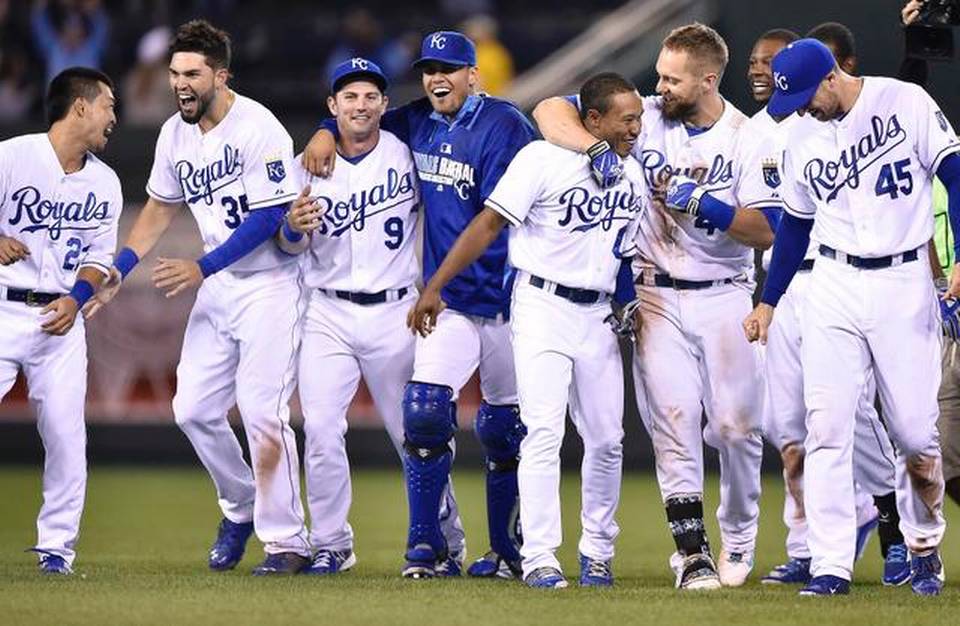
As I start on this journey of a piece, it has the makings of being a really long one (and now I’ve finished it, not sure it works, but here goes). It goes to the heart of me as a fan of sports around the world. Of my love for cricket, of my lost love of football, of my hopes to see a team like the baseball champions Kansas City Royals (a team unable to compete financially with the big clubs in the States, but still able to win it all) win the league in England, of my hopes of seeing a team run by faceless wealthy oligarchs get relegated. Of my watching every single sport become a vehicle to make massive amounts of money at the expense of spectators. Of a media in hock to the money-making charade. Of organisations where the only way you can postpone the possibility of jail time is to stay in charge. Of money ruling everything. Of the extinguishing of the commodity every football fan of a club outside the richest in the world possessed – hope. Hope. Sport made you hope.

When Jarrod sent me the copy of Death of a Gentleman I sat there and watched in…. well I don’t really know what my emotions were. I wasn’t surprised. Giles Clarke is an absolute pig of a man, and there would have to be a question of judgement against anyone he’d class as an ally. I wasn’t shocked that India were looking after themselves – after all, that’s what the big clubs do in football here, so why the hell are we shocked at that – and as for not widening the game, well let’s face it, it’s only a matter of scope. Club football loves the expansion of the game because similarly levelled talent of footballers from Eastern Europe and Africa (and South America if they didn’t predominantly move to Iberia) are cheaper than English counterparts. No major English club (and, by extension it seems, their fans) give a flying f*ck about the national team and developing players for it. In many cases, quite the opposite. The club sides were businesses, and the big clubs don’t feel the need for a sucessful national side to keep the home fires burning like they used to.

I wasn’t shocked that some players, like Ed Cowan, would give everything for their first cap, but the counterpart is that they might not feel so enamoured of the game when they get to, say, their 70th. Once something becomes routine, almost an entitlement, then that sheen of optimism wears off and it becomes just a job. But it’s nice to be reminded of the good side of first selections. Then there is the focus on test cricket. It doesn’t make commercial sense, so therefore, because of that it should not be played. It is not entertaining. Sport should not be played in front of empty stadia. We can’t serve up dead pitches because five day cricket is inherently boring. It is a form of the game worth saving because…. and it comes to the ultimate test of skill, technique, concentration and athleticism. However, those qualities sell better if there are more games. Shortening becomes efficiency. That’s what the people want in their busy lives…. So dead pitch test matches are bad. Very bad. They are driving people away.

That’s a line of argument gaining traction whenever we have a pitch where you might have to work really hard to get very good players out on it. I’ve been on this mortal coil now for over 45 years and people have become this way – short-term driven and wanting to tinker. Attention deficit and a generation of tinkerers. You know how it is at work. You can’t stay the same, you have to change. Change is good. If you are not open to change, you are an impediment. What happens now is administrators, managers, CEOs have to change something. There needs to be something done because there is always more to do. Innovate or die. And that’s my problem. Sport now apes business, because it has ceased being about sport, in many case, and more about business. I used to go to, and play, sport to escape business.

What is sport for? Well, actually, it isn’t for spectators, it is for the joy in playing it, isn’t it? Sport in itself is a form of enjoyment, of individual achievement, and when in a team context, of playing with your mates or forming a bond with like-minded adults or formulating friendships as kids. It’s getting the best out of yourself. Doing something that is better than work, perhaps to get away from a daily grind. So sport, at its base instinct, is about the players. When you were a kid, you played cricket until you got out. You might be stopped in street cricket when you made 50, or 100. You didn’t constrain yourself with limiting overs, field settings, who could or could not play. You didn’t care who was watching. When sport was more organised, for me it was Schools cricket and junior clubs, they would put some constraints on what you could play and then you sought to build innings, practice defence, and try to improve.

A key tenet of the debate going on now is that people aren’t developing the same love of the sport as they did when I was a kid. That cricket, obsessed with monetising the talent, is hidden behind a paywall that pays it more than a terrestrial channel. George Dobell, in his latest piece on Moeen, made the point:

At Moeen’s old school, Moseley, 80% of the kids do not have English as their first language; 40% receive free school meals. You don’t have to be a genius to work out the long-term effects of charging almost £100 for a ticket to international cricket or putting it behind a paywall on television. The game is in danger of becoming invisible to a huge section of society.

The role of TV in this piece is all-pervading, but I’m not sure if it’s the illness or the carrier. The fact is that cricket is, in some markets, an important commodity. Indian TV contracts are massive. In England, the absence of an IPL or a cricket equivalent to the football behemoth, means the contract is all about televising England’s national team. In this country it means test matches. I know how much more keenly test matches are viewed, by one look at the hit stats for the blog. ODIs capture nowhere near the attention. We’ll come to why, soon. Maybe. But it needs to start at what sport means to me. What cricket is…

When I was a kid it was all test cricket. No-one really cared about county cricket as a kid, and I didn’t go to my first County Championship game until I was a University student. Cricket was played in the streets by kids back in the 80s, because I was one of them. We played football in the same streets, despite being told not to by the council busybodies. Football is very visible, and yet I don’t see any kids playing it in the street on my council estate. There are less teams playing on Sundays over the playing fields I used to play on. Participation levels appear to be down, even informally. I lived cricket, though, because although I was never really going to go to county cricket, I followed it in the papers. I even purchased a long wave radio so I didn’t have to wait a couple of days for the scores when I was on holiday and could listen in to the snippets of cricket on the World Service.

During my formative years there was a school of thought that televising football live would kill clubs. Yes. People actually fought tooth and nail to keep the FA Cup Final as the only live club game on TV each year. It’s almost unthinkable. TV coverage was totally removed for the first half of the 1985-6 season. Nothing. Not a thing. At all. There was a running joke that West Ham’s Frank McAvennie, recently signed by them from St. Mirren and who was scoring for fun, could walk down the streets and no-one knew him. Football didn’t die. Of course not.

Now to make money, sport has to be about spectators – but it has become about TV spectators now. Players want to get paid for what they do, and they want it in increasing amounts. As those amounts get larger, the people paying them want more bang for their buck, and to try to keep the money flowing. They’ll increase ticket prices, play TV companies off against another to get in more revenue, and still they’ll increase prices, get into bidding wars with other mega-wealthy clubs to get the best players, who play less often because they are increasingly saved for matches against the best teams. Gideon Haigh summed up the role of you, the spectator, in DoaG perfectly – we are there to be monetized.

I’m a little bit of a lefty, you’ve probably guessed that, but I don’t live my life with my head in the clouds. Players want their fair share of the money going around, and that’s understandable. For the vast majority of sportspeople, especially in team sports, careers are short at the top level, and those lucrative media jobs for post-sporting careers are few and far between, while coaching and managing at the top level is both short-term and high-risk. But with money comes cynicism (I know it is not an exclusive relationship, but it’s just worse when high values are involved) both in terms of the superhuman feats a player is expected to perform because he/she is earning amazing amounts of money, and from the players, who might, or who are not able, to perform superhuman feats on cue every time they are asked to. It then means we might feel short changed when we see something that isn’t up to standard from them. That player will be crucified in the press, the braying, baying media pack who want “drama” “stories” and “soap opera” rather than sport. Your team wins some times, it loses some times. We are in the era when big clubs are not allowed to lose. Ever.

It is us, the spectators who are at fault. Most of us aren’t good enough to play at a high level, yet act like we know what it takes. I’m as guilty of that as anyone. Now your choice of football team is often seen as a reflection on you. I support my local club exclusively in England. I don’t care much for any other team. A team with a style of play I like might lose one week and I wouldn’t give the first f*ck about them. My team is Millwall. I was brought up in Deptford. My Dad was a Charlton fan, the rest of my family Millwall. My cousin got me first, and took me to the Den in 1979. I was a Millwall fan, for life.

Now, in SE London, I see people with Chelsea shirts, Arsenal shirts, Manchester United shirts, less Liverpool shirts than you used to, and for the love of all that is holy, Manchester City shirts. Their choice of team isn’t in reaction to their locality – hell support those jokers from Selhurst Park, it’s better than Arsenal – but it’s not just their choice that riles. They pat themselves on the backs as if they’ve backed a penny share that’s suddenly had a good Annual Report. Meanwhile, of the three local clubs, Palace are having a decent run, but it will only take a raid on their best players, and a downturn in form to see them back where they belong; Charlton are now a Belgian league club’s plaything; and my lot are arguably back where they belong – a tier two/tier three yo-yo club. Only diehards support lower league clubs now. We’re seen as an oddity, as if there’s something wrong with us, as if we don’t have the mental capacity to choose a big team.
So it goes for cricket.

I am a Surrey fan, for life. I chose them in the late 1970s. They were my granddad’s team, they were the nearest ground to home, and someone with the same real surname as me played for them (hello Mr Alam). They are my team for life, and believe me, it took 20 years for any glory. But I appreciated it so much more that it took so long. I am also a supporter of the following other sports teams – Miami Dolphins (Superbowls since supporting them – 1, and they lost it); Boston Red Sox (started supporting in late 1990s, when Pedro was doing his thing – they’ve become winners since then); Chicago Bulls (nearest I come to a glory hunter, but supported once I got to see Michael Jordan play on TV – before the Championship run) – and stuck with them through their slumps, which they have all suffered (Miami the 1-15 season, Red Sox bottom of AL East two years on the bounce, Bulls post the glory years).

The modern spectator has more in common with the Bulls following than anything else. They want to win, and they want to see the big stars at their team. Extrapolated to the TV audiences, it means big clubs, more often. Top stars, more often. Money makes the world go round.
In cricketing terms we all know what this means. The biggest money is in India. Therefore, the biggest stars are in India, a nation that remains proud of its own, and yet loves those from outside that embrace the culture and the fanaticism. When this is combined with cynical, money-hunting businessmen, on the prowl for more power, there’s an unstoppable nexus. Feed the fanaticism, make more money. The IPL stands alone as the T20 league to play in. The money, the fame, the adulation. Cricket on a level playing field with football. No wonder players want to play in it, and others worry themselves sick about it. India hold all the negotiating hand here, and everyone knows it.

Anyone in England who thinks this is outrageous, then look at how the Champions League is run. How the Premier league is run. The aim for all is to make sure India keep the IPL away from their turf, to keep themselves sustainable. West Indies have suffered the most. England and Australia, the least.

Again, anyone in England wondering why India want to guarantee nine matches in the 2019 Cricket World Cup, because of a shock exit in 2007, haven’t paid attention to a Champions League that spends 48 games to halve its numbers, with a lovely seeded draw to keep as many big teams apart as possible, and a draw designed to maximise revenues in the big markets by not allowing more than two games per nation on any one day, and by stretching the 2nd round out over four weeks, not two. There was nothing wrong with the old European Cup knockout model, except it didn’t make the big teams enough money. When UEFA had the gall to remove the second group stage, there were howls of derision from the bigger clubs, and many a veiled threat – but fans saw through it and it was almost too obvious in its soaking of the fans. The big club spectators want more of this exotic stuff, not less, but too much damages credibility. India are mimicking big football clubs, and yet we get howls from supporters in this country that they do so. We must be having a laugh……

India has been threatening an IPL2, have been using their international team as pawns in ageo-political money accumulation game for years now. They have the power. Without them, every country with the exception of England and Australia is sunk. Sports authorities, and those making money out of them, rarely look for long-term rewards, because within a few days your corruption might be fatal, your face might not fit, or some younger, or more innovative whipper snapper has seduced your enablers. It’s only going to get worse. I sound like an old codger, I know, but we’ve got a load of twenty-somethings come into our office in the last year or so. I like pretty much all of them personally. But they don’t see long-term. They see rapid development, an entitlement to promotion rather than it being earned in the long run of hard graft. There is impatience. There is practically no dissent to authority. It is not about common good, it is about the pursuit of your own goals. It’s the culture in which they were raised.

That sort of culture, to take an extrapolation if you might allow me to, means sports that take five days, played in empty grounds, are anathema. These are top players who could be earning more. They could be used more. The lopping off of six weeks at a time to play three matches in a desert location makes absolutely no commercial sense. Commercial sense. It isn’t about growing the game, getting more teams involved (after all, we grew it in 1999 by promoting Bangladesh to test status and they still aren’t up to it), it is about getting the best players on people’s screens, in front of lots of people. It isn’t about cricket lovers, certainly us old codgers, because we aren’t the target for advertising – that group between 18-35 is the holy grail – and advertising makes the TV money go round. A modern culture demands a modern way. Death of a Gentleman is more Death of an Attitude.

The film highlighted all it needed to. A governing  body doing what all other major board seem to do – hoard power and cash, run the sport on short-termism, pay lip service to development and monetise the best players as frequently as possible – and players moaning about workload in the one instance, but grabbing every bit as much cash as they can whent the opportunity arises (which is why I won’t listen to KP on county cricket, for instance. He made it where he is because of it, not in spite of it. He moved to this country to play it). Giles Clarke is a lovely coat-stand to hang our ills on. Maybe he is right and we should ride India’s coat-tails. Maybe the counties are right for fighting for the status quo, because, let’s face it, their existence in the form of 18 teams playing four day cricket book-ending the limited over stuff is every bit as logical as test cricket in Mohali.

Whether test cricket lives or dies isn’t up to me. The Ashes will live on, as long as we have players capable of playing long-form cricket. There is a lot mentioned about context of tests, and the refusal to have a Test Championship is mind-blowingly short-sighted, but what was the context when the West Indies were ruling the world, or Pakistan played test series against India that would feature a result once in a blue moon? These aren’t new issues. Cricket is more expensive to watch, both at grounds and via subscriptions. So is football. So are most other sports.

I’d like to finish this long ramble up with a comparison to baseball, which I mentioned at the start. You can’t go a week or two without reports that viewership on TV is down. That baseball is a dying sport. That no-one talks about it over the water-cooler. That the NFL now rules everything in the US. Baseball will still be there in decades to come. It is a slow, cerebral game, which I love. It cultivates its base by making its local TV rights, and national shows available. It has a website that was the envy of many other sports which made watching your team outside of market very cheap (£90 for every match in a season, more or less). It plays on its history, a sepia-tinged “father and son” narrative. It’s a sport embraced by the Latino community. It’s also competitive. The current richest team haven’t won a title since the 1980s (Dodgers). The perennial richest team, the Yankees, have won the championship once since 2000. Last week, the Kansas City Royals won the title having been in the finals last year. According to sources, a greater proportion of younger people watched the World Series than in recent memory. It’s food for thought.