Contusion

The one thing you get from me on this blog is how I feel. I see this as not only a cricket journal, following some of the threads others don’t, and trying to get the issues out in the open, but also how it interacts with my daily life. I’m a lot stronger in my mentality than I was this time last year, but have several moments, one of which resulted in me closing down the old blog and starting a new one. I may never go into why that happened in writing on here, but suffice to say I got spooked a little by other events to people quite close to me. Just because I’m paranoid, it doesn’t mean they ain’t out to get me.

I also get on my high horse about injustice to people or matters I care about. I care about English cricket, as I’ve been a fan for life, and yes, I loved watching KP bat. If that makes me a “KP Fanboy” then so be it. All those that do call me that, let me ask how you feel about the Ashes 2005 now, you unreconstructed hypocrites? Wish it had never happened? Wish we’d been skittled out for 150 and drawn the series? I saw an injustice in the singling out of KP for the Ashes failure in 2013/14, the fact that he performed less worse than others, and then the lack of insight or need to know, and importantly tell, why it happened. Blow by longread blow. Someone will make a fortune when they do.

Why all this, again, now? It started last night on Twitter. It’s a dangerous medium at the best of times, but also very rewarding. I have several rules of engagement.

1. I do not troll journalists. I just do not. I may ask them questions, or joke with them, but I do not tweet who I criticise. Some contact me, some I feel able to contact behind the scenes. Some of them, believe it or not, I like. They may even like me, I don’t know. But I am honest.
2. I do not control, nor would I have the affront to, those of you who comment on here. If some of you want to wind up a journo or two, then I can’t stop you. Those that want to read this stuff know where it is. Those who don’t, won’t.
3. I will not have people misrepresent me or my position, or even what I write, without attempting to correct it. Neil Harris acted like an arse last night and I called him on it. It was a factual rebuttal where I called his position at varying times “over-reaching” and “nonsense”. I won’t block him on Twitter, because I don’t do that (I didn’t block the one who threatened to mutilate me and my dog) but in turns I was branded a “sad individual”, “a KP fanboy” someone with “bile” “keep trolling journalists” – hilariously at one point after saying “and you decided to get a rugby journalist involved because…” the individual concerned said he wasn’t accusing me of anything. When it was pointed out to him the piece was on statistical analysis (from Steve James book) he had to even pipe down on the Anti-Cook brigade twaddle. I will defend myself, and this blog, to anyone. It turned to “do I know the person who did” which was shifting his goalposts, and it wasn’t worth another second of my time. Still, Steve is clear now, because Pam’s told him all about us.
4. I will discuss with anyone on DM on Twitter, on my e-mail (dmitriold@hotmail.co.uk) or on here anything. I’m open to criticism, but I will, nearly always respond.
5.I have four Twitter presences. DmitriOld is the main one. LordCanisLupus was set up when I was spooked, and is used only to link posts on another Twitter feed. I don’t check it very often. The third is OutsideCricket where Vian and I publicise posts on here. The fourth is a secret, I never tweet from it, and I use it to get around the fools who block me. I am open about pretty much all I do except the last one. Vian also has just two Twitter identities – his @blueearthmanagement handle and the Outside Cricket one with me. So, Pam, close down your Twitter to all but your close acolytes if you are that worried that I read you.
6. I use an alias, or a nom de blog, for my own personal reasons. If you don’t like it, you can choose not to read me.

The article in question, forwarded to Steve James, was the statistical one. The one where Monte can predict a game to some accuracy. I’m not clever or sophisticated enough not to call this nonsense, so I asked what it was about. One of our number forwarded it to Steve James. Harris didn’t do his homework, had a pop, and got all prissy when I called him on it. He may think the same. I can’t help that. Maybe he’s neutral about it all.

I’m bloody angry at the moment, because I knew this was coming. WIth every good news story, we, the refuseniks, get attacked. You see, with every bad news story, we attack those constructing the message and delivering it to us. Like celebrating a 48 against the 16th placed county in the country, just weeks after you know who hit 355 against the 17th and had it pooh poohed. I make no apologies for not having Alastair Cook as my favourite player.  I similarly make no apologies for saying KP was my favourite player. Those who choose to proceed in their own way COULD be accused of being on the same side as Giles Clarke, which would be a lovely thing to say. I don’t ever question their support of England cricket and the love of the game. So don’t you damn well question mine. You think I do this for a laugh.

I’ve put this below thelegglance’s post as the cricket is more important than this. Just wanted to get a few things off my chest.

Have a good day. Because all I do is “attack attack attack”, and it’s all “anti-Cook”. I don’t think I’d be getting the number (and it isn’t massive or particularly representative – I know that) of hits if we (Vian and I) were that one dimensional.

England v New Zealand: ODI series review

Just more of the same old problems really.  A static opening batsman, an over-reliance on what the data says, a determination to reach an adequate score that proved totally inadequate.  Square pegs in round holes, a complete unwillingness to try players who have been successful in the short form of the game in domestic cricket, and an approach that looks frankly terrified throughout. Hang on, that’s not what happened at all is it?  England won the series 3-2 of course, but even if they’d fallen short in the final match, it wouldn’t have mattered in terms of them demonstrating progress.  That they did mattered greatly to the players of course, and the joy and delight on their faces was apparent to all. But what it did highlight was the astonishing change in approach for this series and this series alone.  And it raised lots of questions about how England had played before, how they’d been set up to play before, and the management who were responsible for that. As recently as March, Alastair Cook was berating all and sundry for dropping him as captain for the World Cup, stating that the side needed his leadership and criticising Eoin Morgan for how he had led the side.  This is history of course, so why bring it up again?  Well the trouble is that the most striking thing about the change of approach from England is that it has plainly never occurred to the old guard to do it.  When Cook was whining about his omission, he at no time stated his dissatisfaction with the style of England’s play, merely that they didn’t play very well, and that it would all have been so different had he been there.  A penny for those thoughts seeing England play in such a manner Alastair. As for Morgan himself, there are enough indications now coming out that he was deeply unhappy as captain in the World Cup, specifically because of the strait-jacket in which the team was placed.  Whilst he probably won’t win any awards at the Funky Captaincy Annual Dinner, he is clearly a major influence on the way in which England are now approaching the format. One of the most amazing sights about this England team is that they are so obviously and plainly enjoying themselves thoroughly.  The England teams have looked utterly miserable for a long time, and the most basic pleasure of playing sport seemed to have gone completely.  For this team at least, it is well and truly back. What isn’t known is whether that will spill over into the Test side as well.  Of course, it is an entirely different game, but those players who will return do seem to prefer scowling to smiling, berating team mates to jumping on them.  There’s some sympathy to be held here, grumpy, crotchety older players are hardly especially unusual, and particularly so when there’s frustration and unhappiness.  Yet the contrast between Broad and Anderson on the one hand, and Mark Wood on the other, couldn’t be more obvious.  In the last match, Wood playfully pretended to Mankad one of the New Zealand batsman.  He laughed, the batsman smiled, and so did the umpire.  And yet….Wood had rather made the point there hadn’t he?  Don’t push it with the backing up.  All with humour.  Likewise with his sudden sneaky running in before the batsman was ready.  It kept them on their toes, and was all done with a smile, from a player who looks like a kid at Christmas.  What will be fascinating to see is if Wood’s patent enjoyment rubs off on the others.  Because there’s no doubt at all, a team having fun will play better than if they’re not. Wood’s economy rate of 5.23 across the three matches he played was bettered only by Trent Boult on either side, and in a series which was such a run fest, it proved critical to the outcome.  That Boult was injured dealt a huge blow to New Zealand, without question.  But that’s the game, and few series have gone by without injuries to key players.  Where it does become relevant as far as England are concerned is that when Wood first played in the Tests, there were concerns about whether his action made him an accident waiting to happen.  England then played him in the one day series.  This is a difficult one.  England’s bowling coaches mangled James Anderson thoroughly trying to fix a potential injury crisis before it happened, and since he returned to his natural action, he’s remained more or less constantly fit.  It’s probably best to leave Wood alone, and deal with any issues if and when they arise rather than worrying potentially unnecessarily.  But managing his workload is still sensible.  One of the overriding criticisms of England is that they are extremely poor at doing so.  Grinding Wood into the dirt won’t be easily forgiven if they do it. In terms of the selection for this series, it seems that incoming coach Trevor Bayliss requested a young side and the selectors obliged.  That in itself raises questions about how it was done previously.  On tour it’s said that although the selectors choose the squad, captain and coach select the team.  That means that Adil Rashid’s clear success in this series vindicated the selectors who chose him for the West Indies, but rather hang out to dry then coach Peter Moores and captain Alastair Cook for not picking him.  With the ODI series over and eyes turning towards the beginning of the Ashes, quite why Rashid wasn’t tried – and the justification that he’d not bowled well in the nets – looks more and more an aberration, especially given Mooen Ali’s clear and obvious lack of fitness.  Better late than never perhaps, but it doesn’t mean excusing it. A similar circumstance applies to Alex Hales, albeit concerning his absence from the World Cup until it was too late.  Hales didn’t go on to make the big score he would have craved, but he undoubtedly set the tone with his batting, and others carried it on.  That he was ignored for so long because of a supposed weakness to the ball coming in looks ever more bizarre.  And yet it’s exactly how it is with English sport all too often, a focus on what someone supposedly can’t do rather than promote what they can.  Hales was instrumental to England firing from the very top. Not everything England tried came off.  Jason Roy did ok without every looking like he was going to take the world by storm.  Steven Finn took wickets yet still didn’t look the bowler he was.  And of course the final match yesterday had England 50-5.  And yet none of the shots were especially reckless, they just found fielders through slightly awry execution for the most part.  That’s not something to worry about, it can happen and on this occasion it did happen.  It will also happen again.  The recovery led by Bairstow was outstanding, and they still played in the same manner.   On so many occasions England have said they are learning, yet right now with this side, they really are learning.  Some patience with them when they get it wrong is deserved.  It’s only when they use that as a shield to close down discussion and criticism that it’s a problem, I don’t get the feeling with this side that it is. And so New Zealand come to the close of their tour of England, with just a T20 match to come.  They have been brilliant tourists, and that people have been heard to say we should have them every year says everything about how they have played the game.  As well as playing attacking, exciting cricket as a policy, they have some genuinely fine cricketers.  Kane Williamson looks special, Ross Taylor is a terrific batsman, and the seam attack even beyond Boult and Southee looks potent.  Above all else, they have played it in a wonderful spirit, demonstrating beyond all question that playing the game hard doesn’t have to mean sledging, abusing or provoking opponents.  It’s something England could learn from, as could several teams.  Not shouting at an opponent isn’t giving them an easy ride, and never has been. England go to New Zealand in 2018 as currently scheduled.  There are again only two Tests to be played.  It is possible they will look to amend that, but not very likely.  The last tour down there was praised for being beautifully balanced, with three T20s, three ODIs and three Tests.  So of course they are not going to repeat that.  It would be too much to think that the boards could see a good thing and capitalise on it.  Although some things can change on the field, off it very little does.  And while this post has concentrated on the cricket, it doesn’t mean that the ECB are now forgotten for what they have done, not for a single second.  It might be what they hope for, but the news overnight about telling Sky which commentators they can have remains as symptomatic of their ability to make a bad situation even worse as ever. It’s just that the cricket itself sometimes reminds you why we care. @BlueEarthMngmnt

Violence Through Silence

I think it shows how weary I’ve become that when I saw the article (quite early in the evening) on KP and the commentary stint I thought I’d leave it be. Nothing surprises me with these clowns any more. That is should go through the conduit of the Daily Mail or Mail on Sunday is little surprise. That Patrick Collins thinks it’s great is little surprise. I’ve no doubt the likes of Pam, who was probably jumping the moon after her little Andy came in and we’ve had this massive turnaround (drawn series at home to New Zealand), and is calling us all KP fanboys, is happy too.

There’s a super piece by Maxie over at TFT if you want to comment. I have and so have other familiar traitors posters (I jest). But I’ve just re-read the Mail article and two bits in particular make my blood boil.

The ECB were outmanoeuvred by Pietersen and his advisors, led by Piers Morgan, during a sustained public relations campaign on his behalf after he was sacked following England’s 5-0 Ashes drubbing in Australia last year.

and

Pietersen has previously impressed as a television pundit, but pressure from the ECB to keep him at arm’s length this summer indicates that they remain extremely wary of his capacity to polarise public opinion and potentially alienate England supporters with his outspoken views. (my emphasis).

Listen here, journos. I don’t think we had everything to do with it, but it wasn’t you keeping “outside cricket” going, and it wasn’t KP either. There was no sustained PR campaign throughout last year when KP kept largely silent on the matters of his dismissal, as he was bound to do. They had a strategy. Stand back and let the morons at the ECB, aided and abetted by the compliant media to do the rest. Just wait, and thou shall deliver.

The ECB did itself in by appointing Paul Downton, and all the campaign had to do was keep quiet, let some of your lot throw themselves in front of the mighty Paul, and call him Lord Aplomb, and then allow him to open his mouth. I miss Downton because he was useless. He had all the suitability to the job as I have of being a court jester. There’s nothing sustained about the PR Campaign. He wrote a book and you lot took out the bits that mattered to you, and ignored some pretty salient points. And you can’t go f–king anywhere without Piers Morgan’s name coming up. Grow up you morons and admit it. Some of his fans, and many who hated the way he was scapegoated, didn’t buy what you fools were selling. Now some of you have buyer’s remorse on Downton in particular, and Moores as well, you want us to say sorry? Do one.

Which leads to the second point. His commentary may alienate some of the cricketing public. I’ve seen it all now. What do you think his sacking did? Do you think I’ve been writing this blog because I love it and accept it? Do you think I care enough to spend all the hours that I have on this and HDWLIA because I’ve not been alientated by this. And you care about those who have done nothing but insult us all the way because of it? Because we were right over Downton, over Moores, over Cook’s position in the ODI, and yes, over his leadership of the test team. You worry about alienating the people who have stuck their heads in the sand?

It would be hilarious if these chumps weren’t serious. Well done Sam. Paul would be very proud.

2015 Test Century Watch – # 28 – Adam Voges

Adam-Voges-Cricketer-Images-540x337

Adam Voges – 130 not out v West Indies at Roseau, Dominica

A debut century always gets the stattos on their uppers, and this one was one of the better ones. With due respect to Graham Thorpe and Alastair Cook, it was a first innings ton. With due respect to Andrew Strauss and Matt Prior, it came when his team were really up against it. With due respect to pretty much everyone, this bloke is a cricketing OAP.

The obvious starting point is that at 35 years and and 243 days he is not only the oldest man to make a test century on debut, he combined this with really pissing off Ian Chappell. The previous holder of this record was Dave Houghton of Zimbabwe, who was 125 days younger when he scored a hundred against India in Harare in 1992. I make it Voges is the 99th player to make a century on debut – there have been 101 debut centuries and Lawrence Rowe and Yasir Hameed made a hundred in each innings – and the fourth Australian this century to do so, following Michael Clarke, Marcus North and Shaun Marsh. Kirk Edwards was the last man to score a hundred on debut in the West Indies (at Roseau too), while Scott Styris was the last visitor to score a debut hundred in the Caribbean (he made his at St. George’s, Grenada). No Australian before Voges made a hundred in their debut test in the Caribbean. Other Aussies to make debut centuries are – Charles Bannerman, Reggie Duff, Roger Hartigan, our main man Herbie Collins, Bill Ponsford, Archie Jackson, Jim Burke, Doug Walters, Greg Chappell, Gary Cosier, Dirk Wellham, Kepler (pure dinkum) Wessels, Wayne Phillips, Mark Waugh and Greg Blewett.

This was the 36th highest score made by a batsman on debut, and the 9th highest by an Australian. The leader in that field is the longest standing record in the game. Charles Bannerman’s 165* still leads the way, with Archie Jackson (164), Wayne Phillips (159), Kepler Wessels (162) and Doug Walters (155) all within 10 runs of that record. Others above Voges include Mark Waugh (138), Shaun Marsh (141) and Michael Clarke (151). It is the 8th highest unbeaten hundred on debut, with that lead being held by Jacques Rudolph who made 222* on debut against Bangladesh. The highest debut hundred remains Tip Foster’s 287 in Sydney for England in 1903.

This was the 109th test century by an Australian against West Indies. At the time it moved into 41st= in the overall scores list, level with another maker of 130*, Kim Hughes. It was the 55th scored in the Caribbean, and at the time, it placed him just in the top 20. The best is by Bill Lawry, who made 210 in Bridgetown in May 1965. It is the 4th highes by someone batting 5 for Australia in the West Indies (Steve Waugh holds the top two slots with 200 and 199), and is one of just two unbeaten tons from number 5 in the West Indies by an Aussie – the other being Adam Gilchrist. All pretty decent names.

Voges was the second Australian to make a century at Windsor Park. Matthew Wade made 106 on the Aussies previous visit in 2012. He became the fifth man to make a hundred there, and the scorer of the 6th overall – Chanderpaul (2), Edwards, Wade and Gayle the others. 130* is the test record for this venue.

Have you seen a 130, Dmitri? Given the two scores of 130 made in London were before I was born, this makes it unlikely, and that’s the case. The last England man to make 130 was Alastair Cook, at Leeds in 2013 – you remember the one. That hundred made before his drought. Other 130s of note include Eoin Morgan’s very forgotten century against Pakistan on a difficult pitch at Trent Bridge. The last 130 before this was made by Imrul Kayes in November last year. The last one by an Aussie was by Michael Clarke against India in Chennai in 2013. Jacques Kallis has ben not out 130 on two occasions. Brian Lara has been dismissed on 130 on two occasions.

The first 130 in tests was made on 17 July 1899 by Tom Hayward. Coming in at 47-4 at Old Trafford, Tom Hayward eased the England score up into the 300s with his knock. Wisden waxed lyrical…

On the first day England stayed in until just after six o’clock their total reaching 372. Nothing in the early cricket gave promise of such a score, the start being so disastrous as to threaten a repetition of the failure at Lord’s. Despite fine weather in the morning the ground kicked a good deal during the first hour, and at the end of fifty minutes’ play four wickets were down for 47. Things changed a little when Hayward joined Jackson these two batsman staying together for an hour and twenty minutes and in that time putting on 60 runs. Jackson was caught at slip off a bumping ball at 107, and though Brockwell played a very bright innings he only remained in while 47 runs were added when he left England’s position was a very bad one, the only dependable batsman left to help Hayward being Lilley. These two had saved the situation at Leeds and again they did brilliant work together, putting on 113 runs in something over an hour an a half.

When Lilley was lbw at 267 a speedy end to the innings was expected, but the Australian bowling had now lost its keen edge and some rare hitting followed. Hayward and Young took the score to 324, and after the ninth wicket had fallen Young and Bradley added 35 runs in as many minutes. Sadly disappointed at the turn the game had taken the Australians became a little demoralised. Hayward’s innings of 130 was in every way magnificent. Rarely or never in the whole series of England and Australia matches in this country has a more remarkable display of batting been given. Up to lunch time he took an hour and a half to make 20 runs, but so completely did the character of his cricket change when things were going better for his side that after the interval he added 110 runs in rather less than two hours and three-quarters.

This was on Hayward’s three centuries for England. Another great Surrey man….

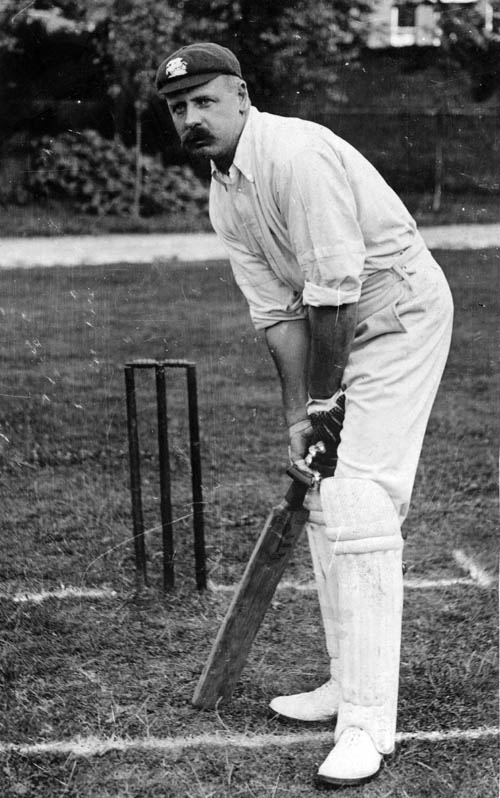
22nd January 1929:  Tom Hayward (1871 - 1939) played for England (1893 - 1914) and Surrey.  (Photo by Hulton Archive/Getty Images)
22nd January 1929: Tom Hayward (1871 – 1939) played for England (1893 – 1914) and Surrey. (Photo by Hulton Archive/Getty Images)

Two Adams scoring test tons within the space of a few days. How coincidental.

Adam Voges century came up in 187 balls and contained 9 x 4 and 1 x 6

Escape For Victory

There was almost something poetic about Jonny Bairstow’s knock today. In a nutshell it summed up so much that had gone wrong in the past. That Adil Rashid was there at the end as well, was strangely appropriate. Two talents somewhat unfulfilled at the international level. Two “what ifs”. Two players seemingly relishing their chance to shine.

Today’s win is one of the really good ones. It’s the one dug out of adversity, when you are, to all intents and purposes, dead in the water. You are left 45 for 5. The rocks on which we are building this revival had gone – Hales had failed at the top of the order, Root had gone at three, and then so did Morgan. With no Buttler to fall back on, it was now up to rookie Sam Billings, and fallen young star Jonny Bairstow. As I drove back from Costco in Croydon, in the middle of a rainstorm I heard the two lads put the partnership together to cement the innings and give us a shout. When Billings went, Bairstow piled on. I got back to see the end. Bairstow with cool hitting getting us home, and yes, with a bit of luck too, with the drop by Santner almost certainly costing the New Zealanders the match.

But the symbolism of a talent, abused and ignored by England for so long, bringing a new era home was not lost on me. Bairstow had become the world’s most experience drinks carrier. He was called up rarely, often without much in the way of top class cricket under his belt in the weeks building up to his appearances. He’d come into teams either shot of confidence, or knowing he wasn’t there for long. He’d been over-sold when he made a 95 at Lord’s against South Africa, or that 50 at Cardiff. But he’d be in and out more times than an Hokey Kokey convention and he withered. Today was brilliant. Absolutely brilliant. I’m thrilled for him, and I’ve not said that about a cricketer in ages. I thought it was reminiscent of the KP innings against Australia at Bristol in 2005 – maybe not as violent, but every bit as important because this won a series, this continued momentum, this set down a bit of a marker, and it was against pretty large odds. Good luck.

I’m not going to go into huge detail on the game. I’ll leave that to thelegglance who is going to do a series review in the next day or two. But a series win is important, but in the whole scheme of things not that important. It was the manner in which we played, it was seeing some of our talent set free. I love that more than anything. Adil Rashid was excellent with the ball today. Mark Wood looks like he loves it out there. Jos Buttler is a man with talent to burn. Eoin Morgan and Joe Root are the rocks at 3 and 4. It’s a team to get behind. It’s a team that enthuses.

On to the Ashes. And the return of those who were noticeable by their absence. ABC will return. They have a momentum they have to ride with, not destroy. We’ll be watching. Carefully.

2015 Test Century Watch – #27 – BJ Watling

BJW

BJ Watling – 120 v England at Headingley

Bradley-John Watling’s second test century of the calendar year was a hugely important one. Playing in this test as a batsman only, he dug in, then expanded and put his team firmly on top. It’s the sort of innings to wax lyrical about, and different to his more legendary “dig-in” knocks to save tests. At the time of this innings he was the third man to make a second test century in 2015 – alongside Kane Williamson and Alastair Cook. With this innings he took his average to over 40, and made his 5th test hundred in just his 53rd innings. To put that in some context, Matt Prior made 7 centuries in 123 innings, and we’ve recently lauded him as a modern powerhouse.

Mind boggling fact #1 – BJ Watling’s hundred is the first made by a New Zealander at Headingley in test cricket. His 120 beat the previous best of 97 by Stephen Fleming in 2004. Luke Ronchi’s 88 was 4th best when he made it. It was the 23rd hundred made by a New Zealander in tests in England, and the second man to make 120 for his country here (Stewie Dempster did it at Lord’s in 1931). 120 is the 8th highest score made in England by a New Zealander. 14 of those 23 hundreds were made at Lord’s.

Have you seen a test 120, Dmitri?  Well, there have been 58 of them since the first test match. The answer is, a little to my surprise, yes. It was a century totally overshadowed by a legendary one later in the innings. It was a hot summer’s day in 2001 at The Oval, and after a lengthy opening partnership between Matthew Hayden and Justin Langer, Mark Waugh strolled to the crease. He did what he did when in nick. He made 120 look easy. Then his twin came in on one leg, made 157 not out, and everyone forgot Waugh (and Langer’s) ton.

The first 120 in test cricket was made by a man who saw one of his long standing records nearly broken a few weeks ago. Bobby Abel, of Surrey and England, made 120 against South Africa in Cape Town in 1889. This is an astonishing score card, because Bobby himself beat the hosts by an innings and 30 runs. England posted 292 and Johnny Briggs then took 7 in South Africa’s first and 8 in the second to bowl the hosts out for 47 and 43. 14 of those wickets were bowled and the other LBW. This is brilliant stuff. Bernard Tancred carried his bat for 26 in the first innings. If he’d played for my school 2nd XI in 1985, he’d have been dropped (30 years on and yes, I’m still bitter!)

I’ll let the almanac describe the state of affairs…

The last match of the tour and a complete triumph for the Englishmen, who outplayed their opponents at every point, and won in an innings with 202 runs to spare. It was the second eleven-a-side fixture, and was more decisively won than any other match during the trip. The South African team, with the exception of Mr. Tancred could do absolutely nothing against Briggs, batsmen who had scored well in earlier matches failing dismally. The Lancashire bowler met with wonderful success, taking in all fifteen wickets for 28 runs – a worthy finish up to his briliant exertions during the trip. Abel, too, wound up in splendid form, making his third hundred during the tour. He went in first and was out seventh, making 120 out of 287.

No frippery or waxing lyrical. Well batted Mr. Tancred. Martin Williamson’s Cricinfo article is brilliant in explaining the circumstances behind this test .and the impact it had on South African cricket. There were three England players in that team that played their only first class games on this tour. But what is even more sobering is the fate of England’s young captain (he was 23):

Bowden, however, was an altogether sadder story. At 23 years 144 days, he was and remains England’s youngest captain, but he never even knew he had represented his country, or even saw his homeland again. In 1891 he headed north with Rhodes where he was incorrectly reported to have been killed. Not long after he was found to be alive, he did die, in a remote a mud hut in Umtali. The final indignity was that his body had to be protected from marauding lions – prior to being interred – in a coffin made from whisky cases.

I may be a bit down on Alastair Cook, but…

Bobby Abel’s famous record is the 357 he made for Surrey in 1899 against Somerset. It is said on Wikipedia that the England selectors were unwilling to choose him after 1896 over concerns about his eyesight. Seems to have more in common with KP than we think!

Other 120s that caught my eye included the previous one made in tests, which has also semi-legendary status. We’re talking about Ben Stokes at Perth. The only century made by an Englishman in the international part of the tour. The one that he needed to be persisted with because of it!

Bob Caterall of South Africa made two scores of 120 in test matches, within a fortnight of each other. In June 1924 he followed up his 120 at Edgbaston with the same score at Lord’s. Fellow countryman Bruce Mitchell also made two 120s against England, but they were separated by 17 months and the distance between The Oval and Newlands. Michael Vaughan has two 120s, with the first being his first test century against Pakistan at Old Trafford, and the other against Bangladesh at Lord’s in the run up to the 2005 Ashes.

Other players to have made 120 twice in tests include West Indian wastrels Viv Richards and Brian Lara and Sri Lankan wicket-keeper Prasanna Jayawardene.

In 1987 fellow Kiwi Jeff Crowe made 120 not out against Sri Lanka. It took him 609 minutes and nearly 400 balls. This was the same test that Brendon Kurrupu batted 777 minutes for 201. If time had not expired, lord knows how long Crowe would have taken to get to that, and the slow century award on this site could be called the Crowe (Jeff) Award! This looks like five days of thrilling cricket!

This was Watling’s third highest score in tests, his highest test score not made at the Basin Reserve, and the fastest of his test tons.

BJ Watling’s hundred came up in 136 balls with 13 x 4 and 1 x 6.

Book Review – Put To The Test by Geoffrey Boycott

boycs book

On my very occasional visits to Hay-on-Wye (I’ve been there twice), I head out looking for older cricket books, and often they can be snagged for a pound, maybe two. I have picked up a number of the Boycott books from the late 70s, early 80s, where he wrote a tour diary about his fortunes, and often with blisteringly honest critiques of his team-mates. It’s the sort of book that could never be written now. It’s from a bygone age. But for all that, this Boycott book reads of a man in crisis and it is better for it. It seems real.

This particular book relates to the Ashes series of 1978/9, in the midst of the Packer Revolution, with an Australian team lacking its main stars. It is largely disregarded by the Australian cognoscenti on the grounds we were playing their 2nd XI, and thus the 3-0 hammering we received the following year (in a non-Ashes series) is more of a true reflection of the two sides at the time.

The book is couched within the first chapter when Geoffrey gets his excuses in early. He had been sacked as Yorkshire captain – oh don’t we miss those brutal fraternal wars in that quaint old county – and had the terrible sadness of his much beloved mother passing away. Geoffrey, as one of those highly paid gurus would no doubt have said, was not in a good place. So excuses may be a bit harsh, but I’m not going to call them reasons…

The book takes us through a tour that seems to be played on nothing but rubbish pitches. Look at the scores in the tests. Barely anyone has a good series with the bat. Rodney Hogg stands out with his bowling figures, but the teams are all over the place, and there are no draws. England find themselves in difficult positions in many of the games, but pull themselves out of them with a lot of luck and a lot of help from poor captaincy, dropped catches and bad play. Boycott himself has an awful tour with the bat, but even then Sir G is a front-runner for modern thinking, as the epilogue has a wonderful bit where he takes the positives.

Boycott pulls apart Yallop’s captaincy, while also getting the hump early in the tour that he wasn’t being listened to, but then being fulsome in praise of Brearley for asking him his views once that concern had been raised. Brearley does seem to apply remarkable common sense in most of his dealings, from what I can see. I think Geoff really liked Derek Randall, even though he really wasn’t his kind of player, and his 150 in the Sydney Test, when England had just lost the 3rd in Melbourne to lead 2-1, and had conceded a first innings lead of 142, was the deciding factor in the series. Then Randall’s contributions seemed to fade away.

There’s some interesting stuff throughout. England’s former run scoring record holder, Gooch, is still without a test hundred, and would go another two years before getting one. Brearley seems to get the solid start off to a tee more than Geoffrey, and this book is very noticeable by a lack of comments on that. There’s lots of praise in there for those who surpassed themselves, including Bob Taylor, who made a 97 in the 5th test that pretty much secured the game. But Boycs does show his frustrations with Botham’s batting and bowling, Gower getting out the same way, but he is borderline effusive on Brearley:

“I watched Brearley pretty closely…..and I consider he did a magnificent job on and off the field.”

This is also cricket from a byegone era, and it makes me feel old reading it, because this is the first overseas highlights I ever remember watching (I was 8). There is plenty running through the piece on bouncers, and the almost quaint “no bouncing list” that existed (yes, people were protected from having bouncers bowled at them if they were crap batsmen). It was more understandable given helmets were in their infancy in those days, but reading it makes me feel old.

Boycott has a pop at the umpires “they assumed an air of infallibility which their decisions did not always bear out” and at the Aussie crowds “The Hill at Sydney used to be amusing, sharp and cutting, but not unfriendly; now it is simply foul-mouthed and crude.” He wasn’t pleased with the pitches “The great Don Bradman himself once remarked that nobody expected Joe Davis to play snooker on a bumpy table” and Yallop’s captaincy also came under his microscope, with one exchange with Rodney Hogg an example of how the new captain struggled to assert authority. Boycott also rails against sledging and over-appealing, and the former debate still lingers on.

A really interesting read, and although just over 180 pages of text, none the worse for its relative brevity. Highly recommended if you can lay your hands on it. It is big boy/girl cricket writing. Honest, frank, informative, descriptive and free from cliche, management-speak, taking the positive speak (with one caveat) and dealing in nicknames. It’s a book that covers the debut of Allan Border (which all those who wish to dismiss this series Down Under should contemplate) and the force of nature that was Rodney Hogg. There are also familiar themes – the running between the wickets of Graeme Wood runs through this like a stick of rock – and the ODIs in this book look like the belong in Roman times compared to today’s high octane stuff.

A book like that today would be media managed out of existence. James Anderson once said that the ECB amended about 200 pages in his book (he may have been joking) and yet although I have it on my Kindle rack, I’ve not read (but also not heard anything controversial about it either). If you wonder why I am so nostalgic, books like this are the reason why. Honest accounts, dealt with in an adult manner. It’s actually quite refreshing.

England v New Zealand – ODI #5 – The Decider At Durham

Well, Chester-le-Street, but you get my drift.

The Greatest One Day Series in the history of mankind (containing one remotely close match in four) comes to an end today up north. There appears to be a little bit of rain about, but probably not enough to impact too much on the game – though you never know – but let’s hope the series is not ended with a DLS, or whatever it is called, schmozzle.

England look to be without Jos Buttler, who has split the webbing on his hand, and there is an emergency call-up for Jonny Bairstow. I’d have thought we’d have allowed the other keeper in the squad, Sam Billings, a chance to carry out the duties, so have England just called Jonny up for another chance to carry the drinks, for which he’s undoubtedly the Don Bradman of in terms of proficiency. With Buttler out, does it mean a place for James Taylor, and if so, will it be at 6 or will he take 5 from Stokes?

As for the bowling, it’s getting to the stage that the quicker bowlers should sling their names in a hat, and the first three are pulled out. This has been a lamentable series for all the bowlers (perhaps I’m being harsh on Wood) and there’s no indication that’s going to stop.

Anyway, I look forward to all your comments as usual. Once this is out of the way, and the T20 game on Tuesday is in the books, this blog will be dominated by the one series that truly matters to all cricket fans in this country. So while the press and ECB TV are waxing lyrical over how great this series is, and what a shame it was just the two tests, all the promos, including that bloody song, and a renamed channel are on the way and filling our screens. We may not be having the “phoney war” as one poking journo (!) called it quite rightly, but it’ll be made up for. Or maybe, just maybe, we are a teeny weeny bit fed up that this is the third Ashes series within 24 months, and that overkill is in play?

Now Alex, when you get in that position again, you know, 60-odd by 10 overs, don’t do that again. There are massive tons in your horizon….

A Prize…

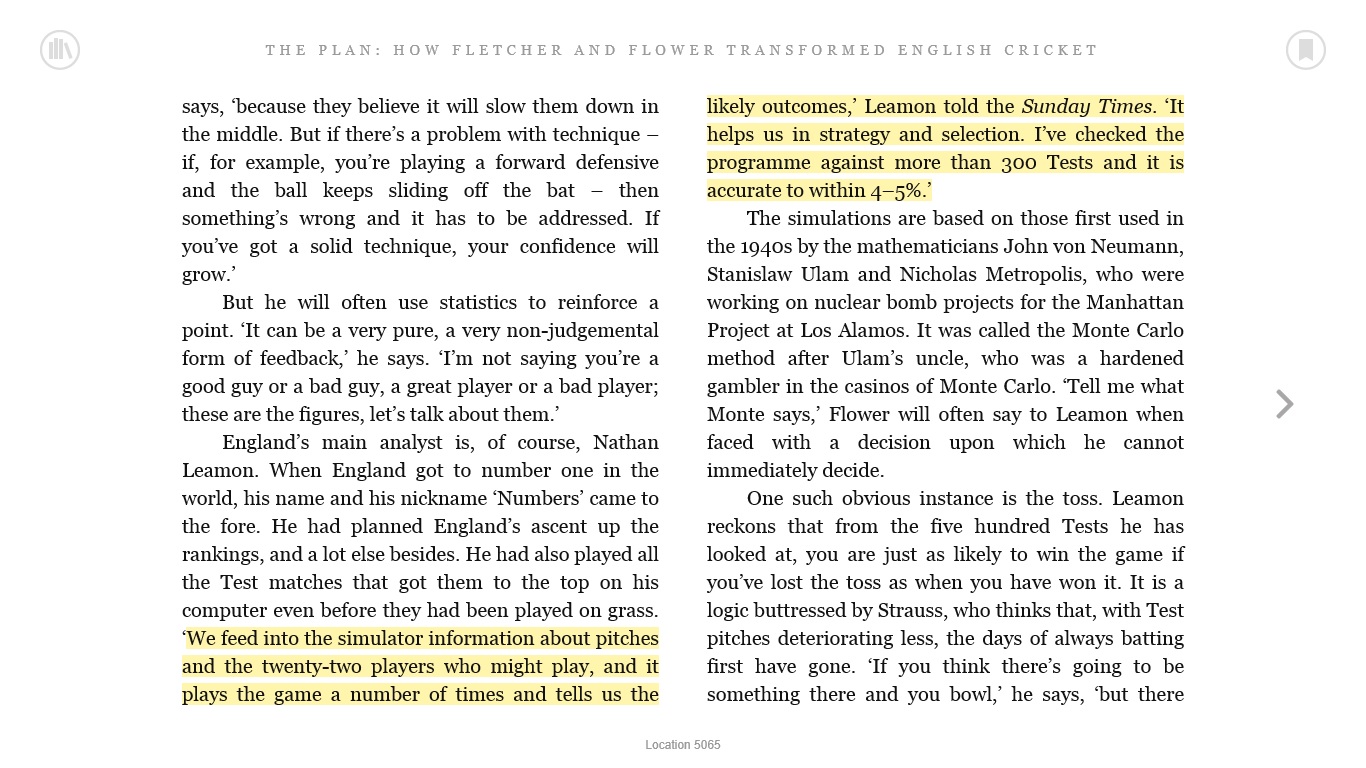
This part of The Plan gasted my considerable flabber.

Statistical Hogwash

I mean, really. Someone explain to me how you are accurate to withing 4-5% of whatever it is he’s supposed to be babbling on about. “Oh yes, the computer said Kevin Pietersen would bat like a god at Mumbai, and get out for 188 rather than the 186 he actually managed, and that, yes, the same computer analysis that was 25% out in the selection of the bowling attack at Ahmedabad, was now spot on at Mumbai and Kolkata?” This looks like twaddle.

Someone tell me how this works, because, and I love cricket stats by the way, it is lost on me. “Tell me what Monte” says, said Andy Flower when he couldn’t decide. Maybe whistling out of tune formed part of his statistical analysis.

No wonder we fucked up the World Cup if we had this sort of drivel going on.

A prize to anyone who can decipher that highlighted phrase for me.

Bruised

Evening all.

Personally it has been a tough week for me. Nothing that ends the world, but the sort of week that knocks the confidence, hits the self-belief and makes you question what you think you should do. I did, at one point, think that I might give the blog up for a while, at least until the Ashes, but that was but a fleeting thought. There’s the brilliance of thelegglance to support on here, and there’s also lots more I want to say. So, while bored out of my mind on a training course this week, I jotted down some ideas for future posts and direction. thelegglance and I will get together to discuss some changes to the blog, and perhaps some of the ideas I have and he has. We will let you know what is decided.

The one thing with this blog that amazes me, still, is how from small incidents, major stuff happens, if only at the blogging level. Without the throwaway two press men reviews in the post last week, one of our number would not have tweeted the link to the top five mentioned, and then we would not have had Pringle calling me irrelevant. I’m not one to ever let a snippy comment go unblogged, so off I went, then followed by thelegglance last weekend, and now by Maxie’s opus on The Full Toss, which it goes without saying, I recommend to this house.

From little acorns do these blogging oaks grow, but what’s the relevance? I had a discussion on Twitter DM with a well-known (I think on here) figure in the reporting game who said he wished I dealt more with the actual cricket than journalists who no-one really gives a shit about. Like all constructive comment aimed my way I considered it. A lot. Then came being told I wasn’t strategic enough to build a brand identity and push a plan through cost me a promotion (how I laugh inside at that, not) and I begin to question myself. Am I aiming in the wrong place? Am I just becoming a stuck record? Have we peaked (hits are noticeable on this blog when the news is bad) and could we sustain this blog through “good times”? Is it worth sustaining? How do we do it?

I’m not satisfied. I used to be easily satisfied, but not now. This is too precious to me to give up.

I wandered around for a long time in the wilderness until I got noticed. I then set about keeping the limited audience I had in a flurry of furious posts, each one dripping with anger at the press, the ECB and yes, Alastair Cook. I’m over none of that. Not one bit. Without that anger the well runs dry. I now almost hate the game I love for the fact that nearly every facet of it brings me to rage. The lack of terrestrial coverage, the patronising of New Zealand as if awarding them just two test two years after awarding them just two tests is somehow ordered by some Cricketing authority on high rather than the ECB’s actual choice of oppenents. The victories in the ODIs, and the manner of the defeats, are laudatory, but for the love of all that’s holy, it’s 2-2 and there has been enough dumb nonsense in this series that we now seem to think it is OK to overlook because we are playing positively (and the bowling looks absolutely clueless). There is the very good point thelegglance made about how this rush to gush is now overtaking the inquest that should have taken place about how the team played in the World Cup. Instead we’ll have it all laid on Moores’s door for the failure (Farbrace was in that dressing room, so don’t give me all that) and no doubt the C–tmaster General’s door for the brave decisions. One of our scribes rightly said that we don’t look to the players for the successes, but at the coach, or someone who puts in place strategies. I’ve always said with strategies, that when they are successful they have many parents, but when they fail, they are orphans.

I’ve just read Steve James’s “The Plan”. I might do a review of it when I calm down. It has some interesting nuggets, especially in his willingness to blame anyone but his Zimbabwean colleagues, and some insider stuff that if true, casts an interesting shadow over some of the decisions taken after the book. But it was a throwaway line on Moneyball that got me.

I’m a massive baseball fan, and both the book and the movie of Moneyball omit one incredibly salient fact that is missed about those Oakland A teams. It wasn’t about value for money and all that, but it was about the fact they had a brilliant pitching rotation. They had great pitchers in their midst to start games. The Red Sox this year have, on paper, a really good hitting team. They absolutely stink this season because their starting pitching is atrocious. I go on a blog where they ask you to predict the record of the team for the season. I was the only one who didn’t have them down as having a winning season. It is, in baseball, a lot about getting bang for your buck. It is also about your scouts, your player development, your drafting ability to get good players of your own.

Peter Moores loves this book. According to Steve James, he passed a copy to Flower who also liked it. It’s a good book, tells an interesting story, and pretends that Billy Beane is some sort of out-there genius. It tells the story of running a sporting franchise where the As didn’t have the most money (far from it), didn’t have the best stadium (very far from it) and didn’t play in the best city (I can’t comment on that, but no-one really mentions Oakland in the tourist guides). So he had to look beyond the athleticism and at the numbers to see if he could get value. Beane got older players with a couple of good years left (stop laughing at the back) who may have been looking for one last hurrah. Beane got players who didn’t necessarily have the best physical condition, or who had individual styles that the trainers and physiologists would have kittens over (Samit Patel……any England fast bowler that goes to Loughborough) or develop his own players quickly and get them in the team to trade them for other pieces – which is what a club team does, but not an international one. The thing I believe Moores would probably have taken out of this is the data. The numbers. Not the traditional ones, but the things like WAR or OPS+ that the statsguru’s of baseball love. But that doesn’t really translate to cricket. Take KP, who is berated for having an average of just 47. He has precious few not outs as he’s a risk taker. In my view. How is that translated to the press? “It’s the way he plays….” “A player of great innings not a great player” or the best of all “inconsistent”. I didn’t see anyone try to get behind those numbers too hard.

Moneyball is about running a business, that is why it’s written by a prolific business writer. England are if not the wealthiest team in cricket, than they are second. And they just lost a test in May to a team without a pot to piss in. I hope the new man has nothing to do with such trite twaddle. Sadly, I think Strauss would probably melt into a warm puddle at the very mention of it.

I have rambled off, which is usual, but the point I’m trying to make is that this journalist probably thought Moneyball was some wonderful text because Flower liked it. It needed investigating. I read this stuff. I’ve read virtually every self-congratulatory tome about the Red Sox winning it all in 2004 due to these techniques (of course, buying up one of the best pitchers on the market and having the second highest payroll in the game had sweet FA to do with it). I’m a sports nut who laps this stuff up. But not with an uncritical eye. When someone tells me a book like that helped shape a couple of England coaches’ philosophies, I want to know why.

I’ll never be able to scratch that itch completely. I’ll always be searching for the right point, even if I find out it is wrong. I want to know. The pieces recently by much more precise, beautifully crafting authors like Maxie and TLG than I, hone in on their targets like laser guided missiles, and we are all the better for it. I’m far less accurate, but hope I make up for it in my desire to find out. I’m still not satisfied that I’ve found out what I want.

So it gets to the point, where, yes, I confess, I hope Alastair Cook fails as a batsman, because he’s a wretched leader of men. I get to the point, where, yes, I confess, I see England wins as something to dread for the stupidity of the reaction they garner from people who should know better. I hope Strauss falls on his arse for backing a Giles Clarke line on KP (for that is what I think it is) and he leaves that post with the ridicule his predecessor garnered. I will not forgive those who branded the likes of me as “outside cricket” for turning me off an England cricket team. Even one with players like this.

I’m not falling in love with them. Not one iota. Until that whole top edifice is cleared, Clarke has absolutely nothing to do with the ECB, that there’s an apology to those they insulted, I’ll despise them with every f–king fibre of my being.

When I was a child, I played cricket in the street. I played with 10 other kids on a council estate in Deptford. I watched Botham’s Ashes. I watched the great 1980s West Indies teams. People talked about cricket all the time. Going to my first test match was a thing I will always treasure (1997, Oval, Day 2). I have this game in my soul. I come from an era where it mattered to kids of all social classes. Now?

Yeah. I’ve no right to be angry at all. No I’ll carry on with all of them. And now I don’t have to play the good little foot soldier role in the office, I’m ready to up the ante.

Night.