Somewhere, Somehow…..

UPDATE AT END OF POST…. (Sunday @9:10pm)

A third piece up today. I thought it an interesting thing though.

David Hopps wrote this article on Cricinfo. Please click on the link.

England could have used the international against Hong Kong in Abu Dhabi as a celebration of the full ODI status Hong Kong received for a four-year period from 2014, a chance to show a vague commitment to the global expansion that many cricket followed hanker after. Many would have seen it as posturing, but even posturing can bring benefits.

I’ve kept the article in full by way of record in case it is altered in the light of the following Twitter exchange…

This has amused me on several levels.

First of all, the leaping to the defence of England’s cricket hierarchy by John is touching. While Hopps’s piece may not be true, and that the Hong Kong ODI team, throwing their weight around, forced England into a 13-a-side game we never really wanted, and we accommodated them (despite the rumours that we weren’t playing Hong Kong in a full ODI because we didn’t want / couldn’t afford (ho ho) our players), it’s not as if we go out of our way to give the Associates with ODI status on our doorstep much of a look-in. Ireland are an attractive side to watch, famously beat us in Bangalore, and yet we try to cram them in at the fag end of the season. It’s not as if our ICC representative is out there fighting their corner, stitching up the Big Three agreement, rubber-stamping the ten team format for the next World Cup.

Andrew Nixon, a firm proponent of Associate cricket pointed this out…

We spent a lot of last year going on about some of the press doing the ECB’s bidding. There still remains a good deal of suspicion around that area. Tim Wigmore alluded to it in a piece he wrote on Olympics and cricket. The ECB are capable of looking after themselves and defending their record. Except, of course, they are not as they showed last year.

If England would have wanted this to be a full ODI, ground status or not, they could have. Hong Kong dictating terms to England seems rather fanciful to me. But I’m not there, so I have to accept what I’m being told. It just seems a little strange.

This will be an interesting next few hours.

UPDATE:

Some more tweets:

https://twitter.com/TheCricketGeek/status/663377811298762752

“Don’t see any reason to doubt them?” Blimey. I don’t have to look hard to find one.

Hopps is not backing down:

Andrew Nixon is not convinced:

The match will have been good experience for Hong Kong, but the lack of ODI status for this fixture between two sides with ODI status leaves something of a sour taste in the mouth. Reports are that Hong Kong said in the post match press conference that they requested the game not be an ODI. Given what I’d heard from within Hong Kong cricket ahead of the game, that is almost certainly a line written for them by the ECB in order to save face.

Andrew’s not going to give this one up without a fight! Please click on the link.

Tim Wigmore – who wrote a book on the Associates with Peter Miller – has come to the party.

A Nepal cricket writer Tweets:

UPDATE II – John Etheridge has commented. See link.

Off The Long Run / Deep End – Death Of A Gentleman / Death Of A Way Of Sport

RoyalsWhiteSox JFS 9-15-14 1751

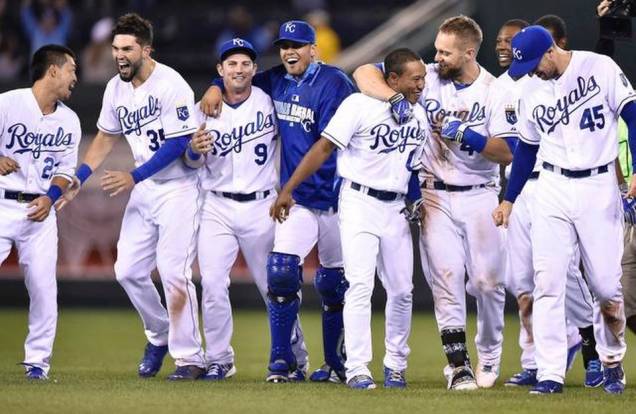
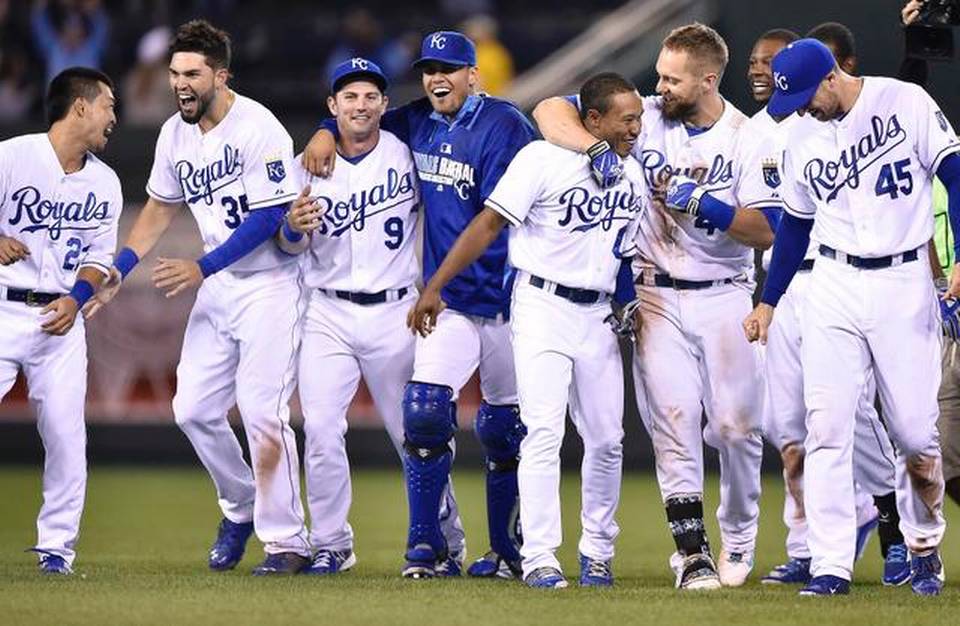
As I start on this journey of a piece, it has the makings of being a really long one (and now I’ve finished it, not sure it works, but here goes). It goes to the heart of me as a fan of sports around the world. Of my love for cricket, of my lost love of football, of my hopes to see a team like the baseball champions Kansas City Royals (a team unable to compete financially with the big clubs in the States, but still able to win it all) win the league in England, of my hopes of seeing a team run by faceless wealthy oligarchs get relegated. Of my watching every single sport become a vehicle to make massive amounts of money at the expense of spectators. Of a media in hock to the money-making charade. Of organisations where the only way you can postpone the possibility of jail time is to stay in charge. Of money ruling everything. Of the extinguishing of the commodity every football fan of a club outside the richest in the world possessed – hope. Hope. Sport made you hope.

When Jarrod sent me the copy of Death of a Gentleman I sat there and watched in…. well I don’t really know what my emotions were. I wasn’t surprised. Giles Clarke is an absolute pig of a man, and there would have to be a question of judgement against anyone he’d class as an ally. I wasn’t shocked that India were looking after themselves – after all, that’s what the big clubs do in football here, so why the hell are we shocked at that – and as for not widening the game, well let’s face it, it’s only a matter of scope. Club football loves the expansion of the game because similarly levelled talent of footballers from Eastern Europe and Africa (and South America if they didn’t predominantly move to Iberia) are cheaper than English counterparts. No major English club (and, by extension it seems, their fans) give a flying f*ck about the national team and developing players for it. In many cases, quite the opposite. The club sides were businesses, and the big clubs don’t feel the need for a sucessful national side to keep the home fires burning like they used to.

I wasn’t shocked that some players, like Ed Cowan, would give everything for their first cap, but the counterpart is that they might not feel so enamoured of the game when they get to, say, their 70th. Once something becomes routine, almost an entitlement, then that sheen of optimism wears off and it becomes just a job. But it’s nice to be reminded of the good side of first selections. Then there is the focus on test cricket. It doesn’t make commercial sense, so therefore, because of that it should not be played. It is not entertaining. Sport should not be played in front of empty stadia. We can’t serve up dead pitches because five day cricket is inherently boring. It is a form of the game worth saving because…. and it comes to the ultimate test of skill, technique, concentration and athleticism. However, those qualities sell better if there are more games. Shortening becomes efficiency. That’s what the people want in their busy lives…. So dead pitch test matches are bad. Very bad. They are driving people away.

That’s a line of argument gaining traction whenever we have a pitch where you might have to work really hard to get very good players out on it. I’ve been on this mortal coil now for over 45 years and people have become this way – short-term driven and wanting to tinker. Attention deficit and a generation of tinkerers. You know how it is at work. You can’t stay the same, you have to change. Change is good. If you are not open to change, you are an impediment. What happens now is administrators, managers, CEOs have to change something. There needs to be something done because there is always more to do. Innovate or die. And that’s my problem. Sport now apes business, because it has ceased being about sport, in many case, and more about business. I used to go to, and play, sport to escape business.

What is sport for? Well, actually, it isn’t for spectators, it is for the joy in playing it, isn’t it? Sport in itself is a form of enjoyment, of individual achievement, and when in a team context, of playing with your mates or forming a bond with like-minded adults or formulating friendships as kids. It’s getting the best out of yourself. Doing something that is better than work, perhaps to get away from a daily grind. So sport, at its base instinct, is about the players. When you were a kid, you played cricket until you got out. You might be stopped in street cricket when you made 50, or 100. You didn’t constrain yourself with limiting overs, field settings, who could or could not play. You didn’t care who was watching. When sport was more organised, for me it was Schools cricket and junior clubs, they would put some constraints on what you could play and then you sought to build innings, practice defence, and try to improve.

A key tenet of the debate going on now is that people aren’t developing the same love of the sport as they did when I was a kid. That cricket, obsessed with monetising the talent, is hidden behind a paywall that pays it more than a terrestrial channel. George Dobell, in his latest piece on Moeen, made the point:

At Moeen’s old school, Moseley, 80% of the kids do not have English as their first language; 40% receive free school meals. You don’t have to be a genius to work out the long-term effects of charging almost £100 for a ticket to international cricket or putting it behind a paywall on television. The game is in danger of becoming invisible to a huge section of society.

The role of TV in this piece is all-pervading, but I’m not sure if it’s the illness or the carrier. The fact is that cricket is, in some markets, an important commodity. Indian TV contracts are massive. In England, the absence of an IPL or a cricket equivalent to the football behemoth, means the contract is all about televising England’s national team. In this country it means test matches. I know how much more keenly test matches are viewed, by one look at the hit stats for the blog. ODIs capture nowhere near the attention. We’ll come to why, soon. Maybe. But it needs to start at what sport means to me. What cricket is…

When I was a kid it was all test cricket. No-one really cared about county cricket as a kid, and I didn’t go to my first County Championship game until I was a University student. Cricket was played in the streets by kids back in the 80s, because I was one of them. We played football in the same streets, despite being told not to by the council busybodies. Football is very visible, and yet I don’t see any kids playing it in the street on my council estate. There are less teams playing on Sundays over the playing fields I used to play on. Participation levels appear to be down, even informally. I lived cricket, though, because although I was never really going to go to county cricket, I followed it in the papers. I even purchased a long wave radio so I didn’t have to wait a couple of days for the scores when I was on holiday and could listen in to the snippets of cricket on the World Service.

During my formative years there was a school of thought that televising football live would kill clubs. Yes. People actually fought tooth and nail to keep the FA Cup Final as the only live club game on TV each year. It’s almost unthinkable. TV coverage was totally removed for the first half of the 1985-6 season. Nothing. Not a thing. At all. There was a running joke that West Ham’s Frank McAvennie, recently signed by them from St. Mirren and who was scoring for fun, could walk down the streets and no-one knew him. Football didn’t die. Of course not.

Now to make money, sport has to be about spectators – but it has become about TV spectators now. Players want to get paid for what they do, and they want it in increasing amounts. As those amounts get larger, the people paying them want more bang for their buck, and to try to keep the money flowing. They’ll increase ticket prices, play TV companies off against another to get in more revenue, and still they’ll increase prices, get into bidding wars with other mega-wealthy clubs to get the best players, who play less often because they are increasingly saved for matches against the best teams. Gideon Haigh summed up the role of you, the spectator, in DoaG perfectly – we are there to be monetized.

I’m a little bit of a lefty, you’ve probably guessed that, but I don’t live my life with my head in the clouds. Players want their fair share of the money going around, and that’s understandable. For the vast majority of sportspeople, especially in team sports, careers are short at the top level, and those lucrative media jobs for post-sporting careers are few and far between, while coaching and managing at the top level is both short-term and high-risk. But with money comes cynicism (I know it is not an exclusive relationship, but it’s just worse when high values are involved) both in terms of the superhuman feats a player is expected to perform because he/she is earning amazing amounts of money, and from the players, who might, or who are not able, to perform superhuman feats on cue every time they are asked to. It then means we might feel short changed when we see something that isn’t up to standard from them. That player will be crucified in the press, the braying, baying media pack who want “drama” “stories” and “soap opera” rather than sport. Your team wins some times, it loses some times. We are in the era when big clubs are not allowed to lose. Ever.

It is us, the spectators who are at fault. Most of us aren’t good enough to play at a high level, yet act like we know what it takes. I’m as guilty of that as anyone. Now your choice of football team is often seen as a reflection on you. I support my local club exclusively in England. I don’t care much for any other team. A team with a style of play I like might lose one week and I wouldn’t give the first f*ck about them. My team is Millwall. I was brought up in Deptford. My Dad was a Charlton fan, the rest of my family Millwall. My cousin got me first, and took me to the Den in 1979. I was a Millwall fan, for life.

Now, in SE London, I see people with Chelsea shirts, Arsenal shirts, Manchester United shirts, less Liverpool shirts than you used to, and for the love of all that is holy, Manchester City shirts. Their choice of team isn’t in reaction to their locality – hell support those jokers from Selhurst Park, it’s better than Arsenal – but it’s not just their choice that riles. They pat themselves on the backs as if they’ve backed a penny share that’s suddenly had a good Annual Report. Meanwhile, of the three local clubs, Palace are having a decent run, but it will only take a raid on their best players, and a downturn in form to see them back where they belong; Charlton are now a Belgian league club’s plaything; and my lot are arguably back where they belong – a tier two/tier three yo-yo club. Only diehards support lower league clubs now. We’re seen as an oddity, as if there’s something wrong with us, as if we don’t have the mental capacity to choose a big team.
So it goes for cricket.

I am a Surrey fan, for life. I chose them in the late 1970s. They were my granddad’s team, they were the nearest ground to home, and someone with the same real surname as me played for them (hello Mr Alam). They are my team for life, and believe me, it took 20 years for any glory. But I appreciated it so much more that it took so long. I am also a supporter of the following other sports teams – Miami Dolphins (Superbowls since supporting them – 1, and they lost it); Boston Red Sox (started supporting in late 1990s, when Pedro was doing his thing – they’ve become winners since then); Chicago Bulls (nearest I come to a glory hunter, but supported once I got to see Michael Jordan play on TV – before the Championship run) – and stuck with them through their slumps, which they have all suffered (Miami the 1-15 season, Red Sox bottom of AL East two years on the bounce, Bulls post the glory years).

The modern spectator has more in common with the Bulls following than anything else. They want to win, and they want to see the big stars at their team. Extrapolated to the TV audiences, it means big clubs, more often. Top stars, more often. Money makes the world go round.
In cricketing terms we all know what this means. The biggest money is in India. Therefore, the biggest stars are in India, a nation that remains proud of its own, and yet loves those from outside that embrace the culture and the fanaticism. When this is combined with cynical, money-hunting businessmen, on the prowl for more power, there’s an unstoppable nexus. Feed the fanaticism, make more money. The IPL stands alone as the T20 league to play in. The money, the fame, the adulation. Cricket on a level playing field with football. No wonder players want to play in it, and others worry themselves sick about it. India hold all the negotiating hand here, and everyone knows it.

Anyone in England who thinks this is outrageous, then look at how the Champions League is run. How the Premier league is run. The aim for all is to make sure India keep the IPL away from their turf, to keep themselves sustainable. West Indies have suffered the most. England and Australia, the least.

Again, anyone in England wondering why India want to guarantee nine matches in the 2019 Cricket World Cup, because of a shock exit in 2007, haven’t paid attention to a Champions League that spends 48 games to halve its numbers, with a lovely seeded draw to keep as many big teams apart as possible, and a draw designed to maximise revenues in the big markets by not allowing more than two games per nation on any one day, and by stretching the 2nd round out over four weeks, not two. There was nothing wrong with the old European Cup knockout model, except it didn’t make the big teams enough money. When UEFA had the gall to remove the second group stage, there were howls of derision from the bigger clubs, and many a veiled threat – but fans saw through it and it was almost too obvious in its soaking of the fans. The big club spectators want more of this exotic stuff, not less, but too much damages credibility. India are mimicking big football clubs, and yet we get howls from supporters in this country that they do so. We must be having a laugh……

India has been threatening an IPL2, have been using their international team as pawns in ageo-political money accumulation game for years now. They have the power. Without them, every country with the exception of England and Australia is sunk. Sports authorities, and those making money out of them, rarely look for long-term rewards, because within a few days your corruption might be fatal, your face might not fit, or some younger, or more innovative whipper snapper has seduced your enablers. It’s only going to get worse. I sound like an old codger, I know, but we’ve got a load of twenty-somethings come into our office in the last year or so. I like pretty much all of them personally. But they don’t see long-term. They see rapid development, an entitlement to promotion rather than it being earned in the long run of hard graft. There is impatience. There is practically no dissent to authority. It is not about common good, it is about the pursuit of your own goals. It’s the culture in which they were raised.

That sort of culture, to take an extrapolation if you might allow me to, means sports that take five days, played in empty grounds, are anathema. These are top players who could be earning more. They could be used more. The lopping off of six weeks at a time to play three matches in a desert location makes absolutely no commercial sense. Commercial sense. It isn’t about growing the game, getting more teams involved (after all, we grew it in 1999 by promoting Bangladesh to test status and they still aren’t up to it), it is about getting the best players on people’s screens, in front of lots of people. It isn’t about cricket lovers, certainly us old codgers, because we aren’t the target for advertising – that group between 18-35 is the holy grail – and advertising makes the TV money go round. A modern culture demands a modern way. Death of a Gentleman is more Death of an Attitude.

The film highlighted all it needed to. A governing  body doing what all other major board seem to do – hoard power and cash, run the sport on short-termism, pay lip service to development and monetise the best players as frequently as possible – and players moaning about workload in the one instance, but grabbing every bit as much cash as they can whent the opportunity arises (which is why I won’t listen to KP on county cricket, for instance. He made it where he is because of it, not in spite of it. He moved to this country to play it). Giles Clarke is a lovely coat-stand to hang our ills on. Maybe he is right and we should ride India’s coat-tails. Maybe the counties are right for fighting for the status quo, because, let’s face it, their existence in the form of 18 teams playing four day cricket book-ending the limited over stuff is every bit as logical as test cricket in Mohali.

Whether test cricket lives or dies isn’t up to me. The Ashes will live on, as long as we have players capable of playing long-form cricket. There is a lot mentioned about context of tests, and the refusal to have a Test Championship is mind-blowingly short-sighted, but what was the context when the West Indies were ruling the world, or Pakistan played test series against India that would feature a result once in a blue moon? These aren’t new issues. Cricket is more expensive to watch, both at grounds and via subscriptions. So is football. So are most other sports.

I’d like to finish this long ramble up with a comparison to baseball, which I mentioned at the start. You can’t go a week or two without reports that viewership on TV is down. That baseball is a dying sport. That no-one talks about it over the water-cooler. That the NFL now rules everything in the US. Baseball will still be there in decades to come. It is a slow, cerebral game, which I love. It cultivates its base by making its local TV rights, and national shows available. It has a website that was the envy of many other sports which made watching your team outside of market very cheap (£90 for every match in a season, more or less). It plays on its history, a sepia-tinged “father and son” narrative. It’s a sport embraced by the Latino community. It’s also competitive. The current richest team haven’t won a title since the 1980s (Dodgers). The perennial richest team, the Yankees, have won the championship once since 2000. Last week, the Kansas City Royals won the title having been in the finals last year. According to sources, a greater proportion of younger people watched the World Series than in recent memory. It’s food for thought.
A Hornet’s Nest

Over at our friends at the Full Toss, a proper debate has been going on – it started initially on Twitter, with Tregaskis raising a point, and snowballed from there.  The whole thing can be read through Maxie’s post on TFT, and I’m not going to repeat it here, so the link is as follows:

The return of Caesar’s wife

Here’s the thing.  I like Maxie.  I like his writing, and I like him personally.  I’ve had a couple of good nights out with him, and enjoyed his company thoroughly.  Which is why I know that saying I disagree with his premise is not going to be met with shock and horror, but more “Oh really, why?”   Because if there’s one thing I do know about him, it’s that he’s exceptionally comfortable with the idea people hold different views to him – it’s something that always makes me smile when you get the more virulent criticism of him for his articles, he is quite interested in those who don’t agree.

It’s one of those things that is striking across a few of these blogs.   Dmitri is the same, forever worrying about whether his perspective is a reasonable one.  The irony is that it’s me who tells him to ignore the trolling and the abuse, yet I’m the one who is probably thought of as less polemical and more nuanced.  The true beauty of all of these debates is that it involves real people, who can be hurt.

From his post, it seems Lawrence Booth in particular felt that he was being unfairly maligned, and here I have enormous sympathy with him.  I really can’t see a thing wrong with something like a golf day that might involve a few players.  And this is why – in my own line of work there is a fair bit of what we might call “promotional” activity.  The deal is what is has been for generations across many kinds of career, we take them out, spoil them, show them a good time and when it comes to contracting maybe they’ll be better disposed to us than our competitors. Naturally, our competitors do the same.  It’s the kind of thing that tends to be pontificated about as somehow dubious, but it’s normal practice.  More specifically, I’d fall down in a faint if something like that made a potential client switch to me, it doesn’t happen, it’s way more complex than that involving building trust and – the key point – getting to know people.

For journalists, their stock in trade is copy for their newspapers.  It’s nothing like as simple as on here – I can write any old rubbish and click “Publish” and up it goes.  The press pack have to pass it via their editors and hope that some kind of simulcrum of what they wrote appears in the paper the following day.  It is extremely easy to be totally cynical of all media output, and it just ain’t that simple.

Want the proof?  I can write a piece on here talking about Kevin Pietersen, and the hits we get double from normal.  Hell, just the fact his name is used will add a few extra ones. It’s extremely easy for us to manipulate the content if we were so inclined, and thus when online papers do it, the line that it’s clickbait might be true, but it’s successful clickbait.

Neither Dmitri nor I make a penny from this place, so we can say what we like, but it’s pretty easy to see how commercial sites love it when you can do something that straightforward to get extra hits.

So for a newspaper journalist, first and foremost they need to create copy that attracts attention.  That might be about – say – Joe Root, as we’ve seen with the Telegraph interview with him that has got plenty of notice.  But what we can’t do is expect those articles to come out of the ether, and that’s where the whole point of argument has stemmed from.  It’s a fair bit easier for former England batsman and captain Michael Vaughan to do it, but for a normal cricket journalist, to provide an angle requires them to do the legwork both before and after.

We know what Root (poor lad, still using him as the example) did in raw figures and anyone can write that, it’s just that barely anyone will read it because it’s dull.  How does a journalist provide context and colour?  It’s by getting to know them, talking to them, allowing a sufficient degree of trust that they will speak to them in the first place.  So both because of my rationale about hosting events, and because of the peculiarities of sports journalism, events such as a golf day are critical.  What else would people desire of their correspondents?  Glorious isolation? It simply is not going to happen, and the journalists aren’t doing their jobs if it does happen.

The unguarded comment from someone suckered in by a journalist they trust is in itself part of the job, but they can’t do that unless they know them in the first place.  It’s just not a fair argument to attack people for doing what is in reality their job.

On here we have offered up plenty of criticism for journalists not holding the ECB or ICC to account, and those criticisms stand absolutely. The frustration about that can’t mean though that everything they do is therefore criticised, we have to be fair about this. When we get a fascinating interview with Nick Compton, it’s because that journalist spent time getting to know him well enough for him to talk, and created sufficient trust for him to open up. It doesn’t help anyone to pretend the means by which that happened shouldn’t.

Criticism for not doing their jobs properly is legitimate and necessary. But not for when they are.  And heaven only knows there are enough things to complain about there, for there really is much too cosy a relationship between some journalists and the ECB, while the fact that the senior cricket correspondent of one of the broadsheets can’t even be bothered to watch Death of a Gentleman remains as pathetic a dereliction of duty as there is.  But seeing reds under every bed weakens the argument, it doesn’t strengthen it.  Sometimes they’ve simply done nothing wrong.

Citius, Altius, Fortius

The reports, carried by Tim Wigmore on ESPN, that Colin Graves is about to propose that cricket be in the Olympics, is interesting on many levels. This is about long-term development and broadening the game in the future. But it’s also about the ECB now. Very much now. Who knows, this could be the funniest power struggle yet?

2024 is almost a decade away and the landscape may have changed by then, because the land has changed a great deal in the last 10 years. There’s no certainty cricket will be selected as an Olympic sport even if it chooses to seek inclusion (although India’s might could help if they were interested as their Olympic record is not good), and not many of our current team will be around for it. But the prospects it opens for associate nations and broadening the game can’t be underestimated. Spare me the wailing sirens of us losing a test series – the NHL in each Winter Olympics shuts for a couple of weeks and then re-opens again. There is too much international cricket in the summer as it is.

Don’t worry all you Ashes lovers. A series isn’t scheduled in England that summer. Yet. We’ll probably play two test against South Africa instead.

What interests me is this is Colin Graves challenging his predecessor. Now, you know my position and I’ve still not changed it. Giles runs English cricket and Graves has not stood up to him. Now Graves seems to have found his balls. This could get interesting, quickly. Under the Yorkie watch he has overseen a change of personnel in charge of the national team, a revitalisation of the ODI team into an attractive, attacking unit, and, of course, an unlikely Ashes win. He has the press salivating over the new Director, Comma as well as the beatification of our captain. There’s a rump of us who have the hump, but we’re not important. Frankly, if he can’t impose his own authority over matters now, when can he?

Now Giles is coming off the back of some negative publicity. His performance in Death of a Gentleman was awe inspiring, playing to his typecast role of unreconstructed snob, the sort of villain straight out of Hollywood’s central casting for “quintessential evil English toff”. His high-handedness was inspiring. One wonders how a man is so self-confident while lacking so much in self-awareness. I think someone removed his “I give a shit” gene. Giles is a master of politicking, and I don’t mean that as a compliment. He will likely be put into bat for cricket in the Olympics by the people he lorded over, and have to put the case. I for one reckon we’ll be hearing back precisely what Srini thinks as a reason for inclusion or exclusion, and Graves can say all he likes. Giles is not a man for turning, and his protestations that he’s protecting his board in DoaG didn’t look like those of a man considering all sides of the argument. Will he take his orders, given he made sure Brearley was put in his place when it was suggested he would have to. Oh yes, Giles Clarke is going to be a great watch throughout this. Wally has already deserted, but then again, it’s not his country’s summer this jamboree is going to take place in!

For someone who finds the ECB shenanigans fascinating, this is like Christmas. The former deputy, coming in with the reports of a blunt intstrument ready to hit all and sundry, put in his place over his attempts to bring back someone the establishment want rid of, and for correctly assessing West Indies ability to play test cricket, is now feeling he can say something. This something challenges his former king. It could be seen as betrayal. It could be seen as a challenge. How Clarke responds will be riveting, at least for me.

Read Tim’s piece by clicking here.

Also, this is a stat I was supposed to write a whole piece on. It does shine an exceptionally good light on our captain’s performances in Asian conditions. A good player of spin, not as many concerns on his areas of weakness (caught behind, chopping on), and a method and indefatigability that is almost inhuman. There’s no taking away this statistic from him. I’m not sure anyone is denying that these conditions suit his game (and not many others) and he cashes in.

Selvey, of course, wants you to know how much he loved Cook’s performance. This from a cricket correspondent who, since the release around three months ago of an important film on cricket hasn’t bothered to watch it, but still seems “remarkably informed” at what the ICC is thinking given his tweets on the IOC approach.

As I’m writing India are collapsing to defeat against South Africa.

State of Play

The gap between Tests reduces to some extent the frenetic nature of the media as far as cricket goes, and allows a little time for reflection about where we are more generally, and how we got here.

Although it’s fairly rare to offer up any praise for the ECB (for the simple reasons that they tend to both incompetence and duplicitousness, which is rarely a good combination), it is worth noting that Women’s Ashes matches have been scheduled for between the men’s Tests.  For once they have it right, as it’s far more likely to gain attention that way.  It says a fair bit about the ECB that the overriding reaction to seeing such a piece of consummate common sense is surprise.  Generating that interest creates a feedback loop, as shown by Sussex announcing that the T20 at Hove is nearly sold out.

The rise of women’s cricket in England is a fascinating development.  It’s one that the ECB pat themselves on the back for an awful lot, and it has to be said they have played a significant part in that, although women’s participation in what were traditionally male sports has shown a significant rise across the board, from the success of the football team to the way the women’s Six Nations is now covered on television and gets decent crowds.  In rugby, the RFU have gone as far as to schedule some matches directly after the men at Twickenham, something the ECB have also done beforehand with some England games, and with the same kind of success.  As a means of allowing the more casual supporter to watch, it’s obviously highly successful.  But what it also means is that cricket is not a discrete entity in this; women’s sport is gaining an attention that would have seemed highly unlikely a generation ago.  Quite why that might be is a little hard to pin down, much of it being for sociological reasons as to the acceptability of women playing such sports – good to know we’re in the 21st century at last.  The ECB are entitled to be pleased, but when seen in the context that the number of women playing football is shortly to overtake the number of men playing cricket, it raises as many questions as it answers about their role as governors of the English game.

Nevertheless, whatever provided the catalyst, and whatever the context of cricket more generally, the ECB have certainly played their part in helping growth in women’s cricket.  Free kit has been distributed to clubs, and free coaching and umpires courses provided for women who wish to make use of them.  That does represent something of a contrast in how it is for men wishing to do the same, and the costs involved tend to be significantly higher (and with less given back) than the football equivalents.  Many clubs offset that cost themselves, in order to encourage their members to gain their qualifications, but it is still a lot of money.

What doesn’t get mentioned much (and here the ECB aren’t alone by any means, it is taken for granted across both sport and other walks of life) is that any success requires people on the ground to volunteer and give up huge amounts of time to help encourage people to play the game.  The decline of schools cricket is often cited as being disastrous in this, yet in comparing what was available 25 years ago to what is available now, the clubs have more than filled that gap.  As someone who attended a cricket playing state school, the coaching was non-existent (and the county paid little attention to the state schools there anyway – in that little has changed) while only one local club had a thriving youth section – indeed only one local club even tried to create a thriving youth section.  Moving forward to the present day, it is truly astonishing to see medium sized clubs having colts evenings comprising up to a hundred youngsters of an evening, and a plethora of qualified coaches to help them.  It is, of course, enlightened self-interest from the clubs; shorn of a supply of schoolboy cricketers, they are producing their own.  It is hard to avoid the conclusion that for a child who has shown an interest in cricket (therein lies a different debate), the opportunities for playing are now markedly more plentiful than they were in the 1980s.  So far so good, with the obvious concomitant opportunities for cricket more widely.

With both boys and girls cricket, those volunteers are the heroes and heroines.  Many clubs simply decided they wished to create a women’s and girls’ section, and worked ridiculously hard to try and make it work.  Many male players will be familiar with making up the numbers in the initial stages until sufficient players of the correct sex were available.  It is there where the ECB provided some support, a little of it directly, more of it via the counties.  Let there be no mistake, that support was and is critical, but it is still the uncredited hard workers that form the backbone of every cricket club who have made it happen, almost always unappreciated higher up in the game.  The ECB and the counties have been facilitators of an existing desire, not the creators of it.  Given the sheer number of clubs it couldn’t be any other way, but that’s where the balance lies, not in initiatives from the ECB.  Like any organisation, self-justification is part of the marketing, but agreeing that they deserve some credit is not the same as allowing them to take it all.

There is another side issue that affects both male and female youth cricket, and that’s the way funding and support is channelled through the counties.  Girls cricket provides a fascinating insight into the methods of boys cricket as well, given that it was essentially a tabula rasa upon the foundation of the structures.  Some of the counties are excellent, and it’s striking how many cricketers at the top level they are producing, notably Durham.  Others are not.  There is sufficient anecdotal evidence that some counties wish to work with a very small number of clubs in their Premier League alone, and ignore the rest.  That manifests itself in pushing even 12 year olds of promise, boy or girl, to the big clubs in the county, where they can be watched by the county structure.  The frustration for the majority is that there is little point in focusing on producing the best players they can, if the first time they come into contact with the county, that county tells them to leave and go somewhere else.  It becomes a parasitical relationship rather than one of mutual support.  Now of course, as that youngster develops, there comes a point where they need to be exposed to the highest level of club cricket possible, if they are to make it to the professional ranks, and every club is – or should be – fully aware of that.  But that isn’t what is occurring in at least some of the counties, they are attempting to hoover up every single promising player and divert them from their home club at the earliest possible age to a bigger one.  If this was happening to a tiny village club with one eleven, you could almost understand it, but it isn’t, it applies to clubs who are playing in the county league cricket structure and by any measure are good, strong cricket clubs.

The Sky Millions question is: how widespread is this?  It is dangerous to extrapolate anecdotal experiences with reality, but it is a complaint heard sufficiently to cause deep concern.  The trouble is that few people have direct experience of multiple county structures, so one that doesn’t behave in this way would be seen as doing things extremely well by those living in a “good” county without being aware of the circumstances elsewhere – and vice versa.  In at least some of the counties, and perhaps more, the club game is treated as something of a hindrance, except as a means of extracting the best players out of it and into the arms of the county.

That attitude towards the clubs at the ECB and the counties is evidenced by the complete lack of representation of the amateur game within its own governing body.  It is striking that the much maligned FA has much greater representation outside the professional game than the ECB does.  A cricket club needs to be affiliated to the ECB but has no power of influence over it.  There is a single representative from the recreational game on the board, and that one person wasn’t elected by any clubs, but is an appointee.  Equally, there is little or no oversight for how a county fulfils its obligations to the clubs in its area, which means it is reliant on them doing so in the wider interest rather than their own.  The clear decline in participation can be for any number of reasons on an individual level, but when there’s a pattern more widely, questions need to be asked why.  It would be easy to point to the loss of terrestrial TV coverage, and undoubtedly that will have played a part, but it is much more complex than that.

Where this has relevance as we move up through the levels of cricket is in terms of affecting the quality of the player base from which the counties and then England can select.  As has been pointed out on a number of occasions, up to seven of the England eleven are public schoolboys.  In some instances they are scholarship boys, quite possibly because of their cricket prowess in the first place.  This isn’t a class based point, or a political one, but the reality is that with 93% of children going to state schools, there is clearly an enormous wastage of basic talent.  That has to be balanced with the reality that with excellent facilities, the public schoolboy has likely far better access to cricket as a matter of course.  It’s not an either/or and it’s not a straightforward criticism.  What it is though, is extremely careless to have failed to make the most of the vast majority, in a way that football tends to avoid.  And that’s without taking into account the worrying lack of Asian talent making it to the top level given the proportion of club cricket that comprises.  The clubs are developing young cricketers in greater numbers than they ever have before, athought there is inevitably wastage as they grow up, and inevitably some parents will regard it as a useful form of free babysitting.  The volunteers and the clubs themselves are more than aware of that, but do it anyway because of the small percentage who will stay with the club into adulthood.  If the clubs themselves are providing the basic numbers, then at some point as the standard increases, they are falling by the wayside as a proportion of the whole.

With the Edgbaston Test approaching, the dropping of Gary Ballance for Jonny Bairstow has been accompanied by a sideline that there aren’t too many alternatives to choose from.  There is obviously the pachyderm hovering which must not be mentioned, but even in that instance, the point of origin for that player is South Africa.  Since he arrived as a 19 year old off-spinner, a strong case can be made that he learned to become the player he was in England rather than anywhere else, yet the formative years weren’t here.  Indeed the same applies to Ballance himself who learned his cricket in Zimbabwe.  The county system itself looks in both directions, both up to England level and down to club level.  If done well, that link can be invaluable, if done badly, it’s a matter of self-interest rather than the greater good.  England are always going to have some input from places like South Africa for obvious historical reasons, the number of overseas British passport holders is enormous, and the county game offers the potential for a good living.  Some object to the importation of such players who then turn out for England, but given the rules, which are stricter in England than they need to be internationally, there is nothing wrong with England choosing them, and in any case someone who moves across the world to make their career as a teenager is clearly a driven individual.

No, this isn’t about the use of such players per se, but why it is that without them England would be so markedly weaker, why we aren’t producing enough players of the requisite standard ourselves, and why we don’t produce the exceptional players that other countries seem to.

A little over a year ago, an article appeared in Cricinfo from a father talking about the experience of his son, who hadn’t been part of the age group sides, but had developed later on his county trial.  For those who missed it, it is well worth reading again in its entirety:

http://www.espncricinfo.com/thestands/content/story/717821.html

On its own, a single article like that means little, but the trouble was that it very clearly chimed with a great many others.  It was a small article, somewhat hidden away, and within the depressingly small confines of those interested in cricket, received a lot of attention.

Even if they can still think for themselves, they won’t be allowed to if they want to progress. Their whole lives will be structured by a battalion of experts for every eventuality, and should they speak up against it, they will be labelled “a divisive influence”, “a rebellious individual”, or most worryingly of all, “not a team player”.

The relentless focus on fitting in with what those above wished, the intolerance of individuality, and the requirement for a player to be coached to meet the narrow definitions of the approved cricketing path, rather than trying to get the most out of them is a complaint heard all too often, even in the national set up.  This is the other side of the coin from the counties themselves trying to drive the direction of youth cricketers from a very young age.  A child whose parent resists the push to move to a bigger club at an early age is already risking being marked out as part of the awkward squad, with all that entails.

Recently, he trialled with a first-class county, and after a single session lasting less than three hours, he was left injured and demoralised for more than a week afterwards. The injuries were because the session seemed to be less about cricket and far more about physical punishment. If a bowler failed to hit the cone, hurdle or pole that was acting as a target in the drill in question, he faced punishment. If a batsman failed to hit the bowling machine ball back between the cones provided, he would face punishment. If a fielder failed to complete the drill faultlessly, he would go back to the queue, because for the second half of the session, fielding drills were the punishment.

Allowances in that particular article need to be made for someone being a father to his son; the trouble was the lack of outrage from other counties, and the lack of anyone coming forward to say that it was an entirely isolated incident.  Indeed, just the opposite, with even some coaches lamenting that their own experiences in the centres of excellence mirrored it exactly.  Few allowances are made for players developing at different rates in the first place, if anything it was something of a surprise that an older player who hadn’t been through the county process got as far as getting a trial in the first place.

There’s a degree of irony in this.  When England talk about “executing their skills” ad nauseam, what is clear that those skills form a smaller part of the development of young players than might be thought.  English cricket – and the clubs are no more immune to this criticism than those above – has a terrible tendency to focus on what someone cannot do rather than what they can.  It is indicative that it is somewhat hard to imagine a Steve Smith, with a highly unconventional technique, making it to the top level without someone trying to force him to do what everyone else does, and probably failing.  A wise man once said that the skill of coaching was to ensure a player became the best he could be, and that doesn’t mean making that player fit in to preconceived ideas and micro-managing every aspect of their lives beyond the nets.

The danger for women’s cricket is that this template is being duplicated at every level.  From a low base, this probably doesn’t matter in the immediate term, but it seems too much to hope that lessons are being learned.

None of this should be seen as a criticism of the selection of Bairstow, his record this season merits consideration, and he is clearly steeped in cricket from birth, both directly and indirectly.  It is a matter of closing the circle from the lowest levels on the village green to the Test arena, whereby England are able to select from the widest and deepest talent pool available.  Whether it is the bowling attack, or the batting line up, the cry that often goes up is that is all too samey.  Yet this is hardly surprising given all the above.  Talented players are pushed the same way, to the same circumstances, and the same end result.  And ultimately we end up with an England team where the batsmen tend to be very similar, and so do the bowlers.  It is perhaps unsurprising in that context, that the county who are often seen as creating a template for producing players who exist on their own merits – Durham – are also the one who create players who reach England level that have quirky personalities and techniques that have been largely left alone.  It is furthermore disappointing to see that someone instrumental in that, Graeme Fowler, felt the need to stand down in protest at the direction the university cricket centre was going in.

In recent times one of the more striking things about the England team has been the peculiar joylessness in their play.  If the likes of the article above are true about how the various development centres are run, it is unsurprising that this would be the case, players pushed in a certain direction from a very young age, forced to operate with narrow parameters lest they be considered unable to toe the line or form part of the group, and prevented from expressing themselves in their play.  Of course, the New Zealand series showed that this doesn’t need to be so, yet the last Test showed worrying signs of a reversion to the mean, although a single match shouldn’t in itself be viewed as any kind of trend.  The challenge for Trevor Bayliss and Paul Farbrace would then be far more extensive than simply to allow England players to express themselves, it would be to undo half a lifetime of being trammeled and restricted.

This doesn’t mean for a moment that those players in the England set up are therefore unhappy, but it does take a particular type of person to operate in the kind of environment cricket in England works in.  The problem is not those players who have made it, but those who have not.  How many talented players are lost at every stage due to it?  Falling by the wayside is inevitable, not making the most of what you have is criminal.   Whether at 12 years old or 25 years old, a one size fits all approach cannot work, it simply produces those who are pre-disposed to fit the prevailing culture.  And that’s all very well, but you end up with an England side who are the products of that, with all the limitations therein.  One of the most striking things about l’affaire Pietersen is that he so plainly didn’t fit into the box into which the ECB wanted to put him.  When that same perspective pervades the entire game, then suspicions start to arise that the ECB itself is a major part of the problem.

It is highly unlikely that the ECB are doing anything except that which they feel to be the best overall.  But the tail wags the dog, with the counties having the overriding power.  Where this ties in as at both ends of the game’s spectrum.  The wider club game is often viewed as a chore within the counties, hence the desire to compact it to as few clubs as possible, while the England team is not the focus except inasmuch as it benefits those counties, especially financially.  That being the case, from youth to senior professional, the counties play their role well, producing significant numbers of county level professionals, of whom England select the best at playing county cricket.  The trouble is, that is not the same as producing the best possible players.  And this is completely inevitable, because although some would doubtless protest at the way they are being painted here, any organisation will gear itself to the promotion of its primary aim, irrespective of what they might say that aim is.   How that translates in terms of the financial distribution of the money brought into will be the subject of a future blog.

Women’s cricket is in an expansion phase where there is optimism about the direction in which it is moving.  But by doing it the same way as they are with the men, the potential for the same shortcomings is clearly there.  The men’s team will play the best available team (with arguably one exception) who will do the best that they can.  But why they are the best we have is a subject that reaches right the way down to the park and the village green, and ultimately, England get what they have worked for since the players were children.  The problem is, that isn’t necessarily a good thing.

@BlueEarthMngmnt

21 Days

Secret Photo From The Kremlin

I feel a a bit melancholy, to be honest. I’ve been out of the UK for the best part of three weeks and will be returning in the morning, weather permitting. I’ve had such a great time out here doing very little that the thought of returning to the office on Thursday fills me with dread.

It also got me thinking. There’s been a hell of a lot going on in those three weeks, those 21 days, and we’ve come a long long way in that time. I thought I’d jot down a few points to tide you over until the next piece (hope Vian can put one up in the next day or so) but also see where we were, and where we now are.

1. Grenada (Act Like You’ve Been There Before) – I left just after victory was secured and the growing clamour was that England had turned the corner and were continuing their form from the India series having got that “awkward first away test of the series” out of the way. Those who sought to belittle us doom-mongers were in full cry, and the reaction was less than pleasant. We had all that “real England fans” codswallop that cheeses me off. I don’t doubt their desire to see England do well and succeed in the long run, so don’t doubt mine. Also, it has to be said, the media went totally overboard, as if this was one of the great England test wins of recent memory. It reeked of what it was, a good win against a team that got into a slide they couldn’t arrest, and in Anderson, they came up against a bowler in a purple patch. Relying on miracles isn’t a long-term route to success.

Hate Weekly

2. KP (170) – Pietersen had made a flying start against the Universities, but had not set the County Championship ablaze with one half century in four knocks (albeit with two not outs). The anti-KP were as comfortable as they could be, as this was not the form of someone pressing for selection.

Cooky Macho Captain

3. At last, a century for Cook – A couple of days into my holiday, and outside a massive department store in Mays Landing, NJ, I got the signal that told me that Cook had ended his long wait for a test century. This was his first century in England’s first innings, when the big boy runs are supposedly made, since Kolkata in 2012. His first international ton since a century to set up a run chase against New Zealand at Headingley 23 months ago. Just as Grenada proved England were back, this century, on the back of several more solid knocks, provided those who had waited with the ammunition to fire at those who had been right the last year. Cook was back, and no-one seemed to mind he was out to the last ball of the first day’s play because England looked like they had scored enough on a tricky wicket.

4. Mediocre – Then the West Indies scrambled back, with Blackwood keeping them in range of England’s first innings. I couldn’t watch it so lord knows what the captaincy was like. Then England, on that second evening, collapsed. In a heap. They tell me this middle order is set in stone, and yes, collapses do happen, but that’s a few times now against some of the less threatening attacks in world cricket. Buttler tried to get the score up, but the tail was abject, with Broad’s decline now reaching the almost “feel very sorry for him” stage. Still, it was just under 200 to win, but the WIndies did it. Suddenly a mediocre team had just had a rocket put up their arse (presumably said rocket doesn’t go off in Anitgua or Grenada) and a tag used by the Chairman Elect to describe the WIndies was now the greatest motivational thing ever, in the history of the world. A pity the press weren’t so hot on “outside cricket” eh?

Dinosaurus Vexed

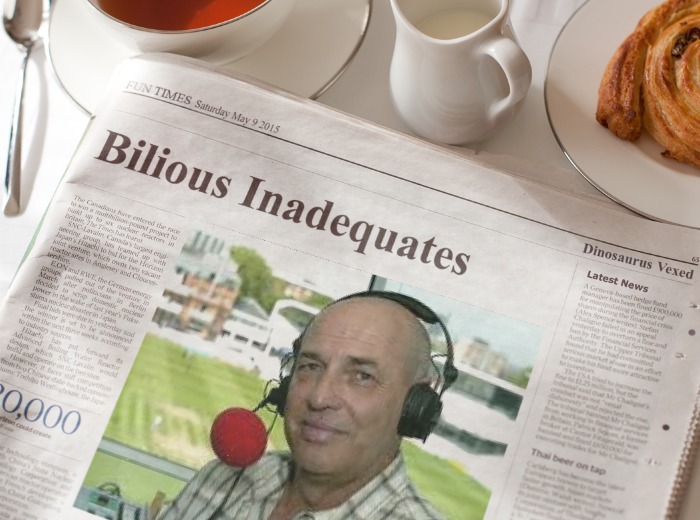
5. Losing Minds – Suddenly, a week after Grenada, it appeared as though the appeals for calm and rational assessment after Grenada went as unheeded after Barbados. People started to just go bonkers. Suddenly a team every press member thought we should beat easily had been galvanised by Colin Graves. This despite the fact that the Australian media and punditry and players give England enough bulletin board material to last decades and it doesn’t seem to matter then. Geoff Boycott lost it with Alastair Cook, and the divine Cooky had a gentle pop at Yorkshireman in an interview – the sort of thing that is called ill-judged, or fanning the flames if someone else does it – and Boycs went nuclear. Aggers and many others in the press were going overboard on “mediocre” and meanwhile in an incredibly dignified and thoroughly professional manner, a man who has had his mental health picked apart for nigh on 18 months retired in a classy, decent way. Oh, and then there was Selfey and Smiffy, waging campaigns against bilious inadequates and social media minorities. But compared to what was coming, this was child’s play.

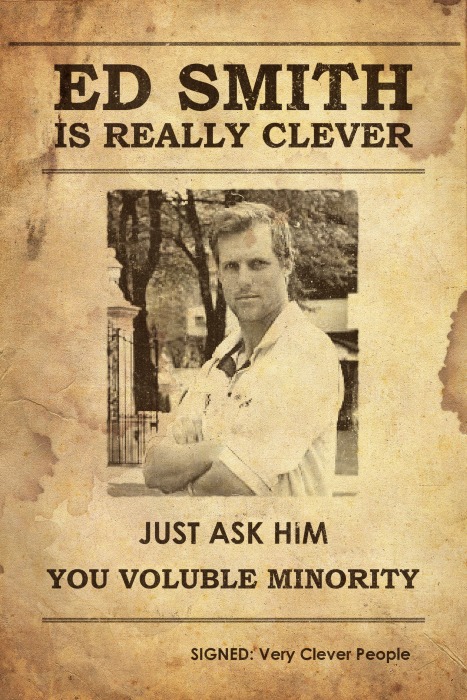
Ed Smith Is Really Clever

6. The Curious Case Of The Non-Leak – Peter Moores went to Ireland with a scratch England ODI team, and by the end of the day had been humiliated. This is the ECB. I don’t care how the story got out, someone at the ECB told someone, who told someone, who told someone else. It’s a leak, no matter how you deny it. A leak doesn’t have to come from the ECB directly, but as this was their information, their decision, that it got out in advance of when they wanted it to is their fault. In doing so they humiliated Peter Moores. It was wrong. Horrendously wrong. I was no fan of his appointment, and in test cricket it has to be said, he assimilated Ballance into the team, got Root in a place where he has made hay, brought in Buttler, and tried to get Jordan and Stokes firing. He’d not done an awful job with the test team, but was beyond awful in ODI cricket. Despite the massive workload required of a full-time, across-all-formats coach, Strauss (more of him in a minute) wants one man for the job. Remember when it was KP “alone” who wanted shot of Moores and no-one stood behind him. By his actions, one might judge  the craven “leadership” of Strauss back in 2009. Hey, let’s go out there and say Strauss could possibly, even then said “you go ahead KP, I’ll be captain if you fail” to himself. His attitude to Moores was evident in the rapidity of his dismissal. Also, did he leak? So poor Peter Moores had people feeling sorry for him.

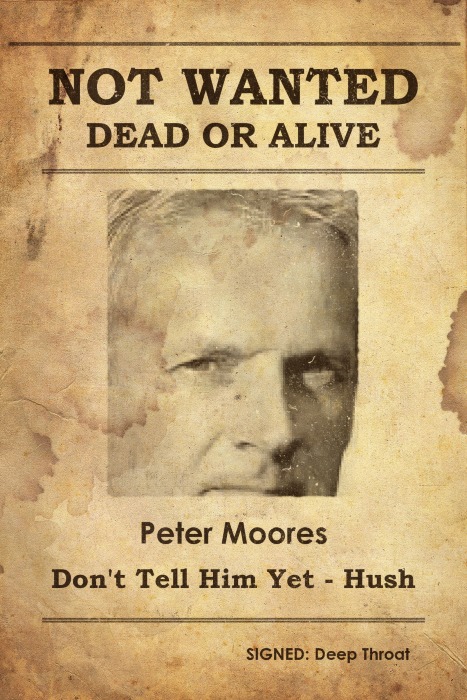
Moores Not Wanted

7. The Appointment of King, Andrew – After an exhaustive head hunt, which seemed to be of one person after Vaughan said this wasn’t the job he was looking for, the decision to appoint Andrew Strauss as Director, England Cricket was a poorly kept (leaked) secret. He pulled out of commentary for the Moores Debacle game, leaving Nick Knight to spill the beans, and was confirmed as the man for the job in one of those hastily compiled, corporate speak load of old crap we’ve got used to in the past few years. You didn’t need to be Einstein to work out this was bad news for KP. A lot of white noise was created over his educational background and potential political leanings, but you only had to watch how his successful teams won matches. Graft not glamour with individuality contained within a strict structure. With a strong captain this works, to a degree, but only for so long. With one perceived weak captain this is a recipe for disaster. Oh, and he called KP a c*** and had a big feud he would never have picked him for after if he had stayed on. So we knew what was coming. Even if some said that Strauss might surprise us.

You're our only (choice) hope...
You’re our only (choice) hope…

8. It’s All About Timing – The Sunday night saw KP in the 30s not out v Leicestershire, who on a pitch that was supposed to resemble a road, had been bowled out in a day upon. 24 hours later, and much glee up and down the Garden State Parkway, and in Atlantic City, KP finished the day 326 not out. Then we found out there was a meeting due that evening with Andrew Strauss and Tom Harrison, ahead of the formal launch of Strauss as Director, England Cricket the following day. Within minutes of that meeting the information leaked, and TMS was saying KP had been told it was all over. Frankly, you know the rest. We’ve done it to death. It’s all about trust. Andrew Strauss cannot trust KP. The ECB cannot trust KP. Senior players, supposedly, cannot trust ECB. Oh, and KP’s lack of trust with the ECB is a sideshow. An organisation that constantly leaked against him, most notably the heinous leaks of 2009, is not relevant. Only KP has to build the trust, no-one else, despite it being no-one to blame. It’s all a load of old nonsense.

KP In Flames

9. 355 – The fact is that there are few who could have played that innings, despite some absolute fucking morons trying to – and yes Dominic Cork, you are an absolute fucking moron who should be slung off cricket punditry if that’s the wretched sort of analysis you are coming up with, you absolute cretin – and although he fell two short of Surrey’s all-time record, the statement made Strauss look rather stupid. We’ve debated it for days, and will do for days more. But, in the words of Hal Holbrook in All The President’s Men, Deep Throat could have been talking about KP, rather than Haldeman:

“you’ve got people feeling sorry for him. I didn’t think that was possible.”

Because this was all about a clean slate, giving up the IPL, and making a fist of county cricket. He’d been lied to. People like KP don’t give up £250k on a whim. If he did, it’s rather noble, don’t you think? It sort of smashes the selfish, money-grabbing tosser meme apart? The anti-KP media, while trying (and failing in the main) to be ever so fair, all fell in line. A non-playing suit with an ill-defined role will always be more important than a man capable of what KP did. Because, in the history of county cricket, only five people, is it, have scored more?

A Matter of Integrity

10. The Graves Delusion – The press statement issued on Friday was eerily similar to some that had gone before. We had questioned his integrity, and that no guarantees had been offered. We hadn’t really questioned the first, and no-one I know thought the second. The statement showed that in the 15 months since Paul Downton released the infamous “outside cricket” press release, one which raised barely a murmur among our stalwarts in the press at the time (some have woken up, most notably the Editor of Wisden), the ECB have learned nothing. They remain distant, aloof, dismissive, arrogant and supercilious in the extreme. Graves has become the media lightning rod now, and each press man is taking it in turns to line him up now Clarke is out of the way – how tremendously brave of you – either for betraying KP (which he was only a part of) or for opening the whole thing up again “needlessly” which he did, and for which many applauded him for reverting the policy, we thought, to picking on merit.

So, not a lot, eh? I’ll be back on line possibly tomorrow, although I’ll be getting over whatever jet lag I get, or Friday. We’ll have the usual posts up for comments on the game on Thursday, and until then, I’d like to thank all of you for saving me a ton of money by giving me much to read and not going out as often to drink such rot as Miller Lite. It has been a tumultuous 21 days.

Pipe Down Week

Closing Ranks

It’s been quite striking the last couple of days how those who adore the establishment that is the ECB have adopted a “move on, nothing to see here” approach.  As usual, they do not answer the questions or objections that have been levelled by the hoi polloi, but instead repeat the same old lines about it being about the future, and that for undisclosed reasons, this is the right decision, and indeed the only decision.

Strauss should be trusted to do the right thing, Colin Graves is an honourable man and certainly didn’t intend to mislead, and we all know what Kevin Pietersen was guilty of (I can’t tell you though) and therefore deserves everything he got.

It’s nonsense though.

Colin Graves’ self-serving statement did nothing but use the lawyer technique of picking something no-one had accused him of, and denying it strongly.  No one ever claimed Pietersen had been guaranteed a place.  No one.  Not Pietersen himself, nor anyone else.  Claiming that private conversations had been talked about in the press deliberately ignored his own public statements which no matter how the apologists try and squirm, were absolutely clear and repeated on more than one occasion.  It was in any case more than slightly hypocritical given the BBC announced the outcome of the Pietersen/Strauss/Harrison meeting within minutes of it being over.  Since then we’ve had reports that Pietersen went out “in a blaze of glory” shouting expletives at the other two.  Since there were only three of them present, that means that if true, the information has come from either Strauss or Harrison – probably via a third party who likes to pass this on.  It’s a matter of trust you see.

Ian Bell’s press conference statements appear to have been largely glossed over.  But they are important because of who it was saying it, and what he said.  One of the constant refrains in the whole affair has been about what the players think about it all.  But the players won’t think about it overly because they will be thinking about themselves.  For the batsmen, no Pietersen means that they are just a little bit more secure in their position.  All players will first and foremost be interested in themselves and their own careers.  Bell was telling the absolute truth when he said they didn’t think about it much when they were in the West Indies and nor should they either.  Very few people in any walk of life are prepared to put their heads above the parapet for another, they prefer to keep their heads down, focus on themselves and hope it doesn’t happen to them.  That’s why the ECB got away with it initially – not because of some overwhelming support in the dressing room, which seems to amount to two or three players, but because the others would not stand up and object when it risked their own position and own careers.  It’s not malicious, it’s simply human nature.

Yet what Bell said contradicted so much of the ECB line.  He didn’t come out firing, he quietly and firmly had his say and deserves credit for doing so.  Much was made of his backing for Strauss in his new role, but again this should come as a surprise to no-one.  Players will accept the hierarchy in which they work because they can’t individually change it, and the public comments will always be in favour, no matter what their private feelings.  Yet there’s no reason to doubt that Bell absolutely meant it, because the players – especially the senior ones – will want stability.  The problem is that the behaviour of the ECB does just the opposite, and that has been the criticism all along.  Ignoring the rest of what Bell said, which runs so counter to the official line, simply reinforces the dim view taken of the way the ECB conduct themselves.

As much as the press obsess over Pietersen, they continue to miss the point about the whole matter and simply store up the resentment and indeed the story for later.  The termination of Pietersen’s chances does not provide closure on the whole affair; it might do to an extent were England to carry all before them this summer, because as much as it might fester amongst the supporters, it gives the press something different to write about, and the lack of trust amongst the supporters that has been so vocally put forward would reduced to a rumble.  That’s still damaging, especially when they don’t buy tickets, but it wouldn’t be front and centre in the media.  That is unlikely and there is the distinct possibility the summer could be a complete cricketing calamity.  If that were to transpire, every single one of these issues is going to be highly visible once again.  The fundamental point the ECB cannot address, no matter how much they try and obfuscate, is that their new policy is not one of selecting the best players on cricketing merit.  And that means should England lose Tests, the same questions will be put to them, as to whether England would be a better team if Pietersen were in it.  They’ve managed to turn the whole issue of a single player into a fundamental question of how they operate, in which Pietersen is simply the catalyst for questioning that approach.  At some point a player will step out of line.  They don’t dare drop him without inviting the same opprobrium.

The same applies to the question of who they will appoint as coach.  There have been enough indications that at best Gillespie is uncertain whether he would want to take a role where the Director, Cricket (that writing that title is in itself an instance of sarcasm demonstrates their problem) has already decided who can’t be picked and who is captain with no input or apparent authority from that coach means that there is the distinct possibility that the most able candidates will rule themselves out.  And if that happens, and we are left with another Peter Moores – presumably whoever gets it is at most the second best coach of his generation – then they have indeed sacrificed the England cricket team’s ability to succeed on the altar of their dislike of Pietersen.  This is a critical point, which has not been directly addressed in the discussion around the whole debacle.  If the unqualified removal of Pietersen from consideration results directly in being unable to engage a coach of the highest quality, that is not acting in the interests of the England team, and undermines the repeated claims to be acting in the medium to long term.

With the gift for timing that we have come to expect from the ECB, Tom Harrison chose this week of all weeks to effectively kill off the prospects of cricket appearing on free to air television:

“Sky have been a great partner for English cricket, going forward, we need to be very careful about the way in which this argument is understood. Is there a role for terrestrial television post the current deal with Sky. Terrestrial is becoming, frankly, less relevant every single year in the context of how people consume media. I don’t think we solve all our participation concerns by terrestrial television.”

Again, it’s using an argument advanced by absolutely no-one to defend the actions of the ECB.  No one has ever claimed putting cricket on free to air solves all problems, but it doesn’t mean for a second that at least some on there wouldn’t help.  All comparable sports make the effort to put some of their output on terrestrial TV, even those who took the Sky shilling long ago like rugby league.  Most sports try to ensure there is a balance – the money from Sky is undoubtedly important, but so is exposure on as wide a platform as possible.

Everyone is aware that consumption of audio visual output has changed and will continue to change over the years ahead, but failing to take into account how people discover the game is potentially crippling.  Cricket tragics will tend to eventually pay up if they can so they can watch.  The casual viewer will not, unless they are already interested in other sports and the bundling of content gives them cricket they would not specifically pay for.  Yet the ECB consistently tries to ignore the wider issue in favour of re-writing history.  Colin Graves – a man of integrity so he claims vociferously said:

“It would be nice to have some cricket on terrestrial television but the problem we have got is terrestrial television does not want cricket.  It certainly does not want Test cricket. We have to get best of all worlds, but if terrestrial broadcasters don’t want cricket, then what can you do?”

This misses the point and is completely disingenous.  It is hardly surprising terrestrial broadcasters are uninterested when it is abundantly clear that they have no prospect whatever of winning a contract to show it.  Why should they invest time and effort in thinking about where they could fit it into their schedules when they know perfectly well they have no chance and that the ECB will go with the highest bidder – which will be Sky unless BT Sport decide to jump in.  If the ECB were to state that they wanted Test cricket on terrestrial television and then no broadcaster showed an interest, then they could claim that.  Unless that happens it’s simply more mendacity from an organisation that seems to find telling the truth challenging in all circumstances.

The argument has been made that young people consume their media in  other ways than television these days.  That is true, but whether via X-Box, Playstation, iPad (other tablets are available – they really are) or anything else comparable, you still need that Sky subscription to watch it.  Unless you access illegal streams.  One would presume the ECB are not advocating that approach.

In any case, it pre-supposes an existing interest.  This does not happen by default, in order to develop an interest in a sport initially there must be some kind of exposure to it.  That may be from a parent, in which case all is well because that parent may imbue the child with the enthusiasm for the sport, but what if the parent hasn’t the finance or the interest in cricket in the first place?  The child will never casually come across cricket if the household does not have Sky Sports, and the idea that media output from the ECB will compensate for that is nonsensical – only those with an established interest will seek it out.

Cricket has become a niche sport, and the focus of the ECB’s response to criticism has been in terms of the England team.  But that is not their whole role in cricket, they are responsible for it at all levels.  The loss of cricket in schools has to some extent been offset by the clubs who have made astonishing efforts to drive interest; indeed the clubs have been instrumental in taking cricket into schools themselves.  As much as the ECB like to congratulate themselves for that, much of the funding comes from Sport England, who have expressed serious concerns about the decline in participation and warned their funding cannot be taken for granted, and most of the effort comes from people down at club and village level, who despair of where the next generation of cricketers will come from unless they do it themselves.

Cricket Australia have taken a fundamentally different approach.  The media position there is not radically different to the UK – and the point about youth televisual consumption is identical to here.  CA insist on cricket being free to air, and even take out advertisments promoting the game on Australian television.  By the ECB insisting their approach is the only one for the UK, they are directly saying that the Australian one is not the way.  There might be differences in the structure of TV between the two countries, but they are not so vast a comparison cannot be made.

Whether it be on the continuing fall out from the Pietersen omnishambles, the question of the coach, the matter of Alastair Cook being affirmed as England captain, or the subject of cricket on television, it is possible the ECB are right, and others wrong.  And in the last case, I would dearly like to be wrong.

Trouble is, I fear I’m not wrong at all.

UPDATE: Since this post was originally put up, the press have released articles concerning what Stuart Broad said about Pietersen.  Essentially it amounts to saying he’d have no objection to Pietersen playing, that the differences between them have been exaggerated, and perhaps most tellingly that he’s not spoken to anyone above him in the ECB about it.  Can anyone find anyone else in the England team apart from Cook who has a problem with him?  Because it seems to be narrowing the field by the day.

@BlueEarthMngmnt

Statement Of The Oblivious

You know when there is trouble ahead. When an ECB press statement is delayed is a pretty decent indication that this one is a bit tricky. The last time one of these was delayed like this we got the gems of outside cricket and the moaning from the ECB that someone else was leaking. So we expected something interesting…

http://www.ecb.co.uk/news/articles/ecb-chairman-colin-graves-comments-week

And they delivered with something so totally “lawyered up” that a new remake of LA Law was interested in it for a script.

I would like to start my stewardship of the ECB looking forward to next week’s Investec Test series against New Zealand and the Ashes later in the summer.

That’s very nice. I mean, you could say that if you’d been hiding in Paul Downton’s cupboard at Lord’s, but this takes wishful thinking a bit far.

But first there’s another point I want to address.

Ooooh. I wonder what that could be. If it’s what I’m thinking it might be, “want” might be a strong word.

Clearly, the question of whether Kevin Pietersen will play for England again has been a debate for media and cricket fans alike.

Er. Yes. Arguably you re-created the debate in a move welcomed by many. The odd concept that teams being picked on merit, good performance rewarded, clean slates and all that. I mean, we are debating whether these are good things, which seems odd to me, but it takes all sorts…

I understand why people feel it’s important. So I’ll tell you what I said to the First Class County Chairmen, at yesterday’s AGM, and our people across the ECB this morning, on my first full day as Chairman.

I understand why people might be a ickle bit cheesed off that our top run scorer was dumped without a reason given, and that for a year or so we’ve been chasing for an explanation as to why meritocracy takes second place to personal feelings, and despite what that two bob muppet Pringle says, we aren’t fairweather fans but passionate supporters of our team. That’s our team, not the ECB’s. So do tell me.

In the past few days my integrity has been called into question, something I can’t accept. Throughout my business career and my years at Yorkshire, integrity has been my watchword. It governs everything I do and is an important part of what I bring to the ECB.

You’ve not just joined the ECB, Graves. You were part of the gang who instigated this. So when you ease the position on his potential for selection, as you evidently did despite some less than convincing denials, we, and KP took note. So don’t try the “aww shucks, I’m new to this nonsense”. Now if you are bringing integrity into it, say what you said to KP on those phone calls. Admit you had them and say what you said. Then we won’t think of questioning your watchword.

So it saddens me that what was a private conversation with Kevin in March has been used to do just that.

What did you say? You said in private that there was a “clean slate” (you’ve not denied it) and now you are getting pissy because someone who might have relied upon it has used it to defend their position? Are these people for real? Don’t insult me with this faux naivety, Graves.

Back then, when we talked on the phone, Kevin asked if I thought his England career had ended in the right manner following the last Ashes series in Australia. I agreed that nobody particularly emerged with much credit from the whole episode, particularly given his achievements for England.

So, saddened as he was with private conversations being made public, he’s making some of it public. Note also that those who did not emerge with much credit, such as Flower, A and Cook, A are both still well entrenched and enjoy the full backing of the ECB. There’s not much credit going round, but they kept some.

Kevin felt he had a lot to offer and was interested in a dialogue with the ECB, sorting things out and working together. He would love to play for England again but he wanted to contribute, whether as a player or not.

Chairman of ECB indicating KP’s not a purely selfish pig. The zealots on the other side won’t be pleased, but this is all puffery. Did you say he had a clean slate, Colin? This stuff matters. It’s the key accusation against you old son, and you know it. So stop pretending.

I didn’t make any promises. There were no guarantees that if he chose to exit his IPL contract, play County cricket and score runs he would be selected for England.  And I said he should make any decision on his future on that basis.

Deny an accusation that wasn’t made. Colin, this should not fool anyone with half a brain. He never sought guarantess for selection. He sought a clean slate. He sought an indication that he wasn’t wasting his time giving up a still lucrative IPL contract to play county cricket because he had a chance. Come on now. Stop letting the lawyers write this, you bluff, gruff, Yorkie.

I can see something has been misunderstood around the conversation and in the following debate – and perhaps how that happened.

You told him it was a clean slate. And it wasn’t. Ooooops. Someone cocked up. Probably you.

What I did stress was that when I took over as chairman I would back those people whose job it was to take decisions on team selection. I stand by that.

That’s very nice, but if you told them it was a clean slate, as leader of that organisation, they would have to listen or they would be out of jobs. Also, Andrew Strauss took the decision and he confirmed that he isn’t a selector, if we’re going to get all strictly legal on this. Also, you are his boss too. I don’t know, but I don’t reckon Giles Clarke gave a stuff about his underlings’ sensitivities, given he is supposedly one of the key drivers for KP’s exclusion and made it a key part, along with Downton (miss him) in the selection of a new Coach for England last year.

Ahead of a big, busy summer of cricket, a clear decision needed to be taken. Given the history and the book, the simple fact is that bridges have still not been rebuilt and trust needs to be restored.

Details, details. Still not there. Meet the new boss, same as the old boss. What history are we talking about now and can you perhaps shed some light on it? The book was post-sacking so we can’t be using that as a reason for the original decision. You were there Colin, in post as Deputy Chairman, weren’t you? Were you dozing at the time? Were you on “Integrity Watch”? As for the trust, well, we’ve been down that road. Trust = Alastair Cook veto. Allegedly.

That takes time – as Andrew Strauss made clear this week.

The time it takes to lose an Ashes series and see KP sod off. Andrew Strauss is talking nonsense.

Kevin was told on Monday and I completely support the decision that was taken. He may not have liked what he heard but it allowed him to look at his opportunities.

A bit late for that. You had 355 reasons why your strategy has gone per-shaped. As for the last part of this particular sentence, he and his lawyers have to be taking the piss.  He gave up a ton of money because of you. Don’t you dare say this allows him some freedom. This was a stitch up from the start. Whether you meant to lie to him is neither here nor there. You’ve not denied the key allegation, that KP took it from you that there was a clean slate, one made by Alec Stewart as well, so we’ll take that as truth. So don’t go acting as if you’ve done him a favour now by trashing what he thought he might have a chance, that’s all, a chance, at.

Despite everything, he can work with us to re-build the relationship and make a further contribution to English cricket. It was important he knew where he stood.

Hey, despite the fact we’ve led him up the garden path, leaked against him on many occasions, briefed against him, had the press slag him off, encouraged him to play county cricket and made runs, we can still trust him in the future. Jesus, do these people ever listen to themselves? Is anyone buying this drivel. KP’s no saint, I know that, but the last part of this statement is a kick in the teeth, He thought he knew where he stood in March. He acted on that. Did no-one think to tell him “no” then? When he gave up his IPL contract? You certainly don’t appear to have, Colin. That’s integrity if you are relying on your statements now.

Of course, I would like us to move forward and concentrate on the important matter of winning cricket matches. I don’t want to add any more or go deeper into private conversations.

Of course you would. Look over there. News for you mate. They tried that last year and won a test series as well. How did that work out? Of course you don’t want to go deeper into private conversations because you would be Donald Ducked if we did, and you know they will. I wish you luck if you stick to this line, Colin, because you will be shark-bait.

I want to look to the future. I’m excited by the England team that is evolving and I look forward to giving them my full support this week.

Rah-Rah. Another charlatan.

UPDATE:

Look who pops up later in the comments to put an even-handed, I’m not an ECB stooge, spin on things. Well, lookie-here.

Trust – 2

First of all, I have some bad news.

It is time to have an honest conversation about thelegglance. After Wednesday morning, with his blogging equivalent of a 355 not out under his belt with his post A Matter of Life And Trust, it was decided, unanimously, by the blog board, that he would no longer be retained by Being Outside Cricket. I cannot trust him not to overshadow me again, and he’s also upset my support staff, Armand the Rubber Duck, and my border collie (although I’ve not asked him yet, being in a different country and all that) and have decided that in the short term, Being Outside Cricket will move forward with a fresh and exciting skipper at the helm (me). HE IS NOT BANNED. DEFINITELY NOT. We’ll see, if he agrees to be utter crap in future, whether we can get that trust back. Until then, he can get on a plane to Dubai and write for The Full Toss for all I care. I just want the best for Being Outside Cricket, as long as they aren’t more talented than me.

Seriously, my thanks to Vian for the post. It meant I didn’t have to write much the same thing, but in a much less focused manner, and it was one of the best posts I’ve read anywhere. I’m biased, but as he knows, when we had that legendary Krusovice evening that I’d wanted him to come on board, and knew what an asset he’d be. He just better not do it too often!!!!

I thought I’d do a little bit on some of the side issues. I listened to the two podcasts on Tuesday night. The Switch Hit was interesting principally for David Hopps nailing the Alastair Cook issue. I hear many times that “no-one dislikes Cook” when there is a growing element that do. Hatred is too strong a word for me. When he said that the continued, repeated backing made Cook sound entitled, you could have heard the cheer from my mother-in-law’s kitchen. He got it. He actually got it. The rest of the podcast was a bit nondescript to me, missing a Butcher or a Dobell, and Jarrod went a bit OTT. But it got a damn sight nearer to the points we are making than most.

Then came the TMS podcast, weighing in at a brutal one hour and 45 minutes. At the end of it I felt thoroughly crushed. What the hell has happened to Phil Tufnell? He’s about as rebellious as Marks & Spencer. Is it too simple to ascribe his views to becoming a paid-up member of the Middlesex Mafia? “When I did wrong, at least I said sorry” he said. Phil Tufnell was a rebel who on his day, and I was there for one of them, was a brilliant bowler. He was a maverick. He didn’t seem to do well with authority. What possesses him to side against someone you would think was in his sort of field? I was surprised how willing he was to side with the authorities.

Jonathan Agnew was blaming it all on Graves. At the time Colin Graves reached out to KP, England were performing appallingly in the World Cup. Downton was a dead man walking. There, presumably, was no fixed thoughts on the way forward and who would be the new personnel. Moores was also probably a dead man walking, because I’m not 100% convinced this was a Strauss decision in its entirety, much as the KP one wasn’t either, in my view. He may have been too hasty, but lord, he thought he was dealing with adults, not children. Now he’s in a hell of a spot, probably, again as a mere “guess” because I don’t believe Giles Clarke is going to be a silent partner, but a very influential back seat driver (I must find where he was referenced in the decision making process) who has made sure, before he left that KP wasn’t getting back. (It wasn’t the book, I think, on that, but when KP listed who needed to go before he got back – Downton, Moores and Clarke). Agnew did admit that KP is entitled to feel let down, but that it was Graves’s promise, not Strauss’ nonsense that was the problem.

The other point that Jonathan made was one that’s really itching at me. He said that he speaks to other players in the team who feel that the support isn’t there for them from the fans. Instead of really focusing why, Jonathan seemed to be exhorting us to get behind the lads. I’ve heard the same from George Dobell, put in a slightly different way. The fact is that this is down, fairly and squarely to the ECB. I understand those people I see on Twitter who say the team matters more than any individual, and certainly more than any organisation. I understand, but I do not agree. I’m at an age where I’ve been taken the mickey out of enough by authorities to know they don’t care about me. If I disagree with them, I will tell them, and I will fight and get angry if needs be. The ECB couldn’t give a stuff whether I support them or not. They’ve shown that by their attitude to those of us “outside cricket”. Those who don’t care about that, fair enough. I think you are wrong not to.

The ECB sacked one of their best players in February 2014. They did not tell us why. They clearly believed over a short period of time we’d die down. They were wrong. They thought that a decent test series win against India would calm it down. They were wrong. They thought that the silent treatment of the book would mean the England community would turn against KP, but they were wrong. They thought that he might be permanently finished as a player on the basis of a poor T20 Blast season and a disappointing IPL. They were wrong. They have one hope left. That time will calm us down. 16 months on, and with the events of Tuesday, there’s absolutely no sign of that.

The Cook issue is for another post, but Jonathan ought to realise how much many of the angry brigade don’t like the way he’s been reinforced at every turn, and now, it seems, having a veto on selection. It’s hard to pull for a team, even with really exciting players like Buttler and Root, and really promising talent like Ballance, Stokes, Jordan and Moeen, when their positive results keep Cook in his position. I can’t betray my feelings, Jonathan. I really can’t.

A Matter of Life and Trust

Like so many others, the activities of the last couple of days have left me in despair about cricket in England.  That the ECB can invoke a question of trust in their carefully rehearsed PR speak was roundly met with hollow laughs amongst professionals, amateurs and supporters alike.  So much of the focus has been on Kevin Pietersen for obvious reasons, yet the ECB will be perversely pleased by that, because it avoids the wider questions and the wider problems.

That Pietersen has been treated dreadfully is a given even amongst those who are not remotely his fans – and let’s nail this particular straw man argument right here, there are a tiny number of people who are proper, out and out Pietersen fans.  Most of the others are England fans who may or may not think the side would be better with him in it, but believe a team should be selected from its best players, and who know a stitch up when they see one.

There is no doubt at all that Graves told him it was a clean slate, not just from his public pronouncements, but in two phone calls.  Pietersen responded to that by giving up his IPL contract to come and play county cricket.   He did what was asked of him.  Pietersen might be wealthy, but making someone give up a contract worth hundreds of thousands is not a small matter.  There have been some comments that Graves is just one person and that no guarantees were given.  This is sophistry of the highest order.  That one person is the incoming chairman of the ECB, and Pietersen trusted what he said.  More than that, if he has gone out on a limb then there was plenty of opportunity for the likes of Tom Harrison to talk to him and tell him that was not ECB policy.  He didn’t do so.

Let’s call this what it is – a lie.  They lied to him, an action of both commission and omission.  Pietersen might be a controversial figure, but he did not and does not deserve that.  At no point yesterday has there been so much as a hint of an apology for that.  That is outrageous behaviour.  Whataboutery concerning Pietersen is not the issue at hand here – it wasn’t him that kept banging on about trust.  The ECB are the organisation comprised of people that promptly leaked the outcome of Pietersen’s meeting with Strauss and Harrison minutes after it happened, the organisation on whose watch the coach Peter Moores found out he was being sacked via the media before they’d bothered to tell him (leaks or otherwise is irrelevant to this – it’s what happened), who backed Alastair Cook vocally two days before sacking him as ODI captain, who allowed a private memo from the England captain in 2009 to leak to the press.  What Pietersen has or has not done over the years does not for a single second justify any of this.  To talk about trust is a sick joke.

Nasser Hussain tried to make the point that trust has to go both ways, and Strauss’s response that he isn’t blaming anyone for the breakdown of it simply isn’t good enough.  He can refuse to talk about where Pietersen is at fault, that’s his prerogative, but he cannot avoid the complicity of the ECB, the organisation he works for.  Tom Harrison apologised to Peter Moores for how he found out about his sacking.  An apology to Kevin Pietersen for being led up the garden path is the very minimum that is needed.

It’s not going to happen of course.  The arrogance of the ECB knows no limits.  Over a year later they still haven’t addressed the realities of the “Outside Cricket” jibe and the utter contempt that signified for those who buy tickets and play the game.  And here is the fundamental question of trust as it really is, not as the ECB would like it to be.  There is none for the ECB.  The way Pietersen has been treated – and indeed the way Moores was treated – are indicative of an organisation that considers human beings to be commodities and nothing more.  Losing the trust of individuals barely scratches at the surface of the problem, because despite the ECB’s apparent belief, the public are not stupid.  They can see how this translates into a wider lack of interest or concern for anyone that doesn’t fit into their narrow field of vision.

The media response has been  fairly predictable in the way it has gone down the usual lines.  What the ones who loathe Pietersen fail to understand is that it is not about that, it is entirely within their rights to despise him and not want him anywhere near the England team while at the same time recognising that the ECB have behaved poorly.  The inability of some of them to see things through anything other than a Pietersen prism is the reason they attract such contempt.  If Pietersen is a side show to the wider issue, then deal with the wider issue.  Being an apologist for awful ECB conduct is not journalism, it is cheerleading.  Let’s put it a different way, if it was someone other than Pietersen who was the central player in the drama, would there be such fawning coverage of the ECB itself? This goes to the crux of the matter, because if not, then it means that they need to ask themselves about the job they are doing – their loathing of Pietersen is blinding them to what are far more important questions.

It is abundantly clear Pietersen is not coming back.  So given that, it raises a whole series more questions about where we go from here.

The first thing that Strauss and Harrison talked about was the plan for 2019.  In itself, this is hardly surprising – all new arrivals give themselves a nebulous target some time in the distant future, usually when they’re fairly certain the near term is going to be catastrophic and don’t want to be blamed for it.  But there are a couple of things about that.  By focusing so relentlessly on it, they invite ridicule that it’s tantamount to a Soviet Five Year Plan that was simply replaced by another Five Year Plan when the previous one went wrong.  In one day cricket, England cleared the decks for the World Cup, moved the Ashes with spectacular – in one sense anyway – results.  Yet now they are telling us not to worry, there’s another new plan coming along, and this one will be a belter.

Ah, but we should trust them we are told.  Why?  For what reason should we trust these people who have made a monumental mess of everything they have touched.  Trust needs to be earned, as  Strauss himself banged on about with that terrified look in his eye, but he apparently again didn’t grasp that the horrible masses don’t believe him.

It’s nothing more than a permanent offer of jam tomorrow.  That can work for a bit, yet they drew much greater attention to it by self-evidently rejecting a player who might be of value in the here and now.  Anyone over the age of about 15 can remember rotten England teams, but it’s been a fair while since having a weakened side was specific policy.

The Ashes this summer are not sold out.  It’s not disastrously so, but it’s not brilliant either.  Next summer we have Sri Lanka (again – though doubtless they’ll compensate for that by not playing them again until about 2030) and Pakistan.  If ticket sales are struggling for this year, what on earth is going to be like next year?  The blasé talk about what happens in four years time is surely not a deliberate writing off of the near term, but once again it does give the impression of it, which is exceptionally clumsy, even if not intended.  Those who have bought tickets are perfectly entitled to ask what the point of going is if the current team is not the focus.  It can’t especially cheer up the players either.

Buried in the detail was the sacking of Ian Bell as vice captain and Stuart Broad as T20 captain. Poor Bell.  He seems to be the favoured whipping boy, there’s no question that he has been briefed against – when Cook’s position came under scrutiny for captaincy (not exactly a rare event) there were a slew of articles talking about how badly Bell had done in team building events to make it clear he wasn’t a viable alternative.  This is a minor matter in relative terms, but once again a player suffers in certain media quarters when the status quo is under threat.  Broad’s removal as T20 captain is less surprising in itself, but replacing him with Eoin Morgan perhaps is, given his recent troubles.  Broad might wonder quite how he has been booted while the Test captain is so strongly backed.

As for Cook himself, although at first sight it seems he’s been thoroughly backed, in reality he’s already been given notice on his captaincy.  The appointment of Root as his second in command is the first time the ECB have deliberately chosen someone who they feel (the “they” is important here) can take over.  The ECB are plainly not optimistic about this summer, and Cook now appears to be in place as a firebreak for when it all goes horribly wrong.  Not remotely the first time they’ve used this tactic, and whatever the opinions on Cook, it seems quite likely he is the next sacrificial lamb.  What that does suggest though, is that the Ashes themselves are not regarded as the priority.  It may also just be dawning on Cook that if he doesn’t win this summer, he’s probably out (it is the ECB of course.  So they could decide to grant him life tenure – funny how we don’t trust them…), and therefore if Vaughan is right and Cook said he would resign if Pietersen was recalled, then he’s signed his own death warrant by refusing to include a player who might give them a better chance, and thus him a better chance of keeping the captaincy.

And then we come to the question of the coach.  The sacking of Moores was nothing other than a panic response.  That he shouldn’t have been appointed in the first place doesn’t alter the truth that Moores had a point when he complained he hadn’t been given enough time.  Although you could equally argue he’d had far too much time given the results were pretty dire, if you are going to appoint a coach with a brief to build a new team, and then sack him a year later when the said new team doesn’t do too well then you’ve sold him a pup.

Both Strauss and Harrison responded to questions about Jason Gillespie by saying that he is certainly one of those they will want to talk to.  In ECB speak, this is tantamount to openly saying he hasn’t got a prayer, because the front runner never seems to get the job with them.

The Pietersen affair has rightly re-opened the question as to what sort of coach will take on a role where certain players are denied to them through policy.  It may well be the case that Gillespie wouldn’t want Pietersen anywhere near the team, but there has to be significant risk that he will feel having that principle enforced at a level above him will be considered an interference in his ability to do his job.  There remains the feeling that the lack of high profile coaches applying last time was directly related to interference in team selection.  And here’s the rub – if by their actions against Pietersen they have limited their ability to obtain the best coach, that is a far wider impact than a single player, and a direct failure on the part of the ECB to do their job.   This has already happened with the choice of Director, Cricket (I wonder how much it cost to have the consultants decide on that format?) where Vaughan hinted, and Stewart openly stated, that they would want to select from all players.  Repeating this with the coach is an abrogation of their responsibilities to English cricket to play the best team, with the best support staff, to give them the best chance of winning.

The ECB have tried to pretend the Pietersen omnishambles is a discrete issue.  It isn’t, it pervades everything they are doing and everything they have done.  The consequences of it are ongoing and extremely deep.  If high quality coaches are uninterested in the England job because of how they’ve dealt with Pietersen, that is appalling mismanagement not of a single player, but of the entire England structure.

The question must be posed, what is the ECB actually for?  If it is a governing body of cricket domestically, then their lack of interest in the game below the exalted professional level is a savage indictment of them not doing their job in any way.  Participation levels have dropped, viewing figures for England on Sky are now lower than they are for darts.  There are huge swathes of supporters disaffected and disillusioned.  Ed Smith’s ridiculous attempt to claim that all those NOT using social media are silently delighted with the ECB merely reinforces the cosy image of those Inside Cricket, talking amongst themselves.  They don’t see the anger, and are taken aback by it, because they don’t understand why.  The ECB hierarchy see the world through the prism of their own experiences, while the media have absolutely no idea whatever about the supporters and their world.  When did any of the journalists last queue for 90 minutes to get a beer?  When did they last find themselves squeezed into a tiny seat with inadequate legroom?  When did they discover that lunchtime is a terrible time to try and get some food at a Test?

They have no idea about any of this, because it’s not part of their world.  The reaction to the Pietersen debacle is one of puzzlement as much as anything else – the confusion of people for whom the masses might as well be speaking a different language.  There is simply no doubt the ECB have succeeded in keeping the bulk of the cricket press onside, while at the same time driving a huge wedge between them and the wider cricketing public.  Bloggers, commenters and tweeters might not be representative of the wider public (although they might well be too), but they are extremely important for one reason alone – they tend to be the kind who care sufficiently to consider buying tickets.   How many bilious inadequates not attending does it take to become noticeable?  One for you to work out Ed.

It’s a matter of trust we are told.  There is none.  And the worst part of it is, they don’t even realise why it is, or what they’ve done wrong.  That’s why there are some English cricket fans actively hoping for Australia to hammer England this summer.  Think about that.  That’s the ECB legacy.  Well done chaps.

@BlueEarthMngmnt