2015 Test Century Watch #23 – Kane Williamson

Kane TwoKane Williamson – 132 v England at Lord’s

Test century number two for the year for Kane Williamson as his reputation was enhanced with a cool and brilliantly compiled century at the home of North London cricket. It was the 14th test  century made by a New Zealander at Lord’s and moved him into 4th in the highest scores made there by a BlackCap. It was the highest score for 21 years by a New Zealander, and he trailed Martin Crowe (142 in 1994), Bevan Congdon (175 in 1973) and Martin Donnelly (206 in 1949) for scores made there.

This was the 229th test century made at Lord’s. He moves level with Ajit Agarkar, and one ahead of Sachin Tendulkar, Brian Lara and Ricky Ponting. Did you know that Robert Key has the 6th highest test score made at Lord’s. But enough of that… It’s the 104th ton by a visiting player to the MCC’s private club venue.

So Dmitri, have you seen a 132? No. There have been 29 in total in test matches, with the previous 132 made by Graeme Smith in St. Kitts against the West Indies in June 2010. The “nearest” I came to seeing one was when Marcus Trescothick made that score at Durban when England set about a large deficit in the first innings to almost turn a terrible position into a win. I flew into South Africa than night, and went to the next test in Cape Town.

Three players have made 132 twice in tests. Marcus Trescothick is one (his other was at Headingley against New Zealand in 2004), as are Graeme Smith and Patsy Hendren. The first ever 132 was made by a relatively topical name, even if the 132 was made in 1892. It was an unbeaten score made at Sydney, and the scorer of it was the man who holds the record first class score for Surrey, Bobby Abel.

The “Guv’nor” was a great crowd favourite for many years at the Oval, where he was the one reliable bat in a strong Surrey side. Of small stature (5’4″), and serious demeanour, he had an unconventional technique, with a bent for cross batted shots. “He gathers runs like blackberries everywhere he goes” said CB Fry. He possessed great patience, but generally scored quickly, driving and cutting well, but particularly adept at forcing the ball off his legs. An excellent slip fielder, he also bowled off-spin with considerable skill, but was rarely used in a strong Surrey attack.

His 357* was recently challenged by some one no-one can trust, but his 132 not out at Sydney came in a remarkable match. Australia were bowled out for 144 in the first innings, with George Lohmann taking 8/58. England made 307 in reply with Abel carrying his bat and putting on 72 for the 10th wicket. England were in a strong position, but let it slip. John Lyons made a very brisk century, Alec Bannermann took anchor for 91, and Australia set England 229 to win. Abel made just 1 as England fell 72 runs short.

The second of the three big matches produced one of the finest performances in the history of Australian cricket, a performance, indeed, fully comparable to the seven runs victory at The Oval in 1882, or the great, but unsuccessful fight on the same ground in 1850.

Read the Wisden report here.

This was the first score of 132 at Lord’s, by the way. The last 132 made by a visiting player was by Jacques Kallis at Manchester in 1998. Bevan Congdon has the only 132 by a New Zealander, made against Australia in Wellington in 1974.

I did a bit on Kane on HDWLIA when he made his big double hundred at the beginning of the year. This is his 10th test hundred, his first against England, his 7th outside of New Zealand, and his 5th highest overall. His previous best against England was 91 in Wellington on our last tour in 2013.

This was the 25th hundred by a Black Cap in England. 14 have been at Lord’s, 5 at Trent Bridge, 5 at Old Trafford and one at The Oval. Martin Crowe is the only New Zealander to have made three centuries in England. One bets Kane might get close to that.

Kane Williamson’s 100 came off 148 balls and contained 12×4.

2015 Test Century Watch #22 – Asad Shafiq

Asad-Shafiq

Asad Shafiq – 107 v Bangladesh at Mirpur

The third century of the innings was made by Asad Shafiq, which was his 6th in tests in 35 matches, his second in Bangladesh (the other was made in Chittagong in 2011) and his 4th highest in tests (his career best is 137 v New Zealand in Sharjah last year). He has two tons against South Africa as well, and one other against Sri Lanka.

We’ve done Mirpur now in the Younis Khan hundred yesterday, so sort of running out of things to say at the stadium or Pakistani level now! So was thinking, had we had a 107 this year, so far? The answer is no, so we can go to town on that then!

Have you seen a test 107, Dmitri? The answer is “not really”. I was there on Day 2 of the England v Sri Lanka test in 1998, when Graeme Hick was dismissed on 107 early on that day, but he’d scored all the runs the day before. So it doesn’t really count.

Asad’s 107 was the 68th score of 107 in test cricket. The last one before him was by Jimmy Neesham against the West Indies last year at Sabina Park, Kingston. The last by a Pakistani was by Younis Khan (not out) against India at Eden Gardens, Kolkata in November 2007. David Boon, Allan Lamb, Denesh Ramdin, Alec Stewart, Doug Walters and Younis Khan have all made two scores of 107 in test matches.

The first 107 was made back in July 1893 at Lord’s. Arthur Shrewsbury, who we featured in an earlier piece, had made 106 in the first innings of the game, and when Harry Graham came in for the Australians at 75/5 on the dismissal of Trott(y) things looked bleak. But Graham kept the visitors honest with his 107 which he made on his test debut. I love the old Almanack entries on Cricinfo…. here cometh a mention of a “5”:

Half the wickets were down for 75, but then came the partnership between Gregory and Graham, which completely altered the aspect of the match. These two young cricketers began by making a series of short runs, and obviously upset the fieldsmen by the fearless and rapid manner in which they travelled between the wickets. Very soon, too, the bowlers became anxious, and almost before the spectators could realise it runs were coming at a great pace. So admirably did the two Australians bat that at lunch time 120 runs had been added without further loss, and in all the total had reached 217, or 142 for the wicket, before Gregory was dismissed. With Bruce in, Graham completed his hundred, and soon afterwards the follow-on was saved with four wickets in hand, but at 264 Graham’s splendid, though by no means faultless innings, was closed by a catch at the wicket. Out of 189 added during his stay, the young Victorian had made 107, batting for two hours and twenty minutes, and hitting a 5, twelve 4’s, two 3’s, and nine 2’s.

The obituary makes you want to find out more:

Harry Graham did many brilliant things as a batsman but scarcely gave himself a fair chance. Had he ordered his life more carefully he might have had a much longer and more successful career in first-class cricket. His natural powers were great. He did not play with quite a straight bat but he was a splendid hitter with any amount of dash and vigour. When he came to England for the first time in 1893 he was at his best, playing the innings of his life against England at Lord’s. No one who saw the match will forget the way in which he and Gregory knocked off the England bowling after Australia had lost five wickets for 75.

Count me in as intrigued. On a bit of subsequent research I found this – http://www.cemeteries.org.nz/stories/grahamharrysthn90608.pdf

Other 107s to note, maybe, even if it isn’t a wonderful big ton, are Alec Stewart’s only hundred against the old enemy, made in Melbourne in 1998, when he gave up the gloves to Warren Hegg, in a game England won. In 2004, Marcus Trescothick completed two centuries in a match when he made 107 in the 2nd innings against the West Indies at Edgbaston. But all in all, 107 isn’t earth shattering, is it?

Especially when you have a 226 and a 148 coming in before you.

Asad Shafiq’s 100 came up in 149 balls and contained 9×4 and 1×6.

2015 Test Century Watch #21 – Azhar Ali

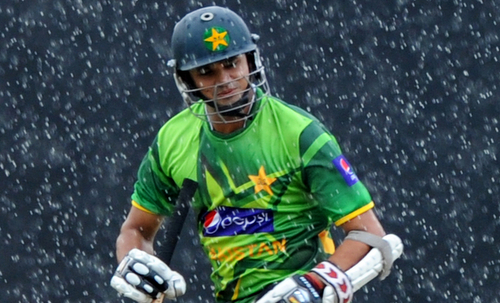
Pakistan batsman Azhar Ali runs as rain falls during the third one-day international (ODI) match between Sri Lanka and Pakistan at the R. Premadasa Stadium in Colombo on June 13, 2012. AFP PHOTO/Ishara S. KODIKARA        (Photo credit should read Ishara S.KODIKARA/AFP/GettyImages)
 AFP PHOTO/Ishara S. KODIKARA (Photo credit should read Ishara S.KODIKARA/AFP/GettyImages)

Azhar Ali – 226 v Bangladesh at Mirpur

Mohammad Hafeez’s Pakistani record against Bangladesh lasted a week. I had a hunch this man might get close when he rested overnight on 120-odd and so it proved. An old fashioned test batsman making a really high score to set his team on the right path. It’s time for some stats.

This is the 15th highest score in tests by a Pakistani batsman and the 39th test double century. It is Azhar’s first test double, as he passed his previous best score of 157 made against England and Sri Lanka in 2012. This is his 8th test ton, half of which have come against Sri Lanka. He took his average from 41 to over 44 in this innings, and also passed 3000 runs in test matches. His previous best against Bangladesh was the 83 he made in Khulna in the previous test.

I have done the Pakistan and Bangladesh stats to death already, so let’s look at the number 226. Have you seen one, Dmitri? Given there have been just 8 scores of 226 in test history, the answer is likely to be no, and so it is. There have been recent 226s in this country – Kevin Pietersen made one against the West Indies at Headingley back in 2007, while Jonathan Trott also made this score against Bangladesh at Lord’s in 2010. Azhar’s is the second in Bangladesh – Neil McKenzie made 226 at Chittagong in his record stand with Graeme Smith back in 2008. Bridgetown has seen two scores of 226, and both by Barbadians – Sir Garfield Sobers made one in 1960 v England, while Gordon Greenidge made his score against Australia in 1991 (when, if memory serves, they were thinking of dropping him for poor form). Brian Lara is the third West Indian to make 226, completing his effort in Adelaide against Australia (of course), while our history slot looks at the first 226, made in 1931 by someone who specialised in large innings.

The first score of 226 was made by Don Bradman, and it wasn’t his usual foe (England) he made it against. This was made at Brisbane against South Africa, and his individual score was higher than both South African innings in this game (170 and 117). Bradman made 200 on the first day, and Australia made 450 in the first innings, but this test still managed to go SIX days (yeah, yeah, two of them were rained off) in a timeless match. Interesting that South Africa had a Morkel in their team….

226 is the 136th= highest score in test cricket. Still the holy grail of 229 has not been scored in the history of tests (it must go soon, surely….). 228 still has been scored just the once (Herschelle Gibbs), while 227 has three instances, 225 has three, 224 has six, 223 has nine, 222 has five, 221 has five and 220 has three. Must be something about 223 and 226!

Azhar Ali’s 100 came up in 212 balls with 10×4, and his 200 came up in 406 balls with 19×4 and 1×6. His total innings lasted 428 balls with 20×4 and 2×6.

2015 Test Century Watch #20 – Younis Khan

Younus-Khan_1500837cYounis Khan – 148 v Bangladesh at Mirpur

Ah, the old warrior, fresh from missing out in the runfest at Khulna, has cashed in today with a 148 in the second test. This was his 29th test hundred, made in his 98th test match, and he continues an exemplary conversion rate which means when he reaches 50, he makes it to 100 every other time. This is his 12th highest test century, not even half way to his career best of 313 against Sri Lanka in 2009 in Karachi.

This is Younis’s third test ton against Bangladesh, with the other two both coming in Chittagong, where he made 200* in 2011, and 119 as long ago as 2002. His previous best at Mirpur was 49. This was the 18th test century made by Pakistan against Bangladesh (number 19 followed three overs later) and Younus joins Mohammad Hafeez as the only Pakistanis to make three test hundreds against them.

Let’s do 148, and ask the question. Have you ever seen a test 148, Dmitri? Ah, funny you should say that but…no. I thought that might have been the score of one of Ponting’s tons in Adelaide, but it isn’t. This was the 31st test 148, and some that my readers may remember include:

  • Rahul Dravid at Headingley in his 2002 “we don’t seem to be able to get this chap out” tour.
  • Alastair Cook’s 148 at Adelaide in his tour for the ages in 2010/11, where he followed up his 235* with this knock. Those were the days.
  • One for Arron, Robin Smith’s 148* at Lord’s in 1991 when he marshalled the tail superbly and made a magnificent hundred.
  • Tim Robinson’s 148 in 1985, allied with David Gower’s 215, was a joy to watch one glorious Saturday afternoon. Have that on video somewhere…

However, as I always try to do, I want to pick out the old or the obscure, and the first 148 was made back in 1884. It’s almost astonishing that another man was not dismissed on this score for 87 years after that (MAK Pataudi), but back in the day Allan Steel made 148 at Lord’s in 1884 to help England to an innings victory over the Australians. I liked this description of him from Cricinfo:

Though not a regular captain of county or country, he had an improbable run of success as skipper: Marlborough over Rugby, Cambridge over Oxford, Gentlemen over Players, Lancashire over Yorkshire and England over Australia.

Bet he’s on Metatone’s Mafia hitlist (well, he’d been dead over a century, so that’s probably pointless). Anyway, the almanack entry gives you the facts of the first test 148.

Les Ames made an unbeaten 148 against South Africa at The Oval in 1930, and Kenny Barrington an unbeaten 148 against the same opposition at Kingsmead, Durban in the period intervening Steel and Pataudi. Tony Greig made two scores of 148 in 13 months – once in India at the Brabourne, Mumbai, and once in Bridgetown. Greig and Dravid have been dismissed twice for 148, while Barrington and Tendulkar have a dismissal and a not out to their name of that score.

This is the second 148 of the year. The first being made by AB DeVilliers against the West Indies in Cape Town. That century watch can be found here

This was the 26th test hundred made at Mirpur. At time of writing, given Azhar Ali is not out overnight, Younis ranks in 6th place, has the highest score for Pakistan (beating Taufeeq Umar’s 130) and was the second Pakistani to make a hundred at this venue (again, obviously, Taufeeq being the first). The ground record is held by Shivnarine Chanderpaul and Mahela Jayawardena who both made unbeaten 203s.

Younis Khan’s century came up in 142 balls and contained 9 x 4 and a six.

2015 Test Century Watch #19 – Alastair Cook

o-ALASTAIR-COOK-facebook

Alastair Cook – 105 v West Indies at Bridgetown, Barbados

And so it came to pass on the first day of the fifth month of the year two thousand and three fives since the birth of our lord, that Saint Alastair of Cook made his 26th test century. And there was great rejoicing among the corps de press, and amongst former disciples and pharisees, who announced from the highest heights that the lord and saviour was “back to his best” and doth bellowed from their pulpits that the Saint had “rammed the critics’ words back down your throats” and “be quiet muppets”.

Alastair Cook’s 26th test hundred came nearly two years after his previous one. In that time he immortalised the number 95, and went the number of innings not making a century from the opener slot that was inhabited by people like Mike Brearley. I could make this a whole piece on the nonsense between hundreds, but let’s try to keep this true to form.

Only one of Cook’s tons has been less than 105 – his unbeaten first century on debut v India at Nagpur where he made 104 not out. This was his second century at Kensington Oval, where he made 139 not out in the first innings back in 2009, and it remains his only venue in the Caribbean where he has made a test hundred. This is his fourth century against West Indies, and as we’ll see later, he’s not exactly gone on from the three figure score in those innings. This is his first test century in the first innings of a test match (first overall, not England’s first innings) since his 115 in 2012 v South Africa.

Have you seen a 105 Dmitri? Well, funny you should ask, but I saw a large part of a 105 made by Alastair Cook, when he made that score v Pakistan at Lord’s in 2006. I have seen two others at The Oval – the first by Chris Gayle in 2004, in an innings that drove Michael Holding mad I seem to recall, and the other by Justin Langer in 2005, when the Aussies started getting us all worried with that opening partnership. There have been 92 scores of 105 in test cricket. Alastair Cook and Jacques Kallis are the only two players to have been dismissed three times on that score. Ricky Ponting and Kumar Sangakkara have also made the score three times, but both have a not out to their name.

In our vintage slot, we go back to the first 105 made in tests, and that took place a mere 130 years ago (any jokes about it seeming like that between Cook’s last two hundreds is your gag, not mine). His name was Arthur Shrewsbury Sr, and he made his unbeaten 105 at the MCG. The home team had been dismissed for 163, and it reached that due to the Demon Spofforth making 50 from number 11. In England’s reply of 386, made over a very sedate 221 overs, Shrewsbury came in at 97 for 3 and batted for over 5 hours in making his score. Must have got a wiggle on with that over rate. England went on to seal an innings victory, bowling out Australia for 125 in a mere 102 overs. Paul Collingwood….beat that. The match report is worth reading.

The first 105 in the West Indies was by Les Ames in 1930 at Port of Spain. Doug McGlew’s 105 against Australia in 1958 held the record for the slowest ever test hundred until Mudassar Nazar beat him twenty or so years later. Just the nine hours and five minutes in getting to three figures. Fifty of these 105s have been scored since 1992, although it has been over a year since the last one – Virat Kohli made 105 against New Zealand at Wellington last year (after McCullum’s triple). Sherwin Campbell made the last 105 at Bridgetown, in the famous 1999 test against Australia (think Brian Lara).

This was England’s 17th test century in Bridgetown. Alastair Cook nestles in at #15. The record score for an England player is, surprisingly, 154 by Mark Ramprakash in 1998. Only one other player has passed 150 there for England, and it’s that man Andrew Sandham again, who made 152 in 1930. Alastair Cook joins Alec Stewart (two in one match) and Graham Thorpe as the only England players to make two centuries in Barbados.

Going back to Sandham, that 152 was made in the first innings of the first test. After a lean run in tests 2 and 3, Sandham made 325 and 50 in a timeless 4th test and never played for England again.

Imagine that, Alastair.

Alastair Cook’s 100 came up in 259 balls and contained 10 x 4.

2015 Test Century Watch #18 – Imrul Kayes

Imrul Kayes1

Imrul Kayes – 150 v Pakistan at Khulna

So while Tamim was setting the national record at one end, Imrul was making the seventh highest score by a Bangladesh player at the other end, setting record opening partnerships with him, and becoming fifth player to pass 150 in tests for Bangladesh. It was a carve up in Khulna.

So with all the ground records and national stuff out of the way in the Tamim piece below, what else do I have for Imrul’s knock in statistical terms? This was Imrul’s third test century and his first not at Chittagong. He has a decent conversion rate – 5 scores over 50, just two falling short once he passes 50 of the century mark (one being his first innings 51 – the other a 75 at Lord’s). That test average is still in the mid-20s, but don’t underestimate a knock like that in saving the game. He doesn’t stop at 100, with scores of 115 and 130, so while a DBTA of 31.67 isn’t top drawer, it isn’t nonsense either.

Imrul’s century was the 11th made at the Sheikh Abu Naser Stadium, and he nestles into 5th = with Shiv Chanderpaul (who made a not out 150) for the stadium honours board list. Five hundreds have been made by home players – Tamim has two, Shakib al Hasan one and Abul Hasan one. Three hundreds were made in one test by West Indies players in 2011.

On to 150. Have you ever seen a 150 Dmitri? The answer is no. There have been 30 scores of 150 in tests, and if I had to associate the number with one innings I recall, it is Mike Gatting’s at The Oval to take us to a series losing draw v Pakistan in 1987, when the visitors had racked up 700 on us. The first 150 was made in 1911, and by one of the few test players with a surname beginning with the letter Z outside the subcontinent. Billy Zulch, at the SCG, while following on against the hosts, made 150 for South Africa in a losing cause.

“When South Africa followed-on, Zulch made a great effort. He batted extremely well in the latter half of his innings, but he might have been out three times before he had scored seventy.”

A “Cook-esque” ton then 🙂

The previous 150 made in tests was Shiv Chanderpaul’s effort at Khulna three years ago. Sydney and Georgetown have had three scores of 150 apiece, so Khulna, in its limited life as a test venue is punching above its statistical weight. The last Englishman to make 150 exactly was Gatting, with just two others making that score – Len Hutton and Derek Randall. The last one in England was by Ricky Ponting at Cardiff to kick off the 2009 Ashes. Ricky Ponting, along with Gary Kirsten, are the only two players to make 150 twice in tests.

Imrul Kayes 100 came up in 150 balls and contained 11 x 4 and 3 x 6.

2015 Test Century Watch #17 – Tamim Iqbal

Tamim

Tamim Iqbal – 206 v Pakistan at Khulna

Tamim Iqbal, once, as I always like to remind him, compared to Virender Sehwag by Jonathan Agnew, is really hitting form. Today he reached the pinnacle of Bangladesh test batting by setting its record score. His 206 broke the record set by Mushfiqur Rahman (200) two years ago in Galle against Sri Lanka. It took his test batting average over 40. It was his seventh test hundred, he’s a good over or two’s thrashing from 3000 test runs, and he’s just 26. It’s a bit of a transformation for him, and Bangladeshi test cricket. On the batting front there are green shoots of recovery.

This was the 16th double hundred made in tests in Bangladesh (we set out the country record and ground record holders in the Mohammad Hafeez piece). 206 places Tamim in 9th place in the list. When he reached 182 he passed Monimul Haque for the highest score by a Bangladesh test batsman in their host country. This was the 14th double ton in Bangladesh involving the host nation – two Pakistanis made their doubles against Sri Lanka in the Asian Test Championship. This was Tamim’s second ton at Khulna, his fourth in Bangladesh (he has two in England) and only the third of his centuries to pass 110.

206 has been made 14 times in test cricket? Have you seen one Dmitri? Well funny you should mention that but I have. It was in Adelaide, funnily enough, and it was Paul Collingwood who made it. I wonder how that test panned out?

The first 206 was made in 1938 by Bill Brown, who carried his bat for that score at Lord’s in 1938 after Walter Hammond had made a big double for England in the first innings. Lord’s saw the second 206, when Martin Donnelly of New Zealand made that score in 1949. Lord’s shares the distinction of having two scores of 206 with the Queen’s Park Oval in Port of Spain, where both Everton Weekes and Ricky Ponting have made that score. Also, Adelaide has two – Collingwood and Arthur Morris. The last 206 was Chetshwar Pujara’s unbeaten innings against England in Ahmedabad. You know, the game Arron refers to a lot when it came to our selection of bowlers (and rightly so). Another notable 206 innings came from Ravi Shastri in Sydney (Shane Warne’s debut).

Tamim Iqbal’s 100 came up in 124 balls and included 11 x 4 and 3 x 6. His 200 came off 264 balls, with 17 x 4 and 7 x 6, with the final tally for his innings being 278 balls. A National Record to be proud of Tamim. Bangladesh may well be on the rise.

2015 Century Watch #15 – Kraigg Brathwaite

Kraigg-Brathwaite-495x650

Kraigg Brathwaite – 116 v England at St. George’s, Grenada

The fifth test hundred at the St. George’s ground, the third by a West Indian, and the first by a Barbados man (the two others were by Jamaicans) was a triumph of application and temperament over doomsaying and dismissal. I’ve rarely been more appalled by a commentariat so ignorant and so dimissive of a ton, excused as it was because it was made on a road that was killing test cricket. Rant over. I like this man, and hope he has a top future.

For those who commentate and ignore anything outside the England bubble, this would not have come as a surprise. It was Brathwaite’s 4th test hundred in 19 tests (Samuels has 7 in three times as many games) and his second highest. His best was against Bangladesh, when he made a double (212) and one of his other four was made against South Africa in Port Elizabeth (another “dead” track). I don’t expect miracles from a youngster, but he’s doing well. Did you know he’s hit just the one six in test cricket?

This was the third highest score made at St. George’s, below Root and Gayle. It was his third century in the Caribbean (the others were made at Kingstown (St Vincent) and Port of Spain).

This was the 67th score of 116 in test cricket. As is usual, I’ll look back at some of the older scorers of this amount for any statistical frippery. Archie MacLaren made the first 116 in tests, back in 1901. This was in the first test of the 1901/02 Ashes and England won by an innings and a few against the hosts at the SCG. That was as good as it got for England, as we lost the next four. No doubt the Selvey and Newman’s of the age would have been hootering and a hollering about the SCG and telling us all to pipe down and nothing was wrong!

The last 116 was scored by Mushfiqur Rahim of Bangladesh against the West Indies in Kingstown (when Brathwaite got his double). I’ve seen a test 116, and it was by everyone’s favourite Bedford schoolboy, when he hit a doughty and defiant innings of that score at the WACA in 2006.

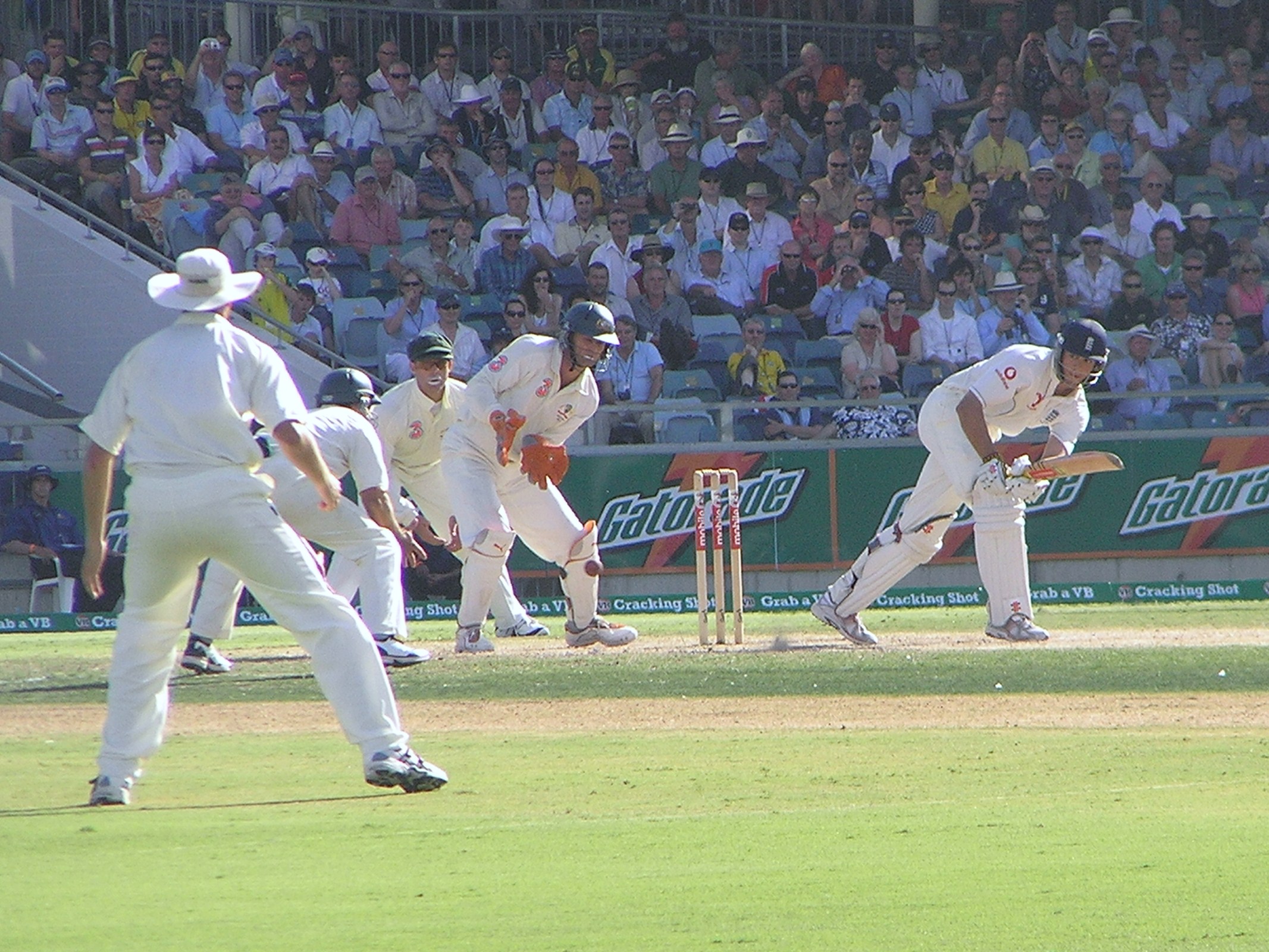
Cook pushes a single to complete his century against Australia in Perth 2006. Taken by this
Cook pushes a single to complete his century against Australia in Perth 2006. Taken by this “not true fan” of England. Anyone can use it if they like….

Mark Butcher and Chris Broad (as well as Cook) are Englishmen with two scores of 116 to their name. For the West Indies, they have just five scores of 116 out of those 67 – Clyde Walcott, Ramnaresh Sarwan, Kraigg Brathwaite and two for Shiv Chanderpaul.

Kraigg Brathwaite’s 100 came off 228 balls and contained 11 fours. He made his 116 in 252 and added three more boundaries to his total.

2015 Test Century Watch #14 – Joe Root

Joe-Root

Joe Root – 182 not out v West Indies at St. George’s

You’ve read all the stuff about over 150 scores for Joe Root, but the century watch is for my statistical buffoonery, and not those boring old stats. We’ll be talking DBTA and all sorts.

Joe Root’s 182 not out is his first century overseas, and adds on to the five made at home. It his second highest score in test cricket, nestling behind his double ton against Sri Lanka last spring at Lord’s.  His DBTA now stands at 184.5, which is rather good and reflects he has a Steve Waugh propensity to make 150s and stay unbeaten in doing so. This is, of course, a small sample size, and will come down with time, but still amazing.

This was the 17th score of 182 in tests, and the sixth unbeaten score. I actually saw the start of the last 182 not out in tests – I walked out of the match because I was fed up – which was made by Jacques Kallis at The Oval in 2012. The last 182 in tests was made a few days after Kallis’s efforts, when Alviro Petersen made that score at Headingley. Root is the third Englishman to make 182 in a test match – CP Mead and MC Cowdrey being the others. Of the 17 scores of 182, two each have been made at The Oval, Sydney, Georgetown (Bourda), Headingley and Kolkata.

For me there is one score of 182 seared on my memory, and it is this one. It is one of the best innings I’ve ever seen (but then I loved Richie Richardson):

https://www.youtube.com/watch?v=uouZo1lUZx0

Greg Chappell has two scores of 182. 182 links two other West Indian greats – Lara and Richards. It’s a venerable old score.

This was the 4th century at St. George’s and the second highest. The record is held by Chris Gayle who made 204 against New Zealand at this venue in 2009. Samuels was the third century maker, and we have the fifth to come… It was the second by an overseas player, and the highest (obviously) beating Scott Styris who made 107 in 2002. Not many tests are played at Grenada (this was the 4th) so there isn’t a huge track record to go on.

This was England’s 12th highest score against the West Indies. The best is by Andrew Sandham who made 325 in Jamaica back in 1930, and is, along with Bob Cowper and John Edrich, one of those frequently forgotten on the list of test triple centurions. The last double made against the West Indies is by current fan favourite Kevin Pietersen, who made 226 against them at Headingley in 2007. Three of our top ten scores were made at Sabina Park. Root’s 182 was the fifth highest score made in the West Indies by an England man.

Joe Root’s century came up in 125 balls with 13×4 and 2×6. His innings consisted of 229 balls with 17×4 and 4×6.

2015 Test Century Watch #13 – Marlon Samuels

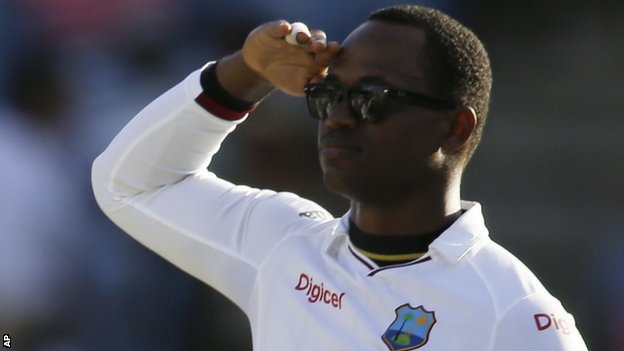
There can only be one suitable picture…

Samuels Salute

Marlon Samuels – 103 v England at St. George’s, Grenada

Well, Marlon, thanks a bunch. 103. When was the last time we had one of those? Oh yes. About five days before you did one. See Jason Holder (#12). So read that post for some of the statistical quirks surround 103s in test cricket, which, when Marlon did it, was the 121st time in test cricket. There have been two 103s closer together, and quite recently (2011). Rahul Dravid made 103 not out on the Saturday, and Matt Prior on the Sunday of the first test at Lord’s. Both were undefeated (I went to Day 5 of that game and got very excited about it – but then I’m not a real fan). On a personal note, this not real fan spent not real money to see a 103 made against England. This one was by Michael Hussey in Perth in 2006. The remainder of that day, when Adam Gilchrist went off, is the stuff of legend (because I missed it, of course….)

So as there were two other tons made in this test, and both were higher scores, the ground record section will be taken then. This leaves me with a Marlon Samuels perspective for the rest of this piece. Wish me luck…

This was Samuels 7th century in tests. Looking at the seven we see something pretty striking. He has a DBTA (Dmitri Big Ton Average, worked out as if you assume the player is on 0 when he makes 100 and then take his batting average from then) of 30.43. Not brilliant, but not disastrous. This is because it is distorted, Ian Bell-like (hmmm) by a massive score against Bangladesh of 260. The fact is that in four of Samuels scores over 100, he hasn’t made it to 110.

This was just Marlon’s second test hundred at a home venue (he has one at Kingston), and was his second against England. He has two test hundreds in South Africa, which really betrays how his talent is not matched by his stats. Not sure how I can work it out on Statsguru, but there have been 12 1/2 years between century #1 and century #7 for Marlon.

Marlon Samuels century came up in 226 balls with 14 x 4.