All Stars Cricket: Why is it Failing?

This is a guest post by Danny Frankland – and first appeared at http://www.dannycricket.wordpress.com.  You can also contact him via Twitter @dafrankland

If the ECB wanted to attract new people to the sport with the All Stars Cricket programme, perhaps it shouldn’t be more expensive than existing juniors cricket coaching or almost literally every other single thing a kid could be doing instead?

For those who might not be aware, the ECB recently launched a new initiative which aims to reverse the decline in youth participation in cricket. Named ‘All Stars Cricket’, the scheme is designed to get 5-8 year old boys and girls to “fun” coaching sessions at their local cricket clubs. The parents pay £40 to the ECB a few weeks before the sessions start, and in return they receive eight hour-long training sessions and a backpack containing a personalised cricket top, a water bottle, a hat, a cricket bat and a ball. The coaching is carefully designed by experts to be help children in their fitness and hand-eye coordination, as well as being entertaining.  In addition, there are videos online featuring current men’s and women’s England players, and suggestions for cricket-based games the parents can play with their children in their back garden.

At the launch a mere 7 weeks ago, the ECB were suggesting that they were targeting approximately 50,000 boys and girls to take part. They had announced a collaboration with MumsNet, an influential parenting website, and promised a marketing campaign to extend All Stars Cricket’s appeal beyond the children of existing cricket fans. 10,000 children who sign up before May 10th will also be randomly selected to meet and play with current England players at various events around the country.

Matt Dwyer, the Director of Participation & Growth at the ECB who is responsible for All Stars Cricket, was on Test Match Special on Sunday talking about it. The thing which immediately jumped out at me during the interview is that he said it’s on course to have around 20,000 children participating this year. This is 40% of the ECB’s own target, which begs the question: Why has it all gone wrong?

Cost And Value

The first thing that jumps out at me about All Stars Cricket is the cost. £40 upfront is not a small amount of money for a lot of people. Apart from excluding children with poor parents, it also represents a gamble even for cricket-loving middle-class parents. If they sign up their child only for the kid to hate it and refuse to go back, the parents will have paid £40 for the backpack and one hour of training.

And what do you get for £40? I’m pretty sure I’ve seen cricket bats with balls in one of my local pound shops, as well as water bottles and caps. The personalised shirt and backpack might be a little more expensive, but not much. I’d personally be amazed if the ECB was paying more than £4 for every child’s full kit.

As for the coaching itself, £40 still seems a lot of money for 8 hours of junior cricket coaching. To take the example of my local cricket club, they offer a weekly 90-minute training session for under-11s for £2.50, plus an annual junior membership of £5. For the same money as All Stars Cricket, a child gets 21 hours of coaching. It’s presumably by the same coaches, teaching the same skills and probably in quite similar ways. Perhaps it seems like better value in more expensive parts of the country, but it’s hard to see All Stars Cricket as anything other than a rip off where I live.

An important thing to remember is that All Stars Cricket isn’t just competing with existing cricket coaching, if parents have £40 to spend on making their child happy they have much better ways to spend it available to them. They could buy at least five or six new DVDs for them to watch, which is almost certain to offer more than 8 hours of entertainment. They could buy a new console game for around £40, again you’d expect more than 8 hours fun from that. They could buy 40 cheap crappy toys from their local pound shops, way more than 8 hours of fun there.

It might seem like an oversimplification but if the ECB wanted to attract new people to the sport with the All Stars Cricket programme, perhaps it shouldn’t be more expensive than existing juniors cricket coaching or almost literally every other single thing a kid could be doing instead?

Forward Planning

The other obvious flaw I see in All Stars Cricket is that it requires forward planning by the parents. The whole training plan is based around the kit the kids will get in the backpack. Each one has to be personalised and then delivered, which obviously takes some time. If someone heard about their local cricket club’s All Stars Cricket sessions the day before they started, they couldn’t just drop their kid off on the day with £40. If a kid who has signed up enjoys it, nothing they can do could get their friends to join up until the next year. If a family has a holiday booked for one of the weeks, the child will miss out and potentially be left behind the other children taking part. And of course the parents will still be paying for the hour’s training that the child misses.

All Stars Cricket, like most ECB-run schemes, suffers from rigidity and over-centralisation. If a new kid turned up at my local club’s regular junior coaching session, they wouldn’t be expected to pay anything up front. They’d almost certainly get one free trial session to meet everyone and see if they enjoyed it. They wouldn’t need any of their own kit.  Kids who forget to bring their weekly fees or pay their membership are still allowed to play, with a gentle reminder to bring them next week. With more than 8 hours of coaching every summer, if a child is away one week they won’t miss out on specific skills they might need to play cricket at the same level as the rest.

I’m also a little curious what happens with a club’s All Stars Cricket programme if some of it has to be cancelled due to rain. Can the club schedule an extra week, or do the kids lose out on some of the carefully selected activities due to lack of time? Again, and I hate to keep banging on about it, I doubt the parents get a refund either way.

Marketing

I don’t have any children, so I suppose it’s possible that the marketing is great and I’m just not seeing it. Obviously people who are already active with their local cricket clubs will almost certainly be aware of All Stars Cricket. I’d assume there are probably articles about it in many local newspapers, and some clubs will have managed to put up posters, handed out flyers, talked at school assemblies and so on. The usual kind of local unpaid outreach done largely by selfless volunteers.

I’ve not been able to find any evidence of the collaboration with MumsNet which was much heralded at the scheme’s launch. The only things which show up when searching for “All Stars Cricket” on MumsNet.com are an invitation to the launch event in March and a handful of posts in localised forums. I honestly find it a bit embarrassing.

Beyond that, all I’ve seen are social media posts and articles by national cricket journalists. The thing about these is that they’re only going to be seen by existing cricket fans. For a programme which many people had suggested could reach out to children without a cricket-loving parent, I’m not seeing any evidence of the ECB even trying.

Conclusion

In short: The ECB (which tries to solve everything with lots of money, mediocre marketing and no understanding of the general public) has tried to solve poor youth cricket participation with lots of money, mediocre marketing and no understanding of the general public. I’m honestly a little surprised even 20,000 kids will sign up.

As always at the ECB, despite creating a colossal failure no one will lose their job. It was probably all KP’s fault. Or it was the public’s fault for not understanding what a great deal the ECB were offering them. Clearly no one can be held responsible for this, or is so incompetent that they need to be replaced.

Feel free to insult me, or the ECB, in the comments below.

England v Ireland: ODI series review

The 2-0 scoreline won’t come as a surprise to many people, nor indeed the one sided nature of the matches, particularly the first of them.  In some ways the belated nature of finally inviting Ireland to play is symptomatic of a game that seems hell bent on trying to limit growth (except financial to the chosen few) rather than assume a missionary zeal to ensure it widens its frontiers.

Ireland found a collection of decent players and created a buzz in the country with their magnificent win over England in Bangalore.  Unquestionably cricket became a game on the up throughout the island, clubs reported huge increases in interest and new ones were formed.  Visitors to Ireland would pass on anecdotes of how cricket would crop up in conversation, something that never happened to that point.  This was, without question, a good news story.  From being a fringe sport, it became one that might not have quite reached the mainstream, but certainly had aspirations to do so.  The iron was hot, and it was time to strike.  Naturally enough, the ICC didn’t do that.  No pathway to Test status was offered, no formalisation of the potential for a new nation at the top level was created.  Instead proposals to curtail the World Cup were approved, the result of which was to make life harder for nations like Ireland.  With qualification so difficult, every match became vital, every side put out had to win.  

This team have got old together, and while all involved insist there is talent beneath the surface there haven’t always been the opportunities for them to move up and take the side to the next level.  How Ireland have managed their young players is something open to debate, but it surely must be a concern to see so many of the same names in the side as there were six years ago.  

The trouble is, we’ve been here before, hence the concern.  At one point Kenya looked like they might be the ones to break through, and in Steve Tikolo they had a national cricketing icon to take them on.  But the help they had was limited, domestic problems curtailed progress, and a generation faded away along with hopes for a new cricketing nation.

The reason why this enrages so many is the double standards.  Bangladesh were fast tracked into international cricket on little more than a wing and a prayer and with no first class infrastructure at all.  The ECB, perhaps rather astonishingly, actually seem to have provided reasonable assistance to Irish cricket – to the point that Cricket Ireland openly praised them saying they couldn’t wish for a better full member sponsor.  Yet despite this the suspicion is that many Test nations are opposed to Ireland’s promotion on the grounds that it might dilute their own power, the same reasoning in reverse that led to Test status for Bangladesh.  If this is true, it is perhaps one of the worst examples of the skewed priorities involved among the powerful who care so little for the game, and so much for lucre.  Bangladesh weren’t even close to being ready for the top level, and many said so at the time. Yet given they have reached the point where they are competitive now, as they showed against England last year, a good case could be made that however long it took, it was a price worth paying for expanding the global game.

Ireland six years ago were THE good news story of cricket.  They remain a decent enough side who weren’t out of their depth in the second match, and who could have pushed England closer than they did had things gone a bit better for them.  The problem is that whereas these two matches should have been a celebration of a rising country come to take its place at the top table, there’s the fear that cricket as a sport is going to miss the opportunity.  There is no reason at all why Ireland should not have been and should not now be granted the same opportunities as Bangladesh were, unless those opposed are doing so on the basis that the Bangladesh decision was wrong, and is still wrong.  Few are making that argument.

Ireland playing England at Lord’s was wonderful.  If the game of cricket fails to support them sufficiently to ensure that it’s a regular event, that’s something for which they should hang their heads in shame.  In no other sport is the development of it beyond its normal borders considered to be a problem that needs solving rather than a glorious opportunity.  

England v Ireland – The 2nd ODI

There have been great mini-series. I rather liked Camarena, The Drug Wars back in the day. There have been less than great mini-series too. This one looks like a less than great one, and there really isn’t anyone to blame for that other than Father Time. When Sam Billings came back from the IPL, spouting nonsense, that the opposition would be petrified of England, the World ranked #5 team in the format, I do believe, I could be charitable and say he was thinking of Ireland. He obviously wasn’t, but let’s be nice for once.

Tomorrow’s game is at Lord’s, which is nice. A load of teams would give their eye teeth to play an ODI at Lord’s, so it’s bloody disgraceful we haven’t up to now. After all they are our near neighbours, a source of some players, and a potential nice little rivalry if cricket develops the way we all hope it will worldwide. But it is what it is, and Ireland will be feeling a lot of pressure after the display at Bristol which wasn’t so much as lacklustre, as totally dull. Only a couple of players did themselves justice, and they’ll hope that more will come to play this time around.

England, in truth, never needed to get out of the low gears. The relative brevity of the game had one advantage, as I got to hear a lot of less of the increasingly annoying Nasser Hussain, but in other facets, it wasn’t really a great run out for England to test their mettle. England did the bowling job well, but these aren’t the top drawer players, and yet we know a number of the Irish can do a lot better. Jason Roy will need some time under his belt (and the irony of the sky punditry giving us the “it’s the way he plays” defence is really not lost on me) and Alex Hales was also extremely fortunate to get away with his early errors. England to bat first would be the recipe for a bit of batting practice, but the way of this world is to do the job in as an efficient manner as possible.

I have to say I never expected a great display from Ireland, so Friday wasn’t a surprise, but I would love to see one. Where we are pushed, hard, and to blow this bloody complacency that I see in certain sections. Tomorrow is just another day, as Suggs and the boys once sung, but I see another grey day for the boys in green.

Let’s hope not. For my big Irish cricket fan mate if nothing else. He’ll be there tomorrow, and if you sit next to him, or near him, you’ll probably hear him!

Comments below……

England vs. Ireland, 1st ODI

There was always likely to be a cruel inevitability about the result of today’s game and unfortunately this reigned true in Bristol today. It has been almost two years since the teams last met in wet and windy Malahide, with whispers abound about the fate of then England coach Peter Moores after a disastrous World Cup and a ‘mediocre’ performance in the West Indies. Moores as we know was indeed sacked and England’s fortunes in white ball cricket have improved immensely since.

So then, we come onto the game with what on paper looked like a bit of a mismatch. On the one hand England’s white ball stock has never been higher, on the other hand Ireland seem to be on the way down with some of their more experienced players getting a bit long in the tooth and the new arrivals not living up to previous expectations. That the first major series between England and Ireland on English soil should take place when there is such a disparity between the teams is at best unfortunate. The Irish, so long the brave underdog with sides from the recent past, folded without so much of a whimper and thus this may do their aspirations of playing the full member side more often some significant damage. It certainly could be used by the ECB to justify England’s rather snotty approach of playing their second string for a one off match each summer moving forward.

As for the game itself, Ireland surprised most people by opting to bat first, especially as the make up of the team suggested they would be more effective chasing rather than setting a score and for the first few overs, it looked like this ploy could indeed be effective. This was aided and abetted by a few poor overs at the start from both Willey and Wood (though the latter soon began to find his rhythm and more importantly his pace) and from some aggressive striking from Sterling. However after both their openers departed and with Balbirnie also dismissed for a breezy 30, Ireland contrived to collapse from 80-2 to 126 all out, a feat that some past English teams would have been proud of. Ironically enough it was the spinners that ripped out the spine of the Irish middle and lower orders, Rashid bowled quite fantastically with the Irish simply unable to pick his variations and Joe Root also cemented his reputation of having a ‘lucky arm’. Naturally Nasser and chums weren’t as fulsome in their praise of Rashid as others might have been as Rashid is now described as a confidence bowler when he does well and fragile when he doesn’t, the poor guy simply can’t win, an outsider one may say.

With Ireland bowled out well before the Lunch interval, England has 18 or so over to chase the Irish total before the scheduled break. Indeed it appeared at one stage that we were going to get the farcical situation where they would take lunch with England needing 10 or so to win the game. Thankfully for once the umpires saw sense and extended the session by another 15 minutes for England to chase down the Irish score. Cricket has done enough of shooting itself in the foot recently, so it was refreshing that common sense finally prevailed. As for the England innings itself, Roy appeared to think that he was still at the IPL and ended up flicking a ball down the throat of midwicket for a duck, Hales played some good shots whilst being dropped twice in putting on a fairly fluent if sketchy half century and Joe Root did what Joe Root always does and made batting on a slightly tricky wicket look embarrassingly easy.

I would suggest that neither team got much out of this encounter sadly and we can all but hope that Ireland show more grit and application at Lords to make this a contest; otherwise it could be another early finish at the Home of Cricket. This would be firstly be a wasted opportunity for an Irish team looking to gain positive exposure on the world stage and secondly for the Lords members, who wouldn’t have time to gorge on their expensive hampers. Will someone please think of the Members!!

As ever, please add any thoughts below and have a good weekend one and all.

England v Ireland – The Opening ODI

Welcome to 2017’s international cricket season. Welcome to the longest international season any of us will remember here in England. Welcome to the summer that really matters for 50 over white ball cricket. It’s the Champions Trophy at the beginning of June, and we’ve put half our chips on this one. The other half we’ll hold back until 2019. Building. Always building.

Now I know that the 50 over game doesn’t exactly float the boats of all of the punters on here. Sometimes I feel the same, but for all that, I still prefer this to the fluff that is most of your T20 cricket. There are all sorts of games of 50 over cricket, and although it gets a bad knock now because of its youthful, more irritating little brother, there are always things to watch. At least I hope so.

Tomorrow we kick off against Ireland in Bristol (now I know why Lawrence was moaning about a quiet carriage this morning) with, what I believe, is our first ODI v Ireland in England. We’ve been over there a couple of times, lost hilariously in the World Cup in India to them, and there was a game in the West Indies World Cup which, according to some wags, is still going on. There’s plenty of feeling as Eoin Morgan plays against the country of his birth while Ed Joyce plays against the country he once made an ODI ton for. The weather appears to be OK, if a little on the cool side, and there should be a full match. England are without Jos Buttler, Ben Stokes and Chris Woakes. Sam Billings has come back from the IPL and appears to have caught some sort of ailment where he’s speaking twaddle, but he’ll keep wicket, and there are rumours Moeen Ali may well be left out.

I could go on, but I’m trying to watch a dreadful play-off match with my team in it, and really it feels like a bit of a pre-season friendly, but no doubt any good England performances by a “fringe” player will get lauded beyond the stars, and any loss to Ireland, or even a duff performance, will be over-analysed.

Here on BOC we’ll try to set up and report on each day’s play this summer, but it’s a difficult task for us to do with three of us. If anyone fancies doing it for us for some of the days this summer, please let us know.

So, in the age old, time honoured tradition on BoC…..

COMMENTS BELOW!!!!

Gunboat Diplomacy

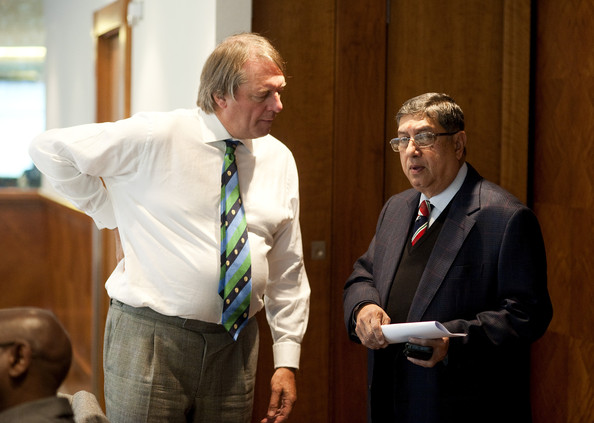
Giles+Clarke+N+Srinivasan+ICC+Board+Meeting+USwPhcIc2fXl

In the film A Death of a Gentleman, Gideon Haigh asked the pertinent question: “Does cricket make money in order to exist or is it now the case that it exists in order to make money?.” Now many of the followers of this blog are well aware that cricket has become more of a product than that a game anymore in the eyes of the administrators, who are each looking for their slice of the pie. It has been made mightily clear by those that are in power that this is about sustaining and growing the revenues of the most powerful nations and by setting up various new T20 leagues to try and cash in on the perceived popularity of T20 cricket. Mr. Graves and Mr. Harrison (or Laurel and Hardy as they are otherwise known) can bluster all they want about reaching a new demographic and increasing the exposure of the game, but we know it’s not really like that, it’s the cold hard cash from TV rights deals. Any fool can see through it, apart from the ones in the media, who are singing from their hymn sheet.

I bring this up, as there have been more rumblings from the ICC and in particular from the BCCI this week. Now I’m not a particular expert on this subject (and I hope Simon H amongst others will chime in), but the long and short of this appears to be the fact that the BCCI doesn’t particularly like the word democracy if it costs them money, despite a 13-1 vote in favour of the changes to redistribute revenue, and are now threatening to throw their toys out of the pram if they don’t get their way. Now who knows what is lurking at the back of the BCCI and who is calling the shots, but they have stubbornly refused to back down from the Big 3 carve up that alienated so many Full Time and Associate nations and basically gave them the keys to the castle, or $578million dollars until 2023. You see when money and lots of it is involved, certain boards suddenly don’t feel so passionate about growing the game anymore. To mitigate this, the ICC have offered them $400million dollars, which those at the top of the BCCI (and don’t be surprised if N Srinivasan is still hanging around) still feel is insufficient, they want the whole lot previously assigned to them (bear in mind that the combined revenue assigned to the Associates is around $238), many feel that this is more than generous. The BCCI however, believe that they have the ICC and the rest of the cricket playing nations by the proverbial testicles and they’re going to keep squeezing until someone blinks, with their first threat being to pull out of the Champions trophy. Now before I get angry messages saying that I hate India, I would hold Giles Clarke (who famously only looks after the interests of his board) and James Sutherland equally accountable for this mess. They were the ones that were greedy enough to sell the other nations down the river in order to secure their own financial futures and they were the ones that let the genie out of the bottle and allowed the BCCI to have whatever they wanted, whatever the cost, as long as they looked after CA and the ECB. I don’t envy Manohar one little bit in trying to get that genie back in the bottle.

So what can and should be done, the ICC can of course cave into the BCCI’s demands and reduce the income of those that need it most in the vain hope of keeping the BCCI happy and protecting the huge amount of revenue that India brings to the table. That is one option, but it is not my preferred one, I believe that now is the time to be radical and call their bluff. This is without doubt a risky move and will no doubt have a huge impact of the revenue of all nations in the short term, but surely it’s better to take that risk now and draw a line in the sand before the next negotiations where the BCCI will want more and more and will likely get it. I firmly believe that this can’t be kicked into the grass this time, the ICC should be a democratic organisation that acts upon the interest and votes of its’ members, not a totalitarian state at the behest of one uncontrollable beast. If India wants to pull out of the Champions Trophy because they haven’t got their own way, then let them. Stick a line in the sand, carry on with the tournament despite the loss of revenue, but then sue the BCCI afterwards for the loss of revenue. Again, if the BCCI threatens to withdraw from Test cricket, which is undoubtedly the next step, then again let them do so despite the loss of large television rights deals. All the other nations have a responsibility to each other to try and ensure each stays solvent and in relatively good shape during this period and it can be done, if all are bought into the concept.

After this is all done, then we should hit the BCCI where it hurts, by pulling all NOC’s for international players from the IPL and then withdrawing the TV hosting deals. This normally isn’t the sort of diplomacy that I would normally advocate, but I feel that the BCCI’s position on this leaves the rest of cricket with no other option. Sure, the IPL will still attract the T20 freelancers and there is a good chance that some high profile international players coming towards the end of their careers will also choose to forfeit playing for the country (ABDV and some of the West Indian squad come to mind), but I feel the majority won’t, Test cricket in the eyes of many is still the pinnacle. The IPL will still have their own high profile domestic players, but when you are scraping round the barrel for international has-beens and mercenaries, then it’s hardly going to offer the glitz and glamour that the Indian public have been used to and no doubt this will also hit the IPL’s sponsorship bottom line. In my opinion that is the only way to get India back to the negotiating table as a member of the ICC and not the dictator. Sure there’s a risk that certain members get itchy feet and crave for the BCCI’s money again, but without risk, there is no reward and I feel that on this occasion it could be worth it.

This all brings me back to Dmitri’s post from earlier on this week, I feel out of love with the game at the moment and want to hark back to the days when I knew nothing about the international cricket administration, when there was cricket on FTA and when the England team selection wasn’t based around people from the right type of family and was instead based on talent. I want to cozy back up to County Cricket again, like the old loveable pet that has always been there for you when you need it (I saw a great one day game between Somerset and Surrey today), but then I remember that the ECB is trying to destroy that too. It makes me angry, but also incredibly sad. Most of all, I would like to go back to a time when Cricket was a sport and not a product and when money wasn’t the single driver of every decision made with it.

Have an enjoyable Bank Holiday Weekend one and all.

Take It or Leave It

One Take. One Take writing. Take it or leave it.
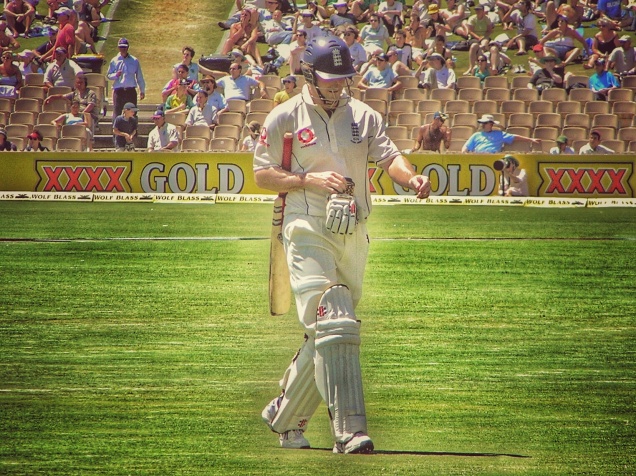
australia-2006-sim-2-136-02.jpeg.jpeg
We live in interesting times. We live in times where our cricket faces change and turmoil, yet we, as lovers of test cricket and the primacy of the international games, sit on the outside not able to countenance what is going on. Not able to articulate our rage, our desperate anger, in a way that those making the decisions take a blind bit of notice of. Those “in charge” of the decline. From the keepers of the international game, emasculated at the altar of Indian primacy, the paper tigers dwarfed by the 1.3 billion sized elephant in the room, pretending they have a roar, when all they have is the cage around them. To the local entrepreneurs, the brains of the various outfits, struggling to keep their game relevant while realising that it really is a task of such gargantuan proportions, it makes Sisyphus’ little struggle seem a pre-break tick box exercises. To the media, and those who claim to be inside and outside more than the world hokey-cokey championships whenever it suits, who tell the proles that they are bilious inadequates, but should realise that without them, they are nothing. To the governing authority of the English game, without sin or error, without confession of mistake, without recognising the recreational game, without recognising the contribution of county members and supporters in nurturing the sport, bringing in the next generation, who sit on high like some Supreme Judge, a body of the immense, a wisdom beyond mere mortals, while practising their own version of dictatorship.
We live in interesting times. Where players play too much, there is too much cricket, but where the prime form of the domestic game is marginalised to the ends of the summer. To the past pros, able to dish out criticism, call their followers on Twitter idiots or muppets, but when the folly or conflict of their ways is pointed out, they jump on a stool, like the maid in Tom & Jerry, feigning horror. The Shiny Toy is naked. The Analyst has 39 mis-steps. The Lord is just another social media zealot. The Muppet is left to the Cricket Paper. The cosiness of the media construct, that rushed to praise the Comma, and we doubt will ever bury him, remains. It just wears less marked clothing. A Sky Sports team brought up on Free To Air, preaching how restricting coverage is for the good of the game because of money. That thing that matters everywhere.
For however interesting those times are, I’m afraid they don’t interest me anywhere near as much as they used to. They’ve learned absolutely nothing. They pretended to, but we never bought it. They appeared to move towards us, but instead they were doing so only to insult us more. They spoke nice words, then when we did not prostrate ourselves before their mighty deity, they lashed out. You obsessives. Obsessives. OBSESSIVES. These men, for men they generally are, deserve our contempt. They do not deserve our anger any more. Anger is for those who seek to change. Who believe that change is possible. Who believe reasoned debate, and calm tones, have tried and failed and been used against us. Who believe that there is something out there worth saving. Who believe, truly, totally believe in test cricket.
Anger, like natural resources, is something exhausted. If you keep banging your head against a brick wall, it starts to hurt. Do it too often and you cause permanent damage to yourself. You either stop, or you end up in pieces. Why? Is it worth it? Truly? When a game is run by such total charlatans, such specious toads? When they don’t care what you think, when they KNOW they are right? Why? Is it truly worth it?
The world moves on. Blogging moves on. This blog won’t end, not yet. But I sense I’m watching the degradation of a good friend. Surrounded by those who purport to want to save it, they are instead looting it. When they leave, and they will, the good friends will be left to mourn. I believe we are in this phase. Dmitri Old eventually will be no more. He will move on. Sad, grateful. Mad, respectful. Angry, in awe. The game that gave so much, returns him nothing but contempt. 20 overs here, a large bash there, a MRF Maximum to send him on his way.
Enjoy it while we all can. For enjoyment is in short supply.

Guest Post – Bowled ‘Im by Simon H

Like many here, I’m a batsman in my own excruciatingly modest cricketing career and I found that, in most of my cricket viewing, it was the batsmen who got me watching and who I wanted to be. However I’ve found in recent years, perhaps because the game now seems so slanted towards the batsman, that it’s the bowlers who’ve been interesting me. So, let’s hear it for the bowlers  through ten moments of flying bails and cart-wheeling stumps.

There were some rules for a dismissal to apply. It had to be from my cricket-watching lifetime and there had to be film of it so it couldn’t be romanticised in the mind’s eye (so no S.F. Barnes bowling Clem Hill with a ball that was reported to have changed direction twice in 1911/12 then!). It had to be in a Test match. (so no Wasim Akram in the 91/92 WC Final). Individual bowlers could only feature once (more on who that excluded below). It helped if a bowler had overcome a worthy performer and if the wicket was emblematic of some wider phenomenon.

So, with that out of the way, ten tributes to the poor bloody bowlers:

  1. Michael Holding to Tony Greig, Oval 1976.

I’ve written plenty here before about how much the 1976 West Indies’ tour meant to me.  There were many great feats on that tour but only one I can say I still haven’t seen surpassed – and that was Michael Holding’s bowling in the final Test on an Oval featherbed.

This was at the end of the tour with the series won and it would have been very easy for the bowlers to be throttling back. However for Michael Holding, there was no question of doing so. Holding these days says that he was too young and stupid to back off – but we all know that in that summer of “grovel” and race riots there was more at stake.

Greig may not have won any prizes as diplomat of the year – but he was a fine Test batsman who played some great knocks against pace (especially at the Gabba in ‘74/75). He’d found some form with 116 and 76* in the previous game. It mattered not. As a tall man, Greig’s vulnerability was against the yorker at his toes. West Indies had got Greig that way several times during the series. Greig, a very fine batsman, knew what was coming – and still could do nothing about it. Stumps flew everywhere, Holding was engulfed and Greig (to his credit) mimicked grovelling as he departed.

Holding took 14 wickets as bowlers as good as Andy Roberts and Bob Willis managed just two wickets between them. Wayne Daniel broke down injured so Holding knew he wasn’t going to get much rest – unless he took a load of wickets……

Wicket at 1:30 here –

https://www.youtube.com/watch?v=MhYnYbvF9fo

http://www.espncricinfo.com/ci/engine/current/match/63167.html


  1. Dennis Lillee to Geoffrey Boycott, MCG 1979/80

For someone of my generation Australian fast bowlers will always mean Dennis Lillee – and should all be like Dennis Lillee. Lillee was not only ferociously competitive and a great showman but one of the most technically pure bowlers of any age. Lillee had taken 11 wickets against England in the Centenary Test at the MCG in 1977 through pace and force of personality – in the post-Packer reunification series in 1979/80 he did it again against a better batting line-up, on an even less helpful pitch and at lower cost. The second time around Lillee did it by deploying all the arts of a fast bowler.

It’s one of the myths of English cricket about Australia that pitches there have been usually fast and bouncy. The MCG pitch at that time was tired and slow. Australia in the match scored nearly 500 against Botham and Willis. Lillee did what we like to think of as a very English thing, cut his pace and bowled a mixture of seamers, cutters and swingers. It was one of the greatest displays of bowling I’ve ever seen.

The wicket I’ve chosen as emblematic of that performance was his bowling of Geoffrey Boycott in the second innings. Boycott was bowled playing no shot. Was Geoffrey ever dismissed playing no shot in another Test innings? I can’t think of one. Lillee had been troubling Boycott with his usual stock away movement when he outfoxed the great man with a ball that hooped in then went even further off the seam. Boycott had been in good form on that tour – he’d made 99* in the First Test, batted superbly in the ODIs and had been looking good in the first innings when Ashley Mallett caught him brilliantly in the gully. There was a great still photo in one of my cricket books of Boycott’s head up just after the dismissal, a look of “I can’t believe that just happened”.

The wicket is at about 4:40:

https://www.youtube.com/watch?v=OzefuBcoZNc

http://www.espncricinfo.com/ci/engine/match/63258.html

  1. Bob Willis to Ray Bright, Headingley 1981

Now, I can be as hipster a contrarian as the best (or worst) of them and should I one day write a ‘Ten of the Best’ for the Guardian music section I’d probably be leaving out all the hits for those ‘C’ sides that were only released in bootleg editions in Hull on a Shrove Tuesday.

But…. but…. some dismissals are so iconic they have to be here. For an Englishman of a certain vintage (I was sixteen at the time), there was only one Headingley ’81 – and there was only one coup de grace when Bob Willis flattened Ray Bright’s middle stump to win the game. Chris Old even dropped Terry Alderman twice to ensure the match got the finale it deserved.

The first days of the match had really been quite dull. I had almost given up on the game the day before and would have gone to a CC game but for rain in the morning in Sussex. The feeling had been that England needed a few more runs that morning but Willis had nicked Alderman to slip so 130 it was.

Brearley opened with Botham and Dilley, hoping their batting heroics would inspire them. Botham got Graeme Wood but Dyson and Trevor Chappell took them to 56/1 before Willis started that famous spell. Chappell got a brute, Dyson was a touch unfortunate, Hughes and Yallop couldn’t cope with the bounce, Marsh had a desperate hook and Lawson a nervous poke.

Bright and Lillee put on 35 in 4 frantic overs, Lillee cutting everything as Willis bowled shorter and shorter and Bright took to Old. Willis finally got one up to Lillee who spooned it to mid-on and the end came….

With the lift Willis had been getting, Bright was lurking on the back foot for the fateful delivery. Willis got the ball full, straight and quick. Bright’s balance was all over the place – and he missed it. Out came the middle stump and pandemonium followed.

England celebrated – and in some ways, repented at leisure. The 1980s became one long ‘hope for a miracle’ and some necessary reforms had to wait another decade.

Wicket at 2:20 –

https://www.youtube.com/watch?v=zZzWcfg4_sc

http://www.espncricinfo.com/ci/engine/current/match/63291.html


  1. Waqar Younis to Graeme Hick, Lord’s 1996

Of the great fast bowlers I’ve seen, I’m finding more and more that Waqar Younis is my favourite.  Part of it is his action – the sprint to the wicket , the low arm (especially later in a spell), the celebration (Waqar’s jump in the air always seemed more a spontaneous display of joy than the Lillee or Hadlee turn to the umpire).

But of course, it’s more than that. Lillee, Holding and Marshall were all more classical – and some would say, more complete bowlers. Waqar’s genius is that he found a new way of playing the game. When a game is over a century old, how often does that happen? Like reggae in music, Waqar’s method stood all the received pieties on their head. Attack with the new ball, out-swing is the really dangerous ball to good batsmen, give ‘em some short stuff? Waqar was more dangerous the older the ball got, he attacked with fast, late inswing and the only injuries I can remember him causing were to batsmen’s feet and their pride. Of course like any innovator, Waqar was building on others before him, Sarfraz and Imran in particular, but he took it on to another level. He was also, along with Curtley Ambrose, the best bowler for creating an unstoppable roll that I’ve seen.

He was stellar in the two great Pakistan teams that toured England in 1992 and 1996. Cricinfo ran a recent piece on the earlier team – but I think I’d marginally prefer the latter. Javed had gone from the batting but they’d added Saeed Anwar and Inzamam to their batting and Waqar, Wasim and Mushy were at their peaks.

Waqar had bowled a great spell at Lord’s in 1992. Those who prefer that team might pick a wicket from the spell when he ripped out Lamb, Botham and Lewis. In 1996, he did it again and having knocked over Graeme Hick with a perfect yorker in the first innings, Waqar did him again in the second. Hick had seemed like he was mastering Test cricket in 1994-95 but this reversal was one he never seemed to recover from. A batsman with 100 centuries knows what’s coming and still can’t do anything to stop it.

Wicket here at 2:30 –

https://www.youtube.com/watch?v=y9VWLRBeuJU

http://www.espncricinfo.com/ci/engine/match/63716.html

  1. Wasim Akram to Rahul Dravid, Chennai 1999

Wasim Akram didn’t quite have the immediate, visceral thrill of a Lillee or a Holding. There was something about the placement of the feet and knees that lacked elegance. Wasim, after being extremely rapid when he first burst on to the scene, also started to throttle back rather like the mature Richard Hadlee – one can see, the amount of cricket that they played, why they did it but while it appealed to the head it doesn’t grab the heart in the way pure fast bowling does. Wasim also amazingly never took a five-for in England and although he has an integral part of three winning tours, he always seemed slightly to be supporting someone else.

That’s the churlishness out of the way. Wasim Akram was a great cricketer – and by great, I mean “great” and not “very good” or “I have something to sell”. The key to Wasim was of course the arm – no bowler epitomised what’s meant by “a fast arm action” more than Wasim. For England fans, Wasim will always be remembered for the 91/92 WC Final – but elsewhere in the world, it’s another spell that is more remembered and there “the ball of the century” does not conjure up the image of a blonde leg-spinner and a grey-bearded batsman.

Pakistan and India were playing for the first time in Tests in nine years in Chennai in 1999. You want to talk about pressure in sport? That was a pressure game. India required only 271 to win when Wasim delivered his great one-two to Rahul Dravid. Wasim’s first ball was the perfect in-seamer. Dravid survived the LBW because the umpire must have felt he’d hit the ball first – the replay clearly showed Dravid’s pad was the first impact and with DRS he’d have been out. Wasim’s follow-up was to bowl Dravid with just the most perfect away-swinger that started on the line of leg-stump and swung away to clip the outside of off. It’s so sublime you need the replay to gather fully just what he did there.

In-seam followed by out-swing. One of the game’s greats ‘dismissed’ twice in three balls. Rahul Dravid faced more balls in Test cricket than any other batsman:

http://stats.espncricinfo.com/ci/engine/stats/index.html?class=1;filter=advanced;orderby=balls_faced;template=results;type=batting

Only 55 of them hit his stumps. That’s 0.001% of the balls he faced. Pakistan won by 12 runs (and won the series 2-1).

https://www.youtube.com/watch?v=faJ6aUBrDLU

http://www.espncricinfo.com/ci/engine/match/63828.html

  1. Shane Warne to Andrew Strauss, Edgbaston 2005

So far, it has been pacemen hogging the scene – but this isn’t any reflection of a lack of regard for spin and more a reflection on the state of the game in the 1980s and 1990s. It also reflects the fact that I can’t find any film of Saqlain bowling Cork and Caddick with two perfect doosras at OT in 2001. The best ‘bowled’ I saw from Murali was in a CC game at Southampton when he bowled Jason Laney with a delivery that pitched so far outside off-stump it was barely on the cut strip.

So then, it is left to Shane Warne to carry the flag for spin. Which one to go for? The ‘ball of the century’? The flipper that did for Alec Stewart? Even bowling KP round his legs in Adelaide?

No, and you didn’t think you’d get out of this with some piss-antsy contrarianism, did you? Because I’m not even going for the more famous bowling of Strauss in 2005 when the batsman shouldered arms – but my favourite Warne dismissal is the one in the first innings at Edgbaston.

There are a number of factors that go into the greatness of this one. For example, in ‘the ball of the century’, Warne was largely unknown, had a helpful pitch (Peter Such took 6/67 on it) and the batsman was past his prime. This Edgbaston dismissal had everything loaded against it – it was the first morning of the game, his captain had won the toss and bowled, his seamers were bowling like drains and he was up against two quality openers at around their career peaks.

One thing I love about the dismissal is how Warne slightly drops his arm to get more side-spin on the ball. Warne’s method (especially post- shoulder op) was to try to get one ball to run so that batsmen would start playing for the spin and his slider would take countless LBWs and bowled. The other thing is how he turns the batsman’s strength against him. Strauss loved hitting the ball to the right of cover off the back foot. He’d seemed to spend the whole winter in SA playing that shot. It’s one thing to get a batsman out through his weakness – but another to play to his favourite shot.

Here at 4:00 –

https://www.youtube.com/watch?v=BycQf9Ulu7U

http://www.espncricinfo.com/ci/engine/current/match/215010.html


  1. Andrew Flintoff to Jacques Kallis, Edgbaston 2008

Well, that’s enough subtlety and back to cart-wheeling stumps….

Day 2 at Edgbaston was one of those mostly unremarkable days of Test cricket, mostly some jockeying for position and rain-reduced, that was lit up by a brief moment when it all ‘clicked’ for a bowler and he produced one of the great short spells.

Andrew Flintoff had been picked very young and for the first four or so years of his career had held down a role as a containing bowler who gave the front-line bowlers a breather. A talk with bowling coach Troy Cooley on the 2003/04 West Indies tour led to a change in how Flintoff saw himself and perhaps how his (new) captain saw him.  That’s the official version, anyway. Before Bridgetown in 2004, where he took seven wickets, Flintoff had taken just 55 wickets in 31 games at 45 and a SR of 93; afterwards, for whatever reason. he became a formidable strike bowler for the next four years until injuries cut him short.

Jacques Kallis had seemed to be cruising comfortably in his innings at Edgbaston. What sparked Flintoff into life was perhaps the sense that Kallis was vulnerable as he indicated he was having trouble seeing the ball – and perhaps a sense of injustice that Aleem Dar had turned down a plumb looking LBW shout. Kallis survived several more close calls until an off-stump yorker beat a bat that was very late and slightly inside the ball and the stump was sent cart-wheeling back towards …. quick: who was keeper that day?

Flintoff’s performance is more poignant in retrospect because it was something of a ‘last hurrah’. He played ten more Tests, scoring just two fifties and taking more than five wickets in the match (not the innings) once – in the definite last hurrah at Lord’s in 2009.

https://www.youtube.com/watch?v=A-1oA29fWBo

http://www.espncricinfo.com/ci/engine/current/match/296911.html

  1. Ryan Harris to Alastair Cook, Perth 2013

So far, it’s been pace all the way with a little wrist-spin thrown in. Time to pay tribute to the yeoman fast-medium bowlers…..

Ryan Harris was one of those cricketers everyone seems to love. I’m reminded of a quote from Ian Chappell’s obituary of another bright but brief Australian bowling talent when he died not long ago – Gary Gilmour was first in the queue when God gave out the talent but near the back when He gave out the luck. Rather like Gilmour, Harris’s lower body couldn’t support the strain of bowling for long (although, unlike Gilmour, that wasn’t compounded by falling in with a drinking culture around Doug Walters). Harris was also an Australian so likeable even Mike Selvey wrote nice things about him – but let’s not hold that against him.

England were of course 2-0 down in Perth and set 500 for the third consecutive time. In that sense, Harris was not under a great deal of pressure as he ran up to deliver the first ball. However he was bowling to a certain opening batsman who’d made 72 in the first innings and was staring to look like he was hitting a bit of form – and he had done quite well there last time he visited.  Some might think the enjoyment of the wicket is increased by the identity of the batsman – well…

https://www.youtube.com/watch?v=Oz8RjPAD2Jk&list=RDOz8RjPAD2Jk&index=2

Harris’s delivery was one of those rare birds that swung one way then seamed the other. It swung in, hit the pitch near but not on a giant crack and seamed away to take the top of off-stump. Cook trudged off with the look of the tour from hell had just got worse.

Harris didn’t bowl too well for the rest of the innings and England made their highest score of the tour (which showed the pitch was not as bad as that crack made it look).

As with Flintoff, there’s a poignancy knowing Harris didn’t have much time left in the game. He played three Tests on the winning tour of SA (bowling Morne Morkel to win the deciding Test with 27 balls to spare) and thrice more against India before the body gave out. He finished with a Test average of 23.5 which some maintain is unachievable for modern bowlers.

https://www.youtube.com/watch?v=0rAUV9cUkbw

http://www.espncricinfo.com/ci/engine/match/592399.html

  1. Dale Steyn to Brad Haddin, Port Elizabeth 2014

South Africa went into the Second Test in the 2014 series 1-0 after taking a shellacking at their bastion at Centurion from a Mitchell Johnson inspired Australia. They fought back to level the series on the usual dry, slow PE wicket that the Australian seamers could get little out of.

Australia found themselves needing 448 or holding out for five sessions. Rogers and Warner got them to 126/0 before they lost ten wickets for 90 and lost before the end of Day Four (the Saffer bowlers actually took 17 wickets in that innings as SA dropped four catches and missed three wickets to DRS). At the heart of it was a sustained spell from Dale Steyn that turned a mini-collapse into a rout.

Steyn has been the one indisputably great fast bowler of the last decade in world cricket. No other seamer has taken 150+ Test wickets at under 25. Steyn’s method has been mainly based around fast late out-swing from an unusually straight line. On PE’s slow, abrasive pitch he reversed his method and attacked with reverse in-swing. Steyn was on a roll having ripped out Michael Clarke, caught low down at second slip, and Steve Smith, trapped LBW by a ball angling in. Clarke would score a century in the next match and Smith had scored one in the last match so those were two crucial wickets. In next was Brad Haddin, on the back of an Ashes’ series where he’d averaged 61 on a diet of fast-medium half-trackers.

Steyn’s approach was the opposite of Sakerball. He’d bowled Haddin with an in-swinger through the gate in the first innings, Haddin like Hick two decades before, knew what was coming and was powerless to prevent it. The middle stump was flattened and a pumped up Steyn went beserk in celebration:

https://www.youtube.com/watch?v=-KzogTWdk3E

The Clarke and Smith wickets, plus a different angle on Haddin, are in this compilation:

https://www.youtube.com/watch?v=YYBzqBwww9c

  1. Lakshan Sandakan to Joe Burns, Pallekele 2016-08-30

Gideon Haigh’s ‘Mystery Spinner’ about Jack Iverson is one of my favourite cricket books. The game has seen very few of them and those that have merged tend to burn out quickly (like Iverson) or fade into mediocrity (like Ramadin or Ajantha Mendis). English cricket, with its stout yeoman values and Gosplan-style coaching, has not produced one in fifty years.

The idea that cricket regimes like Sri Lanka (and Pakistan, Bangladesh and probably now the West Indies) can turn their lack of finance into an advantage by not stifling raw talent is a seductive one – and almost certainly delusional. However in the last series against Australia’s chicken-fattened millionaires (thanks Dan Brettig for that phrase), and with their team in crisis following a string of retirements and poor results, they found a left-arm wrist-spinner, one of the rarest of breeds in the game.

Australia needed to 268 to win the First Test in Pallekele. Australia had only ever lost one Test in Sri Lanka and although they’d collapsed against spin in the first innings, it’s only with hindsight that a second collapse appeared inevitable. They’d lost two early wickets but Burns and Smith were rebuilding the innings and at 68/2 were starting to look menacing.

The new ground at Pallekele is not normally massively helpful to spinners. The ball had been turning but was not particularly deteriorating, as SL’s large second innings’ total showed. With his finger spinners stuck, Mathews turned to his debutant, Lakshan Sandakan. I can only think of two other left-arm wrist-spinners who I’ve seen play in Test – Brad Hogg who was as ineffective in Tests as he was excellent in one-dayers and Paul Adams who, despite his decent record, everyone in England can’t help regarded as, frankly, a bit rubbish.  Sandakan had befuddled Australia’s tail in the first dig – but surely the front-line batsmen could work him out?

Sandakan pitched it well wide of off-stump. Money for old rope, surely? The batsman, as the saying goes, was caught in two minds – hit it for four or six? The ball hit a foothold, turned…. how much? TV didn’t put a marker on it but (and who doesn’t revert to imperial here?) we’re talking feet, not inches…. and Burns was castled. Australia folded and of course went on to lose both match and series.

Will Sandakan have a future in the game? Stout yeoman will declare every less than stellar match as proof that he’s been “found out”. His figures tailed off in the Third Test as Herath and Perera took over the leg-work. Maybe Sandakan is a shooting star who briefly lit up the cricketing world and will fade? But moments of magic like that, against top opposition at a crucial moment, are what all but the most blinkered of nationalists watch the game for.

https://www.youtube.com/watch?v=Lya2iu6Nd0I

http://www.espncricinfo.com/sri-lanka-v-australia-2016/engine/match/995451.html

Thank you Lakshan, all the bowlers here, and all who have a desire to fling down a cricket ball fast or slow and even in-between. Sorry to all those who didn’t make the cut and had a case to (Harmison’s slower ball, Boult bowling Azhar Ali playing no shot in UAE, Murali bowling Mark Butcher with a massive turner, Donald splattering Atherton in Jo’burg on the 2/4 morning, Shoaib Akhtar’s Yorker-double of Dravid and Tendulkar, Alderman’s peach of an out-swinger to Atherton at the Gabba in ‘90/91, Bruce Reid yorking Robin Smith in the same game  – all were on the short list). May those who run the game learn to value you a little more – and may the future be kind to you.
 

The Pure English Alpaca Company Limited

It has been a week of reflection here on Being Outside Cricket. Chris has put down two of his best ever pieces (in my opinion) on here about the start of a cricket season, and thanking those club stalwarts that make the world turn, even though we didn’t really appreciate it at the start. It captures the life of nearly all of us who paid club cricket, to varying standards, to varying levels of ability, while forming the core base that any sport really needs to thrive. Much of what Chris said there rang true. My first captain, of our second XI, was someone in his 60s at the time, who while I wouldn’t say made you feel welcome from the start, became someone I just absolutely loved jousting with and we had those verbal sparring matches that had those watching laughing at us both! Our lift to Hammersmith underground station as we set out for the 2006 Ashes was one such event. His son posts on here, and I count him and his brother as true mates. If you’ve got memories of these people, stick them on Chris’s piece. We’d love to hear them.

While Chris looked back in reverence, I looked back in anguish!

There was me, with a glass half empty approach to world sports, and England in general. I have to say that a lot of this recent reflection stems from talking to an old friend from the estate on which I live on Twitter (and WhatsApp) and looking back at how we both view sport now, from two very different angles. Like me, he loves his day out at the county cricket, like me, probably not as much, he is jaded by the whole football circus, but mainly we talk about how sports coverage and the games, for that is what they are, has evolved over the years. I keep stopping myself to say it makes me sound like an old granddad and saying “it was better in my day” but I genuinely think it was. Not in terms of talent – for to make that stand is clearly preposterous as sport evolves – but in terms of what the sport is about, how it is seen, perceived. As Sir Peter put in one of the comments, when Trevor Brooking retired, football was a sport. Now it is an industry. So are most sports, and as they continue to merge into the commercial world more than ever, and it isn’t likely to change. It’s like screaming against the tide, but the model just can’t work like this without a big drop off in all sports other than the behemoth football. Even that isn’t in the rudest health at the grass roots as one dog walk over to the local sports field will tell you. A lot fewer teams, more vacant pitches.

There is a temptation, a big one, for the next couple of weeks before the return of international cricket, that we could get carried away with this pall of negativity and nostalgia. But for a cricket supporter like me, what else do I feel I have at the moment? I can look back at the joyous moments, and I have in mind a piece on the best five test innings I’ve seen in person, but there’s a tendency to think to the future. Much has been made that the BBC had over a million listeners to its county coverage over the weekend. I’d probably like to see that stat in all its true detail, but one can’t deny that there is a decided undercurrent of support for the county game that isn’t reflected elsewhere. Most notably by the authority supposedly wishing it well. George Dobell, in his tour de force this evening, nails it for me…

Despite all the ECB’s talk of communication and transparency – a word that is hard to square with the non-disclosure agreements that have bound county officials to secrecy in recent times – associated with the new-team T20 competition, there is a sense of disenfranchisement pervading county spectators at present that suggests their administrators have stopped representing or even listening to them. Really, they may as well just slap county spectators in the face when they buy a ticket and have done with it. The sooner supporters have a collective voice the better; the Cricket Supporters’ Association may be the partial answer.

George didn’t invoke the O word used by Tom Harrison, but he might as well have. There is a love for the competition out there, sometimes a bit precious, but also something that should be cherished. For me it is the opportunity two or three times a season to sit in the sunshine (all being well), drink a few beers, take lots of pictures, enjoy watching some super talent, and some young ones too (Sam Curran for one), over a long, relaxed timeframe. The game evolves at its own pace, sometimes quick, sometimes slow, but its rarely truly awful unless the weather intervenes. I would have liked to have been there today, at the Oval, but there was a garden fence to be repaired post Storm Doris. I can find some of the love a bit too full on, as I don’t do pants-on-fire enthusiasm, and I can also find it patronising, as in #propercricket and some of the Guardian BTL, but these people love the game, and if they don’t know the ECB is getting at them, then they ain’t listening. I have no idea what the Cricket Supporters’ Association is, and like most of these sorts of things I start with a healthy dose of scepticism, but anything that tries to get the supporters voice at the table has to be welcomed.

My fear with these sorts of organisations is that once inside the tent, paid lip service by the powers that be who can’t really be seen to tell the patrons that they need to wind their necks in that obviously (unless Giles is around…), the pressures on the representatives to be all things to all people strangles the life out of them. In the worst cases, and I’m not naming names, they go native and those who got them where they were don’t see it, while the people they purport to represent can go whistle. It’s human nature.

The nature that supporters can get noticed has always been a difficult one. Blogs like ours can gain traction, but we are all too aware that tastes and circumstances change. What works on one occasion doesn’t on others. Social Media is what it is. You can Tweet to your heart’s content, and yes, I do, but no-one in authority listens. Why? In isolation we are nothing but individual units. It turns out more and more that your points may be supported and taken up by some of the media who might be interested in it. Do you think, for instance, that “Outside Cricket” as a term that caught the eye, would have had traction if we and people on Twitter didn’t invoke it putting Paul Downton in the role of Marie Antoinette and the media perpertrating as if we were some sort of zealots (hey JE, we are looking at you)? We note the name of #39’s podcast with some amusement, for instance!

I doubt that even if the resurgence in interest at the new season being maintained will have much of an effect. The somewhat bizarre refusal to allow Jonny Bairstow to play for Yorkshire shows that the ECB don’t want to waste him on the premier domestic competition because of a schedule of such breathtaking stupidity coming up (and previous) “exhausting him”. Taking the long view when that view has been put together by bean counters wanting to extract the maximum cash from an international schedule is going to be at the expense of those who’d quite like to watch him in person, but won’t stump up test match ticket fees, or an expensive Sky subscription. Is it any wonder the current crop are invisible to the general public.

Just as it is inevitable that England will struggle to produce spin bowlers – or batsmen with experience of playing spin bowling – while so much of the season is pushed into the margins (counties will have played eight of their 14 Championship matches by the end of June) and medium-paced nibblers are disproportionately important. It is many years since England produced a legspinner as talented as Mason Crane; there is something wrong with a system that cannot find a space for him in a side.

But here’s the thing. It may be taking the long view with Johnny Bairstow, but it isn’t when we need to develop skills to make the international team work. The Mason Crane example is one, but then there are five international spin bowlers out there at The Oval this Easter weekend. It’s patchy at best though, and the way first class cricket is confined to the margins of the “English Summer” is short-term thinking. This is why floodlit county cricket might have to work to cram a space in the mid-summer for more fixtures. July and August are gone, so it is going to have to be a big thing in June now to create a better environment for these skills. Sadly we are trying to cram in an 8 month season into a 6 month period and the pips are going to squeak. You can’t help feeling if the winter’s Ashes go tits up and we don’t come close to winning the Champions Trophy, that we’ll be plunged into yet another review of English cricket. The issues are staring you straight in the face.

On another tangent, the ECB Accounts are due out soon. Last year they came out in the last week of April. The main things to look for is how much revenue took a hit due to the perceived and real difficulties in having Sri Lanka and Pakistan over in the same year in terms of revenue. How stark that contrast will be with last year is going to be interesting. Turnover in 2015 (India the previous summer) was £174.7m. Turnover in 2016 (Ashes in 2015) was £134m. Turnover for the 2012 summer, for instance, was £111m – that did not have an Ashes or India visit.

I’ll keep looking in to see when the next set are up.

OK – I’ll end the ramble, and wish all of our readers a Happy Easter weekend, enjoy what you are doing and we’ll be back with some more stuff soon. And if you haven’t read Chris’s pieces then please do so.

UPDATE – CRICKET SUPPORTERS ASSOCIATION

George Dobell mentioned this in his piece yesterday and also tweeted about it today. I must confess that until he did I’d not heard of it. This isn’t the most auspicious of starts.

The aims and aspirations of the association seem very worthy. George is currently listed as co-founder and will step down when the time is appropriate as the long-term aim is for it to be an organisation of people not professionally involved in the sport. I am all for supporters organisations being recognised and having a voice, a real voice, in the running of a sport. It should be a requirement, in my opinion.

I am a little surprised that the likes of us, pretty well known in blogging circles, and certainly to some involved in this, haven’t been approached to spread the word. Maybe we are that toxic! I also have a little problem with the official magazine of the Professional Cricketers Association being a “Supporting Partner”. We know where the PCA’s priorities lay a few years ago, and a supporter association needs to be truly independent of players and administration. But these are wrinkles.

Read the website and tell us what you think.  http://www.cricketsupporters.com/


Standing on the Shoulders of Giants

Up and down the country, young people are picking up a bat or a ball for the first time.  It might be in the back garden, it might be in the local park, but at any given moment someone who will go on to be a cricketer is gaining their first experience of the game.  For most, it will go no further, a casual game with the family or friends, and a memory that will occasionally resurface through life.  For some, a few, it will instil a deeper affection for and love of the game itself.  Those people will seek out a club, will learn how to improve and will play on a regular basis for years to come, and perhaps even for a lifetime.

At some point will come a time for reflection, a wondering of how they got to that point and about those who played a part in it.  Family is often first and foremost, and perhaps it goes without saying that it was my father who first put a bat in my hand.  But that is frequently just the start of the story, there are many others who play an instrumental role in what follows.

A few years ago I received a text from my mother to let me know that one of those who introduced me to the sport had died.  He was an old man by that point, the circle of life I guess, but nevertheless it came as something of a jolt to the system to hear the news.  In our minds people stay the same, and particularly so as we move away from our childhood homes and lose contact with those who were present in those formative years.

Neil Duncombe was someone who was in the team when I first started.  The excitement of being in the Sunday 2nd XI for the first time aged about twelve or thirteen is a vivid and evocative memory, far more so than playing for my school.  Of course at that point playing involved batting somewhere in the lower order, making up the numbers and doing the running around for the older players (wondering why they wouldn’t make an effort in the field, only to discover 30 years later that they were making an effort), and realising that the boundary was a hell of a long way from the wicket keeper.  The contribution in terms of runs was minimal – to the point I can recall reaching double figures for the first time and considering it a substantial achievement.  Neil was already about sixty by then, his career was coming to a close and he spent the day stood at first slip imparting wisdom and the humour that is so particularly a part of the game.  Yet he was one of the gods of the team to my young mind, a proper player to whom I looked up who I would spend the tea break sat next to just so I could listen to him, and who showed me how the game should be played.  He had been a good cricketer too, and a lesson gleaned from that was that if a 60 year old is playing against you, then don’t see them as they are now, imagine how good they must have been in their youth to still be on the field at that age.

Nor was he remotely alone in imparting wisdom, the captain was a man called Mike Connell, not the greatest cricketer – although at the time I thought he was of course – but the one who worked endlessly to ensure eleven players turned out every week, who organised everything, who walked the tightrope of friendly cricket game management in terms of trying to keep everyone involved and happy.   He was also the one who after a couple of years asked if I’d ever thought about keeping wicket.  Of course it hadn’t occurred to me, but given it was abundantly obvious I was one of the worst bowlers anyone had ever seen (capable of reasonable pace but entirely unable to direct it even vaguely in the right direction) he rather pithily pointed out that being behind the stumps might actually lead to me offering at least some kind of contribution to the team in the field.  He took me beyond the boundary, lobbed the frankly rubbish and oversized club gloves to me and started throwing cricket balls.  That I remember clearly, along with the “OK, you’ll do” observation having watched me.

To that point I’d had no desire to do the role at all, batting was all I cared about and by that time I was developing and scoring runs.  Mike was also the one who to my shock told me one day I was opening the batting.  I scored 19 – hardly an innings to pull up any trees, but I batted for a fair while and came off to lots of smiling team mates telling me that this was my metier and that I was a born opener.   My wicketkeeping on the other hand had to be pretty much self-taught; in those days the idea of qualified coaches in a club was something of a pipe dream – even now finding those capable of teaching wicketkeeping is a rarity.  Nevertheless, with encouragement I learned and progressed, and it gave me the added bonus of now being stood next to Neil on a Sunday afternoon where he would tell highly amusing tales and periodically offer up pertinent advice.  He may not have been a wicketkeeper himself but he knew the game, and importantly he knew when to keep quiet, that advice can be counter-productive if it’s not from a position of knowledge.

Curiously enough his son Chris also would become a keeper (and in my adult life a good friend) and some years later we would battle each other for the position in the first team, with me being driven on by the fact he was usually the first choice.  I was much younger than him and I was learning – put simply he was better than me at that point, though naturally enough I didn’t see it that way at the time.  Besides, my primary role in that side was to be a batsman, first as one of those not quite good enough for the firsts and then moving up the order until reaching the opening slot where I would spend most of my subsequent career.

The third member of those seniors in the Sunday 2nds was the opening bowler, Derek Robinson.  A seamer who eventually had to stop playing when his back finally gave way rather spectacularly during a game; he was also supremely accurate, something of a boon to someone having to learn how to stand up to the stumps from scratch.  With the batsman’s healthy disregard for bowlers of all types, I probably had less direct interaction with him initially in a learning sense (after all, bowling was for lesser types in my mind), but his delightful disposition and humour made him a joy to share a field with and a source of wisdom about the wider game.  As my keeping developed so would his advice in that discipline and his study, usually from fine leg, became a valuable source of information.

Of course, it wasn’t too long before I outgrew the Sunday 2nd XI, progressing through the sides to the league teams, initially the Saturday 2nd XI and then the 1sts.  Runs came much more freely, wicketkeeping progressed rapidly, life developed and I moved away eventually to a new club in a different county who got by far the best of my cricketing career.  It is a deep regret that while their time and effort allowed me to develop into a reasonable cricketer, those at my first club never remotely saw the best of me on the field.

And yet.

Looking back now, everything in terms of my cricketing life developed from those few short years on the lowest rung of the cricketing ladder.  Those three people were hardly alone, there were numerous different ones at every step of the way, even when I was old enough to hold my own as a player at a decent level.  But nothing is so formative as those in the early years who encourage, advise, criticise and perhaps especially when they tell you off.  An opposition player did that once too; I don’t know who he was and never played him again, but one of his team-mates scored undoubtedly one of luckiest fifties I’ve ever seen, balls flying in the air just past fielders, edges past the stumps and so on.  Reaching his half century was greeted by us in silent disbelief, with one or two making unfriendly observations about good fortune.  But as with many friendlies, one of their players was standing at square leg umpiring.  He came in at the end of the over and quietly said “People have different levels of ability – this is a big thing for him, respect his achievement”.  That opponent may never have scored a fifty again in his life, but that was his day, and it was magnificent.

His comment is seared into my mind, I felt deeply and utterly ashamed instantly, and the lesson he taught my fourteen year old self remained me with ever since.  I would always applaud or acknowledge an opponent’s landmark from then on, no matter how fortunate it might have been, and that wise cricketer’s words were passed on by me to many a young team-mate in similar circumstances.  I doubt he would ever even remember saying so, but I cannot thank him enough for delivering that quiet, understated bollocking.

For here is the point:  Few are ever aware of the impact they have on other people, young people especially.   They would doubtless be surprised to learn of their part in it all.  Neil Duncombe even gave me my first set of batting pads, old-fashioned cane ones with buckles that provided limited protection to my legs, but they were mine and they were a gift from someone I both looked up to and adored.  Mike Connell made me into a wicketkeeper.  Just him, no one else; hundreds of stumpings and catches down to his decision on a sunny day.  What made him do that, I have no idea.  Derek Robinson taught me how to improve, how to get better, and how to have fun on a cricket field.

I never told them.  Oh dear God, I didn’t tell any of them, not these three, not Paul Brook – a modest cricketer but a great man, not Martyn Cobb who taught me that cricket is a game that rewards thinking, not one of the many others I could list who weren’t my father yet who did so much.  In at least one case it’s now too late, and for the others I don’t know where they are or if even they are still around.  These people were instrumental in my cricketing life, yet I was far too self-absorbed with the arrogance and certainty of youth to realise it at the time.  They taught me everything, they gave up their time – yes to have fun, but also to guide, encourage and teach a young player about both the game and about life itself.

Everyone reading this will have had the same kind of experience;  it might be in cricket, it might be in any other sport. It doesn’t even have to be within a sport itself, for we all have those who have made the difference to who we are.  These names mean nothing to all but a very few, but you will have your own who do.  Tell them.  Express to them what they did for you.  Tell them how important they were, thank them for being who they were and what they did.

Before it’s too late.  Before you fervently wish you had taken just a moment to do so.