Washing up

And so the dust begins to settle.

Let’s get something clear here, before the start of the Test series, an England win was expected by everyone.  No one in the media said that the West Indies were an improving side, no one in the press said that there were grounds for concern.  England might be a “developing” (a delightful euphemism for “not very good”) team, but the result of the series would be that England would win it. And they haven’t.

And here come the excuses.  Colin Graves was at fault for motivating the West Indies by calling them mediocre apparently.  Let’s just look at that for a moment.  Say that what he said did motivate them, did do their team talk for them.  Are we really saying that a few words from the chairman of the ECB, a man most of the West Indies team have probably never heard of, made the difference?  Firstly, that’s incredibly insulting to the West Indies team, it implies that without such words they would have rolled over to defeat.  It also says that England could only win if they were scrupulously polite about the opposition.  How fragile must this England team be?  How shallow must the West Indies be?

It’s a nonsensical line of argument, particularly so when Alastair Cook talked only a few days ago of how the West Indies would crack under pressure.  If anything were to motivate the opposition, those words would have done it – but to suggest they did is still silly, for all the reasons above.  The series was drawn because of what happened on the field, not what was said off it, especially when both instances are pretty mild.

As it happens, Graves shouldn’t have said what he did – but not because of what happened in the series, simply because it was impolite.  But people who are outspoken sometimes say things, weirdly enough.  That four paragraphs have been written about something so supremely irrelevant is a reflection of how some have grasped at straws.  Let’s move on.

It is genuinely pleasing to see some signs of life in West Indies cricket.  The wider picture is important, and they do seem to have found some young players who have a bit about them.  Jermaine Blackwood had a terrific series, averaging a shade under 80.  There’s little question that his innings first time around in  Bridgetown  went a long way towards the eventual result; his team were dead and buried without him, and he kept them in the game.  Jason Holder equally looks a good prospect, while Darren Bravo played with a discipline yesterday that’s been lacking in much of his career.  In all cases it’s up to them to ensure it’s not just a one off, but something to build on.  It’s hard to see this side seriously troubling Australia in a month, but nor should they be expected to.  It’s at the bottom of a very long and winding hill – there’s a heartbeat, that’s enough for now.

As an aside, what a sad cricketing irony it was to see Shiv Chanderpaul look like he’s reached the end.  A player who almost single handedly kept them alive over a grim decade, but whose age catches up just as there seems to be some hope.  No one ever said life was fair.

England lost this game in their batting.  First innings wasn’t good enough; the pitch was at its best, and scoring under 300 was abject.  Cook held the innings together, with an innings that was obdurate and stubborn, and he certainly deserves credit for that.  His dismissal at the close of day one was likely a loss of concentration.  It’s not that surprising shortly after a hundred he so desperately wanted and needed, and blaming the bloke who got the hundred for getting out misses the point as much as it always did.

Yet Cook’s hundred was not evidence of him being back and it’s wishful thinking on the part of those who worship at the altar of the blessed Alastair to assume it is.  His technique remains flawed and there are serious concerns about how he will shape up against a better attack this summer and next winter.  He deserves immense credit for getting it, because even the longest journey begins with a single step, but that’s as far as it goes.

Bell had a poor Test, and not a great series.  Indeed, he’s struggled since his Ashes mirabilis in 2013.  He clearly deserves the patience his record warrants, but it is concerning as we go into the summer that he seems so adrift from where he could be, especially so given that he doesn’t appear out of form.

We are probably saying goodbye to Jonathan Trott.  There’s an extensive piece elsewhere, so there’s no point going over that again. His near tearful reaction at the end of the match suggested he knows it too.  There’s no shame in attempting to come back, and no shame in not succeeding. He’s been a fine servant for England.

England’s second innings of 123 showcased all the problems that have been evident for some years, especially the way that they freeze when put under pressure.  The irony of Cook’s comments about the West Indies cracking under such pressure is evident, and this is nothing new.  The tour to New Zealand two years ago had a few instances of England becoming strokeless and terrified of defeat.  For all the talk about England playing fearless cricket, they do the opposite.  Only Stokes and Buttler tried to reverse the position, and Stokes then received criticism for the way he got out.  That’s just not good enough.  When a player tries to change the momentum they are taking risks to do so – sometimes it doesn’t come off.  The reality is that it still has to be attempted.  That England got as many as 123 is down to him, and then Buttler.

Buttler was again left high and dry.  At number eight in the order that’s clearly going to be a risk, but given the side England selected, should he be any higher in the order?  Probably not.  The issue is that England’s lower order fold even when there is a batsman to play for.  Jordan was a bit unlucky, and Anderson fought.  Broad’s batting is simply not good enough for someone of his ability.  There were signs in the first innings of the smallest smidgen of progress – he stayed in line at the point of delivery (he stayed legside of the ball, true) which is more than he’s being doing recently.  But he’s in pieces still.

Root and Ballance both had good tours, one of the most striking features of the second innings shambles was how England fell apart when those two failed with the bat.  Like always, we cannot rely on players having unsustainable runs of form to bail us out of a hole.  At some point, they won’t manage it.  Still, in the wider context, those two have been a success.

Moeen Ali had a curious time of it.  His bowling wasn’t great, but compared to what?  His first class record hardly suggests he is a world class spinner, but he is a hard worker and improving.  Bringing him in after an injury and with little bowling behind him was a gamble, and one that didn’t work.  He batted well in the first innings before Cook ran him out, but he needs to deliver more than he is.  He’s flattering to deceive and becoming a bit of a frustration.  He clearly has talent and desire, even if the blame game is trying to highlight him.

Buttler himself did well throughout the series.  His keeping was good, and he’s still inexperienced in that discipline.  His missed stumping yesterday cannot and should not be used as an excuse (another one).  Keepers do make mistakes.  The specific missed stumping is one of those that commentators and journalists who have never done it talk about as being easy.  It is an abiding frustration that those who know nothing about keeping are so keen to dispense their lack of knowledge.  When the ball goes between bat and pad, there is a tendency not to follow the line of the ball, but the expected path of the shot.  It’s a bad miss because every keeper who has ever done it (and every keeper has) berates themselves for the error.  But it happens, and happens a fair bit.  A perfect example of the complete lack of understanding about wicketkeeping comes when a catch standing up to the stumps is described as good reactions.  It’s nonsense.  When standing up, the keeper isn’t even aware that there has been an edge until AFTER the ball is in the gloves or on the ground; the brain simply cannot process information that quickly.

None of which means that Buttler won’t be bitterly disappointed not to have taken the stumping, but some understanding is required here. He made very few mistakes behind the stumps this series, and for a young player making his way in Test cricket, that’s a good effort.  Wicketkeepers drop catches and they miss stumpings.  It was ever thus.

Chris Jordan is another who showed promise without ever fully justifying his inclusion.  His catching in the slips was genuinely astonishing, and he bowled some fine spells without seeing quite the rewards.  Like Ben Stokes, his wicket taking was below what would have been hoped for.

Broad with the ball seemed to be getting his mojo back.  He needs overs under his belt more than anything.

And then there’s Anderson.  The best compliment he can be paid is the frightening thought of him getting injured this summer.  Like with Root and Ballance, England cannot be so reliant on him going forward and hope to succeed.  He was overbowled in the last home Ashes due to desperation, and largely ineffective thereafter.  He’s a fine bowler, but he’s not invincible.

Peter Moores spoke after the game talking about how players had developed over the series.  Presumably he meant that Lyth, Wood and Rashid have become particularly expert on which bats to carry out to those playing, and what combination of drink they prefer.  In any tour, players are left out, and often become little more than a spare part, yet this was a missed opportunity.  If Rashid is not to be selected for pitches like Bridgetown or St Georges, when is he going to be selected?  Is it remotely likely that he will play in the Ashes or in May/June Tests against New Zealand?  England were on a tour against one of the weaker sides in world cricket, and chose not to introduce new players, but to stick with the tried and presumably trusted.  Perhaps the worst part of that is the fear about what a player can’t do, not what they can.  This is symptomatic of the problems in the England team, the negative considerations always outweighing the positive.

James Whitaker looks likely to pay the price for this tour, having been described (as was Moores) as a “dead man walking” at the outset.  Yet it wasn’t the selectors who ignored the fringe players on this tour, that was down to the captain and coach.  Whitaker has been something of a PR disaster in his role, but it would be somewhat cruel for him to ultimately be blamed for the reluctance of Team England to trust the selections he and his colleagues made.

Moores himself is now extremely vulnerable.  Both he and Cook specifically contradicted the words of the chairman, in the captain’s case by his effectively partially blaming Graves for the outcome, and in Moores’ by saying there was no need for an enquiry.  Repeatedly saying how it had been a “good tour” in defiance of the results simply adds to the impression of being removed from reality.  And yet there should be some sympathy for Moores.  A better and stronger captain would have made a significant difference, but he has helped in his own downfall by being front and centre in terms of what he wants.  England are the only team in the world where the coach has such a significant role in how the team actually plays, it is impossible to imagine Duncan Fletcher being interested in such a structure – which is perhaps exactly why Fletcher wanted captains like Hussain and Vaughan who knew their own minds.

And then there’s the captain himself.  It is curious how so many queue up to damn him with faint praise.  He did indeed do alright as captain this series.  Alright.  For Moores to talk about him learning in the role is preposterous, he’s now one of the longest serving captains England have ever had.  When will he learn to be England captain?  2019?  When he breaks Graeme Smith’s Test record perhaps?  Maybe then he’ll actually be “not bad”.  Highlighting that he’s done alright merely emphasises that he so often has been awful.

The least surprising, but most troubling news came in the shape of various articles indicating Strauss would get the DoC role.  Above all else, such an appointment would be a circling of the wagons and a reinforcement of the status quo.  As Vaughan said last night, sometimes you just have to accept it isn’t working.  Unless you’re the ECB.

England drew with the eighth ranked side in Test cricket, who in the last four years have beaten only New Zealand, Bangladesh and Zimbabwe.  Stop the excuses.

Mediocre

There ends another series. If we’d just got Jason Holder early on in Antigua, and we’d scored 50 more runs in Bridgetown, it would have been a whitewash. Then it would have been six on the bounce and bring on the Aussies. Sorry. Been chanelling my inner Selfey there. It’s probably all Jos Buttler’s fault.

Instead of a whitewash we’ve got into a decent position here in Bridgetown, had our feet on the home team’s throat, and in another calamity, let them off the hook. To do it in Melbourne could have been understandable on a bad tour; to do it at Headingley could have been considered an understandable, if lamentable, brain fart. This reeked of complacency. This reeked of thinking we had the job done once we’d edged up to around 280 and had the home team a few down early. Blackwood got the West Indies into range and our lamentable, undroppable batting line-up (other than the revolving door non-Cook opener slot) handed another test over to the valiant opposition. Ballance, Root, Bell and Moeen – Headingley, Lord’s and Kensington Oval. Save your Moeen at Headingley stories….this middle order is untouchable we are told.

As a not a real fan candidate (according to Guardian commenters I’m supposed to be nice to – add “the usual malcontents” to the list of glorious things I’m not to be cheesed off about), I can say that I lost contact with this game at around tea. The feed for Sky Sports, which I bloody well pay for, went down. It never came back. I tried TMS, got 10 minutes of Swann’s summarising, and my internet link shut down to prevent further damage. Instead I watched a team live up to its billing in the NBA Play-offs (Golden State Warriors) on the TV and followed updates on cricinfo and Twitter as another team didn’t live up to its star-studded rep. To me this isn’t surprising – we’ve seen the over-hype machine cranked to bursting point after Grenada and it’s not as if we weren’t warning them. We’re not Jeremiahs…we’ve bloody seen this before. Lots of times. Now those who were quick to spray their bile over us after that miracle at St. George’s, will need to take it back. This was utterly abject. But they won’t when it’s easier to shoot the misery messenger telling you as it is.

It may be funny, in a strange sort of way, that Cook’s century was made at last. Because all the while he wasn’t scoring those big runs (and 105 isn’t massive, although very good in the context of the match) there was almost this paranoid need for him to retain all facets of the test job as if this would inspire him to make those scores. You know, all that leading from the front twaddle. There has been an air of defiance from our wonderful captain this tour, with his prickly demeanour reputed to have included a heated discussion with Agnew over his commentary stints with the mortal enemy. Who know’s if this is true? But what I heard from the bits of this series I caught was a concerted effort from some of the Sky crew to really “get behind” our captain, to the extent that there were copious mentions of our dear leader’s “body language” and “I’m in charge” stance. It’s nonsense. That you feel the need to point this out, or to comment on how much better it supposedly is indicates there’s a problem. I’m trying to work out a captain post-Gower who had these comments made about him.

I said after Grenada that:

1. When you win a test, act like you’ve been there before; and

2. When you win the test on a back of an inspirational solo effort, don’t bank on that as a long-term solution.

Instead, even I got sucked in, with my prediction that the WIndies would fall 40 or 50 short in their chase. This was in direct contrast to my suspicion. The suspicion was that the 123 we made in the second innings wasn’t the product of a minefield as seemed to be intimated on the wires last night. It was the product of total, utter incompetence, and watching this morning I didn’t see much devil in the wicket. No, we were perfecting a craft. Losing from winning positions is becoming a lovely little Cooky habit. Bring on Australia, I say. So I dismissed West Indies, wrongly, and they showed what getting your head down and not fretting about the “one with your name on it” as Botham muttered on could achieve. Well played chaps.

I’ve missed the aftermath. I understand Nasser got a bit pointed with Moores. Oh well, it’s always better to a sinner repent and all that. There’s far more good than bad with Mr Hussain. I’ve missed Bob off the long run, although I’m sure it will be the same old same old. It loses its resonance when you’ve been throwing hyperbole all over the place after Grenada. Then there’s the press – ready to stick it to all the doubters on Friday when Cook made his ton, and now ready to stick a belated knife in to whoever is this month’s sacrificial non-Cook lamb. Some have been just totally dismissive of the opposition, but now lay the blame at a comment by a loudmouthed Yorkie who gave the home team a supposed push with his “mediocre” comment.

The West Indies played with passion, with patience, with skill and with no little application when the going got tough. Darren Bravo’s innings summed it up. He has been accused of being flashy and irresponsible. Now he played with a calm head and rode what luck he had to make the crucial contribution. Jermaine Blackwood, a dasher of huge irresponsibility it is claimed, stuck to his task and was there at the end. He’s had a really promising series and I hope he goes on to bigger and better things. The bowling was honest, was clever and too good in the end. We kept being reminded that Jason Holder was “fourth seamer” material and yet he took wickets, whereas our seamers (Stokes and Jordan) appeared to have no clue for much of the time. I am still not seeing what the world sees in Chris Jordan’s bowling that I didn’t when at Surrey. Sure, he bowled a decent spell that took an early wicket, but he’s not consistent enough.

So where does this leave us? I’m fed up with saying what I say about Cook. The batting is now put to bed, and we have no chance of seeing him leave the team on form now. The captaincy position is more interesting, but there’s nothing I haven’t seen before. We’re told he is developing all the time, but I’m fed up with hearing this drivel, month in, month out. The century in Barbados proved nothing. It was a good innings, but not a match-winning one. It was his first in two years, yet this isn’t something to be lauded, but something to be concerned about. It answered no questions, other than one in the media’s mind. We weren’t wrong to criticise his preferential treatment just because me made a ton. You carry on, because the evidence is stacked in our favour. Boycott has had enough, that’s for sure.

I don’t know about Moores. I am not as down on him as others, but the position is becoming more and more untenable. The story book had been set. After the World Cup embarrassment, it was clear that the media message the ECB wanted to portray was that the tests were what mattered now, and we’d just won three on the bounce in that format. Cook was refreshed, there were young pros developing and this is the future. Now we look like a shambles within a week of a “famous victory”. The reports I’m hearing is that we are trying to say the Windies weren’t really “mediocre”. Well, let’s see how the Australians deal with this team. Moores has to be on thin ice, and we’ll see very soon how the new management react.

Jonathan Trott has been sent to the cricketing gallows, so he’ll pay the price. Ian Bell started the series on fire, and finished it fully soaked. Gary Ballance looks good, but I’m still worried about his technique, and Joe Root did not follow up his great effort at Barbados. The bowling is a long-term issue, and you can moan about Moeen until the cows come home, but 123 all out sums it up. Is that Moores fault? Really?

Meanwhile one of the main architects of this struggle remains in Loughborough like the malevolent priest, the power behind the monarchy. We have rumours of his evangelical student Strauss becoming the Director of Cricket, which fills me with all the joy of a root canal procedure, and there remains the thoroughly uninspiring body language king as captain. Good grief. How can you put up with Stuart Broad’s batting as captain of your team. I don’t care if he got hit, we all have who have played the game, and the next time you bat you are nervous. He’s not pulling his weight. If the issue is that serious, he has to go. Just has to. How can you ask people to play through tough times when one of your senior pros is showing such fragility?

I am now listening to TMS and Boycott’s comments. This should be fun.

Vian will have more tomorrow, hopefully, and thanks for all the comments today. We’ll be back tomorrow with more comments and analysis of what has just happened, and some of the reaction.

Buffering

Coming To You Live From The Jersey Shore

Watching test cricket in the US is not as impossible as it used to be. I have access to the test match feed, but my internet connection isn’t brilliant and there are also other things to do. It’s a peaceful holiday, a really cool and calm time with a sick mother in law and a wife fussing over her and also getting her home air back in her lungs. Meanwhile it’s sunset and selfies more for me (and I don’t mean the journalist).

I’ll let Vian take over many of the more technical duties relating to this test. I’ve been struck by a couple of things while I’ve been watching. First, listening to one of our Sky Sports finest discussing a pitch pre-game is about as accurate a predictor of the game’s progress as legendary NFL draft seer Mel Kiper Jr has been when confronted with the first round of this year’s horse-trade. We had predictions of a great pitch to bat on and with it breaking up on day 5. Unless there’s a monsoon on the next two days, the public will be on the beach / drinking rum, or if they know what they are doing, going to admire the view at Bathsheba.

There is, of course, the Alastair Cook century to deal with. I have never looked forward to a century watch less. I am probably glad to be by the Delaware Bay than have to read much of the bilge that no doubt accompanied this century. But, let’s get one thing into context. Without it, in this test, we’d be in big, big trouble. It would be churlish in the extreme to be denigrating of this century given the context of the match. These are two really ordinary teams, and the difference is in a couple of extraordinary performances, and not much else. 39 for 5 is really killing this game off, isn’t it? We have just over 100 runs to play with. 150 might be enough, but it might not. Our tail has not exactly been our strong point when it comes to the team’s performance. Bloody hell, we need it now.

Make no mistake, this has not been a rampage, and this does not augur well for the upcoming battles. Much has been made about the Jonathan Trott experiment failing, and I know, I must get round to reading George Dobell’s take on matters. Others have been rather too keen to jump on the bandwagon, and while I note all that has been said on here about his form towards the last couple of years of his first go around, we were hoping for the best. I don’t know if we are seeing a trend here as well – one the press won’t ever go to town on – but that since Strauss, this is another opener who has tried and failed with Cook. They just don’t last long with him. According to some, mentioning this in the same breath is “warped thinking” and that we thought Trott had been put there to fail to make Cook look good. Hey, if there’s an insult from a press-man going, I’ll catch it and run with it. It’s nowhere near as warped a thinking as Cook getting 35 or so test innings to register a century and then to be greeted with a “he’s back” and “you are the ones with problems” nonsense I have seen over the past couple of days. Wind your bloody necks in.

But in between the constant buffering on my feed, I’ve seen two poor batting sides. I’ve seen England lurching between spells where they look like absolute top dollar to others where they’ve been utter, utter dross. The proof of this particular pudding is how we do in the late summer this year with Australia about. That’s what they want us to focus on. I don’t see the up and at them needed to compete. Jimmy Anderson has it in bursts, and again, from what I saw today he was excellent (seriously, spare the bloody “genius” cockwaffle I saw on Twitter from some who should really know better – act like you’ve been there before) but there’s enormous question marks over the rest of the bowling. It might be we get out of here winning 2-0, but portraying it as a brilliant success isn’t going to cut it. There are flaws, massive flaws, and they can’t be covered up that easily.

I have the house to myself tomorrow to watch the denouement. The rest are going out to collect sea glass. I hope our message in a bottle is one of success, and of lower order scoring prowess. Instead, we could be watching a cliff-hanger, with the fragile veneer of English cricket potentially shattered on the mediocre rocks of West Indian cricket. And with that, it’s off to watch the NBA play-offs.

From Town Bank, NJ, it’s Dmitri Old, wishing you well.

West Indies v England, 3rd Test, day 3

It seems distinctly possible that day three of this match will see a conclusion. Boards around the world hate this, the loss of revenue if a match finishes early is something of a disaster.  But just like it has been said that for Formula One to be exciting, just add water; so for Test cricket to be exciting, just add a pitch that does a bit.  And isn’t that the point?  Give the bowlers a chance and suddenly every ball matters, because you really aren’t certain what will happen.

18 wickets fell on day two.  I’m sure there will be complaints that it is somehow unfair that the ball dominated, and it’s always struck me as peculiar that when bat dominates you might get comments that it’s boring (and it is) but rarely unfair.

Trott’s cheap dismissal probably marks the closing of the book on his Test career.  I’ve written about his contribution, but perhaps the best response was that of the England fans out there – a standing ovation; not for his innings, brief as it was, but for the player and what he achieved.  Perhaps in days to come he might appreciate that.  I hope so.

So much happened today that there are a myriad of things to mention.  Anderson certainly deserves a shout out – a player who has spent most of his career trying to drag his average below 30 is suddenly on the cusp of taking it into the 28s, it’s now 29.20, and I’m not sure I’d bet against it dipping below 29 in West Indies 2nd innings.

But the bit today that made me sit up and take note was Jermaine Blackwood’s innings.  He got some stick for holing out at the end – that always strikes me as the way everyone else can get a duck, but let’s blame the bloke caught on the boundary for 96.  The West Indies would have been dead and buried without him, it was a brilliant, timely, aggressive, brave knock.  A run a ball 85 to get the team within 70.  It may yet be a match winning hand.

Cook was out in familiar fashion to that we have seen so often.  Let’s just say I’ve no reason yet to move on from the technical criticism I’ve bored you senseless with already.

So England are a shade over a hundred ahead, and half the side is out.  I’d say England are still favourites as the pitch deteriorates, but – and I know this will come as a shock – I’ve been wrong before.

Day three tomorrow.  I can’t wait.  Comments as ever below!

Vian

2015 Test Century Watch #18 – Imrul Kayes

Imrul Kayes1

Imrul Kayes – 150 v Pakistan at Khulna

So while Tamim was setting the national record at one end, Imrul was making the seventh highest score by a Bangladesh player at the other end, setting record opening partnerships with him, and becoming fifth player to pass 150 in tests for Bangladesh. It was a carve up in Khulna.

So with all the ground records and national stuff out of the way in the Tamim piece below, what else do I have for Imrul’s knock in statistical terms? This was Imrul’s third test century and his first not at Chittagong. He has a decent conversion rate – 5 scores over 50, just two falling short once he passes 50 of the century mark (one being his first innings 51 – the other a 75 at Lord’s). That test average is still in the mid-20s, but don’t underestimate a knock like that in saving the game. He doesn’t stop at 100, with scores of 115 and 130, so while a DBTA of 31.67 isn’t top drawer, it isn’t nonsense either.

Imrul’s century was the 11th made at the Sheikh Abu Naser Stadium, and he nestles into 5th = with Shiv Chanderpaul (who made a not out 150) for the stadium honours board list. Five hundreds have been made by home players – Tamim has two, Shakib al Hasan one and Abul Hasan one. Three hundreds were made in one test by West Indies players in 2011.

On to 150. Have you ever seen a 150 Dmitri? The answer is no. There have been 30 scores of 150 in tests, and if I had to associate the number with one innings I recall, it is Mike Gatting’s at The Oval to take us to a series losing draw v Pakistan in 1987, when the visitors had racked up 700 on us. The first 150 was made in 1911, and by one of the few test players with a surname beginning with the letter Z outside the subcontinent. Billy Zulch, at the SCG, while following on against the hosts, made 150 for South Africa in a losing cause.

“When South Africa followed-on, Zulch made a great effort. He batted extremely well in the latter half of his innings, but he might have been out three times before he had scored seventy.”

A “Cook-esque” ton then 🙂

The previous 150 made in tests was Shiv Chanderpaul’s effort at Khulna three years ago. Sydney and Georgetown have had three scores of 150 apiece, so Khulna, in its limited life as a test venue is punching above its statistical weight. The last Englishman to make 150 exactly was Gatting, with just two others making that score – Len Hutton and Derek Randall. The last one in England was by Ricky Ponting at Cardiff to kick off the 2009 Ashes. Ricky Ponting, along with Gary Kirsten, are the only two players to make 150 twice in tests.

Imrul Kayes 100 came up in 150 balls and contained 11 x 4 and 3 x 6.

2015 Test Century Watch #17 – Tamim Iqbal

Tamim

Tamim Iqbal – 206 v Pakistan at Khulna

Tamim Iqbal, once, as I always like to remind him, compared to Virender Sehwag by Jonathan Agnew, is really hitting form. Today he reached the pinnacle of Bangladesh test batting by setting its record score. His 206 broke the record set by Mushfiqur Rahman (200) two years ago in Galle against Sri Lanka. It took his test batting average over 40. It was his seventh test hundred, he’s a good over or two’s thrashing from 3000 test runs, and he’s just 26. It’s a bit of a transformation for him, and Bangladeshi test cricket. On the batting front there are green shoots of recovery.

This was the 16th double hundred made in tests in Bangladesh (we set out the country record and ground record holders in the Mohammad Hafeez piece). 206 places Tamim in 9th place in the list. When he reached 182 he passed Monimul Haque for the highest score by a Bangladesh test batsman in their host country. This was the 14th double ton in Bangladesh involving the host nation – two Pakistanis made their doubles against Sri Lanka in the Asian Test Championship. This was Tamim’s second ton at Khulna, his fourth in Bangladesh (he has two in England) and only the third of his centuries to pass 110.

206 has been made 14 times in test cricket? Have you seen one Dmitri? Well funny you should mention that but I have. It was in Adelaide, funnily enough, and it was Paul Collingwood who made it. I wonder how that test panned out?

The first 206 was made in 1938 by Bill Brown, who carried his bat for that score at Lord’s in 1938 after Walter Hammond had made a big double for England in the first innings. Lord’s saw the second 206, when Martin Donnelly of New Zealand made that score in 1949. Lord’s shares the distinction of having two scores of 206 with the Queen’s Park Oval in Port of Spain, where both Everton Weekes and Ricky Ponting have made that score. Also, Adelaide has two – Collingwood and Arthur Morris. The last 206 was Chetshwar Pujara’s unbeaten innings against England in Ahmedabad. You know, the game Arron refers to a lot when it came to our selection of bowlers (and rightly so). Another notable 206 innings came from Ravi Shastri in Sydney (Shane Warne’s debut).

Tamim Iqbal’s 100 came up in 124 balls and included 11 x 4 and 3 x 6. His 200 came off 264 balls, with 17 x 4 and 7 x 6, with the final tally for his innings being 278 balls. A National Record to be proud of Tamim. Bangladesh may well be on the rise.

West Indies v England 3rd Test Day 2

240-7 after day one represents a fairly poor day for England having won the toss. Most of the coverage has focused on Alastair Cook scoring his first century for two years, and without him England would be deep in the mire.

This looks a result pitch, and England badly need to get up to 300 at the very least. The West Indies are certainly brittle, and it’s perfectly possible that it’ll prove a competitive total in this game. But it was not a good day, and no amount of Cook love can disguise that.

Comments here as usual.

Vian

The finishing post?

With the mode of dismissal today – playing a short ball poorly – the cricketing obituaries for Jonathan Trott’s international career will doubtless be written overnight. Yet he has been put in an extremely difficult situation, being asked to come in an open the batting, something he’s not remotely experienced in. The suspicion that he was a sacrificial lamb to avoid placing the spotlight on Cook should he have had a bad tour remains, particularly if, as has been suggested, Cook and Moores were the two prime movers behind the selection of him in that role. That it hasn’t worked particularly well is at least partly their responsibility, especially given England do have a specialist opener in the squad.

Trott himself would of course have leapt at the opportunity even to take on an unfamiliar role – it was a chance to get back in the side, and there was a seeming vacancy in order to do it. But the odds were always against him being a success in the position, even in his best form. The focus on his technical flaw against the short ball seems to be a little inconsistent with the belief that Cook (for example) would overcome what has plainly been a major technical flaw in his own technique and the patience shown towards him.  You can certainly make the point Cook deserves that patience; perhaps the nature of Trott’s departure from the Ashes tour makes people less inclined to do the same, along with his age.  Trott has played fast short pitched bowling well in the past; is it entirely inconceivable that he could do so again?

Nevertheless, it can’t be denied that there seems to be a problem when looked at in its own right, even if the point about choosing the technical issues to focus on is a valid criticism. And given that age and past history, it is likely enough to mean that we are witnessing the end of his Test career. It is notable that the prevailing response to that seems to be sadness more than anything. And perhaps when it is looked back upon, that is in itself evidence of the regard in which he  is held.

Trott’s performances did tail off significantly in the last couple of years before he left the Ashes tour, but overall a Test career of approaching 4,000 runs with an average in the mid forties represents a player who performed admirably during a period in which England did have a fair measure of success. To put this into context, even with that decline in form, Trott scored more runs at three than any other England player in history (3,109 runs), bar Wally Hammond. When defined by average, for those players who have scored more than a thousand runs, then in the last 30 years only Gower has been more successful – until the arrival of Gary Ballance last year. Ballance of course is at the start of his career, only time will tell if he continues in the same vein, but let’s be clear here – if Ballance performs across his career at number three at the same kind of level as Trott has done, then England will have an excellent player.

Of Trott’s ten centuries, some will live long in the memory. His partnership with Stuart Broad against Pakistan, while subsequently tainted through no fault of his own – was a rollicking performance by the pair of them (perhaps a repeat from Broad is just as unlikely as one from Trott come to that), while the iconic image of Gabba scoreboard showing 1-517 probably represented the personal high point of his career.

In ODI cricket, his presence in the side, while often criticised, did lend England a solidity that has been sorely lacking in the last 18 months – perhaps it is ironic that his absence has been that which highlighted his contribution most of all.

All of which is intended to be a reminder that Trott is hardly alone in seeing declining returns across a career, indeed you could argue it is probably the norm, as few get to end on their own terms. If it is the end for him, let’s remember that for a few short years we thought we had the answer to a problem batting position, a position that had been a problem since David Gower left the scene. And you know something, we did have the answer.

It was called Jonathan Trott.

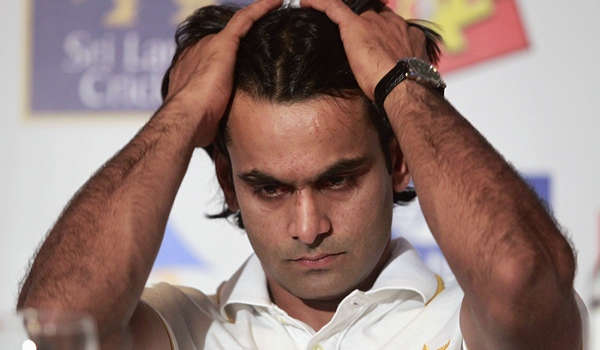
2015 Century Watch #16 – Mohammad Hafeez

mohammad_hafeez_pakistan_test_captain

Mohammad Hafeez – 224 v Bangladesh at Khulna

So while most of our attention is turning towards Bridgetown, there is a test match going on in Bangladesh and Mohammad Hafeez has filled his boots for a double hundred, moving into second place behind Kane Williamson in the highest score of 2015 list. This is currently the 146th highest innings in test cricket, and he is the 6th man to make this score, all of which have been in the past 22 years.

The first 224 was made against England, and it was by the man who stormed test cricket only briefly. Vinod Kambli made his highest test score at Mumbai on the fated tour by Gooch’s England, followed it up with another double against Zimbabwe and then never hit the heights again. Since then Lou Vincent (v Sri Lanka in Wellington), Jacques Kallis (v Sri Lanka at Cape Town), Mahendra Singh Dhoni (v Australia at Chennai) and Brendon McCullum (v India in Auckland in the series he followed this up with a triple) have made 224.

This is the 15th highest individual score in Pakistan test history. The leader is Hanif Mohammed with 337 in Bridgetown in 1958. It is the 38th double century in Pakistani test history (Javed Miandad has the most with six). Surprisingly (to me) it is just the 15th double century in Bangladesh, with the highest score currently Kumar Sangakkara’s 319 in Chittagong (Hafeez moved into 6th place with this innings).  Hafeez did not set the ground record for Khulna – that goes to everyone’s favourite saluter, Marlon Samuels, who made 260 for the West Indies against Bangladesh in 2012. Hafeez is the 5th Pakistan player to make a double hundred in Bangladesh – and his is the top score of those. Inzy, Younus Khan, Ijaz Ahmed and Mohammed Yousuf are the other double centurions.

This Mohammad Hafeez’s eighth test century (obviously his highest) and his third versus Bangladesh, with this being his second in Bangladesh. His previous career test best was 197 v New Zealand in Sharjah last year. Hafeez had suffered in the 190s before as he also has a 196 to his name v Sri Lanka at the SSC in 2012. For those eight test centuries, Hafeez has a DBTA of 64.17, which is more than useful. Hafeez has just the one ton away from Asia, which was made in Bulawayo.

Mohammad Hafeez made 100 off 123 balls, and this included 8 x 4 and 2 x 6. He made his 200 off 286 balls, which included 21 x 4 and 3 x 6. In total his innings lasted 332 balls and had 23 x 4 and 3 x 6.