Around The World – Part 2

In part 1 of the World View I looked at the fortunes of the three teams up there with England at the top of the World Rankings. In this part I’ll be looking at those in the mid-division and having a peek at their future series and where they might be going in the next year. This, I must stress, relates to test matches, not other international cricket. It was also written earlier this week, before the conclusion of the South Africa v New Zealand test. Hope you enjoy it.

South Africa

The Proteas were the top dogs of test cricket for quite a while (since 2012?) without ever seeming to have that aura of a dominant team. That was amusing because whichever way you looked at it, the 2-0 win in England to take the top slot was mightily impressive. It is hard to fathom that England have ever been more soundly beaten in a test match at home as they were at The Oval in 2012. South Africa’s reign at the top was assisted by the fact they rarely lost away from home, so that when they did lose at home, as they did to Australia in 2014, the away wins kept them top (along with the inconsistency of all the other nations).
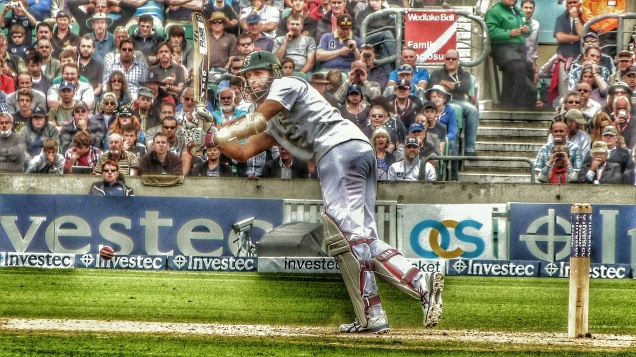
P1000684-01

The South Africans fortunes have waned recently, culminating in a horror winter of 2015/16 when they lost at home to England and were thrashed in India on what one might call some interesting surfaces. As they did so their cracks became clear. The first is at the top of the order. Walking into an England series with Elgar and Van Zyl looked like it was asking for trouble. Elgar is a solid citizen, and played well for a century in Durban, but he’s no Smith or Gibbs. Van Zyl was a middle order test player stuck up the order and did not produce. The middle order solidity of Amla, Du PLessis and DeVilliers let them down in the two series, and when that was breached, problems in other areas got exposes. DeVilliers in particular is sending out warning signals about his workload that some Saffer fans are not too happy about. DuPlessis did not score as heavily and his average dropped down to the low 40s. Amla cannot go on forever. Cook coming into the top order (some saying long after he should have been) added some strength and Bavuma has a lot of promise, but this doesn’t strike you as World Number One batting. What they seriously must hope is that Quentin de Kock is going to work as an opener. He’s great to watch in the one day matches and the South Africans would love to see him do that for them. He’s opened in this recent match, made an 80, but you suspect this is a Hales like experiment. Probably doomed to fail.

Where the cracks are really showing is in the Proteas’ main strength; their seam bowling attack. They simply can’t get their top four pacemen fit at the same time. Imagine an attack of Steyn, Morkel, Rabada and Philander in England next Summer? That is all we will do because Steyn is breaking down more than a 40 year old Trabant, Morkel is rickety, Philander has been out for quite a while and only just back, and Rabada is shouldering a large workload. South Africa have little spin threat, although Dane Piedt isn’t bad, but that’s something they are used to. The bowling just below test level is unproven – as it is most everywhere – but this doesn’t seem to be at the depth of England’s for example.

South Africa’s winter is a bitty one. They play this series against New Zealand, and look like they might win the test at Centurion, then play a five game ODI series against Australia at home. They then travel to Australia for a three test series in Perth, Hobart and then a day-nighter at Adelaide. Given Australia’s recent travails in Sri Lanka, that looks a potentially exciting series. Sri Lanka visit South Africa for three tests starting at Port Elizabeth on Boxing Day (followed by Cape Town and Johannesburg).and then a whole host of limited overs bilge. Then South Africa jet off for a series in New Zealand, playing copious amounts of ODIs before settling in to a three test series starting in early March in Dunedin – the other two matches are at Wellington and Hamilton.

With that workload their chances to get to England with the four pace bowlers intact looks limited. 11 test matches I make it, and bundles of hit and giggle. Those people sniping at AB for the workload comments (and yes, that is rich when you make the IPL your be all and end all) may need to revisit it. South Africa are at the crossroads, like so many, with younger players not really establishing themselves in blocks, but with enough green shoots to be tantalising for the future. They need to eke out as much as they can from AB and Amla before they ride off into the sunset. That may not be far away.

Sri Lanka

The legends are bowing out, one by one. Holes in the test team need to be filled. By common consent, from what you read, the authorities running the game in Sri Lanka are beyond the ECB in ridiculousness. There are perennial financial crises. The nation that brought  us Murali, Vaas, Kumar, Mahela, Sanath, Aravinda et al looked firmly on the downslope of their test match fortunes. They seemed the poster children for the travails of the test game worldwide. They played a frankly miserable series in early summer England (and I use the word summer with due poetic licence) where they lost 2-0, may well have lost the final one but for rain, and all seemed doom and gloom.

Then Australia visited Sri Lanka and all hell broke loose. Suddenly, a month later, they had whitewashed the supposed World Numbe One team (and when have we ever seen a number one team thrashed like that in Asia. That never happens) despite batting weaknessess that have been opened up wherever they go.

The reasons for the Sri Lankan demise, if that is what it is, is that maybe in this modern era of test cricket, having oven ready longform players is not going to be the norm. These players are going to take time to adjust, to gel, to form decent careers. In many ways this means selectors and senior pros are going to need to take time and not a little skill to identify who the top prospects are. Sometimes they will thrill you, play the innings of their life and give you a glimpse of their ceiling, but that is just what it is, a glimpse. We’re not talking about a James Vince cover drive in a dashing 30, but a matchwinning, Mark Butcher 173-esque zone of a lifetime knock. A Chandimal. A Kusal Mendis. A Dananjaya De Silva.

For Chandimal, who also keeps wicket, that’s not such an issue, but Kusal and Dananjaya have given us a tempting look at the future. All around there is uncertainy, save for the trojan captain Angelo Mathews, who can’t go on forever. The fleeting sights of a Karunaratne ton are outweighed by maddening inconsistency. Kaushal Silva shows flashes of brilliance. There seems no shortage of those flashing lights, but they aren’t as world savvy as their predecessors, and aren’t coming into a team protected by the genius bowling of Murali. And while Herath is a lovely bowler, a joy to watch, and of full of width as your author (actually, I wish), he isn’t Murali and we can never hope to see another.

That 3-0 win was a shot in the arm for test cricket. In each test they won the scraps. When it got tight, they got out of it. In each match they exposed the visitors’ weaknesses and held sway. In doing so they threw Australia into crisis. The spin bowling was brilliant, and although the seam bowling, despite Sanath’s cries, is not the best in the world, it has enough going for it. Will it be worldly wise enough to carry them through the next few years? Only time will tell. But watching Sri Lanka will be fascinating going forward. I think they are the bellwether for tests (along with the West Indies). When Sri Lanka’s production line is strong, then there’s warmth in my heart for tests.

This winter Sri Lanka seem to have no test cricket until December when they travel to South Africa for the three tests mentioned above. They outstrip England for a stupid tour (our’s to the West Indies for 3 ODIs) with one to Australia for three T20 internationals in February. And that is it. There is nothing on Cricinfo suggesting they will be going anywhere else. Are they going to Zimbabwe? Their future tour programme shows a massive blank up until five tests at home after the Champions Trophy (2 v Zimbabwe, yeah right, and 3 v India).

So how can you develop with a patchy program like this? So those that shout from the rooftops that Sri Lanka’s win against Australia vindicates test cricket, should look at the bigger picture and wonder why they are spread so thin this winter? Sri Lanka are one of those teams to nurture, not shun. We won’t be any further forward in knowing what we have in 9 months. Staying strong in South Africa would be an achievement, and then…. we may have quite a wait.

New Zealand

With those two series defeats, home and away, against Australia, together with the retirement of their talisman, Brendon McCullum, it really looks like an end of an era for New Zealand. Such as it was. The most patronised of international cricket teams might still be ultra competitive in the shorter forms with their explosive, brutal batting, but in tests the flaws are too great for them to march forward, and you don’t sense a production line of Kane Williamsons are there to keep them afloat.

The upcoming winter, if you include this series, sees New Zealand play 12 test matches, which is a considerable number compared to recent years and probably going to test them well. Two in South Africa, (well one given what happened in Durban) is followed by a series in India with three tests (see India section in previous post for venues). Then New Zealand host Pakistan in a two test series, have South Africa at home in three, and according to the FTP, Bangladesh visit as well with two tests in Wellington and Christchurch in January.

Of course, as English-centric as we are, we can only refer back to the last series between our two teams as a marker. Some have claimed it to be the most important series of test cricket played in recent years, which is lachrymose nonsense. It was a two test series contested between two evenly matched teams, and the cricket reached very good quality at times. It produced excellent performances, and it also contained some absolute nonsense (Day 4 at Headingley again…). The key message should have been that a two test abomination at the start of a summer treated a good team with contempt. Instead it was Stokes and Cook.

So what do we have with New Zealand now? In common with pretty much all test teams (India aside?) there are problems with openers. Latham and Guptill don’t seem to be that secure but they don’t appear as though they are going to be left out. The replacement is Rutherford, I presume. The next two batsmen are plenty solid enough – Kane Williamson is in the top echelon of players, and as I write he’s the only one not falling apart against South Africa. Ross Taylor has had some top innings in the past year, and is a major player. After that we have promising players, unproven players and insecurity. That is except BJ Watling, who is one of the most unsung cricketers I’ve ever seen. I’m a huge fan, and it is always a sense of consternation to me that his innings at Headingley is hardly ever mentioned. He’s a total pest to shake off when he is in.

Then there is the bowling. Trent Boult and Tim Southee are a good opening pair, and there is back up in the seam department with Wagner, Bracewell, Henry and Milne. The spin bowling is taken care of by Santner at the moment, but like many others, the lack of mystery spin, or even a Swann-type hinders many teams these days. New Zealand are no exception. Will we have any more idea where New Zealand will be in the next 12 months? There is a feeling of a slightly managed decline, with the odd top performance being countered by continued problems against foes they struggle against. Pakistan at home for two games, and South Africa for three look to set the tone for the next couple of years.

————————————————————

The Final Part will be around in a week or so, dealing with West Indies, Bangladesh and England. Zimbabwe? Why bother? Who knows when they play?

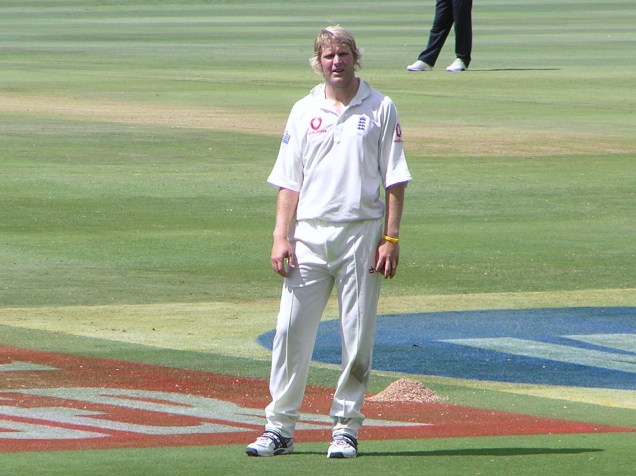
South Africa vs England: 2nd T20 Review

OLYMPUS DIGITAL CAMERA
Enter The Cauldron…You Get Boiled!

For reasons which have never been entirely clear, the BBC in their wisdom decide that while Test matches and tournaments are covered on the Radio Four long wave frequency, a T20 like this one isn’t, with them advertising coverage of Sports Extra which is of absolutely bugger all use to most people driving a car at the time as without digital radio there’s no way of listening to it.  It’s a curious policy for the BBC to have – one would think that those who listen to TMS usually would probably also listen to a T20 match, but apparently not.

All of which is by way of explanation that this afternoon was spent driving back from a family engagement, tuning in to try and listen to South Africa’s reply, and being unable to.  Having watched England perform a collapse that was spectacular even by their exalted standards, the final total was unlikely to ever be enough, but the hammering that followed wasn’t entirely expected.

All of which means that this is going to be a short post due to an inability to reasonably assess the defeat, except to say that the collapse was partly bad luck (the run out of Morgan) and partly self-inflicted (the run out of Hales).

What isn’t surprising is that the response concerned it being an inexperienced side and the various excuses therein.  As so often, there may be a grain of truth in it, but at some point those have to stop – with a global tournament next month you couldn’t say England go into it as one of the favourites, no matter how some have tried to big them up.

Over to you to tell me what the hell happened.


South Africa vs England: 1st T20 review

If we’re honest, then generally speaking the outcome of an international T20 tacked on to the end of a tour would be worthy of limited comment and response, sometimes we don’t even get round to writing anything about them, which may say more about us than anything else.  It’s the disposable Christmas present of international cricket, that one you look at, smile politely, toy with for a few minutes then put back in the bag never to be seen again.

With the World T20 approaching though, there’s more interest than normal, not least because of how these matches are to all intents and purposes part of the warm up for the competition.  It does have to be said that South African pitches bear no relation whatever to the conditions in India, but as an exercise in seeing how this new, exciting (®ECB) England team perform, then it has merit.

And how did they perform?  Well, for a side whose bowling has been decidedly average in the one dayers, this was a marked improvement.  To nearly defend 134 on a pitch where all the forecasts (for what they’re worth) had suggested 180 was the target was a pretty good effort.  But the reason that pretty good effort was required was down to another batting performance where England lost wickets while trying to be aggressive and stumbled to a modest score.  This is a difficult one, because if England are going to play this way, then there will be days when it all goes wrong, and the worst thing that can happen is for them to be criticised accordingly, while celebrating the days it goes right.  It’s the old “score at ten an over, but don’t take any risks” exhortation.  What can be said is that going hell for leather in all circumstances is not that much of an improvement in terms of consistently winning matches than being overly circumspect in all circumstances.  The very best teams adapt to conditions in a way that at this stage England don’t seem able to.  Given the choice of two limited tactical approaches, this is by far the better, but it would be nice to know that they had a Plan B from time to time.

As an aside, Kevin Pietersen got runs again, and is in his third T20 final of the winter.  There may be no way back, but it doesn’t mean he has to stop embarrassing the ECB.

It does mean that when all goes well they are a thrilling side to watch, and they did at least get some kind of score to defend, thanks to Buttler in particular doing just that kind of adapting.  Unfortunately, we’re still not really sure what kind of side England are, or what they’re capable of achieving.  Imran Tahir taking 4-21 is not a terribly promising sign for next month though, even if many of the dismissals were remarkably careless in nature.

What England did do rather well was squeeze in both the field and with the ball.  Chris Jordan has had a fairly miserable time of it so far on this tour in white ball cricket, but here he was outstanding, taking England to a position where they really should have won the game.  That they didn’t, well poor Reece Topley.  Having dropped Chris Morris first ball, he then had the over from hell, with balls two and three going for four and six; then missing a straightforward run out that would have tied the game and taken the sides into a super over.  The best thing that can be said is that these things do sometimes happen, and better now than in a knockout match in the World Cup.

For South Africa?  It’s hard to say.  They bowled well but made incredibly hard work of what ought to have been a straightforward target.  As ever, it’s a question of whether that was down to England playing well or them badly.  But it’s unlikely they’ll have learnt too much from this one.

It was quite good fun though.

South Africa vs England 2nd ODI Review

In these days of scores approaching 400, there’s something curiously old fashioned about a game where 260 is the target and it goes down to the last few overs. It’s almost a throwback to the 1990s, with Ben Stokes playing the Derek Pringle role by going for six an over and being given out twice, and not out once when he probably should have been for a duck of glorious proportions.

It all meant that after the pyrotechnics of the first match, this seemed relatively low key throughout, where you notice that the Port Elizabeth crowd are not only fond of singing, but offer a rarity at any sporting location of being very much in tune. There’s something rather beautiful about it.

Perhaps South Africa did rather make heavy work of their last ten overs, but at that point a score of around 285 would have been towards the top of their aspirations anyway, so while 262 was disappointing, it is hard to make a case that they lost it just in that short period.

De Villiers’ dismissal to another exceptional catch, this time by Chris Jordan, did come at just the wrong time, but De Villiers was looking to go fully on the attack at that point anyway, with all the risks associated.

Much had been written about the surface being slower and less conducive to hitting, but it still felt at least 30 or 40 short. Of course, the change in mentality couldn’t be better expressed than in the feeling that if the England of a year ago had set that total they’d have walked off to applause from people pointing at their laptops, saying that would win most games historically. South Africa weren’t aiming for a score around that level, it’s simply how it turned out.  In any one ODI, this can and does happen.

In truth England seemed in control for most of the run chase. Alex Hales will bat better than that for many fewer runs, and in some ways those are the most satisfying innings. It was cruel on him to be dismissed one short of a hundred he’d have worked so hard for.

When Hales was dismissed England still needed 61 off 52 balls and with half the side out, surely a tight finish was likely. 20 minutes later it was all over, as IPL bound Jos Buttler, aided and abetted by Moeen Ali, finished the match in a flurry of fours and sixes. He’s in some form.

2-0, and England’s transformation continues.

South Africa vs England: 1st ODI

An individual one day international is the equivalent of a McDonalds value meal, it’s appealing in advance, you quite enjoy it at the time, and afterwards you feel a bit empty and wondering why you’d anticipated it all day in the first place.  But enjoying it at the time is no bad thing, though a Super Size Me month might leave the equivalent feeling of sickness.

Given England’s approach to the shorter forms of the game recently, it remains consistently fascinating how they could possibly have got it so wrong for so long.  The team hierarchy of the time persistently denied that they were ever so fixated on statistics as was portrayed, though the less than entirely trustworthy Graeme Swann did claim that to be exactly what happened.  Whatever the absolute truth of it, it is hard to believe that England would have carried on throwing the bat with abandon after their quickfire start in order to reach a total just shy of 400 – more that they would have felt that keeping wickets in hand and a decent score over 300 would have been viewed as satisfactory.

Perhaps that is overly harsh, for received wisdom is a very hard thing to fight against and there’s a tendency to paint failed regimes in the worst possible light, but the reality is that five of England’s seven highest one day international totals ever have come since June last year.  Yes, it is true that the game has changed over the last few years, but it is only in this last seven months or so that England appear to have caught the zeitgeist.

Towards the end of the England innings it actually appeared quite possible that England might be bowled out, yet that didn’t stop them, they carried on attacking and considered being bowled out to be merely an occupational hazard.  For supporters of other teams around the world, this must seem a statement of the most bleeding obvious there can be, but for those who follow England, seeing them play this way is still a startling thing to witness.  There are a few players of recent vintage who would revel in this England approach.

Fifteen sixes were hit across the 50 overs, which is a record for England, and you wouldn’t bet against them breaking that again next time out.  Jos Buttler will rightly get the plaudits, for a blistering century that came off 73 balls, and still represents his slowest one yet.  That in itself indicates the absurdity of the past, and the delight of the present.  For it is bringing the best out of players who when set free can be a joy to watch.  For Root’s 52 off 58 balls to be the slowest innings in the top eight is absurd.

Buttler made the big score, but Roy looked more assured at the top of the innings than he has done before, Hales appeared liberated from the inhibited player in the Test series, while Stokes simply terrifies opponents at the moment.  His catch to remove De Villiers on the boundary had the preposterousness of so many great all rounders of the past, for whom sometimes nothing is impossible.

South Africa’s run chase was ultimately doomed by the rain that curtailed the match and allowed England to win by the not insubstantial margin of 39 runs under Duckworth-Lewis-Stern (let us hope there are no further modifications to this system, it is taking a while to type) and in truth would probably have won the game had it gone to its natural conclusion  But probably is only as far as can be said, for Quinten de Kock certainly had other ideas.  He was on the field every ball of the match, and batted superbly well to be unbeaten on 138 when the weather closed in.  With another 150 needed, and half the side out, it would have been a big ask, but not entirely impossible.

Thus far only batsmen have been mentioned rather than bowlers.  One of many jokes a batsman will lob in the direction of their bowling colleagues is that they are there to serve – and to deal with it.  In Test cricket, the bowlers are the most important members of the side, in ODI and T20 cricket, they really are there to serve.

England go 1-0 up, while South African supporters will lament that the shortened game robbed them of what could just possibly have been a great victory.  There’s been enough in this match for there to be another queue at McDonald’s on Saturday.


South Africa vs England: Fourth Test, day four [Sticky – Other Posts Below]

Providing the weather holds, South Africa ought to win the final Test of the series some point tomorrow afternoon.  For the match has been thoroughly one sided throughout and unless England somehow escape through their own endeavours, which is possible but unlikely, a draw seems most possible only with the help of a thunderstorm or two.

If that were to happen, then perhaps the finger could be pointed firmly at the home team’s captain and coaching staff, for the lack of urgency in building the lead in the second session and after tea was unusual to say the least.  It’s not exactly a matter of batting on too long, more that with a more positive mindset they would have been able to declare somewhat earlier.  Still, with three early wickets already taken South Africa would be disappointed if they failed to finish England off, so the point will probably be a moot one, but just occasionally, this conservatism comes back to haunt teams, as England found on a number of occasions, most notably in managing to lose a series in the Caribbean they dominated, but where sheer timidity cost them two Tests and one collapse ultimately the series.

Certainly South Africa’s reluctance to take risks was justified early on, for with Anderson taking two wickets in an over early on, there would have been some concern even though at 182 ahead for three wickets down, it was hardly disastrous; given the collapse in the last Test, perhaps it was forgivable.  But the lack of acceleration after lunch was less so, as by that point they were 254 runs ahead with four wickets down.  England probably weren’t too upset.  Between lunch and tea they only scored 102 runs in 30 overs, and after tea 65 runs in 15.2 overs – a small acceleration, but hardly putting their collective foot down.

By that point, and with England going through the motions to an even greater extent than they have in the Test is a whole – bowling wide of the off stump and wide of the leg stump in an effort to restrain the scoring and keep them out there, the Test really wasn’t going anywhere, except for a debate as to whether they were intending to let Bavuma score a century.  It was a touch peculiar, and suggested a side seriously lacking confidence, for there was no sign of an imminent declaration.

The rain break forced their hand and with a pretty nominal 382 required in 109 overs, England were left with just a draw to play for.  They didn’t exactly start very well.  Alex Hales did get one that kept a touch low, but that he hasn’t had a great series is plain.  As ever, it needs to be qualified that he’s hardly alone in not having a great series.  The radio report from Jonathan Agnew this evening highlighted that he’s averaged 17 across the Tests, and that is indeed not great.  Yet it is as striking as it always is that this point was followed with saying that Cook was the next to be dismissed, with no mention of him only averaging 23 in the series.

It is tiresome to have to keep writing this, but it does Cook no favours to be treated as the prodigal son all the time.  Yes, he has a very strong record behind him, and yes anyone can have a bad series.  But to specifically, repeatedly and consistently overlook when the chosen one doesn’t do well as though it is of no consequence is failing to properly scrutinise matters.  That does not mean for a second that Cook is or should be in any kind of danger of his place, for he had a decent 2015 after a disastrous 2013 and 2014 and has the fine career as evidence of his skill and ability.  But what it does mean is that he has had a bad series.  It happens.  It’s worth noting.  It’s worth mentioning.  It is something that when totally ignored draws attention to the disparity in treatment.  Sky have managed to skilfully ignore his poor series but still mention that he’s closing in on 10,000 Test runs.  That will be a fine achievement, and worthy of comment as the first England player to reach that mark – though another would probably have done so sooner had his career not been curtailed.  It is also true that he’s not had a great tour.  It is quite astounding how the media will go out of their way to ever mention these things.  Once again, it is not a case of criticising him heavily, querying his position, calling for his removal or any such thing, but it unquestionably is about highlighting how TMS can entirely ignore it, yet tweet a question as to whether Compton has convinced in this series with an average of 30.

For tomorrow, England do have a long batting line up, but assuming a full day’s play of 98 overs, pulling off a draw here would be an outstanding achievement.  Indeed, nigh on impossible though the target might be, with a middle order as attacking as England’s is, it would probably be more likely that England win rather than bat out a draw, and that’s very unlikely indeed.  And if South Africa do win the Test, then Scyld Berry’s point that it would have set up a fifth Test perfectly is ever more apposite.  It was meant to happen, for the ECB promised it would a few years ago. It didn’t.  And while the home team have to approve the scheduling, there has been a remarkable silence on the part of the ECB that their desire for five has been flouted.  Four Tests is at least an improvement on the dreadful three match series in 2012 that was blamed on the Olympics, but five is the best Test format for big series for very good reason – as previous England – South Africa encounters have demonstrated amply.  It’s not being wise after the event, plenty of people who love cricket were disappointed it wasn’t five before the series started.  Apparently, only India and Australia are deserving of this.  The Big Three who have accrued all the power and money to themselves, allowing five match series between themselves.  Try to contain your shock.

England’s repeated defeats in the final Test of a series, dead rubber or otherwise, is beginning to look careless.  Curiously, it isn’t so long ago that they suffered from losing the first Test of a tour consistently.  The series win is a fine achievement, and whether South Africa are quite the side they were doesn’t change that.  But if they do want to be the best side in the world, there’s plenty of work ahead of them yet.

Day Five discussion below.


From Vaughan to Cook – Compare and Contrast

OLYMPUS DIGITAL CAMERA
Hoggy at Joburg – 2005

The series win was clinched yesterday and it’s one to savour. Since readmission we’ve won one series at home and two away against South Africa, and while we can get the feeling that we are beating a side on the way down, it’s also a salient point to remember that in 2005 we were thinking much the same thing. A number of us on this blog remember that 2004/5 series win as probably one of the greatest away wins England had, and we aren’t wrong. But there were also some similarities as well.

Any victory, in fact any tour result, has an obvious series to compare it to. 2005 Ashes had 1981, the whitewash of 2013-14 had the whitewash of 2006-7, every dominant Aussie side will be compared to the number 1 team of the late 90s, early 2000s. England’s series win here will be compared to 2004/5, so let’s do some of that now. I’m going purely on memory of 2004/5, so any errors, please let me know.

Going into that tour England had had an amazing 2004 – they’d won all but one test match they played, and that was due to playing against Brian Lara on the Antiguan equivalent of Heathrow Airport’s main runway. Some of these wins came from blowing the oppo away, but many came from gritty batting displays chasing down some very itchy totals – I’m thinking New Zealand at Lord’s (the Nasser farewell), New Zealand at Trent Bridge (all hail Thorpe) and West Indies at a very gloomy Old Trafford (a grossly unfairly forgotten knock by Rob Key). During that spell we’d drafted a new opener (Strauss) who had settled in well, and a new keeper (Jones) who made a ton in his third test. The bowling was gelling as a unit, without Simon Jones, but with Hoggard, Harmison, Flintoff and Giles. The batting was solid, Strauss, Tres, Butcher/Key, Vaughan, Thorpe, with Ian Bell waiting in the wings. The focus was on 2005, and the Ashes. This was our chance. But in the way, and as it turned out, how great it was that it was, was a tour to South Africa.

Readers will know that I went to the Cape Town test, and also two days of the Jo’burg match on that tour. You may also know that by pure chance we booked into the Guest House run by the former manager of the South African cricket team who had just recently been reassigned when the Board sacked coach Eric Symons and installed Ray Jennings. This was also the time when the South Africans had a right downer on Mark Boucher. On our first full day in the country the hosts arranged for a friend to take us round the Cape Coast, and it turned out he was a retired sports journalist. We’ll always remember (I went with Sir Peter) his rationale for the exclusion of Boucher (“the board hate him. I hate him. He suffers from “little man syndrome”).

At this stage the home side were 1-0 down and had just narrowly avoided it being 2-0. The first test at Port Elizabeth was a triumph for Andrew Strauss, who made a ton in the first innings and an unbeaten 90-odd to see us home in the second innings. It was a top test match, as the game ebbed and flowed, and it also saw two reasonably decent players make their debuts, AB de Villiers and Dale Steyn. I think it fair to say we were far more impressed by the latter at the time. That team looked unbalanced, with Tsolokile keeping wicket, new players, and confused selection. The coach had come over as some sort of boot camp sergeant (infamously pinging a ball of Smith’s head in catching practice in Joburg) lacking any degree of sophistication.

The second test in Durban was one of those “stake in the ground” matches for England which made you utterly proud of them. The first two days could hardly have gone worse. Put in on a helpful wicket, England were skittled in the first innings for 139 and then felt the brilliance of Kallis who made a brilliant 162 and put the hosts nearly 200 in front. Three days left and the situation looked bleak. England did not wilt. They erased the deficit for no loss, piled on 570 for 7 declared and gave themselves time to bowl South Africa out. The hosts were clinging on (just as Sir Peter and I were venturing out for a beer in Cape Town – we were successful in our pursuit) and arguably were saved by the bad light.

The third test, in Cape Town, was a wake up call. England conceded 400+ in the first innings, fell foul of Charl Langeveldt on debut by collapsing in the reply, with the hosts putting on the required runs in enough time to give them to bowl us out for a second time. The game was sealed mid-way through Day 5, giving us enough time to belt up Table Mountain before our flight out the following day.

OLYMPUS DIGITAL CAMERA
Herschelle Gibbs about to sweep and bring up his century – Joburg 2005   (c) DmitriPics

The Joburg test was one of those seminal moments for that team. A great first day (when we were driving down from Hluhluwe to catch our flight from Durban for Day 2) by England was eagerly taken in on the radio and the airport TV, but as we were in the air Strauss got out for his third hundred of the tour, Key was dismissed for 80 odd, and Thorpe a duck. It wasn’t so great. Nor was the weather in Joburg on Day 2, but there was enough play to see Vaughan regain some nick and he and Harmison put the hosts through the wringer before Bucknor took everyone off for bad light. England had over 400, declared overnight, and a lovely sunny Day 3, spent sitting next to Kevin Whateley while not uttering a word to him, saw Herschelle Gibbs make a century, and South Africa claw their way back into the game. We flew home that night. What followed was possibly Tres’s greatest knock for England, and then possibly Hoggy’s greatest spell of bowling. With time running out England knocked over the hosts and took a 2-1 lead.

Centurion was blighted by weather, saw AB make his first test hundred (having got out in the 90s in the first innings), Kallis make his third of the series in mystifyingly slow circumstances, and England wobbling in a nervy last session. There wasn’t really a doubt, but we’d suffered enough in the past to have it in our minds that it was. But even in that test there was confused thinking from the hosts. DeVilliers opened with Gibbs with Smith batting at 5! Seems odd to think that now, doesn’t it?

So, using this as a tenuous reference point, what are the similarities. Well, there was a feeling that England were on the up, with a team coming together. The batting had largely held up, but we knew Thorpe was nearing the end and the assumption was that Bell would come in. Butcher had played his last test, although we didn’t know that at the time, and I’m not sure Key ever played again, either. We know who came in for that slot, and we were a matter of days from hearing the name that partially dominated the newsline for the next decade. Our bowling was solid as a rock, even allowing for Jones not quite nailing it and Anderson having a bad time at Joburg.Harmison didn’t have a great tour, but then we won without our main bowler having an impact. Broad went into this series as Anderson’s oppo. Now he’s on top of the pile.

Jones was a concern at keeper as he had developed a habit of going for pretty much all that was heading for first slip and not nailing it. Bairstow finds himself a bit more advanced on the batting front but with still major keeping concerns.

We encountered a South Africa unsure of themselves and it permeated the team. Van Jaarsveld had a decent second test, playing a big role in saving the game, and was bunted out straight away and turned into the Surrey-killing Kolpak. Tsolokile was keeper for one test, then it was AB, then Boucher. Openers were changed. Pollock wasn’t long from the end of his career. South Africa had a Nathan Lyon complex over Nicky Boje. But they also had two gun young players in their midst – Steyn and AB and that meant hope sprung eternal. Also in that series we saw Amla. This Hashim Amla was a walking wicket, a man no-one feared. Stick with someone and you never know what you might have might be the mantra.

For AB and Steyn the hosts must be hoping Bavuma and Rabada are somewhere in the same zipcode. Can you rely on that and also, there are othere ageing players in that line-up too. But all the comments I’m seeing on the future for the South Africans are grim. When your not quite made it test players can go back to first class cricket and immediately dominate, it does not look great. A number subscribe to the “cyclical nature” of cricket but that’s not happened for the West Indies, is not looking likely for Sri Lanka, and who is to say Pakistan will continue to churn out talent? The noises around AB, that has inspired huge discomfort from the Saffers I come across on Twitter, have not eased anyone’s soul. There’s a lot of discontent that AB took his first captaincy press conference to pour cold water on the future spoke volumes. It may not be the cause, but the effect is that if you feel your leader’s heart isn’t 100% in it, then nor should your’s – even sub-consciously. South Africa have been under the leadership of two players who don’t really exude commitment to being the main man. The fish rots from the head.

OLYMPUS DIGITAL CAMERA
Leaving The Wanderers – 2005

For England this is a great win. Let’s not get churlish about this from the team’s standpoint. Durban was won due to important batting contributions from Compton and Taylor, not our usual old faithfuls. It was won without Anderson. Then there was Stokes and Bairstow at CT, and then two of our old reliables, Broad and Root in Joburg. The batting isn’t world number 1 class, it just isn’t making the runs across the board, the opening slot is a mess, the number 3 in flux, Taylor hasn’t nailed down five (nor is he letting us down) and it’s because the batting has depth down, arguably, to nine, that this is not as crucial. While 2-0 in South Africa is a tremendous result, it doesn’t, for example mean 2-0 in UAE should be ignored, not with the challenges of India this winter on the horizon. This is the World #1 opposition in name only, and a #1 in flux and down in the mouth. We did what we should do. Beat a team in that shape, and make it worse.

Just for laughs, I thought I’d pick a composite team of the two from those winning squads. I bet this will go down well.

  1. Trescothick
  2. Strauss
  3. Vaughan (c)
  4. Root
  5. Thorpe
  6. Flintoff
  7. Stokes
  8. Bairstow (Wk)
  9. Ali
  10. Broad
  11. Hoggard

Five from this team, six from 2005.

Have a great rest of the day.


South Africa vs England: 3rd Test, day three

Whatever was expected for day three, it wasn’t this.  England grabbed the moment, and with it the match and the series. The headlines will be all about Stuart Broad, and so they should be.  For he has now taken 5 wickets in a bowling spell seven times in his career, which is remarkable.  I was fortunate enough to see the first “Stuart Broad Day” back in 2009 when he ripped through the Australian batting order to effectively win the Ashes back for England, and there’s something about him when he gets going that makes him irresistible, he goes through batsmen like a knife through butter.

Broad is one of those players who seems to attract as much criticism as praise, and he’s not even close to being one of the best loved of England cricketers.  His demeanour over the years has sometimes irked people, and his tendency to blow hot and cold has often frustrated – as tends to be the case with explosive players, some remember the bad times rather more than the good.  The same applied to Kevin Pietersen of course, where some would choose to deny the match winning performances and point to the failures, as if that meant anything.  Those who make the game look easy at times are cursed to be berated for not producing excellence on every occasion.  Yet Broad’s overall record as a bowler is now a genuinely fine one.  He didn’t have a great start, and his bowling average didn’t dip permanently below 40 until his 21st Test, and only went below 30 after 76 matches.  And yet that average continues to fall and is now at 28.54, which is more than respectable.

Nor is this just a golden spell for him, for his bowling average over the last five years is 25.67, and over the last two it is 23.97.  This suggests not only a player who is of Test class which has been apparent for years, but one who is now world class.  He should now be at his peak, and James Anderson may well be nervously looking over his shoulder as the England record wicket taker, for over the last year or so Broad is just beginning to reel him in.

England have been on the receiving end of games like this often enough, where the team becomes crippled by uncertainty, unable to score, and reduced to resembling startled rabbits, transfixed in the headlights of a rampaging bowler.  And yet few of his wickets were batting errors, they were instead outstanding bowling.  He won the man of the match award for it, and although some felt Joe Root’s hundred the greater contribution, it was Broad who created the result, and perhaps given the name of the award, that is the right approach to it.

South Africa are unquestionably a team in transition, the loss of their great players to retirement and the absence of Steyn and Philander through injury have reduced them to a shadow of the outfit that reached number one status in Tests, but both age and injury are facts of sporting life, and it’s never been an excuse when England have lost, so nor should it be now.  However, there is a strong sense that these are two sides heading in opposite directions.  If this is purely a cricketing circumstance, then for the English it would be a reason for celebration; this England side is one that is full of verve and vigour, playing an attacking and incisive style, and responding to adversity by going after the opposition.  There is much to like about them.

The trouble is that with Test cricket in the state it is, any pleasure from it has to be tempered with real concern about the future.  The ICC stitch up with the resulting loss in relative income means that the potential for South Africa to lose their best players to T20 wealth is high, and if that is so, then building another fine side could prove beyond them.  For the point about Test cricket is that to take the maximum pleasure from your own side winning so handsomely, it must be in the knowledge that in future the tables will be turned.  That is after all why the English and Australians gleefully tease the other, because they know next time they’ll get it back to the same extent.  Success is only special when failure is an option.

England’s win means that South Africa are dethroned as the side at the top of the ICC rankings.  India for now take over, with Australia in second place.  England may well be currently fifth, but with home series against Sri Lanka and Pakistan to come, are more than likely to move up the table quite quickly.  In short order the top three Test sides will almost certainly be India, Australia and England.  Quite the coincidence.

With that proviso, it remains an outstanding feat to win the series, for since being accepted back into international cricket, Australia and England are the only sides to have won series there.  That is perhaps not so surprising as it might seem, for South African conditions are entirely alien to all other sides bar perhaps New Zealand, who you wouldn’t expect to win there often if at all.   Yet those predicting a healthy England win before the series were considered outliers, and understandably so.  England have unquestionably exceeded expectations, the younger players have brought verve and joie de vivre, and the side appears a very different one to the nervous, hidebound and risk-averse outfit under late era Flower and Moores.

Which means praise for Trevor Bayliss and Paul Farbrace in particular – and indeed Andrew Strauss for appointing the former and backing the latter.  Good decisions should always be acknowledged, in the same way that bad ones should never be brushed under the carpet.  The style of Bayliss and Farbrace appears to be to remain in the background, encourage the players to express themselves, ensure the captain runs the side rather than being a cipher for the backroom staff, and to play attacking cricket wherever possible.  What sets them apart is that so far they’ve actually done it, for every coach says these things, but they have managed the ultimate coaching trick of getting out of the way.  Cricket is not football, and prescriptive management isn’t going to work.  Being a support and an adviser is, and early stages though it might be, the signs are excellent.

England aren’t a very good side just yet.  But they might become one.  From the depths of disaster, largely self-inflicted, that’s considerable progress.

South Africa vs England: 3rd Test day two

In the world of Formula One racing it’s been said that in order to make the sport exciting, just add water.  And so it is with cricket, though adding water isn’t a great idea.  Instead, add a pitch that has some pace and bounce to it, where bowlers feel they are in with a chance, and good batsmen can play shots and score centuries if they play well.  Quite simply, it makes for better, more exciting cricket.  The trouble is, a surface like this tends to be exception rather than the norm, with a tendency towards slow, turgid pitches that can be nigh on guaranteed to last into a fifth day and thus make more money for grounds and boards.

It’s a quite astoundingly short sighted view, for endless slow pitches just make for boring cricket, as fast bowlers end up on their knees from the exertion of trying to extract something, while batsmen find playing shots difficult and merely accumulate.  The result is slow scoring, few wickets and a crowd who have either drifted off to sleep or haven’t bothered to turn up in the first place.

Of course, cricket needs to be played in all conditions, and home advantage should be just that.  And the domestic cricket played on the pitches the domestic structure creates informs the strengths of the home side.  Yet when Test cricket is in dire need of support from its boards – and the suspicion is they couldn’t care less about Test cricket because it doesn’t make them money – the refusal to comprehend what is right in front of them is part of the damage being done.  Of course, the disparity in incomes, both for players not from the Big Three countries, and their respective boards is the biggest factor in the current swathe of articles about the danger the game is in, but it’s not just that – or rather there’s a corollary point that’s related to it.

It all comes back to money and to power.  The crisis in Test cricket due to the land-grab by India, England and Australia has finally got the attention of at least some of the newspapers.  These are the papers who generally ignored the whole matter with the odd honourable exception who pointed out what the likely impact was.  Those terrible bloggers added their voices to the writers retaining their integrity and lambasted the others for their ignorance or lack of interest (or both in at least one case).  Perhaps we should be grateful they’ve noticed at all, certainly the British newspapers managed to pretend Death of a Gentleman didn’t exist.  And given the wider issue and the importance of it to a game we love, it is better late than never.  Just.  But if they have noticed the trouble Tests are in, they still haven’t joined up all the dots.  Chairman’s Pitches are part of the same equation; the players certainly don’t love them, on the few occasions they can be persuaded to venture a real opinion (the deliciously outspoken Moeen Ali apart ) the one thing they will loudly criticise are pitches that have nothing in them.

The ball is also part of that.  It really doesn’t matter whether the ball is a Duke, a Kookaburra or an SG, it just needs to last long enough to keep the bowlers in the game and not become a rag after 15 overs.  The pitch and the ball are clearly critical, and get those right and we at least have a sport that is worth watching.

The best, most exciting Test matches tend to be the ones that don’t go the distance.  In fact in some instances they are done and dusted in three days or even less, which is a disaster if that’s due to one-sidedness, thrilling if it’s a proper fight.  Nor is it about rapid scoring or wicket-taking per se, for a slow but tense passage of play can be the most exciting of all.  Test cricket might be considered the purist’s version of the sport, but the attractiveness of T20 stems partly from the fact there is plenty of action.  In Tests, cricket with uncertainty, whether with bat or ball, is very watchable cricket.  And very sellable cricket.  And very broadcastable cricket.  It’s not bloody complicated.

And so the groundsman at the Wanderers deserves immense credit; it’s not an exact science, and wickets can sometimes perform in a manner that leaves the ground staff tearing out their hair.  That’s a given, it can happen.  But the intent has to be there, as it is in Johannesburg and as it all too often isn’t in England.  And this is still trying to make use of home advantage, for a bouncy, pacy track is one where South Africa unquestionably fancy their chances of a win.  Not a thing wrong with that either, no matter how much certain hypocritical Australians might bleat about it.

And so this game has see-sawed, from South Africa throwing away a decent position on day one only to roar back with late runs, positively made, and then to leave England in trouble before Stokes and especially Root dragged England back into a position of parity.  We’re at the end of day two and we don’t know where this Test is going, except to say there will probably be a result.  This is perfect, this is Test cricket as it should be, where a cricket lover can’t take his or her eyes off the screen because something is going to happen.  You don’t know what, and you don’t know who – but something is.

The South African total of 313 is in that sweet spot where there is uncertainty as to whether it is a good one or not.  It’s one the home team will probably be fairly satisfied with, and has the notable record of being the highest Test total where no one has made a half century.  And when England were 22-2 and 91-4 they would have been ecstatic with it, and confident of a first innings lead of some size.  That this is now in question – and England really should reach parity at the least – is largely to do with one partnership that bounced along at seven an over.  Stokes of course was Stokes, a player who is lethally dangerous with the bat, and able to take a match away from the opposition in a session.  But Joe Root was the central figure, making his ninth Test century in a career that is rapidly flowering to be very special indeed.

Root has looked in form all series, making good contributions before getting out when set, to his clear frustration.  He’s now far enough into his career that we can start making proper judgements about him.  He’s had the poor run of form and come out the other side grinning – as he does a lot.  We may have someone truly special on our hands.  If he stays in any length of time on day three, South Africa are in trouble.  It’s quite striking how he seems to get to 30 without anyone noticing; he scores his runs at a fair lick without ever seeming to really attack; it’s his ability to find gaps for singles and twos that marks him out, for he doesn’t have an obviously rock solid technique defensively.  He can be caught on the crease, he can be lured into playing away from his body, and early on the slip cordon will be licking their lips.  But when he gets in, and when he gets going, he’s a joy to watch.

Alastair Cook was again caught down the legside cheaply.  It’s clearly an opposition tactic and a technical problem for him, where he is too far over to the offside and playing the ball outside the line of his body.  He has had a poor series with the bat to date.  Let’s be clear about this, batsmen can have poor series, they can be slightly out of sync with their movements and they can struggle somewhat.  You take the rough with the smooth and accept it happens.  With Cook it is what it always is, less about him having peaks and troughs, and more about his cheerleaders in the press refusing to ever acknowledge the chosen one has been anything other than magnificent.  Instead they will openly criticise other players who have done better across the series.  Some sympathy for Cook in this area is due, for this sacred cow approach is doing him a major disservice.  Acknowledging that a good player is having a rotten series doesn’t mean he’s not a good player.  It means he’s having a rotten series.  Try being honest and straightforward – it might be liberating.

A case in point resides with Compton, a player for whom there appears to be a queue formed in order to criticise him.  He made a slow start to his innings, and of course it suddenly because a topic for the usual suspects to mention it.  What is this?  Is playing yourself in suddenly unusual?  Isn’t this Test cricket, not a T20?  He got in, he got going, he scored runs – and then he got out.  He won’t be happy with the shot that led to his dismissal sure, but then the number of times a batsman is truly got out rather than bringing about his own downfall is rather few.  He’s done a mostly good job this series, and isn’t deserving of the scrutiny he’s receiving.

The hosts’ pace attack impressed too.  The absence of Steyn is giving the chance to some new, younger players.  Rabada looks a bowler of immense talent, and is a pleasure to watch, while Viljoen showed pace and hostility throughout, hurrying the England batsmen repeatedly.

Tomorrow is moving day.  It’s going to be fascinating.  Test cricket – it really can be good.

Day Three discussions below.


South Africa vs England: 3rd Test 1st day. Not a match report

One of the issues with a blog such as this, is that it’s written by people who have jobs, and jobs that aren’t in (and definitely not Inside) cricket.  That means that any post when a match is ongoing is dependent on being able to have the television or at worst the radio on during play.  In my own case I am fortunate enough to be self-employed with an office at home, and doubly fortunate that having it on in the background doesn’t distract me in the slightest when I’m concentrating on work.  Cricket is like that, it exists but it isn’t necessarily something where full on focus is possible or even desirable all the time.  The same applies when going to a match of course, where much of the time can be spent chatting to others; queuing for the bar (which at Lords can take up to a session of play, so inept are they at looking after their customers); queuing for food (because you don’t want to do that during that portion of the day usually referred to as lunchtime, unless you want to miss even more of the play); or nipping off to the usually vile loo.  Sometimes it’s as simple as wanting to stretch the legs that have indentations from the seat in front and where you try to recover some kind of blood flow in a backside numb from a plastic seat presumably bought in a sale at B & Q.

It’s a routine that cricket fans tend to be familiar with, and regular supporters take account of it.  As an aside, a picnic at the cricket is often viewed by the media as being somehow charming, as opposed to the reality of it as being a necessity when faced with outrageously priced, virtually inedible tat you’ve waited an hour to receive – at which point imminent starvation tends to win out over revulsion.

All of which is the background to explaining that with meetings all day, I haven’t seen a ball of the match, and haven’t heard a ball either.  But then you see, as I work for a living, I don’t get paid to watch cricket.  On the contrary, cricket costs me, and costs me a lot of money.  It’s not just tickets of course – for some on here go to far more matches than I do –  or indeed for some like Dmitri, flights, hotels and tickets.  It is also television subscriptions and the TV Licence fee.

This could be viewed as something of a disadvantage on a cricket blog, and indeed in terms of providing brilliant insights on a day’s play, it unquestionably is.  I mean, I could start talking about how late the fonts moved off  the seam on Cricinfo’s ball by ball text, but it’s probably not going to make anyone sit up and ponder.  But here’s the thing, this isn’t a newspaper, and it isn’t written by journalists.  We don’t get paid for this, and more to the point we don’t want to be paid for it.  In fact, let’s go further than that on the point about us not getting paid.  We don’t monetise this site through advertising either.  The odd advert does come up, but that’s a WordPress thing, it’s nothing to do with us.  The option to get banner advertising here is in the settings, it hasn’t been done, and it won’t be done either – neither of us are remotely interested in ever doing that.

And yet the idea that we are frustrated or failed journalists because we pen our thoughts here doesn’t seem to go away.  Let’s be clear about this, neither Dmitri nor myself have the slightest aspiration to join the ranks of the paid hack, to have to pay attention to the possibility of upsetting someone at the ECB, to worry about “access” to players or officials or to  have to write “Sponsored by Waitrose” at the bottom of a puff piece about Stuart Broad’s latest hairstyle (receding by the way, poor lad).  Why would we?  We have our careers and we’re both pretty happy with them.  More to the point, if journalists as a body were doing their jobs properly, then blogs like this would barely exist, for few if any would read them, let alone take the time to make comments which repeatedly teach me new things and find out contradictions and hypocrisies of which I’d otherwise be unaware.  Why unaware?  Well, you see it tends not to be in the papers.  Written by…oh yes.

What is puzzling is quite why some journalists find the blogs to be such a threat.  If they are so irrelevant, inane or downright mad, what’s the problem?  Clearly no one will pay them any attention and readers will instead genuflect to the great correspondents who nobly dispense wisdom on a daily basis.  So why even mention them, why make a pointed comment about the difference between a journalist and a blogger as if one is somehow inherently superior?  Because they get paid for it?  Some people get paid for having sex, we don’t tend to consider it a plus point.

We do get the occasional journalist talking to us directly on here or on Twitter.  It’s quite striking the difference in approach.  The ones utterly unconcerned about blogs tend to be friendly, inquisitive and (he’ll hate me for saying this) full of praise for my partner in crime’s writing.  The ones who are tend to make public comments at odds with what they say directly.  There’s a word for that kind of behaviour, although “insecure” fits, it’s not the one I was thinking of.

The first paragraph of this post detailed some of the joys of going to cricket when you’ve actually paid for a ticket.  How many journalists are in any way aware of any of it?  How many have paid to get in to a Test match and sat in the normal seats?  There’s a TMS commentator who played the game at the highest level and thought tickets were about £20; there is a total disconnect between those who report on the game and those who pay to watch.  It’s a delightful little club, where they really are Inside Cricket, and the rest of us are Outside.  Obvious it may be, and it’s all too often regarded as a trite point by those on the receiving end, but without people going to matches, they truly wouldn’t have a job.  In my line of business I’m acutely aware that without customers I don’t have a job, not least because it’s happened.   And yet there is very little evidence whatever that the media appreciate that most fundamental of points.  The various ECB disasters over the last couple of years were dissected repeatedly from the perspective of those on the inside of the special club.  The wider question of why people should pay a fortune to be treated like dirt at the ground while at the same time being dismissed as irrelevancies never occurred to many of them, because they don’t even realise that’s how it is.

It isn’t all of them of course, no one would claim that.  And yet those this isn’t directed at would know that perfectly well from reading it.  They know who they are, and they do good work.

Here’s the rub, great journalism does what a place like this could never do, and wouldn’t even try to do.  It can be majestic, and it can change the world (FIFA, IAAF).  You want to know the difference between a journalist and a blogger?  It’s that you can.  You want to know why there isn’t one?  It’s because you don’t.

Oh yes, the Test match.   Looks pretty even to me.  Here’s a match report:

http://www.espncricinfo.com/south-africa-v-england-2015-16/content/story/961977.html

Discussion on day two below!