New Zealand v England – 1st Test, Day 1

Your hard working writers have been working bloody hard recently, and so the articles on here are a little thin on the ground. We have always said we won’t post for posting sake, and that we know you understand this. A lot has got my interest recently, and even today there is barely concealed anger over the ICC Qualifiers for the World Cup. We’ve had the tiresome nonsense between two groups of adults acting like children in South Africa. We’ve had the KP retirement and the reaction (and lack of in some quarters). There was the schmozzle in Sri Lanka, there are the frequent laments over county cricket. If the game has nothing to moan about, then it can generate something in a heartbeat. Sadly, despite all these subjects we’ve just been crushed by our day jobs. So sorry, but that’s life. It’s especially tough when we see some of the stuff being put out there at the moment.

But we have some actual cricket tonight. I was going to say proper cricket, but I’m not sold on this pink ball stuff, but according to all and sundry I am supposed to be the one to get into line. This is a sad tour for me. New Zealand are attractive opponents, playing an exciting type of cricket, with some good bowlers, and we will be tested. So let’s just play two test matches, bunged on to the end of an extraordinarily long winter tour, which to the public at large is going to be as an invisible tour, straight out of the HG Wells novel. You can tell how important it is for all and sundry – no-one appears to give a toss that Ben Stokes is playing. It’s an interesting sub-plot rendered meaningless by it being so low key. Stokes is making a comeback in the country of his birth. Such courage, as Andrew Strauss said. Let’s play a game. Let’s see if it’s New Zealand-born Ben Stokes on the scale of South African-born Kevin Pietersen in days of yore.

The first test is being played at the world’s most Mickey Mouse playing area, with some primary school boundaries in play at Eden Park. It’s also being played under lights (you’ve said that already), and it’s a two test series. One wonders if the ECB don’t take this series seriously, why the hell should supporters? As I’ve said many times, England lost an Ashes series 4-0 and no-one really gave a shit. So why should we care about what happens in New Zealand?

We do need to start winning away test matches. It may not be something the ECB cares too much about, but there is a worrying trend of England folding when there are distances to travel. This is a big series for a lot of players coming off an underwhelming Ashes. Stoneman has a place to play for, and even then, I’d be dubious of his test longevity. Malan came out of the Ashes with rep enhanced, but it’s a fragile place to be, and he may end the winter being chucked in at number 3. Joe Root has a number of critics to placate, because he keeps making 50s but not 100s. Moeen Ali had a chastening Ashes, but he’s not allowed one bad series, while some of his teammates survive three or four. Alastair Cook thought about quitting, but then didn’t think about, made one massive knock amid the slim pickings, but he’s not under pressure. Why should he be? Jimmy Anderson and Stuart Broad and Chris Woakes also need to recover some of their mojo. Well, not Jimmy. He’s in the sainthood with Alastair. But both could do with good series to bring England a victory, if possible.

New Zealand are going to be formidable, one would think. Neil Wagner is particularly interesting, having run through the West Indies before Christmas. Boult and Southee need no introduction. Kane Williamson is a class act, and the fear is after the ODI series is that we have a red hot Ross Taylor to contend with. It’s got plenty to commend it, this match.

We also have Act Three in the Children’s Party in South Africa. Who will call each other the worst rude word? Who will come up with the unfunniest quip? Who will ask another player out for a fight after play has finished? Which team will be more cheeky to teacher (umpire or match ref)? Which player will actually shut up and play cricket? England as a team are no angels, that I know. But this series has seen some tense cricket, good performances and exciting periods of play. Hell, AB De Villiers has shrugged off his fatigue to be fabulous. They don’t need this needle, and for grown adults to say they do, they should grow up. I can’t say I perform better in work if my manager tells me to fuck off every five minutes, or it gets me going if I threaten HR every now and again. They don’t have the monopoly on tense working environments, so pack it in, you tedious bores.

Comments on both matches below. We’ll try to get day reports up as and when. No promises.

England vs South Africa: Fourth Test, Day Two

For a time during the afternoon, it looked as though at long last there might be a genuinely competitive Test match on the cards.  Sure, England had played well in the morning session, thanks to Jonny Bairstow’s masterclass in farming the strike with the tail, but with the tourists 141-3, and looking in reasonable shape to challenge the England total, the prospect of not knowing where the match was going after two days was a definite possibility.

That it didn’t happen was partly down to some excellent bowling – from James Anderson and Moeen Ali in particular – but also some woeful batting.  England received plenty of (justified) criticism for the way they rolled over at Trent Bridge, but with the series now likely to finish 3-1, South Africa have clearly demonstrated that however fragile England might wish to be, they can exceed it.

Both teams had faltered in the top order, and the difference in position wasn’t especially marked, but whereas England’s middle order had rescued the situation, first through Stokes, then through Bairstow, South Africa’s fell apart.  It doesn’t tell us that much about England, for the trio of Stokes, Bairstow and Moeen have rescued the team from calamity on a few occasions, but in this series at least, the same can’t be said about their opposite numbers.

Although England had lost a couple of early wickets, 312-9 in the context of the batting line ups didn’t look a bad score.  A rollicking last wicket stand with Bairstow turning a useful fifty into what appeared certain to be a remarkable century moved England into a position of likely dominance.  In itself that says a fair bit about these two sides.  There is some movement off the pitch and in the air, but this is a decent Test match wicket.  400, once the minimum expectation for the side batting first appears to be right at the top of the aspirations of these batting line ups.

Bairstow of course fell for 99, joining a substantial group who have managed to get themselves out in often peculiar circumstances in pursuit of that single extra run.  If ever there was an illustration needed that batting is done in the head, it is right there.  He was perhaps a trifle unlucky of course – not in the sense that it wasn’t out, but because it was a marginal call. In the world of DRS such calls are automatically considered “good” decisions as they are backed up by the technology, and perhaps the game is better for that.  But he may feel some chagrin for not getting that nebulous unwritten rule concerning the benefit of the doubt.  It’s the same for all.

If Bairstow had left England content at the change of innings, Anderson ensured that lunch was to be a happy place in the England dressing room, removing the obdurate Dean Elgar third ball to christen his newly named bowling end with a classical Anderson delivery, swinging into the left hander’s pads.

For the next couple of hours it was good Test cricket.  The loss of Amla to Toby Roland-Jones for the third time in succession cut short an innings where he looked in decent touch, an all too rare occurrence recently.  If he was fluent, Heino Kuhn was anything but.  Battling dreadful form and injury, he was eventually put out of his misery by Moeen Ali, but it should be said that if his team mates had batted with the same tenacity and determination as the under pressure opener, they might not be in the mess they are this evening.

Bavuma and Du Plessis then took over, not without alarms, but the match was fairly even.  And then it all fell apart.  Anderson removed both within three balls, and while they were decent enough deliveries, Bavuma’s decision to join his team mates this series in regarding the bat as an optional extra, and Du Plessis’ dreadful defensive shot that dragged the ball on to the stumps through the widest of gates was symptomatic of the difference between the teams – namely that brittle as England might be, they are tempered by comparison with their opponents.

With the exception of Elgar, every South African batsman this innings has got into double figures, yet none has made a fifty.  The tail did well, Maharaj, Rabada and Morkel being responsible for ensuring the 142 run deficit (with one wicket remaining) wasn’t even higher.  Yet De Kock was subdued, seemingly unsure how to play the deteriorating situation, and the procession of batsmen coming in and going out was of no surprise at all.

All of which means this match is following an identical pattern to the third Test (and similar to all the others this series).  England will have a huge lead, and with no rain to date the luxury of no time pressure whatever in setting a vast target – though doubtless some will be calling for them to push on and declare tomorrow night.

It’s not entirely clear why it is that matches, in England at the very least, have become so one sided in recent years, and the old truth that correlation doesn’t equal causation should make anyone wary of the easy blaming of T20 cricket.  But it doesn’t make for good viewing and it isn’t healthy for Test cricket.  The very concept of a battle unfolding over five days is undermined when the outcome is pretty much clear after two, every time.  This has happened in Tests since they began, but it is now sufficiently consistently the case as to cause even more worry about the health of the game than was already the case.  All sport thrives on uncertainty, for without it there is little point watching.  The up and down results England have had in the last couple of years is indeed quite uncertain, that is true, but the matches themselves are anything but.

Barring something preposterous, England will win this match, and with it the series.  But the feeling that the next two (probably not three) days are merely playing out the inevitable (yet again) is both frustrating and fundamentally lowers interest.  It’s to be hoped it is a phase, as can happen in sport, for if not the problems are even greater than has been supposed up to now.

England vs South Africa: 3rd Test, Day Three – Wet

The forecast wet weather duly arrived not too long after lunch, and that was that for the day. South Africa had managed to save the follow on, and given the rain that may yet prove to be vital in going to the final match of the series all square. Temba Bavuma deserves all the plaudits for getting his team into a position whereby with some help from on high, it’s just about possible to see a potential escape. He was helped in adding 50 to the team’s overnight score by Vernon Philander, fresh out of hospital, but clearly far from recovered given his repeated trips off the field during England’s second innings. He’s plainly still not well at all. 

Toby Roland-Jones was the man to take the final wicket, and in doing so completed a five wicket haul. Cricket history is littered with examples of players who shone brightly at the start only to fade, and while nothing should be read into his achievement in terms of his international career, if nothing else he will have this match. But he’s bowled well, and certainly added to the potency of the England attack in helpful conditions. 

With no follow on option, it was for England to follow the pattern of the first two Tests and go out in the third innings and build a lead. The overhead cloud still assisted the bowlers and Morne Morkel in particular made life especially difficult, accounting for Cook for the 11th time with a good one that left him and clattered into off stump. At the other end Keaton Jennings was struggling badly against Philander, escaping being caught in the slips via a cordon that couldn’t react in time as the ball flew off the edge. 

That he’s struggled this series is obvious, but all players need a bit of luck, and perhaps that was just what he needed. He also escaped being given lbw on review, but towards the end of the possible play he was starting to look more fluent and more assured. Should he go on tomorrow, on such fine margins can sporting careers be made. 

Tom Westley in contrast has looked like he’s been waiting to bat in a Test match for years. Both in the first innings and today, his stroke making has been notable, his ease at the crease remarkable. Once again, it means little in terms of the longer term, but on brief evidence, he does at least appear at home in the environment. 

With England 252 ahead, a better forecast for the next two days and a pitch still offering some assistance to  the seamers, it’s hard to see much other than England creating a huge lead and then asking South Africa to bat the best part of four sessions to try and save it.  As so often, it might be best if England were bowled out removing the need for a decision, but even if South Africa were to have a great morning, the chances are the target won’t be below 350.

The people most pleased with today will be those with tickets for tomorrow.

England vs South Africa: 3rd Test, day two – rampant

There’s a strange contradiction in being the Grumpy Old Men of the cricket blogging world. At the time England were being well beaten in India there appeared to be some kind of denial in many circles about the weaknesses of the team and the personnel. Excuses were made, post facto predictions were changed to meet the reality rather than how it had been seen in advance. Yet with really bad defeats (such as in the last Test) the press piled in, slating all and sundry for an abject display and questioning the very ability of the team to play the game.

Mild observations that sides are never as good or bad in defeat or victory as they seem to be never quite fit the zeitgeist, with kneejerk responses always a more fitting way to meet events. Yet with England today having an exceptional time of it, doubtless the same overreactions will apply, despite little of material fact changing.

England have played well here, but in a similar manner to how they have done so when succeeding over the last few years. Cook batted beautifully yesterday, and drew the sting from some fine bowling. He didn’t carry on for too long today, but can count himself unlucky to say the least to be on the rough end of a marginal lbw call. He deserved a hundred, but as has been pointed out, context free discussion of Root’s conversion problem can apply equally well to an unlucky Cook.

With his removal, Stokes and Bairstow went on the attack. Ah, now there’s a thing. It came off. Both players took some chances, played their shots and changed the context of the day, South Africa unable to contain them as the runs flowed at 5 an over. Outcome is all, for had that calculated risk not succeeded, it really isn’t hard to imagine the plethora of comment about being unable to play at a Test match tempo, preferably blaming current shibboleth, T20. The point there is that those critics aren’t wrong, but nor are they right just to point it out when it goes wrong. Responding to every move on the basis of whether it works or not is no way of assessing whether the strategy is a sound one, it’s a far deeper question than that.

That Stokes batted beautifully is not the point, it’s a matter of whether he (and the rest of the middle order) are given the latitude to fail as well as succeed playing this way. Forgetting the bad days just because today was a good one is as flawed as the other way around. England haven’t changed, nor has that middle order, it’s just that today they batted well in a similar style to when they did badly, and not just when failing spectacularly to save a match.

That’s not to downplay how good today was for a moment, for 353 always looked above par, even before what followed. There were decent contributions most of the way down, it was – as often – a surprise that Bairstow got out, while Moeen Ali took his controversial dismissal on review remarkably well. Toby Roland-Jones will think Test cricket is easy given he scored his runs at a healthy lick before having something of a party in his primary role.  He may or may not succeed as a Test cricketer, but not every player gets to have days like this.

Stokes certainly knows how to be the showman, and the three consecutive sixes that raced him through the nineties to a well deserved century were simply marvellous to watch. Some players simply make you smile or gasp when you watch them. It is those who make the game special, even if the less eye catching tend to be the ones who are more consistent.

South Africa, who had bowled so well on day one, were certainly hampered by the absence of Vernon Philander, off the field to much amusement due to tummy trouble, only for that to die away as it transpired he’d ended up in hospital for tests. His absence was keenly felt on a day where his bowling seemed ideal for the conditions.

If runs and wickets are the obvious measures of success, Joe Root had a good day as captain too. It wasn’t just that every bowling change he made seemed to work, it was also that he appeared to assert his authority as captain. The new ball was being wasted, a succession of pleasant, swinging deliveries from Anderson harmlessly passing outside the off stump. Good for the economy rate, not so much for taking wickets. It’s an observation that has been made before, and all too often considered heresy given it concerns England’s leading wicket taker. It’s curious how some, and only some players are considered beyond criticism. An observation may be right or wrong, but it doesn’t dismiss an entire terrific career either way. Still, Root’s response was to remove him from the attack after just three overs, something Anderson didn’t seem overjoyed about looking at his body language.

But here’s the thing: when he returned later in the innings he was right on the money; hostile, threatening the stumps and the edge, and every inch the bowler any England fan loves watching torment opponents with his skill. Captain and senior bowler could be an interesting dynamic to watch over the coming months, but it seemed here to get the best from him.

It was of course Toby Roland-Jones’ day. The merits of an old fashioned England seamer are often overlooked (yet curiously someone like Philander is lauded for showing exactly the same kinds of skills, albeit at a very high level), and here was someone who, after initial nerves, pitched it up, made the batsmen play and did a bit off the seam. Where he led, others followed, and at 61-7, and with the absence of Philander effectively 61-8, the only question, and surely not a serious one, was whether England would enforce the follow on.

Temba Bavuma has shown himself to be a batsman with good temperament before, and the task of extracting his side from the wreckage was one he seemed to relish. In company with Rabada he at least stopped the rot, a partnership of 53 not enough to change the direction of the match, but one at least to narrow the gap from catastrophic to merely disastrous.

It’s possible Philander will be fit to bat tomorrow, but it will take something truly remarkable to move this game away from what appears an inevitable England win. With some inclement weather around, saving the follow on has to be the first and only aim, but only two days have gone, it’s hard to see how it can delay England long enough to prevent victory.

All of which leads back to the beginning. England have had a great day, but just as the fourth day at Trent Bridge didn’t alter the known strengths in the team, nor does this cover up the multiple flaws. Today went well, and they should win this game. It hasn’t re-written the book.

The Third Test – Preview And Day 1 Comments

Dmitri (dangerously referring to himself in the third person) goes a little nostalgic and you will all pay…

England v South Africa at The Oval. It wasn’t that long ago that the day before the Oval test started would be a frantic one. Tidying up loose ends in the office, arranging the meeting places for the ticket collection, determining who was bringing what to eat. The day(s) at The Oval were one of the highlights of the year for me – the Oval test put on the calendar, leave booked early, anticipation rising.

But it was England v South Africa in 2012 that was the final straw – my angst pre-dating the Difficult Winter. I had missed the first day, as prices had increased and the purchasing power of my salary had diminished, so it was Friday and Saturday for me. I saw England collapse on the Friday and watched South Africa lose two wickets in the ensuing five sessions. I’d also left my camera battery in the charger for the Saturday, and was, how can I put it, “in a bit of a mood”. It wasn’t helped by England being smashed, feeling terribly uncomfortable all day in the Ryanair seating, and being surrounded in front and behind by people who annoyed the hell out of me, spilled beer over me, and just plain got on my nerves. With 30 minutes to go, and I never left early unless it was heatstroke, I got up and said to my mates #!k this, I’m off home. And I doubt I’ll ever come back. And I flounced. But I’ve never been back for a test match. The prices appear to have risen greatly, the amount of tickets members could purchase has been curtailed (some might think that a good thing) and the customer experience, piled on top of each other, is a joke. Harrumph!

That day, the last I saw, was memorable for the batting of Hashim Amla, who made 311. He never really looked flustered, and the fear is, linking into the upcoming battle, is that Trent Bridge has put him back into the groove. The partnerships between Amla and Smith, and Amla and Kallis were not thrill a minute joyrides, but 12 or so hours of grinding England into paste. They were there to make 380 odd, or whatever it was, look totally inadequate. It almost seems like a different era of test cricket. That ability to bat long in England seems from a bygone age. In fact, presented with a 637 for 2 wicket, in a game completed in 4 and a bit days remember, we’d probably see a ton of complaints about nothing in it for the bowlers.

From that test in 2012 there are precious few survivors. The rigours of international cricket took many a career, inflicted or decided by themselves. But key cogs remain. Amla is there with Morne Morkel, Cook is there with Broad and Anderson. It says a lot about their staying power that they are all very important parts of the teams, maybe even the most important. Cook made a hundred in that match, which is easily forgotten. While Kallis, through retirement, maybe the seminal figure lacking from the team that won, the Oval 2012 should always be about how Dale Steyn tore us apart on a dead wicket. International cricket well served then, and how Steyn has paid for it through injury.

Tomorrow England need to fight back from a defeat every bit as demoralising as the 2012 reverse at the home of English Cricket (the Original venue….), after the mauling they received at Trent Bridge 10 days or so ago. England have been given a thorough beating before, but this time this one seemed to encourage, if that is the word, the scything criticism lacking from more recent defeats. There seems to be more of an open season on the captain, and especially the coach, than before. This reaction, which should not be a surprise, has actually been one. It is as if the media community has found its voice, its teeth. It didn’t seem to give a steaming pile of crap like Chennai as hard a time as they did the Trent Bridge performance. You know I’m not going to get over Karun Nair getting a triple hundred don’t you?

England go into this match with a lot of questions, and now with two debutants. Mark Wood has failed his fitness test and Toby Roland-Jones is going to play instead. Given there’s been other confirmation that Liam Dawson will play, and boy that’s a lightning rod stuck up, right there, it looks very unlikely that Dawid Malan will make his debut (I think that was an odd choice in the first place). Tom Westley will take his place at number 3 (there you are son, bang in the hotseat for you, good luck). While the Essex media are certainly in paroxysms of delight over Tom finally getting the nod, I have to say that I don’t quite know why he was the slam-dunk selection (and no, I’m not carrying a torch for Stoneman either), but there is no harm in trying, and you never know. I will certainly be watching certain journos for double standards reporting on him.

The main criticisms coming out of Trent Bridge was that England had not shown enough respect to the test format, but quite frankly, by the end of it, I’ve no idea what Shiny Toy was up to, and Geoffrey, is well, Geoffrey. This was met by quite fierce return fire by the England team, and Stokes has relit that fuse with his comments. I’m not sure it’s respect for the format that’s the problem, but rather, funnily enough, ability. This just doesn’t look like a very good England team. So if you are going to go down, go down playing your shots, eh? I’m not sure this team can block it out, they certainly couldn’t when they’ve been asked to do it in recent years, and probably with better teams than this. We’ve tried to compensate for lack of true star power in depth (reading Trott’s book at the moment, and we went through a golden spell then with players, so we could accommodate Collingwood, by and large) with the bat. Stokes is a classic. All the talent, inconsistent delivery. I think that’s the message (if you had present day Stokes, and 2005 Freddie, who would you select?). I mean, Shiny Toy thinks this is one of the most talented England teams ever. I don’t.

So if the players are a bit of a moving target, what with all that talent and such, it therefore must be someone else, and now we come to Trevor Bayliss. We interrupt this message to point out that losing at home to South Africa is something Andy Flower did, Peter Moores did, Duncan Fletcher didn’t, David Lloyd didn’t and Ray Illingworth didn’t. Bayliss can be questioned, of course he can. Is he getting the most out of the team? Is he doing enough to find talent, if, indeed, that is in his job description? Can he do more? Can he do something different? Yes. They can all be answered and there can be critical evaluation of it. But in my view, and that’s where this could be really fun, any criticism of Bayliss draws a direct line to the man who appointed him, sets his job spec and acts as his line manager. After all, Comma, shouldn’t be above reproach and if you look at cold, hard, results the 2017 team plays with a lot more verve, but the 2013 team actually got to World Number 1 (Trott mentions this a fair bit in his book). Also, as we are never shy to point out, Farby seems exempt from all this. Good old Farby.

So 1-1. Perfectly poised for the 100th test match at The Oval. I went to quite a few, from 1997 to 2012 I went to at least one day of each test there, and as with the days you select to attend you do hit and miss. Here are five of my favourite days (a bit biased towards England)…

2003, Day 3 – England v South Africa. Thorpe makes a century on his return to the team. Emotional. Trescothick makes his highest test score of 219. Alec Stewart plays what would turn out to be his last innings in an England shirt. And so did Ed Smith! A terrific day from start to finish.

2005, Day 1 – England v Australia. Andrew Strauss plays one of the best innings no-one really remembers. Without him we would have been toast. Flintoff also plays a terrific hand and England finish the day relatively even. It was just the pure tension, the weight of expectation and anticipation of the match that made it a great day.

2011 Day 2 – England v India. Watching a 300 partnership is special, and I’ve seen two. You know who was the common denominator. His 175 was overshadowed by Ian Bell’s career best (completed the following day) but it was total domination against a poor attack. Still great fun to watch.

2009 Day 2 – England v Australia. Days 3 and 4 weren’t bad, but watching Stuart Broad demolish the Australians in one of those spells he is capable of was magnificent entertainment. I still recall, with us 3 down at the end of the 2nd day that we were still talking of how we could lose even though we were nigh on 300 in front.

1997 Day 2 – England v Australia – Nothing like your first day at test cricket. I saw lots of wickets (Tuffers took 7) and a tense battle as England tried to recover from a first day collapse. The atmosphere, the tension, the battle, the action was like no other cricket I had watched in the flesh. Oh to go back to the 1997 me.


Just missed out included a glorious Shiny Toy ton in 2002, the infamous walk-off by Pakistan in 2006, Herschelle Gibbs on day 1 of the 2003 test, Steve Waugh’s hundred on one leg in 2001 (just to prove a point), my brief glimpses of Murali and Jayasuriya in 1998 on Day 2, the rain-affected tension of Day 3 in 2000 against the West Indies.

Happy century of tests for the Oval, and as usual, after 1500+ words of waffle, comments below if you have any on the points raised, views on great Oval moments (you have been to, or witnessed – could have popped off another 1000 words) and more importantly on the action tomorrow.
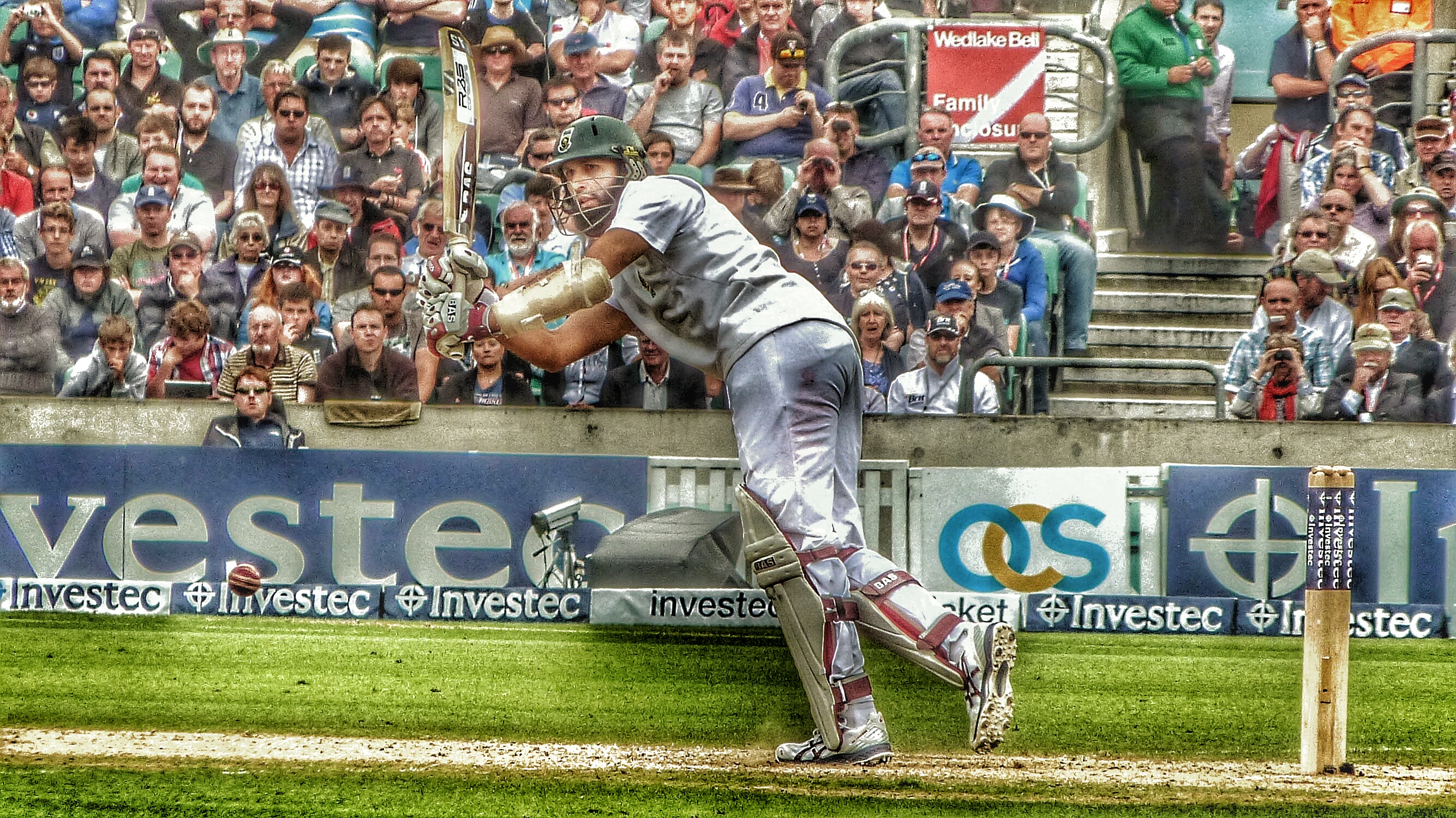
England vs South Africa: 2nd Test, Day 3 – Doomed

Barring the kind of sporting miracle that a few always cling to, England will lose this match, probably tomorrow, and it’s all down to their batting performance on the second day.  Today certainly wasn’t the worst England have played – they bowled reasonably enough – but the gap between the sides after the first innings meant that to have even the slightest chance they would have needed something exceptional, indeed to skittle a South African side entirely content to accumulate runs.

There are things England could have done better; certainly the delayed introduction of spin was highlighted by the way Dawson and in particular Moeen took wickets once they were finally used, but any suggestion that this was the difference between winning and losing would be rather extreme.  England toiled hard and bowled well enough in the morning session, but they were always going to be in a situation of trying to limit the damage as much as they could after the initial burst failed to bring results.  South Africa played it exactly right – not for them the abandon of attacking batting, they played as though it was a Test match, taking minimal risks and continuing to build on their already overwhelming advantage.  It was curious to hear the commentators criticising them for this fairly early on.  Despite at the time the best part of three days to go, the desire to see them throw the bat was present on both television and radio.  Perhaps it was a subconscious wish for England to get back into the game, for it is hard to comprehend why with so much time left to play it was remotely in the tourists’ interests to take risks with their position.  Perhaps the influence of T20 has become so pervasive that even observers can’t cope with a team playing decent Test cricket any more, for South Africa were hardly particularly slow – they were simply using the time honoured tactic of grinding England into the dirt.

Elgar and Amla did the damage early on, looking in little trouble as they made a strong position completely dominant.  By the time both were dismissed their team already had enough on the board to be strong favourites even if they’d stopped there, and neither dismissal was expected at the time given their level of comfort.  England did miss one opportunity, failing to spot a thin edge from Amla when on 25, but of their DRS problems this series, that was the least damning – players have missed hearing edges from the dawn of time.  They did get one right when Amla had reached 87, Dawson’s introduction bringing the overturning of a not out decision that was entirely understandable as he advanced down the pitch.

By this stage the surface was showing signs of some wear, if a long way from being unplayable.  The lbw of Faf Du Plessis will have sent tremors of uncertainty through England ranks given how low it kept from short of a length, but for the seamers at least, it was unusual to see the ball misbehave that much.  There was some spin to be had, as should be expected in the second half of a Test match.  Dawson had the advantage of bowling into the footholes to the left handers, but it was Moeen Ali who extracted more life, and looked the more threatening.  Part time offspinner England may consider him, but in the absence of Adil Rashid, he looks by far the more potent of the two spinners on show.  Dawson has done little to suggest he is the future, albeit from three Tests, and there are already whispers that his place might be under threat.  This is unfair because he hasn’t had anything like long enough to get used to Test cricket, or to learn, and should he not be retained then questions should be asked about his initial selection more than his performance, for if he isn’t deemed good enough, why was he thought good enough so recently?

Towards the back end of the innings, Philander and Morkel decided to attack, with Moeen bearing the brunt of their assault as he also took wickets.  In microcosm, this was a good sample of Moeen’s bowling career – expensive but taking wickets at frequent intervals.  His 4-78 represented unusually good figures for a spinner at Trent Bridge, albeit three of the wickets came from attempts to hit him out of the ground.  By that stage though, the target had exceeded world record levels, and with Philander’s departure, that was sufficient to invite the declaration and ask England to bat for a tricky 20 minute spell.

One thing is abundantly clear, short of an unexpected monsoon, this match is never going to be a draw.  England would have to bat 184 overs and if they did that they’d probably reach the target anyway.  Either they reach 474 (they won’t) or they will lose, and to that end to have even the slightest possibility (virtually nil) of winning then a good start was essential.  It so nearly got off to the worst possible start, Cook given out lbw first ball to Morne Morkel before successfully reviewing it.  In truth, it wasn’t a great decision, it always looked high and so it proved on Hawkeye.  But it must also be said it really wasn’t a great shot either – Cook was attempting to clip a good length straight ball through square leg.  He got away with it because Morkel is so tall, but it was a reminder that those who berated Moeen Ali for being caught at point tend to go much quieter when poor semi-defensive or defensive shots are played instead.

For the remainder of the four overs the two openers were under huge pressure.  Cook had another close lbw call against him when he again played across a pretty straight ball, while Jennings just about managed to control an outside edge and push it down in to the slip cordon.  Both these players could do with some runs.  Cook hasn’t been in the greatest of touch in Tests recently, but hardly disastrously so, while Jennings is suffering the murmurs of the press despite a more recent century of the two of them, and is only in his fourth match.  Cook quite clearly has a long fine record, but that observation is about him, it is about the seeming lack of patience with new players and the immediate pressure placed on them to succeed.  Cook had faith placed in him at various stages of his career, and perhaps dividends would be reaped if others received half that faith.  England are becoming very careless with opening batsmen.

They got through it, one way or another, and England can at least begin day four with all ten wickets intact.  It is hard to see anything other than a South Africa win, and a convincing one.  If England bat as they did in the first innings, it could be over in short order, but at least with Cook still there they have someone who could bat long and keep the game alive.  He’s not alone in that for the inexperienced Jennings has the temperament to do so, and so could Gary Ballance.  In the last case he really needs it.  Ballance does suffer in terms of perception from being anything but elegant, and this series he’s batted reasonably and not looked out of his depth, but without ever going on to make a score.

England could do themselves a big favour, even in defeat, by making a decent fist of their run chase.  There are question marks over their defensive techniques as a collective, and their ability to bat for long periods.  Falling over in a heap would make those criticisms louder and highlight to the opposition what they must already suspect – keep England subdued and they’ll get themselves out.  For England to come out of this match with their heads held high, they really need Alastair Cook to lead the way.

The trouble is, it’s all too easy to see England being all out by tea.


England v South Africa: 2nd Test Preview

It’s curious how a single win can change both the narrative and the expectations for the next game.  England won at Lords at a canter, but South Africa certainly had their chances, and better catching and the ability to stay behind the popping crease could have made a material difference to the outcome.  Test matches are all about that kind of thing – the key moments that swing the game, although very often they are apparent afterwards rather than at the time.  Few remember the errors of the side who wins the game.  But the feelgood response to England’s win has led to an expectation of more of the same, and this is by no means a certainty.  England have a new captain, and that always engenders feelings of a fresh start, but with a recent record before this match of losing five of the previous six Tests, it is hardly a recent history to terrify the opposition, notwithstanding India being a tough place to tour.

One of the most interesting comments Trevor Bayliss made after the first Test was that Moeen and Stokes allowed the side to be balanced in almost all conditions, meaning that England quickly confirmed the same team for Trent Bridge and thus will play two spinners while at the same time having four seam bowlers.  There’s certainly a logic there, and handled properly, it could grant England the ability to ease new players into the side without taking risks as to the bowling attack.  This is a rare privilege for any side, a single all rounder tends to be the hope, as it allows a five man attack with seven batsmen.  England have three, including (and he certainly should be included) Jonny Bairstow.  Whether the selectors make best use of the opportunity afforded is a different matter.

If South Africa shot themselves in the foot repeatedly in the first Test, the cost of that is still to be found in the second.  The loss of Rabada is unquestionably a blow, and as self-inflicted as the future loss of Ben Stokes is likely to be when he falls foul of the same regulations.  Timing is everything, and if Stokes can ensure he gets himself banned for a couple of end of season ODIs then few will complain – except the ticket holders of course, and they never count.  Rabada may be out, but the return of Faf du Plessis certainly strengthens the batting, and of course having the captain back should in itself allow some stability within the side.  Rabada will certainly be replaced by Duanne Olivier, but there have been suggestions that two quicks could come in instead, with Chris Morris becoming the fourth seamer.  Should they do that, Theunis de Bruyn would most likely miss out and South Africa will go into the match with only six batsmen.

Du Plessis himself comes in to replace JP Duminy, a player who recently has provided more work for the umpires than the scorers.  It may be the end of his Test career, but he has come back before, and South Africa are rather light on batsmen this tour should there be injuries. Still, even with the unsurprising news of that particular change, six batsmen would represent something of a gamble.

Trent Bridge has a reputation for offering swing and seam to the bowlers, but in recent times the pitches have tended towards the slow, and sometimes downright turgid.  Two spinner in the England team may not be as unusual as might initially be thought to be the case.  Recent rainfall may have lessened the dryness of the ground beneath the immediate surface, and should the pitch assist the seam bowlers, then South Africa will feel confident they have the weapons to challenge England.

It is 20 years since South Africa last lost a series in England.  Lose this match and that proud record is under serious threat.  But despite missing the likes of Steyn and De Villiers, for differing reasons, they are a good enough side to cause England problems.  Quite simply, they just need to play better than they did at Lords.

Comments on Day One below:

England v South Africa – Game Over

It’s been a fun four days. I don’t usually have test matches scheduled around my birthday (it was on Friday but I don’t want to talk about it) as the second series usually starts in mid to late July. So it was nice to watch a lot of cricket as I took time off, didn’t have a celebratory drink and chilled out after another traumatic and hectic week. What I saw was a very good England performance, with flaws of course, but still a resounding start to the Root regime. It was, also, good to see the return of some perennial blog commenters who seemed to have gone into hibernation as the hit rate increases massively in the longer form of the game.

It is often said by the editorial board that we are a “Bad News Blog”. It is true to a degree but that’s because the writers are a dreadful bunch of cynics. One thing we always say is that we should not over-react to a victory, because the team has major flaws. It is a test team that lost 6 out of the last 8 matches, which can be partially explained away, but not totally by alien conditions etc. Any turn in form, and home wins are a good way to start, has to be welcomed.

We started the day with England 119/1 and well on top. There had been a number of comments made about the pace of the response – I think we sometimes become  a little passive when we are on top – but many will also point out that the loss of 19 wickets in a day is justification for the decision to be ultra careful. Whenever the name Alastair Cook is raised, we see the temperature go the same way. Note the return of an old favourite today because I had the sheer gall to mention HIM. Cook’s 69 was, in the end, with the judgement of the scorebook, the match and the day’s play, was vital to steady the ship. Some, not me, think he puts pressure on the team-mates when he does that – the same thing was frequently levelled a Geoff Boycott – but the main evidence is how the game plays out, and without it, we might have been in trouble. Jonny Bairstow, a totally different player to Cook showed you could prosper if you took an aggressive attitude, so it wasn’t one size fits all. I just point out, repeatedly because facts are so damn awkward that:

  • Cook has made 5 hundreds in his last 92 test innings.
  • Cook has converted just 5 of his last 30 half-centuries into hundreds, but yet again Nasser mentioned Root’s conversion rate after the end of the game.

So when Cook was the first to fall, after a nothing sort of shot was well caught by Bavuma, the house of cards fell around him. Ballance nicked off, with Morkel bowling really well, Root was loose with Maharaj and was bowled. Stokes fell LBW to a Rabada delivery, which kept a little low but wasn’t the shooter that the pundits were wibbling on about. Suddenly 131/1 was 149/5 and some nerves were detected. A little stabilisation, with 20 odd runs added on by Bairstow and Moeen stemmed the bleeding, and it was at 180 that Moeen fell. A little tail wagging between Wood and JB took the score past 200 (after Dawson had completed a pair) and England wangled their way up to 233. Imperceptibly, Maharaj had taken four wickets, including the stumping of Bairstow to complete the innings. It was a portent of things to come.

England had set the visitors 331 to win, and it was evident from early on in the piece that they were never going to get anywhere near it. A great legside catch by Johnny Bairstow got rid of Kuhn, and a caught and bowled by Ali did for Elgar. Dawson saw off Amla, and then Moeen pretty much did the rest. South Africa looked like they might not get to three figures, but they did. Moeen took six wickets, for 10 in the match, and Dawson nabbed two.

England ended up winning by 211 runs. But for many of us on the blog, the highlight of the day was JP Duminy holing out at mid-wicket the last ball before tea. Duminy is one of those frustrating characters who appear to have most of the shots, but not most of the gumption. He’s not in the frame to be dropped as I listen to the Verdict (and what the hell has happened to that?) yet one of our number is adamant that he should be. We awaited his response, and it came…..

South Africa have a huge reputation for digging in and fighting. This was an awful surrender. The team looks quite weak in batting on paper. Elgar was dealt an inexperienced hand with no Faf, and with a player who could definitely help giving his committed support to the team, on Twitter! They missed chances, but they also appeared to lack resilience. With no Rabada in the second test, with Faf able to replace about four batsmen in the line-up, and with Philander nursing a damaged bowling hand, the prospects look dodgy indeed.

England must be very happy. A captain making 190 puts to bed early fears about the role affecting his form. Our pundits have memories like goldfish for some things, and like elephants don’t forget others. Root has banished one of the memes instantly. Moeen taking ten is great, adds to his confidence, but this was also the same man who was cannon fodder in India. He’s not as great as today’s figures, and not as bad as the confidence-shot man from last winter. His batting, at 7, is becoming like a mini-Gilchrist, albeit with a velvet smooth swing, for England, with him hitting fast runs to bail us out, or to make us strong. He’s a key weapon. For the rest, this was a pretty nothing test match. Good in parts, proved not very much, but also not done a lot of harm. The media are itching for Ballance to fail (don’t ever give me the agenda crap when this is as clear as day to me).

We’ll have some more considered thoughts in the week, perhaps, but for now England are 1 up, test matches have started, and I feel the season is now in full flow. Isn’t that something to be thankful for.

Finally, congrats to the England women’s team for their World Cup victory over Australia. Well done! Always good to beat the old enemy,

England v South Africa: 3rd ODI

Appalling and disgraceful.  Shocking and irresponsible.  Replace the lot of them.

There’s bound to some kind of kneejerk response from some quarters to what was a pretty poor display by England, both with the bat and the ball.  Yet there does need to be some context involved: over the past two years England have been remarkably consistent batting first.  In the 23 innings in that time frame, they have passed 300 16 times. Furthermore, on all occasions they didn’t reach that landmark (and a few when they did) they lost.

England batting first in the last two years

What that suggests first and foremost is that 300 is the absolute benchmark now, and indeed all too frequently isn’t enough.  This isn’t especially a shock to anyone watching ODI cricket recently, but given that, it also makes it clear that taking risks is inherent in the modern game.

That list also shows that when England get it wrong, they do so spectacularly, the 138 at Manchester against Australia and the 153 today clear outliers.  Today was actually a pretty good recovery from 21-6, and showed a degree of fight and ballsiness that should be welcomed, albeit in a hopeless cause.  Where the debate lies is in the way England got out to a succession of poor, indeed identikit, shots in the first five overs.

Here’s the nub of it, how should a team approach the innings when they lose early wickets.  Within that list are a couple of examples – versus New Zealand at Southampton and the West Indies in North Sound, where England were 34-2 and 29-2 respectively – where they carried on going for the shots and scored just either side of 300, winning one and losing the other.  Either or both of those could have gone wrong and 40-4 the outcome, but it’s indicative of England’s approach that they do not decide to moderate their play but carry on in the same vein.

Now, it would be absolutely ideal if England could adjust their sights according to the situation, but this is a more difficult mental thing than might be supposed.  If a team is to play without fear, as most seem to want them to do, then that means backing themselves not to get out, but to score and score heavily.  A hope that England hit lots of sixes but don’t take any risks is all too easy to fall into, and the moment that freedom to stuff it up is removed, then the prospects of scoring 300 and even 400 as they have done recedes into memory.  To put it another way, collapses like this are an occupational hazard from a team that lives on the edge in their batting.

Of course, it could be argued that once they are three or four down, that kind of moderation would be eminently sensible, and that’s also true, but collapses happen in all forms of the game, and all who play at any level will be familiar with the post match head scratching as to why exactly everyone chose to get out to dreadful shots.

As someone might have said about their own game in the past, this is how England play, and given that there are going to be days where they get it all wrong.   Beating them up for that is entirely counterproductive and needs to be seen as the price paid for the generally successful highly aggressive strategy.  It doesn’t excuse an individual error, but it does explain how it can happen across the team.  England fans recall all too well the restrained style where they aimed for something competitive, and much good it did them too.

Having had that disastrous start, they actually did fairly well to reach 153, entirely down to Bairstow, Willey and Toby Roland-Jones.  It’s worth noting that none of them were especially restrained in their batting, going for their shots throughout in a vain attempt to pull off a miracle and get England a defendable total.  It could be argued that by so doing, and scoring at a shade under 5 an over, it represented the only possible way England had of offering up anything competitive.

South Africa certainly looked better for the changes they made.  Conditions were helpful early on, but not unduly so, and the addition of Morne Morkel lent the attack an air of increased menace.  Rabada may well be a star of the upcoming tournament, for he offers both express pace and control, while Parnell too looks dangerous at times.  A small wobble in the run chase is part for the course with the South Africans, but this match was effectively done after five overs.

For England, their bowling attack had a distinctly second string look to it, but with such a small total it is perhaps unfair to judge them harshly on today’s display.  Still, the opening spells were woefully poor in both direction and length, removing any minimal hope there might have been.  Roland-Jones did himself no harm, while Jonny Bairstow continues to be the most under-appreciated cricketer England have had in a while.  The batting is certainly strong, it must be in order for him to be left out.

It’s probably no bad thing for England to be given a kick up the backside in what was both a warm up match and a dead rubber as far as the series was concerned.  The real business begins later in the week, and it’s clear that England are certainly capable of winning the competition, but also capable of falling flat on their faces if they get it wrong.  It makes them a very interesting side to watch.


England v South Africa: 2nd ODI report

Saturdays are often the day for doing things, whether going out, doing the shopping, or spending time with family and friends.  But sometimes they are days where the sporting content on offer makes some plan to spend the day in front of the telly soaking it all in.  With cricket spread across the day, it left time to take in the rugby Premiership Cup Final, and the FA Cup final.  If there was one thing all three had in common it was that they were undeniably exciting. 

Of course this being a cricket blog, the others are peripheral, although the chances of the cricket getting too much attention in the Sunday papers probably aren’t great given events elsewhere.  But a warm up for the Champions Trophy it may be, it was still a fine game in its own right.  

England have consistently scored heavily when batting first over the last couple of years, one painful collapse against Australia aside, and they go about their business in a similar manner each time.  The batting order is unquestionably a powerful one, even if the opening pair are probably not quite functioning perfectly as a partnership.  But there’s a happy knack of someone getting in and making a decisive score – Morgan in the first match, Stokes here.  Whether Stokes should have even been playing is a matter of some controversy. He said after the game that he’s fine when batting and fielding, but gets pain when bowling.  It is something of a puzzle why he would be risked, and certainly why he would be asked to bowl at all.  As it was he managed only three overs.  With England playing up to seven bowlers including him it does seem a curious risk to take with their talisman so close to a tournament England have set their stall out to win. 

That aside, Stokes was magnificent with the bat after an extraordinarily rocky start, three edges and two dropped catches in his first three balls.  The batting support came all the way down, Buttler producing some extraordinary shots in the closing overs, and Moeen once more quietly scoring rapidly.  He may dislike life at number seven (he was talking about Tests in fairness), but he does it well.

South Africa were fairly shambolic in the first half, the fielding was abysmal, the catching worse.  Yet they showed more than enough to suggest they are capable of beating anyone, and a tournament is all about what happens on the day.  These warm ups mean little in terms of the trophy itself.  Rabada is a real handful, and his dismissal of Roy was something we see all too rarely these days – a batsman beaten for sheer pace.

330 is a decent score, if not impregnable these days, and it’s certainly true that the visitors had the best of the conditions.  The cloud of the morning dispersed and it couldn’t have been better for batting.  But South Africa still should have won.  De Kock batted beautifully, De Villiers did what he does so well, and with Miller and Morris hitting cleanly and with some distance, to lose a match where only seven runs were needed off the final over, and with five wickets in hand was remarkable.  Mark Wood unquestionably bowled superbly, and despite figures of 0-48 from his ten, had a reasonable claim on the man of the match award.  Such is the lot of the bowlers at the end, whose figures take a pounding even when they have they have done something impressive. 

And so England take the series.  They got out of gaol a bit with this one.  And it was a good game to boot.  But then so was the FA Cup Final and so was the Premiership Cup final.  At least one of those will get acres of coverage.  Pity.  The cricket was good today. 

One last thing.  Elsewhere Kumar Sangakkara turned his fifth successive first class century into a double.  Those who have seen him play know just how special a cricketer he is.  Those that havent, time is running out.  Go and watch him if you can.