India vs England: 3rd Test, Day Three

If yesterday was a good one for England, hauling themselves back into contention having wasted first use of a flat pitch on the opening day, then today was the antithesis.  It’s all very well to lament the advantage India had in the last match in winning the toss, and there’s no question at all that it very definitely was an advantage.  But you have to make use of it.  India did and England didn’t.

Day two was certainly a recovery, and at the start of play there would have been hopes that the damage done could be contained; bowling India out fairly cheaply would have evened up the game and allowed England a chance to win the match.  As it turned out, it wasn’t quite a horror day, but it wasn’t too far off.

Ashwin, Jadeja and Yadav all cashed in on a surface that remained placid, with the England bowlers unable to get much purchase.  Eventually, they reverted to attempting to bowl dry, with a degree of success sure, but by then the damage was done.  Ben Stokes and Adil Rashid were once again the pick of the bowlers, the former ultimately picking up a five wicket haul with the two of them taking all nine to fall to bowlers.  The temptation will be to blame the bowlers, which would once again be an example of making them responsible for the failures of the batsmen.  417 is far more than they would have felt India would score in their bleakest moments, but it’s still nothing more than around par for the conditions.  Bowling dry can work sometimes, but with so much time remaining, India were perfectly content to accumulate, while England looked a team out of ideas.

If a deficit of 134 was about 100 more than England would have hoped for, a difficult position was not beyond redemption.  The pitch remains flat, with little spin and little movement.  The occasional ball is keeping low, but nothing more than could be expected on day three.  There is the pressure of the situation to take into account, certainly, and India’s spin attack is overall better than England’s.  This is no surprise, and is as it should be given the native conditions in the respective countries.  Rashid has been excellent, Moeen and Batty a bit limited, though it’s worth noting that kicking stool Moeen has over twice as many wickets this series as specialists Batty and Zahari combined.  Moaning and complaining about them is as pointless as moaning and complaining about the conditions themselves.  What do those whining expect?  A sudden superstar off spinner to appear over the horizon?  There aren’t any, and while a case can be made that others represent a marginal improvement (Adil Rashid is rather more than that – not that it would have been apparent from the slating he received from those who should have known better), it doesn’t mean that these matches would be radically different, and nor does it alter the truth of the matter that England’s problems in this series are down to the batting not the bowling.

Being so far behind didn’t mean England were completely out of the game, they just needed to bat well to give themselves some kind of chance.  And once again they fell short.  Cook is a terrific player of spin bowling and has been throughout his career, and it is only two Tests ago he scored a fine hundred.  Yet he’s also a player who can look thoroughly out of sorts in no time, and here he was all at sea more or less throughout his innings, twice surviving reviews before being bowled through the gate by Ravi Ashwin.  Cook is getting stuck on the crease, neither properly forward nor back, and feeling for the ball.  In this case he was beaten by the flight and simply played down the wrong line.  For England to be truly competitive in this series they needed Cook to bat exceptionally well.  It’s not worked out that way.

With Hameed injured, Cook’s opening partner was Joe Root, and despite some issues with his back, he proved to be the only light amid the gloom of an entirely expected clatter of wickets.  After Cook’s dismissal it was Moeen Ali’s turn.  There’s a curiosity that should come as a surprise to no one, in that Moeen tried to use his feet, was thoroughly beaten in the flight by Ashwin, and chipped it to mid on.  Not a great shot by any means, but the usual queue of suspects lined up to attack someone for apparently being irresponsible when they get out using their feet.  Given how thoroughly stuck England became against Jadeja and Ashwin in particular, almost strokeless at times, the intent was correct, if the execution was flawed.  Immediately, Moeen was heavily criticised.  The problem is this – it’s that a player who hasn’t exactly had a great tour with the bat but has scored not far off a thousand runs this year with an average in the mid forties is once again being singled out for criticism based more than anything on the fact that he was out to an attacking shot rather than a defensive one.   Cook’s shot was at the very least just as poor, and probably worse, but it was a defensive one, and therefore given a free pass.  Any batsman will say that they hate being out to a defensive shot most of all, for it is a concession of defeat to the bowler.

With Moeen’s dismissal in came Jonny Bairstow, a mere 20 overs after he’d stripped off the wicketkeeping pads.  It certainly doesn’t follow that his failure to score an unbeaten triple century is due to that, but there’s a reason keepers tend not to bat high up the order – it’s difficult.  He looked decent enough though, and was undone by one that kept low from Jayant Yadav.  Bairstow did pretty well to get an edge off it, and no blame can be attached to him.  Where he was unlucky was in Parthiv Patel taking an outstanding catch behind the stumps.  It’s been a regular on here to whinge about the cluelessness of most commentators bar the obvious exceptions when it comes to the life of the man with the gloves.  “Good catch” was about as far as the praise went, although James Taylor in the studio afterwards certainly got it, making up for the lack of effusiveness in the comm box.

The reason why the catch was so good is because it was low.  It might not seem to be a big thing, as coming up with the ball is an article of faith amongst all wicketkeepers.  The trouble is that all human beings anticipate based on what they expect to happen rather than what actually does.  It’s why batsmen edge or miss the ball when it seams, spins or doesn’t spin – anything different to what he might expect.  When coming up, it’s far easier to cope with additional bounce, as that’s the direction of travel for the hands anyway.  If the ball keeps low, then changing direction is nigh on impossible given the miniscule time between noticing the bounce and having to catch it.  As a keeper it always amused to be praised highly for taking a catch stood up where it bounced more than expected – it looks magnificent, but it isn’t that special a catch.  Taking one low down like that is a truly fabulous piece of technique.  Patel will be fully aware of how good his catch was, and his celebration made it clear that he rated it.  It’s a shame not too many others do, for it was better than any number of spectacular diving one handers.

Stokes was the final man out today, again beaten by Ashwin who has bowled beautifully.  He’s simply been too good today.

It’s hard to see how England will get out of this. It’s not easy to see how they will even make India chase more than a nominal total.  It’s possible, for while Root is in all possibilities are there.  But it will require him to get a very large score indeed, and at least one of Hameed and Buttler to do very nearly the same.  Possible doesn’t remotely equal plausible, and the expectation has to be that India will go dormie two some time in the middle of day four.

Day Four Comments Below

India vs England: 2nd Test, day five

England did at least do cricket watchers at home a favour – in that they subsided so quickly the match was over before many had even hauled themselves on to the train or into the car to head to work.  No watching or listening with irritation, no lamenting a poor performance or berating a poor shot.  Having worked so hard to try and get some semblance of a chance on the final day, it all went wrong within minutes of the resumption.

It would be a mistake to view the events of day five as the reason for defeat; the hole England were in was so deep that it required virtual perfection even to take the game into the final session, but to collapse as badly as they did was not the end hoped for even in a match that they looked destined to lose from the second evening onwards.

There are a few things that can be taken from it though.  Firstly, India’s over rate was astounding, bowling ten overs in the first half hour.  While they were spin bowlers and England were not smashing the ball to all parts, if nothing else it should put to bed any justification whatever for tardy over rates in the wider game.  Teams can do it when they put their minds to it, there is no excuse whatsoever for failing to complete the necessary number in a day.

England seem quite likely to drop Ben Duckett for the third Test.  This smacks of the same kind of panic currently afflicting Cricket Australia.  He’s played only four Tests, and it’s only a couple ago that he was being lauded for how he played in scoring his maiden Test fifty.  If he was good enough then, he’s good enough now, or why pick a young player for the future to begin with if faith isn’t going to be shown? That doesn’t mean that a player is given licence to fail repeatedly, but it’s either a bad selection in the first place or it’s nothing other than panic from the selectors.  Neither reflects well on them, and Jos Buttler is no noted player of spin either.

Likewise, only two Tests ago the media were lamenting England’s spin bowling options and expressing a peculiar wish for them to try an all seam attack.  No matter what the situation there is always a suitable target for blame which never involves the captain, coaches, selectors or administrators.  They are above reproach.  Again, creating what David Warner so gloriously described as escape goats doesn’t help anyone, and it’s not a call to shift blame to others in any way.  England will lose Tests sometimes, and India is a challenging place in which to tour for English teams.  A rational and thoughtful approach in discussing where the shortcomings are is hardly a radical request.  Equally, that doesn’t mean people will agree as to what those are, it is a game of opinions after all.  But it would be far better if there was less flip flopping around and blame gaming towards some individuals and not others.

For this is what grates more than anything else.  It’s not traitorous behaviour to acknowledge that Cook isn’t the most acute captain in the world; he is what he is, and since he’s the skipper then it’s just a question of getting on with it – no one’s perfect.  But instead of any discussion around perhaps how India should not have got as many runs as they did in the first innings, instead everything that flowed from that is dissected and other individuals placed under the spotlight.  The point about the slating the spin bowlers received after Bangladesh is a case in point – the form of Adil Rashid is now being mentioned as a positive.  And so it is – but that was always a possibility anyway, for he’s a talented bowler trying to perfect a difficult art.  He deserves far better than having his character questioned repeatedly when things aren’t going well for the team, yet a pretence that it never happened now he’s doing well is quite obvious.

Consistency from the players is very hard to achieve.  Consistency from those commenting is not.  People can be wrong, and they often are.  Observers on cricket and economists could interchange on each others’ discipline with no discernible difference in accuracy, but it’s not asking too much to hope they would maintain a line and stick to it.

Of course, some will say that Cook gets plenty of criticism on this blog and is he not a scapegoat too?  Well no, because the whole point of that is that the cricket media never so much as whisper that he’s anything but perfect.  Cook is a fine batsman (though not a great, no matter how much some might try to claim it based on volume of games) and his captaincy is certainly better than it was.  But it doesn’t make him immune from comment either, and it is abundantly obvious that absolutely anyone else will be criticised before he ever is.  Virat Kohli received no end of stick for his captaincy from Nasser Hussain while Cook got none.  That’s simply bizarre and an avoidance of comment for reasons unknown, and as ridiculous as Shane Warne slating Cook while refusing to address Australian problems.  That doesn’t for a second mean he should be fired as skipper just because England have lost a game, but it does mean a reasonable analysis of all England’s flaws is the least anyone ought to be able to expect. That doesn’t mean a focus on Cook either, for the principal reason for the loss was the batting collapse, but it does mean that it is one of many areas that could and should be discussed.

Where do they go from here? Although there’s been an attempt to massage expectations so that anything other than a 5-0 defeat can be portrayed as a good tour, there’s not that much between the teams; the size of this defeat is slightly misleading.  England are well capable of winning against this India side, even in alien conditions.  This should be a highly competitive series, and in truth apart from one disastrous session with the bat (day five can be discounted to some extent because of the scale of the challenge) England have competed fairly well.  Cook observed that winning a couple of tosses would help, and although some will see that as making excuses, he’s actually quite right.  England did have the worst of the conditions here, and the toss is important.  It isn’t too hard to imagine that had England batted first here they could be now celebrating a win.

The bowlers have done pretty well overall; although England didn’t have a good day with the ball on day one of this match, that can happen and does happen. They don’t look out of their depth at all, neither the seamers nor the spinners.  Could they be better?  Absolutely they could, but there’s little point in engaging in wishful thinking – England need to cut their cloth according to what they have.  And what they do have is a leg spinner who is a definite weapon, two off spinners who are competent enough, and four seamers (one of whom sits out) who are actually very good.

The batting has been an issue, but not because of an inability to score runs, but because of the tendency – not at all new – to fall in a heap in combination once in a while.  That’s shown by the nascent series batting averages to date, four players averaging over 50, and only Duckett genuinely struggling.  The implication that it’s all his fault is ludicrous.  What England need to do – and there’s absolutely no reason whatsoever why they shouldn’t – is put together partnerships so they compile a good team score.  Easy to say, harder to do, but not something that they are incapable of achieving at all.

India haven’t lost at home since England’s last tour here four years ago, and while it’s a big ask for them to repeat the feat, the idea that England are hopelessly outclassed is nonsensical.  If they play well, they have every chance of levelling this series.  England are not even close to being a great side, but then neither are India.  The overreaction to England wins is nauseating.  The overreaction to England defeats deeply irritating.

All of which means the match review ultimately amounts to one sentence:  England ost the toss, had a bad day or so and it cost them the Test match.   Better luck next time lads.


India v England – 2nd Test, 2nd Day

This England team really are a mine of material, keeping me motivated to continue. Whenever you think that this blog might die down, go through a period of stability and calm, so that we don’t have to keep stating what appears to be the obvious (to us), they come up trumps with a display full of talking points. I think what gets to me, and looking at the comments, us, is that we are so often right. Sure, a stopped clock and all that, and I don’t have an editor or a line to take to tell me what to do, but some of the stuff I read, or hear on the radio, baffles me. In the words of the late Fred Trueman “I have no idea what’s going on out there” half the time. Are they watching what we are? Are we so off the beaten track of cricket opinion? Is our evaluation of a days play so anathema to the others who report on it?

It’s tough to make it clear how I’m thinking, and it’s nothing to do with a convivial lunch. But there’s a frustration watching this England team. It has ability. It just doesn’t seem to believe in itself enough. I find it hard to define. But if I’m frustrated with the team, it pales into insignificance when I read about the game. There the matters on the field seem, for some, to mean less than how they should be reported against some message that needs to be conveyed.

The last test match did not follow the script. This script appears to be an exercise in managing expectations. England were supposed to lose 5-0, because (a) we can’t spin and (b) we can’t bowl spin. Add to that scraping a draw in a series against Bangladesh, and the fear of God was put in us all. Then, one very positive, encouraging performance, and the managing of expectations is going to be a bit more tough to put out when England played so well. Where do we stand after Rajkot? The players have to be positive, we know that. We would be worried if they weren’t, but the watchers and writers have to display more scepticism. “Now we are ready to take it to India toe-to-toe” they imply, remarking that Ashwin has a block against England…. Kohli still hasn’t really made hay. Then the last two days happened and it is almost a volte face. The expectation management, or as I know it “excuse” is that we lost the toss and then we lose the match. So this is to be expected, or as Newman said this is “the performance we all feared”. Funny, this wasn’t really what I was reading last week. Clearly the toss is important, but as you’ll note from a remark in my “On This Day” below, it doesn’t have to be fatal.

Yesterday four wickets fell, today eleven. The game has moved forward quite rapidly and India hold all the cards. They got first use of the wicket, capitalising on their chance to use the pace and bounces, such as it was, to its fullest, while our bowling wasn’t quite up to it (and I’m not mentioning the captain). Two of India’s top four made centuries. England fought back well this morning, but still 455 looks a good score on this wicket. In fact, there aren’t many test wickets where 455 isn’t a good score.

England’s demise wasn’t so much as predicted as bloody well certain. Now a lot of this is predicated on me not seeing the action (job etc.) but following on Twitter and the comments here, but once Cook was toppled early there was an air of inevitability about this. I saw his dismissal, and a very good ball, make no bones about it, got him, but heavens above they didn’t half go on about how great a delivery it took to get the opener. As you know, I’m not setting up an Alastair Cook Appreciation Society on here, and as you may also conclude, I may go out of my way to find reasons to get angry about it, but the media he gets is preposterous. It’s as if any word of criticism is going to be met by the most awful of repercussions, and any dismissal has to be explained away with reverence reserved for royalty. Honestly, I’ve known nothing like it. Nothing like the Hughes puff piece interview in the Cricketer (which is really getting better if you could just shove #39’s bloody ego out of the way) which might as well have had a soft focus border and ended up with the question “Alastair, sir, do you have any words for your subjects to explain how they could be great like you?”.

This is what gets our ire – Cook is venerated, and even his mistakes are given a veneer. Contrast that with how the Joe Root dismissal has been treated. More of that later.

I’ve not seen the run-out. By the time this goes to press on the blog I would have. Most people indicate that Root was the guilty party, HH the victim. These things happen sometimes. They just do. You can’t legislate for them. Quite often, when they happen, the TV and news pundits will say it is evidence of “a scrambled brain” but that was obviously not going to be put forward for the manchild or for the putative World #1 batsman they’ve all very reasonably buffed up this week. So remember that the next time someone of a fragile mind might get run out, or play an injudicious shot, that scrambled brains don’t happen to the star players or the prodigies. (I’ve seen it now, it’s the sort of thing that happens, but let me make a point. Hameed made 13 in 50 balls and an hour and 20 minutes. He got run out with a dozy piece of cricket. Replace Hameed’s name with Compton. Not Compton now, but the Compton of 2013. Think he’d be getting that same lovely press for an innings every bit as slow as his. It would be unfair to have a go at Hameed, but that never stopped our media laying into Compton).

Next in was last month’s Bright Young Thing, Ben Duckett. Now I really want Ben to do well for a number of reasons, not least that he plays aggressively, seems to have a good head on his shoulders, and it might debunk the myth about Division 2 being too big a gap to bridge to play test cricket. His half-century in Dhaka was greeted with joy unconfined even as England toppled like wet cardboard after he got out to post that ignominious defeat (still not buying Bangladesh being a good side, yet). Today those that were praising are now burying. A number openly calling for him to be removed from the action for his own benefit. Hey, maybe opening with him and letting him get his eye in to quicker bowling might be better for him, instead coming in against spin, cold, is not working out well. There’s a lot being made of his technical flaws (watch out Ramps, they are after you) but two test matches ago we were being feted by tales of a “brilliant half-century”. As I write this Colvile has previewed the next part of The Verdict as “Is Duckett’s career in a spin”. Two tests, two innings, time to go. Now, just as people might be right about Hameed, so they might be wrong about Duckett. Not every top player has a watertight technique. Give the guy a bloody break.

Joe Root’s dismissal is getting the easy, lazy lines out again. Far better for a player to have his technique undressed, albeit in a one-off scenario (Cook) than for you to get out having an attacking shot and getting caught in the deep. I understand Farbrace  said that he did not want to hear anything about “that’s the way I play”, but if he did say that then he’s a dolt. Of course Newman has piled in, comparing this dismissal to his usual bete noire, Ian Bell (and SimonH’s prescience on this in the comments is spooky) playing well and getting out to a soft shot. Really. As usual, we pop at the one who showed most aptitude, rather than those who didn’t. Sure, Root will be mad at himself. He sets himself high standards, but maybe, just maybe, I’m smelling a Cook preservation rat, and Root’s name being discussed recently means a higher bar being set for Joe. Odd, because I think Cook is as secure as he’s ever been. I’m probably looking for my tinfoil hat.

Moeen’s LBW has me chuckling all the way to the end of this piece. For years we have rightly excoriated the BCCI for going their own way in not using DRS. The theory was that Sachin wanted no part of it because he might get out more, and the word of the Little Master was never to be contravened (it kept him playing well past his prime). The other theory is that the other word of the Lord in India, MS Dhoni, was implacably turned against DRS by an LBW decision overturned in the 2011 World Cup against Ian Bell. Whether these two contentions are true or not, let’s recognise that India have taken up the DRS. Now they use it to overturn an LBW decision based on a couple of change of regulations over the years, and suddenly we (well Newman does in the Mail) get all precious about it. “I’m sorry, that’s just not out” isn’t a defence when DRS has given it out. We can’t pick and choose. Sure, Moeen was unlucky. Sure, Moeen wouldn’t have been given out in years gone by, but spare me us moaning about DRS when we wanted it imposed on India.

So what now. The S&B crew need to get us out of trouble again. Stokes has shown much better aptitude against spin this winter, and Bairstow has put out so many fires in the past few months we almost expect him to do so. For the record I think getting to 256 is academic – India are going to bat next in this test match – so it’s a combination of time and runs that are going to matter.

So that’s more than enough for one day – I didn’t see the India innings, but I want to get this out because I have things to do. Which leads me to a topical On This Day…


On this day in 2012, Alastair Cook batted for 90 overs at Ahmedabad adding 94 runs to his overnight score of 74 not out, as he and Matthew Prior undertook a long rearguard to attempt to save the match for England. On a wicket that had seen 8 of England’s first innings wickets fall to spin (Ojha taking 5/45), Cook thwarted all that was thrown at him on the fourth day to take England ten runs ahead with five wickets in hand, and at least give England a chance of saving the match.

I thought I’d put this in because just because a pitch is aiding the spinners, it doesn’t mean you can’t make runs on it.

Sure, on Day 5 we were bowled out for 406 – Cook making 176, Prior 91 – and just five second innings wickets fell to spin, and India completed the win, but their rearguard inspired England that they could play on these wickets, Cook was brilliant all series, and England won on a ragging Mumbai snake-pit having lost the toss.

So for one of his best, most valiant, most stubborn knocks, Alastair Cook is today’s “On This Day”.


Comments on Day 3 below…

India vs England: 1st Test day three

This particular Test has caused a mild outbreak of panic at BOC Towers, falling as it does during a period when all three of us are snowed under with work during what tends to be our busiest time of the year in our respective jobs.  Add into that 4am start times, lots of travelling and full days and trying to keep abreast of goings on in Rajkot appear to be a little distant.  In my own case, this week has been spent at World Travel Market at Excel, where international goings on allowed me to play a small joke on various colleagues on Wednesday morning:  “Have you seen the news overnight?  Isn’t it extraordinary?”, “Yes it is, I wonder how all the people on the American stands are feeling this morning”, “Oh I doubt they care too much, but 311-4 is a really impressive start”.

England’s 537 all out undoubtedly created scoreboard pressure, on a pitch that was felt likely to deteriorate, but India’s response has been one of outstanding batting and perhaps slightly disappointing bowling.  The seamers have been tidy enough, without being especially threatening while the spinners have been short too often, and badly used in at least one instance.  The stand between Vijay and Pujara was both essential and deeply impressive, slowly getting India back into the match, taking few risks and batting time.  Having reached 277-1, what followed was something of a surprise, for England had shown few signs of being likely to take wickets, only to snare three in little more than an hour.  If nothing else it was a reward for plugging away, and for keeping the scoring rate under control.

High scoring matches often appear to drift for large parts of a given day, as one side slowly claws their way towards parity and the other fruitlessly tries to stop them.  It’s why low scoring matches tend to be consistently exciting throughout, whereas with ones like this the viewer can disappear for an hour or two and come back to see how little has changed in terms of the balance.  The three late ones don’t exactly amount to a clatter, more of a gentle rattle, but they will have caused a frisson of anxiety in Indian ranks and raised the hopes of the English ones.  The pitch so far hasn’t been a dead one by any means, and there is both spin available and some movement off the surface for the seamers and rather more in the air.  It may be simply that both sides have batted well, it wouldn’t be the first time.

While Stokes removed the fluent Pujara, it was Adil Rashid who got the obdurate, yet intermittently attacking Murali Vijay with a delicious googly in his first over back just before the close.  And here is where even Sky felt it reasonable to offer up some criticism of Cook (before Rashid took the wicket, note) for not making more use of him and going to him as the last possible option.  It’s a criticism this blog has made repeatedly, and it’s not a matter of being wise after the event, it’s because there’s absolutely no point in having a leg-spinner if he’s not to be used as an offensive weapon.  England’s plethora of all rounders frees up spaces for luxury players who can bring something different, and a leg spinner is about as different as it gets for an English team.  Yes, he will go for runs, yes, he will be sometimes inconsistent.  But he’ll also get you wickets, that’s the whole damn point.  England have six frontline bowlers in this side, there are plenty of fall back positions should the leggie have a bad day – for him to bowl the fewest of any of the spinners on a pitch that is offering purchase is a waste of resource.

As for the wider question of where this game is going, as things stand the draw appears the favourite, but that is based on how the bat has dominated to date.  The behaviour of the surface is going to dictate much, yet with few signs of radical change to date it’s perhaps wishful thinking to expect it to drive a result on its own over the next two days.  India have plenty of batting still to come but are also a sizeable 218 runs still in arrears.  Should they get remotely close then the pressure will transfer to England as they will be doing nothing other than playing for the draw with the time remaining, while even if they only add another hundred it’s hard to conclude that England would feel safe enough to declare until some time into day five assuming things went well.  But perhaps given the kneejerk response to defeat in the last Test in Bangladesh, that’s still a position England should be pleased with.  The old mantra that they are never quite as good or quite as bad as the press portray them is as true now as it ever was.  All things considered, so far it’s quite even.

Day Four Comments Below


Around The World – Part One

An update on world cricket in three parts. Today, part one on India, Pakistan and Australia. A brief review of where we are, a look forward to the winter and other assorted comments.

The World Game… Test Cricket

This blogger loves test match cricket. You know that. But there is not enough time in the day, or the week, to keep up with it all. Not while holding down a full time job, and keeping up with all my sporting interests. But I can take an overall view of what’s happening, subjecting myself to the greater experts out there, but putting down a starting point for a discussion. Hopefully.


India (Latest Series – Leading 2-0 v West Indies (a))

The Indian cricket team, on paper, doesn’t strike fear in the hearts. This may be because I take a rose-tinted view of the past teams, with the Sehwag-Laxman-Dravid-Sachin-Dhoni axis at the top of the order, and with a quality seamer in Zaheer Khan. Spin also seemed more daunting with Kumble and Harby over the past couple of decades. The team is currently playing the West Indies in a four test series (and by the time this goes to print, it will all be over) and they have handled the hosts quite comfortably. The batting revolves around Virat Kohli, who has looked good on this tour at times, with solid citizens like Rahane to back him up. The opening slots look to be between 3 players – KL Rahul, Murali Vijay and Shikhar Dhawan – while Pujara, who looked awesome a couple of years ago, seems to have really gone off the boil. In this series India have played Ashwin as a number 6 bastman (and he has rewarded them with two centuries) but that has to be an unlikely gambit to play at home against England, one would have thought. Saha appears to have nailed down the keeper-batsman slot, which leaves the bowling. We’ll see three spinners I would imagine (given the quality of Ashwin’s batting, we are talking a potential all rounder here) in the series against England, and hoping that Ishant and whoever else is doing the seam work can do their share.

Before England visit India, there is the small matter of a three test series for India at home to New Zealand. These will be played at Kanpur, Kolkata and Indore, with the first starting on 22 September. The five test series against England will start on 9 November in Rajkot, with the following four matches in Vizag, Mohali, Mumbai and Chennai all being wrapped up before Christmas. India are also scheduled to be playing a one-off test against Bangladesh at home – that’s taken them just the 18 years – at Hyderabad in February. I refuse to believe that India will then let their international players twiddle their thumbs until the IPL starts, but Cricinfo has not got them playing anyone until then (but it looks like Australia will be visiting – see below). Surely Sri Lanka are available for an ODI series?

england-v-india-august-2007-3rd-test-212-02.jpeg.jpeg
Zahee Khan – the last truly fearsome Indian seamer?

England fans are always going to wonder about India. It’s terribly hard to shake the memories of the Indians last two tours to this country. Firstly the 2011 tour, when a keenly fought first test gave way to a downward slide in performance was put down in part to a dying of the light of the old pros (although Dravid gave a lie to that), part due to Zaheer’s injury and part to boredom on the part of India – and a bloody decent England team playing just about as well as they could. 2014 was different only in that the performances lasted until the second test, before the remainder of the test tour descended into performances of atrocious quality. India will be back here in 2018, and with the different style of Kohli as captain, I don’t expect phlegmatic shrugs and devil-may-care attitudes. Not sure Kohli hasn’t seen a situation he doesn’t see as a competition, and I put the brilliant but undervalued Ashwin in the same category. Both are fine cricketers. Many love to watch Rahane, while I’m quite partial to the traditional opening skills of Murali Vijay. The bowling will always be a hostage to the conditions that home matches are played in.

Many think that the five test series will be played on similar surfaces to the ones that took South Africa down last winter. Some on here were particularly scathing of those wickets. We’ll get an idea when New Zealand visit. England know what is coming. India do to. They can reinforce the number one position in the world this winter against two good foes.

PAKISTAN (Latest Series – 2-2 away v England)

The English summer, as Chris said in his recent piece, was a magnificent one for Pakistan, and for England fans who craved a competitive series with committed and competent foes not from the Big Three. It wasn’t 18 months ago that New Zealand had provided an albeit short quality series, but Pakistan’s longer series was much to enjoy, and greatly received. They stand on the cusp of World #1, and yet this may be elusive as India may well reinforce their lead. Their core is quite old, with two key batsmen nearer pensionable age than school age (allow me some poetic license with Younus, eh) and the quite experienced tier underneath looking good at home, but not so much on the road. However, I mean Asad and Azhar in particular here, both adapted and made test hundreds in England to add to their excellent home records. Like many world teams, the openers are not settled, but they may have found a good one in Aslan (a lion heart – sorry), and I suppose Hafeez may come back for home conquests. It was interesting that Azhar opened in the final test, and whether this may be his new position we’ll see in the fullness of time. The bowling was up and down in England, but is going to be useful in its “home environment”. Actually, Yasir Shah is probably a bit more than “useful” in the UAE, while Amir will be good for the run-out in England, and Wahab, Sohail and Rahit all looked decidedly decent at times. They’ve got some great talent.

According to the cricinfo page on future series, Pakistan will not be playing tests in UAE this winter, but they have two test tours lined  up. The first of those is the abomination that is a two test series, which makes no sense still, in New Zealand, with the matches being played in Christchurch and Hamilton. These take place in November. This is followed by a tour of Australia for three tests – the first, in Brisbane, is a day-night match, with the second and third at the traditional Boxing Day and New Year’s venues of Melbourne and Sydney. International duties are fulfilled by the end of January in Australia, and there then seems a gap. Maybe the path is being cleared for the PCL, or whatever it is called? The ICC Future Tours programme (stop laughing Simon and D’Arthez) suggests they’ll be contesting a four test series in West Indies. As if. It also suggests that they’ll be playing a two test home series against the West Indies in October, but I haven’t seen a lot about that, have you?

Pakistan were impressive tourists, but we could see their flaws in the way they were thrashed at Old Trafford, and let a great position slip away, in my view due to an abundance of caution, at Edgbaston. When on the front foot they can be excellent foes, and at Lord’s they won a close game by keeping their heads when England were losing theirs. The team’s core is old, and when they go, which won’t be long, it’s going to need Azhar, Asad and Sarfraz in particular to take up the cudgels of senior pros and lead from the front. They have the ability, but whether they have the sticking power is debatable. But their ability, their flair and their personalities shone through and the long-awaited renaissance of Pakistan cricket looks to be on track. Whether it is sustainable, and whether it crosses into other formats, is a matter of wait-and-see. The world would be a better place for a firing Pakistan playing regular international cricket.

AUSTRALIA (Latest Series – Lost 3-0 in Sri Lanka)

What on earth is going on? We know that for non-Asian teams, winning away on alien surfaces is a treasured prize, but the same goes for Asian teams on their visits overseas, and very little slack is cut for them (see my views on India in 2014). This Australian team is an absolute mess when it leaves the shores of their beloved home. It folded any time there was movement in England in 2015, and now, in Sri Lanka, a team rebuilding after star players have left the stage, who looked dreadful for large swathes of their previous series, turned over Australia in three hard fought matches. Their bowling didn’t let them down, it was the batting putting their bowlers into various states of Mission Impossible. On paper, with Warner, Smith and Voges an experienced trio anchoring the batting this should not happen. Joe Burns and Usman Khawaja are supposed to be talented batsmen. But there is something about Australian selection that is harking back to the hilarities of the Hilditch regime, where bits and pieces players are popping up at number 5 (Moises), and talents like Burns are given a couple of bad games before they are fired out of a cannon into limbo. Australia used to be the benchmark when it came to shrewd considered selection. I’m wondering if Ted Dexter is secretly running the show.

Australia will fall back on their success at home as they attempt to get over yet another Asian shambles. They go to South Africa for some ODI nonsense, before hosting the Proteas in Australia for three tests in November (South Africa want Boxing Day matches of their own, not bowing down to Australia, so it seems unlikely Sydney and Melbourne will see them much in the future). Those matches take place in Perth, Hobart and finally Adelaide (a day-nighter it seems) and will probably end up in a comfortable home win with lots of players looking really good. This will then be followed by another three test series against Pakistan (see above), where we will see if normal service is resumed, and Australia dish out a beating. After some ODI action, the FTP has them playing four tests in India in the early part of 2017. No details of venues yet, but Bengaluru, Dharamsala, Ranchi and Pune are mentioned as the potential hosts.

p1060707-02.jpeg
Another Mitchell – Impressive in Sri Lanka. Can he stay fit?

But what of the team? The flow of ready-made, top quality batsmen, with almost flawless techniques seems to have passed. Australia, rated number 1 until recently, are a pale shadow of past number 1 teams – hell, if you need a benchmark from 10 years ago, they are it – and are something we’ve never associated with them, brittle. From losing the first test having bowled the hosts out for 117 in the first innings, to contriving to lose a test match in Colombo where the hosts were 26 for 5 in their first innings, and the visitors were 267 for 1 in their reply is staggering. These players appeared mentally bereft. The old tenets of international cricket were ripped up. Australia losing their composure? Really?

Selection for the first home test is going to be fascinating. Joe Burns had two ordinary tests and was replaced by Shaun Marsh, who promptly made a ton, but has let Australia down before. David Warner is secure, but he went another Asian series with no real success. Steve Smith was a centurion in Colombo, and made starts in the other two tests, but he’s not convinced as a leader as yet, and may find himself in a position that Clarke inherited, but without a Mitchell Johnson to bale him out. Voges had a low-key series, Khawaja, having looked a million dollars last winter, was dropped again as soon as he failed in a couple of games. The bowling was fine, although Lyon wasn’t the success that was hoped on wickets where Herath made hay. But it was Australia’s sense of throwing selectoral mud on the wall and hoping some would stick that mystified. Heaven knows what happens when they go to India next year. It might not be pretty.

One senses with Australia that they will maintain home dominance and still falter when not expected to away. Despite weaknesses against spin, and the apparent discomfort on Asian surfaces, no-one expected that latest reverse to be so dramatic. Their handy dismantling of the New Zealand good news story last winter is evidence that this is a quality side. Where they concern me, if I can be concerned about Australia, is that this team needs selection patience, and they aren’t doing it. It’s fine and dandy to have a hair trigger when your team is dominant and your 2nd XI would probably give you a better game than most test teams (as in the early 2000s), because the top boys need to maintain their standards. In a team bedding in new players, that’s not sensible. I mean, seriously, who envisages Moises Henriques becoming a test stalwart? We saw this in 2010-11, albeit a bit more laughable, but the portents aren’t good. Burns and Khawaja are quality players. Faith is needed. Perhaps the most interesting country to watch this winter. It might be bipolar in the extreme.

Hand me Down a Solution – Series Review

In the early 1980s when growing up, summer holidays meant tuning in to BBC1 at 10:55 to watch the Test matches.  Come the end of summer, the feeling of melancholy at the conclusion of a series was always strong, with the only subsequent cricket being the end of season Lords one day final, which was akin to pretending to enjoy the sloe gin from the drinks cabinet when everything else has been consumed.  Times change, and cricket now is unending, where the finish to the Tests is merely a pause before the one day internationals begin, and then England go on tour somewhere.  In the same way that the end of the football season is a mere pause in hostilities, the end of the Test match cricket summer no longer normally carries so much power to create sadness.

And yet with this one, perhaps there is a little more in the way of regret at the passing of the season.  This is probably as much as anything due to Pakistan, who have been exceptional tourists, and thoroughly merited their victory at the Oval to draw the series.  Four Tests also offered up the reminder as to why a five Test series remains the best possible format, provided the series is a competitive one.  Few cricket fans would object to a decider for this one, yet it is a lament that so often is heard and never acted upon.  It was at least better than the ridiculous two Test “series” against New Zealand last year.

What the drawn series did do was silence those who were quoting the article of faith about England holding all the bilateral trophies.  It isn’t that doing such a thing isn’t a meritorious achievement, it’s just that something that no one had ever noticed or paid attention to before somehow became the highest possible achievement in the game in their eyes.  As with so many things, the context is all, noting success is a good thing, going overboard about it is not.  Doubtless, the bilateral series record will now return to being what it always was – a minor matter.

Given their troubled previous tour to England, Pakistan clearly intended to win hearts and minds this time around, and in that they succeeded.  It is a remarkable turn around for a side who it is probably fair to say were one of the least popular touring sides in England; they played with a joie de vivre that reminds everyone that cricket – even in its modern, money is all important guide – is a game, a pastime, and above all fun; the reason all of these players first picked up a bat or a ball in the first place.  The repeated press ups may have irritated the England players, but it amused the spectators every time.  Quite simply, the Pakistan team looked like they were enjoying themselves.  One particular moment comes to mind, a catch by Hafeez (who didn’t exactly have many high points) caused a young boy in the crowd to wildly celebrate, being picked up by the TV cameras and leading the player to end almost doubled over laughing, and applauding his young supporter.  It was a delightful moment, and one that re-inforced the image of a team comfortable with where and who they are at last.

Misbah ul-Haq remains under-appreciated in his homeland, but elsewhere he is approaching hero status for cricket fans.  The achievements are verging on the extraordinary, with Pakistan now having the most successful period in Test cricket in their history under his leadership.  It is quite exceptional in itself, and given his age, truly remarkable.  Misbah has made Pakistan competitive, and above all given his team their self-respect.  If it has to be that it is something more recognised for what it is abroad, then that is a pity, but it is still worth recognising.

So what of England?  The first part of the summer was routine enough, a Sri Lankan side shorn of its great players was despatched with little difficulty, but Pakistan proved to be something of a harder nut to crack.  This in itself came as something of a surprise to some, with many predictions of a comfortable England win before the series began.  Yet Pakistan were always going to be a threat, and in advance of the series the assessment of it being between two sides with good seam attacks, and patchy batting proved to be ultimately more or less right.  England had the advantage in the middle and lower order, while Pakistan had a (much) better spinner at their disposal.

Statistics can be gleefully misleading at the end of a series though: take the comparison between Moeen Ali and Yasir Shah, both of whom averaged over 40 in the series with the ball.  Yet Yasir was instrumental in both Pakistan wins, while Moeen – with the ball at least – certainly was not.  This isn’t a particular surprise of course, for Yasir is an outstanding bowler, and even the most adoring fan of Moeen would never make that claim.  But it does highlight the point that players can have an impact in a game disproportionate to their overall figures, perhaps we could call it the Ben Stokes effect.

England did have some real successes in the series, Moeen himself batted absolutely beautifully, that dreadful slog at Lords proving to be very much the exception.  It’s notable in his case that that particular dismissal didn’t stop him from using his feet to the spinners, most gloriously on that final morning at Edgbaston where in the first over of the day he served notice that England were going all out for the win.  That Moeen can bat is not especially surprising news, that his batting improves out of all recognition when given one of the batting spots rather than being in the tail perhaps is.  Either way, and given that England have limited spin bowling options – presumably Adil Rashid will come in for the India tour – his series will count as a success, albeit with a couple of major caveats.  One item of note with Moeen’s bowling is that although his average is certainly not the best, his strike rate is quite decent, comparable with Nathan Lyon for example.  Batsmen do try to attack him, and do get out to him.  In the absence of a truly top class spinner of the calibre of a Graeme Swann, replacing Moeen with another off spinner is unlikely to deliver markedly improved results.  It doesn’t mean defending Moeen irrespective, but it does mean cutting England’s cloth according to what they have.  A decade ago Ashley Giles received no end of criticism for not being Shane Warne, but he did a job, and did it well.  Chasing rainbows is not the means to a successful side.

Joe Root finished top of the batting averages, largely due to that astounding 254.  Aside from that it will represent a mildly frustrating series for him, getting in and getting out with annoying frequency.  An illustration of just how good Root has become is shown by the feeling that the series was a slightly unsatisfying one despite over 500 runs at more than 73.  Such is the penalty for excellence, for brilliance is expected every time.  But Root himself alluded to the irritation of getting out when set, so it is less a criticism, and more a matter of the player being so good now that he can deliver even more than he currently is.  He has a decent shout of being England’s best batsman in many, many years.

Cook too had a mixed time of it, despite a strong set of figures over the series.  He looked somewhat rusty in the first Test, but thereafter his biggest problem appeared to be that his form was too good if anything.  He rattled along, having the highest strike rate of anyone bar Moeen, a most un-Cooklike state of affairs.  He was fluent and even playing cover drives, which tends to be one of the best indicators of an in form Cook.  That would then bring about his downfall – seeing him caught at point off a skewed drive, or dragging pull shots onto the stumps is not something that is expected.  Most batsmen will tell you that they score the most runs when they are just shy of their very best, where there is a degree of caution in the strokeplay.  When feeling on top of the world, more chances are taken, and getting out is more likely.  It is impossible to measure, but the suspicion has to be that this was the case with Cook this time.  Still, a good series for him.

Jonny Bairstow was the other major plus point in the batting order.  He’s the leading run scorer in Tests in the world this calendar year (by dint of having played far more than anyone else, it has to be an Englishman) and scored heavily without ever going on to a truly match defining innings at any point.  Four fifties and no hundreds represents a decent return from a player in excellent form, but perhaps his most notable achievement was muting the comment about his wicketkeeping.  He hasn’t turned into a great ‘keeper overnight, and probably never will, but it is tidier, and with fewer errors than in previous series.  He pulled off a couple of decent catches too.  His wicketkeeping remains a work in progress, but the reality is that his runs balance that out; the age old debate about a specialist keeper versus an auxiliary batsman who keeps has long been settled, in favour of the batting.  Bairstow will make mistakes, but the more he keeps – and it does need to be remembered that much of his career he has been essentially part-time – the better he will get.  There have been some suggestions that he move up the order, effectively to compensate for the flaws in England’s batting, but it would be a big ask to expect him to do that, especially in the heat of India or Bangladesh.  Weakening another player to make up for the failures of others has never been a solution.

England have become something of a team of all rounders in the last eighteen months, and the player who was widely felt to be more of a bits and pieces player than a true example of the breed is Chris Woakes, who probably had the best series of anyone.  He batted well enough, making a maiden half century, but his bowling was a revelation to many.  Yet Woakes has an excellent first class record with both bat and ball, and he was hardly the first player to find the transition to Test cricket a challenge.  The demand for instant success clouds the reality that an immediate impact guarantees nothing, and other players can take time to adjust.  One fine series doesn’t mean that he’s a fixture for the next few years, but he’s started to look the part with the ball for a while; in South Africa he bowled with very well yet was spectacularly unlucky.  This time he got the rewards.  By all accounts he has worked exceptionally hard on his bowling, putting on an extra few mph and improving his control.  Players can and do learn – it is not unlikely that James Anderson is a rather useful resource – and Woakes’ success is a reward for being patient with him.

Stuart Broad is a bowler who attracts considerable ire and much comment, despite a record over the last couple of years that compares with anyone.  This series certainly wasn’t his best, and mutterings about his apparent habit of coasting resurfaced.  Yet 13 wickets at 28.61 is hardly a catastrophic return, and if that now counts as coasting, then it merely demonstrates what a fine bowler he has become.  It was a relatively quiet series for him because he didn’t have one of those spells where he becomes completely unplayable, rather than because he struggled at any point.  Broad is the focal point of the England bowling attack these days, despite Woakes having a better time of it this time.  Criticism of Broad is absurd, he is a fine bowler who had a series that was quiet by his standards.  The “by his standards” is the key.  Where there can be severe disappointment with him is with his batting.  It has completely fallen apart, and the pity of that is that for so long he looked like someone who, if never destined to be a true all rounder, looked a player capable of meaningful contributions on a regular basis.

Anderson too had a reasonably quiet but still moderately effective series.  He didn’t take a whole lot of wickets, but maintained excellent control throughout.  He made more headlines for having a preposterous strop at being rightly sanctioned for running on the track than anything else.  What can be said about him is that at 34 he remains an outstanding athlete, with few obvious signs of diminishing powers.  Assuming he carries on for another few years he will doubtless get slower, but he is a clever bowler, and one who will use the skill developed over a career to take wickets.  At the veteran stage of his cricketing life, he is still a valuable asset.

As for Steven Finn, his raw figures look horrible, but at times he bowled well and with pace.  He’s a difficult one to assess, forever making progress and then regressing.  At 27 he should be coming into his peak, but the nagging worry that he is not going to fulfil the potential he first showed is very much there.  Two away series (assuming Bangladesh goes ahead) in Asia are unlikely to show him at his very best, given that the rampaging, lightning fast Finn of the past now appears to be something we won’t see again.  He is once more at the crossroads, and which way his career goes is open to question.

The bowling overall looks in reasonable shape, the nucleus is there as it has been for some years, and if the spin side of it looks a bit thin, it’s an issue that applies to the English game as a whole more than anything.  Unfortunately the same can’t be said of the batting, for despite the good performances of those mentioned, that they were required to do almost all of it as the rest of the top order had poor series.

Ballance was the best of them, and he at least has a strong record to fall back on.  His return to Test cricket doesn’t appear to have shown any major changes in his technique, beyond batting a little more out of the crease than he used to.  He didn’t appear out of his depth, did get a few good deliveries and made one score of note.  Of all the players who had weak series, he still appears to be best equipped for Test cricket.  Yet the jury remains out on him, as to whether that slightly idiosyncratic style is going to allow him to make a true success of the longest form of the game.  He probably did enough to retain his place in the side, if only because others did worse, but he needs significant runs soon if he is not to be another to shine brightly but briefly.

Hales and Vince are the two who are most at risk, yet for differing reasons.  Hales doesn’t have the purest technique, but was brought into the side to provide a contrast with Alastair Cook’s accumulative style of batting.  Yet it was Cook who was by far the more fluent, while Hales appears to be attempting to bat like a traditional opener.  It’s hard to understand the thinking behind this, for Hales is never going to be as competent at that as others are, his strengths are in playing his shots, taking the attack to the bowling and giving England a fast start.  Once in, he is one of the most destructive players around, but whether it is his own decision, or it is pushed from above, it seems to be the worst of all worlds, a pedestrian style and a technique that doesn’t stand up to the rigours of Test cricket.  It would be easier to comprehend if he was trying to be England’s answer to David Warner, and whether that succeeded or failed, it would at least be an experiment worth trying.  As things stand, it’s hard to grasp what the intention is.

Vince in contrast looks lovely, full of gorgeous and stylish shots, only to fall repeatedly to a fundamental weakness outside off stump.  The health enforced retirement of James Taylor created a vacancy in the middle order, but it wasn’t a position that had carried much strength anyway.  Vince looks every inch the Test cricketer right up to the point he gets out, then rinse and repeat next time around.  Michael Vaughan for one has insisted that Vince be given more time but the ISM factor there lowers the credibility of someone whose views ought to be credible.

What that means is that there are three players in the top five not pulling their weight, an impossible situation for any team.  The only reason it hasn’t proved catastrophic is because of the strength of the middle and lower order.  When England’s top five (with two obvious exceptions) are collectively referred to as the “first tail” it’s clear there is a problem.  Of course, not for the first time the selectors have made a rod for their own backs.  As with the Pietersen situation it requires replacements to be notably better than those that have been dropped, and the discarding of Ian Bell can hardly be said to have been an unqualified success.  The problem here is not the dropping of a player, it so rarely is.  Bell had struggled for a while and not selecting him for the South Africa tour was a decision that could be justified.  Where England go wrong is in at the very least implying that at no point could they ever have made a mistake, and ignoring any and all criticism that they may have done so.  All teams have to create a space for new players to develop, the issue England have is that 60% of the top five are in that position, something completely unsustainable.  The rather transparent attempt to undermine the selectors in the media by the coincidence of several articles at once proposing the creation of a supremo (like we haven’t been here before) don’t alter the truth that the selectors themselves have a fairly patchy record.

Looked at that way, it is something of a miracle England managed to draw the series at all.  With the five matches in India to come, it is difficult to see how they could get away with these flaws.  The one bright spot is that Ben Stokes will return, and while his batting is not entirely reliable it is at least more so than some currently in the side.  It may well be that by bringing in Rashid and dropping one of the seamers (presumably Finn at this stage) they have a ridiculously strong middle order with Stokes, Bairstow, Moeen, Woakes and Rashid comprimising numbers 5 to 9.  Whether that then compensates for the top is another matter.  There are whispers that Adam Lyth may be recalled to top of the order, or it could be that another young player is thrown in.  Eventually no doubt they will find the right player, but repeated discarding of batsmen doesn’t give too much confidence in the method.

A few last items: It has been a regular topic of complaint on here, but this was surely the summer in which poor over rates finally caused the ICC to take action and stop the theft of spectators’ money.  It would take an extraordinarily insular governing body who didn’t have an issue with it, one that considered paying spectators as nothing other than a resource to be exploited.  Perish the thought.

According to the press, should the Bangladesh series go ahead it will be left to the players to decide whether to go, with no adverse reaction should they decide not to do so.  Nice words, but the reality is always different; it may not be deliberate, but a player has a chance to get into the side by making himself available – equally few but the most comfortable will want to take the chance that someone else comes in and takes their spot.  It’s not meant to be critical, the ECB’s position on this is a reasonable enough one.  But reality intrudes on this – there will be some reluctant tourists.

After that comes India, and a huge challenge for the team.  While it is entirely for monetary reasons, it is still welcome to have a five Test series over there, but 2012 is a long time ago and England will do will to escape with a drawn series, let alone anything better.  Cook will need to be at his very best for one thing, but the batting will need to do far better than it has shown itself capable of in recent times in order to compete.

England are not a bad side at all.  The Test rankings show nothing more than that several teams are capable of beating each other on their day and (especially) in their own conditions.  But for all the talk about whether England could get to number one by beating Pakistan, it’s of no importance if they might drop down the series following.  There is no outstanding side in world cricket quite simply, and the focus on being the best is quite some way away.  Although there is necessarily going to be an England-centric focus on that, it’s no bad thing to have a number of competitive sides.  A bigger issue is the difficulty of winning away for anyone – which is why Pakistan drawing this series is such a creditable result.  They have been delightful visitors.

Oh yes one last thing.  It’s 8-8 in Director, Cricket’s  Big Plan To Make Cricket Relevant Idea.  You hadn’t forgotten had you?

The Phantom Menace

I thought I’d copy out an article I’ve just read. Keeper99 linked me to another article from the Hyderabad (Central Zone I believe) news press and had me off looking to see other views. I came across this article which is a darn sight more sobering than some of the cries of relief we are hearing. It’s from the Indian Express (emboldened parts are my emphasis):

A rock, a hard place

BCCI chief has an unenviable job at a difficult time. He must step up to it.

– See more at: http://indianexpress.com/article/opinion/editorials/bcci-shashank-manohar-a-rock-a-hard-place/#sthash.fnOv0895.dpuf

It will be understandable if the Indian cricket board president, Shashank Manohar, feels that, right now, he is being loved and viewed with suspicion, both at the same time. The Anglo-Saxon part of the cricketing world is lauding him for the clean-up job he has promised at the International Cricket Council. But the Indians in power in cricket administration might not be quite cosying up to him. Needless to say, he has an unenviable task on his hands. He has spoken about defanging the bully that is Indian cricket that, along with England and Australia, had devised a plan last year to retain the lion’s share of the revenue. If he manages to bring in a more equitable sharing system, then the BCCI, which, as part of the Big Three, was expected to rake in around $568 million annually, will have to settle for a double-digit figure.

(Comment – this last part may be over-dramatic, but do not underestimate it. Domestic sports bodies the world over have little interest in the wide world outside. We have the Premier League as Exhibit A.)

Even if the new revenue is somehow deemed palatable by the old guard back home, they might stir up a rebellion of sorts if Manohar starts to clean up Indian cricket as per the recommendations of the Justice Lodha Committee. The suggestions of the Supreme Court-appointed committee are aimed at a comprehensive clean-up. Several important figures would have to quit cricket administration as they would not only be debarred by the age clause of 70 years but would be automatically disqualified by the limits imposed on tenure — cumulatively nine years and no successive terms allowed. Politicians and administrators don’t usually give up power easily.

If the Big Three is dismantled, and democracy replaces hegemony, the BCCI stands to lose money, which in turn would affect the generous cash flow to various local associations across the country. A recommendation as simple and rational as auditing and accounting for the money given to associations is likely to hit speed-breakers. In other words, the recommendations envisage a complete shake-up of the system — be it changing the way the associations and the BCCI are currently registered to the way the money is shared between them — and such overhauling is likely to alienate the BCCI chief from his colleagues in cricket administration. The job at hand isn’t going to be easy, considering the big names and powerful people involved. With the SC breathing down his neck, it will be interesting to see how Manohar responds.

A New Hope, maybe, but there is a lot to worry about still. Turkeys don’t vote for Christmas. Rich businessmen didn’t become rich by giving away money. Powerful people don’t generally give up power easily. This is not a knock on India, but if they have the attitude of our own Giles Clarke, they’ll put the views of their board above those of the world game. That’s where we are. Especially when you are talking about immense amounts of money.

Please read TLG’s excellent “A New Hope” as a full view on this situation. I believe the above paints a more alarming picture.

UPDATE – Would also recommend this piece from the same organ on the tussles in India at the moment as the Supreme Court get involved in the governance at BCCI. http://indianexpress.com/article/sports/cricket/supreme-court-gets-stern-with-bcci-asks-it-to-implement-lodha-panel-recommendations/

Dubai – Day 2 (and a bit on today)

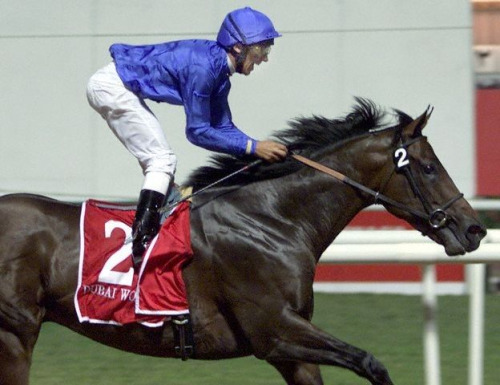
Dubai Millennium

With things looking to be in the visitor’s favour on the departure of Shan Masood, the experience of Younus Khan and Misbah, together with Asad Shafiq pulled the day back round to Pakistan’s favour. Misbah completing his ton in the final over was the icing on the cake.

England are not out of it but that does depend on ridding us of the turbulent 41 year old and seeing off his young tyros. That’s not easy but not impossible. Beware of the use of “two quick wickets” in the pre-game show.

Being at work today I didn’t get to see much of the action, trying to follow it on the Cricinfo site and Guardian OBO. It seemed, from the little bit I watched, that the wicket had a bit more carry and a bit more life, which, frankly, isn’t hard. But no-one is confusing this with Day 1 of the 3rd test in 2012.

Simon and others have made many really good comments on Misbah’s ton. The obsession on The Verdict over that last over is making me chuckle, because it really appears as though they have nothing else to talk about. I’m not sure it’s the world’s best debate, and as Dominic Cork is on it, the tariff of difficulty is much raised, to get up there.

282 for 4 is a good start, especially given the ground statistics I cited yesterday. England will be doing well to keep them under 400 and then the scoreboard pressure routine begins again.

In the other matches played today, Sri Lanka were skittled out for 200 at P Sara, with West Indies 17 for 1. Again, let’s see how both teams bat on this before we make a judgement but this is still a very decent rebound from the tourists. The main damage was done by debutant Jomel Warrican, described on cricinfo as a slow left arm bowler (again, not had a chance to see any of it) who took four wickets. Innocent Bystander on Twitter was saying that the spread odds on the number of wickets for Herath in this match would be 10.5/11.5 and so we’ll see how much assistance Warrican got from the wicket (anyone who might have caught it, could they comment?). Because if there is assistance, Herath is pretty damn good at getting the most out of it.

India won the ODI in Chennai, and still kept up there record of not making 300 there (just). Virat Kohli made his 23rd ODI century with a score of 138. Despite AB’s heroics in another audacious 112 (I’ve just watched some of the shots… wow) the series is now tied, ready for the decider in Mumbai.

Another series going to a decider is the Zimbabwe v Afghanistan contest. Afghanistan won today’s contest by three wickets with Mohammed Shahzad making an almost run-a-ball 80. Obviously there’s been no coverage I’ve seen, but this is promising for the associates and a little bit worrying for Zimbabwe. Tim Wigmore’s piece in the recent Cricketer magazine explains the new Zim admin’s philosophy, to play more frequently, and I’d recommend reading it (despite being surrounded by a lot of tut).

So two tests tomorrow to concentrate on. Comments welcome.

Anyone guess the horse?

2015 World Cup Semi-Final – India v Australia

Can’t they both lose?

Comments below. I’ll be awake a bit earlier tomorrow, so I’ll try to watch some of this on the train if I can get my Sky Go up and running.

We are all Black Caps now (presumably if you aren’t Indian or Australian or desperate to win the contest).

Thanks for all the nice words below. It’s always good to know people like the blog.