No Ifs, No Butts

Disaster.  Doomed.  5-0 on the cards…

Ah yes, the usual kneejerk response to any England Test result.  And it might even be that is what transpires; but it should not be deemed inevitable.  A 10 wicket defeat is ultimately something of a hammering, but England did compete for the first three days, and more than that, they were on slightly in the ascendant.  Had they managed to get Steve Smith early, and gone on to win the match, as they surely would have done, then doubtless the press would have been full of thoroughly premature articles about the Ashes coming home.

Of course, it goes without saying that winning or losing colours the coverage completely, it couldn’t be anything else, but a five Test series allows for fluctuations after all – one bad Test doesn’t mean things can’t change.  England’s weaknesses were on full display in this match, a bowling attack that struggled to take wickets without the new ball, a brittle batting order, and sans Stokes, a tail that rolls over in the face of fast bowling.  In contrast, Australia did a good job of covering up their own weaknesses – their less than outstanding tail performed well, the top order batted well in one of the two innings – while making use of their strengths, the fast bowling to some extent, the superior spinner to a greater one.  It’s never the worst idea to look at what went right for the winning side just as much as what went wrong for the losing one, and ask whether that’s likely to continue, especially given Australia’s unusually strong record at the Gabba.

Although England’s inability to take a wicket second time round is troubling, it’s also the case that the primary reason for defeat was failing to set any kind of reasonable target.  The mentality of a run chase is very different when a side is completely confident of success; it’s certainly not terribly surprising to see a team romping to a small target even if they struggled in the first innings.

The difficulty arises in trying to sift England’s structural problems and those that sit in the “one of those things” category, and a single Test doesn’t always offer insight into which is which, and to what degree.  Many of England’s failings in this game aren’t new at all, but the matter of degree might be.

If England were to win this series, so the wisdom went, Cook and Root would have to have successful series given the inexperience of the rest of the top order.  True as that might be, that inexperience is a self-inflicted wound given England have messed around with their batting for so long.  It is entirely their own fault they’ve arrived in Australia with so many question marks around positions 2, 3 and 5; at least two more Test novices than is normal.  Yet as it turned out, those inexperienced ones did reasonably well, albeit without any going on to make a really defining score.  That too has been a hallmark of England recently, and the inability to make big hundreds is always going to make it hard for England to put real pressure on Australia.  Cook failed twice in this Test, which can happen to any batsman, but in his case the greater concern is how he appears to be batting.  He looks adrift technically, much closer to the Bad Cook than the Good Cook of recent years and a live Test series is no time to be trying to put a technique right.  England will certainly be hoping that it is just a small adjustment, or that he merely felt out of sorts, but his recent record is one of diminishing returns – a statement that has been dismissed repeatedly, but which even his media supporters are starting to mention, albeit to to deny it.  There has never been a better time for him to prove the doubters wrong.

Root on the other hand was dismissed twice in similar fashion, lbw to a ball swinging in to him.  This could be a vulnerability, or it could just be getting out to a decent ball on two occasions.  He remains England’s best batsman by a distance, just like his Australian counterpart.  England need him to show that next time out.

Where England are certainly wasting a batsman is in the number seven position.  In both innings Jonny Bairstow found himself with the tail, and on both occasions got out trying to force runs.  It’s obviously the case that England miss Ben Stokes, but that doesn’t mean England have gone from the strongest lower middle order to the weakest overnight – England’s number seven will be a highly capable batsman irrespective. Before the Test England swapped Moeen and Bairstow around, saying that the latter would bat better with the tail, to seemingly almost universal approval from the great and the good.  Perhaps it is the case that such appreciation ought to be a warning sign, for the arguments in favour seemed weak at the time.  Moeen has been quite adept at smashing bowling around the park and farming the strike late on in an innings, in contrast to Bairstow who has been most effective in building longer innings.  He’s never shown too much aptitude as a late order hitter, at least.  It may be a waste of Moeen’s talents to have him throw the bat given minimal support, but it seems an even greater waste of Bairstow’s.  This will surely be corrected next time out, effectively conceding the error.

Whichever way around it might be, runs from the tail are always sought after, but England’s isn’t especially appalling, not with someone as capable at eight as Chris Woakes, nor someone who does score runs (however ungainly they may be) at nine as Stuart Broad.  But few would be talking about the tail if the batsmen had done a better job.  There is one thing that shouldn’t take up any more time, and that’s Moeen’s “controversial” dismissal in the second innings.  The thickness of the damn line is neither here nor there, and no batsman pays any attention to it.  What they do know is they have to keep a part of their foot behind it.  He didn’t, he was out.  Move on.

On the bowling side, first time around at least, Anderson and Broad did reasonably well, maintaining control and taking wickets.  In the second, they didn’t even look like taking any.  The match position may go some way towards explaining that, but not entirely, and certainly they looked far less effective with the old ball than the new in either innings.  But a bowling attack cannot rely on just two bowlers, no matter how good they might be, and England’s support bowling was relatively poor, which creates a vicious circle of making the better bowlers look poor too.  Again, it may be wise not to read too much into a single game – Moeen for one frankly described his bowling performance as “rubbish” when he was asked about it, and raising the performance levels is more than possible for any of them.

One thing that shouldn’t be thrown at them is the problem of the similarity in style of England’s seamers, given was always going to be the case anyway.  Woakes is a first choice seamer, and only Jake Ball is in there in place of Stokes, who even though might be a very good bowler, is still a right arm, fast medium one, just like the others.  The loss of bowling options before the series was a blow, but they were all right arm, fast medium too, even Finn these days.

In contrast, if England’s bowling is not completely hopeless, Australia’s pace attack is not the West Indies circa 1984 either, no matter how much the Australian press want to claim it is so, and nor were they even dramatically faster than their England counterparts in this match.  It was Nathan Lyon who really excelled, and who really made the difference, on a surface surprisingly suited to him.  Moeen’s disgust at his own performance can unquestionably be seen in the context of how Lyon did.

With the 2nd Test in Adelaide a day/night one, much is being made of the potential for England to gain swing, particularly James Anderson.  This may prove a vain hope, for recent matches there in the same conditions have been high scoring and with a flat pitch, but it is also quite probably England’s best chance of winning. At 1-0 down, there’s nothing wrong with targeting this one, and backing themselves to get more out of it than Australia do.  The alternative is to assume Australia would beat England in all conditions, which seems unduly defeatist, even for England supporters expecting the worst.

What can be said is that the 2nd Test is pivotal.  Lose that one, especially if they lose it badly, and a hammering is well and truly on the cards.  But win it, and we have a proper series.  England can undoubtedly play better than they did in Brisbane, Australia can undoubtedly play worse.  The nagging worry is the obverse is equally true.



Ashes First Test Review – Day Five

With Australia only needing another 56 runs to secure victory with all 10 wickets remaining, the result was never in doubt. The only question was whether England could take a few wickets and sow doubts in the minds of the Australian batsmen for the next game. England opened with Broad and Anderson bowling to the Aussies, but like their previous spells they were economical and unthreatening. After a few overs each, Ball and Woakes replaced them and that seemed to signal the last of England’s resolve. Cameron Bancroft did edge a wide Jake Ball delivery through a vacant second slip, but that was the only mishit in the day. Bancroft finished the chase with three fours in a Chris Woakes over.

This will be a frustrating loss for the England team and its fans. This pitch was the best case scenario for them at the Gabba, they won the toss, and they even had a pretty good first day. Although the record books will show a 10 Australian victory, it was genuinely tight for much of the game.

Indeed, England’s batsmen had several opportunities to put themselves in the driving seat which they failed to take advantage of. 6 of England’s top 7 managed an innings of at least 40 runs, Cook being the only exception. Unfortunately, none of them converted their promising starts into a big score and Vince was the only one to get more than 56.

England’s bowling attack didn’t cover itself in glory either, and certainly looked inferior to their Australian counterparts, but I think that holding Australia to 326 runs when Steve Smith scored 141* was a remarkable achievement. They relied heavily on Stuart Broad and Jimmy Anderson to take the wickets, which makes Anderson’s possible side and shoulder injury even more concerning.

Jake Ball was particularly expensive in the first innings, which might tempt England to replace him with Craig Overton or Tom Curran. Woakes was economical in the first innings but largely without being threatening, and only scoring 17 runs in two innings won’t boost his credentials as an allrounder either. Moeen Ali was not at his best with the ball, perhaps due to a finger injury he suffered early in the game or the injury which kept him out of one of the warmup games, but he was strong with the bat. The most worrying thing for England in the series is that none of the 5 bowlers ever really looked like they had Steve Smith in trouble.

Honestly I’ve avoided looking at England’s bowling in the second innings too closely. With a complete absence of scoreboard pressure, the batsmen have taken apart England’s bowling. It quite honestly seemed like England weren’t especially focussed on either keeping things tight or forcing a wicket, and in the situation I can’t blame them. Their minds are already on the next game, there’s nothing left for them in this one.

Perhaps the most difficult thing for England’s fans and management is trying to avoid judging the players on a single game. Sometimes people just have a bad day at the office. Certainly the first Test of an Ashes series is not without its distractions and diversions. For the experienced players, Australians have tried to remind them as much as possible about the 2013/14 whitewash. For the newer players to the team, the barrage of media attention and fan interest will be something completely alien to them. Maybe the smartest thing for England to do would be to pick the same eleven players and trust their selection?

Or maybe not. Why not post what you would do in the comments below.

Ashes First Test Review – Day 4

The day began with England 26 runs ahead but two wickets down, and the start was promising as Hazlewood and Starc didn’t seem as threatening as they had the day before. The ball was a little older, the deliveries a bit slower, and although Stoneman and Root had some nervous moments they seemed relatively comfortable.

When Nathan Lyon came in to bowl, it was a different story. The left-handed opener Stoneman in particular had problems facing him, and on Lyon’s third over of the day Stoneman edged one to Steve Smith at slip. Dawid Malan, another left-hander, didn’t seem much more comfortable playing the offspinner, and whilst Malan blocked out a few overs he fell to a similar dismissal soon after.

This brought together Joe Root and England’s #6 Moeen Ali, and for a while things looked rosy for England. Both batsmen were positive, they rotated the strike well and caused Australia no end of problems. Both handled Lyon relatively comfortably too, with Moeen moving his feet and forcing the bowler to vary his lines and lengths. Root coasted to his first fifty of the series, but the very next ball he was given out LBW to a quick seamer from Hazlewood. The manner of his dismissal will worry England, as he was out in a similar fashion in the first innings.

When Bairstow came to the crease, the scoring continued at a high rate and England fans might have entertained the hope that their team could create a lead in excess of 250. Of course true England fans know well the dangers of such hope, and Moeen Ali demonstrated this when he played inside the line of a Lyon offspinner only to get stumped. It was an incredibly tight decision which went to the third umpire, and the TV pictures seemed to suggest that the line had been painted in a particularly haphazard way, but at the end of the day the fault lies with Moeen rather than the groundsman.

With Moeen Ali gone, the scoring stalled again as Bairstow played more defensively and Woakes struggled to pierce the field. They managed to put together a partnership of 30 before Woakes edged a Starc bouncer to second slip, which triggered the second collapse for England’s lower order in the game. Within 3 overs the last 3 wickets fell, and the tourists had set Australia a modest target of 170. Bairstow’s dismissal in particular was disappointing, as the shot seemed more like catching practice than a scoring opportunity.

Australian openers started slowly and patiently, seeing off Anderson and Broad with the new ball. Once they were facing the other three bowlers, they really started accelerating to the point that it seemed possible they might reach their target today. Moeen Ali in particular was expensive, with Australia scoring 23 off his 4 overs.

It was at this point that I decided to go to sleep, as an inevitable march to a low total really isn’t interesting enough to hold my attention at 6.30am. At least the previous 3 days had some balance and competition. A quick look at Cricinfo’s ball-by-ball suggests I didn’t miss any action. No wickets, no drops, no DRS appeals, nothing to suggest that England even made a pretense of competing.

At the close of play Australia ended on 114/0, needing another 56 runs to win. If you are a colossal optimist, which basically just means Sri. Grins at this point, England need to take 10 wickets. Or they’d certainly settle for a rainstorm to come out of nowhere. It seems likely that the game will be over by 1am, which will at least help get my sleeping back on a regular schedule.

After play ended, there were reports coming from Australia’s Fox Sports that Jonny Bairstow might have been involved in an incident with Cameron Bancroft at a Perth nightclub. Recalling both Dave Warner in 2013 as well as Ben Stokes, you’ve got to wonder why cricketers go to nightclubs at all.

Comments are welcome below, unless they’re potentially libellous about players fighting in nightclubs in which case they are very much not welcome.

Ashes First Test Review – Day 3

The day started with Steve Smith and Shaun Marsh continuing their form from the previous day. After a couple of loose overs to begin both Broad and Anderson managed to build some pressure with consecutive maidens, and on Broad’s third over of the day he managed to draw Marsh into playing a drive on the up from a slower ball. Anderson at mid off caught the looping ball, and England were off to a great start.

After Tim Paine came in, England settled down into a routine to bowl out the 12 remaining overs to the new ball. Jake Ball bowled bouncers outside off the Steve Smith whilst Moeen Ali bowled from the other end to rest the other bowlers in advance of the new ball. It worked to a point, restraining Australia’s strike rate when they might otherwise have been looking to cash in, but didn’t generate any clear chances. One bouncer did cause Smith some discomfort, hitting the shoulder of the bat, but it fell well short of England’s fielders in the ring.

Anderson made a breakthrough in the first over with the new Kookaburra, Tim Paine edging a quick outswinger to Bairstow. This wicket brought Mitchell Starc in, and England sensed the chance to run through the Aussie tail with the new ball. Starc raised the crowd’s hopes with a six smashed straight down the ground from Stuart Broad’s first over in the spell, but those hopes were dashed two balls laters as a leading edge floated back down the wicket where Broad caught it. Pat Cummins and Steve Smith safely negotiated the remaining 6 overs to Lunch, where England fans worried about Anderson’s fitness as the bowler ended his bowling after just three overs in the spell whilst holding his left side.

The second session began poorly for England, with Smith and Cummins slowly accumulating runs through the first hour against Ball, Woakes and Moeen. Broad and Anderson returned to bring a bit more control to proceedings, but couldn’t pierce the Australian defences. Eventually Smith reached his century with an off drive against Broad. It took until the end of the session for England to take another wicket, with Cummins eventually edging a ball to Cook at first slip.

The evening session didn’t go much better for England, although Moeen did bowl Hazlewood early in the session. Smith and Lyon kept going, with Smith taking Australia into the lead by guiding a short delivery from Jake Ball for four. It took an hour for England to take the final Australian wicket, with Lyon edging an offspinner from Root to leg slip.

It didn’t get any better for England when they started batting either. Cook fell in the 4th over after top-edging a pull to long leg, which will disappoint him as he has a good reputation against the short ball. Vince nicked one to slip two overs later, reverting back to his more familiar form. A quick bouncer hit Root on the head, breaking a part of his helmet clean off, but he carried on after a quick inspection from England’s team doctor. Root and Stoneman survived the onslaught, and England ended on 33/2 with a lead of 7.

It’s notable how much better the Australian tail played compared to England’s, especially since that is supposed to be a strength of the tourists. Of course Australia was helped by the fact that they had Smith batting through the innings, but Australia added 153 for their last five wickets whilst England’s tail only managed 56. A lot of that seems to be not a weakness in England’s batting but in their bowling. Australia’s bowlers were able to successfully bounce out England’s tail, or Lyon confused them with his spin. England’s bowlers seemed unable to reliably trouble the Aussies, particularly Ball, Woakes and Moeen.

As always, please comment below. I’m off to bed now!

“Day 3 At The Gabba….” – LIVE BLOG and Preview.


cropped-20171121_230654-01.jpeg

It’s a parallel universe, and in that wonderful place it is Day 3 at the Woolloongabba and England are batting. They are 165 for 4, with Joe Root on 64, Dawid Malan on 44. Australia have posted 302. The pitch is not easy to score on and the bowling side has two opening bowlers with 900 wickets between them.  In that parallel universe the headlines on the Courier Mail would be “Pommies Holding On For Life”. Or something much more crude.

England are in a really decent position, having reduced the hosts to 76 for 4 but seeing the late session play go the way of the home side. At this point they are in front, not by far, but ahead. Day 3 is set for a terrific contest in an interesting test match. One little aside, amazing how Trent Bridge 2013, played on a slow, low surface, was slated as a terrible wicket to diminish the terrific game that unfolded, yet the Gabba gets a pass. We’ve missed attritional, fighting cricket so much that when we see it, we go mad. This is classic test cricket, fascinating, enjoyable and slow to unwind. Great.

The Editorial Committee discussed what we would do about tonight’s proceedings. We are concerned for Danny’s wellbeing as he has stayed up all night for the first two days’ play and we can’t commit that he will do a third – even though he has told us he will (he has been promoted to Editor this week, I’m sure he is thrilled!). While there is no work for us tomorrow, I’ve got a bloody Heathrow run so won’t be up all night. Others may be in late from their evening’s entertainment. It’s a tough life.

But we also note that the Live Blogging went down quite well despite everyone else seemingly doing it. We can’t bring the corporate heft of ESPN Cricinfo, the legendary voices of TMS, the pageantry and self awareness of the Guardian or the ever so enjoyable Guerilla Cricket, but we can bring our own brand of, well, whatever our brand is, to the Ashes cauldron caukdrib  ( Puts on Frank Muir voice – a caukdrib is a pot used to cook liquids at low temperatures….). So we’ve decided to live blog tonight, for as long as we stay awake.

FOR AS LONG AS WE STAY AWAKE.

It might catch on as a motto.

So, you know the form. Chip in with your comments below, and one of your loving, charming hosts will be updating you from here.

So for post number 1, Dmitri is kicking it off….

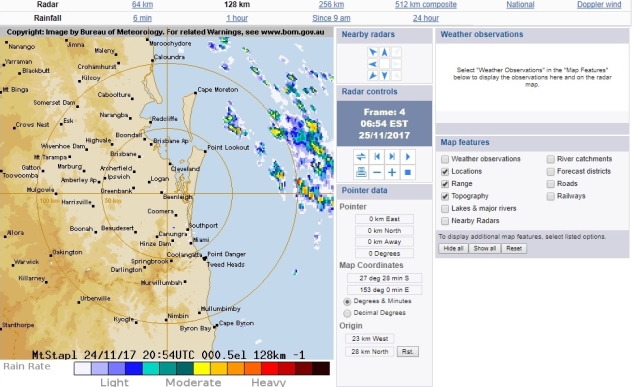
2121 – The latest weather radar from the Bureau of Meteorology….

Brisbane Radar 24

21:28 – A couple of things. Who is the person who has his/her hits from Santa Caterina province in Brazil? Always mystified me that one. And secondly, if your column is a regular dose of snark, make sure you get his name right in the photo caption.

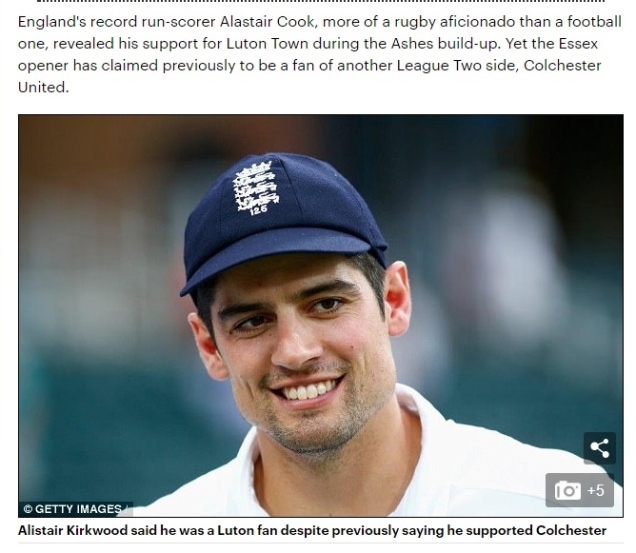
Cook

This never happens to John Cena.

2201 – We’ve solved the Brasilian conundrum – welcome Mark. We’ve also got the first of Oliver Holt’s Holiday Snaps for today.

Read Martin Samuel’s nonsense in the Mail as well. He won’t be happy with a 1-1 draw at home to Leicester. Shame.

22:41 Been editing the live coverage for transfer on to my records. So…. many….. betting….. adverts. I am a nerd and I keep a lot of cricket. Broke my heart that I didn’t get the VHS all onto DVD as I had tons of Lara, Thorpe, Sachin (though he wasn’t my fave) and others. Up to date now and feel a bit better.

22:44 While we are looking at our viewers from afar, who is the one in Santiago, Chile? And the Dallas Metro area. Everyone very welcome. It really amazes me our little old blog has this reach.

23:01 Day 3 in Brisbane on my visit. Hungover from a long day in the sun and lots of beer. England capitulated, not totally, but enough to allow the Aussies a big lead, and then they accumulated for the rest of the day. The Saturday night was the Manchester derby. Watched it in an open air bar with a bloke who came from Deptford, like me. City won 3-1. Feeding goats or something or other.

23:04 Day 3 in Brisbane on the 2010/11 tour. Hussey and Haddin completed their 300+ stand after one of the unluckiest bowling sessions I’ve ever seen England have. Australia post big lead. Strauss has our hearts in mouths with a very close LBW shout leaving it. The next two days went down in legend.

23:07 Day 3 in Brisbane in the book I have out – the 1982/3 tour. Kepler Wessels had completed a century on debut the day before and almost carried his bat, making 162. England trailed by 122 runs, but Graeme Fowler dug in, we lost just one wicket in getting to 71 and England had half a shout.

23:30 Day 3 last time out in Brisbane. We’d been skittled. Warner and Clarke made tons, set us five hundred and plenty, and we were two down at the close, including Johnson getting Trott. Meanwhile Shiny Toy and Lovejoy are on the screen together, with the latter saying Woakes’s shot is “the worst of the Ashes so far”. My eyes roll.

23:42 The KP ESPN advert is drivel. He’s becoming a worrisome parody.

23:57 Game ready to resume, darker clouds above, James Anderson bowling, Dmitri on the keyboard for a bit. Danny is awake, and the first ball of the day goes for two.

0:00 No, not a clue.

0:02 Broad at the other end. Gilchrist finding out bantz with Boycs isn’t a long-term plan. Marsh square cuts Broad for four to get off to decent start.

00:07 Boycott getting on my nerves already. OK, we get your point. We don’t need to hear it every ball you frightful old bore. Marsh gets three behind point and completes a half century. Not sure why people thought he was a dodgy selection. He’s hit and miss, I know, but he does hit.

00:17 Anderson gets Smith to woosh at a shot outside off stump. First legit play and miss today? Meanwhile a usual suspect on Twitter goes all pseuds corner re Adam Gilchrist. It’s me. I find it if I was an ice cream I’d lick myself stuff. 175 for 4.

00:21 WICKET – Out of the blue Marsh checks a drive and lobs up a catch to Anderson at mid-off for 51. Broad gets the wicket, Marsh looks at the pitch with some disgust implying it held up for him. Marsh, Caught Anderson, Bowled Broad 51 – 175 for 5

00:24 Broad induces a thick edge from Paine, but no hint of a chance. Paine looks edgy, trying to push a single the following ball. Wicket maiden completed.

00:31 Woakes on for Broad after his wicket maiden. New ball due soon so sort of understand it, but isn’t the moment now? Woakes gives up a single to Smith first up, but then keeps Paine on 0 for the remainder. Vaughan does the Lehmann has scored a ton more recently than Paine stat as if no-one has heard of it. Jake Ball into the attack.

00:37 Jake Ball gives Smith a cracking ball at his throat and the captain is lucky to survive as the ball drops into no man’s land. He gets off strike with a single next ball. Paine gets a chance and plays a lovely cut shot for 4 to get off the mark.

00:43 Woakes and Ball now bowling short to Smith and Paine. It’s dull to watch, there’s funky field placings, and this sort of thing gets the pundits salivating. Smith, despite that one iffy little moment, really looks like he doesn’t give a toss. “Test match cricket at it’s finest”. Cut out the bloody hyperbole, Shiny Toy.

00:48 No slips. I can hear Botham chuntering. Shiny Toy moans about Aussie papers not being balanced. Should have seen the report of your ton in the lead up to the 2002 Ashes, Vaughan. They belted you for being rubbish, scratchy, all over the shop.

00:50 5 minutes to The Leg Glance. And we have Lovejoy. Says something to do with Bodyline. I want to cave my ears in for hearing it. Poor Alison Mitchell. Now a Tufnell joke story. Lord heaven above. Doing a Tuffers impression. Paine moves on to 6 during this low-grade variety act masquerading as cricket punditry.

00:55 And as Lovejoy completes his first over by at last concentrating on the action, I complete my stint and hand over to the incomparable Leg Glance for the next however long he stays awake period. Dmitri signing off…

01:00 TLG here.  Well now, in common with half the country, Friday night is “wander to the pub night”, and you know what?  Ashes cricket is made for that – head out, amble back, turn the cricket on.  Oh and then England take a wicket a few moments later.  Perfect.

Since you ask (you haven’t) the chicken wings were fabulous.  Oh yes, cricket, I should mention that.  So far Tim Paine is failing to go anywhere, while Steve Smith is clearly going to be That Player England Can’t Get Out this series.

01:05 I need to point out the total absence of any cricket when I’ve been on writing duties so far.  If there’s a tropical downpour in the next 10 minutes, don’t be at all surprised.  So, where are we?  England are keeping decent control here, but they could really do with another wicket to put Australia under real pressure.  I’d fancy England would be thrilled with a lead of 50. Especially given Australia have to bat last – but 5 wickets down means a lot of work to do, and the naturally pessimistic England fan has the phrase “tits up” going through his (Or her.  Hmm, on reflection it probably just is “his”) head.

01:13 Graeme Swann and Alison Mitchell on commentary together is like listening to Joe Pasquale and Eric Morecambe doing a double act.

01:18 Joe Root slips in for an over as England await the new ball.

01:24 WICKET! Anderson strikes in the first over with the new ball.  A typical Jimmy dismissal really, a touch of swing, the outside edge, and Bairstow does the rest.  Tim Paine on his way, and it’s 202-6. 100 between the teams.

01:30 WICKET!  Broad nabs a sharp caught and bowled to remove Starc for 6.  Doesn’t even begin to describe it as two balls before the latest assorted Mitchell plays an extraordinary shot – straight driving Broad back over his head for six to get off the mark.  Broad got his revenge quickly, so the Brisbane crowd will thoroughly appreciate that no doubt.  209-7

01:35 England had kept the lid on nicely this morning, but hadn’t looked especially threatening, at least not until the new ball.  Then two quick wickets and all of a sudden it’s all happening.  Smith is still there though, and while he is England still have a problem.  While we’re at it, Australia are scoring at 2.52 an over, compared to boring negative England’s 2.58 an over.  We all love the Brisbane Courier Mail.

01:48 Steve Smith is playing a completely different game to anyone else.

01:57 Some concern over James Anderson.  He certainly reached for his side, and he’s been replaced by Jake Ball after a short spell.  He’s not gone off the field, but there are only  a few minutes to lunch.

02:01 And that’s lunch.  Australia are 213-7, still 89 adrift.  And perhaps the most notable thing about this match so far is that unlike the last two series, we’re into day three and we don’t know where this game is going.  It’s competitive, hard Test cricket.  Marvellous.  Steve Smith scored just 17 off 66 balls that session, while losing partners at the other end.  England get loads of stick for bowling “dry” but sometimes it’s exactly what is needed, and that was fine bowling.

02:09 My travel advice is to steal the mini-duvets off Emirates.  They’re so warm.

02:16  Just the 48 runs in that session.  Test cricket, absolutely.  Amusing given Australian whining about England’s run rate?  Oh yes.

02:17 Typically in a Test match, the side batting second need to have a runs advantage going into the second innings.  So England are currently in a very decent position.  If they can get a reasonable lead, especially so.  But equally the third innings of the match is full of pressure, for a side can lose the game in a session.  How this pitch will play is as open a question as it was on day one, for if it gets better then England have an issue.  If it gets worse then Australia have a crisis.  And how good is it not to know?  Test cricket.  You jut cannot beat it.

02:40 Jake Ball opens up after lunch.  Not exactly putting to bed those James Anderson fitness concerns.

02:47

Not sure what’s more unlikely – England fibbing or the English cricket press being cynical about what they’re told.

02:55 Let’s call this a quiet start to the afternoon session.

03:03 Aside from 4 overthrows via Cummins’ back (accidental), and one Steve Smith straight drive, it’s still quiet so far.  But not terribly threatening from England either.  It might be time for Moeen.

03:06 I’m a captaincy God.  The Bearded Brummie is on.

03:13 England have let Cummins play himself in.  Danger.  In other news, the Rugby League World Cup semi-final is little over an hour away – the titanic battle between England and Tonga to decide who has the privilege of being stuffed by Australia.

03:23 Australia aren’t exactly rattling along, but this partnership is becoming  problem.  The gap is now down to 61, and England simply don’t look like taking a wicket.  Smith is closing in a 100 and looks serene, and Cummins looks secure. Anderson has gone off the ground – for bowling boots?  Let’s hope.

03:29 Anderson is back on the field.  And that’s my lot too – handing over to Danny who hasn’t seen the sun in several days.

0331 Danny here. Sad and almost completely true comments from thelegglance. Almost an hour after lunch, Broad finally gets the ball back.

0336 And Anderson from the other end, all eyes looking to see if there’s any sign of injury from the highest rated Test bowler in the world.

0352 Still nothing to report, although Broad & Anderson have at least kept it tighter than the other bowlers. The ball is now 25 overs old and I worry about England finishing off the tail…

0403 Smith drives through the off side for four, and brings up his century. That’s his 21st century, and his 6th against England.

0417 Still awake. Still no wickets in the session.

0431 WICKET About 10 minutes left in the session, and England finally take a wicket. Cummins plays a loose drive to a wide, full ball from Woakes and he edges it to Cook at first slip. A very useful 42 runs from the Australian bowler, and Hazlewood comes in.

0442 TEA Australia are 287/8, just 15 runs behind with 2 wickets remaining, and crucially with Smith still at the crease.

0518 Quiet start to the evening session, 7 runs from the first 4 overs and England’s lead is just 8 runs.

0528 WICKET Moeen Ali bowls left-hander Josh Hazlewood, who was trying to hit it on the leg side but completely missed it. Australia 298/9 and 4 runs behind England’s score.

0539 Smith whips a short delivery from Jake Ball to the fine leg boundary and Australia go into the lead.

0605 WICKET In the first over after the drinks break Root is bowling to Lyon, who inside edges a ball to leg slip. Smith finishes the innings on 141* and Australia have 328 runs with a lead of 26 runs.

0630 WICKET Hazlewood bowls a quick bouncer to Alastair Cook, who top edges it to Starc at long leg. England are still 15 runs behind.

0642 WICKET And Vince has gone as well, squared up on the back foot by a quick Hazlewood delivery and edging it to Smith at second slip. England still 9 runs behind, and 2 wickets gone.

0649 Fast bouncer from Mitchell Starc and it hits Joe Root on the helmet, breaking a piece off. England’s doctor comes out and gives him the concussion test, but Root dons a new helmet and carries on.

0713 Root turns Lyon behind square for a single, and THE SCORES ARE LEVEL with England already 2 wickets down.

0720 Cummins works Stoneman over with an over of short bowling, 10 minutes left for England to hold on.

0732 STUMPS England survive the last over against Nathan Lyon, and finish the day on 33/2 with a lead of just 7 runs.

Ashes First Test Review – Day 2

As the only one of the group to actually watch last night’s play (bloody part-timers), it falls to me to write the review after a few hours sleep. I’m still suffering a bit, so please forgive me if I missed something.

The day began with England on 196/4, and with England hoping to really cash in and keep the Aussie bowlers toiling for most of the day. Those plans seemed to be working through the first hour, as Malan and Moeen looked fairly comfortable at the crease facing the second new ball. There was also an injury scare for Australia as Shaun Marsh ran his spikes across Mitchell Starc’s knee in the field, causing the bowler to leave the field for some treatment and a new pair of  trousers. Starc returned to the field quickly though, as it was just a scratch.

At some point during the hour Australia switched up their tactics and went from bowling full to short as they peppered Dawid Malan and Moeen Ali with bouncers, whilst Lyon targeted the two left-handers from the other end. Neither batsman seemed comfortable with the aggressive bowling, particularly Moeen, but it was Malan who fell to it after top edging a pull from a Mitchell Starc bouncer to deep square leg. It was a disappointing dismissal in some ways as the field was clearly set for that shot, but before the match started I’d have snapped your hand off if you offered me Malan scoring 56.

The very next over, Nathan Lyon dismissed Moeen Ali LBW as the batsman played for spin that wasn’t there. In a matter of minutes, England had gone from two set batsmen at the crease to there been two bits of fresh meat at the crease for the Aussies to attack. Two overs later Lyon bowled Woakes through the gate to a very loose drive, and the familiar England Test collapse was on.

Jonny Bairstow had been pushed down the order to “bat with the tail”, and after having faced only 7 balls for no runs that’s exactly what he was doing. With Broad at the other end and two number 11s to come in, Bairstow took the not unreasonable choice of attacking the Aussie bowlers at every opportunity. Unfortunately for him (and us), he skied a short ball from Cummins and wicketkeeper Paine collected it.

Jake Ball then came in, and actually looked pretty good as he seemed to time the ball better than the other England batsmen. He hit 3 boundaries before glancing a ball from Starc off his hip and straight into the hands of David Warner at second slip. Anderson and Broad added another 13 runs between them before Broad pulled a short ball from Hazlewood to deep square leg, and the innings was over with England finishing on 302.

Australia’s innings began broadly how you’d expect, with the experienced David Warner looking fairly comfortable whilst the debutant Cameron Bancroft looked more hesitant and nervous. The nerves clearly got to him, as Bancroft edged a full Stuart Broad outside the off stump low to the wicketkeeper. This brought in Usman Khawaja, who is considered weak against spin bowling. Joe Root switched to Moeen early, and in just the 11th over, Moeen trapped Khawaja plumb LBW as the Aussie played for spin that wasn’t there.

This dismissal brought Steve Smith to partner David Warner, and this seemed like the most crucial partnership for England to break. The early signs didn’t look good for England, as Smith seemed able to score singles at will and the set Warner looking comfortable facing England’s bowling. If anything Warner became too confident, as he got himself out playing a loose shot to a shortish delivery from Jake Ball straight to Malan at short midwicket. This was a massive blow for Australia, as this partnership had the very real potential to bat England out of the game.

This brought in Peter Handscomb, whose stance deep in the crease caused problems for Anderson and especially Ball as they struggled to bowl the fuller line required to drag him onto the front foot. Anderson did get a few on target though and one got through Handscomb’s defences to hit him on the pads just inches in front of the wicket. The umpire gave it not out, but England reviewed it straight away and it was successful.

This wicket left Australia on the ropes at 76/4, and in real danger of conceding a 100-150 run first innings lead. The next batsman in was Shaun Marsh, who has been dropped more times than a slip chance to Ian Bell and has a Test average of just 36.00. Unfortunately for England, he looked in good form and they seemed to have no answers. Australia were helped by loose bowling which meant that Moeen Ali wasn’t able to concentrate his bowling against the left-handed Marsh.

The other significant factor is that England have not shown the ability to take wickets with the old Kookaburra ball so far in this tour. Even against very inexperienced “Cricket Australia XI” teams, the bowlers couldn’t make frequent breakthroughs. Against the highest rated batsman in the world (and Shaun Marsh), those difficulties seem even more acute. Unless England coax some reverse swing from the ball, they appear to be waiting for the second new ball to actually make some progress in the game.

And so it went that Smith and Marsh batted for 37 overs through the evening session, all the way through to Stumps. England managed to rein the scoring in at least after the Australians started scoring quite quickly early on in the partnership.

The day ended with Australia 165/4. On paper they’d still be considered behind England, especially with their relatively weak tail, but I won’t feel in any way confident until England can get Steve Smith out. He looked in awesome form today, and that will worry England for the series ahead. Apparently Smith averages 95 once he passes 20 runs, so England have to find a way to get him out early several times this series to keep Australia’s talismanic batsman out of the picture. It’s not looking good for that plan so far…

As always, please add your comments below:

All Talk Of Circadian Rhythm

In just a few hours, the time for talking will have come to an end and the time for action will have begun. Until then, boy has there been a lot of talking.

The primary aggressor has been the unlikely figure of Australia’s offspinner Nathan Lyon. He looks like a cross between the least effective person at the office and a weasel, and he is the slowest bowler in the Australian team. Nevertheless, on Monday he declared his hope that Australia would “end the careers” of English batsmen. He also suggested that Australia were trying to get Root out of the side, that Australia’s fast bowlers were the best in the world, and that England have no chance of winning.

This follows Josh Hazlewood talking about Australia trying to “open up a few scars” for the England players who toured in 2013/14. Before that, David Warner said that England should expect “war”, and that he would make himself “hate” them during the series. In all honesty, the build up has been less like a cricket match and more like Wrestlemania.

I suppose that I should be annoyed by this kind of behaviour, but in truth I can understand why they feel the need to do it. This Ashes series is not a clash of the giants. It’s not even a clash of two particularly good teams. Divorced from the historical significance of a small urn and centuries of colonial rivalry, this matchup has very little going for it. Both batting lineups have gaping holes in them and both bowling lineups are good but lacking in depth should anything happen to the starters. And in England’s case, things have already started happening to their starters.

With this in mind, I don’t begrudge the Australians trying to drum up a little interest in the game. Are they using outdated and quite frankly offensive language when doing it? Yes, of course they are. They’re Australian. But the series does need promoting and people are talking about all these ridiculous statements, so mission accomplished I guess?

Looking forward to the actual cricket match tonight, the big question seemed to be about England’s fourth fast bowler. In the warmups, the position was Craig Overton’s to lose. After having managed three consecutive ducks with the bat, and good but not great figures with the ball, he has indeed lost out to Jake Ball. Ball claims to have fully recovered from his ankle injury, although England are certainly not without form when it comes to bringing injured players back prematurely.

On the Australian side of things, Warner and Marsh both have minor injury worries, causing CA to draft Glenn Maxwell in as late cover. I’m sure I speak for all England fans when I wish Shaun Marsh a very speedy recovery.

Which brings me to our big announcement: We at Being Outside Cricket will be running a live blog through the first day’s play. The post will begin around 9.30pm and go through the night as we take turns talking about the game and whatever else comes up. It’s a whole new experience for us, so please join us if you can.

And Another One Gone…

It is now just two weeks until the men’s Ashes begins, and it’s fair to say that things aren’t going to plan for England. In fact, it’s hard to see any realistic scenario in which things could be worse for the tourists.

This morning Jake Ball apparently suffered an ankle strain whilst bowling, the latest bowling casualty before the series even begins. Wood, Roland-Jones and Finn are all unavailable, as of course is Ben Stokes for an entirely different reason. Moeen Ali is expected to be fit in time for the first game, but the way England’s luck is going you’d be a fool to guarantee that.

None of these players are on their own irreplaceable (even Stokes), but having 5 fast bowlers with international experience all missing at the same time would tax any country’s reserves. Tom Curran is already travelling to Australia to replace Finn in the squad, and it seems likely another bowler will be called up to join him. There are no obvious substitutes waiting in the wings for England, who already have three uncapped bowlers in their squad.

Liam Plunkett, perhaps the first thought for most people who follow the England team, has apparently been focussing on playing limited overs cricket this summer. His most recent Test match was against India in 2014, and he only played 2 championship games this season. The only other fast bowler with international experience who might be available is Chris Jordan, but with an average of 32.83 in Division 2 this summer he isn’t knocking the door down.

The more likely alternative is another uncapped bowler. Saqib Mahmood and Tom Helm are the two fast bowlers in the Lions squad which will be touring Australia this winter, but neither has much first class experience to draw on. For all of the candidates, I feel massively underqualified to judge them as I don’t follow county cricket very closely. Whoever is selected, it’s a tough ask for such an inexperienced bowling attack to do well in Australia.

The performance of the current bowling attack today against Cricket Australia XI hardly filled me with optimism about the upcoming series either. After taking 5 wickets in the first 33 overs of the innings, England then seemed unable to dismiss the tail with an older ball. I don’t think it bodes well for when England have to face the full Australian side, although of course Broad was not playing in this game.

All of which doom and gloom leads me to England’s batting. Stoneman, Vince and Malan have all had very good tours so far, but it’s hard to look past their performances this summer when guessing how they will play against Australia. Meanwhile, Cook is currently averaging 8.00 on this tour and Root has been good but not great. With Stokes almost certain to be replaced by a bowler, England have much less margin for error from their specialist batsmen than they have enjoyed in recent times.

One point I noted about England’s batting yesterday was how much trouble they had against Australian legspinner Daniel Fallins in his debut first class game. He finished with figures of 5-73, and if he can manage something similar in the second innings then perhaps Australia might be tempted to call Mitchell Swepson or another legspinner into their squad. England’s failings against spin have been clearly evident in recent years, and Nathan Lyon is no doubt looking forward to facing them.

At least the fielding seems pretty good though. That’s something to hold on to.

As a sidenote, BT Sport have been showing the game against Cricket Australia XI for free on their Facebook page, as well as the women’s Ashes Test on their Youtube channel. Free English cricket is so rare nowadays, please enjoy it while you can.

As always, comments are welcome below. If you can give me some small scrap of hope about England’s chances this winter, that would be especially welcome.

Is English Cricket Too Posh?

It seems fair to say that cricket in England has always been a class-based affair. For almost 200 years there was a separation between the independently wealthy amateur gentlemen and working-class professionals. It was only in 1963 that amateurism officially ended in English first-class cricket. There has always been a sense that English cricket is a game for aristocrats which the proles can only play at their sufferance and on their terms.

Even in recent history, there has been a bias toward people from privileged backgrounds. In the last 40 years, public school boys have accounted for 80% of the ECB/TCCB chairmen, 67.5% of the chairmen of selectors, and Test captains in 65% of the games. To put these numbers into context, in 2016/17 the percentage of children attending public schools in the UK was 7.9%.

Considering the over-representation of the well-to-do in the higher echelons of English cricket, you will be unsurprised to learn that this pattern continues in the selection of the England Test team. In the past 10 years there have been 126 England Men’s Test matches featuring 61 cricketers. Players who attended fee-paying schools make up 62.6% of the appearances in this period.

This was higher than I expected, but the real shock came when I looked a little deeper. If we divide the players into two groups, batsmen and wicketkeepers versus bowlers and allrounders, there is a massive disparity between the two. “Only” 26.5% of appearances by bowlers were by public school boys, and Stuart Broad’s 109 games account for 17.2% of them. Conversely, 93.6% of appearances by batsmen were from public school boys. That is a patently ridiculous figure.

The question this begs for me is this: “Why are people from ‘the right kind of family’ more likely to be batsmen than bowlers?” The most likely answer that I can give is coaching. People who attend fee-paying schools probably receive a higher level of cricket coaching from a younger age than people who go to comprehensive schools. It’s possible to train someone of average height, average strength and average speed to become a decent batsman, and wealthy people have the ability to make that happen.

The same is not necessarily true of bowling. There is an old adage in coaching: “You can’t teach speed”. I mean, you obviously can, but every person has a limit beyond which they can’t get any faster. One thing you definitely can’t train is height, which is also an advantage when becoming a fast bowler. No matter how much money you throw at it, you can’t make a posh boy grow 6’4″ tall and be capable of bowling at 85 mph. Bowling is therefore a significantly more representative and meritocratic discipline in English cricket.

I suspect that when counties scout their local clubs and schools, children from public schools would appear to be superior choices. Having received better coaching from a younger age, they will be playing closer to their potential abilities. This would however mean that counties overlook kids from less affluent areas who might have lesser abilities but greater potential.

There are, I suspect, other reasons. As I’ve pointed out at the start, senior roles in the ECB tend to favour people from privileged backgrounds. Public school boys have a reputation for intelligence, confidence and leadership ability. You only have to look at other areas of public life which they dominate like investment banking or politics to see how quickly these stereotypes fall apart under even the slightest scrutiny, but nevertheless they are considered “well-spoken” and “the kind of boy you hope your daughter marries”.

This disparity angers me for several reasons, not the least of which is that we as a country are probably losing multiple potentially great Test batsmen from the game simply because of the circumstances of their birth. It also has a massive long-term impact on the game. Most of the off-the-field roles in English cricket are taken by former players. Administrators, coaches, selectors, journalists, commentators and pundits are all likely to be former players. If the majority of players are from public schools, that means that they will also dominate all of the other aspects of English cricket.

So what can be done about it? Fortunately, there is already an example of a country whose cricket was also dominated by a wealthy and privileged elite but have reversed that trend in recent years. Of course, that country was South Africa.

Obviously the two situations aren’t even remotely comparable. Black South Africans had faced over a century of institutionalised racism in all aspects of society, including cricket. Even after reinstatement into world cricket and the election of the ANC, there were relatively few cricket clubs in black communities. One of the solutions to this issue has been the use of quotas, requiring minimum numbers of black and coloured players in their international and first-class teams.

This approach is not without its downsides. I’m sure most people on this blog will be aware that Kevin Pietersen cited CSA’s policies as restricting his chances of playing in his home country. Several Kolpak players in county cricket have also suggested this, although a more cynical person might suggest that for most it seems like a straightforward financial decision. I don’t think this would be as strong an issue as it is in South Africa.

The current system in South Africa allows 5 white players in any first-class team, and there are only 6 first-class teams. This means that there are essentially 30 professional contracts available to white South Africans, which does seem somewhat restrictive. If similar quotas were enforced for privately educated players in county cricket, there would be 90 spots for them because English cricket has three times the number of teams. This seems like an eminently workable number, allowing room for both experienced professionals and developing future stars but without allowing a wealthy minority to dominate the sport.

A quota system would force counties to look beyond the low-hanging fruit of public school cricketers and encourage them to help promote mainstream youth participation in their regions. If the privately educated became minorities on the cricket field, hopefully that would also filter through over time to all of the other facets of the game. Indeed, if English cricket ever weans itself off rich entitled men being in charge, perhaps they will finally close the divide between those Inside and Outside Cricket?

As always, we welcome your thoughts and comments below.

The Tangled Web

Guess what everyone?  Today is the fifth and final ODI, and the last international cricket of the summer.  Yes, it’s still summer – did you not get the memo?  You may think it’s nearly October, but there’s still money to be made, and if that means January is henceforth to be considered balmy high summer, then you’ll just have to lump it.

Of course, the usual lack of interest in a non-descript dead rubber of an ODI (apart from those with tickets, obviously – but they don’t count for anything these days) is compounded by (note capitalisation now required) The Ben Stokes Affair.  As Sean wrote so eloquently yesterday  the ECB’s track record when players go rogue is anything but a consistent one, and the importance of Stokes to the team (but not Hales remember) means they are now in a tricky spot with regards to the upcoming Ashes.  Doubtless, they’d rather like the whole thing to go away, but it has to be said that this is rather more serious than the usual transgressions and the suspension of both Stokes and Hales was probably the minimum they could get away with doing.

There’s been a whole heap of discussion around the rights and wrongs of those events, but there are a couple of considerations for a blog like this:  first of all, none of us are lawyers and the term “sub judice” tends to strike a degree of fear into the team.  Worth noting that for the comments too by the way, so please be circumspect. Reporting what has been said is fair game, but there are plenty of places that’s discussed and rote repetition of what’s elsewhere seems a bit pointless.  We do from time to time get information about various subjects and have refused to post them (you might say we skip them) because there’s no evidence and none of us want to land in court.   We’re not so obscure we can say what we like.

The cricketing fall out is a bit different, which is why so many of the comment pieces in the press have focused on that.  Stokes’ status as the talismanic all rounder makes this something of a nightmare for the ECB to negotiate, as they balance the needs of the team with their public role as the face of cricket (stop sniggering at the back).  Were Stokes not so integral, it seems hard to believe that they would do anything but drop him from the Ashes squad, highlighting both the double/triple standards involved, and the line of least resistance so often taken.  What that means is that they are now in a real bind – they can weaken the side substantially by not taking him, or if they do then they will be accused of placing results above all other considerations – something of an irony given their predilection for placing revenue above cricket most of the time.

That the two of them were out so late has been a topic of some debate, but sportsmen have often partied as hard as they play, and often go out late and yes, spend that time drinking.  As much as some would like them to be monastic in their behaviour, it’s simply not going to happen with everyone – or more specifically, it’s not going to happen all the time.  How often they do that is a slightly different question, but it’s certainly true that players in the youth England sides are kept on an extremely tight leash, possibly excessively so.  It’s also true that many of the very best in all sports do look after themselves to an extent that the average person would find very hard to live with.  What that ultimately means is that going out to clubs is not in itself evidence of too much, it is a matter of degree, and on that subject we do not know how prevalent that is with him, or with anyone else in the squad.  And actually, nor should we – it’s a matter for management to, well, manage.  Some nasty minds have asked the question as to whether if Stokes is convicted he would then be eligible for Australia or not.

Since the Pietersen fall out, there has been the question about how they would manage Stokes.  In reality, something as serious as this wasn’t part of the discussion, since it’s actually possible to feel a degree of sympathy with the ECB’s dilemma here.  But it’s likely to be the case that Stokes is most of all reliant on being an essential player, because the moment he isn’t, or suffers a drop in form, he is vulnerable to being properly briefed against as disruptive.  This stuff almost writes itself these days, given the duplicitousness that is commonplace at the highest echelons of the English administration.  Whatever the outcome of the current difficulty, the likelihood of a drip feed of negative stories about him in the future is one to watch out for in future – which is a separate question to how currently the media are posting stories that otherwise wouldn’t see the light of day to cast him in a negative light.  Already examples of poor taste comments on social media are being used against him – though when it comes to matters of conscience, the morality of someone who screenshots a private conversation with the intent of selling it to the tabloid press rarely gets mentioned.

Of one thing there’s no doubt at all – England without Stokes are a much weaker side than they are with him.  The truly Machiavellian approach would be to consider this the perfect excuse for defeat, and the entire responsibility should it transpire can then be safely loaded onto one person with no awkward questions being asked about anything else.  An “escape goat”, as it were.  But of course, that degree of Humphrey Appleby scheming is well beyond any of those who like to sit comfortably in their jobs at Lords…

Oh yeah, fifth ODI.  Will Billings play? Will it be Jake Ball or David Willey?  If a cricket ball falls and no one sees it, did it really happen?  Comments on the game below if you really want to – on anything else because you do really want to.