From the Cradle to the Graves

First of all, I’m annoyed, not just a little bit annoyed, but completely and totally incensed by the treatment that our so called administrators have handed out to Durham and I’m not even a Durham fan. The ignominy of being relegated to the 2nd Division on financial criteria rather than cricketing prowess was not bad enough in the eyes of the incompetent fat cats running our board, oh no, they had to give them a massive f**k you as a coup de grace. Here’s your 48 point deduction – put that in your pipe and smoke it, oh and best of all, be grateful for it too, we saved you. Oh and we’re also revoking your Test status, although actually that is probably more of a blessing in disguise.

The circumstances of Durham’s financial demise have been well documented, but let me briefly cover it again, so there can be no doubt where the blame should lie. Back in 2003, Durham were an ambitious club, one who wanted to give fans in the North East, those who had previously been starved of international cricket access to the game without having to travel hundreds of miles to actually see live coverage. This fitted in nicely with the ECB’s stated mandate to spread the national game away from the traditional Test grounds and even their edict that all newly built grounds should have the capabilities and facilities to host Test Cricket.

This was pretty much as good as it got though for our friends in the Northeast. Firstly (and I could with some help here), the choice for Durham’s new shiny international ground was not in surburban Newcastle or even in the more populated Durham, but instead was housed in Chester-Le-Street, a town with a population of 26,000 holding a ground with the capacity of 16,000, the math’s simply didn’t add even back then and now look astonishingly slapstick in the cold light of day. Then there was the small matter of the fact that we already had 6 international venues fighting for on average 5 tests a year (if you account for Lords having 2 games a year) so with the addition of Durham, Hampshire and then latterly Cardiff into the mix, we suddenly had an surfeit of counties desperately hunting Test cricket at their grounds to cover new builds, redevelopment and general running costs with not enough games to go around. Seriously it doesn’t take a genius to realise that this was not going to end well.

So what was the ECB’s solution to this? Well I can think we can all agree that most sensible administrators would’ve sought to manage risk and spread the games as evenly as possible amongst each county to ensure financial viability; however the ECB is not a sensible administrator, it’s a greedy money grabbing pit of self interest, and instead chose a far more lucrative option. The ECB bods in all their wisdom decided that a bidding system would be a far fairer way to distribute the games and the money (for themselves obviously and not the counties). So here we had it, a bunch of increasingly skint counties desperately fighting over those games that weren’t going to be held in London in the hope of getting enough punters through the door to make enough money to survive into the next year, like a group of fat men desperately fighting over the last pork scratching. Yet the ECB sat quietly by, filling their coffers with well over £75 million worth of hard cash and not having to lift a finger. None of the risk, all of the reward, I say old boy.

So to the surprise of no-one, except the ECB, though they I doubt they cared that much, this house of cards came tumbling down in a heap fairly quickly. The writing had been on the wall since the start. Cricket has been in decline for some while, and whilst there are many debates as to the reasons behind this (I could and have written a whole article on this subject alone) one can easily surmise that a lack of cricket on FTA, the general disappearance of the game from the national news and the increased focus on the T20 tournaments meant that interest in Test cricket began to wane quickly. As the counties latterly realised this, it very quickly proved to be a bun fight in who could get the most popular games, with the counties throwing exorbitant amounts of money for an Australia or India game in the hope that they could get them to last 4 days so they could make some money, with the other counties counting the cost of getting a Sri Lanka or a New Zealand Test knowing that they wouldn’t even cover their costs. Indeed a certain Ex-Yorkshire chairman, better known to most readers in his new role had this to say back in 2011:

12142_colin-graves

“The problem we have in England and Wales is we have nine Test match grounds and seven Test matches and nine into seven doesn’t go.” 

“At the end of the day you are playing with high stakes and that’s a big risk business and at this present time, we are not in that.” 

“I’m urging them to look totally at the way we structure cricket, the way it is financed and, going forward, how we are going to stage that,” he said.

“There are some big searching questions there to be answered.”

It’s of course very interesting to note that we haven’t heard a single peep out of Mr. Graves since he was made Chairman of the ECB, let alone hear the answer to these big searching questions. After all, it’s your boat now chaps, but I’m going to take the paddles with me in any case..

And so we now to get to the stage, where a county who followed the ECB’s edict to the letter (though I would conceive that they should have done more to position the stadium in a far more densely populated area) have been handed a massively draconian punishment for racking up serious debts that the ECB’s bidding system not only actively encouraged, but gave them no other option than to. Nicely played chaps, offer false promises with one hand and then crush with the other when the unpleasant reality sets in.

Except this isn’t really about Durham is it? Nor will it be about a Leicestershire or a Somerset, a Northamptonshire or a Sussex when the inevitable happens, and they teeter on the edge of administration. This is about business and that business is an 8-team city franchise, the savior of all English cricket in Colin Graves and his fellow cronies eyes. Sure they have had to go around the houses with the county chairmen, sure there have been meetings, promises counter promises, £1.5million promises but all this is a case of playing the waiting game in the expected hope that the county chairmen spend more time fighting each other and their members rather than noticing the smiling devil at their door. It is not inconceivable that by the time 2019/2020 comes around all of these clubs and many more will be on their knees and willing to accept any morsel their so called benevolent administrators are willing to toss them; oh as long as they are willing to give up some more rights to benefit those who the ECB deem worthy. The thing is that growing the game, as I and many others have said before, is simply not on the ECB’s radar not has it ever been, it knows nothing but the pursuit of financial gain and anyone who gets in the way will be simply cast aside or crushed. After all, Graves has put his neck on the line to make this City franchise competition happen and he is going to do everything in his power to make it happen, so what does it matter if the odd county goes bust along the way, that’s business for you?

I find what has happened to Durham today and will in time happen to other counties very sad, but not in the least bit surprising, after all if you stick your head in the crocodile’s mouth for long enough, one day it will bite. My guess is that it would be fair to say that the dinner of many of the county chairmen might not taste so juicy tonight as they reflect on the fact that with ‘friends like these, who needs enemies’…


Eoin, T20, ECB, ICC, Tired….

As Chris is off around the other side of the world, and my job has gone absolutely hyper, the time to consider and even react to games, news, events is so totally limited. Coming home has been like wandering into a gently soothing cool shower, draining away the aches and pains, but leaving you still tired and needing rest. Such feelings don’t correlate with writing passionate blog materials. Twitter is easier, but also lazier.

Carrying out the duties of a blog like this means a lot of spare time is taken in reading and listening to what is going on. Today is a good example. I bought the Cricket Paper this morning. The only time I’ve even thought about reading it was when Tregaskis asked me if he could see a copy of the front page. I get home and the first time I actually catch up with the Surrey and Middlesex scores is on the bus to my house. I’ve listened to George’s podcast while having one eye on the unbelievable opportunity I have in 9 days time to fulfill one of my dreams.

I sit and read the stuff on Eoin Morgan. My job entails me going around the world, infrequently, and seeing some extraordinary places – I’ve been to Almaty in Kazakhstan, a brilliant experience, and down a coal mine in Illinois. I’ve been to Istanbul a number of times, and even the amazing city of Moscow. I’ve been nervous about many of them. But I went, because I believe I can look after myself, have a huge sense of danger, and feel as though my wits are about me. I don’t guarantee safety, but then again life is too short to worry about everything. I’m sure something will happen some day, but it is as likely to be in Paris as it is in Istanbul, for example.

But I have turned down visits that don’t suit my personal circumstances, or where being a chunky could get me into trouble (i.e. being able to run decent distances). Or, importantly, where they make me nervous. You see, I may have to make the choice of going to Bangladesh soon, and I’m not that keen, but would probably, on balance go. But I am not a high profile international cricket team. I have every sympathy for Eoin Morgan, who has damn good reasons for not going. His own. You don’t walk a mile in his shoes, so don’t you dare judge him for making that decision. It is all perfectly well people saying “he’s the leader, he should show some courage”. Bollocks. There’s too much of this judgmental crap these days, and I’ve had enough of it. I’m sure many of you have too.

Those who like that sort of thing are pointing out Eoin Morgan’s “lack of form”. The irony of that smacks me in the face. Two years ago lack of form was nothing when the other England captain was playing test cricket, and his lack of form at ODI level took more than a few months bad trot to get him out of the team. Morgan will know how much he lost if he is not selected for India. If he isn’t selected in the squad, then I know that this is personal. Morgan is a very good white ball captain. Jos Buttler will not surprise us that much in three games to persuade us that Morgan still isn’t the best white ball captain.

Then there is the T20 stuff. Look, sorry people, but I really haven’t been following it as much as I know you might like me to. Part of me is past caring. The ECB know what they want. They want an 8 team tournament, in prime summer, with international superstars, and it live and exclusive on Sky TV. Yes, you read the last bit. If it ain’t them, it will be BT Sport. That the counties want little to do with it, is not a surprise, but they’ll be told “no nice payouts to keep you going if there isn’t what we want” and we’ll melt down into civil war over cucumber sandwiches. Unlike Australia, on which we are basing our T20 envy, the game has lost its grip on the social fabric of the country because it banned itself from free TV. Australia still reveres it cricket and there is still an audience for it. It also, as I read from someone today, the perfect set up with large urban centres limited in number. What would we do?  Graves seems to have all the negotiating skills of a Sandstone cliff, and Tom Harrison couldn’t persuade me to put the heat on in winter, so what chance do we have? I don’t think the other side of the debate has been all that crash hot either. Why do we need to save the counties? If they didn’t “need” saving we wouldn’t have to help them out. The game is not viable even in the current “massively successful” T20 Blast era. You know my view – players are getting paid above their market value, and unless there’s some damn realism in this sphere, we are going to be in real trouble ad infinitum. There is not a single current non-international cricketer who should be on more than £2k a week in county cricket. There used to be a few at Surrey. I’ll bet they weren’t the only ones.

And as for the ICC. May god have mercy on the souls of the cricket boards of this world. We truly are in the hands of men with little imagination, other than how to try to make money. I’m done with it. What is there left for us to say? What more could Death of a Gentleman do to say, sort this mess out? I’m not sure two divisions would have saved test cricket, nor do I believe it is in as dire a state as some say it is. It most certainly is in certain countries, but that isn’t new. We have the wonderful success story of Pakistan, the world #1 that never plays at home. England are up and down. Australia too. India look to be getting some consistency. Sri Lanka can pull magic out of a hat. South Africa may still have it. The ICC don’t give a shit. Not really. The BCCI run the game and we all know it. It may have sounded like they were moving towards consensus, but that was always transient in my eyes.

So tiredness and weariness, despair and demoralised, we move on to the end of a season where the premier long-form competition is coming down to a thrilling conclusion with the top two meeting in the last fixture and our host broadcaster, with five or six sports channels to fill in midweek, cannot be arsed to cover it. And that’s the broadcaster who #39 put their head chap at #6 in his power list. He should be #1 because if the exclusive broadcaster can’t be bothered to do this and that company is very likely to keep all cricket in the future, then this sport has the wrong priorities. But we knew that.

UPDATE – Paul Newman has written a truly appalling piece on Morgan’s decision. I’m not linking it. If you want to read it, then go ahead. But there is no room in his ivory tower for a shade of grey. The sort of article that plays the man, and not the issue. An issue so serious that the ECB Head of Security went out there for a week and still the ECB said there would be nothing held against anyone who did not travel. I ribbed an Aussie about their non-tour last year, I know. But there’s been some naughtiness since (I’ve learned a hell of a lot about Bangladesh since then) and it’s a judgment call. No more no less. But there isn’t empathy in Newman. Certainly not in his writing. I don’t know if I could be more angry with him.

Customer Experience – try telling that to the ECB

So, the recent travails of trying to sell out the early Tests in the North of the country have been there for all to see. Yorkshire did a fairly decent job of getting punters through the gate, but the struggles that Durham had in attracting fans to the Test have been well documented. In my mind, it was either simply staggering arrogance from the ECB that they believed that they could sell out 2 Test matches in such a close proximity so close together or more likely, it was because they didn’t really give a monkeys, after all they had banked their £950k from each venue, so let the counties take the hit. If this was to be Durham’s last Test match, which I sincerely hope it isn’t, then I suppose they can console themselves that they were there when the ‘chosen one’ got to his 10,000 run mark.

As I mentioned in the preview of the 2nd Test, I simply find it incredible that the ECB are able to still persevere with the ballot systems, which not only hoses the counties (unless you can get an Australia or India to sell) and that in turn ensures us fans get hosed too – a double bubble for the ECB (actually come to think about it the fans tend to get hosed whatever the situation). Why not do as they do in Australia and agree a profit (or loss) sharing scheme and then allocate Tests fairly on a four-year basis? Oh yes, we come to the money question again and as we know the ECB doesn’t like to get involved with anything that might dent the rather tasty nest egg that they’ve managed to accumulate over the past few years, after all Giles Clarke’s lunches don’t come cheap.

This all got me thinking about how other industries and businesses would deal with a customer base that had been going south for quite a while. The term that is now fashionable in the business world is ‘customer experience’, what can we as a business do to convert interested individuals into buying customers and how can we ensure that we get them to keep coming back to us in the future? Now I generally think most business talk/marketing is a mixture of bullshit combined with some of the dark arts, but in this case, I think there is a strong lesson to England’s cricket administrators. After all, if we take the emotional tie of being an England cricket fan away from the mix, then what is there to attract people? I’m pretty sure it’s not the £75 tickets or the ruinously expensive crap they class as a food and drink, nor is it the genuine mismatches that many of the Test Series have thrown up over the past years. I think you get my point as to where I’m going with this! Why would the inhabitants of Durham, Yorkshire, Hampshire or Glamorgan part with their hard earned cash to watch a sport that they know little about? After all it’s not as if you can easily switch on the TV as a casual onlooker to see if cricket is something that floats your boat, you need to pay Sky at least £70 a month for the privilege of doing that.

So what about those fans who do actually go and spend their hard earned cash watching the game, what is their experience of the whole day? Is it something that gets them yearning for more? Well not really in my book and I quantify this by stating that I went to 5 Tests last year (3 against the Australians, 1 against New Zealand and I also flew out to Dubai to watch the 2nd Pakistan test), this year I plan on heading to a maximum of 2. If we look at the fan or customer experience, as this is basically what we’re classed as by the ECB, someone to fill their pockets and keep noise to a minimum unless we’re wholesome in our praise for Alastair Cook, is this really acceptable? Firstly there is the ticket prices, I’m based in London so generally I can’t go and watch a game in London for less than £65 a day, which is a whole lot of money to spend watching part of a game in a 5 day format. Then add in the cost of drinking their god-awful piss beer for £6 a pint and then eating something that might or might not be classed as fit for human consumption at the bargain cost of around £10 (the burger I had at the Oval last year was still wriggling as a vivid example of the dreadful food). So in essence my day out at the cricket with crap beer and something inedible to eat is well over £100 for the day, fancy coming back again? Nah I might give that one a miss! This is the easiest thing in the world to sort out from a customer experience point of view, firstly make sure the tickets are no more than £40 per ticket and if you want to charge top dollar for the food and drink, then please come up with something that isn’t undercooked burgers or Fosters lager! Not exactly rocket science, but as we well know fan enjoyment of our sport is at the very bottom of the ECB’s wish list, it’s all about profit for them.

Ah, they may say, but we have the Lords Test match coming up and that always sells out, so we must be doing something right. Well, Lords is a law onto itself, and I don’t mean that in a good way. I went to the Saturday of the Ashes Test last year and as a Middlesex fan, this really pains me, but I had a really crap time (and not just because Australia were hoofing us round the park). You see my name isn’t Tarquin or Barnaby, I didn’t go to private school, I didn’t go to ‘be seen’ and no I can’t afford the £86 lunchtime hamper and therefore I am not the type of fan that the ECB wants to see in the crowd. Lords has always been about the pomp and circumstance and the thing is that the could put the Sri Lankan under 13’s girls team out against England and Lords would still sell out. It’s never been about the cricket for the average Lord’s punter, it’s about showing the world that you have the connections to be an MCC member or can afford to drinks at the Veuve Clicquot champagne tent or have the money to host a corporate box, these are the real fans that the ECB wants, not you or I, who are passionate about the game. We’re all from the wrong sort of family after all! Needless to say I won’t be watching any Test Matches there again in the foreseeable future…

On a slightly different note, I see Dave Richardson’s been tweaking his rule book again and coming up with some encouraging sound bites about the future of Test cricket – http://www.espncricinfo.com/ci-icc/content/story/1022445.html. Now don’t get me wrong, I think we should be doing all we can to preserve the status of Test cricket and the division idea is a positive one, it’s just that we seem to have the same rhetoric around change every year, but nothing ever seems to happen. I think the first time 2 Test divisions were mentioned was back in the day when the Beatles were still together and precisely what’s changed since then? Well bugger all seems to be the closest guess anyone can fathom. Personally, I’d be surprised if anything does change in the short term, despite the fact that Shashank Manohar seems genuinely committed to growing cricket as a global game, rather than pandering to the favoured few. However, what happens when one of the big three is threatened by relegation? I’m not sure that they are going to shrug their shoulders and declared that we should have played a bit better then (despite Colin Graves’ assertions). It would not surprise me one bit if we ended up with the farcical situation where we have 2 divisions but one in which neither India, Australia or England could get relegated. I’m sure that would be an extremely positive signal about growing the game to the masses. As for the other things being proposed by Manohar, such as the reduction in revenue going to the big 3 and a more even spread of cash amongst the full members and the associates, I am awaiting the news on this with bated breath. Manohar no doubt has the best interests of the sport at heart, but the BCCI looks like it’s circling for a fight with Anurag Thakur, the newly elected president, no doubt bought into power with a mandate of safeguarding their cash and the ever so lovely Giles Clarke still wandering around the halls of power. It could be a very interesting few months for the future of our game. I would suggest to watch this space.

Have a good evening and rest of the week…..

Their Business is Our Business

Clarke 2

I wrote this piece at the beginning of last week, and I’m going to put it up without amending it from then. I hope it still works.

Admin Matters – Their Business Is OUR Business

It’s one of Giles Clarke’s bon mots. That “no-one should be interested in sports administration”. I know many supporters of sport feel the same way. “Can they just get out of the way and let the sport play out” they say. “It’s not worth worrying about bad administration. What is there we can do?”

This could go the way of one of my usual diatribes about how sport isn’t what it used to be, how business has corrupted the sporting ethos, how money is much more important than the sport itself. And I probably could bore you senseless as I go over all that again.

I stopped going to Millwall at the end of the 2012 season. Why? We were a lower-middle Championship side then, probably punching a little over our weight, and yet I felt I didn’t really associate myself with the team being put out there. We’d survived the drop due in no small part to a useful old player called Harry Kane. But he wasn’t our player, of course. We’d loaned him in. As we did with Ryan Mason. With Benik Afobe. We were getting more and more loan players in. They style of football was boring, all about surivival and defensive resistance. This was because a drop into League One was seen as a footballing disaster. It wasn’t like that in the recent past. We survived and thrived in that league below by bringing on youngsters, or snapping up wily old pros and lower league talent to prosper. That’s not the way now. It’s all about borrowing other team’s players.

But I’m digressing. Sport is about loving what is out there. It’s about enjoying the moments you are at a venue, or watching on television. One such moment occurred this weekend. Oklahoma City Thunder were at home to Golden State Warriors in a regular season game. The game ebbed and flowed, the Thunder not quite sealing the win, and the Warriors keeping it close. The game went into overtime, and with 20 odd seconds, the game was tied. Then this happened….

https://www.youtube.com/watch?v=YkaqIujpcbw

The Warriors are not my team. But it is watching that total class act do something truly extraordinary that defines what sport is about to me. It’s about enjoying the best being the best, and indeed, enjoying sporting contests with ebb and flow. I love watching Barcelona, but not when they are duffing up some mid-table nonsense, but when they are in a contest. A true battle against a foe they could lose against. That’s when you see how good they are, and why the Champions League is as successful at is, because for all the fact that they win it more often than others, Barcelona sometimes struggle. Tainted by money and used by the rich to get richer the Champions League maybe, and that daft nonsense about putting the rich teams automatically in defines why business should just foxtrot oscar, but even in its present form it still knows that it needs to excite.

It is that excitement, passion, emotional investment, the need for good competition and entertainment that drives sport. The fact is, these are traits that are an advertisers or businessman’s dream. This is a demand that is super-loyal, and takes a lot to break. It is a clientele that when they fall for something, will become irrationally devoted to it. Association with your team, or your sport, is seen as a reinforcement, even sub-consciously, of what you believe in. But still they want more. The best playing the best more often, completely ignoring the short-term “gains” with the long term contempt those contests engender if they happen too often. It’s their relative rarity that makes them special. The World Cup is special because it takes place every four years. So are the Olympics. Sports administration just wants to make money, by and large. In F1, how can you have a grand prix in Sochi, but not in Germany like last year? How can Monza be under threat, but there be a race in Baku?

But it’s pernicious. I heard someone say that what else was all this football from all round Europe on TV for now? What is football on TV channels now other than a vehicle for in-play betting? Check out how many betting adverts there are on all football broadcasts. Betfair, Skybet, BetFred, Bet365, Betway, whatever that one Swann did, BetVictor, William Hill, The effing Ladbrokes Life, Paddy Power…. and that’s off the top of my head. I know a gambling addict, and I know that watching a football broadcast now is akin to mild torture. Football is the betting industry’s cash cow, and as some say, it doesn’t matter who it is, as long as it is televised. That has been levelled at cricket, with the reputation that affixes itself to any ODI that has a collapse, or a T20 where scoring rates slow surprisingly. I’m sorry, I find that objectionable. I want to watch sport, not intervals between middle class, mainly white blokes, celebrating whatever wins they have, or flogging me free bets.

But it’s money, and that’s what matters, and keeping our players in the huge pay to which they’ve become accustomed (I read today that Nathan Loftus Cheek is on £65k a week) and the next TV contract (£11m a match – just let that sink in) is just going to make it worse. But people can’t get enough of it. The English Premier League is a worldwide “brand”, is successfully run if you just look at the bottom line, and as far as we all know, not corrupt. I said, as far as we know. Again, despite some rumours floating around, we are given to believe that English cricket is largely without sin, but how do we know?

Colin Graves
The “Paul Downton Locked Cupboard Under The Stairs”. Currently occupied by Colin Graves

Contrasting the organisation of our behemoth “best league in the world (c)” and guardian football authorities with the ECB is interesting. The President of the ECB was awarded the post because it would have been too bloody to get rid of him altogether. So they created a post for him (the head of the FA is being pretty much forced out by the “blazers”. There’s much rejoicing that he will have to face the DCMS Select Committee, but it’s a Pyrrhic Victory getting him there now – although it might be jolly good fun. We have Colin Graves, who will obviously need a very long sheet of paper to detail what he’s been up to this past year, because, frankly, other than the KP thing, who the hell knows? Tom Harrison is lauded in some parts, but comes across as a slightly aloof, extremely dismissive, sharp suited chap we’re totally used to and who most of us would cross the road to avoid. The press office have changed little, we have a North Korean-like Twitter feed (it’s been ten years since Cook’s debut, which they commemorated twice this week), which is so resolutely upbeat it should be prescribed downers forthwith. The counties control the agenda, and change seems to be wrung out of them like a fiver out of my wallet when the charity collection comes round. I’d wager all the bosses of these counties, in their business lives, are great proponents of “change” but in this world, they seem rather reticent.

The award at the SJA last week for Death of a Gentleman has opened the window a bit, and the light is slightly seeping in. The MPs had a screening on Monday, and more and more clubs and institutions are showing it (I went to one at an unlikely venue, it has to be said). The word is getting out, and yet we still feel all so powerless. Our fears for the game fall on the deaf ears of administrators who want the power, and its measurable unit, money. We are to be monetised, as Gideon Haigh says in the film. We have no say. I understand people feeling that one voice doesn’t matter. It doesn’t mean you shouldn’t try.

I’ve just finished “The Ugly Game” about the bid to win the 2022 World Cup. It is a book that has made me incredibly angry. Do NOT confuse this with “surprise”. I remember talking with people many years ago who said Joao Havelange was a crook, and Sepp Blatter was learning at his side. Blatter is the archetypal head of a crime syndicate. He’s not getting his hands dirty, but he’s certainly making sure that anyone becoming his henchman is going to get their’s very mucky. As Michel Platini is finding out, as Bin Hammam did before, if you take on Blatter, you are assured of your own destruction. The book actually made me feel sorry for Bin Hammam, would you believe. A billionaire businessman, bribing a way for Qatar to win the bid, and then disowned afterwards by both FIFA and his own royal family, as a result of getting too big for his boots and challenging Blatter. The list of corrupt practices in the FIFA “family” is relentless, yet the organisation is run as some sort of private slush fund for its corrupt members. The motto being “don’t get caught” but even if you do, we’ll bring in some judge on our dime to bury the evidence. Even today, Charles Sale repeats this line about the Qatar bid….

It emerged after the FIFA Congress in Zurich that the still-to-be-published Garcia report into the bidding process for Russia 2018 and Qatar 2022 has no smoking gun in its details.

The report will only the see light of day when an investigation into the conduct of Thailand’s Worawi Makudi is complete. But even if Garcia has uncovered one or two instances of bribes playing a part in those murky votes from 2010, it would not be enough for either country to lose the World Cup.

One or two? Jesus wept. Sale’s being a muppet here, because the Sunday Times ran this story to saturation before the World Cup in 2014, and there’s evidence that a key man bought votes. He did deals, it seems, with Spain to secure the Latin vote. He broke rule after rule, and yet he gets sent into purgatory and the paymasters, the people who get to reap the spoils have plausible deniability. And there is precisely fuck all we can do about it. Except speak out.

Sports administration, be it in football or cricket, needs vision and it needs to be open and transparent. It should run the sport, not be the sport. It should keep itself to matters organisational, and should not be intervening in the playing side (and if it does, it should be open and transparent as to why – and you know who I am getting at here). Sport has always been a business, and yet, now, it is more corporate than ever. That corporate nature is built upon those people who love moments like the Curry long-range shot, the Messi genius, the thrill of Grant Elliott’s semi-final six (which I committed to DVD last night) and such like. Moments of drama and excitement. They are up for sale, and you’ll pay the price. They are up for monetising you and your love, knowing it is an inelastic demand that takes a hell of a sacrifice to break. It preys on a form of addiction, and you, the punter, feel like can’t do anything about it. It’s wrong. Sports administration matters all right. You just choose not to admit it. This is OUR game they are flogging. Not their’s.

But it doesn’t matter, does it. Because they are ruining what you love. It’s always the same. When they are gone, with their damage, we will still be here. Paying the next lot the cash.

The curious incident of a Cook in the limelight

In the Spotlight....
In the Spotlight….

Something a little odd happened yesterday.  England announced their World T20 squad, and to the surprise of no-one Kevin Pietersen was left out.  One or two journalists outside of Fleet Street – Andrew Miller at Cricinfo – did point out that on merit he should have been picked but of course it was always known this wasn’t about cricketing merit.  We’ve been here for some time of course, and while the ECB could have been clever and used this one short tournament to largely defuse the ongoing disconnect between themselves and large numbers of Outside Cricket people (amateur players, supporters that kind of thing – the worthless types who merely pay all their wages) they chose not to, and pretended it wasn’t happening.  Now that in itself wasn’t the odd thing, unless talking about the oddness and duplicity of the ECB itself.  No, the odd thing was that on the very day of the announcement, Alastair Cook suddenly was made available for interview at a Chance to Shine launch event, to numerous media sources.

Now clearly this is a fortuitous coincidence, what else could it be?  Having been silent since returning from South Africa (perfectly reasonably so) and without any cricket until the start of the domestic season, his schedule and that of the ECB clearly would have been rather busy, but obviously this one day was the notable gap in his busy diary, not a day earlier and not a day later.  As Goldilocks would have said, yesterday was “just right”.

Some cynics, who may also be such things as bilious inadequates, and are quite probably also impertinent, have wondered about this timing. One or two may have idly wondered if it was even deliberate, perhaps a specific arrangement to provide the press with ample copy gifted by the chosen one, there to fill numerous column inches and ensure that no one went off message and asked difficult questions.  Such dreadful scepticism should never form the basis of dealings with the ECB, who have after all shown themselves to be honest, upright types, not given to deceit, deception or subterfuge in any way, and certainly not the kind of body to brief against players or grotesquely insult the entire non-professional playing and watching base of England and Wales and then refuse to even acknowledge they might have annoyed anyone.

On that basis, one could hardly expect the written press to then acknowledge the timing, or to ever openly state that they were being played and draw attention to that, for that would mean that said interview might not transpire.  Equally, given the announcement of the squad for the World T20, it would of course be rather unusual to ask the England Test captain for his view on the exclusion of players who the great unwashed might be talking about.  For since they are nothing other than resources to be exploited, anything they might want to know is of no relevance whatsoever.  Now, doubtless when granted an audience with our noble lord, there would have been restrictions on the questions, so to pick an entirely random example from the air, it’s distinctly possible that the various ECB media teams may have expressed a preference for the Great Satan Pietersen’s name not to be mentioned.  And of course when faced with such a plaintive request, our brave souls with their pens could have no recourse except to obey – for how else would they gain the insights into the Glorious Leader’s thoughts and musings?

Now the press of course would rarely ever debase themselves by abiding by restrictions imposed by a sporting body in order to gain access to anyone, for such behaviour would be contrary to fearless and free journalism, and prevent interviews actually shining a light on what people might like to know rather than what those in authority want the message to be, so perhaps it is merely that there is no interest in the matter instead.  Perhaps no one cares or wants to know, which is why there are never any articles about Kevin Pietersen published, and nor are there any hits, let alone hundred of comments made.

In a pig’s eye.

Let’s be clear here, either the press supinely obeyed restrictions which is pathetic, or those involved didn’t think it worth asking the question, which is unprofessional.  It isn’t entirely black and white, for some who have been openly critical of many of the ECB’s actions over time bought into this, and presumably considered it worth the price in this instance in order to get the story. There is a professional decision to be made, and in each individual case it could be justified.  But when it is both so blatant and when it applies across every single person carrying the story, it moves beyond that.  When it is so obviously the ECB’s intention to stage manage the agenda and avoid scrutiny, then there really isn’t an excuse for it.  In some instances it’s entirely to be expected, in others, it’s frankly disappointing.

Perhaps less surprising, given the context, is that little of what Cook did say was given close examination, being allowed to speak for itself.  For example, he highlighted the problem of burn out for those players who play multiple formats for England, and he is right to as well, given how the ECB milk their players for as much revenue cricket as possible.  2016 has a ludicrous schedule with 16 Tests, 18 ODIs and 4 T20s – plus the World T20 itself.  So when he says

“Those two [Root and Stokes], plus Moeen, are dead certs in all three squads. And there’s going to have to be times to take those guys out of international cricket. When it becomes a chore, you need to protect them.”

he is quite right.  Yet those with longer memories may recall the occasional previous player bemoaning the workload of playing in all formats, particularly when playing through injury, only to be told to “man up” and stop complaining.  Indeed, when attempting to reduce that workload, the response was to deem it a retirement from two forms of the game.  So Cook is quite right, but all it does is highlight the hypocrisy of the ECB, not for the first time.

With England engaged in a one day series in South Africa, Cook had observations about how England had played the game:

“The game of one-day cricket has changed over the last two years. We were slow to catch on to that. We were one year behind the revolution. The guys who have gone in now and taken it forward are brilliant to watch and exciting to watch.”

This is also true, and he’s entirely correct that they are exciting to watch as well.  Given how England approached the World Cup last year, and Cook’s own part in that approach, it remains intriguing how this can have failed to merit a follow up question in some quarters.  For this is the “problem” with Cook all too often, what he says is very often entirely fair comment, but the lack of context and reminders about where it came from simply make those statements, left alone as they are, quite ludicrous.  Cook is no fool, he knows exactly that he was part of the problem, for when asked about the same thing in the Daily Mail he said

“As captain, I was fully responsible for that. It’s hard to take, but we were one year behind the revolution.”

Cook’s response to his sacking as ODI captain is well known, but the acute personal disappointment was always going to colour his response.  So that realisation does him credit, though with the proviso that not all player are afforded the privilege of being forgiven for speaking out of turn.   But certainly the Guardian was feeling especially warm and friendly for it went on

 Cook scored 766 runs in seven innings in Australia in 2010‑11 – “probably the best I’ll ever bat” – and is now targeting the next Ashes series there, in 2017-18, possibly as his swansong.

which is an example of telling the truth, but entirely avoiding the wider truth.  For Cook batted like God in that series, but has a dire record in the other Ashes series he has played – so why bring up that one that is five years ago now?  How does that have greater relevance than the South Africa series where he again struggled?  Articles that cosy up to him do him a huge disservice, for they merely give the impression of an adoring journalist sat at his feet listening to him tell sad stories of the death of friends instead of a player who might actually have something of value to say.  Readers can spot adoring flattery a mile off.  In the same article Cook talked about the change in approach from England

“We got to No1 in the world by being really methodical, very insular, and we ground [the] opposition down. We played to our strengths hugely. We became a very efficient side who didn’t have many bad days,”

which is as good a summary of that England side as I’ve seen.  It’s insightful, honest and accurate.

Likewise when talking to Lawrence Booth in the Mail, his observation that

“I thought I was going to step down as captain after the Ashes, whether we won or lost, but the way this side had gone, it didn’t feel like the right time. What’s motivating me at the moment is not just the runs, but pushing the side forward.”

has the ring of truth to it, and as far as the Test team goes, it’s probably what most others expected at the time too.  But Cook actually captained that side fairly well, having been utterly woeful as skipper up to that point.  Carrying on was probably as beneficial to the team as it is to a player who has finally grown into the role somewhat. Having done so, it reached the point that he had actually genuinely become the captain.  Cook was quick to praise Bayliss and Farbrace, and they do deserve credit for ensuring that Cook actually captains the side, rather than being a cipher for a coach itching to get into the action.  It is entirely possible that Cook could have flowered as captain far earlier than he did.

Cook does also suffer because of entrenched views about him, so even saying

“In T20, there is always an element of luck.  The best side wins it but, because it is such a short tournament and a short form of the game, it only takes a team to get on a roll, get a bit of confidence, and they’ll win it.”

can receive criticism for being viewed as a slight on the 2010 winning side, yet in the shortest form of the game luck does play a part.  That side could have gone out in the group stages had the weather been only slightly more unkind.  Cook is quite right.

He also suffers from the hypocrisy of those within the ECB structure.  Paul Downton, who Cook would hardly consider to have been entirely straight with him either, identified Kevin Pietersen’s desire to reach 10,000 runs as being emblematic of selfishness, yet Cook can be asked about the possibility of playing 200 Tests and say

“I’d love to do it”

Of course he would.  So would anyone in his position, and it would be a fine achievement too.  It is grossly unfair to criticise Cook for this as personal ambitions are entirely part of the game and are not just acceptable, but crucial for self-motivation.  Those who bang on about it being a team sport always miss the point; a batsman does not raise his blade on reaching a hundred because he’s really, really pleased for the team, nor does a bowler celebrate a five for by thinking instantly about the match position.  Thus it was equally unfair to use it as a stick to beat Pietersen with.  It is the double standards of response to the words depending on who says it.

Cook himself may wonder why he gets such a derisive response from so many quarters, having spoken and said many perfectly reasonable things.  The problem is those behind him and above him, and their positioning of him as the standard bearer for all they believe.  He bears some responsibility for allowing himself to be part of that, but he is not the main problem, he is simply being used to advance a specific agenda and image.  He is a fine opening batsman, not as great as his cheerleaders would claim him to be (in the same way that Pietersen wasn’t as great as some of his main cheerleaders would claim him to be – not that it is relevant in itself to what happened), but a very fine batsman still.  He took his time about it, but he has developed into a perfectly competent Test captain too.  The problem for him is that he is also the visible face of a regime that regards all others with complete contempt.  And that the press have allowed this to unfold and continue to uphold it.

As long as this state of affairs continues, the response will be the same.  Not from all, but from enough to worsen the reputation of all involved.

Move along, nothing to see…

England announced their squad for March’s World T20, making a late bid to match their previous and astounding heights of omnishambles over the last few years.  The selection of Liam Dawson, apparently on the back of a good Lions tour, is certainly eyebrow raising.  Trevor Bayliss’ swiftly made it clear one way or the other than if it all goes horribly wrong it ain’t down to him guv, by openly stating he hadn’t seen him play and that he was trusting the selectors.  The tone is so often the giveaway, and saying he was a good fielder “apparently” spoke volumes.  Of course, it’s not remotely Dawson’s fault, and he will be rightly thrilled and excited at his call up.  That James Whitaker stated it was on the back of the Lions tour may have been because it’s rather hard to state it was due to last year’s T20 blast when he failed to take a wicket.  Stephen Parry can count himself unfortunate.

Dawson may well go on to be a success, and there is nothing at all wrong with selections based on a hunch that the player will go well, but there is the suspicion that he will be little more than drinks carrier on this trip.

Broad too has been omitted, which rather makes his call up to the ODI series in South Africa somewhat peculiar, as he could have been given the time off to recover if he wasn’t going to be in the squad.  As it stands, and given he isn’t playing in that series so far, it seems pointless to make England’s key Test bowler hang around.

The selectors have managed to thoroughly pretend the various T20 competitions going on around the world don’t exist by ignoring Luke Wright.  England play too few T20 matches for there to be a pattern of international success to draw upon, and Wright is unquestionably a specialist in this form of the game.

And then there’s Kevin Pietersen.  His non-selection is a surprise to no-one, but the idea that England have six better T20 batsmen to draw upon is laughable.  It is thus a team selection for reasons other than cricketing ones.  Some will approve of that, many will not.  No one will be shocked, but the ECB once again are making it clear that teams are not decided on what players can do on the field.  They could have made the argument that they felt others would be more effective, which would be open to question, but a cricketing decision.  Instead they said that he wasn’t even discussed, and thus confirming the point that cricketing matters were not the focus.  As ever, the point is not about one player’s presence or otherwise, but what that means for all others going forward – if they don’t like you, then no matter how many runs or wickets you might take, you will not get in the side.

Some have suggested that England are amongst the favourites for the tournament, but the bowling looks somewhat thin for India conditions.  Even so, in competition cricket, they may well find a way, for not too many would have pointed to Ryan Sidebottom being so outstanding in the one global tournament England have ever won.  Steven Finn is in the squad despite his injury, and he is the one member of that attack shorn of Stuart Broad who looks a wicket-taker, his fitness is critical to England’s chances.

The fundamental objection to the ECB remains that they would prefer not to give themselves the best chance of winning something, in favour of internal politics.

As a statement of policy, it takes some beating.

The End Game?

Clarke
Your Next President Of The ICC

This blog is absolutely no fan of Giles Clarke. His appearance in Death of a Gentleman was perfect pantomime villain, except he was deadly serious. He wasn’t playing for laughs or entertainment, he was self-justification personified. I’ve talked to a number of journalists, cricket writers and bloggers on line and it seems that he is the one subject that unifies all of them. I’ve hardly heard anything good about him.

The carving up of the ICC into the Big Three was something that got us all going. We aren’t alone, but one thing running through this blog and with our commenters is the love of much overseas cricket. Blackwash evokes the memories of the great West Indian teams. New Zealand are, in recent times, a thrill to watch. Pakistan evoke great passions in the commenters, Sri Lanka as well, especially with Sanga and Mahela. There is nothing but huge praise for Dale Steyn, and anger that we play a great team so infrequently. There’s unanimity on the need for a larger World Cup.

The justification Clarke raised was that when the ICC was being carved up, it was he who got India into the tent and not left outside to effectively go it alone. For this the ICC tournaments were handed exclusively to the Big Three for the next decade. Clarke got on the side of Srinivasan, despite his travails at home with the betting crisis involving his son-in-law at Chennai Super Kings. Srini became ICC Head Honcho, and Clarke got to be his replacement in 2016. It was neat, it was tidy.

Then Srini fell, and the game changed. I remember asking a source what the impact of the new broom in Indian cricket would have on the ICC. At the time he was non-commital but had some views…

He thought the grounds had shifted but had no idea if Manohar was going to be pro- or anti-Clarke.

We believe that the election was a fudge, to prevent a bloodbath at the ECB. That’s an accepted view.

He stated that if the BCCI professed to not knowing everything about international cricket, Clarke would be in the room as a loud voice telling them. But he was certainly of the view that Clarke’s position looked less solid.

I might bring some more, but need to speak to the individual first.

It appears as though Manohar has indicated he’s not sold on Clarke’s charms (backing the wrong horse I would imagine, Giles) and now we see the intimations that the vote will be open, there will be freedom to choose (I wonder if there will be an Indian candidate) and that some of the Big Three grab will be returned. These sound like good stories.

The Telegraph is all over it. Nick Hoult is doing great work. The Independent is silent. Andrew Miller has run this prominently on Cricinfo, the Mail is silent. And The Guardian. The Guardian is silent too. The Guardian is not interested. The Guardian does not mention it. The Guardian doesn’t really do ICC business unless it’s internet rights for the Beeb and something that tried to paint Giles in a good light. I think their coverage is shameful on the future of the sport.

Now the ECB has a dilemma. They created a post which would allow Clarke to go to the ICC and do his thing. Now, on initial assessments, he looks as popular with India, Australia and South Africa as a rat sandwich, and now we are faced with a man in a position where he’s a liability and not an asset, and there is no clear path on what to do with him. The ECB’s next move is going to be extremely interesting….he doesn’t look the sort to go quietly.

It was said by Clarke that no-one should be interested in sports administration. Look over there, that implied. People aren’t “looking over there” but the Guardian, for one, is. I don’t have time to dedicate to this post now, but hope it gives the flavour and welcome insights and views (and please add related links when you come across them – who knows, there might be a Guardian one there one day).

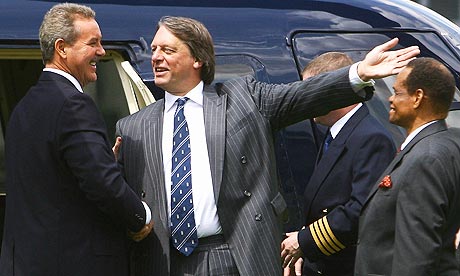
Giles-Clarke-and-Sir-Alle-001
Come hither, Al, and look at my soul….er, I mean this is all David Collier’s idea!

Lost in Space

It’s been a fair while since I’ve  written a piece, and it’s been like an itch that needs scratching.  The last few months have been fairly manic with work, but after next week it should be a quieter period, just in time for Christmas and then January and February, which are my easy months of the year, comparatively.

I’ve also been doing some research on a bigger post to come, and have notes scribbled all over the place.  Picking the right time to do that is perhaps the biggest question.

The approaching series is the one in South Africa, historically always one of the marquee series, and thus one where excitement is building, right?

Hmm.  Over the last week we had the nominations for the BBC Sports Personality of the Year, and the observation that despite a truly fantastic year, Joe Root was missing from the list.  It was also pointed out that at the same time, a woman footballer was on there, and much wailing and gnashing of teeth ensued.

From a couple of cricket writers.

From the wider public there was the sound of complete indifference.

Now, the reason for me apparently picking on a female footballer there was deliberate.  You see, not only are those matches visible on terrestrial television, but it goes further than that.  Participation in female football has been growing rapidly in the last few years, and in the next 12 months or so, it will exceed the male participation in cricket in this country.  Add to that the higher viewing figures for the Women’s World Cup, and realistically, why should there be the slightest objection or even query?  By these measures, women’s football is simply more important to the English people than cricket is.

Is it really?  Probably not, yet one of the defences the ECB puts up to cricket not being on terrestrial television is that it is available on Test Match Special on the radio.  Yet here we have an Ashes winning year with one player across the calendar year proving genuinely exceptional and becoming the number one batsman in the world, and he wasn’t included.  But the fundamental point is that people do get missed off these things, that isn’t the story – the total indifference to it is.

Few would argue that the SPOTY award is more than a bit of fluff, yet it is symptomatic of the decline in interest in the sport generally that Root being left out didn’t cause a storm of outrage, instead it wasn’t even noticed.  Go to the pub, sit at the bar, raise the subject amongst those interested in sport and see what the reaction is.  There’s a slight raising of the eyebrows and a response of “oh yes.  That’s true”.  This is more dangerous to the game here than anything, when the sporting public don’t even realise until it’s pointed out.

When this debate occurs, the question of terrestrial television coverage is always rejected with the line that the drop in revenue from doing so would be a disaster for the game, and that terrestrial coverage wouldn’t suddenly change everything.  This is true, yet it is what it always has been – a complete straw man argument.  No one is arguing that it is a panacea for all ills, it’s a deep seated concern that there won’t be much of a game to support at this rate.

Ah yes, but crowds remain excellent and there is strong demand, so the story goes.  Yet this year there were day one tickets available for the Lords Ashes Test, on the day of the match.  Trying to find this kind of information out from the ECB is nigh on impossible, and so the supporting evidence for this assertion is a simple one – I looked at the Lords website and went through most of the process of buying one to see if I could.  It’s unlikely there were many, but the point is there actually were some.

Let’s just think about that; day one tickets, on the day, for the Lords Test, of an Ashes series.  And England had just gone 1-0 up.  Cost is a big part of this for certain, the exponential increase in ticket prices and the gouging of supporters by the ECB (funny how the huge rise in income for the ECB hasn’t held ticket prices down) has probably reached a point where a substantial number of those who would go simply don’t solely for this reason. Yet the alarm bells should be ringing loudly, and the biggest concern is they don’t seem to be.

It didn’t help of course that the Ashes series itself was such a dreadful one, five completely one sided matches with barely any drama or uncertainty beyond the first day and a bit.  But to counter that, the two Tests against New Zealand were truly magnificent, cricket as entertainment at its best.  It still didn’t make much difference.

With most specialist interests, there’s the matter that anyone writing or talking about it is doing so in an echo chamber, the only people who react or read it, or argue back are those who have the same interest, and thus it can be talked about at great length, entirely oblivious to the fact that no one outside of it cares.  This is where cricket now is.  The national press do cover the game, but if the Sun stopped writing about it (tucked away four pages in from the back) would anyone care?  Would anyone outside of the few even notice?  It seems unlikely.

Out of sight, out of mind is the most dangerous state for any sport to reach.  For decades the lamentation that football has taken over the national consciousness at the expense of cricket has gone up, but it’s gone way further than that now.  Rugby union is miles ahead, notwithstanding the England team gloriously completely the full set of the three “major” team sports all going out at the group stage of their respective World Cups (the football team’s failure is positively superb by comparison with the other two), in fact rugby league probably is.  Cycling, tennis, athletics – they all now have a much broader appeal than cricket does.  It’s nothing more than a minority interest, and the slump in people playing is as good an evidence of that as anything else.

If you were to visit some of the London parks, the removal of the cricket pitches by the councils is something that has been highlighted over the last few years.  Yet a question that is never asked about that is what if the councils are right?  What if they have removed them not just because of the expense, but because no one really cares if they do?  It’s not like it was met with strong protest, more like quiet grumbles at the way things are going.

The national team is the pinnacle of any sport, and also the showcase of it.  For all the talk about the dominance of the club game in football, nothing pulls in viewers or captures the imagination like the national team doing well – younger readers may need to ask a parent – yet despite the defeat in the UAE, the England cricket team had a reasonable enough year post World Cup, and for most of the wider public, it simply passed them by.

A South Africa tour should be highly anticipated, England don’t win there often, and despite the hosts comprehensive defeat in India, it will be a stiff challenge.  But will anyone notice?  Will anyone even realise it’s happening?

The wider ramifications of the ICC power grab are yet to unwind, the complicity of much of the media in allowing that to happen with no objections or investigation as shameful as it ever was.  But the bigger issue right now is the game itself, and where it is in this country.  And for the first time I am starting to truly fear for its future, not just at the top level but throughout.  The mendacity and self-serving nature of the avaricious ECB is a subject to which we will return time and again.  The danger is that it reaches a point where even when it’s put in front of the public, they still couldn’t care less.


Off The Long Run / Deep End – Death Of A Gentleman / Death Of A Way Of Sport

RoyalsWhiteSox JFS 9-15-14 1751

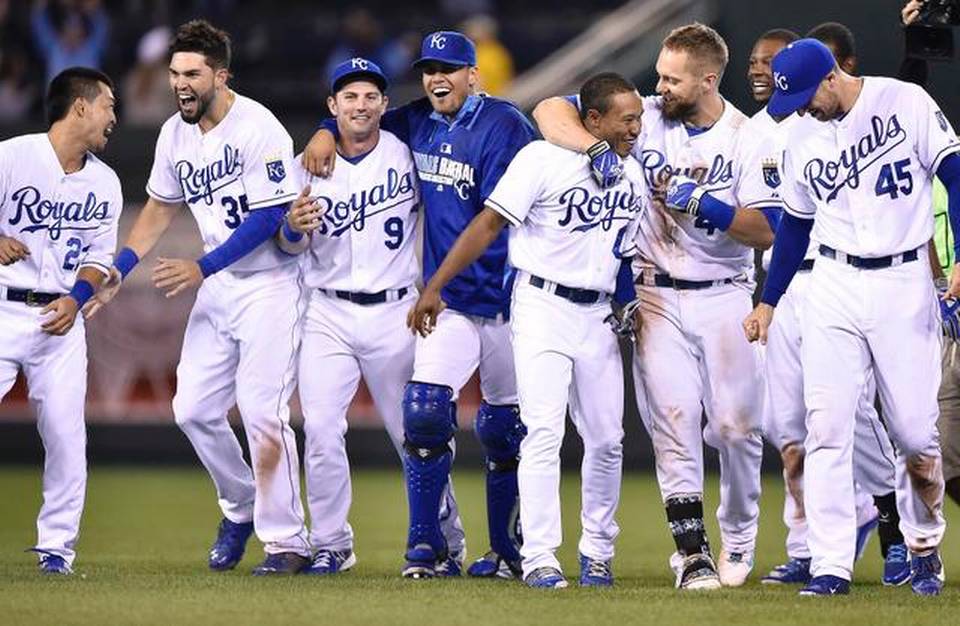
As I start on this journey of a piece, it has the makings of being a really long one (and now I’ve finished it, not sure it works, but here goes). It goes to the heart of me as a fan of sports around the world. Of my love for cricket, of my lost love of football, of my hopes to see a team like the baseball champions Kansas City Royals (a team unable to compete financially with the big clubs in the States, but still able to win it all) win the league in England, of my hopes of seeing a team run by faceless wealthy oligarchs get relegated. Of my watching every single sport become a vehicle to make massive amounts of money at the expense of spectators. Of a media in hock to the money-making charade. Of organisations where the only way you can postpone the possibility of jail time is to stay in charge. Of money ruling everything. Of the extinguishing of the commodity every football fan of a club outside the richest in the world possessed – hope. Hope. Sport made you hope.

When Jarrod sent me the copy of Death of a Gentleman I sat there and watched in…. well I don’t really know what my emotions were. I wasn’t surprised. Giles Clarke is an absolute pig of a man, and there would have to be a question of judgement against anyone he’d class as an ally. I wasn’t shocked that India were looking after themselves – after all, that’s what the big clubs do in football here, so why the hell are we shocked at that – and as for not widening the game, well let’s face it, it’s only a matter of scope. Club football loves the expansion of the game because similarly levelled talent of footballers from Eastern Europe and Africa (and South America if they didn’t predominantly move to Iberia) are cheaper than English counterparts. No major English club (and, by extension it seems, their fans) give a flying f*ck about the national team and developing players for it. In many cases, quite the opposite. The club sides were businesses, and the big clubs don’t feel the need for a sucessful national side to keep the home fires burning like they used to.

I wasn’t shocked that some players, like Ed Cowan, would give everything for their first cap, but the counterpart is that they might not feel so enamoured of the game when they get to, say, their 70th. Once something becomes routine, almost an entitlement, then that sheen of optimism wears off and it becomes just a job. But it’s nice to be reminded of the good side of first selections. Then there is the focus on test cricket. It doesn’t make commercial sense, so therefore, because of that it should not be played. It is not entertaining. Sport should not be played in front of empty stadia. We can’t serve up dead pitches because five day cricket is inherently boring. It is a form of the game worth saving because…. and it comes to the ultimate test of skill, technique, concentration and athleticism. However, those qualities sell better if there are more games. Shortening becomes efficiency. That’s what the people want in their busy lives…. So dead pitch test matches are bad. Very bad. They are driving people away.

That’s a line of argument gaining traction whenever we have a pitch where you might have to work really hard to get very good players out on it. I’ve been on this mortal coil now for over 45 years and people have become this way – short-term driven and wanting to tinker. Attention deficit and a generation of tinkerers. You know how it is at work. You can’t stay the same, you have to change. Change is good. If you are not open to change, you are an impediment. What happens now is administrators, managers, CEOs have to change something. There needs to be something done because there is always more to do. Innovate or die. And that’s my problem. Sport now apes business, because it has ceased being about sport, in many case, and more about business. I used to go to, and play, sport to escape business.

What is sport for? Well, actually, it isn’t for spectators, it is for the joy in playing it, isn’t it? Sport in itself is a form of enjoyment, of individual achievement, and when in a team context, of playing with your mates or forming a bond with like-minded adults or formulating friendships as kids. It’s getting the best out of yourself. Doing something that is better than work, perhaps to get away from a daily grind. So sport, at its base instinct, is about the players. When you were a kid, you played cricket until you got out. You might be stopped in street cricket when you made 50, or 100. You didn’t constrain yourself with limiting overs, field settings, who could or could not play. You didn’t care who was watching. When sport was more organised, for me it was Schools cricket and junior clubs, they would put some constraints on what you could play and then you sought to build innings, practice defence, and try to improve.

A key tenet of the debate going on now is that people aren’t developing the same love of the sport as they did when I was a kid. That cricket, obsessed with monetising the talent, is hidden behind a paywall that pays it more than a terrestrial channel. George Dobell, in his latest piece on Moeen, made the point:

At Moeen’s old school, Moseley, 80% of the kids do not have English as their first language; 40% receive free school meals. You don’t have to be a genius to work out the long-term effects of charging almost £100 for a ticket to international cricket or putting it behind a paywall on television. The game is in danger of becoming invisible to a huge section of society.

The role of TV in this piece is all-pervading, but I’m not sure if it’s the illness or the carrier. The fact is that cricket is, in some markets, an important commodity. Indian TV contracts are massive. In England, the absence of an IPL or a cricket equivalent to the football behemoth, means the contract is all about televising England’s national team. In this country it means test matches. I know how much more keenly test matches are viewed, by one look at the hit stats for the blog. ODIs capture nowhere near the attention. We’ll come to why, soon. Maybe. But it needs to start at what sport means to me. What cricket is…

When I was a kid it was all test cricket. No-one really cared about county cricket as a kid, and I didn’t go to my first County Championship game until I was a University student. Cricket was played in the streets by kids back in the 80s, because I was one of them. We played football in the same streets, despite being told not to by the council busybodies. Football is very visible, and yet I don’t see any kids playing it in the street on my council estate. There are less teams playing on Sundays over the playing fields I used to play on. Participation levels appear to be down, even informally. I lived cricket, though, because although I was never really going to go to county cricket, I followed it in the papers. I even purchased a long wave radio so I didn’t have to wait a couple of days for the scores when I was on holiday and could listen in to the snippets of cricket on the World Service.

During my formative years there was a school of thought that televising football live would kill clubs. Yes. People actually fought tooth and nail to keep the FA Cup Final as the only live club game on TV each year. It’s almost unthinkable. TV coverage was totally removed for the first half of the 1985-6 season. Nothing. Not a thing. At all. There was a running joke that West Ham’s Frank McAvennie, recently signed by them from St. Mirren and who was scoring for fun, could walk down the streets and no-one knew him. Football didn’t die. Of course not.

Now to make money, sport has to be about spectators – but it has become about TV spectators now. Players want to get paid for what they do, and they want it in increasing amounts. As those amounts get larger, the people paying them want more bang for their buck, and to try to keep the money flowing. They’ll increase ticket prices, play TV companies off against another to get in more revenue, and still they’ll increase prices, get into bidding wars with other mega-wealthy clubs to get the best players, who play less often because they are increasingly saved for matches against the best teams. Gideon Haigh summed up the role of you, the spectator, in DoaG perfectly – we are there to be monetized.

I’m a little bit of a lefty, you’ve probably guessed that, but I don’t live my life with my head in the clouds. Players want their fair share of the money going around, and that’s understandable. For the vast majority of sportspeople, especially in team sports, careers are short at the top level, and those lucrative media jobs for post-sporting careers are few and far between, while coaching and managing at the top level is both short-term and high-risk. But with money comes cynicism (I know it is not an exclusive relationship, but it’s just worse when high values are involved) both in terms of the superhuman feats a player is expected to perform because he/she is earning amazing amounts of money, and from the players, who might, or who are not able, to perform superhuman feats on cue every time they are asked to. It then means we might feel short changed when we see something that isn’t up to standard from them. That player will be crucified in the press, the braying, baying media pack who want “drama” “stories” and “soap opera” rather than sport. Your team wins some times, it loses some times. We are in the era when big clubs are not allowed to lose. Ever.

It is us, the spectators who are at fault. Most of us aren’t good enough to play at a high level, yet act like we know what it takes. I’m as guilty of that as anyone. Now your choice of football team is often seen as a reflection on you. I support my local club exclusively in England. I don’t care much for any other team. A team with a style of play I like might lose one week and I wouldn’t give the first f*ck about them. My team is Millwall. I was brought up in Deptford. My Dad was a Charlton fan, the rest of my family Millwall. My cousin got me first, and took me to the Den in 1979. I was a Millwall fan, for life.

Now, in SE London, I see people with Chelsea shirts, Arsenal shirts, Manchester United shirts, less Liverpool shirts than you used to, and for the love of all that is holy, Manchester City shirts. Their choice of team isn’t in reaction to their locality – hell support those jokers from Selhurst Park, it’s better than Arsenal – but it’s not just their choice that riles. They pat themselves on the backs as if they’ve backed a penny share that’s suddenly had a good Annual Report. Meanwhile, of the three local clubs, Palace are having a decent run, but it will only take a raid on their best players, and a downturn in form to see them back where they belong; Charlton are now a Belgian league club’s plaything; and my lot are arguably back where they belong – a tier two/tier three yo-yo club. Only diehards support lower league clubs now. We’re seen as an oddity, as if there’s something wrong with us, as if we don’t have the mental capacity to choose a big team.
So it goes for cricket.

I am a Surrey fan, for life. I chose them in the late 1970s. They were my granddad’s team, they were the nearest ground to home, and someone with the same real surname as me played for them (hello Mr Alam). They are my team for life, and believe me, it took 20 years for any glory. But I appreciated it so much more that it took so long. I am also a supporter of the following other sports teams – Miami Dolphins (Superbowls since supporting them – 1, and they lost it); Boston Red Sox (started supporting in late 1990s, when Pedro was doing his thing – they’ve become winners since then); Chicago Bulls (nearest I come to a glory hunter, but supported once I got to see Michael Jordan play on TV – before the Championship run) – and stuck with them through their slumps, which they have all suffered (Miami the 1-15 season, Red Sox bottom of AL East two years on the bounce, Bulls post the glory years).

The modern spectator has more in common with the Bulls following than anything else. They want to win, and they want to see the big stars at their team. Extrapolated to the TV audiences, it means big clubs, more often. Top stars, more often. Money makes the world go round.
In cricketing terms we all know what this means. The biggest money is in India. Therefore, the biggest stars are in India, a nation that remains proud of its own, and yet loves those from outside that embrace the culture and the fanaticism. When this is combined with cynical, money-hunting businessmen, on the prowl for more power, there’s an unstoppable nexus. Feed the fanaticism, make more money. The IPL stands alone as the T20 league to play in. The money, the fame, the adulation. Cricket on a level playing field with football. No wonder players want to play in it, and others worry themselves sick about it. India hold all the negotiating hand here, and everyone knows it.

Anyone in England who thinks this is outrageous, then look at how the Champions League is run. How the Premier league is run. The aim for all is to make sure India keep the IPL away from their turf, to keep themselves sustainable. West Indies have suffered the most. England and Australia, the least.

Again, anyone in England wondering why India want to guarantee nine matches in the 2019 Cricket World Cup, because of a shock exit in 2007, haven’t paid attention to a Champions League that spends 48 games to halve its numbers, with a lovely seeded draw to keep as many big teams apart as possible, and a draw designed to maximise revenues in the big markets by not allowing more than two games per nation on any one day, and by stretching the 2nd round out over four weeks, not two. There was nothing wrong with the old European Cup knockout model, except it didn’t make the big teams enough money. When UEFA had the gall to remove the second group stage, there were howls of derision from the bigger clubs, and many a veiled threat – but fans saw through it and it was almost too obvious in its soaking of the fans. The big club spectators want more of this exotic stuff, not less, but too much damages credibility. India are mimicking big football clubs, and yet we get howls from supporters in this country that they do so. We must be having a laugh……

India has been threatening an IPL2, have been using their international team as pawns in ageo-political money accumulation game for years now. They have the power. Without them, every country with the exception of England and Australia is sunk. Sports authorities, and those making money out of them, rarely look for long-term rewards, because within a few days your corruption might be fatal, your face might not fit, or some younger, or more innovative whipper snapper has seduced your enablers. It’s only going to get worse. I sound like an old codger, I know, but we’ve got a load of twenty-somethings come into our office in the last year or so. I like pretty much all of them personally. But they don’t see long-term. They see rapid development, an entitlement to promotion rather than it being earned in the long run of hard graft. There is impatience. There is practically no dissent to authority. It is not about common good, it is about the pursuit of your own goals. It’s the culture in which they were raised.

That sort of culture, to take an extrapolation if you might allow me to, means sports that take five days, played in empty grounds, are anathema. These are top players who could be earning more. They could be used more. The lopping off of six weeks at a time to play three matches in a desert location makes absolutely no commercial sense. Commercial sense. It isn’t about growing the game, getting more teams involved (after all, we grew it in 1999 by promoting Bangladesh to test status and they still aren’t up to it), it is about getting the best players on people’s screens, in front of lots of people. It isn’t about cricket lovers, certainly us old codgers, because we aren’t the target for advertising – that group between 18-35 is the holy grail – and advertising makes the TV money go round. A modern culture demands a modern way. Death of a Gentleman is more Death of an Attitude.

The film highlighted all it needed to. A governing  body doing what all other major board seem to do – hoard power and cash, run the sport on short-termism, pay lip service to development and monetise the best players as frequently as possible – and players moaning about workload in the one instance, but grabbing every bit as much cash as they can whent the opportunity arises (which is why I won’t listen to KP on county cricket, for instance. He made it where he is because of it, not in spite of it. He moved to this country to play it). Giles Clarke is a lovely coat-stand to hang our ills on. Maybe he is right and we should ride India’s coat-tails. Maybe the counties are right for fighting for the status quo, because, let’s face it, their existence in the form of 18 teams playing four day cricket book-ending the limited over stuff is every bit as logical as test cricket in Mohali.

Whether test cricket lives or dies isn’t up to me. The Ashes will live on, as long as we have players capable of playing long-form cricket. There is a lot mentioned about context of tests, and the refusal to have a Test Championship is mind-blowingly short-sighted, but what was the context when the West Indies were ruling the world, or Pakistan played test series against India that would feature a result once in a blue moon? These aren’t new issues. Cricket is more expensive to watch, both at grounds and via subscriptions. So is football. So are most other sports.

I’d like to finish this long ramble up with a comparison to baseball, which I mentioned at the start. You can’t go a week or two without reports that viewership on TV is down. That baseball is a dying sport. That no-one talks about it over the water-cooler. That the NFL now rules everything in the US. Baseball will still be there in decades to come. It is a slow, cerebral game, which I love. It cultivates its base by making its local TV rights, and national shows available. It has a website that was the envy of many other sports which made watching your team outside of market very cheap (£90 for every match in a season, more or less). It plays on its history, a sepia-tinged “father and son” narrative. It’s a sport embraced by the Latino community. It’s also competitive. The current richest team haven’t won a title since the 1980s (Dodgers). The perennial richest team, the Yankees, have won the championship once since 2000. Last week, the Kansas City Royals won the title having been in the finals last year. According to sources, a greater proportion of younger people watched the World Series than in recent memory. It’s food for thought.


A Hornet’s Nest

Over at our friends at the Full Toss, a proper debate has been going on – it started initially on Twitter, with Tregaskis raising a point, and snowballed from there.  The whole thing can be read through Maxie’s post on TFT, and I’m not going to repeat it here, so the link is as follows:

The return of Caesar’s wife

Here’s the thing.  I like Maxie.  I like his writing, and I like him personally.  I’ve had a couple of good nights out with him, and enjoyed his company thoroughly.  Which is why I know that saying I disagree with his premise is not going to be met with shock and horror, but more “Oh really, why?”   Because if there’s one thing I do know about him, it’s that he’s exceptionally comfortable with the idea people hold different views to him – it’s something that always makes me smile when you get the more virulent criticism of him for his articles, he is quite interested in those who don’t agree.

It’s one of those things that is striking across a few of these blogs.   Dmitri is the same, forever worrying about whether his perspective is a reasonable one.  The irony is that it’s me who tells him to ignore the trolling and the abuse, yet I’m the one who is probably thought of as less polemical and more nuanced.  The true beauty of all of these debates is that it involves real people, who can be hurt.

From his post, it seems Lawrence Booth in particular felt that he was being unfairly maligned, and here I have enormous sympathy with him.  I really can’t see a thing wrong with something like a golf day that might involve a few players.  And this is why – in my own line of work there is a fair bit of what we might call “promotional” activity.  The deal is what is has been for generations across many kinds of career, we take them out, spoil them, show them a good time and when it comes to contracting maybe they’ll be better disposed to us than our competitors. Naturally, our competitors do the same.  It’s the kind of thing that tends to be pontificated about as somehow dubious, but it’s normal practice.  More specifically, I’d fall down in a faint if something like that made a potential client switch to me, it doesn’t happen, it’s way more complex than that involving building trust and – the key point – getting to know people.

For journalists, their stock in trade is copy for their newspapers.  It’s nothing like as simple as on here – I can write any old rubbish and click “Publish” and up it goes.  The press pack have to pass it via their editors and hope that some kind of simulcrum of what they wrote appears in the paper the following day.  It is extremely easy to be totally cynical of all media output, and it just ain’t that simple.

Want the proof?  I can write a piece on here talking about Kevin Pietersen, and the hits we get double from normal.  Hell, just the fact his name is used will add a few extra ones. It’s extremely easy for us to manipulate the content if we were so inclined, and thus when online papers do it, the line that it’s clickbait might be true, but it’s successful clickbait.

Neither Dmitri nor I make a penny from this place, so we can say what we like, but it’s pretty easy to see how commercial sites love it when you can do something that straightforward to get extra hits.

So for a newspaper journalist, first and foremost they need to create copy that attracts attention.  That might be about – say – Joe Root, as we’ve seen with the Telegraph interview with him that has got plenty of notice.  But what we can’t do is expect those articles to come out of the ether, and that’s where the whole point of argument has stemmed from.  It’s a fair bit easier for former England batsman and captain Michael Vaughan to do it, but for a normal cricket journalist, to provide an angle requires them to do the legwork both before and after.

We know what Root (poor lad, still using him as the example) did in raw figures and anyone can write that, it’s just that barely anyone will read it because it’s dull.  How does a journalist provide context and colour?  It’s by getting to know them, talking to them, allowing a sufficient degree of trust that they will speak to them in the first place.  So both because of my rationale about hosting events, and because of the peculiarities of sports journalism, events such as a golf day are critical.  What else would people desire of their correspondents?  Glorious isolation? It simply is not going to happen, and the journalists aren’t doing their jobs if it does happen.

The unguarded comment from someone suckered in by a journalist they trust is in itself part of the job, but they can’t do that unless they know them in the first place.  It’s just not a fair argument to attack people for doing what is in reality their job.

On here we have offered up plenty of criticism for journalists not holding the ECB or ICC to account, and those criticisms stand absolutely. The frustration about that can’t mean though that everything they do is therefore criticised, we have to be fair about this. When we get a fascinating interview with Nick Compton, it’s because that journalist spent time getting to know him well enough for him to talk, and created sufficient trust for him to open up. It doesn’t help anyone to pretend the means by which that happened shouldn’t.

Criticism for not doing their jobs properly is legitimate and necessary. But not for when they are.  And heaven only knows there are enough things to complain about there, for there really is much too cosy a relationship between some journalists and the ECB, while the fact that the senior cricket correspondent of one of the broadsheets can’t even be bothered to watch Death of a Gentleman remains as pathetic a dereliction of duty as there is.  But seeing reds under every bed weakens the argument, it doesn’t strengthen it.  Sometimes they’ve simply done nothing wrong.