It was all going so well. Surprisingly well, albeit if two batsmen in the top order were going to get set, settled and score runs, Burns and Root were by far the most likely.
Overton was an early loss, but while having him hang around would have been a bonus, he’d done his job last night. The bulk of the day was all about the partnership of 141 which, if not comfortable, certainly looked in relative control. It wasn’t easy, Cummins in particular bowled with pace, aggression and plenty of skill, while having very little luck. But the two batsmen took England to the point where wild fantasies dreamed of a total decent enough to take England to some kind of position of safety. Should have known better.
If nothing else, it demonstrated for the second innings in a row a greater level of batting responsibility from the England batsmen since the shambles of Headingley first time around. To that extent, credit is due to them, for if 200-5 at the early close forced by bad light is some way of being a triumph -it did at least offer a relatively responsible example of batting at Test match pace, against challenging bowling. It is to praise without context, for the times when England might be expected to respond to a big total by posting one of their own are receding rapidly into the past.
The late flurry of wickets, with both set batsmen departing and Roy joining them back in the pavilion wrecked a lot of the hard work that had been done, and with just 6 overs to go until the new ball, the possibility of a full blown collapse in the morning is distinct, but England’s first target of avoiding the follow on, which will take some time out of the game at least, is less than 100 away, and failing to get at least that far would represent a failure and a let down of the batting work done today.
Having been utterly dire yesterday, the problem England have is that they can’t afford a bad half hour for the rest of the Test, and that’s exactly what they suffered late after tea. No one threw their wicket away, Burns and Root were both got out by excellent bowling, while Jason Roy had looked vastly more at home in the middle order than opening, before being undone by his technical looseness against a high quality Test match bowler. Perhaps if he’d been asked to bat in the middle order from the beginning, he’d have had a chance of getting into Test cricket, but his defence looks far too loose to allow him to stay in long enough to capitalise on his undoubted stroke making skill. Even so, that he might never have been good enough to hold down a place is one thing, it is another altogether to select him as an opener which undermined fatally any chance he might have ever had. There’s no disgrace in getting out to the ball that did for him, but how he got out, utterly beaten with stumps splayed everywhere wasn’t a good look.
Root will be picked up again for failing to convert a fifty into a hundred, but both he and Burns probably deserve credit for how they batted today more than criticism for not going on. Losing them together was a huge blow for England’s chances of an escape, but the pressure had been increasing for some time, with Hazlewood, Cummins and Lyon turning the screw ever tighter. For once, England’s predicament is less about the batsmen, though the flaws inherent in the order make handling facing a big total more daunting than it was and than it should be.
It makes tomorrow a designated Big Day for the destination of the Ashes – England are going to have to bat out of their skins to get remotely close to Australia’s total, and bat long enough to take sufficient time out of the game to put pressure on Australia to try to force the win. But it’s hard to see England having to bat less than a day second time around at minimum in order to get a draw, and by the time day five rolls around, on a surface that’s taking ever increasing amounts of spin. Rain and bad light might yet intervene, and provide England with a salvation that they will scarcely deserve, for although they are battling hard, and doing about as much as might be expected of them with the bat, they are looking a doomed team. The performance of Smith has been the difference between the sides, and England are wilting in the face of the repeated pummeling. Bairstow and Stokes are still at the crease, and given the latter’s preposterous predilection for pulling off the impossible, all hope is not lost, but it’s not just uphill from here, it’s getting steeper by the minute.
Late on today came the announcement of the sad death of Abdul Qadir, swiftly followed in the rugby world by that of Chester Williams. Two sportsmen who were iconic in different ways, the latter an icon of the rainbow nation that won the 1995 Rugby World Cup, the former for carrying the banner of leg spin bowling at a time in the 1980s when it appeared virtually extinct, especially in England. Shane Warne a decade later would gain the plaudits for being truly extraordinary, but for a certain age group, Abdul Qadir was leg spin bowling – a man who would demonstrate something that was sufficiently rare and exotic as to send a thrill through the observer in an age where pace bowling dominated. His record is a fine one, but his impact around the cricketing world can scarcely be underestimated.
There are days where the four writers here fight each other in order to get the chance to write the post at the end of play, and there are days when none of us want to write it. Today was very much from the second group.
The game started with people (particularly in the England team and the English media) suggesting that the Australian players would have been shaken and mentally scarred from Stokes’ heroics at Headingley. After two days, that would not appear to be the case. On the other hand, England’s bowlers and fielders looked tired. Perhaps they had spent the previous week on the lash, celebrating their unlikely win. Or perhaps the cold and wet Manchester weather had sapped any enthusiasm and energy they had for the game. Whatever the reason for England’s performance, it was an absolutely dire day for the home team.
The story was a familiar one. Steve Smith was in, and he stayed in until he put the game beyond England’s reach. England’s bowlers seemed powerless to stop him, bar a delivery from Jack Leach which Smith hit to slip. Unfortunately for England, Leach had overstepped the bowling crease and so the wicket was rescinded by the third umpire. Mitchell Starc and Tim Paine played supporting roles to Smith, each getting a fifty. Australia ended up posting a first innings total of 497/8d, leaving England requiring 297 runs just to avoid the possible follow-on.
Australia’s declaration left England with a ‘tricky 10 overs’ to face at the end of the day. As is traditional for tricky periods at the end of the day, no barrage of wickets fell. Instead, Australia were only able to pry Denly out with a sharp catch at short leg. On paper, Denly’s dismissal for 4 off 24 balls seems like an absolute failure. And, to be clear, it is. Any number of county openers must be looking at the performance of this England team’s top order and wondering if they have wronged any particular deity to be passed over so unfairly. But, compared to Roy’s performance in recent games, it was a defensive tour de force. Of Jason Roy’s 7 Test ininngs as opener, only one lasted more than 24 deliveries (His 28 (58) at Edgbaston). Particularly for an opener, who typically has a responsibility to get through the new ball more often than not, that is a shocking record. Let’s just hope that his Test batting improves when he comes in at five tomorrow.
But, and here’s the problem for me as a writer, what can you write about this game from an England perspective? There were no great performances in a losing cause which deserve highlighting, nor was there anyone who stood out as being significantly worse than their teammates. It was all just uniformly, predictably, mind-numbingly poor from all eleven players. The bowling, the fielding, and (for the 10 overs at the end of the day) the batting were diabolically bad.
It’s not like the ECB are going to sack the coach with just a few weeks left on his contract. Nor is any selector, even Ed Smith – Maverick Genius, going to drop all eleven players from a Test team. I’m genuinely stumped. Barring the rain making a significant contribution to proceedings (and given England have chosen to play in Manchester in September, it’s not an impossible scenario), I can’t see how England can avoid losing this game and conceding the Ashes.
And, for those of you keeping count at home, I think there were 4 overs unbowled today. Presumably, like every other day in this series so far, no punishments will be forthcoming.
Well unfortunately none of us we were able to watch the first day’s play yesterday, hence the lack of a post, in the hope that maybe one of us had seen the highlights. Alas, to say it wasn’t a great day of cricket is an understatement. The weather conditions meant that the teams were on, then off more than an opinion from Michael Vaughan.
England lost the toss and were made to bowl first on a pitch that seemed to give little assistance to the bowling team. They did though make early inroads with Broad first taking the wicket of David Warner, who has become his walking wicket during this series and then picking up Harris on reviews. After that, the pitch seemed to flatten out and not for the first time in this series Smith and Labuchagne made England’s bowlers toil in unhelpful conditions for a surprisingly tame England attack.
Craig Overton picked up Labuschagne towards the end of the day, after bowling pretty innocuously for the most part of the day. Steve Smith is still at the crease (of course he is) and if I had a pound for every time I’ve highlighted that England need to get him out early to restrict the Australian total, then I’d probably be living in a castle somewhere in Umbria at the moment.
The weather doesn’t look great for today, cue the why are we playing the Ashes at Old Trafford in Manchester debate, but fingers crossed that we might get some more play today. Equally it would also be quite refreshing if Steve Smith could trip over his stumps in the first over of the day; unlikely sure, but probably as likely as a full day’s play.
Yesterday’s preview that wasn’t a preview rather removed anything that’s not a preview from this preview. Or something.
Anyway, here we are, 1-1 in the series, a genuinely epic conclusion to the last Test match and everything to play for. England have replaced Woakes with Craig Overton, continuing the glorious English tradition of making a bowler pay the price for the failures of the batsmen to score enough runs. Woakes was used sufficiently sparingly in the last couple of Tests to cause speculation about him having an injury. That England insist he’s fit rather makes it worse – as it means Root didn’t bowl him through choice. Overton is clearly intended to come in and be the workhorse, which is all very well as long as he keeps it tight and looks mildly threatening sufficiently to allow Broad and Archer to not be ground into the dirt. Nice plan, let’s see if it happens.
The other change England are making is to swap the positions of Denly and Roy, a tacit admission that despite the insistence that being a white ball opening batsman is sufficient preparation and similarity of role for doing so in Test cricket, they’ve got it wrong. Who could possibly have seen that coming? Roy has plenty of talent, that much isn’t in doubt, but a refusal on the part of the selectors to accept the differences in the roles gave him little chance of succeeding. Whether he has the technique to bat at four is equally in doubt, but England’s insistence on defining attacking cricket as being able to smack the ball around in a limited overs contest means that short of an open admission that the selection was entirely wrong, this was likely the only change they could make. It looks a touch more stable at the top, albeit it now places Denly at a disadvantage, but his innings at Headingley did at least show he was more likely to last the first five overs than Roy. Denly’s innings in Leeds was needed for his own sake, and while he likely isn’t quite good enough for Test level (few are) he is at least approaching his innings with a desire to occupy the crease, something in perilously short supply in the England order
Australia have responded to their bowlers failure to defend 359 by dropping a batsman, which would be rather more amusing were it not for being an obvious necessity in order to bring the returning Smith back into the batting order. Khawaja is the unlucky one, and in his case it might be that he really is unlucky. He’s not shone this series, but nor has he been a particular failure either – he’s certainly looked the best of the top three to date – Australia’s reluctance to drop Marcus Harris after one game being the primary reason for sitting him out of this one. Marnus Labuschagne has taken his chance expertly enough, but there’s something a little strange about making Khawaja captain for the tour match and then dropping him for the Test.
Pattinson is rested for the fourth Test, presumably for Peter Siddle to return. Australia are in the pleasant position of having sufficient stocks of fast bowlers that Mitchell Starc still hasn’t appeared in the series, and few of the journalists are suggesting he will in this one. Maybe a surprise will happen.
Smith’s return does set up the prospect of he and Archer renewing hostilities, and there’s little doubt that England will look to target him with the short ball utilising Archer’s extra pace. Smith would be less than human if he weren’t a little apprehensive about that, but the bigger danger for England is in over-doing a tactic and forgetting that a good ball is a good ball, whoever it is bowled at. It will still be pure theatre when they face off against each other and he will be more than aware of what is coming.
As for the way the game will unfold, the return of Smith is undoubtedly a boost for Australia, but other than that not a huge amount has changed in terms of the weaknesses of both sides. The top orders still look exceptionally brittle, the middle orders still get exposed too early, the bowling attacks still look to be on top. But England are level in this series because of a completely outrageous performance from one player. They have looked second best in the series for the majority of the time, and relying on Stokes to pull off the ridiculous doesn’t seem a strategy likely to yield consistent results. Australia will certainly be wary of a player who can do that kind of thing, no matter what the match position, it’s just that it’s asking far too much for him to do it on more than an occasional basis.
Australia should be the favourites, both for this match and for the series, based on what we’ve seen so far. But England can certainly play better than they have, even with a flawed batting line up. They’ve had a lifeline, a hail Mary of a win – whether they can use that to raise their game collectively is a different matter. But a finish as good as the last one, that would indeed be welcome. Already, as is the wont of those who delight in the clickbait, some are suggesting this series could be as good as 2005. To put it mildly, the last two Tests would have to be extraordinary for that to be the case, even discounting the standard of the two sides in this one compared to 14 years ago. It’s silly, it’s always silly. But it carries on, for that is the journalistic world in which we now live. A decent game, that goes the distance, that’ll do here.
In the words of a song by Bob Moses, “let me tell you about a little situation, that’s been testing my patience”. I’ve had my patience and faith tested this past week or so. Unlike the song, it isn’t about being led astray by a taken woman, but it is how, after five and a half years of cricket blogging, when the day came that could be the culmination of all my work, the crescendo to end the varied, rambling musical piece that this blog, or my contribution to it, has been, I was absent. And I mean totally absent. I played no part, was not engaged, was adrift. In this multimedia, connected world, I was cut off. You lot had a life experience, a sporting drama to match few others, and I got to experience it like a dream sequence in a bad soap opera. Imagining the pain, terror, hope, outrage, excitement, fear, wonder, and any other emotion you care to mention, that undoubtedly that final hour brought with Ben Stokes swinging from the hip. Indeed, what the lead up to it brought to you. Remember YOUR feelings. Remember how YOU watched or listened to it. Then imagine not being able to. At all.
Imagine that. Imagine being a devoted cricket fan and missing it all, every effing ball of the final day. I didn’t get to experience sport in its most visceral form. I didn’t get to scream at the sixes, go ape at the failed run out, laugh hysterically at the LBW review because they’d blown it the over before. I didn’t get to holler that massive YES when Stokes got the winning boundary and let out his own scream. I wasn’t a participant. I wasn’t even a watcher. I was cut off, flying over the northeastern United States, with no access. Like a non-Sky subscriber who never knew what cricket was, is, will be. I missed it ALL.
Yet Chris asked me write the preview to the next test! He’s a cruel one.
A brief aside as to why I didn’t see it, as if any of you give the combination of a single you know what about that. On Saturday I was due to fly to New York with work. Yeah, yeah, yeah, first world problems. I was on the plane, enjoying my drink, when the stewardess snatched it off my tray. “Oi!, I hadn’t finished that” I exclaimed, I got the drink back, necked it, and passed it back to the stewardess. Before I knew it, there were announcements, acrid smoke in the back galley, dumping fuel, circling and emergency landing at Shannon. There were examinations of aircraft, milling around in a mostly closed airport, a flight back to Gatwick, various Keystone Coppery at 2am, transfer to Heathrow at 3am, a 1 and a half hour stay in a hotel, and back on the 9:35 flight the following morning. When I landed at JFK at 5:15pm UK time, I switched on the phone and saw the result. I exclaimed a little “yes” and then concentrated on cultivating the migraine from lack of sleep and flight terror into a 4D yodel in the taxi to the hotel. I wasn’t exactly in great shape. At least that aeroplane lunch had been actively recycled.
But hey, this is a preview of the next test, right? Well how can I comment on trends and shit when I missed the best thing in English test cricket for quite a while – probably 2005. I get to miss out on the “greatest ever” debates I find absolutely immensely tedious at the best of times. I get to not share on the “how great was this….” that all of you who got to watch it live shared. I feel like I did when Charlton signed Allan Simonsen and I got a ticket to one of his first games, only to get in to the Valley and be told he would be replaced by Dave Mehmet. Now I liked Dave (as he was a Deptford Park alum) but it’s not European Footballer of the Year material. Disappointment haunted all my dreams.
Watching the whole thing on Friday was watching a great mystery thriller and knowing the ending. Who Shot JR after the great reveal a few months later? No radio. No TV. No internet. Nothing. Just a migraine and misery. The blogging equivalent of spilling your recycled lunch over the hotel lobby floor – a trick that endeared me to the reception staff on 47th Street. My travelling companion was a German fellow, who kept banging on about tennis. Nice guy, but no-one English to talk the whole damn show through with.
What I did see of the 3rd test was not pretty. I left home for the ill-fated leave the oven on flight at 1pm, and we had just bowled out Australia to leave us wanting the record total. Ouch, that hurts. I missed a record as well. Roy and Burns had just seen off a couple of overs before lunch, before both wickets were lost by the time I had boarded the Piccadilly Line. I sat in Heathrow Airport as Denly and Root ground out the partnership, with Denly sounding all at sea but perfecting the art, until 50, of not getting out. I settled in to my aircraft seat, not realising food would be elusive for another 15 hours, with England whatever it was for 3. Needing 200 more. I hate British Airways.
This test now becomes very important. Instead of the Ashes being done and dusted, we have more mentions of Momentum than post-2017 Labour General Election readouts. Instead of England Brexiting the Ashes, very much on a no-deal, no-good basis, we are poncing about, hoping to remain. And that’s all the politics we are allowing here. They’re more tiresome than the ECB. Spend a week in Trump World, and you might even believe Tom Harrison is a paragon of truth and virtue.
So after all that, and what threads I have are cast into a Dorian-like maelstrom, I conclude that after the drama wot i did not see, the next test can be looked at two ways:
One – England are carrying such momentum that Australia are broken by being so near and yet so far from retaining the Ashes on English since, topically (from my viewpoint) and sadly, there were two towers in lower Manhattan and not the very photogenic one that has replaced it. That Australia’s errors of judgement and execution have so destroyed them, that there remains a hulking carcass, broken and dismayed, flayed of emotion and drive, casting themselves to the inevitability of the upcoming few weeks. England have crushed their spirit, and all that remains is good weather and an inevitable triumph over an emotionally vanquished rag tag and bobtail outfit; or
Two – It takes a miracle for England to win. And miracles may happen twice in a season on big occasions, but three times, or even four, is asking too much. Isn’t it?
This England team, and it is unchanged save from taking the hammock from around the swimming pool, and the deck chair from underneath the mock palm tree (I’ll let you decide which one is Roy, which one is Denly), unless someone makes a change (Curran for Woakes? I really don’t see it, but by the time this goes up, the England brains trust will do something), got bowled out for 67 10 days ago. And not for the first time this year has it been bowled out for a dismally low total in double figures. It’s a habit not usually coinciding with victorious outcomes, even though England have somehow managed to turn the last two sows ears into silk purses. I wouldn’t create a long-term pathway to success.
Jofra Archer may have had a rest, but he’ll be over-bowled, Stuart Broad is no spring chicken and while his bowling may seem to emanate from the fountain of eternal youth, his body is doing well to hold together. Old Trafford can benefit pace and spin, and Leach may well need to come to the party. It’s all very well being the Graham Dilley to Ian Botham role, but Dilley didn’t make the next test match, and Leach needs a defining bowling performance to cement his place. The batting may well benefit from a Root stay at the crease at Leeds, but it needs Jos Buttler to deliver on his promise, and not promise to deliver. England are a deeply flawed team, and Ben Stokes won’t be there every time.
Australia may fiddle with their bowling – I would presume James the Tats Pattinson is most vulnerable to recalling Siddle or Mitchell Starc – and Steve Smith will return to the number four slot, with all sorts of batting decisions spinning off from that, and they will know that they’ve had the whip hand for 75% of the series so far. They know that they are the better side, I think even England might know that, but that doesn’t always translate to success. I have a feeling that they will be on their game here, and England may need to bowl them out cheaply on Day One to get on top. I can’t see England’s batting setting an imposing total. Let’s see.
I’ll be found in my chair, rocking back gently, muttering to myself about the day I missed. How I would have kept up with it in NYC, I won’t know, but I would have. I think the phone bill might have been higher. It may be karmic justice that for all the anger and opprobrium I have spent on the England cricket team meant when there was something to watch to get me out of my seat, I was stuck in Row 13A. The check-in guy even asked me if I was superstitious. I’ll have that rancour of the man who bought all the seats for the Ashes 2005 test at the Oval and being passed over for the Day 5 ticket that remained. We’re still friends.
This isn’t a preview. Who gives a stuff about team news and that nonsense anyway? You want pain and anger, and I have it. You want me to rant at all those who ran to the social media and TV outlets proclaiming “greatest ever”, when arguably there was a better knock earlier this year by Kusal Perera and half the numpties who ran for the superlatives wouldn’t have know who he even played for. It’s the Ashes and it’s just better, so there. A team bowled out for 67 can’t hide the lack of quality.
The Ashes exists in this febrile environment. The KSL finished yesterday and will be replaced by a competition the women don’t want, and yet those who hail the brave new Hundred world were extolling test cricket’s virtues like converted TV evangelists. Don’t be in a rush to donate them your life’s savings. There were tedious moans about DRS, but the debate begins and ends with “don’t waste your reviews on total utter f***wittery”, which, marvellously, was effectively how the great Ricky Ponting summed it up. We had Nick Compton talk us through what’s wrong with the game, how he would address it, and even some spice on his playing days, and it was good to see the media react to it as if we never exist. We know you read us chaps.
I’m in a fury, and it’s not my fault. To English cricket, the media, the ECB and those enabling sycophants who deride people like me as pensioners and stick in the muds, know that missing last Sunday was painful. Really painful. A knife to the shoulder blade, kick in the nuts painful. I turn to Bob Moses (it’s a band not a person) for closure:
I’m trying to tell your intention
when you lie, you’re tearing me up
If you don’t want my affection
you won’t mind, you’re tearing me up
Cricket. Test cricket. F*** you. I loved you, and you did that to me. Let my critics laugh away.
Play starts on Wednesday. No Ashes Panel. Sorry. Let’s try after this one.
In Part One, which can be found here if you somehow might have missed it, I discussed with Nick the key challenges that our batsmen of this generation and the next are facing when it comes to playing for England at Test level. We also discussed how the level of coaching has somewhat diminished across the board as well as the need for younger players to broaden their horizons.
In this Second part, I wanted to dive a little deeper into Nick’s own career as an England Test batsman, the challenges that came on and off the pitch as well as some reflections on his own career.
Sean: You had a pretty classical technique, did the guys at Loughborough try and tweak it? God only knows what they would have done to Steve Smith if they’d seen his technique as a kid?
Nick: “Not hugely. I mean they try to question you in terms of whether you get a bit better here or there, but they didn’t do too much with me. I think when I came in, I had come up the hard way through county cricket; I had scored loads of runs at county level and was an older and more established player. I had played on the England A tour and for the Under 19s too during my career, so no one really tweaked my technique too much.”
Sean: I have been a big critic of the pitches at county level, which encourages teams to play slow wicket to wicket bowlers, what are your thoughts having had a long career?
Nick: “Absolutely, I think the pitches are by and large substandard these days, with even Lord’s being one of them because it’s so dry and slow. When I was a kid you arrived at a game at Lord’s licking your lips – not just because it’s at Lord’s but also because you’re playing on prime surface – almost a work of art really. At times there are club wickets I’d genuinely rather go and bat on these days. It can appear patchy and it’s dry underneath, and all because they’ve got these underwater drainage systems beneath that suck the life out of a pitch, meaning they have to patch it up with extra grass to try and make it Test Match worthy. It’s not an excuse, but I really struggled with motivation the last two or three years I played there. I’d be fielding at backward point and the first ball of the game would drop in front of the wicketkeeper and I can remember thinking that this is going to be a very long four days. The ball didn’t come on to the bat, and it doesn’t make for exciting cricket. My game was all about timing the ball, so I always wanted some pace in the pitch so it came on to the bat. Slow pitches like that make it tedious and dull.
“Obviously that doesn’t affect some other players – a Ben Stokes can just hit the ball out of the ground, but it wasn’t my game and it didn’t suit me. It also leads back to the point I was making about the lack of fast bowling in our game – why bother when pitches are like that? Now we are facing the Australians who have some real pace and our top order is struggling because they don’t face it in county cricket much. The reality is that these pitches encourage medium pacers and it doesn’t help anyone prepare to face bowling of the level and speed of Pat Cummins or Mitchell Starc. It really isn’t complicated – in county cricket you just don’t see those types of bowlers because you’re facing a trundler who bowls 73 miles an hour on a wet green dog of a pitch. In the end it affected my enthusiasm, especially in the early part of the season, because it was just so boring – medium pacer after medium pacer. I did a job as a professional and I had the extra motivation that I wanted to play for England, so I worked it out, but it’s always leave, block, leave, block when trying to get in on those pitches. Even then, no matter how hard you focus, you’ve got someone like Darren Stevens, all due respect to him, ambling in and bowling wicket to wicket. In those conditions he can make you look silly, and that’s county cricket. But then players go to Australia or South Africa where the ball is whistling past their ears and it’s no wonder our players struggle. I was lucky, that’s what I grew up with.”
Sean: If you don’t mind me asking, I was pretty shocked when you were dropped from the England set up in 2013. Do you think that’s because you weren’t an attacking opener?
Nick: “Yes, I’ll admit it’s a real sore point for me because I don’t think I should ever have been dropped. Was it my approach to batting? Perhaps, however I felt that I had forged a good partnership with Cook both statistically and in person and there really wasn’t a need to change things; however it shows how fickle and tough sport can be at the highest level. In my final game at Headingley [against New Zealand 2013] I hurt my rib and couldn’t field on the last day which was originally diagnosed as a hairline fracture but eventually diagnosed as heavy bruising, but still meant I was unable to take the field. There was some scepticism from England’s management team at the time about the injury as they were under a lot of pressure and I knew I was under pressure from certain quarters. It was pretty tough to take as I was an opening batsman who had forged his identity through facing some of the fastest bowlers in the world and seemed to excel in some of the toughest conditions. Naturally, I wanted to contribute in the field so that we won the game and it was incredibly frustrating not to be able to do so. I know Andy wasn’t in a great space at the time and I gave the management an opportunity to look elsewhere by not playing my best at the time. Whether that contributed to being dropped from the Ashes series, I simply don’t know. I do know that I wasn’t given a chance to play again for England under him as head coach.
“Things like that are hard sure, but I have to hold my hands up, had I played really well then I wouldn’t be saying this. I also really don’t think it was the pace that I batted though, more to do with the fact that the England management team felt Cook, Trott and myself were a bit samey. But I’ll say it again, that in my experience that you need three opening batsmen with proper techniques to be successful in England at Test level. I’m of the strong opinion that in this Test series, if England had three top players who could get through the new ball, that middle order would be scoring a hell of a lot more runs than they have been recently, irrespective of what happened on Sunday. The top order need to survive the new ball, if they can last for an hour and a half then they’ve gone a long way to doing their job – and they can go on to a decent score and the middle order have half a chance of succeeding. But it’s not fashionable to approach it that way, and as a result they can’t do it, they don’t want to do it and their techniques aren’t potentially up to it. Full stop.”
Sean: That must have a terrible blow, was that your biggest regret in the international arena?
Nick: “Yes, I would swap everything to have been able to play in the Ashes against the 2015 Australians because if there was ever a time that I could have excelled, that was it. It wasn’t against Sri Lanka and similar teams like that, it was against the fastest bowlers. I truly think that’s where I could have offered a point of difference. I wasn’t the kind of player who would have stood out from the crowd against medium pacers but against for example, Mitchell Johnson, I believe my technique and experience against facing the quickest bowlers in the world in similar conditions would have meant that I had a better chance of succeeding than most; however I never got the chance to prove it and that’s a big regret as I do feel I was a better player than my Test average reflects.”
Sean: I remember Ricky Ponting at the time being shocked that you had been left out of the Ashes team after your performance at Worcester against the touring side.
Nick: “Yes, I played well in that game and they were all running in at 90 miles an hour too. I couldn’t have felt more at ease with my batting than I was against them, it’s when I felt at my most confident and I just wanted that chance at the top level as I’m a different player against the fastest and best. I came alive against Dale Steyn in the game at Durban and felt completely comfortable because that’s what I grew up with and that was my main talent. But the problem was that I felt my card had been marked the first time around as someone who was too intense and didn’t bat with enough aggression. I remember a game at Uxbridge in 2014 for Somerset against Middlesex and I got 98 and 88 not out and played out of my skin saving a game against a strong Middlesex team featuring Steven Finn and Toby Roland-Jones who were all bowling really well. And I remember John Inverarity, who was the chairman of Australian selectors at the time and a fabulous cricketing individual telling my mentor that although I’d played very well, I still wouldn’t be selected, because the England selectors just didn’t want players who played like me.”
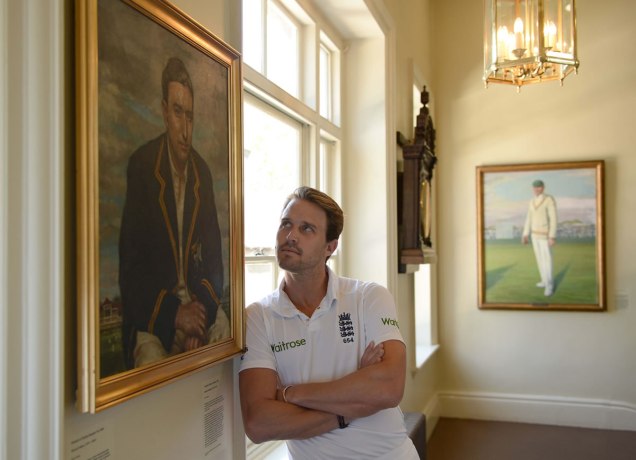
Nick Compton looks at a picture of his Grandfather in the Long Room at Lords. Photo by Phil Brown
Sean: Did you feel that you were treated somewhat unfairly by the media?
Nick: “Yes at times I did. I felt I had to fight harder and harder as my career went on, because I didn’t feel there was a wave of backing for the way I played and the qualities I had – it wasn’t sexy enough for them. Of course there were some good players coming through as well, one by the name of Joe Root, who didn’t turn out all that bad! Given what was written in the press, I felt I had to bang my own drum to get any recognition at all but it also gave me a greater source of hunger for much of my career to prove them wrong. At the time I started to wonder if I was losing it, but looking back now, and given what’s going on with the England batting currently, I realise I wasn’t losing it at all, it’s just my style of batting supposedly didn’t fit with what England wanted retrospectively. I am still deeply disappointed how the likes of Michael Vaughan and those others in the media who would pontificate about how Compton was batting too slowly, portrayed me back then. Joe Root scored 12 off 80 balls the other day but nothing negative was said about him – just the opposite. Now they bemoan the inability of the top order to occupy the crease, but it’s not what they were saying at the time when they were more interested in who could clear the boundary rope. So why was that? They are supposed to know the game after all; Yes, it would have been easier for me if my batting average had been higher so I could have put those murmurings to bed, but I still felt that I was being singled out a bit at times when as a player all you want to be left to do what you’ve done before and will do again. The difference of course is that in international cricket it’s about time and there isn’t a lot of it due to the unique pressures you face in the international arena. I’ve read that it was maybe how I came across in interviews, but personally I don’t think that was the case, I just felt I was focused and professional and that I gave it my all every time I went to the crease. Perhaps it was the Compton name that made me a target, but whatever it was, I could just never understand why I was always in the firing line.”
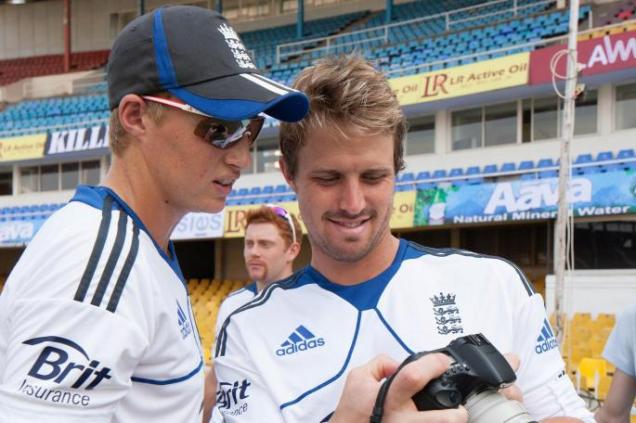
Nick Compton who is never far from his beloved camera. Jonny Bairstow in the background with a fantastic handle-bar moustache
Sean: Perhaps people saw you as a bit of an easy target? There was the whole Nick Compton doesn’t fit in, which baffled me.
Nick: “I know, and that hurt me because I’m pretty sure I’m a decent bloke and got on well with the players in the dressing room. Sure I was a defensive batsman but then so was Jonathan Trott and so was Alastair Cook. I felt it was unfair and to be honest I didn’t really understand where it came from. I know that they didn’t like the fact that Kevin Pietersen was a big mate of mine, but I also made sure that I didn’t take sides in the fall out [Pietersen being dropped from the England side] and that was entirely deliberate. I think all of the boys saw I gave 100% percent whether out on the field or in the nets, during the game or in practice. If I had to answer back to the media, it was perhaps that I’m my own person, an individual, and maybe a little more outward looking than some of the rest of the guys in the team. I have a huge passion for photography, I absolutely loved exploring new places when we were on tour and I’d go and do things that perhaps the other members of the team weren’t as interested in, visiting art galleries in New Zealand for example. Most of the guys preferred to stay in the hotel and play on the PlayStation, which is fine, but that wasn’t me – I didn’t want to stay in the hotel playing on a games console when there are other things to do and new experiences to have. Does that mean I didn’t fit in? No, It was a ridiculous agenda, with no foundation to it. It’s not like they mentioned that I was really good mates with Alastair Cook, that was ignored. So, yes, it really upset me because it was my one shot and my career they were playing with.”
Sean: Did you get any support from any of the former pros in the commentary box?
Nick: “Absolutely not. Never. Michael Vaughan has never met me in my life, Nasser Hussain has never met me in my life and I still find it strange that they made no effort to do so. If I had their history as captain or top order player for England I’d be keen to talk to a new player and suggest a coffee and a chat about what’s involved – pass on my experiences or be there for advice if it was wanted. That would have made a huge difference to me, and I’m certain it would make a huge difference to those in that position now. These are former players we grew up watching. If having done so and then afterwards they then wrote a less than favourable article about me, then that’s fine, it’s their job, but the point is they never bothered to meet me or find out about me. They then still wrote certain things about me that were blatantly untrue. I knew the emergence of Joe Root and the calls to get him in the England side meant that I was a bit of a target, and obviously Michael Vaughan’s affiliation with Root added to that, so it felt like I was always in the firing line.”
“I’m very passionate about the way people are treated, and of course I was hurt by all the criticism I received; but I want to stand up for myself and talk about it because I believe in what I say and don’t see that as a negative thing at all. I want to help not hinder young players, especially those coming through into the England set up, so perhaps they might be able to learn from what I went through.”
The last question I was going to ask, was whether you’d take up a role on the selection panel if offered as I believe you’re uniquely qualified?
“I am actually on the selection panel. I’m only a scout at the moment and I have been tasked with scouting some young players and reporting back. Unfortunately, I don’t get any say on who is picked and who isn’t picked, that’s purely down to Ed Smith and his senior team. Perhaps one day.”
Sean: Once again, thank you for your time and your thoughts Nick; it’s been a real pleasure to have the opportunity to speak to you about your thoughts on cricket in such depth.
Nick is an ex professional cricketer who played for England, Middlesex and Somerset during his career. Nick can be followed on Twitter via his account @thecompdog. Nick is also a passionate photographer and his collections can be found here: https://nickcomptonphotography.com.
As always, it would be great to hear your comments on the above article below.
So there I was, watching the highlights of the Test with a glass of wine in hand and seeing the English batting unit collapse in a heap once again. Many of our parish know that this isn’t exactly a rare occurrence, in fact it is more surprising these days when the English top order actually make some runs. I have my own theories around this as do the rest of the editors on the site, but I wanted to get an understanding from someone who has been there, someone who has not just played at the highest level but also who was renowned for his batting technique throughout his time in the English game. Even more though, I wanted to hear from someone who is still passionate about the game and has some strong views about what is currently going wrong.
So I got in touch with an player who I had seen come through the Middlesex ranks as a youngster and one who I had a number of fond memories of watching when I was still a member of the county and who I felt was cast aside from the England setup far too soon, especially when he was still in his prime: England’s former top order Test batsman, Nick Compton.
I was delighted when Nick agreed to speak even though he was due in hospital on the same day, even if it was for 5 or 10 minutes. I’m lucky that there is a passion that still burns with him and 5 minutes turned into 15 and 15 into nearly half hour. It was great to pick the mind of someone who has seen it all in both the Test and county arenas and I cannot thank Nick enough for sparing the time to speak to me.
The one thing I would ask is for all to read the interview with an open mind, whether you think Nick was discarded too soon or not. He has some great opinions, some strong views and a fantastic cricket mind. With that said, let the interview begin.
Sean: As a former Test opener, what are the main flaws that you can see in the English top order?
Nick: “Essentially, I think there’s a lack of the application and wider batting aptitude that is vital to be a successful test cricketer. Really, it begins with patience, technique and above all, an understanding of your game. That’s how you learn to play the angles and have the ability to survive long enough so that you can contribute with big runs later on in the game. It’s become fashionable to focus only on scoring shots and taking it to the other team rather than playing the moment and building an innings. It works well enough when the wickets are flat but when the ball is moving around, then it’s absolutely the wrong approach.
“Test cricket has been around for 150 years and hasn’t changed that much in its fundamentals – especially when it comes to batting at the top of the order against a high quality pace attack. Ben Stokes was magnificent of course, but it doesn’t mean the wider problems aren’t there. Overall in this series the techniques of many of the batsmen on both sides aren’t that special. Of course, it’s easy to carp on from the sidelines and highlight the flaws of others, but I’m talking about a wider issue that affects our game, not pointing fingers at individuals. There’s a shortage of high-quality fast bowling in our domestic game, meaning those who come through it haven’t had enough exposure to the kind of level they’ll face in Test cricket. So many of the dismissals this series have been poor, both technically and in terms of application. The batsmen aren’t fighting to keep their wicket intact – Test batting in other words – they’re going after the bowling and paying the price. The standard of Test batting has to be a concern – there are a few really high quality players around, Smith, Pujara and Kohli for example, but the drop off below that group is a bit alarming. Joe Root is clearly a fantastic player, but I think the whole move up the order to number three has affected his game more than people are prepared to admit. The “second opener” nature of number three isn’t his natural position, he’s better when he can attack, and that’s because he’s a middle order player.
“David Warner got a few in this last Test, but he’s struggling over here because the ball is doing something both in the air and off the pitch, and he’s just not used to facing it because he’s never really had to, especially in white ball cricket. He’s just an example, but countering the moving ball requires a technique that batsmen these days don’t have and can’t instantly apply. Everyone is trying to score quickly and hit through the line on the up, but they can’t stay in long enough against the best fast bowlers because they take too many risks in attack, their defence isn’t good enough and they struggle to judge what to play, and more importantly what not to play.
“The point is that I’ve played with and against these guys for years in county cricket, and when the ball does something, they’re as normal as the rest of us. On flat tracks like Perth or at the Adelaide Oval, they’re going to out-bat me because that’s what their technique is geared towards, but I can tell you most of the time I’ll survive longer than they will when facing the moving ball. It’s not me boasting, it’s because I spent a lifetime building the qualities needed for that into my game, but the way cricket has gone that kind of approach has become deeply unfashionable. It’s not they can’t, it’s that they don’t.”
Sean: Did you see it creep into the international game when you were playing?
Nick: “Yes I think so. I was a bit startled to see players who have had long international careers suddenly looking out of place. Even Alastair Cook in the last couple of years seemed to have moved away from the highly successful Test approach he’d had all his career, and it wasn’t just a matter of form. So you pause and wonder how it can be that the most successful opener we’ve had in decades is struggling in the Test arena and playing shots that he’d never have considered in previous years. It’s because the mindsets of the batsmen have changed so much, and I felt that Cook was far looser with his technique towards the end of his career. His defence was nothing like as tight as it had been, he was far less patient, especially early on and nothing like as watchful during an innings. I don’t know if he felt some sort of pressure to become a “modern player” and tried to transform his game into this attacking breed of cricket that we’re all supposed to be playing, but I really hope not. In my case, I found as soon as I tried it, I lost the very qualities that made me the player that I was and gained me the success I achieved.”
The opening partnership that should have been given the time to thrive?
Sean: England’s focus at county level has shifted from red ball cricket to white ball cricket, are we now seeing the results of this?
Nick: “Fundamentally, the powers that be believe that an “aggressive brand of cricket” equals entertainment, and that’s what they want to see. If I was starting out in county cricket now, why would I want to work my backside off to survive a couple of hours for 20 runs when there’s more concern about the strike rate than anything else? As far as developing players for Test cricket is concerned, these are the innings that are the most educational and useful and imbue batsmen with the kinds of qualities best suited for the top level. However players these days just don’t do that, and don’t place as high a value on their wicket anymore, they prefer to try and score quickly when it’s difficult because they don’t feel they’ll last too long anyway. Patience as part of the art of batting – for the later rewards – is something that’s rather been forgotten these days, as is building an innings. Instead there’s this desire to dominate, so after an over or two of struggle, you get this big booming drive and a wicket.”
Sean: Do you think you’re a dying breed of batsmen? I look at Trott in his prime and Pujara now for example and see very few else out there whose technique is based around defence.
Nick: “Yes but that’s the point isn’t it? Given the direction modern cricket is going, why would you want to go to all the effort and work involved to become that kind of player? T20 has meant that if you can hit the ball a long way and score rapidly, you can make a lot of money from all the T20 competitions around the world. To add to that direction of travel, now we’ve got the Hundred: the players are professionals and need to earn a living and win contracts so how can anyone blame them for developing their game in the way that benefits that? I certainly wouldn’t, I just went left-field a bit and it was a deliberate choice.
“I came to a crossroads in my career when I was 25 or 26, and I remember sitting down with my mentor for a talk about where I was going. T20 had been going for several years, and a lot of the younger players coming through and some older professionals had either decided that Test cricket wasn’t really their passion anymore or had been found out by the longer form of the game. They saw the money that was on offer in the short form of the game and their heads were turned, so they decided to place all their focus on the T20 competitions. Me though, I did it the other way, I looked at my career and felt that there was a dearth of individuals who could bat for a day around the county game, and even fewer who could potentially bat all day for England. Trott and Cook were the main guys and I decided that I wanted to be the third one, renowned for being able to bat and bat and bat.
“At that time in my career Cook and Trott looked impregnable, and England were making huge totals on the back of them laying the groundwork. I felt I could be a part of that and spent months working on building a world class defence. People say I was slow, but I wasn’t that slow a batsman at all, I just weighed up the situation and played normal cricket. I had all the shots, but a lot of the time what was required for me in all the teams I played in was to take the shine off the new ball and let others bat around me. When I was at Somerset I can clearly remember my coach Brian Rose saying to me “Nick, I’ve got you down here for one reason and that’s to bat; bat all day and every time you think about doing something else, think again and just bat”. He wanted me to do that in all forms of the game and every morning the look in his eye would remind me what my role was. His attitude was that he had Trescothick, Hildreth and Kieswetter to play all the shots, he needed someone who could hold the batting line up order together. That was so helpful to me, if that’s how he wanted me to bat, then that was what I going to do. That kind of backing makes all the difference – I knew what my role in the side was and I was determined to go out and do just that. And because I had some talent, I would be supremely confident knowing I had that support for the way I was playing. I’d be on automatic pilot much of the time, which is a great position to be in when batting; if there was a short ball, I’d just either duck or put it away, I’d been doing it for 20 years by then anyway. I didn’t need to practice hitting a ball off my legs or pushing a half volley through the covers because they were my go-to shots anyway and my key strengths, so I wouldn’t have to think about playing them and didn’t need to practice those in the nets – it had just become second nature and low risk. In one day cricket, you’re going after the 50/50 balls because you have to be scoring all the time, and as the format gets shorter, it moves to 40/60 balls or 30/70 balls. This is absolutely fine in those formats of the game, but in the longer one you should be looking to leave those alone or defend them, and they don’t.”
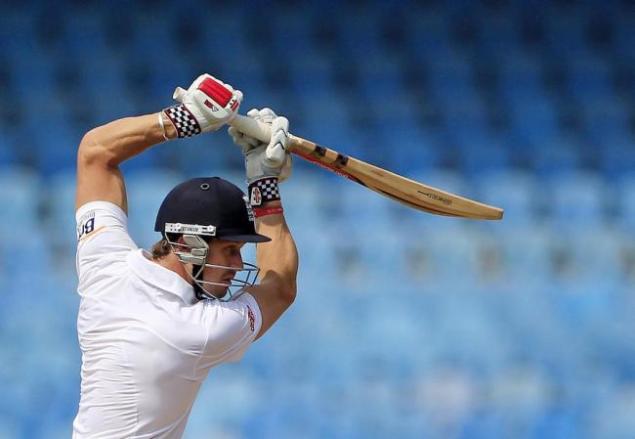
England’s Nick Compton bats during a practice session at the Basin Reserve, Wellington, New Zealand. (Photo by Anthony Devlin/PA Images via Getty Images)
Sean: I remember being coached particularly poorly at club level; do you feel that players are no longer receiving the right sort of coaching to play at Test level?
Nick: “Unfortunately, the standard of coaching is fairly poor across the board at the moment. A lot of people are spending time throwing balls down at batsmen, so it looks like they’re putting in the hours, but that’s not coaching. You could pay a 16 year old lad on his summer holidays to come and do that, but that wouldn’t be coaching either, it would be practice. Coaching should be about improving players and helping them get the most out of themselves. At the end of the season young players need to know where they are and have a full review of their game and what to work on; Instead they’re either told well done or told nothing depending on how the season went. That means they disappear for the winter to do what they want until the start of pre-season when they turn up and do some running around and receive throw downs. How is anything going to have changed in that time? The off season is such a good opportunity to go away and work on specific things, but there’s no structure around the period when more than at any other time they can make material changes. What has he worked on? Who has he done that work with? This is the kind of specialist intervention that sets a good coach apart from the rest, but it doesn’t happen anything like as much as it should. There absolutely are some coaches who do it, but nothing like enough and that’s extremely damaging.
“All players need help and support throughout their careers – even the very best in the world can get into bad habits, but when they do, they go back to their trusted coaches to work out the kinks in their game, and unfortunately much of the time that doesn’t happen for everyone else, even though it should.”
Nick Compton during day four of the First Test match between New Zealand and England at University Oval on March 9, 2013 in Dunedin, New Zealand.
Sean: Why do you think this is? We’ve supposedly got all the brains in world cricket at Loughborough, why isn’t this cascading down to the county level?
Nick: “It’s a question of accountability and job security. It’s much easier to simply follow the instructions of the county and tick the required boxes so they stay in post rather than take on the responsibility of trying to make a major difference to a particular player. Numbers are also important here, because they’ve got large squads to handle, little time and the kind of one on one coaching of a young player that’s needed requires a huge amount of work and a lot of investment both in time and money. I also believe that there is a fear that if they do coach properly on an individual basis, they’ll get the blame if a young player keeps getting out and decides to blame them for it. Coaches too want to have a job next year.
“Instead the approach is to deflect it back on to the player; instead of working with them they ask them questions – “how do you think you should be playing, what do you think you’d do in this situation?”. It’s a way of avoiding responsibility – a player who has a concern about their game doesn’t seek out a coach to be asked questions, they go to learn where they’re going wrong and how they can improve their play. A player is often the least able to understand the mistakes they’re making, and that’s why a coach is so valuable.
“If I listen to what the coach is saying, understand and implement it and still don’t score a run, that’s my fault, not his. It could be that he’s not a great coach, but I still chose to listen, or it could be that I didn’t implement what I was told properly. Either way, that’s still ultimately my responsibility – I choose who to listen to and what to do, but I’d still prefer a coach who gave me bad advice but put his heart and soul into me to make me better than a coach who just stands there and asks questions. If nothing else, my mental state is going to be far better from one who has worked with me in detail and bought into me and what I want to achieve. If it ends up not working, never mind, we both tried extremely hard and put in huge amounts of work in good faith to make me a better player. It just didn’t work out.
“That’s also where the player responsibility comes in, and partly why coaches are the way they are as it’s definitely also down to the player to play a role and work to make themselves better. I look around the counties and I see guys who think that they are so much better than they really are. They don’t put the work in, they don’t look outside of county cricket, they do their training session and go home and play on the Xbox thinking that they’re doing their job to the best of their ability. But you aren’t going to become a better player just by playing for your county, any more than a club player will get better just by playing for their club. You’ve got to go and travel, mentally and physically – you’ve got to go to other countries and work on things. You’ve got to get other advice because no coach is perfect, and ultimately it’s about finding what works for you.”
In Part Two, I will be speaking to Nick about his own experience as an England Test Opener and the rigours and challenges that come with it both on and off the pitch.
Nick is an ex professional cricketer who played for England, Middlesex and Somerset during his career. Nick can be followed on Twitter via his account @thecompdog. Nick is also a passionate photographer and his collections can be found here: https://nickcomptonphotography.com.
As always, please feel free to leave your comments below.
Approximately 24 hours ago, the majority of people I know either personally or through social media were sat enthralled by the action on the 4th day at Headingley. There is no other sport that I know that can have four or five days of action which can then all come down to one session of enthralling action. I was sat on the edge of my seat watching despair turn to hope, then back to resignation finally ending up at disbelief at what I’d seen. I can’t picture the emotions that those in the crowd and even more pertinent, that those in the throes of the action must have felt. The unbelievable batting by Ben Stokes, the resolute defence from Leach, the missed stumping from Lyon and the DRS decision that never was, and this was only the culmination of an amazing Test Match. There is simply no sport that can ever match that type of drama in my opinion and I had tingles down my spine to the rest of the evening trying to recall what I’d seen.
From some of the twitter reports, Sky Sports recorded over 2.1 million viewers who watched the cricket yesterday afternoon and Test Match Special also recorded over 1.25 million listeners at the same time which is not bad for a so-called second-tier sport. However just imagine how many viewers yesterday’s action would have got on free to air; now this is not meant to have a pop at Sky who have enhanced the viewing spectacle dramatically, more it’s a pop at the ECB who sold cricket to the government as a second-tier sport and thus not worthy of free to air access. That is one thing I will never forgive the ECB for and something that still makes me incredibly angry 14 years on. Who knows, we might have had 8 million viewers had the game been on free to air yesterday?
The headlines have rightly going to Ben Stokes, who whilst looking in great touch all summer, played an innings that probably won’t be bettered by him in his lifetime. Naturally the media have caught the ‘best everitis’ or ‘momentum’ as seems to be fashionable these days with the phrases being thrown around like a politician promises new policies. I’m not personally going to get into the debate about whether this was the best innings ever by an English batsmen but what I can agree is that it was one of the finest innings I’ve seen. Stokes though should not just be praised for his amazing batting performance but also a fine bowling spell on the afternoon of Day two and morning of Day three where he wrestled some initiative back to England, even if then a victory seemed more in hope than in reality. Root and Denly also deserve praise for finally laying a platform at the top of the order which allowed Stokes to play in the outrageous manner he did. Indeed I had a quick chat with a former England International batsman before the Test who bemoaned that the like of Stokes, Bairstow and Buttler were not getting a fair crack of the whip because they were always coming and facing a batting crisis.
Now comes the reality though and most who read this blog regularly absolutely know it was likely to come. England were incredibly fortunate to win this Test Match and still have a chance of winning The Ashes. The type of innings that Ben Stokes played yesterday is perhaps something you may see 10 times in your life if you are lucky; certainly it’s not something that England can rely on for the rest of the series. Let’s face it England, the ECB and Ed Smith lucked out big time, we let Australia get 60 runs too many through poor bowling on day one and the batting performance from England throughout this series has been nothing short of disastrous, if you remove the events of yesterday. England might be one all in the Ashes, but it could have easily been a dead series as we headed to Old Trafford and nothing but a damp squib to end the summer after a historic World Cup win. Therefore, it would be so stupidly foolhardy for England to rest on their laurels, in a series where they have been comprehensively outplayed by this Australian team. In reality, Australia should have the Ashes in the bag and would have done so, if it wasn’t for one player’s quite breath-taking batting performance.
Fundamentally Jason Roy looks nothing like a Test player let alone an opening batsman, Jos Buttler is still being picked on promise rather than results (he has one Test Match century in 34 Test games now), Chris Woakes looks out of touch with both the ball and bat and Johnny Bairstow’s wicket-keeping simply isn’t good enough for a Test wicketkeeper. If England really are going to retain the Ashes, then Ed Smith has got to leave his ego by the door and pick a team more suited to Test cricket. If we stay with the same team going into Old Trafford, then I very much doubt we’ll be lucky enough to find another saviour to save us from the abyss this time. I will leave the selection debate to another time and I’m sure many of the readers and commenters on this blog have their own views on who needs to be dropped and who needs to be selected; however doing nothing is simply not an option in my view.
As for Australia, no doubt they’ll be devastated by the result and will have woken up with the sick feeling in the pit of their stomach; however the return of Steve Smith combined with the emergence of Marnus Labuschagne should give them cause for optimism heading into the Fourth Test. There may be talk of momentum shift by the English press and the England captain; however in my view, Australia are still favourites to win the series and take the ashes back down to the southern hemisphere.
On one last note, there was a wonderfully magnanimous piece written by Greg Baum written in response to yesterday’s play. I often criticise the media on both sides as being slightly ‘one-eyed’ when it comes to their team; however this piece was a true celebration of what the author had seen, irrespective of the result.
Where do you even begin? Perhaps with stating, no, insisting with the re-affirmation of what cricket fans have known all along – that Test cricket is the absolute pinnacle of the sport. That the extraordinary World Cup win earlier this year had drama aplenty, but there is nothing, not in one day cricket, not in T20 cricket, and definitely not in Hundred cricket that can begin to match the slow burn intensity, the ever increasing pressure of a Test match.
The heart is pounding not in the final over, but an hour, two hours before the eventual finish. The heart of the players, the heart of the spectators – in the ground, watching in England or Australia, listening to the radio. Even more than that, it would have been for those watching in Chittagong or Colombo, for this is what this game can do. Where every ball can bring a decisive swing, where all outcomes, even the vanishingly unlikely ones suddenly loom into view.
The endless sub-plots, a wicketkeeper as captain (and it is persistently understated just how hard a combination that is) losing the plot along with his team under the relentless pressure of a game already seemingly won beginning to get away from them. The name Test cricket implies the scrutiny of not just ability, but the mental side of the game. Keith Miller’s famous quote about real pressure being a Messerschmitt up his arse speaks to another world and a reminder of the realities outside a sporting contest, but it remains a truth that the tension of a Test match is unlike almost anything else, the gladiatorial individual contest in a team environment.
Stokes being an all rounder will always invite comparisons to the greats, and in England’s case Botham particularly. He might be a different type of player in so many respects and ability wise it remains a pointless debate, but in the sense that he can seize an occasion, they are one of a kind.
There were of course plenty of moments where Australia could have won it. Marcus Harris dropped Stokes in a manner eerily reminiscent of Simon Jones at Edgbaston in 2005, Cummins wasted Australia’s last review with a ludicrous lbw appeal that came back to bite them the following over when Stokes was given not out to Lyon with one showing three reds on DRS. And right at the end, Australia missed a run out chance that was anything but difficult – the frantic moments of a game coming to a climax.
Ben Stokes’ hitting was beyond extraordinary. The switch hit into the western terrace for six will live long in the memory, so bold the thinking, so exquisite the execution. Length balls were disappearing over long off and deep midwicket, shorter ones smashed back past the bowler for four. Jack Leach was the calmest man in the ground, defending his wicket and eventually scoring the priceless run to draw the scores level.
The earlier innings from Root and Denly gained in stature purely because of the outcome of the game, the problems in England’s cricket will be put aside for another day. They shouldn’t be, for one freak innings from a player who knows how to seize the moment better than almost any does not alter the truth of the fragility of the English game. The ECB will breathe a sigh of relief, that the focus will not be on them for another day. But England will collapse again, the weaknesses Australia are exposing will come to the fore once more. But just for today, just for now, it’s ok to bask in the brilliance of a player, and of the game of cricket.
It has to be said some have succumbed to the Greatest of All Time trap – emphasising why this remains such a stupid line to go down, because they’ve said it before. And they’ve said it before so often. It’s meaningless. This was special, it doesn’t need to be ranked.
In the aftermath of the game, the Sky pundits talked about how this would inspire kids to play in the park, pretending to be Ben Stokes. It hasn’t changed the invisibility of the sport, and if Stokes has a recognition factor, it’s because the World Cup final was available for all to see, while this final day remained a niche viewing opportunity. Cricket needs exposure because a Ben Stokes can reach the parts hardly anyone can, as long as they see him. This was something special, if only the nation truly had been gripped.
Somehow, ludicrously, this series is 1-1. And now I need a lie down.
England’s inconsistency with the bat finally worked in their favour today, with a couple of the batsmen finally showing an above-average Test performance. On a personal level it was slightly annoying, as I had already pencilled in what I was going to write in today’s report, and scheduled stuff to do tomorrow. Joe Root’s decision to actually bat longer than a session was, quite frankly, massively inconsiderate.
The first half of the day showed no deviation from the expected script. England’s tired bowlers struggled to take the final four Australian wickets, with an inadvisable run off a misfield eventually leading to Marnus Labuschagne’s dismissal. Archer was the main strike bowler for the hosts yet again, taking the wickets of two Australian tailenders plus giving Labuschagne’s grill another testing blow, but Stokes and Broad also bowled fairly well.
Puzzlingly, Chris Woakes didn’t get a chance with the ball this morning. It seems an odd choice on paper by Root, since Woakes has taken more wickets than Stokes at a lower average so far in this series. Given the lack of trust shown in his bowling, it seems likely Woakes will be the one expected to make way for Anderson if the veteran seamer is considered fit to return by England’s medical staff. Apart from a series of solid (but by no means amazing) bowling performances in the series, the allrounder also has the third-highest series batting average for England. He’s scored more runs than Bairstow, Roy and Buttler, and yet is more likely than any of those three to be dropped. Life is just not fair. Especially if you’re an English bowler.
England’s batting seemed to be following the pattern of recent games, with two quick wickets at the start. Burns was the first to go, fending a bouncer to the slips. Roy followed a few balls later after being bowled by Cummins after playing down the wrong line.
This left Root and Denly at the crease, with 69 overs left to survive in the day and (even more unlikely) 344 more runs needed to win the game. Denly rode his luck early, being lucky enough to miss the assorted wild drives to full and wide deliveries from the Australian quicks. But, over time, he settled down and made a partnership with Root which somehow lasted most of the day.
Eventually it was a bouncer which did for Denly. The Australian bowlers had targeted his head and body through the day with some success, and he finally fended one with his gloves which looped into the wicketkeeper’s welcoming hands. Having scored fifty runs in this innings, it’s hard to see England dropping him for the remaining two games. On one hand, Denly was under pressure, with many people (including myself) calling for him to be dropped, and he delivered. On the other hand, Australia might well think that he’s vulnerable to the short ball and bowl accordingly.
Joe Root’s 75* was no doubt a huge relief for England’s captain after he had made two consecutive ducks in his previous innings. We all know he’s an extraordinarily capable batsman, once compared to Steve Smith and Virat Kohli, but it’s been a lean couple of years for him. (It’s been even more lean for Smith, of course, due to his ban for cheating) Whatever the reason, his form has declined from ‘great’ to ‘good’, and then again from ‘good’ to ‘good enough for England’. Hopefully this innings will allow him to rebuild his confidence and Test batting, although I’ve seen too many flashes in the pan to be very optimistic on that score.
Root and Stokes were still there at the close of play, with England on 156/3 needing 203 more runs to win. It’s still massively unlikely that they can cause an upset, but at the same time it’s significantly more likely than it was this time yesterday.
It’s the hope that hurts the most, I find.
Finally, we were ‘just’ four overs short today. I think we saw that one coming…


 Being Outside Cricket