South Africa v England: 1st Test, day five and match review

South Africa in disarray, England exultant.  No doubt the word “momentum” will be used.

Taking four wickets for seven runs (including du Plessis last night) probably wasn’t the expectation of anyone, with the game effectively done and dusted within half an hour of the start.  But on reflection it probably shouldn’t come as that much of a shock, from the start of the fourth day South Africa seemed almost resigned to defeat, with only the brief passage of play at the top of the second innings suggesting some degree of fight.

It was Moeen Ali, named man of the match, who did the damage, removing AB De Villiers with the third ball of the morning.  Moeen hasn’t had an unquestioned role in the side, not helped by being shunted up and down the batting order and a lack of clarity about what his role is meant to be.  He isn’t one of the six best batsmen in the country, though he is one of the six best to watch, so his primary role has to be as spinner, with his batting complementing that.  There has been considerable development in his bowling since his debut, and it’s now time to start thinking of him as much much more than the part-timer he was then called.  It wasn’t an unreasonable description either at the start, but by all accounts he works harder than anyone and is keen to learn.   The fruits of that are starting to show, though how much further he can develop is an open question.

His Test bowling average isn’t anything special, though in recent historic terms for England it’s not bad either – Swann is an outlier amongst English finger spinners – but after 20 Tests his statistics are starting to become meaningful.  The one that reflects well on him is his strike rate, with a wicket every 56 balls.  That is actually better than Swann, though no one would argue he’s remotely the equivalent as a bowler, for Swann was vastly better at the defensive role.  But Moeen does have the knack of taking wickets, and just as with Finn, this is a skill that the England are finally starting to pay attention to; “bowling dry” is unquestionably a part of the game and England’s ability to strangle sides into submission was impressive.  But the ability to take wickets out of nowhere is more impressive still – the holy grail is to have both of course, but if it was that easy every side would do it.

Therefore it could be argued that 18 months into his Test career, Moeen is actually underrated.  It is his batting where he is underperforming somewhat which is slightly ironic.

He would have had more wickets in his career had numerous stumping opportunities been taken, so Bairstow will have been delighted to get Bavuma, particularly after missing De Villiers last night.  And here we need to talk about wicketkeeping, because it is the one area of the game where people who have played at the highest level and can talk with wisdom and experience about cricket have no knowledge or understanding except in a couple of very obvious cases.

The stumping this morning was an easy one, because it went past the outside edge of the bat.  That means the keeper is following the line of the ball all the way down and the hands are automatically in the right position.  It’s therefore straightforward unless there is excessive spin taking it beyond the reach of the gloves.  The difficult ones are those that go between bat and pad.  Bairstow, just like Buttler, is a part-time wicketkeeper, and that creates a number of issues.  The taking or missing of a particular ball can’t be seen in isolation.  More than anyone else on the field, more even than the batsmen who get to switch off to some extent for half of their time out there, the wicketkeeper is involved in every single ball of the game. Concentration is an obvious requirement, but it’s about more than that – or rather it’s only part of the story – it’s about expecting the ball to miss the bat and come into the gloves.  When it goes between bat and pad there is an expectation that it will be hit, and the eyes follow the line of the bat rather than the ball.

This is not a technical issue as such, Bairstow is more than capable of taking it, and so is Buttler; the difference between a good full time keeper and a talented but part-time one is the automatic expectation that the ball will continue on its path and not be intercepted by the bat.  The best keepers do this, and it’s why in the case of either Bairstow or Buttler they will learn it should they continue to keep over the longer period.  That doesn’t mean they then become good keepers, for there are technical flaws in both of them compared to the best, but it is to explain why that one was missed, and why in itself it shouldn’t be a concern – those kinds of stumpings will come.  Prior in his first incarnation also missed them regularly for example, in his second having focused on his keeping much more, he would take them.

Still, Bairstow took the opportunity today well enough, and will certainly gain confidence from it, which also is part of the equation.

From there it was something of a procession, Finn producing one that moved away just a fraction off the seam and was frankly wasted on Dale Steyn,  Moeen again got bite and turn to account for Abbott while Woakes finally got a wicket, which was the least he deserved – he has bowled well without reward this Test.

Fittingly, Stuart Broad delivered the coup de grace to give England a thumping win by 241 runs.

This is a remarkable margin of victory having been sent to bat in difficult conditions with England finding themselves 12-2 and then 49-3.  South Africa’s abundant problems will be much discussed in consequence, but there is always the danger of underplaying England’s wins and overplaying their defeats.  Too often England only win because the opposition were rubbish, and lose because they are rubbish.  It isn’t particularly fair, they won this game and won it well.

The first innings total of 303 is what set up the game.  It’s not a huge score but given the conditions and a pitch where run scoring wasn’t easy, it was a decent one.  Taylor and Compton can reflect on  their performances in that crucial period and be very satisfied with it.  As a combination they batted beautifully, and Graeme Swann’s bizarre and consistent criticism of Compton for batting too slowly gave something of an insight into the environment of the England team during his first spell in the side.  Compton did an outstanding job here, and deserves high praise not snide dismissal.  Had Alastair Cook done the same thing, he would have received considerable plaudits for it, for it was every bit a Cook type innings in pace, style and above all importance.  Rightly so too when Cook does it, but it is hard to avoid the conclusion that Swann is blinded by favouritism rather than what is going on in front of him.  It is distasteful.

If Compton had a case for being man of the match, so did James Taylor.  Doubtless Kevin Pietersen’s view that he wasn’t good enough for Test cricket in 2012 will be thrown back at him, but firstly Taylor is a better player now than he was then, but also Pietersen’s view at the time was quite clearly echoed by the selectors, who didn’t pick him.  Here he was busy at the crease, and turned the pressure back on to the bowlers.  As a combination with the doughty Compton, it worked beautifully.

That the man of the match award wasn’t an easy one to choose is evidenced by Broad being the fourth player who must have felt in with a shout.  He took fewer wickets than either Moeen or Finn, but the timing of his was the key, breaking the back of South Africa first time round, and ensuring England had a big lead at half way.  Broad is becoming a very, very fine bowler indeed.  And he seems to have got his batting back to at least some extent.  It’s going to be a big few years from him.

Lastly Finn himself can count himself a trifle unlucky to be overlooked too.  Having written about him yesterday there is no point repeating it, but he is looking in fine fettle.

England do have the nice problem of finding a place for Anderson, and Woakes seems certain to make way for him.  Harsh on Woakes if so, but it’s hard to criticise bringing back England’s record wicket taker.

Whither South Africa?

The first thing here is that a side can be comprehensively beaten in one match and gel in the next.  Even those without long memories ought to know that from the last Ashes series where the teams took it in turns to batter the other.  With that said, they do look in some disarray.  The injury to Steyn looks highly likely to keep him out of at least the second Test, but the rest of the attack – and Morkel in particular – compensated admirably here.  Their problems were not in the bowling.

De Villiers’ less than subtle hint about his workload appears to have been listened to, with de Kock being brought in to the squad for Cape Town and seemingly certain to play.  Overloading the best batsman in the side always seemed a peculiar approach, but it’s not in and of itself a reason for how this Test unfolded.  Yet for all the talk about Bairstow behind the stumps it shouldn’t be overlooked that De Villiers had a poor time with the gloves in this game anyway.

Elgar had an excellent match, looking solid and but for being on the losing team probably was the outstanding performer on either side, while Van Zyl in the second innings could well have played himself back into some kind of form without going on to make a substantial score.

The captain is clearly a concern, but Amla is a high class player and has been for a decade.  He was all at sea in the first innings, but much better in the second.  Anyone writing him off does so at their peril, for he will come good, and when he does England will suffer for it.

The immediate response to their performance has a hint of overreaction about it; England are not that good and South Africa are not that bad.  It’s one Test, and South Africa’s difficult tour of India notwithstanding, they have not become a bad side overnight, but they are clearly very low on confidence.

Newlands is a fortress of South African cricket, and while England will go there with confidence, suggestions that they are favourites to win based on this game are a triumph of hope over experience.  South Africa will probably not play as badly as they have done in Durban – if they do they are indeed in real trouble, and at that point a reassessment might be in order.

This isn’t going to stop some getting carried away, and it will be the same people who usually do so.  C’est la vie.
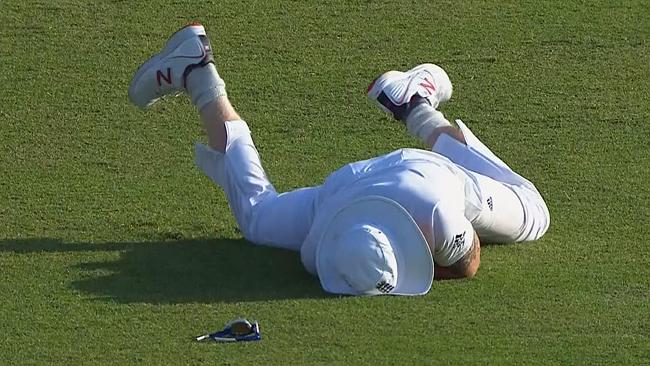
 

South Africa v England: 1st Test, Day Four

By no stretch of the imagination could this Test be called a classic, for one thing England have been edging ever further ahead in it over the course of the game, but to go into the final day with all results (just about) possible is indicative of a match that has been fascinating throughout.  The most likely outcome remains that England will go 1-0 up some time tomorrow afternoon, but South Africa showed admirable grit in their second innings; had they done so in the first innings, it could be argued they wouldn’t have been in such trouble.  Yet ironically enough, they finished the day with a near identical score to that they had at the close on day two.  Perception is a funny thing.

England appeared relatively untroubled by the loss of wickets in the morning, a lead already approaching 300 tends to limit any sense of panic after all, and it was Bairstow who was the undoubted star of the show.  On a surface that started slow and is edging towards the turgid as we approach the conclusion, fluent run scoring has proved difficult, yet Bairstow merrily thrashed his way to 79 at better than a run a ball.  England do have an abundance of strokemakers, but they also require the latitude to play that way, both in terms of the match situation and the allowance from the captain and management above.  The signs are positive that coach Trevor Bayliss is keen to allow the players to express themselves, a welcome change from the years of rigid game management, but it still requires the groundwork done by others – Compton’s 85 and 49 are not going to win any awards for entertainment, but a team requires different kinds of batsmen who play in their own way to to bring out the best in the others; he did exceptionally well, and while no judgements can be made going forward on the basis of a single game, it can be said he played the role of the perfect number three here.

England’s long batting order also demonstrated its value, as first Moeen Ali and then Chris Woakes provided competent support, with South Africa merely looking to limit the damage.

Indeed the approach from the hosts was quite instructive.  The new ball was already available when Taylor was dismissed to leave England 224-6, 313 ahead.  It wasn’t taken.  What this betrayed was that South Africa didn’t truly believe they could win the game; for a side that did would surely have wanted to grab the new nut, knock over the tail and set off in pursuit of 330, with a belief it was possible.  Sure, England would have been strong favourites to win still, but it would have by no means been out of the question.  Equally of course, the new ball could have gone around the park, but not to take it was extraordinarily defensive given from there South Africa could still have won.  It is hard to credit that the view of Amla and/or the coaching staff was that their best chance of doing so was to retain the old ball, it seemed purely about being content to stay in the field as long as possible to avoid batting, and that is fair enough if the opposition are already 450 ahead, but not when they are only 300 and a bit on, with six wickets down.   A few things about this South Africa outfit seem rather muddled.

The debate then turned to the timing of any declaration.  Once again though, there was so much time left in the game.  As it happened, England were dismissed before it became an issue, but with a target of 416 and the best part of 150 overs remaining, it was by no means a pressing matter.  Put simply, if South Africa batted the remainder of the match – and no rain was or is forecast – they wouldn’t be too far away from that target.  Therefore England weren’t going to be losing potential overs that might be needed to take a last wicket or two.  Had they gone on much longer, then yes, it would have become a topic of debate, but it didn’t arise.

In the customary manner, South Africa batted much better second time around initially.  Van Zyl in particular started off exceptionally positively, to the point one or two who had been questioning England for not setting about 350 actually queried whether they should have (if they could) gone on longer to make the game safe.  Sometimes there is a desire to have it all ways.  For let’s put it simply, if South Africa were to achieve the second highest run chase in Test history, then you simply doff your caps to them and say they deserve it.  If they instead manage to bat out the game for a draw, then you may wonder why they didn’t get close enough to win in the time available, but you still doff that cap.  The target was exceptionally challenging, the time remaining extensive.  England and Cook did nothing wrong, however it turns out tomorrow.

After that strong start by the Proteas, and with a ball that resolutely refused to swing or seam to any great extent, it was Stokes and then Finn who made the difference.  Firstly, patience is always needed in these situations, for the wickets will usually come, and secondly you need to have a strike bowler who takes those wickets.  Earlier in his career Finn was criticised – and then dropped – for leaking runs, but he takes wickets.  His strike rate is the best of any England bowler with 100 Test victims, at an outstanding 47 balls per wicket.  This is a serious weapon.  Who cares if he goes for a few runs when he can do that?  So does Dale Steyn for that matter, and while his economy rate is a little better than Finn’s, it’s hardly impressive either.  Trying to force the square peg of potent strike bowler into the round hole of line and length operator consistently missed the point about the attacking wealth offered by him.  When he comes on to bowl it’s quite clear he will drop the odd one short and get hit to the boundary.  It’s also equally clear there is a decent prospect of sending one or two opponents back to the shed.  Leave him be, let him do what he’s excellent at – England have other bowlers to tie an end up.

And on that particular matter, Broad is becoming nigh on unhittable in Test cricket these days.  Indeed an economy rate in this innings of 2.27 probably represents something of a disappointment to him.  Add to that that he takes wickets, as his record over this calendar year shows only too well, and it is time that it was more widely acknowledged that he’s a fantastic bowler, one of the best England have had in a long time.  Appreciation of his skills (if not his DRS expertise) is overdue.

Standing in the way of England emerging victorious is one AB De Villiers.   England did have a chance to get him, Moeen Ali’s beautifully flighted delivery turning sharply through the gate with De Villiers out of his ground, only for Bairstow to miss the stumping.  England are choosing wicketkeepers who are primarily batsmen, and the reality is that while they do so, stumpings like this are going to be missed.  The same applies when it’s Jos Buttler doing the job.  In both cases they tend to miss the stumpings when the ball goes between bat and pad.  The eyes follow the bat rather than ball, expecting it to make contact, and by the time the ball has passed the bat, it’s far too late to adjust.  This certainly isn’t to excuse an error that Bairstow himself was in despair over, but it is to explain how it happens and why.  The very best wicketkeepers don’t make that kind of mistake because they always follow the line of the ball instinctively.  It’s a much much harder skill than might be supposed.

With Du Plessis and De Villiers at the crease, memories of their monumental match saving rearguard against Australia were well to the fore, but Finn returned just before the end to produce one that lifted just enough to take the shoulder of Du Plessis’ bat, Cook taking an excellent catch, and England will breathe much easier tonight.

There was still time for two items of note – firstly that Dale Steyn came out to bat as nightwatchman.  There are two ways of looking at that, either surprise at taking such a risk with a key player with the Cape Town Test only days away, or that he’s already ruled out and therefore there is little to be lost.  A slight puzzle though.   Secondly, immediately after Du Plessis was out the ball was changed.  It had been looked at earlier in the over, and the change itself was routine, and nothing need be inferred from the decision.  Just as nothing needed to be inferred from the decision to change the ball when South Africa were bowling.  It is unlikely that those who cast aspersions through innuendo and suggestion in that case will do so here – and that says it all.

A further 280 is required from 90 overs tomorrow.  More realistically, England need six more wickets.  It probably won’t be easy, but it probably will happen.  On the basis of the first four days, England deserve it.


South Africa v England: 1st Test day three

England should wrap this match up at some point on the fifth day barring something special – and something special is always possible in sport, that’s the point of it – so strong is England’s position.

At the end of day two there was a feeling that England were the side in the ascendancy but that was on the basis of how the game appeared rather than the raw figures of the score, and from there the game could have gone in any direction. But South Africa couldn’t have had a much worse day that they did, from the collapse in the morning which left them 89 behind to the injury to Steyn and dropped catches as England built a lead.

It could have been worse. Dean Elgar carrying his bat through the innings was the only thing that kept South Africa in the game. The deficit was substantial enough but not insurmountable. What lent a feeling of inevitability to proceedings was the injury to Dale Steyn early in England’s second innings. And here we need to be wary of straying into wise-after-the-event territory.   For South Africa lack an all rounder in this post Kallis/Pollock era, and like most teams in such a position, selected a four man attack to try to balance the side. For injury to take out the spearhead is desperately bad luck, provided of course that there wasn’t that risk going into the game, and that’s the question for the South African selectors rather than the four man attack in itself.  To put it another way, England had a four man attack for a number of years and it was rare that they lost a bowler, the same applies to the great Australian team of the first part of this century; in and of itself it’s not flawed selection, but it appears to be when injury strikes. Certainly Morkel did all he could to make up for the shortfall.

And of course balancing a side with only four bowlers becomes difficult, but you do need a keeper who can bat, hence asking De Villiers to do the job. He’s quite clearly a superb player, the question is how sustainable it is to ask your best batsman to do two jobs and whether that impacts on the primary role.  It’s exacerbated when said batsman has to come in at four rather than later, limiting the amount of rest. De Villiers does have a worse record as batsman when he has kept wicket, but it’s hardly a disastrous one to say the least. Yet it’s a huge ask of him, and perhaps his keeping in the second innings is an indication of that.  For while every keeper can and does drop catches, to come in to a Test match having not done it in a while, and to still have to do the primary role, is going to be exhausting, mentally more than physically, though that plays a part as well.  And then we have to consider the first two Tests are back to back.

For England Stuart Broad has been exceptional, but what has impressed has been the back up.  Moeen Ali was excellent, while Woakes was consistently unlucky and Finn cleaned up the tail expertly.

England’s batting too was purposeful. The third innings can so often be one where the side nominally in front can panic and throw away the advantage. After the loss of Cook, Compton set about building the platform, and he did that extremely well. By the time he was out, those following were able to start to increase the pressure on the reduced attack, circumstances that the likes of Root are ideal at exploiting.

England will doubtless look to accelerate in the morning, and wear the pitch a little more. It may not be the worst thing in the world for England to be bowled out, forcing South Africa to go for the win with time left in the game. The danger of batting on too long is an ever present with England in recent times. Tomorrow is not the time to do it again, for here is a chance to pick up an opening Test win away from home, and that’s not a common experience.

South Africa v England: 1st Test, day two

The trouble with the first couple of days of Test matches is that much of the time every observation is couched in maybes, might bes and possiblys. There are exceptions of course, the slaughter taking place in Melbourne has few uncertainties beyond wondering whether Australia will win by hundreds or an innings and hundreds. 

At Kingsmead in contrast, it’s very much in the balance, as Test matches should be at this stage. In your classic Test story, the first two days are feeling each other out, while day three is moving day, and day four is finding out if the team on the rough end of day three will fight back. Day five of course being the result day. 

So at least thus far this Test is following the perfect script. If the first day was even, it’s hard not to feel the second day deserves exactly the same epithet.   And yet England probably should be the happier; they had the clear worst of the conditions on the first day, yet survived it, and in less bowler friendly conditions on day two removed four top order players. 

Against that it must be said that the way England’s innings fell away from a position of promise will – or should – deeply irritate the team, and it’s hardly the first time it’s happened in recent years anyway. 

Nick Compton held the innings together, his 85 of obdurate defence would have received much greater plaudits from certain quarters had it come from another obdurate player in the England side, which says more about those offering the praise than anything else – Compton was excellent and was the primary reason England made a competitive score. Bairstow’s breezy 41 briefly arrested the decline of the innings, while Broad, who appears to have at least partially rediscovered his batting mojo, provided much needed runs at the end to get England over 300.

In this calendar year, Broad has over 50 Test wickets at an average of 24. And yet he remains in at least some quarters a prophet who is not honoured in his own land. His record over the last few years is excellent, sufficiently so that he was pretty much the only player to come out of the Ashes disaster of 13/14 with any dignity left intact. For some reason he still faces constant criticism. 

Certainly here his wicket in the first over was one that would give opening batsman nightmares – the last thing you want to see is the ball arrowing back into off stump when you don’t want to play, likewise Hashim Amla, out of form or not, could have done little with the one that caused his downfall.

And so to that moving day mentioned earlier. In which direction? Who knows. That’s why when Test cricket is at it best, we watch. 

South Africa v England: First Test, day one

If the toss is crucial in a game, and you lose said flip of the coin, then perhaps if at the end of the first day you can say you are still in the match then that represents a very good day indeed.

Weather conditions were unfriendly throughout, and the surface looked green, seaming just enough early on to be a real danger to the batsman and als0 (more surprisingly – not least for Joe Root) proving conducive to spin from the start.  Yet the forecast for improved weather for the rest of the game made this first day potentially decisive for the Test, and England will be well pleased that they are not just in the game, but in a reasonable position.

The late loss of Taylor was unquestionably a blow, for without that wicket it could have been said to not just be a good battling performance, but one where England had a chance of getting on top.  Even so, from 49-3 and in terrible trouble, to reach 179-4 is a fine recovery.

Losing early wickets probably shouldn’t be too harshly viewed, for it certainly appeared difficult batting conditions, though the nature of those wickets will grate somewhat – Cook won’t need to be told that was a poor shot – and it didn’t appear to ease greatly for the rest of the play.

For both Taylor and Compton, much praise is warranted.  Although Compton scored slowly, which is what he was criticised for first time around, in these circumstances it was exactly what England needed, and in any event at no time did it feel in any way negative – he put away the bad ball well, and turned over the strike regularly.  One might say that the difference is in a player who is backed to perform rather than failure being pounced upon, but one innings is one innings.  What is interesting is that he is batting at number three, and given the most successful recent exponent of that position for England was Trott, it may yet be a position that suits him.

Taylor has developed from the batsman who first appeared three years ago, though even then that flawed player showed there was no shortage of nerve and bottle in him.

South Africa only have three front line seamers and England must aim to keep them in the field, and put the pressure on Steyn through additional overs he has to bowl.  Certainly he appeared what he is – a class above anyone else.

England do have a deep batting line up, so will hope to capitalise on the hard work done, but they’re in that tough situation where 300 would be a pretty impressive total to reach given conditions, but likely won’t be enough as the track flattens out in the sun.  So while they have done extremely well, they will need to do extremely well again tomorrow as well – perhaps an unfair return for the effort put in.

All in all, decent effort from England – or more specifically decent effort from Compton and Taylor.  On to tomorrow, where we’ll have a better idea of the balance of the game.


Lost in Space

It’s been a fair while since I’ve  written a piece, and it’s been like an itch that needs scratching.  The last few months have been fairly manic with work, but after next week it should be a quieter period, just in time for Christmas and then January and February, which are my easy months of the year, comparatively.

I’ve also been doing some research on a bigger post to come, and have notes scribbled all over the place.  Picking the right time to do that is perhaps the biggest question.

The approaching series is the one in South Africa, historically always one of the marquee series, and thus one where excitement is building, right?

Hmm.  Over the last week we had the nominations for the BBC Sports Personality of the Year, and the observation that despite a truly fantastic year, Joe Root was missing from the list.  It was also pointed out that at the same time, a woman footballer was on there, and much wailing and gnashing of teeth ensued.

From a couple of cricket writers.

From the wider public there was the sound of complete indifference.

Now, the reason for me apparently picking on a female footballer there was deliberate.  You see, not only are those matches visible on terrestrial television, but it goes further than that.  Participation in female football has been growing rapidly in the last few years, and in the next 12 months or so, it will exceed the male participation in cricket in this country.  Add to that the higher viewing figures for the Women’s World Cup, and realistically, why should there be the slightest objection or even query?  By these measures, women’s football is simply more important to the English people than cricket is.

Is it really?  Probably not, yet one of the defences the ECB puts up to cricket not being on terrestrial television is that it is available on Test Match Special on the radio.  Yet here we have an Ashes winning year with one player across the calendar year proving genuinely exceptional and becoming the number one batsman in the world, and he wasn’t included.  But the fundamental point is that people do get missed off these things, that isn’t the story – the total indifference to it is.

Few would argue that the SPOTY award is more than a bit of fluff, yet it is symptomatic of the decline in interest in the sport generally that Root being left out didn’t cause a storm of outrage, instead it wasn’t even noticed.  Go to the pub, sit at the bar, raise the subject amongst those interested in sport and see what the reaction is.  There’s a slight raising of the eyebrows and a response of “oh yes.  That’s true”.  This is more dangerous to the game here than anything, when the sporting public don’t even realise until it’s pointed out.

When this debate occurs, the question of terrestrial television coverage is always rejected with the line that the drop in revenue from doing so would be a disaster for the game, and that terrestrial coverage wouldn’t suddenly change everything.  This is true, yet it is what it always has been – a complete straw man argument.  No one is arguing that it is a panacea for all ills, it’s a deep seated concern that there won’t be much of a game to support at this rate.

Ah yes, but crowds remain excellent and there is strong demand, so the story goes.  Yet this year there were day one tickets available for the Lords Ashes Test, on the day of the match.  Trying to find this kind of information out from the ECB is nigh on impossible, and so the supporting evidence for this assertion is a simple one – I looked at the Lords website and went through most of the process of buying one to see if I could.  It’s unlikely there were many, but the point is there actually were some.

Let’s just think about that; day one tickets, on the day, for the Lords Test, of an Ashes series.  And England had just gone 1-0 up.  Cost is a big part of this for certain, the exponential increase in ticket prices and the gouging of supporters by the ECB (funny how the huge rise in income for the ECB hasn’t held ticket prices down) has probably reached a point where a substantial number of those who would go simply don’t solely for this reason. Yet the alarm bells should be ringing loudly, and the biggest concern is they don’t seem to be.

It didn’t help of course that the Ashes series itself was such a dreadful one, five completely one sided matches with barely any drama or uncertainty beyond the first day and a bit.  But to counter that, the two Tests against New Zealand were truly magnificent, cricket as entertainment at its best.  It still didn’t make much difference.

With most specialist interests, there’s the matter that anyone writing or talking about it is doing so in an echo chamber, the only people who react or read it, or argue back are those who have the same interest, and thus it can be talked about at great length, entirely oblivious to the fact that no one outside of it cares.  This is where cricket now is.  The national press do cover the game, but if the Sun stopped writing about it (tucked away four pages in from the back) would anyone care?  Would anyone outside of the few even notice?  It seems unlikely.

Out of sight, out of mind is the most dangerous state for any sport to reach.  For decades the lamentation that football has taken over the national consciousness at the expense of cricket has gone up, but it’s gone way further than that now.  Rugby union is miles ahead, notwithstanding the England team gloriously completely the full set of the three “major” team sports all going out at the group stage of their respective World Cups (the football team’s failure is positively superb by comparison with the other two), in fact rugby league probably is.  Cycling, tennis, athletics – they all now have a much broader appeal than cricket does.  It’s nothing more than a minority interest, and the slump in people playing is as good an evidence of that as anything else.

If you were to visit some of the London parks, the removal of the cricket pitches by the councils is something that has been highlighted over the last few years.  Yet a question that is never asked about that is what if the councils are right?  What if they have removed them not just because of the expense, but because no one really cares if they do?  It’s not like it was met with strong protest, more like quiet grumbles at the way things are going.

The national team is the pinnacle of any sport, and also the showcase of it.  For all the talk about the dominance of the club game in football, nothing pulls in viewers or captures the imagination like the national team doing well – younger readers may need to ask a parent – yet despite the defeat in the UAE, the England cricket team had a reasonable enough year post World Cup, and for most of the wider public, it simply passed them by.

A South Africa tour should be highly anticipated, England don’t win there often, and despite the hosts comprehensive defeat in India, it will be a stiff challenge.  But will anyone notice?  Will anyone even realise it’s happening?

The wider ramifications of the ICC power grab are yet to unwind, the complicity of much of the media in allowing that to happen with no objections or investigation as shameful as it ever was.  But the bigger issue right now is the game itself, and where it is in this country.  And for the first time I am starting to truly fear for its future, not just at the top level but throughout.  The mendacity and self-serving nature of the avaricious ECB is a subject to which we will return time and again.  The danger is that it reaches a point where even when it’s put in front of the public, they still couldn’t care less.


TLG Report – Pakistan v England – 3rd Test Day One

Dash, Damn and Blast...
Dash, Damn and Blast…

The lot of the England cricket supporter is to imagine in great detail the impending disaster which is to follow, and so it is that having bowled out Pakistan for 234, on a pitch that certainly offered far more life than expected given the series position, the fear is that Pakistan’s superior spin attack will skittle England for far fewer.

That is always possible, for certainly England are going to have to bat superbly in order to get into a position of strength, but there’s no reason why they shouldn’t and a lead of even 50 would be like gold dust on a surface that is taking considerable turn on day one.  Safe to say that we’re unlikely to find out how much it turns on day five, for this very much appears a result pitch, and England could have asked for nothing more.

At the start of play, having lost the toss, England would have bitten an arm or two off to be batting by the close, so whatever happens tomorrow, day one couldn’t have gone much better than it did.

Sure, there were quibbles, as there always are: the spinners didn’t exert control, or perhaps weren’t allowed to exert control, but the seamers were outstanding, particularly Anderson and Broad who took six wickets between them for just 30 runs in almost as many overs. Given that the most startling thing was the turn from the beginning, for those two to perform as they did was both astonishing and highly praiseworthy. How England’s batsmen perform is a matter for tomorrow, but unquestionably Broad and Anderson have given England a chance of squaring the series.

Not that Patel, Rashid and Moeen bowled especially badly, there were just too many freebies, which really shouldn’t come as that big a surprise given that England’s spin attack is markedly inferior. But they will have to bowl better in the second innings for England to truly have a chance.

In fact the only really sour note of the day came with the injury to Ben Stokes. It didn’t look at all good, but it’s very hard to tell with shoulder impact injuries. If he’s fortunate it’ll simply be a matter of popping the shoulder back in and putting up with some bruising. If it isn’t, then it could be months and with an uncertain prognosis. Undoubtedly a serious blow, and for the game position at least, his batting will be missed too.

And so on to tomorrow. The old story of judging a pitch after both sides have batted on it is as true here as anywhere, but that England have created an opportunity for themselves is equally true, it’s just a matter of whether they take it or not.

We’re going to get a result. That in itself England would have taken before the start.

A Hornet’s Nest

Over at our friends at the Full Toss, a proper debate has been going on – it started initially on Twitter, with Tregaskis raising a point, and snowballed from there.  The whole thing can be read through Maxie’s post on TFT, and I’m not going to repeat it here, so the link is as follows:

The return of Caesar’s wife

Here’s the thing.  I like Maxie.  I like his writing, and I like him personally.  I’ve had a couple of good nights out with him, and enjoyed his company thoroughly.  Which is why I know that saying I disagree with his premise is not going to be met with shock and horror, but more “Oh really, why?”   Because if there’s one thing I do know about him, it’s that he’s exceptionally comfortable with the idea people hold different views to him – it’s something that always makes me smile when you get the more virulent criticism of him for his articles, he is quite interested in those who don’t agree.

It’s one of those things that is striking across a few of these blogs.   Dmitri is the same, forever worrying about whether his perspective is a reasonable one.  The irony is that it’s me who tells him to ignore the trolling and the abuse, yet I’m the one who is probably thought of as less polemical and more nuanced.  The true beauty of all of these debates is that it involves real people, who can be hurt.

From his post, it seems Lawrence Booth in particular felt that he was being unfairly maligned, and here I have enormous sympathy with him.  I really can’t see a thing wrong with something like a golf day that might involve a few players.  And this is why – in my own line of work there is a fair bit of what we might call “promotional” activity.  The deal is what is has been for generations across many kinds of career, we take them out, spoil them, show them a good time and when it comes to contracting maybe they’ll be better disposed to us than our competitors. Naturally, our competitors do the same.  It’s the kind of thing that tends to be pontificated about as somehow dubious, but it’s normal practice.  More specifically, I’d fall down in a faint if something like that made a potential client switch to me, it doesn’t happen, it’s way more complex than that involving building trust and – the key point – getting to know people.

For journalists, their stock in trade is copy for their newspapers.  It’s nothing like as simple as on here – I can write any old rubbish and click “Publish” and up it goes.  The press pack have to pass it via their editors and hope that some kind of simulcrum of what they wrote appears in the paper the following day.  It is extremely easy to be totally cynical of all media output, and it just ain’t that simple.

Want the proof?  I can write a piece on here talking about Kevin Pietersen, and the hits we get double from normal.  Hell, just the fact his name is used will add a few extra ones. It’s extremely easy for us to manipulate the content if we were so inclined, and thus when online papers do it, the line that it’s clickbait might be true, but it’s successful clickbait.

Neither Dmitri nor I make a penny from this place, so we can say what we like, but it’s pretty easy to see how commercial sites love it when you can do something that straightforward to get extra hits.

So for a newspaper journalist, first and foremost they need to create copy that attracts attention.  That might be about – say – Joe Root, as we’ve seen with the Telegraph interview with him that has got plenty of notice.  But what we can’t do is expect those articles to come out of the ether, and that’s where the whole point of argument has stemmed from.  It’s a fair bit easier for former England batsman and captain Michael Vaughan to do it, but for a normal cricket journalist, to provide an angle requires them to do the legwork both before and after.

We know what Root (poor lad, still using him as the example) did in raw figures and anyone can write that, it’s just that barely anyone will read it because it’s dull.  How does a journalist provide context and colour?  It’s by getting to know them, talking to them, allowing a sufficient degree of trust that they will speak to them in the first place.  So both because of my rationale about hosting events, and because of the peculiarities of sports journalism, events such as a golf day are critical.  What else would people desire of their correspondents?  Glorious isolation? It simply is not going to happen, and the journalists aren’t doing their jobs if it does happen.

The unguarded comment from someone suckered in by a journalist they trust is in itself part of the job, but they can’t do that unless they know them in the first place.  It’s just not a fair argument to attack people for doing what is in reality their job.

On here we have offered up plenty of criticism for journalists not holding the ECB or ICC to account, and those criticisms stand absolutely. The frustration about that can’t mean though that everything they do is therefore criticised, we have to be fair about this. When we get a fascinating interview with Nick Compton, it’s because that journalist spent time getting to know him well enough for him to talk, and created sufficient trust for him to open up. It doesn’t help anyone to pretend the means by which that happened shouldn’t.

Criticism for not doing their jobs properly is legitimate and necessary. But not for when they are.  And heaven only knows there are enough things to complain about there, for there really is much too cosy a relationship between some journalists and the ECB, while the fact that the senior cricket correspondent of one of the broadsheets can’t even be bothered to watch Death of a Gentleman remains as pathetic a dereliction of duty as there is.  But seeing reds under every bed weakens the argument, it doesn’t strengthen it.  Sometimes they’ve simply done nothing wrong.

2nd Test, a few idle thoughts

As has become traditional for me, I return from a busy work trip of a fortnight to then spend the next week flat on my back ill. Great. The teasing about it being malaria or dengue fever has already begun.

You might think this perfectly allows
me to watch the cricket, but instead I fall asleep through most of it, which given the nature of play in the UAE might actually be the best way to experience it.

So England lost and have gone 1-0 down in the series. As most have pointed out, it stems entirely from the first innings collapse that saw a position of some strength turn into almost certain defeat in a couple of hours.   After two matches, the series has turned on a single session, for England could well be 2-0 up in this series had things gone slightly differently at key moments. Them’s the breaks, sport has always been about seizing the moment when it arrives, and England have shown themselves less than perfect at doing so for some time.

To some extent it could be said England haven’t learned from their last visit to the UAE, some of what happened then is happening now, yet a difference is that it is possible to see England winning in Sharjah and squaring the series – last time it just got worse by the match.

The batting is obviously a concern, as only Cook and Root are getting any runs, but this isn’t exactly new, and has been an issue for some time. Cook loves these slow pitches – he’s an extremely odd kind of opener, one who is vulnerable to pace and the moving ball (more so than many openers) but an outstanding player of spin. Equally, his levels of concentration are the stuff of legend, so his first Test mammoth effort don’t actually come as a surprise; it’s what he does, and does so well.

Root is now getting to the point where we have to start wondering if he’s not just going through a rich vein of form, that maybe he really is this good. Because if so, he’s going to shatter every England batting record there is.

Mark Wood is one who can hold his head up, and not just for his bowling. We know he can bat, but his innings yesterday showed a depth of character as much as anything. In his primary role, he’s been a revelation. The pitches offer him nothing, so he’s taken them out of the equation. It’s clever, thoughtful and effective. 

Adil Rashid too has shown why those who called for him a year ago and more had a point. He’s been inconsistent sure, but leg spinners are. The trouble is that they are all measured by Shane Warne, who is pretty much the only leg spinner ever who wasn’t inconsistent and wasn’t expensive.   Rashid is a Test novice and has done ok. His batting too has been good, all of which should mean he has a decent shot at the South Africa tour. Whether it will…

Ian Bell is once again under pressure. Given that he’s hardly alone in struggling, it seems a bit unfair to single him out, but that’s what the media do, usually having been given a nod that it’s a consideration by the Powers That Be.  If it is near the end, it’s a sad way for a player with his record and skill to fade away. But it’s hard to avoid the sense that this may well be it for him. 

Jos Buttler too has struggled, and for the first time it seems to be affecting his keeping as well. Players do go through poor form, and those that are backed tend to come through the other side. Some players are backed for a couple of years to allow them to do so. It’s more about what is best for him at the moment, but mid series always seems a peculiar time to change horses, especially if it’s just three matches as it implies the selection was wrong in the first place.
Likewise, it shouldn’t really be a surprise that Moeen isn’t an opening batsman.

For Pakistan, a quick word about Misbah ul Haq. He’s been captain for a few years now, a player less honoured in his own land than abroad. Pakistan cricket was in meltdown when he took over, the hangover from the spot fixing episode, the continuing inability to play matches at home. Misbah has given them back their self respect, and led from the front throughout, all while giving the firm impression that anyone wanting to suggest match fixing to him had better have their hospital arrangements in place beforehand. He’s been a terrific player, one who has performed far above expectations of someone in the autumn of his career, but more than that he’s been a leader. Whatever happens to England, it’s hard to experience anything but pleasure that one of the good guys has led Pakistan out of the darkness.

And with that, I’m going back under the blanket. Ugh.