There’s a lot of chatter going on about cricket at the moment. The T20s in the UAE have the feel of “we can’t wait to get home for at least three days” but they are part of the limited preparation for the World T20 next Spring. If you feel as though there are things you want to talk about on these matches, then please comment below.
I’m also really sorry but I can’t see the fuss over the pink ball test. Things have to be tried, and this sounds like an idea worth having a go at. The sheer ludicrous twaddle about the quality of the ball, when you’ve got a debacle of a test series going on in India, is priceless. Until a test is played we aren’t going to know if it works or not. Cricket can be so far up its own deluded arse sometimes. If it lacks credibility, we’ll know.
But now I’m going to contradict myself, because this stuff about the toss is arrant nonsense. There is developmental stuff to see if the game can be expanded – thus the worthy efforts of a day-night test – but then there’s this tinkering to solve a problem no-one has fully defined? What’s it trying to solve? And what is its expected solution. I’m too tired to even contemplate this.
Finally, the Nagpur test is nearly over. You’ve had your say. Games like this damage test cricket. My view. The odd one being like this is fine, it’s something different. But a series of pitches where fast bowling is largely neutered has to be wrong – in just the same way as juicy greentops to negate spinners is. There’s no easy answers. I just refuse to believe fine Indian batsmen are going to be keen to see their averages take a plunge playing constantly on dust bowls. One of you said it is all about the home team winning for commercial reasons. Sadly, there’s not a lot anyone can do about it.
Polite Enquiries is up with you-know-who, there are interesting noises from the ICC, it appears Selvey might have watched Warriors more quickly than Death of a Gentleman
And that’s your lot. I’m about to have a lovely turkey dinner cooked by the beloved, and even though I’m not American, I wish everyone a Happy Thanksgiving because, let’s face it, we should be thankful for something.
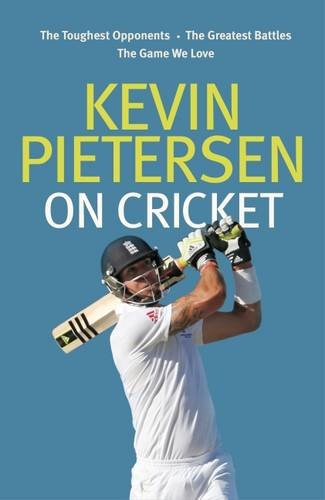
I’ve just finished KP on Cricket, and watched Being Kevin Pietersen (should I sue?) as England’s most polarising cricketer undertakes his next steps in visual and print media. The programme and the book, taken in isolation, are the usual media image portrayals which leave you annoyed at their lack of bite. Of course, though, neither of these are in isolation. Pietersen is not about to rehabilitate himself with anyone, and judging by these two pieces of work, isn’t trying that hard with those who he has no time for, and who have no time for him.
Let’s take the book first. Unlike the visceral KP – the Autobiography, this book took days to finish reading. I really hate bad errors in books, and there is one on Page 2 – Francois Pienaar is named as Francois Pineda, and that gets you started thinking this is a lazy book. It actually isn’t, but I tell you what else it isn’t…. It isn’t what John Crace said, and what the Private Eye review said. Pietersen was exhorted, last year, to include more about the cricket than the arguments. Oh, if there wasn’t one press person expending crocodile tears saying “what saddened me was Kevin not talking about those great innings” there were dozens. So Pietersen does, and the press people by and large ignore it (other than to slag it off as an extension of his out of control ego).
I said in a comment to BigKev that it is a rather dull book, but I don’t mean that as being a book you should not read. When you’ve written a book like the autobiography there is nothing to compare to it. I’ve said about that book on a number of occasions, we mock the sportsman’s autobiography (while they are playing) for being dull and boring (I’m re-reading some of Alastair Cook’s initial autobiography at the momen), but when someone tells it as he sees it, people are shocked. Appalled.
In some places this book is all over the shop, and then in others it brings some interesting insight. I thought it quite re-affirming that the innings of his that I thought was the best (his 151 in Sri Lanka) was the one he did too. The one the English public refer to a lot, his 149 at Headingley, isn’t in the top five. He puts Glen McGrath in his World XI yet whenever he’s interviewed on him (most memorably in the Radio Five Live one with Andrew Flintoff in 2013) KP says McGrath never caused him many issues.
It’s not a book to build bridges. While he is praiseworthy of Swann the bowler, of Prior’s attitude to batting etc. he’s not giving Flower any praise, he’s not giving Moores any praise, and there’s no hint on contrition for the previous words. People will say his inclusion of Jimmy Anderson in his world XI, and his constant references to him as a genius, are just ingratiating. He’s generally nice about Cook, but not his captaincy, not even during this last summer. He clearly believes Cook is not a “flat wicket captain”.
There’s calls for franchise cricket in England, a somewhat silly request for 5 tests at home and 5 tests away each year (and then saying England, India and Australia play each other too much), and throughout there is constant reference to practice, practice, practice. I know of no-one who complains about Pietersen’s work ethic. The impression you get from the media is of a dilettante. A shirker. A natural talent. Pietersne isn’t a natural. He’s worked hard at his batting. He can over-think. He can go off the boil.
You know I’m a fan, and I make no apology for it. Pietersen writes the book the media “wanted” him to (did they hell, Pietersen’s thoughts sell papers, ads) and it sells much less well, gets much less attention and what it does get, is pretty negative. That’s why David Hopps’s excellent review in ESPN Cricinfo is so welcome. Especially this quote:
For those who previously condemned Pietersen’s autobiography as overly confrontational to now dismissKevin Pietersen on Cricketas merely an attempt to address his reputation as an outcast star player, just a cynical display of even-handedness and affection towards former colleagues, is an exercise in double standards, a refusal by his critics to accept he has any saving graces whatever he does. Damn him if he does, damn him if he doesn’t.
The book is worth reading, but if I’m being honest, I’d wait until you can get a cheaper copy. KP’s got enough money, and it isn’t a “must read now” like last year’s book.
Which takes me on to the television programme. Being Kevin Pietersen has been dismissed by the likes of Barney Ronay as a hagiography (the first three paragraphs of which needed an editor to tell him to stop being so effing pretentious), or by Mark Webster as not challenging. While no-one is going to confuse this with a hard hitting expose of Pietersen, it remains utterly remarkable to me that some of the things he mentions in the programme, which he’s been mentioning for 18 months, remain totally unanswered by his critics. Bullying? Swann makes one claim, Cook says he doesn’t recognise what he says, but noticably none of them call him a liar. Textgate against Twitter Parody account – the ECB look stupid. KP doesn’t mention the leaking culture, which like it or not, he was evidently a victim of (e.g James Taylor incident) in the TV programme, but again, in the book, it remains unanswered. What charges is he supposed to answer? The one’s about him giving “tactical advice on how to get Strauss out” which now none of the protagonists said happened and which Jessica Taylor brilliantly summed up as being “such bollocks”?
In the programme he is celebrated by no-one from the current era. And his critics will jump on that. All those that say good things about him are his older colleagues. Piers Morgan turns up as the least wanted character reference since Kenny Senior turned up to defend Brian Potter after the fire at the Phoenix Club. It painted KP in a good light with his team-mates, which is really horrible because, as we all know, he ruins every dressing room he’s been in.
It was worth a watch, won’t change many minds, and that’s the sad fact. We’ve wasted his last two years, not him. The fact is we’ve all been filling in the blanks. This will lead into the media stuff that we’re planning. How those blanks are filled, how the ECB were massively let off the hook, and how we cannot tolerate the something extra, different that he brings.
However, it’s a comment like this, by Webster, that needs challenging:
it is ultimately too much like a documentary that is quite happy to simply be about an exceptional England international cricketer who believes he has has been unjustly slighted. And doesn’t mind telling us
That is because, Mark, we’ve never been told. He says he’s never been told why. The comment put to him about not being a player we could build around, was answered. It then became about “trust” instead, though what he could or could not be trusted is another example of fill in the blanks. You can’t challenge KP’s side when the accusors have never provided the slam dunk evidence. I think berating a bloke for putting his side of the story, when the opposite side tried to leak their’s through the dodgy dossier which was ridiculous, is slightly unfair. But hey, I’m a fanboy. It’s now about the book, apparantly. Well, I’ll let SimonH say what he thinks of that, as he so eloquently did on Guardian BTL.
And those things remain. And so will KP in my memory. He played too many, and I saw a few, great innings for the small-minded haters to taint. Just will not happen.
England win the ODI series 3-1, and did this in varying styles. We dug a game out from a troublesome position, we set a middling to good total and bowled well, and we smashed a massive total which was never really under threat. That’s probably the most pleasing point from this series, and lets leave aside just how good, or not so good, the opposition might have been, and shows there isn’t just one way this team can win.
Having said that, our batsmen are going to win many more games than our bowlers. I’m sure that’s not an exclusive revelation, but the bowling is still capable of going for plenty. It did against New Zealand, to a lesser degree (and that might be down to the change in regulations) against Australia, and it may well do again when the human cyclone that is AB DeVillier reaps his storm.
To quote the mystics from May “there does not appear to be any vacancies in the batting line-up” at present. Don’t worry, pearl clutchers, I’m not mentioning him. With Hales and Roy at the top, Root at three, Morgan at four, Taylor at five, Buttler at six, Stokes at seven and Ali at eight (with Rashid maybe at nine), that is an exciting batting line-up. It could do serious, serious damage. If either of our spin bowlers could become regular wicket-taking threats, we’d be in a really solid position.
What you will get with this batting line-up, as you probably will with most, is brittleness. I’ve seen Jason Roy enough, as have most of you now, that he will go early quite regularly. I’ve compared him many times not to you-know-who, but to Ali Brown. If England had stuck by Brown, took the rough with the smooth, and not bowed to the usual staid and boring methods, we’d have had a winner. I’m convinced. I saw him play enough when I was a Surrey member, in county championship and one dayers, to see it. Roy is a talent. But even yesterday, he started a bit dodgily, with two inside edges flying past his stumps. He was out second ball in the first match. It will happen. We need to stick by him. It was brilliant to see a Surrey man make a hundred for England. Not counting who I can’t name, it might be the first international hundred by a Surrey man since The Thorpe in 2004 at Durban. I think!
At the other end Alex Hales also made his first ODI hundred, and without it we might have been in strife in that game. Hales is again going to be hit and miss, but his hundred was pretty mature in many ways. He got himself in then let himself go. Hales is likely to open, we think, in Durban next month in the test team (though I still remain to be convinced they’ll take this mighty plunge) and we should see what happens (although we might not like the answers). It’s tough to get a huge feel of a series I could only watch on highlights shows, but Hales seems to be finding his way. It still beggars belief that we haven’t had that faith in him for longer. But that’s history now. What I would say is I thought the reaction of the England camp afterwards was a bit OTT. Hales has a long way to go, he’s not there yet, but the upside is phenomenally exciting.
Jos Buttler’s hundred yesterday was amazing, even on highlights. Good grief, what a talent. Some of those shots are played only by the true greats of ODI cricket. That reverse sweep when he barely moved his feet and just belted it behind backward point was staggering. Also, when he got the free hit, he just took a look at the ball, and guided it behind square for four when many others would have looked to belt a six. Brilliant shot selection, awesome power, so many weapons at his disposal, a calm head, what on earth is there not to like. It’s lazy to compare him to Gilchrist, just because they are keepers who can bat. I’ve not really seen anyone like him to be honest. The travails at test level are mystifying, but I pray he gets through them. My real fear, and I hope it is not going to happen, is that he’ll be pigeonholed as an ODI player now white ball cricket is a priority. No-one doubts that Bairstow is most likely to keep in Durban.
The other batsmen weren’t needed so much, although Root was his usual solid self with half centuries, and Taylor won the sort of game we’ll need him to win, where his ability to manouevre the ball around with what looks a more solid technique, is going to be important. He’s no slouch when you need to get a move on, but he’s not the unleashed havoc of Roy, Hales, Buttler and Morgan.
The bowling coped without Finn, Wood or the two senior bowlers who may have played their last ODIs (although neither have retired). It remains to be seen if Willey and Topley are the answer, but they aren’t letting anyone down at this stage. Moeen Ali is still such a promising talent, able to make ODI hundreds and to bowl his share of overs that you can’t imagine the team without him at this stage. Rashid is going to be a daisy player. Some days he will go well, some days he will go far. South Africa will be a real test. Woakes seems like a squad player to me, but others really rate him. It’s nice to have a decent player like him in the wings (a little unfair to compare him to a bit and pieces player), but you can’t discount that he can bat (same as you can’t do that with Willey).
It’s promising, it’s pretty exciting, it’s the coming through of new one day talent, meshed to those who show aptitude for the format already. It is important that this is allowed to settle, but also not to be a closed shop. Bairstow is a fine ODI player in my opinion, especially when on form. I am intrigued by Billings, and would like to see him given a go in an elevated batting position (I think he might be the long term answer at test level – just a hunch based on the limited amount I’ve seen).
But, despite all this, I don’t get that sense of excitement that compares any way to test cricket by people out there. Sure, no-one can be anything but enraptured by Buttler’s hitting, and our two openers making hundreds, but it’s a fleeting thing. That was the point of the two pieces over the previous weekend on white ball cricket. No doubt if this team continues to perform like this, there will be a lot of excitement, and perhaps the new ODI team will capture the imagination. It’s probably sad, but true, that this team will face a firm examination in 2017 when the Champions Trophy returns to these shores, and a failure at that will have much wailing. England and its media don’t particularly like stability. Thus far stability has paid handsome rewards, as Strauss’s backing of Morgan shows.
The test squad raised some comments, and if time permits, I’ll be commenting on that. But well done to the ODI team, there’s something to hang on to, they’ve beaten what was put in front of them, and that’s all they can do. That it’s an exciting batting line-up (and I’m biased towards batting) is something to look forward to. See them all again in January.
The morning after the KP documentary. Interested to hear any thoughts on that.
Main order of business is today’s ODI in Dubai and a chance to seal the series. An absolute pain that these games have all been on when I can’t watch so I rely on your views.
You lot don’t know what goes on behind the scenes. WordPress have changed the post drafting interface again. Jeepers. Leave it alone, peeps.
Anyway, enough of the moans, here’s your comments space for the third one dayer to be played in the venerable old stadium in Sharjah, scene of famous triumphs of the past, and an unimpeachable reputation.
The series is level at 1-1 as England revert to glorious inconsistency. The glimpses of something are there, almost tangible, but not quite. Alex Hales made his first ODI hundred in the second match in Abu Dhabi, while Jason Roy made a half century. We’ve rather been here before with Hales, when that T20 century against Sri Lanka made his future selection almost irresistible (but resist we did for six months), but the England man he reminds me most of, Ali Brown, made a century in his third international and it was, with a couple of exceptions, all she wrote. Hales will certainly be backed for much longer than Brown, and we should wait for Roy too. But as I noted on a separate Twitter feed on another subject, Quinton de Kock has eight ODI hundreds and isn’t 23 yet, while Hales is 26, and this is his first. I love watching Alex play, but the press have over-reacted again, pumping up his tyres, asking us to sort of forget some of his early struggles.
Bowling was also a concern after game one, but those extra runs and the early wickets certainly made the task easier. These guys have Wood and Finn to compete against in the not too distant future (Broad, I think, won’t be tried again) so competition is there, which is good.
Pakistan? Well who knows which team will turn up. They are like England at the moment, rather unpredictable.
We also have Day 5 of the Australia v New Zealand test, which looks nailed on a draw. There is Day 4 of the water polo match between India and South Africa.
Some upcoming news. TLG is nearly back from his manic workload and is working on a major piece, or pieces, on the cricket media – a subject we know nothing about. It’ll be broad in scope and take some work, so keep checking in. I’ve written up an introductory piece, with the interaction between the blog and the media its focus, while also finally announcing the top 10 worst journalists, as voted by you (and me).
I’d also like to thank all of you who contributed to the ODI pieces at the weekend. I’ll do a couple more bringing the pieces together, and perhaps one on T20s to coincide with the Pakistan v England series. And, I know you all want to see this, The Bogfather has written one of his poems (not the filthy ones he puts on Twitter) and it will be coming (oooo er) to you soon.
My Last ODI – Did Anyone Care? – A Dmitri Old Picture
Following on from yesterday’s piece on the Strauss interviews, I thought I’d do a little bit on the other issues that surround the game in this country. The chief of which is the curious case of mismatch of interest.
All through the World Cup there were people on the Twitter feed saying that they really didn’t care about how England did, because, in their words, we’ve always been useless at this sort of thing. Yet, whenever there is an ODI match in the UK, in the main (not always, I know) these are really well attended. People do like watching them, but at the end of the day, do they care? And it is that care that makes the task of Strauss very, very tough indeed. There are going to be no campaigns to sack a one day captain – and as I write that I recall Alastair Cook, but let’s treat that as a special case – and one day form is seen as being somehow inferior to being in test form. Whereas the rules of test cricket have not changed hugely, barely a year goes by without some tinkering with field placements, powerplays and, of course, the hugely lamented supersub is inflicted on ODIs. The format itself seems insecure.
We seem alone in caring so much about test cricket, but are we really? Are we equating attendance at a fixture with the amount the people care about it? After all, T20 matches are ten-a-penny, but are well attended, but are you as awfully upset if your team loses one of them, as you would be if your team lost a key longer-form game?
Test cricket does not have a world championship, so the idea of who is the best is determined on a rolling basis, which people find incredibly hard to understand how it works. At the moment the world ranked number 1 team is South Africa, who are being given a bit of a beating in India. England were number 1 for a year, in which their first series as top of the tree brought about a 3-0 defeat in the UAE. We are now ranked number 6. Whenever the reign of Strauss and Flower is brought up. being number 1 test side in the world follows. But at the same time, England were ranked number 1 in the world at ODIs too, and that’s never mentioned at all. We reached the final of the Champions Trophy, and choked in a T20 final masquerading as an ODI, and yet that’s dismissed. No-one placed any value on it.
Because, let’s face it, in ODI cricket all that counts is the World Cup. It’s the importance of that once in four years championship that conquers all. The main reason, one could call it a priority reason, Strauss gives a stuff about white ball cricket, if you ask me, is that we are at home in 2019 (and the CT in 2017) and failure there would make him (and not the suits above him) a laughing stock. It’s why the next world event, the World T20, is barely given a passing mention. It’s in India, we don’t play well there, so who cares?
Can you make people care?
The grave danger is that you might not be able to. Caring is about losing, not about winning. Everyone feels nice when their team wins, but caring is about how you feel when they lose. I’m a Brian Lara fan, so when Warner was 244 not out after one day, and playing like a God, and he’s a player I’m not that fond of, I would care immensely if he lost the record to him. If it were Hayden’s 380, I’d be willing Warner on, but only to make 381. I’d care because I loved Lara. Now, as you know, what the ECB have done over the past 18 months meant that I have ceased to care about how England perform, so that on many occasions, my sense of misery after they lost has diminished. Getting that caring back is much harder than losing it.
But even during my peak times of fandom, did losing hurt that much? In tests, oh yes. If asked what was my lowest moment in sport while I was at the venue, it probably would have to be Stern John’s goal in the Play-Off Semi in 2002. I gave enormous amounts of time and money to my club, knew that goal would likely mean the break-up over time of that squad, and we lost our shot at the Premier League. But running it close was the Adelaide test of 2006. While some make light of it with their “it never existed” meme, the agony over six hours of watching that demise is still immensely painful. There are pieces to be written about it still, but it was shattering.
He never bloody hit this, Bucknor – A Dmitri Old Picture….
I have been to a few, not many, ODIs, and the most memorable, if you will, was the England v New Zealand game at The Oval in 2007. This was the Elliott/Sidebottom game, when Collingwood upheld an appeal, but New Zealand somehow won by one wicket in the last over. It was an exciting game, it was won off the last ball, I believe, and yet….. I’ve never been back to an ODI. Both Sir Peter and I were of the same mind. It was a great game, but it never mattered. It’s almost fandom-lite. You can watch a spectacle, admire it’s good parts, tut-tut at the bad, but you never gave a stuff. Not really.
This is where the fandom gets personal. I watched the Ashes series this summer with a bit more detachment, and thus found it hard to fathom why fans were going so mad over two wins on green tops (I think the Cardiff wicket was fine for both teams, actually, and was a superb win by England). I would have been more delighted if we’d won in UAE as that would take some doing, just as India in 2012, Australia (for all their faults) in 2010-11 and the wins in Pakistan and Sri Lanka 2000-01. And yes, Australia at home in 2005 with that team, which, remember, one tweeter memorably said he’s wished had never happened! All supporters are different.
Care does need to be taken, because ODIs are too frequent, too many played with not enough riding on them, quite often without main stars who are rested. If authorities treat them like this, then why should anyone care? While people go on about tests lacking context, the only context that seems to matter on ODIs is how often can we put them on while keeping grounds nice and full. When you have a billion people across India, with ODI grounds a plenty, that special occasion might be a local thing. In England, the ten or so we put on a year are often tucked on to test series, and seen as the dying embers of a tour.
I come from an era when the county final on the first weekend of September was a massive occasion. Then, when people pointed out that bowling first nearly always won you the game, people found holes in it. The glamour of the occasion died. It’s now a sad, pale imitation of what it once was. Yet that is the format of the game that gets the crowds in at international level! It was failing well before the T20 era, before anyone lays the blame firmly at that door.
It’s not just cricket. Millwall, my team, got to the FA Cup Final in 2004. For a fan like me, the win at Old Trafford against Sunderland was a highlight of my supporting life. Never has 45 minutes passed so slowly. We were well beaten in the final, and as we got our buses back to the car parks in Cardiff, a load, and I mean many, Manchester United fans walked past us, almost solemn, almost disinterested. I said to them “cheer up, chaps, you won the FA Cup!” because people of my age saw this as a highlight of any season. One snapped back “We’re supposed to win this sort of competition”. Clearly, in Arsenal’s invincible season, winning the Cup wasn’t enough. It didn’t matter to them. In one instant, the new football was laid bare. I’d denied it was really true, denied it when I went to cup ties and the attendance was shocking, denied it when clubs played reserve teams, but it was true. Something I cared about, didn’t matter. I’ve scarcely cared about the Cup since (I do believe Manchester United have never won the Cup since).
So, to get back to cricket and the ODI priority. Strauss has seen 50 over cricket’s importance diminish over the last 15-20 years, so there’s no domestic base to give a stuff. T20 matters a little, but does it really? You’ve got 14 games a year to play of that. At international level, the series have on context, with players often rested due to crazy schedules. The competition only seems to matter when there are a mass of teams on your shores battling it out, and even then you constrain who can play there. Why make such a fuss over something we don’t seem to give a fuss about? Why prioritise something that the people who watch may never think is a priority? Good luck Andrew.
I was researching a piece I intended to write last night, when the news from Paris started to filter in. I find, like most of you no doubt, that stories like this consume you, so the piece took a back seat. Now I’m struggling to remember what I’d heard, so if this doesn’t have some flow, forgive me. Naturally, last night’s events hit home. That’s us out there, eating and drinking, going to concerts, watching sporting events. The world is a potentially horrible place.
This piece is on Strauss and his ODI comments.
I wasn’t concentrating on cricket much towards the end of the week, which is a bit of a problem for a cricket blogger! Work and social stuff took over, but I couldn’t help but notice some of the reactions on here, and on Twitter, to a round of interviews that Andrew Strauss conducted during the 1st ODI (or just before). So last night I listened to the Agnew interview and the one with Nick Knight.
The confusion I had was I thought the line to take from these interviews was that Strauss would prioritise (and he used that word a lot) “white ball cricket” because if we didn’t we would fail again in the World Cup in 2019. Many of you on here took this to mean that players could miss tests to play in the IPL or perhaps the Big Bash to get experience of top quality, pressure-filled cricket (Mike Walters in the Mirror certainly did). This certainly wasn’t dampened down immediately, but then, yesterday Strauss made it clear that he was not suggesting that England would weaken their test team to allow this to happen.
“I can’t foresee any circumstances in which we would weaken our Test team in order to allow a player to play in the IPL or any other franchise-based competition.” Strauss…BBC
The cynical among us, and that numbers me, might note that the two day period between the airing of these interviews, when the position wasn’t made crystal clear, and the clarification offered yesterday was deliberate, to see how the position went down when allowed to float, or Downton-esque and a cock-up. Whereas Downton was a buffoon from the outset, I’m absolutely convinced that Strauss is, if nothing else, a sharp operator. Leaving that position open (ish) was probably quite an astute move to see if some of the big beasts roared. I don’t think, for one minute, Andrew Strauss wants Joe Root and Ben Stokes to play in the IPL (the only two test certainties that will play international white ball cricket and possibly get picked). Jos Buttler might also be sought to play in the IPL but his status as a test player is in jeopardy. The test team is our money-spinner and to mess about with that, even in the early season test series, opens the door to much in the way of consternation. Remember when we rested our bowlers against the West Indies at Edgbaston a few years ago? Some people went mad!
KP’s interjection at this point, while understandable, probably wasn’t well judged. I’ll leave it there at this point and may return to it later.
The thing that concerned me was Strauss and his non-stop mentions of the word “prioritise”. What does this actually mean? Strauss claims that the model to follow appears to be the Australian one, where they can play well in both formats of the game at the same time. He takes the message that Australia prioritise the game in the right way and his takeaway is that we should seek to specialise our white ball cricket. This, clearly from where I am sitting, means two almost separate units, with very few players playing in all formats of the game.
Let’s leave T20 cricket as an outlier at this time. That’s a format of the game Australia have never succeeded in because they seem to play another different team entirely for that (and pretty much have treated it like a joke – but a productive one – see David Warner). Australia’s ODI winning team lined up as follows:
Warner (current test opener), Finch (specialist), Smith (current test batsman), Clarke (then the test captain), Watson (then the test middle order bat), Maxwell (played tests, but seen as specialist), Faulkner (played tests, in their thoughts), Haddin (then test keeper), Johnson (test bowler), Starc (test bowler), Hazlewood (test bowler).
Arguably Australia had two out and out white ball specialists, and one (Faulkner) who has made his name in that game (but I’m sure is in their thoughts for test cricket). This may change given the retirements – Wade will probably be ODI keeper instead of Nevill, Khawaja isn’t, I think, seen as an ODI batsman, and it remains to be seen if Burns can force his way into the white ball arena. Voges isn’t an ODI player for the future. But what is clear from the above is there isn’t the separation of powers that Strauss seems to think is vital.
Looking at their opponents in the final, New Zealand, the specialists were Ronchi and Elliott. Vettori was playing ODIs to end his career (having been a prolific test player) but all the others are in the test reckoning. There really aren’t that many “specialists” like a Kieron Pollard or a Quentin de Kock.
Strauss wants to bring this specialism to the fore and I think it is dangerous. One of the names he mentions is Jason Roy. At this stage he’s shown ODI promise without delivering the big innings, and it is a great credit that England are going to stick with him. I remember how we treated Ali Brown, and I still get livid about it. We wanted a pinch hitter, but when it went wrong he got slagged off. I think it is too soon to give up on Roy as a potential test player. I don’t think he’ll get there, but in red ball cricket, he has been a bloody important player for Surrey. He plays that innings in Surrey’s line-up that demoralises the opposition. He will fail, but sometimes he will succeed. Strauss appears to be pigeon-holing him as a white-ball specialist very early. The same may happen to Alex Hales. What if we have a new player who comes in as an ODI player, is whisked off to T20 competitions, and yet he could be a test player in the making? All through this I look at how we’ve treated James Taylor to the point that at this stage, we don’t really have a scooby (clue) what he is.
I don’t have to tell you that I’m not a fan of Strauss. I’m also not going to pretend that he’s another Paul Downton. There’s a lot of good thinking in what Strauss is telling us, but he’s a politician to his boot-straps, and management consultancy is in his DNA. The latter seems to make sports journalists go weak at the knees. A man only has to come in, spout out about culture and environment, talk about processes and evaluation, and set low goals, and suddenly he’s a guru to be listened to, a beacon to follow. I call it Lancastrianisation. The aim is stuffed back donkeys years, and when you get there, well……
So much has been written about the Rugby World Cup that it’s almost become a spectator sport. Look at what Lancaster and the RFU did, and do the opposite might be a better lesson to learn. They cut off the talent pool by putting in restrictions on selection, they identified a lot of players (who weren’t good enough), they took multiple second place finishes and close losses as evidence of progress, they then brought in a wild card to show they were innovative, and made last minute changes to the team, and they collapsed in a heap. The journalists in that sport, a lot who make cricket writers appear like meek and humble people, have hardly aimed fire at Lancaster. If half the vitriol that Paul Ackford aimed at Sam Burgess for example had been aimed at Lancaster, well…..we might actually be admitting where the problems lie. Meanwhile, the head honchos in the RFU remain. So while cricket gazed on admiringly at this nonsense, they perhaps need to “refocus”.
What I also found funny was Strauss saying that prioritising ODI cricket for a World Cup would be a new approach. Now it is if you do it a long way out, but in 2014-15 we played no test cricket for six months. We prioritised the ODI game and yet it didn’t work. So prioritisation isn’t new, it is now a different kind. But that’s classic management speak – the past is not to be referred to, and all things have to be new. There has to be change. Change. A word I never want to hear muttered by a manager or administrator again in my life.
Managers also make tasks sound harder than they might be. Strauss sets the bar low (we had a miserable World Cup – while forgetting we got to the Champions Trophy Final last time around) and then makes it sound like the way out is absolutely nigh on impossible. If you fail, well you tried, if you succeed, you are a genius:
“If someone is playing in the Test team or very close to the Test team, then that’s a harder decision to make. But let’s be honest – we’re not going to make massive strides in white ball cricket without making some hard decisions along the way.
“I think we have to be prepared to do that and I personally believe we can make those strides and not do it at the expense of Test cricket.”
So what did we learn. We’ll focus on specialists – so I’m assuming that’s Willey, Woakes, Roy, Billings, Hales, Topley and the skipper, Morgan. Perhaps Buttler if it’s decided that tests aren’t for him, and perhaps Bairstow if he drops out of the test team. The portents are not good – Luke Wright and Ravi Bopara are two that come to mind – but if Strauss is serious about attitudes to the game, then fine.
Nick Knight, in his interview on Sky, raised the T20 World Cup, which seems to be something hardly mentioned in the corridors of power. So the management consultant assured us we had great talent and had a real chance. But the words he spoke at the end of the piece were the ones that sparked the rage in me….
“I think we’ve pretty much identified the group of players we want to work with in the short term. It’s important we give them opportunities to develop.
“It would be wrong to be searching in very different directions right now. Of course, that doesn’t mean it’s a closed shop in the long term.”
The World T20 is in March. We have a T20 player scoring hundreds. He’ll have plenty of big game T20 experience. He’s absolute class. He’d walk into this team in normal circumstances. I’ll quote Peter Miller from his excellent podcast with Daniel Harris last night – England would rather lose cricket matches than pick Kevin Pietersen. For that, KP is correct when he says:


 Being Outside Cricket