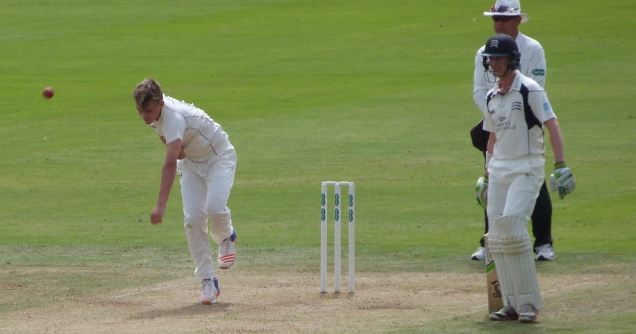
England v Pakistan: 3rd Test, Day 4

You got Dmitri today. Poor you.

It was an odd day, a day of contrasts, a day where the ebbs were certainly deep, and for a long time the only flow was the bowling of deliveries as far from the batsmen as possible without being called wide. The plan at the start of the day for England was to build on last night’s superb work by Cook and Hales and then push on. Cook seemed to be invoking the memories of last year’s innings at Lord’s against New Zealand, and Hales needed a score to confirm his place more emphatically. That both fell early clearly put that plan back, but then came the rather dull passage of play that made me scratch my head and wonder really what is happening to test cricket. Fear of losing took over from taking control. Pakistan, in my view, retreated into their shells when they had a modicum of control. England were effectively 23 for 2. We were in a pickle.

Now I’m one who does appreciate the nuances of the game, but this passage was infuriating, and it wasn’t really England’s fault. There are lots out there who marvel at Misbah, and for bloody good reasons, but the attitude to the new occupiers of the crease (Root and Vince) turned Misbah negative after such a positive start. The pre-lunch session was pretty tedious stuff. Nasser Hussain broke his Twitter silence to say how much he admired the performance of Misbah in that session, and I was surprised, to be honest. It declared, at least in my eyes, that Pakistan were going to rely on England giving it away than them seizing the moment. We mock Warne a lot, I know, but I thought it was a slightly defeatist approach. It was sitting in to the nth degree. England might have felt some pressure, and yes, Root was dropped during his knock, but both Vince and Root (struggling with his back) felt little pressure to survive. Both laid excellent groundwork, but it was dull stuff.

Root’s dismissal, to a sweep, may have been seen as some justification for the negativity, and Vince nibbling at the new ball might have put England into a tricky-ish situation again (at 257 for 4, with a lead of just 154). However, Bairstow got himself in and with Moeen Ali as a fluent, focused ally, took the game away from the visitors with a wonderful post-tea stand. Ballance’s innings of 28 also stabilised matters, but people are so worked up about looking for repeat dismissals that the work, although incomplete, he did to prevent a collapse is underestimated. I much prefer 28s and 42s to single figures!

England finished the day at 414 for 5. I had to go out for the last half hour so not sure how many overs we were short today (if any), but England are 311 in front, which is probably enough now (but no way we declare overnight) and will dictate matters tomorrow. Again, we aren’t about to set the Cook Fan Club up in these parts, but in many ways he must dread these situations. England dug themselves into a hole, and got out of it, and it would be crazy to throw that away with a declaration that gives the visitors a sniff. Their bowling today, in my view, doesn’t earn them a shot we gift them. But he knows that for every minute he delays the declaration, the siren voices will be ringing in his ears. My view, is 45 minutes of 40 runs, whichever is the quicker. I’m sure you all feel differently. But however this game goes, Cook is going to be in the spotlight. Win it and it’s one of our better ones, draw it with 7 or 8 down, and the questions will be there if he delays the declaration.

Other observations – for every decent insight Warne provides, and he does provide some, you have to navigate a mass of noise to get there. Post-lunch him and Botham just pounded at my head with incessant, dull nonsense. When they handed over to Holding and Athers, I could relax. The art of letting the action breathe, dull or exciting, is lost on Warne. In his case, less would really be more.

Seeing an Edgbaston crowd like that on a Saturday was also a little concerning. At £31, and I’m not sure how many seats were available at that price, this is excellent value for a day out. Maybe its the fact that tests have been on the short side recently has made people unwilling to commit to a fourth day’s action that prevented the full house, but if you can’t sell out a Saturday in advance at Birmingham, there’s issues. I really believe that each test in England has to have two of the first three days play at weekends, and starting on a Wednesday is asking for it. All tests should start on Thursdays and Fridays, but in the crowded schedules, I might as well ask for the recall of he who can’t be mentioned.

Game on tomorrow. It could be great. It could be dull. Imagine how much more dull it would have been if this was a four day test. You know those – the ones where we’ll compel teams to bowl 100-105 overs a day when we can’t make them bowl 90 now. Those where any rainfall is going to condemn a test. Those where we have to create more daylight (Durban, UAE for example….) than we have now or make every test a pink ball pandemonium. Michael Vaughan’s text, which I linked on Day 3’s post, sums it up. Thought went out the window a long time ago. It’s all about the Benjamins Baby.

Final Day comments below. I attach a little picture from yesterday at Lord’s, just for the hell of it…..

P1070429
He had a good day today….Sam Curran yesterday.

England vs Pakistan: 3rd Test, Day Three

This blog has been on something of a mission to talk about over rates over the last year or so, but even by the woeful and unpunished standards of that time today was something special.  Only 81 overs were bowled in the day, and that was thanks to the innings change being at tea, otherwise it would have been in the seventies.  That is 10% of the day’s play not completed, and rightfully there has been much comment about it.

Yet it is merely an extreme example of something that is considered acceptable.  In no other sport would this go on – can you imagine a football match finishing after 81 minutes for example?  People have paid good money to go to these matches, and they are being shortchanged repeatedly.  What normally happens is that the match referees take into account delays such as reviews, repairing the bowlers footholes and so on – but this is nonsense.  The additional half hour is there precisely to cater for such things, it is not part of the playing time.

No excuses, no justification.  Today is merely an extreme example of the game not giving a stuff about those who pay to watch.

During what play there was, England actually had an exceptionally good day, perhaps even more so considering it wasn’t one of those magic days where nothing can go wrong.  Instead, on a pitch that has shown no signs whatever of breaking up – indeed it appears to have got flatter – they worked hard and stayed in touch through the dint of those efforts rather than anything extraordinary.  The wickets were shared around with the exception of the luckless Finn who cannot buy one at the present and suffered yet another dropped catch towards the end.

Woakes again was excellent, Anderson was miserly, and Broad showed what he has added to his game in the last few years – namely the ability to keep things tight and pick up wickets even when not at his very best.  Broad in particular is one of those divisive characters who gets criticism despite having a truly outstanding record in recent years.  He has a bowling average of 22.69 in the last two years.  This isn’t just good, it is truly world class.  Yet he still gets stick when he has a less than perfect day.  It’s hard to know what more he could possibly do to win the detractors over.

For Pakistan, a lead of 103 might have been less than they had hoped for, but it would have still been an immensely satisfying outcome from the first innings.  Stats can be manipulated to express a desired outcome, but the one that only 3% of matches have been lost by a side taking a lead of 100 or more does emphasise the strong position in which they found themselves.

It could have been better still – Misbah continued his one man mission to give hope to all those over the age of 40 with another good innings, cut short rather unluckily from an inside edge that deflected off pad and heel back on to the stumps.  After his departure the innings began to fall away, despite the best efforts of the increasingly impressive Sarfraz Ahmed, ultimately left stranded on 46 as the tail fell away.

Flat as the surface was, England were in some difficulty with the match position, and Cook and Hales deserve immense credit for batting to the end of the day without either being dismissed.  Pakistan’s bowling could have been better certainly, but there’s always the temptation to lay the blame on the opposition rather than praising England.  Confining Cook by not bowling anything wide of the stumps for him to cut is extremely easy to say, and not terribly easy to do.  The way Australia managed it in 2010/11 was exceptional – but that is not normal, or cricket would be a far easier game than it ever has been.  Likewise, Hales may have a weakness outside off stump, but he batted with good discipline and reined his instincts in.  In some ways this was his most impressive innings to date in the Test side.

So with England now in the lead with all 10 wickets in hand, it could be argued that the match is now level, and numerically this is so.  But psychology plays a funny role in cricket, and an effective 17-0 it may be, but the effort in getting to parity cannot be overlooked.  England have made a very good start, but 120-0 can all too easily become 150-3; still not a bad innings but in the match context 50-3 is back in trouble.  Therefore for England to get into a good position they will need to bat exceptionally well tomorrow too, they are the vulnerable team in this match still.

The draw is now a good possibility though, with two days remaining it’s hard to see circumstances where England are sufficiently comfortable to be in a position to declare, so at worst Pakistan will likely have less than a day to bat should things go perfectly for England.  Pakistan remain the most likely winners, and perhaps England’s best chance of victory is to be bowled out, sometime towards the end of play tomorrow.  Another 300 would represent a perfect fourth day and be a stiff target.  But another 300 would also require England to bat out of their skins.

This could yet become an exceptionally good Test match.

Day Four Comments Below


England vs Pakistan: 3rd Test Day Two

Predicting sporting contests is a fool’s game much of the time, though it remains fun to do.  The very essence of sport is that the unexpected happens, otherwise there’d be no point watching or participating.  Nevertheless, the degree of certainty so many had that England would prevail in this match before the start was rather peculiar, apparently based on the undoubted hiding that England dished out at Old Trafford.  When Pakistan put England into bat, it was called defensive, when England were bowled out on day one, it meant that England would do the same to the tourists on day two.  It is as though Pakistan’s victory at Lords never happened, as though they were merely cannon fodder for an all conquering home side to swat aside.  Some even predicted a 7-0 Test summer, as though Pakistan were no more of a threat than Sri Lanka.

England are not out of this game by any means, the late wicket of the excellent Azhar Ali made the day slightly less dreadful than it would have otherwise been, and with Pakistan still 40 runs behind the possibility of early wickets in the morning with a still fairly new ball remains.  But England desperately need those early wickets for if they don’t get them they are in serious trouble, even if Pakistan are the ones having to bat last.  All things being equal, by the time England are batting again, there should be a little more help for the spinners, and one of the notable things about Moeen Ali’s bowling today was that while it wasn’t hugely effective, he was getting bounce occasionally, and bounce is a considerable danger when utilised by an outstanding spin bowler.

It had all started so well, Mohammed Hafeez slapping a wide long hop straight to Gary Ballance at point, but after that it was all Pakistan.  Sami Aslam impressed mightily in only his third Test match – and startlingly, he hasn’t played a first class match since December.  He looked every inch the Test opener; compact, technically sound and perhaps as important as anything else, he left the ball superbly.  England didn’t look like getting him out, so his partner did it for them, running him out with a dreadful call, albeit Sami could have backed up a little more.

Should Pakistan bat well tomorrow, England have another potential problem, for Anderson has received two warnings for running on the pitch and another will see him banned for the rest of the innings.  Anderson himself didn’t behave terribly well, and subsequently said that he’d apologised to both umpires.  Whether that is enough to distract the match referee remains to be seen.

The not out batsman overnight is Younis Khan, and it is hard to decide whether it is amusing or painful to watch his batting travails at present.  He looks hideously out of form and is fighting with himself every ball he faces.  His batting technique is all over the place, jumping in the air constantly, weight distribution somewhere around the inverse of what it should be – yet he is still there.  To see such an elegant player battling this way is both impressive and worrying given his age.  As ever, when a player gets older he is given little time to simply be out of form.

One other small point:  the 90 overs were completed today.  That it is worthy of comment should in itself highlight the problem.

By the close of play tomorrow England could be in serious trouble, if they aren’t batting soon after lunch it will be a difficult match to win; if they aren’t batting by tea they are in dire straits.  Tomorrow is a big day for both teams, but Test cricket can and does turn on a session.  England will need the morning to be one of those.

Day Three Comments Below


England vs Pakistan: 3rd Test Day One

The trouble with day one of a Test is that unless one side has had a truly grim day every summary at the end of it revolves around it being too early to say whether the score is a good one, the toss decision is a good one or if the pitch is favouring one side in particular.  There are only so many ways to say that it’s in the balance and that after tomorrow we will know more.

Pakistan’s decision to bowl first certainly caused some raised eyebrows, but having bowled England out in a day will have viewed that call as being vindicated.  England’s score of 297 is right in the zone of being enough to be in the game but anything but a good score.  It could become a good score, if England were to bowl Pakistan out cheaply tomorrow, or it could be a bad score if they go past it – self evident of course, but still how it is.  The trouble is, saying as much isn’t about sitting on the fence, there’s nothing but uncertainty around how it will develop from here.

So perhaps the only indication is the relative happiness of the two sides – England trying to convince that it’s not a bad score at all, Pakistan reasonably content with their day’s work.  If that is an indicator then Pakistan could be said to have had the better of the day, and instinctively that feels about right, but not so much so that England are at this stage in any kind of trouble.  Likewise the strong criticism towards Misbah for electing to bowl had dissipated somewhat by the close, again suggesting that decision had – thus far at least – been vindicated.

Certainly England will be a little disappointed with the total, as much due to how many players got in and then got out again as anything else.  Cook started with rare fluency, and while Root’s dismissal was ascribed to overconfidence perhaps the same can be said of the captain.  He appeared in outstanding form, and that is so often when the mistakes come.  No matter, these things do happen, and all cricketers know the frustration of being back in the pavilion having made an error on a day when they felt they could do as they wished in the middle.

Vince again got in and got out, and again it was his flaw outside off stump that did for him.  His 39 was the opportunity to go on and make a meaningful contribution, and he didn’t.  He looks good, then he gets out, and while looking good tends to buy a little more patience (unfairly so, of course, but true nonetheless) than for less attractive players, at some point the chances run out.  Vince needs a good innings urgently, and he’ll be as aware of that as anyone.

Ballance is the antithesis of the stylish player, yet his 70 was the mainstay of the innings.  He scores runs, and while the 142 he’s scored in four knocks he’s since his recall won’t make too many headlines, he looks a far better player than the one dropped last year.  What is interesting there is that the technical adjustment appears minimal, and by some accounts he’s proven entirely resistant to attempts by others to tinker with it.  Confidence and faith in one’s own game is often far more important.  His dismissal was one of those often felt somewhat unlucky, taken down the legside off Yasir Shah by the rather impressive Sarfraz.  It was a good catch too, legside catches standing up are always prized by wicketkeepers – more so than stumpings much of the time.  The angle did allow that rarity when up to the stumps, time to adjust, but it was a significant deflection, and he will be pleased with that one.

Bairstow pushed too hard at a ball that wasn’t really there to drive off the back foot, and Woakes was probably due a failure.  Thus it was Moeen who was principally responsible for getting an unquestionably sub-par 224-6 to a perhaps adequate 297.  There may be better batsmen than Moeen around, but there are few as delightful to watch as he is.  He has that languid (and frustrating style) that is rather reminiscent of David Gower.  One item worthy of note here is that Moeen was today batting at seven.  Helped rather substantially by his unbeaten century against Sri Lanka, his average when batting in that position is now over 80.  The sample remains far too small to draw conclusions either way, but he wouldn’t be the first player to respond to being in the lower order by batting like a lower order player instead of the batsman that he is.

For Pakistan, the man of the day was quite clearly Sohail Khan – a 32 year old playing only his third Test and his first in nearly five years.  His time in the limelight may yet be brief, but there is a special pleasure to be had in seeing an unlikely successful comeback.  That he is a right arm bowler may have worked in his favour, after two Tests with solely left arm seamers for England to negotiate.  But he bowled well, deserved his success and his evident pleasure (and press ups) leaving the field couldn’t help but raise a smile.

The weather forecast for day two isn’t particularly great, and the England bowlers will hope to make the most of the leaden skies. Yet the England total is not big enough to prove decisive barring something extraordinary.  We may well have another good match on our hands.

And finally, the last England wicket fell with five minutes of play remaining, and 86 overs bowled.  Once again the required number of overs in the day fell short, even with the additional half hour, and once again nothing will be done about it.  Given that, we can assume that the ICC approves of literally shortchanging their paying customers.  It remains unacceptable, it remains disgraceful.

Day two comments below

England vs Pakistan: 3rd Test Preview

Perhaps the most welcome facet of the build up to this third Test is that with the series at one apiece it is both alive and very much uncertain as to the outcome. England may well have well and truly battered Pakistan last time out, but at least much of the press have learnt some lessons from the past and avoided the “momentum” cliché. One sided matches have little effect on the following game, indeed the Ashes last year seemed to provoke the opposite result. Therefore there is no particular reason to assume this match will go the same way.

Indeed, it could be argued that one very special innings from someone who is becoming a very special player ultimately proved the difference. Cricket is what it always has been, an individual game in a team context. A player can have an impact that decides a match, even if the coup de grace occurs a couple of days later.

Pakistan will feel that they had the worst of the conditions at Old Trafford and were beaten by a sublime knock. It happens, and even if it is a crutch on which to lean rather than the whole story, it still means that a fresh start in the next game ensures all possibilities are there.

That said, Edgbaston is a happy hunting ground for England, and a home victory, subject to weather, is probably where the probabilities lie. But a talented Pakistan attack have the capability of ripping through England in any conditions, particularly given the soft middle order. This match is subject to the same vagaries as all the others – two fine bowling attacks, two brittle batting orders.

Where England have had an advantage is in the lower middle order. That is best defined by the lack of comment that replacing the injured Stokes with Finn rather obviously weakens the batting, but only in the sense that it is now simply strong rather than ridiculously so. Moeen at a likely number eight is still a dangerous customer, though he could do with a few runs after his less than impressive dismissals recently. Woakes of course is simply having a golden run with both bat and ball, in the way all rounders seem to do.

Alastair Cook indicated that England would go in with four seamers and a spinner, suggesting that someone has had a word with the groundsman the pitch is not likely to favour Yasir Shah overly, though proverbially leg spinners do have the ability to turn the ball on glass. He remains a substantial threat, particularly given England’s continued vulnerability to it, Old Trafford notwithstanding.

Edgbaston is one of the more raucous, enjoyable Test venues to visit, and Pakistan should have plenty of support too. If the cricket lives up to the crowd, it might just be something special. Not every Test can be an exceptional one, thus far this series we’ve had one excellent match and one that was too one sided to be truly enjoyable, except for partisan reasons. Here’s hoping we are lucky and get a second good one.

Comments on Day One Below

Behind The Eight Ball

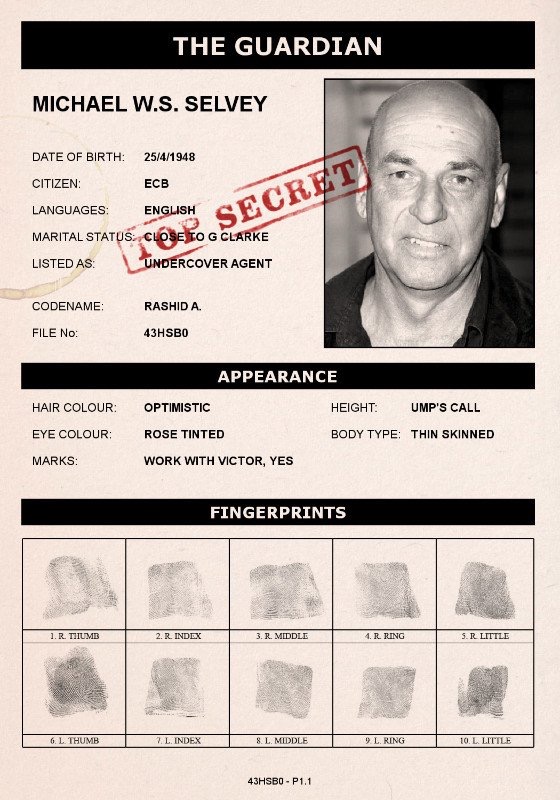
It’s hardly headline news to state that the national newspaper industry is an industry in serious decline, so it should be no surprise that one of the big beasts of cricket journalism should find out that his services (and likely hefty salary) were no longer needed by the Guardian a couple of weeks ago. Whilst I never like to hear of anyone losing their job, any tears will be tempered by the fact that Lord Selvey has no doubt received a decent pay off after 31 years of service and by the fact that he has shown himself through his various barbs on Twitter to be quite an unlikeable gentleman.

So how the situation arrived when newspapers such as the Guardian feel the need to cull their Chief Cricket Correspondent? Well the answer is a little more complicated than the fact fewer people read print anymore and fewer people take an active interest in cricket, although naturally these are actively linked; however this sharpe decline has actually been years in the making and brutally quick in it’s execution. If we go back just over 10 years ago, all this seemed a long way away. The Telegraph had a daily readership of over 900,000 and the Sunday Times had 1.6 million readers, both were making lots and lots of money through advertising (the recruitment advertising arm of the Sunday Times was making £500k a week on it’s own) and hey England had just regained the Ashes from the mighty Australia, so all was looking rosy in everyone’s garden. However if we bounce forward to the situation today, then things are certainly not looking rosy for both the national newspapers and cricket as a whole, so it is worth briefly charting the fortunes of both as without doubt cricket’s health is very dependent on the coverage that it receives the nationals.

What is clear is that the National press has been somewhat arrogant about it’s place at the top table for an awful long time. They felt that they were both the mouthpiece of the nation and the only place (alongside some TV and some Out of Home) where brands should spend their hard earned marketing money to reach their precious audience. The problem is that their arrogance made them spend a lot of their time attacking each other with faux clever marketing campaigns rather than looking at the bigger threats looming on the horizon (sounds vaguely familiar doesn’t it). If we look at things from a purely commercial point of view, all papers are absolutely reliant on advertising as their main revenue source, and from that advertising spend, print advertising is by far the most lucrative (most papers actually make a significant loss on their cover price) and hence any threat to this income makes newspaper owners sleep very poorly at night. This was where the first industry hit took place – the rise of Digital. As the industry changed and how people consumed media changed, the newspaper industry suddenly seemed to be stuck in an archaic rut with print audiences immediately starting to decline rapidly and whilst many owners put out shiny new websites fairly quickly, the money they could charge for digital advertising was a lot less than they could charge for print advertising. This was when the first cull started to happen around 2007. Things did calm down for a while as whilst the revenues they were earning previously were long gone, they still had a stable base of readers (either print or digital) and came up with new, more expensive offerings for the brands who still needed to reach their readers, which at least allowed them to stabilise their bottom lines. This was all fine up until a couple of years ago when the 2nd hit happened, the rise of programmatic advertising, and this is something that the industry has not and probably will not recover from. Automated, or programmatic buying has taken over the industry not only because it makes ad transactions more efficient but because it can make them more effective, as long as the right data is applied. Ad buyers can use programmatic buying to fan ads across the web and then, mid-campaign, evaluate what’s working best, which geographies, times of day, audience segments, publishers to narrow their target accordingly, so they’re paying only for highly effective ads. This has killed the national’s revenue line at a stroke, as all of these companies have the data they need to provide brands with the option to target a particular message to a particular audience at a particular time of day, something the nationals cannot offer and surprise, surprise their revenue has hit the floor and panic has well and truly set in. A serious bloodbath is about to occur.

So you may be wondering why I’m talking in such depth (and thanks for sticking with this) about the decline of the national newspapers on a cricket blog. Well you see all of this has been particularly bad news for our beloved journalists including many cricket journalists and for the sport itself. For many a year, cricket journalism flourished (their words, not mine) in some kind of alternative reality bubble, whereby they could post an article in print, good or bad, and then spend their time giving themselves a big pat on the back at a job well done. This was somewhat tempered when all of the posts started to appear online and various and sometimes quite derogatory BTL comments started to appear; however again many were happy to declare these people as loonies and carry on with business as usual (despite many being not, there were some fantastically knowledgeable contributors to the Guardian BTL back in 2012 before the mods moved in and many moved on). It was the advent of social media and in particular Twitter that really burst their bubble as they were now open to criticism from the masses, many of whom were both knowledgeable about the game and angry at the continued selective reporting, around the content of some of their articles. Some of the new breed were savvy enough to engage in meaningful conversations with those that questioned some of their writings, whereas some of the others, mainly the old school, decided that they would take the opportunity to shoot down any questions in as rude a way as possible. You only need to look at the childish level of language that Paul Newman used towards Tregaskis when the latter quite rightly accused the former of writing a total puff piece about Alastair Cook.
IMG_3934

Despite the inconvenience of having to speak directly to the masses, many of our beloved hacks have still spent their time cocooned in their own ivory tower, enjoying the hospitality of the ECB and occasionally getting to do their dirty work too; however whilst they had been cocooned away from the harsh realities of the real world, what they didn’t realize is that the power base they thought they were sitting on has gradually ebbed away. Firstly the amount of cricket correspondents was cut, then coverage of county cricket was cut to almost zero and now we’re in the situation where none of them should be sitting comfortably as even the big beasts are simply not immune to what’s going on in the real world as the sackings (or forced redundancy’s) of Selvey, Bunkers and Pringle et al clearly show. The ECB is fast starting to run out of hatchet men and who knows how safe Newman is these days. The other side of the coin is that there are a number of very good national journalists out there, again mainly from the new breed and it would be a terrible tragedy if the likes of Nick Hoult, Lawrence Booth and Ali Martin found themselves out of their jobs and stuck with writing titbits for the The Cricket Paper with it’s circulation of about 150. The signs I’m afraid though don’t look promising.

So why is this so worrying for the world of cricket? Well again, I suppose we can easily travel back to 2005 and the choices that our friends at the ECB (yes them again) have made since that time. The 2005 Ashes series was a classic and got the whole of the country behind our national team with over 8 million people watching 3rd Test of that series on channel 4. The problem for the ECB was that it didn’t fill their coffers so well, so of course they made the decision to get into bed with Sky and remove any FTA cricket except the odd highlights package from the home test (not that this is a particular criticism of Sky as on the whole their coverage is very good.) This at a stroke cut off access to the masses who had been captivated and excited by the cricket in that 2005 series (it also didn’t help that the national team then got hammered by the Aussies and then had a very lean time under the sorry stewardship of Peter Moores); however there was enough coverage within the national press to keep cricket, if not front of mind, then at least with a share of mind. However as soon as this coverage started to fade from the backs of the nationals with only 1 or 2 cricket correspondents per paper compared to a veritable army of football correspondents, then the impact that our cricketers had soon became invisible to the next generation of potential cricket fans. After all, it has been over 10 years since an England cricketer has been nominated for SPOTY, out of sight, out of mind, one may observe. This lack of coverage of the national game (the county game seems to be fairly obsolete in it’s coverage now, with either only a diehard set of supporters or those who would like to get drunk watching T20’s in certain parts of the country) coupled with the shameful behavior of our boards in the Big 3 takeover has meant that cricket is at it’s lowest ebb around the world. Overall, the decision to take all coverage away from FTA alongside the lack of coverage in the news has meant that cricket is now even more elitist than ever, the preserve of those that can afford to play (i.e. public school boys) or those that are well past their prime, have hung up their bat and are grudgingly willing to pay the exorbitant costs that Sky charge (i.e. me). Growing the game comes a distant second to a quick payday it seems.

Even more worrying is the fact that the ECB doesn’t seem to be able or want to do anything about it. The constant bickering and tinkering with the both the county and domestic T20 competitions is simply like re-arranging the deckchairs on the Titanic, it’s simply not going to get the numbers through the door outside of London or other cricketing hotspots. Their constant leaking of information from the ECB around those that ‘aren’t from the right family’ to it’s favourite attack dog – Paul Newman or the dull and meaningless and often supervised interviews with England’s so called superstars alongside their powder puff reporting on the game’s key issues really isn’t getting anyone excited about the game I love. As for social media, there is a decent hot bed of interest from the cricketing community, yet all we have a monotonous England cricket account and no real highlights from any of the games – way to go guys, ignore the most important channel in reaching out to generation Y, Z and the millennials, that’s a brilliant strategy in attracting new followers to the game! Another tick in the Tom Harrison “achievement” column.

This might not be the most uplifting article you’ve read in terms of the health of cricket as a whole, but the comparisons with the health of their friends in the national press are at best incredibly troublesome and at worst extremely frightening and this is not something that is going to go away like it or not. The ECB (and their friends at the IOC) have a stark choice, do something radical now to get people to the game, such as a better share of revenues to invest in grass roots, showing decent highlights on YouTube or Twitter from both red and white ball cricket and bring back some FTA coverage across the board or risk the total devastation that the national press has witnessed by sticking their heads in the sand and hoping things will go away. Time is running out and I only hope that it’s not too late already, because once the horse has bolted, we’ll all be staring at the empty gate wondering where it all went wrong.