The Fast And The Furious

There have been a number of interesting things, shall we say, that have occupied minds over the past few days. I note that in the comments today, for instance, there has been some views expressed on TV contracts and media relations; a request to talk about what is happening in Australia with Chris Gayle; and, of course, some general hilarity over some reporting and scoring.

I really didn’t want to say anything on Gayle. All has been said. His attitude to women, his tiresome nonsense meant long ago that I unfollowed him on Twitter. His approach is dreadful, and he doesn’t have a clue what the consequences of his actions are. Don’t give me straw men about women doing it to men too – they don’t get the sort of abuse women do who “make a big deal about this”.

Mark asked me if I’d given any thought to commenting on what has been happening in Australia. Yes, I’d given it some thought. But then who needs to hear another voice outraged at Chris Gayle’s conduct? Because of his actions female reporters are going to be scarred by it, abused for it, made, in some eyes, culpable for it and have to take the sort of stuff on Twitter I would have nightmares about (and no doubt they do too). Why? You can’t move on the internet for people sticking their views up. The initial reaction is incredibly important, and it isn’t a blog like mine that’s going to be a key player. It is those directly affected who matter.

This isn’t a bloody cop out. I listened to the podcast Dennis put up on his site. It’s powerful stuff. Listen to it. I can’t walk a mile in Melinda and Neroli’s shoes because I am not a female reporter subjected to this shit. I won’t be the one copping the abuse, the rape threats, the outright disgraceful misogyny that this stuff elicits. It would have been miles more effective in getting the message across if each newspaper across the land had just written out the transcript of this podcast, conveying the emotion of Melinda Farrell especially, rather than a special paid columnist to air their “I’m so fucking important” view, as so many have.

Yes, that might sound like me being a touch hypocritical. But let me give you an example of hypocrisy. Jonathan Liew wrote a very decent article today in the Telegraph, actually approaching it from a slightly different angle. I’m not a fan of all Liew’s work, but this was worth reading. He says, as others (men) do that when they meet Gayle he’s charming, humorous and good company. But he also condemns totally what he did to Mel McLaughlin. It’s a decent read.

So, we have a serious article, written by a bloke with a reputation for being a bit smart, and who you could listen to. Then, right below it, are those links – you know the ones, the “Outbrain” ones, those paid for adverts that induce to click on them for salacious stories and gossip – and the first one is a picture of Neymar with a blonde woman with, let’s face it, a large chest and the headline “Neymar parties with UFC stunner” (or something like that).

I mean, that bloody well says it all. Look, in our newspaper we’re berating a sports star for acting like a prick, treating women like trophies, having one of our top journo’s go into depth and thought – and look, click on a picture of a sports star with a woman in a very small bikini? Leave off. You wonder, you really do….

No blame on Liew, all the blame on the muppets (being kind) who ignore this thing. Takes me back to Keays and Gray, and the Mail Online having a lead story getting all self-righteous about their sexism, and the picture next to the story on-line was of Cheryl Cole, as then was, with a tattoo on her back and the headline “Nice Tramp Stamp”. Spare me the newspaper moralising, please.

irony

I now realise I’ve done precisely what others have. I tell you what I won’t do. I won’t publicise this on Twitter (other than the auto notification on the LCL Twitter Feed) to get those nodding hits of approval or the scathing admonishments. I won’t go all out to call people knuckle-draggers because they might have a different view. I won’t be vicariously offended by something that did not happen to me, but will support whatever stops this shit happening again. The ONLY voices we needed to hear were the victims.

Instead some journalists bring in their own stories, like Russell Jackson, put it at the front of their piece, their first evidence. Then, when called on it, you claim the person “wasn’t one of the big beasts” (as if that matters), and that it wasn’t representative of the overall article (you mean your first piece of evidence, and the most striking, is not to be taken as your most convincing point?). Chuck in another story about an OBE, in pure TTT (Tyers Twitter Tendency) mode and then attack the critic. It’s been a time.

But, these are my opinions. Others apply. It’s my view of the current world we live in.

Meanwhile the Big Bash goes on in full swing and breaking all sorts of records. It’s the perfect size, played in mainly perfect weather, and with just enough blend of international talent and home-grown stars to make it work. Six teams might be too concentrated, ten teams a dilution without the Australian internationals. They play in the six main population centres and the two largest conurbations get two teams. The structure is almost perfect. Australian domestic cricket pretty much covers all the bases for quality players and it works.

So what about the T20 in England, I hear the cry? The Big Bash works, so why don’t we apply it here? Well, one, I don’t want it, so that’s a start. Two, we don’t have the massive stadia to play it in and don’t talk to me about football grounds. Three, yes the block wouldn’t work in a bad summer. Four, it would be the death of county cricket. Oh, it’ll carry on as a niche sport, but players won’t want to get injured in that if they miss the Big Blast, because that’s where the money would be.

If you had eight teams, got the international players over to play it, and did it in a three week slot at, say, the middle / end of August, it might work. Football might get in the way, but I’m not sure why it would decimate it. There would be big crowds, there would be interest, you might even get FTA to cover it, but given that the bidding power of satellite providers dwarfs that of FTA, I think wrong trees are being barked up. It would work, and at the same time leave the counties beholden to it. Sooner or later a franchise owner will say “why am I subsidising these clowns?” and off we go. Sports clubs owners in the UK aren’t exactly known for seeing the bigger picture. This isn’t an American sporting organisation that looks to grow the whole sport.

Don’t go searching for the golden answer because it doesn’t exist. Ramble on with our Blast and you’ll get good county standard matches. Go for a franchise tournament and the better players get richer, while the rest go to hell in a handcart, but the public laps it up. County cricket would wither on the vine, a dependent relying on the success of others – for some counties it is like that now, this would accentuate it. Run two T20 comps, one for the counties, one for the franchises, and it will be the equivalent of BDO/PDC darts. If that’s a price worth paying, so be it. Talking about expanding the current arrangements is arrant nonsense. Enough teams in the Blast jack it in when they’ve lost three early games, the standard is variable and introducing more teams will dilute quality, and more games will take away the special nature of the fixtures, turning it into a Sunday League type affair.

We have an 18 county structure. If we were to start from scratch we wouldn’t have. We do not have that luxury. I don’t know what will work, and don’t pretend that I do. That would be a position many would do well to take.

Finally – Pringle on a sensitive topic. Can’t wait…

Finally, Bunkers’ final day report is a beauty. Read it.

Always happy to have you comments….
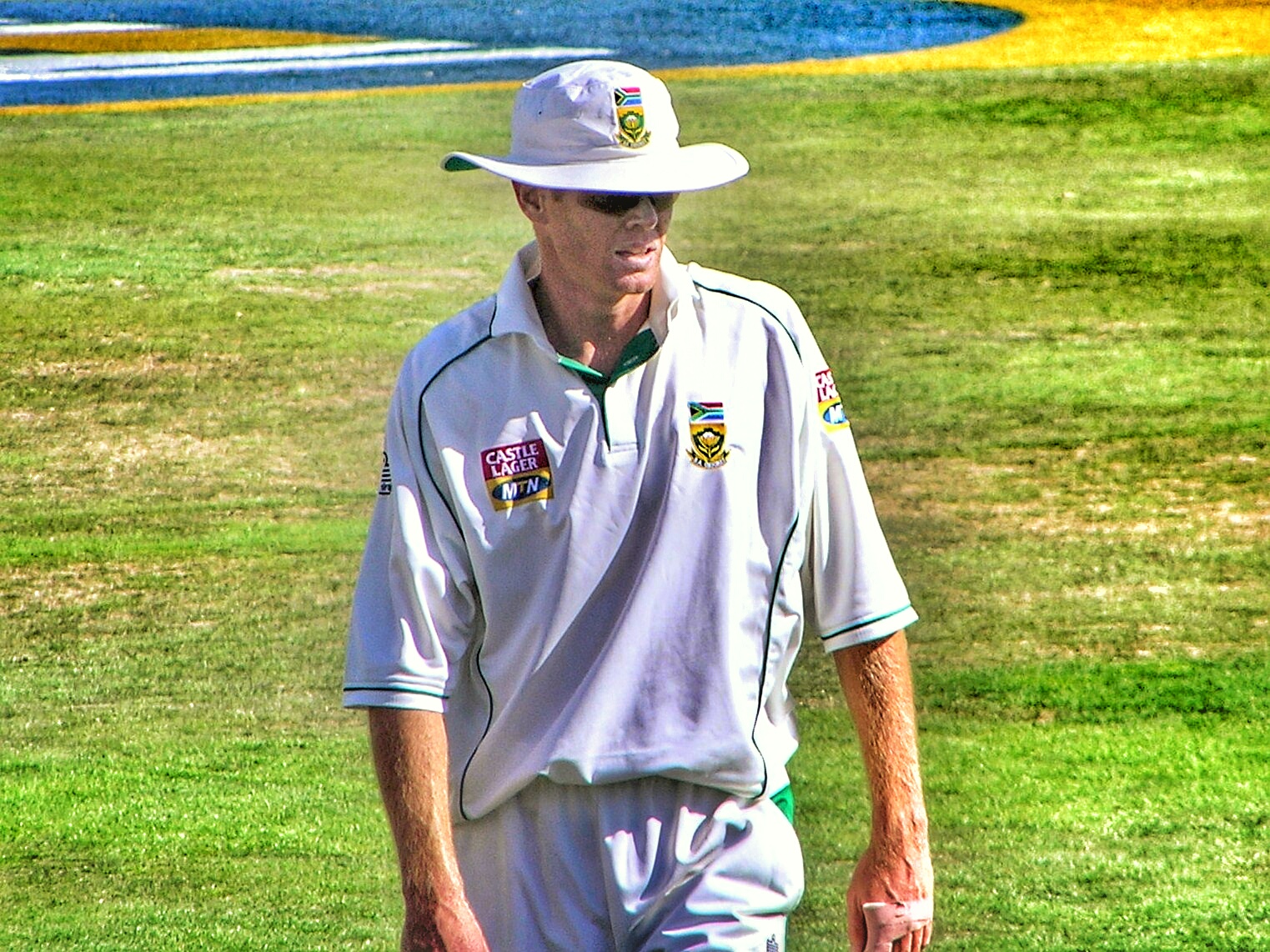
South Africa vs England: 2nd Test, day five and review

If you were ever asked which side had the ability to score over 600 and then be nervously contemplating the possibility of defeat on the final day, the answer would be England. And not just this collection of England players either; it seems almost hard wired into the psyche of the national team to scare the bejesus out of their supporters, to cause unending fits of mirth amongst Australians and ensure journalists and bloggers head to Statsguru to see if the latest potential disaster has any kind of precedent over the last 140 years.

In truth, England were never quite on the edge on the final day, but they did certainly manage to make things difficult for themselves and interesting for everyone.   It’s been said before – the England cricket team do have a habit of making Test matches interesting, whether they like it or not.

As soon as South Africa had reached somewhere near parity, the pressure had transferred to England as the only side who could realistically lose, given the time remaining.  The clouds that eventually did for play created just enough for the bowlers to make it rather more challenging, but the pitch was still exceptional for a fifth day surface, and it was far more about the pressure England brought on themselves than anything else.  That is as it should be, for cricket is a mental game and Test cricket is the ultimate expression of it.  Human beings react under pressure, and sporting pressure is still pressure.

Thus it quite often happens this way, as the side batting third has little but time and the draw to play for, and the bowling side can give their all knowing they have but a slim possibility of winning, plus the guarantee of a limited time spent in the field.  Once in a while something remarkable happens, but not today.  Not quite.

Ben Stokes received the Man of the Match award and that was probably inevitable given his tour de force on the first two days, yet for the second match in a row it wasn’t entirely clear cut.  Amla’s double century probably had more impact on how the game concluded and was made knowing failure meant likely defeat, and with poor form over the last year.  Jonny Bairstow batted beautifully in the first innings and steadied the England ship with a disciplined and important knock second time around.

Somewhat astonishingly, Stokes received some criticism for his dismissal today.  It shouldn’t need saying, but apparently it does, getting caught on the boundary is the flipside of seeing him batter bowlers around the park; it remains an unending frustration that those who will happily cheer when the ball evades a fielder for four or six will berate a player if it instead goes into a pair of hands.  This really is how Stokes plays, and how Stokes should play.  Of course, saying such a thing is no longer allowed because…

Doubtless, Swann will shortly be saying that it was a joke, and that many people were taken in by it, but he has form for this kind of thing.  Only a few days ago he patronisingly expressed surprise that Simon Mann could make a pertinent point about spin bowling, only to catch himself when he realised how arrogant, supercilious and sneering it sounded.  Swann is also the man who expressed amazement that home ticket prices were so expensive, saying he thought they were only about £20.  To be so ignorant about those who were paying for his comfortable lifestyle beggars belief in the first place, to then dismiss any right they have to a view as well is indicative of his worldview – ungrateful, full of self-importance, smug and contemptuous.  The cheeky chappie routine wore thin long ago, as he reveals what he really thinks under the guise of it being banter.  He can think what he wants and he won’t read this.  The personal contempt is such that I couldn’t care less, we can form our view of him as the people who pay and paid his wages.

There is now a long break until the next Test, over a week, a rest period that England’s bowlers will certainly appreciate after so long in the field in this game.  South Africa have made fools of all those who wrote them off after the first Test and who gleefully anticipated England routinely flogging them for the remainder of the series.  Some hasty reassessments will undoubtedly be in order.  Steyn is rated as 50/50 for Johannesburg, while Philander has been ruled out of the series.  Kyle Abbott will also be fit as the hosts find themselves with rather more options in the bowling ranks.  Although any nonsense about “momentum” can be ignored, South Africa will certainly be feeling much better about themselves having finished this match on top.  As the Wanderers is also at altitude, England will have a contest on their hands.

South Africa will also have a new captain, with Hashim Amla resigning immediately following the game.  Perhaps the timing is something of a surprise, yet Amla clearly didn’t feel comfortable as captain and didn’t appear to be especially astute tactically, which may well be two sides of the same coin.  Whatever the reality of that, Amla spoke impressively after the game, and his assertion that he felt he could benefit the side more as a batsman than as a captain was both honourable  and quite probably true.

AB De Villiers takes over for the remainder of the series, perhaps ironically so given his less than subtle comments about his workload and the veiled threat to reduce his availability.  It could be a short term option, or it could be a means of locking him into the team – few would turn down the captaincy of their country when offered after all, but at least it should rule out him doing the wicketkeeping again.

For England after two Tests the form of the captain will be a slight concern.  He’s not got going at all this series.  It’s slight because it’s in the sense of a key player not yet having contributed and nothing more than that; he’s had a decent enough time with the bat overall in the last twelve months after all.  Yet it is a curiosity that there is an agreed silence about it in the cricketing press, while at the same time plenty of comment about Nick Compton, someone who failed to reach 40 for the first time in four innings earlier today, or Alex Hales, who scored 60 just one knock ago.  As so often, it’s less about Cook himself, and more about the way so many journalists place him on an untouchable pedestal.

So far this series for England, the standout performers have been the discards, the unwanted and the damaged.  Ben Stokes was considered not good enough for the England World Cup team, and even when he had been in the side he had been batting at number eight – a decision that got a fair bit of support from the great and the good at the time; Jonny Bairstow has been in and out of the side in all formats; Nick Compton appeared to fall foul of the different personality selection criteria while Steven Finn was of course unselectable.  Add to that an opener whose technique was openly dismissed by the then coach and there’s a certain pattern.  To look on the positive side, it amounts to a tick for the new England coaching set up.

There are no reasons to be gloomy about England’s chances in the final two Tests.  South Africa had the better of the final two days in Cape Town, but the shock and surprise that exceptional players sometimes play well was amusing.  The bowlers did little wrong, the fielders dropped catches and fine batsmen cashed in.  That is allowed to happen.  When play starts at the Wanderers, all is reset.  Reading the runes based on today and yesterday is as daft as doing so based on the first Test and that went well for those who did it.  Perhaps it was because apart from Geoff Boycott, they all had Test averages under 45.

South Africa vs England: 2nd Test day four

It is when a Test reaches this kind of stage that the thoughts of England supporters turn to the Test Which Must Not Be Mentioned.  As we go into the final day, only South Africa can win the game, a scenario that seemed unlikely to say the least as Stokes and Bairstow flogged the hosts’ bowling around Newlands a couple of days ago.

This was always going to be a possibility, given a surface that has shown no signs whatever of deterioration and has proved something of a batting paradise, and unlike one or two, for this particular blog it isn’t being wise after the event.  Of course, in reality the draw is by far the likeliest outcome, and for England to lose would represent an even worse calamity than The One That Didn’t Happen given both surface and the much more limited potency of the South African attack.  It is an amusing temptation to draw parallels, but they almost certainly aren’t going to be there.

And thus England should be able to comfortably bat out the final day, making the most of the batting practice.  Ideally, they will be able to take the same from it that South Africa have, the opportunity to play a couple of the batting line up into form, not least the captain.

The regrets will be there, England were astoundingly profligate in the field, dropping anything up to ten catches (depending who is counting) in the duration of the innings; some were tough, some were anything but.  One of the more peculiar truths of playing cricket is that dropping catches is…well, catching.  At the start of South Africa’s innings the question was whether England would create enough opportunities to take twenty wickets, to not be too far off that after the first innings, and without bowling South Africa out is quite something. A quick (and of course simplistic) totting up of what those drops cost comes to around 350 runs.   Amusing then that Stuart Broad ended the day charged with a Level One offence by the ICC for dissent, one wonders if it was directed at umpires or fielders.

If England had a slightly better day than yesterday – four wickets!  Four! – it still belonged to South Africa.  Hashim Amla duly completed his double century and Faf Du Plessis continued to provide sterling support.  What followed came completely out of the blue, as three wickets fell for ten runs including both set batsmen.  De Kock was skittish and won’t look back fondly on the shot that led to his dismissal, and with a deficit of still nearly 200, the England bowlers suddenly had a spring in their collective step.

Temba Bavuma has had a pretty terrible press this series, dismissed as being a quota player, derided for not being remotely good enough.  Of course, for English eyes it is the first time most will have seen him play, and given his travails in the first game, questions about that were reasonable enough.  Yet one game never has been sufficient to judge a player, particularly one unknown to the observer.  He didn’t look great, but a few keen watchers said he had talent.  Eleven years ago, similar aspersions were laid at the door of another South African batsman starting out, one who looked out of his depth at the highest level.  Perhaps people have heard of him – his name is Hashim Amla.

The one thing not to be is holier than thou over this; given the political element of the composition of the South African team the suspicion that better players are not going to be picked is always there, and Bavuma had hardly taken the world by storm in his first six Tests. For British observers though, he is nothing but a new player, and one who may or may not succeed – we rarely have the in depth knowledge to make assumptions about the ability of a particular player, and perhaps staying silent is the wiser course until the evidence is in place.  Plenty of people have been made to look stupid by Amla proving himself a wonderful cricketer, to risk it a second time is careless at best.

One innings doesn’t make a career, but the while the symbolism of Bavuma’s hundred is obvious, it was in itself a delightful innings, full of wonderful strokeplay.  Given the stick the England team gave him on his arrival at the crease and a slightly (but not dramatically) uncertain start, symbolism wasn’t required to take pleasure in seeing a young player ram the taunts back down English throats.

If nothing else, Bavuma’s innings lit up a day’s play of a Test that was limping towards a terminally dull conclusion.  Made off only 148 balls, it may not have had quite the brutality of Stokes, but it had style, dash and elegance.  It was, quite simply, a joy to watch.

Chris Morris deserves a word of praise as well; he had a difficult time of it with the ball, taking the brunt of Ben Stokes’ murderous assault, and for a young player on debut, it will have been a chastening experience.  Today was his day too, showing no little batting ability in making a fine 69.

England’s bowlers again didn’t do anything especially wrong, beaten by the pitch and the Kookaburra ball.  Indeed, the pitch has of course received the most criticism for being too batsman friendly, but a Duke ball might well have given the bowlers just enough for one side or the other to be able to force a result.  The pitch is only one element of the equation – although even then it would require England to have held their catches.

As far as the over-rate watch is concerned, once again the day finished with the 90 incomplete.  This time it was a solitary over short, and doubtless some will say that doesn’t matter, but the half hour additional has been invoked every day, and still the overs aren’t being completed.  In times past, this would not have mattered, as play would have continued until they were.  It was the TV broadcasters who objected to that, as late finishes played havoc with schedules.  The half hour leeway was intended to ensure all overs were bowled while still offering a definitive finishing time.  The match referee’s decision on over rates and any punishment following is not determined until the end of the match, but after four consecutive days of failing to meet their obligations, there is no excuse whatever for failing to take action.

Elsewhere today, news broke about a school match in India, where 15 year old Pranav Dhanawade shattered a century old record for the highest score in a competitive match, making a scarcely credible 1,009 in a game that redefines the term “one sided”.  It’s been interesting to follow the response to this, initially astonishment and no little awe, turning quite swiftly to criticism of the teachers for allowing it.

One final thing for now, although it is a subject which given the wider ramifications we will return to over the coming weeks and months.  The Lodha report in India on cricket governance in that country has taken something of an axe to the current BCCI structure.  What follows, whether that is court challenges or acceptance is something that will impact on cricket across the world.  What can be said, is that for the first time in a while, there is cause for a small degree of hope.  There’s a good summary on Cricinfo for those who wish to read a little more:

http://www.espncricinfo.com/india/content/story/957707.html

Day Five Comments Below

South Africa vs England: 2nd Test day three

If there’s one thing the cricket media never seem to learn, it’s that writing off a team after one Test is always dangerous.  South Africa today fought back splendidly and for the first time this series were the unequivocal winners of a day’s play.  More than that, they showed why such dismissal was misguided in the first place, as the two big guns of the home team’s batting line up both made runs, which augurs well for the remainder of their series.

With only 212 runs scored in the day, it was clearly far more sedate than yesterday, indeed the day total barely exceeded what England scored in the morning session yesterday but that is hardly surprising given a match situation where South Africa can only play for the draw.  And they did so with grit, determination and no little skill, losing only De Villiers over the course of the day, and leaving themselves in a position where they really ought to save the match.

England had their chances, two further catches going down to add to the one last night, and had those been taken then the situation could have been very different.  The pitch is flat, to the point the groundsman has expressed his dissatisfaction with it.  It shouldn’t have come as a shock to anyone, for while Stokes’ innings was certainly special, teams don’t score over 600 on a surface that is offering assistance to the bowlers.  That can happen first innings, what is more of an issue for this Test is that there are no signs of deterioration, meaning it was and is only scoreboard pressure that creates the peril, and it is to that South Africa have stood up well.

Could England have done much more?  Well, apart from holding their catches, they perhaps could have attacked more than they did, especially early on.  There were a couple of occasions where an outside edge flew through a vacant gap, but it couldn’t be said they got it entirely wrong without nit-picking a touch.

South Africa aren’t out of the woods yet, for England have controlled the run rate to an extent that a bad session in the morning could yet leave the hosts in difficulties, but all things being equal, this appears most likely a bore draw with exceptional levels of ennui for the last two days.

If that is the case, then although England are a long way ahead here, South Africa will be by far the happier.  The return to form of Hashim Amla shouldn’t come as a surprise to anyone, he is what he has been for a decade, a quality batsman who happened to be having a poor run. Having come out the other side of his rough spell, he is a serious danger to England for the last two Tests.

Likewise Faf du Plessis, a player almost born to play the rearguard knock, will benefit hugely from time in the middle, and all of a sudden the South African batting order doesn’t appear remotely as fragile as portrayed after Durban.  For England certainly didn’t bowl badly, they maintained their discipline throughout – Alex Hales’ startling appearance as a bowler was matched onky by the shock of seeing him only go for two runs in his three overs; presumably abject terror on the part of the batsmen at the idea of getting out to him played a role there.  The dropped catches cost them dear, but it would have been hard labour anyway.

In such circumstances, the pattern is that when the team batting second reaches the point they have saved the game, the pressure then transfers to the other side, for they are then the only ones who can lose – the third innings problem.  But given the slow scoring rate, it is unlikely that South Africa would reach parity before the end of tomorrow, should they bat that long.  The prospects of them being able to put England under much pressure appear slim, meaning that by mid way through tomorrow, the sides could well be going through the motions.

There were some interesting asides during the day; De Villiers rarely looked comfortable against Steven Finn for example.  The placid pitch meant it could never quite be said Finn roughed him up, but he was undoubtedly less certain in his play than he was against anyone else.  On the high veldt this may become more of an issue, though with the proviso that England may well have to face Steyn and possibly Philander in those conditions too.

Lest that sound overly pessimistic, it shouldn’t, for England could and perhaps should be in an even better position than they are, but dropped catches are a fact of cricketing life, and the old aphorism has it right.  But if South Africa do get away with a draw as seems most likely, then the sides will go into the third Test much more evenly matched than some anticipated.

For the third day running the sides were short of their supposedly compulsory 90 overs.  Day one saw 87 overs bowled, day two was 82 – but 84 in reality given the change of innings – and day three was again 87.  Thus far in the match 12 overs have been lost due to nothing other than the sides failing to bowl their overs quick enough.  Given there has also been an extra 90 minutes to allow them to catch up, and however boring it is to keep repeating the point, this is entirely unacceptable and treating the paying spectator with contempt.  To date there has been no sign of the match referee taking any kind of action.  90 overs in a day has become nothing more than aspiration rather than a requirement.

Day Four comments can be made below

South Africa vs England: 2nd Test, day two

The praise and the superlatives to describe Ben Stokes innings and his partnership with Jonny Bairstow will come thick and fast over the next 24 hours, and probably beyond.  And rightly so too, for anyone who witnessed the murderous assault on South Africa’s bowling this morning was privileged to watch something exceptional.

Firstly though, let’s take the match position.  England’s mammoth 629-6 declared is clearly insurance against defeat, so South Africa are playing for the rest of the game to try and save it.  They’ve done well to reach 141-2 by the close, and the pitch is showing no signs of deterioration at this stage.  First innings runs are therefore key in currently very benign conditions, for the first target has to be to reach 430 to avoid the follow on.  The rate of England’s scoring has opened up their options, in that South Africa will need to bat for at least another day and a half in order to make the game reasonably safe, and flat surface or not, that is going to be a challenge.   It could have been a bigger one, had Joe Root not shelled a fairly straightforward chance at slip to dismiss AB De Villiers off James Anderson.  If taken, South Africa would have been in dire straits.

As it is, with Hashim Amla recovering some form and with De Villiers granted a life, this pair will need to bat long into tomorrow to protect what looks a flakey lower order.  They couldn’t ask for a better pitch on which to do so, as while scoreboard pressure brings its own issues, in the purest terms there’s no reason why South Africa shouldn’t be able to save the game.  Avoiding silly run outs would help.

That is for tomorrow, for now it is about two players who played in differing manners most of the time.  Stokes carried on from where he left off last night, which is all very well except he carried on for a session and a half.  This was T20 brought into Test cricket.  On many occasions we see a player do this for short periods, it is extremely rare for it to continue and continue and continue.

The records tumbled, as the pair added a scarcely credible 399 in just 59 overs, with the two (since Moeen was 0 not out without facing, it is the two) belting 312 off 38.5 overs.  To put that into context, if that was an ODI, there would be a chance of them overhauling the world record total.   They were scoring faster than was happening in the Big Bash match on the next channel.

For the record Stokes double century was the fastest ever by an Englishman, beating Ian Botham’s 208 ball knock against India, and second only to Nathan Astle’s 153 ball effort at Christchurch.  It could be argued that particular innings was an outlier, given it was on a drop in pitch, but records are records.  It is the fastest ever 250 in Tests; the 130 scored in the morning the highest in Test history for a first session; the most sixes (11) by an England batsman ever, and joint second globally; the highest run rate in any partnership of 200 or more runs in Test history; the highest sixth wicket partnership in Test history….oh the hell with it.  Go and have a read of all of them:

http://www.espncricinfo.com/south-africa-v-england-2015-16/content/story/957573.html

Of course statistics are one thing, actually witnessing the innings is another.  Stokes has a delightfully simple technique, trigger movements are minimal and there isn’t much to go wrong with it.   The bat comes down straight, the footwork is decent enough.  What that means is that when he is in a mood like this he is going to strike the ball very cleanly. Given how he batted, that seems obvious, but he retains his body shape when going after the bowling.  There was only one occasion where there was a slightly wild swing and a miss, for the rest of the time, even if he mistimed it a touch it was recognisably a cricket shot – at no point did it descend into slogging.  Instead it was simply awesome power, one shot that went out of the ground will live long in the memory.

While Stokes will be the inevitable focus, Jonny Bairstow’s innings was in its own way equally majestic.  He was entirely content to play the supporting role while Stokes was causing mayhem, yet his own innings was anything but laggardly, and he went from 100 to 150 in the blink of an eye.  It says much for Stokes’ awesome innings that a player can score 150 and not be the main focus.

Yet it wouldn’t just have been Bairstow who had a tear in his eye when he reached his maiden Test century.  The celebration said everything there is to say, it was a special moment.

Days like this don’t come along too often, not just the run scoring feats but the manner and sheer bravado in how it was done.   This is the sort of day that gets kids interested, because they want to be the next Ben Stokes.  And God knows English cricket could do with some of that right now.  Stokes announced himself to Australia in the last Ashes down under, and today he announced himself to the world. It was a reminder of why we love the game, a nudge that despite all the issues with governance, the ICC and ECB, the purity of two players having the time of their lives is something that can’t be taken away from anyone.  South Africa’s bowlers, especially poor Chris Morris who took the brunt of the battering, may beg to differ.

And then Stokes went and bagged himself a wicket as well.  Bloody hell.

Day three discussion here. 

South Africa vs England: 2nd Test, day one

One of the delights about Test cricket is how often the final hour of play proves pivotal, and makes the previous five hours seem pedestrian and unimportant in comparison.  It isn’t really like that of course, but day one is a set up day to begin with, and that final hour so often determines which side is the happier, almost irrespective of how things have gone up to that point.

For at drinks in the evening session, England were 224-5, not in trouble as such, but in severe danger of thoroughly wasting the opportunity of batting first.  Stokes and Bairstow’s thrilling counter-attack, particularly against the new ball, means that England will be reasonably content with their day’s work, though much more will be needed from them in the morning to turn it into a position of strength.

The day had largely been one of England players getting in and getting out.  Only Taylor was dismissed early; Cook was loose once again outside off stump, Hales caught in the slips again off a pretty decent ball, Compton nailed a pull straight to midwicket and Root played a rotten waft outside off stump.  If that seems overly harsh, individually it probably is.  Hales made his first Test fifty and batted extremely well, Root looked a million dollars and it was a surprise when he got out, and Compton played the number three role well again.  Yet for at least three of the top order to perish needlessly risked throwing away what could and should have been a position of dominance.  Sometimes these things just happen in the game of cricket, but it looked somewhat careless; the players will know that better than anyone – certainly Root looked about to explode as he left the field.

Compton himself has 179 runs in three innings since his recall, which ought to satisfy anyone.  Not withstanding his failure to go on from a start today, he is doing well.  Yet the pundits and commentators seem awfully quick to get on his back about his scoring rate. At lunch he was 3* off 27 balls, and it was a topic of conversation.  It is hardly unusual for a batsman to start that way, especially so in the run up to a break, and nor is it putting pressure on his batting partner at such a stage.  Given his struggles in the Test before he was dropped perhaps that is a legitimate topic of conversation, but the same thing kept cropping up throughout his innings, which was ultimately at the same strike rate as that well known blocker Alex Hales.    Nor is this a one off, given how Graeme Swann criticised Compton for slow play in the first Test, where Compton’s first innings knock was not only exactly what England needed, it went a fair way towards England winning the match.

Let’s be clear about this – Compton played a perfectly normal innings for a number three.  If it’s going to referred to as “staccato” then do so for other players, not just him – there is an undercurrent of being desperate to criticise for the sake of it.

But the day belonged to Bairstow and Stokes.  Their unbroken partnership of 94 came off just 19.1 overs, but it was the new ball that they were particularly severe on, particularly Stokes.  At one stage they were scoring at 9 an over, as Amla scattered the field.  There’s something to really like about this England team, and it’s the way the younger players respond to adversity by looking to attack.  It isn’t always going to come off, and an understanding of what they’re trying to do is needed.  That means not slating a batsman who is caught on the boundary for example.  It’s high risk but a calculated risk and when it comes off it is both thrilling for the spectator and can completely change the direction of the match.  We cannot have it both ways here: we can’t praise players for taking the game by the scruff of the neck and then complain when they get out.  Stokes could have been caught in the slips on at least two occasions when the new ball was taken, and mistimed a couple of pulls as well.  Yet it doesn’t, or shouldn’t matter – it is a calculated assault that on this occasion worked.

Bairstow played largely the supporting role, but scored not much less quickly.  He’s been good this series with the bat, and looks a much more solid player defensively, which bodes well for the longer term.

The big plus for South Africa was the bowling of Kagiso Rabada.  He’s clearly raw, but has pace, and the priceless quality of hurrying the batsmen even when the speed gun doesn’t necessarily support that.  Joe Root was very late indeed on one attempted pull, and lucky to survive.  For such a young bowler his control was decent as well, certainly better than Chris Morris, who Stokes in particular took a considerable liking to.  Given the injury crisis afflicting South Africa’s frontline bowlers – and there were suspicions Morkel wasn’t entirely fit by the end of the day – this is a welcome sign of promise.

One other item of business from today: even with the extra half hour, only 87 overs were bowled.  This is entirely unacceptable, there were 23 overs of spin in the day, and failing to complete the scheduled allotment is inexcusable.  The ICC have shown no kind of inclination to clamp down on what is tantamount to stealing from the paying spectator.  Fines clearly don’t work, so there is a need to find what does.  Run penalties are sometimes mooted, but there is an understandable reluctance to allow over-rates to impact on the game itself.  Yet if there was a ten run penalty for each unbowled over, does anyone really think that South Africa would have failed to get 90 in?  They would have made sure of it.  Three overs may not seem worth becoming exercised over, but this happens sufficiently often for 85 overs in a day to be considered reasonable.

Enough is enough.  The players are showing disrespect to those who pay to watch them.

317-5 is anything but a decisive score; early wickets will leave England some way below what looks like a par score on this surface.  But the ball turned for Piedt, suggesting that by days four and five spin could be a weapon, especially since Moeen gives the ball rather more of a rip than his counterpart.  In order for that to matter, England will need 400+ to put pressure on the misfiring Proteas batting order.

On balance, England will be the happier team this evening, but that is based more on the way the last hour unfolded than the score itself.  Tomorrow is another day and while the first session will not dictate how the Test will unfold, if England win it then they should be in good shape to put South Africa under pressure.  For all the plaudits Stokes will rightfully receive, this game is quite finely balanced.

Elsewhere, tonight is the start of the Australia – West Indies annihilation at the SCG.  This is nothing but depressing, not because of Australian dominance, but the desperate fall of West Indies cricket.  No fan of the game can feel anything but sadness, anger and despair about it.

Day two discussion below.


South Africa vs England: 2nd Test Preview

Happy New Year everyone from both Dmitri and myself.

Memories of Newlands 2005 - Shaun Pollock Fielding at Fine Leg
Memories of Newlands 2005 – Shaun Pollock Fielding at Fine Leg

One of the joys of England tours to Australia and South Africa (and it could be New Zealand too if they scheduled it that way) for the spectator is how the Test matches fall, one on Boxing Day and one at New Year.  For a cricket fan, tuning in late on Christmas Day or early on Boxing Day for some Test cricket remains one of the pleasures of the game.  For those who intend to travel, the same applies, Christmas or New Year in a great destination, sunshine and some good cricket.

It is therefore unsurprising that the perennially popular destination of Cape Town has the potential to be near enough a home game for England, with thousands of Brits descending on Newlands.  Few national sporting teams are lucky enough to have the support the England cricket team receive away from home, and if perhaps they haven’t always deserved or fully appreciated it, it remains one of the highlights of the travelling fan’s calendar. (Dmitri here – when I went in 2004/5, a taxi driver taking us from the town centre to our hotel said England’s turnout that year was the most overseas sports fans he’d ever seen. Including Ireland during the Rugby World Cup. It’s a great place to watch test cricket.)

Memories of Newlands - Being Able To Walk On The Outfield (Day 4 I think)
Memories of Newlands – Being Able To Walk On The Outfield (Day 4 I think)

On this occasion, those supporters will arrive at Newlands buoyed by the comprehensive victory in Durban, and with the UK media generally predicting more of the same.  At first sight, that confidence may not be misplaced, for Dale Steyn is out of the match having twice pulled up lame in the first match, and Kyle Abbott – himself a replacement for Vernon Philander – facing a fitness test on his hamstring before seeing if he’s fit to play.  Steyn’s place looks certain to be taken by the raw 20 year old Kasigo Rabada.  He may be relatively unknown, but he took 6-16 on his ODI debut against Bangladesh last year (checks…yes, last year now) and is highly rated by the likes of Shaun Pollock and Allan Donald.  One thing he appears to possess in abundance is pace, being clocked at 94mph in that match; England haven’t always handled express pace well, particularly on bouncier, pacier wickets.

Yet despite the bowling problems, at Kingsmead the Proteas bowling stocks performed fairly well, it was the batting that let them down.  And here is where media confidence in England may end up misplaced.  For Dean Elgar was the best batsman on either side, and Hashim Amla will surely return to form at some point soon.

On Top Of The Table
On Top Of The Table

AB De Villiers is being relieved of his wicketkeeping duties, with Quinton de Kock returning to the line up.   That selection would be at the expense of either Temba Bavuma or JP Duminy, and with Rabada replacing Steyn, the selection quota is satisfied, so the expecation would be that Bavuma would be the one to make way.

Graeme Smith has been brought in as a batting consultant; a cynic might think that is more about limiting his public comments as much as anything, for it seems unlikely he will have much of an impact beyond a pep talk in one day before a Test match.

A Long Day's Play.....
A Long Day’s Play…..

England have no such problems, with their only decision concerning the fitness and match fitness of James Anderson.  The indications are positive, and Chris Woakes is the most likely to make way.  It’s a rare thing where England go 1-0 up away from home and strengthen for the second Test.

It is nearly 60 years since England last won at Newlands, and since South Africa’s re-admission only Australia – who appear to regard it as their second home, so impressive is their record – have beaten the hosts.  For England to prevail would represent one of their finer recent away performances.

(Dmitri simple question – something happened on my visit to Newlands in 2005 that has happened on just nine other occasions in the history of test cricket. And no, it’s not that we lost. What is it?)

Day one comments in here!