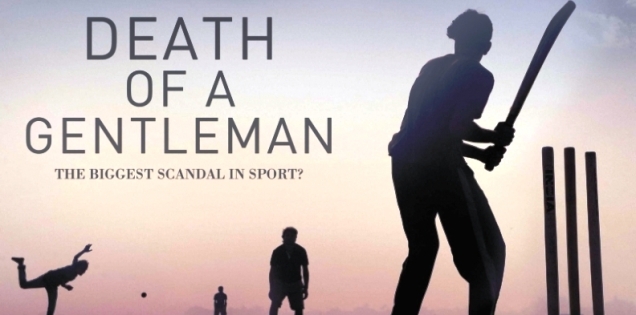
2015 Dmitris – Number Three – Death of a Gentleman (Kimber/Collins)

Jarrod-Kimber-Sam-Collins

In essence this is a really simple one. Probably the most important cricket film in our lifetimes, one that tried to at least have a stab at getting to the power-brokers and making other journalists sit up and listen to what some of us social media zealots had been banging on about since the Big Three carve up, and which slowly but surely is setting the narrative on what is happening in the world game today.

Jarrod and Sam, who both TLG and I can speak to freely, which is pretty nice of them, are every bit as deserving of the good journo award as George was last year. They are not your typical reporters. Jarrod, in particular, has always been one that has intrigued me. His is a bloggers style taken that extra mile that is beyond nearly all of us. His piece, for example, on the beaten England team at Sydney was a masterpiece, capturing the spirits of a defeated army better than the sniping, leak-driven, agenda-laden bog paper our media was serving up. He was also the journo responsible for the reading out of the Top 10 Worst Journalists poll to the press corps at the Sri Lanka tests. He gets the blogging mentality because he is one. He recognises the fandom we have, that that is a positive energy for the sport, not one to be derided, abused, ignored or treated with contempt. So while a Selvey will sneer, or a Bunkers go into a paroxsym of Cookie worship, Jarrod is sniping around the edges.

I was fortunate to be allowed to see Death of a Gentleman early. It was an interesting film, and probably Sam and Jarrod would admit that it isn’t perfect. But what it is is a reminder of how test cricket exists for no real logical reason now. Sure, the Ashes might sell, as might an India v Pakistan match-up, but little else matters. The all-consuming T20 expansion around the globe is seen as a threat, but the film argues it shouldn’t be. It highlights what test cricket meant to Ed Cowan, and that a number of other players see it that way too. But then it turned to the governance of the game, and the film got to its main point.

Sports bodies around the world are viewed with suspicion. I think the term is “a toxic brand”. Collins and Kimber bring that toxicity to the screen. Interviewing Clarke should come with a Hazardous Material warning, while Wally Edwards probably told them to foxtrot oscar. Srini avoided every question that might tie him down. While they might not have found the smoking gun, what they did find were rooms with a huge smell of discharged bullets. The biggest of them all was being left outside the meeting rooms, given short shrift by the security guards, and fed platitudes by the press officers.

While some of the key players, well, I mean Srini really, are not in the picture any more, the evidence Jarrod and Sam needed is coming out. Tim Wigmore is doing massively good work (keep that up and he’s in the running for next year) in highlighting the plight of the associates. Peter Miller and Andrew Nixon are two vociferous associate defenders. The game’s concentration, rather than widening is disheartening to all. While countries treat test matches like the last thing they want to play, there are loads of countries dying to give it a try. It’s a nonsense.

But let’s put it this way. They made Giles Clarke look even worse than we thought he was. That is a stupendous achievement. They have continued to fight the good fight, taking the film to Australia, holding a demonstration outside The Oval, continuing to keep the film in the public eye. The mainstream British media have done little to highlight the film since (with some notable exceptions) and certain senior journalists have not even cast their eye over it, or been major defenders of the ECB in their own lovely way.

So for the efforts to bring the dark arts of cricket administration under the scrutiny of the media, the cricketing public and anyone who might actually give a stuff how our sport is run, I am giving a Dmitri to Jarrod and Sam for their excellent Death of A Gentleman. Available on Amazon etc, and very recommended. My heartfelt thanks for all the work they have done.

death-of-a-gentleman3
??????????????????????????????????????????????????????????

Guest Post – Free To Air – The Silver Bullet?

While your friendly blog administator has been lording it up in the bars of Central London, having a whale of a time, Sean B has been working on a guest post for us…..

Fire away Sean…. and many thanks!

FTA – The Silver Bullet?

Much as been made recently of the BBC’s decision to omit any of the Ashes winning England cricket team from Sport Personality of the Year this year, and whilst most are in agreement that SPOTY is but a relic, designed to carry favour with the few sports that the BBC still has left, there has also been general consent that this is a worry for the future of the game. There have been a number of excellent articles written about this, George Dobbell’s piece being the best in my opinion – http://www.espncricinfo.com/england/content/story/947713.html, and hence I don’t want to cover old ground by focusing too much on this. However I do feel there is more of a piece that needs to be covered around what and if we can possibly do to try and breathe live back into a sport, which for all intensive purposes is struggling to win both the hearts and minds of the British public.


A sensible and much heralded opinion is that the sport has declined in popularity since the end of FTA coverage and the move to Sky, where only those with deep pockets have been able to watch both domestic and international cricket for the past decade. Don’t get me wrong, as much as I think Sky’s coverage of cricket on the whole is excellent (if you take out Nick Knight and Dominic Cork it would be so much better); however their viewing figures compared to the last major series on FTA speak for themselves – In 2005 an average of 2.5m watched the Ashes series on a daily basis with FTA access on Channel 4, with 8.4m people transfixed by the climax of the fourth Test compared to just over 460,000 who watched the final day of the first (and only vaguely competitive) Test of the 2015 series. That is not just a big drop off, that is a complete haemorrhage of cricket viewers.


This has cascaded down further, there are plenty of figures that show the popularity of the sport has also been in sharp decline for the past few years now, with The ECB participation survey highlighting that 844,000 participated in the game in 2014 compared to the 908,000 in 2013 and by Sport England’s own figures that show a decline of just over a third from 2006-2014. I, like most others would welcome the return of some cricket to FTA, even if I think the possibility of this ever happening is incredibly remote (Rupert Murdoch is not renowned for his corporate social responsibility and Sky’s model has always been around locking in big sporting events); however I’m not overly convinced by those arguments that make this the one silver bullet, that will return cricket to it’s heyday of 2005, it seems to be a far too simplistic argument to me. I believe there are a number of factors in place here, some fairly obvious, some far more nuanced, that need to take place before we can see both viewing and participation figures start to head in the opposite direction.


I will happily concede the FTA coverage of the England cricket team, was probably the main reason why I came in contact and started to love the sport. I had no real reason to come into contact with cricket whilst I was growing up, my family are Irish (before cricket got popular over there) and had no interest in the sport. My old man loved football and hence I was taken to football to play in a team at an early age. I also went to a primary school with a small concrete playground and no playing fields, so really the signs weren’t promising that I would ever come in contact with cricket as a sport. This is where FTA coverage was great for me. The summer used to be a barren time with no football, wet summer holidays spent in the UK (certainly in my younger years) and an inordinate amount of boredom if I was stuck inside. I would literally watch any sport – cricket, tennis and sometimes even golf (though that was pushing it a bit) to keep me pre-occupied until the football season started again. As with anything, the more I watched cricket, the more I got to understand it and the more I got to enjoy it, even if watching the England team throughout the 90’s was viewed by many as sheer masochism. This was how I got into the sport and I was absolutely delighted when my old man caved in and bought Sky in 1993 as he missed the Premiership too much (we had spent a couple of years pretending Italian football on Channel 4 was the best league in the world), which meant that I could also start to watch some of the Away tests that Sky was showing as well as feeding my own love of English football.


However, one of my main complaints about the FTA argument is that we’re basing the argument on our own experiences of coming into contact with the game, which in my case is around 25 years ago and certainly not how today’s generation Y or Z (or whatever generation the children of today are, I’ve lost count) would consume content. If I use an example of my Niece and Nephew, who don’t even watch the TV anymore unless there is a film on or they have been told to leave their iPad’s at home. The generation of today can pretty much download any content at any time they want to and hence as a result, attention spans I would guess are shorter than they once were. If they start watching something or playing a game and get bored, then they can switch to watching something else whereas I had 4 channels and snoopy tennis to keep me amused as a child, so you generally stuck with things more, even the slightly more tedious passages of play when Australia were thumping our bowlers to all parts.


The major challenge with all sport, but cricket even more so, is that the cricket players and fans of the future don’t consume information the same way we did at their age, nor looking at Sport England’s figures, do they participate in as much sporting activity as we did 10-20 years ago. I strongly believe you could have shown all of the Ashes tests on BBC One throughout the summer and the demographics of those watching wouldn’t have particularly changed (yes you would get greater numbers with an influx of non-Sky subscribers, but I doubt you would have got too many new fans). I totally agree that we need to open up the sport so more can actively watch games and hopefully look to emulate those at the top of the game (and I believe Sky could help by potentially selling 5 day tickets for £20 on their On Demand Access service) but feel that FTA is but a part of the solution and there needs more focus to stream both live games and comprehensive highlights, especially of T20 games, through the web as it will likely to garner more interest with those who have yet to come in contact with the game. Access is king here and FTA, whilst something I would very much welcome, is only part of the solution.


Another major aspect (and in my opinion of far greater consideration) is how do we get people playing the game again. Football has the monopoly here. It is a sport that is supported across the world and on the whole easier and cheaper to get kids playing it, even with sport participation dwindling massively over the past few years. I started playing football when I was 6, partly because my parents enjoyed the sport and partly because it was a lot cheaper to buy me a football and some football boots and to let me run off some of my youthful energy. You can also play football pretty much anywhere and me and my friends did as kids.


Cricket is more difficult, it is more expensive to buy equipment, less prominent in the majority of schools and has less of a fan base to operate with than say football, as most children will take up the sport of their parent preference. Again, If I go back to my own experiences as a child, I had never really had that much urge to play the game despite enjoying watching it on FTA. We never had a cricket games at primary and secondary school and my only real experience was playing it in the large garden of mutual friend, whose father was passionate about the game. In the end, I was lucky enough to befriend the captain of the town’s under 12 cricket team, who were always on the look out for more players and was invited down to see if I could play (thankfully I had pretty good hand-eye co-ordination and was lively in the field, which meant I got in the team fairly quickly, although my dream of being the next Shane Warne never really made it past first base). I played cricket all the way through my teens and then in various 2nd XI’s into my late twenties, as although, I wasn’t actually that good but could bowl and bat a bit, I still really enjoyed playing the game and was happy to give up parts of my weekend to play.


My point here is that I wouldn’t have had the exposure or chance to play if I hadn’t made friends with the captain of the local team as the access to the sport, especially at state school level where most don’t have a chance to play cricket, is incredibly poor. The crux of the matter is that we will continue to see participation drop, if we do not give more opportunities to those not from the previous hotbeds of cricket (i.e. those that might not have been traditionally viewed as prime cricket material) and this in turn will result in fewer people taking up the game, more cricket clubs closing because they can’t field an XI and eventually a mighty old headache for the ECB, when people stop paying top dollar to attend England test matches as people lose interest.


As much as I find the ECB an insipid and quite frankly an out of touch organization, even they are beginning to wake up to this fact. David Hopps’ article on the appointment of Matt Dwyer, the ECB’s director of participation and growth is an interesting piece –http://www.espncricinfo.com/england/content/story/950475.html, and highlights some of the real challenges that the sport is currently facing. Cricket more than ever, is the preserve of the wealthy and those that can afford to send their children to Private School. Without doing any particular research, I would guess that most of those currently playing in the England cricket team went to Private School and thereby had access to the facilities that those of us who didn’t, would only dream about (I remember as a kid, my team managed to negotiate 2 winter net sessions a season at the local private school and we felt lucky that we were able to do so.) The Chance to Shine programme, though laudable, has yet to really take off and has only really scratched the surface in engaging children to start playing the sport and needs to be ramped up significantly. We need somehow to get this on the national curriculum otherwise cricket will continue to be a sport of the elitist and local facilities and clubs will continue to be ripped up and shut as many local authorities and schools look to cut their cloth in a world of continued financial hardships. This is both the biggest challenge and opportunity for the ECB, although whether Matt Dwyer and the ECB are up to the challenge is a question in itself, I do wish them good luck though.


The final piece of the puzzle in getting more people engaged in the sport is also by having the opportunity to watch it live. I went to my first test match in 1999, when I was studying at University (or supposed to have been and was lucky my next door neighbor suddenly found himself with a spare ticket) and have attended at least 2 games per year for the last 16 years since. I’ve also been out to watch England tour a couple of times, which I’m sure the ECB are grateful to me in help swelling their coiffures during this time, even if there gratitude normally extends to raising the price of tickets for the following summer. My main observation though is that now it is pretty much impossible to take a family to a Test Match these days unless you have a lot of money to burn (circa £250 for a family of four is mind wateringly expensive). It is getting rarer and rarer to see a parent and their children at one of the test games these days and unfortunately I really can’t see this changing in the short term. The ECB, like myself, understands the metrics of supply and demand and in the majority, though perhaps not this year, the demand has outstripped the supply, hence the ability to charge obscene prices for both tickets and refreshments in the ground. This is where I feel county cricket can come in and help fill the void. As my article earlier in the year suggested, I don’t feel that county cricket is in the rudest of health and I certainly don’t think it helps itself in many cases. That said, I do think that this is the easiest, cheapest and most accessible place to get more people involved with the game (and not just those that turn up on a Friday night at the T20’s to try and shove as much beer down their throats as humanly possible) with a few changes to the schedule and structuring.


Now I hadn’t planned when I was first thinking about writing this article about wading into the T20 debate, but the more I think about it, the more essential I feel that this is to the health of the game. As I mentioned in my last paragraph, the T20 blast, which should be the easiest way of getting kids into watching the game, is now largely a no go because of the scheduling of all games on a Friday night. I went to 5 T20 Blast games last year and many of them (especially those at the Oval) would be the last place where I would want to take young children as half of the crowd have decided that it’s a prelude for heavy drinking and as a result, increasingly we are starting to seeing more drink induced episodes of violence, which has no place at the cricket, or anywhere else in my mind. Now don’t get me wrong, there are a number of games that I attended in my twenties where some of the action after tea was a bit of a blur, but it was all pretty good humored and very different to the atmosphere at some T20 games (interestingly, I found the out-grounds to be far more welcoming with a nice mix of young and old, make of that what you will). Nor do I blame the Counties in driving through their desire to have all of the T20 blast games on a Friday, as it’s a great money spinner and indeed essential to some for their continued survival; however the current format of the tournament is a logistical nightmare for Players and Broadcasters alike and in my opinion is of a lower quality to those T20 leagues player around the world (and judging from the comments of the England ODI captain, it looks like the players are in agreement). The more I think about it, the more I feel that we need to embrace a franchise league played in 5/6 weeks over the Summer holidays. Now I understand that this might be seen as heresy in some quarters, but my the two main reasons underpinning my thoughts on this are that:


  • Firstly every game can be aired on TV including some kind of FTA/streaming capacity to be able to better reach the masses so that we don’t get the farcical situation of only a couple of thousand people being able to see Chris Gayle smash the ball around at Taunton or watch Glen Maxwell, Brendon McCullum and other world class T20 players that could inspire a generation.
  • Secondly, by basing this tournament around the Summer holidays and with games scheduled at different times of the day with a sensible pricing policy, then there will be opportunities for all types of cricket fans to attend the games, not just those who see it as a chance to drink a lot of beer on a Friday night.


This I believe would help open up the sport to a whole different range of supporters especially with the carrot of being able to watch and hopefully then try to emulate more world class superstars who I feel, would be far more attracted to come over and play in a shortened tournament as well as likely increasingly the skill level of the competition – a win-win for both fans and players alike.


I also believe the four day game has a part to play in this too, although the scheduling and cost doesn’t help at all at the moment. There has to be a movement by the counties for getting the majority of the games back to starting on a Saturday, when they are most accessible for both those that work and those that have families. The move to Sunday or even Monday starts has meant that it is increasingly difficult to view county cricket, whether you are sold on it’s merits or not, and seems to me to be completely at odds with trying to attract a new audience to the game (as well as increasing attendances for the most difficult format “to sell” to the public.) It’s all very well pointing to increased attendances in cricket http://www.skysports.com/cricket/news/12123/10076035/cricket-attracts-record-crowds-for-domestic-and-international-games, although I think there are many factors here with these statistics (and some that aren’t as perhaps as wholesome as we would like), I’d be very surprised if the demographics of those attending those games, especially the county games, have changed at all. I also believe that the pricing for the games is wrong, with it being relatively expensive for a family to come down and watch a day of county fair (£20 for adults and £12 for children, I believe at Lords). Why not introduce a family ticket for £30 whereby 2 adults and up to 2 children can come and watch the cricket for a day? This would surely make more sense as it will firstly mean a fairly inexpensive day out for a family, build more atmosphere inside the ground and most importantly, provide access to live cricket of a decent quality for a broader audience.


In summary, there are a few fundamental changes that need to be made in my opinion, some of which can be done in the short term and some that will take longer, mainly due to contractual obligations:


  • A franchise T20 competition to take place over 5/6 weeks during the Summer holidays with fair ticket pricing and ability to watch free of charge over YouTube or another similar site
  • Most county games to start on a Saturday with a fairer pricing policy including family tickets
  • The ECB to commit to double it’s spend on grass routes cricket inclusive of investing in pitches and equipment to both cricket clubs and also to show a commitment to invest in cricket at state school level
  • FTA access to at least 1 ODI and 1 T20 International per series – this can be done via one of Sky’s intermediary channels such as Pick TV
  • £20 Sky Access TV tickets to watch a test match in its’ entirety, £10-£15 tickets for ODI’s and T20 Internationals


Now these are simply my opinions and many may will disagree with them, but one thing is for certain is that we can’t simply sit back and hope the current status quo magically produces a new wave of cricket fans, it simply isn’t going to happen, even in Colin Grave’s wildest dreams. The foundations of the ivory towers in which the ECB currently presides are starting to look as unstable as they have ever been and one only needs to look at the current state of West Indies cricket as a reminder that blind faith counts for very little when you ignore the most pressing of problems. Now I do hasten to add, that I’m not trying to directly compare the current situation of West Indies cricket with that of English cricket, the WICB has the unenviable position of making the ECB look like a bastion of a sensibility and a well run cricket board in the extreme, an unenviable achievement in itself; however both have had the same problem, albeit the West Indies on a far quicker scale than in England, in that they are governing a sport that has experienced a serious decline in popularity. The ECB aren’t staring at the precipice just yet, but the cliff is beginning to crumble beneath their feet.


Giles Clarke may have blustered “that Test cricket was in rude health” in the film Death of a Gentleman, but it was just that, desperate bluster. I believe that his decision to sell most of the other cricket nations down the river in his support of creating the big three is almost a “King Canute” situation, desperate to repel the tied, but who’s only answer is play against Australia and India more and in the hope that it might buy him a few more years and boost the coiffures. It indeed might, but I’m not sure it will, it seems like a desperate attempt by a desperate board to make as much money as they can whilst the sun shines; Very soon, the cricketing public will become blasé about another Ashes series or another series against an uncompetitive Indian team (I think it’s closer than anyone at the ECB actually thinks) and will vote with their feet. As I mentioned earlier on in the piece, the ECB has a rudimentary grasp on supply and demand and this may well spring them into some much needed action, after all, no punters, no queue of companies offering to sponsor “Hydration breaks” and a big hit in the ECB’s pocket. The strong ivory tower that the ECB thought they constructed might well have foundations made out of sand after all.


Cricket in England is in decline unfortunately and whilst not in a death spiral just yet, there are plenty of reasons to be very concerned. Unless there is radical and fundamental change in the way cricket is administered in England and in the way that new fans are brought into the game, then cricket risks becoming a relic, mourned by the traditionalists, but largely irrelevant to the rest of modern society. Over to you Colin and Tom, no pressure chaps…


@thegreatbucko


My thanks to Sean – I’ve not edited the piece as I want to encourage people to take these things on themselves. I’m sure he’d be happy to hear comments from you, so fire away!


Just a couple more parties for me. Will be back soon.

Dmitri

I Think We Understand

Peter Hayter has an interesting piece up on ESPN Cricinfo.

His finale sums up the issues. Those out there think we don’t understand. We do. But only you are in a position to do anything about it….

The finale…..

The standard of reporting remains excellent, but the desire of the cricket authorities in general, and the ECB in particular, to manage the news, manipulate the media and, on occasions, be downright obstructive, is unhealthy and unhelpful. So is the complicity of those journalists who have allowed the daily news briefing to form the basis of their coverage. Aiding individual requests for access is almost impossible. But if anyone has bothered to buy all the newspapers after non-match days in recent summers, they would quickly have realised they were reading the same story, featuring the same quotes, in the same order. The reader will also be told at the end of such a piece, and sometimes halfway through it, that so-and-so was speaking as a “brand ambassador” for whichever sponsor’s turn it was to have the use of an England player – information that will mean nothing to readers. Those who work in public relations call it churnalism. Journalism, it is not. We have all dined at the same trough. But it did come as a shock to be told by an ECB media officer, soon after I had secured an interview for the first issue of The Cricket Paper with England captain Andrew Strauss (by ringing him up and asking him nicely), that in future I would not be allowed access to any England cricketer unless the piece was arranged in conjunction with a sponsor. I admit I have not always stuck rigidly to the rules.

Players are now well versed in the art and science of media training, to which they are subjected as soon as they show the slightest sign of being good enough to represent England one day. This is conducted by professionals from newspapers, radio and other media, and is intended to teach the poor wee lambs how to talk to journalists – by opening and shutting their mouths without actually saying anything.

In my experience of talking to younger cricketers, media training is the last thing they need. Some may think their time could be better spent being trained to bat, bowl and field. It is interesting to note how much more fun than the English the Australians are to interview, and how much better they come across in public, even while they were losing the 2013 Ashes 3-0. Could this be because, in the main, they said what they actually thought, and not what they thought their media relations department told them to say? If you are looking for answers, don’t bother: I haven’t really posed any questions. But, as well as feeling a profound gratitude for having had such a ball while doing this for a living, I am a little saddened that the next generation of journalists will spend more time glued to the internet than having a beer or two with friends who happen to be cricketers.

And one thing I do know. A bored player talking to a bored reporter in controlled laboratory conditions, sometimes with a sponsor or ECB blazer on their shoulder ready to intervene, usually equals a boring interview for all concerned. The real victims are those who have to read it.

This is why blogs can thrive. We do our best to fill the gap. We don’t need quotes from players, but we look at what happens and do our best to fill in the blanks. It makes us wonder why journalists churn out the line fed to them with little analysis, and in some cases, blind support. They can change it by refusing to comply. The sponsored interview is an abomination, an absolute indication of the utter contempt the powers that be hold us in. You are enablers. You can make it stop. Don’t turn up.

This leads me on to the next Dmitri……..The one journalist to make it in this year for reasons of contempt. You know who it is. I’ve already done 1000 words and feel like I’ve barely scratched the surface.

UPDATE: I was watching Sky last night and they had this teeth-itchingly awful piece with Hussain (RIP his integrity) picking some commentary XI with awful inserts including Eoin Morgan, Joe Root and Jonny Bairstow. It was everything wrong with the modern media relationship in a nutshell. It was neither too close (but interesting how Sky managed to get England players to indulge in a puff piece for their station) nor distant enough. It may seem like a little harmless fun, but to me it just spoke volumes. It’s a business relationship. Pure and simple. There’s no soul, no passion, no vivacity. It’s strictly effing business.

Dmitri Award Number 2 – 355*


82939396_kp_getty

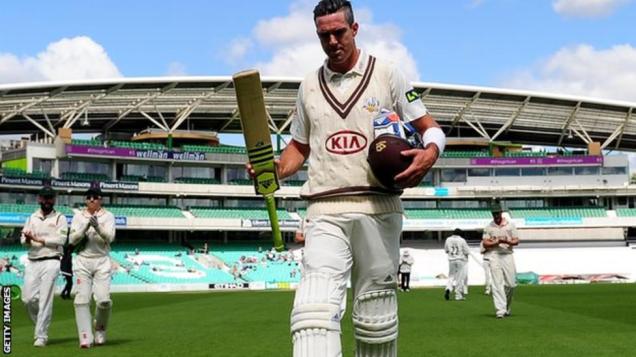
It was either Tickers or Miller who said that Kevin Pietersen was the greatest ever exponent of the “Fuck You” innings. There was the infamous 149, full of anger, full of bravado, full of full blown confidence. That’s a legendary knock. But there’s nothing quite like timing your career best, the fourth highest score ever made at The Oval, the second highest by a Surrey player to coincide with Andrew Strauss’s annointment as the Director Comma. I think if you had to put something forward for a Dmitri, that dominated the landscape of the blog, that fuelled a record month of hits, then to leave out this innings would not be right. As I said in my previous post, it’s time to be true to what I think the blog should be, and not what others want me to write.

Kevin Pietersen still dominates the landscape. Even today he’s playing in a T20 Final in South Africa, and although he failed today, he was the story of the early stages with back-to-back hundreds. It was KP in a nutshell (I apologise). Selvey called him a fruitfly back in the day, but it’s not Pietersen’s job to make things cosy for the powers that be and their enablers in the print and TV media. It is not his job to be quiet. He is playing T20 cricket and that’s so depressing. Because on that day back in May, we saw what he could do. He was dropped a few times, it wasn’t the strongest of opposition, but he was doing as he thought he was told. Go out and score runs in county cricket. He did. 355 of them.

I was in the States at the time. I’d managed to buy a £15 data roaming card which gave me around 500MB data. I’d started the day following the increasing level of his score as we drove up the Parkway to Atlantic City. I have to say I was chuckling heartily. I could sense the bile of those who loathed him from 3500 miles away. You could hear the nonsensical arguments to decry the innings. They had a spectacularly bad tempered Dominic Cork to hide behind if they so wished. But you don’t ignore triple hundreds. You just don’t. This innings made a statement. Pietersen could still bat, so it put to bed that magnificent nonsense that people were putting out there that he was finished. It left them now with the only line left – England would not be picking on cricketing merit. They would be using other criteria, as if any sentient being believed otherwise. The fig leaf was removed. Note – next highest scorer in that innings was 36. By some muppet called Sangakkara!

If KP had not made that innings, then he could have trundled on, and the can could have been booted down the street. “He’s not making enough runs, and he’s at Division 2 level. There are no vacancies in the middle order.” The elephant in the room always was that KP couldn’t be allowed back in because too many people would have been wrong. By making 326 not out at stumps that day, he’d rammed the nonsense back down their throats. “Not enough runs?” Well…..

History has treated Strauss kindly after this decision. An Ashes win was the end justifying the means. The ODI renaissance paints a youthful verve rather than a look-back to past times. But the test batting is now an effing mess, and the only trust we have is in Dmitri #1 to keep the middle order in any reasonable functioning order.

But let me tell you what it did for this blog in May. Being Outside Cricket had its record day, week and month. Pietersen is box office. Those who come here to snark on their own little private echo chambers know this. I know it. I know of people who are sick that they didn’t go to the Oval that day. I know of people who are glad to see the back of him, finally. But what you can’t deny that he is a compelling cricketer. The 355 runs he made in May set up the Director Comma era, and there will be more of that later….

So, as, under my own silly rules, I can’t put KP in, the number 355 will be put into the Dmitri Award annals…..

Here are some interesting links on that time….

https://beingoutsidecricket.com/2015/05/15/statement-of-the-oblivious/ — on Colin Grave’s pathetic justification.

https://beingoutsidecricket.com/2015/05/13/a-matter-of-life-and-trust/ – TLG’s wonderful piece on matters Strauss

and this line…

“That Pietersen has been treated dreadfully is a given even amongst those who are not remotely his fans – and let’s nail this particular straw man argument right here, there are a tiny number of people who are proper, out and out Pietersen fans.  Most of the others are England fans who may or may not think the side would be better with him in it, but believe a team should be selected from its best players, and who know a stitch up when they see one.

https://beingoutsidecricket.com/2015/05/12/trust-1/ – On Trust. We’ll be looking at that in due course.

https://beingoutsidecricket.com/2015/05/12/strauss-press-conference-live-blog/ – TLG’s behemoth post (most hit this year) on the press conference.

So – 355*. Dmitri Award #2.

Certainty In Reflection

Hello all. This is a personal blog post, so please forgive me.

It has been a week of huge change for me. This time last week I was preparing to represent my employers in Hong Kong for a major event, and yes, it was an exciting but also daunting prospect. I appreciate the opportunities, and welcome the challenges it proposed. You’ll forgive me if blogging took a decided second place! I met people I hadn’t seen in a decade, I met a great mate who emigrated and is a massive success (and I’m proud of what she has become) and I travelled with a top bloke too. I even ticked one off the bucket list with a flight on an A380! I came back on Thursday, had a wonderful night out with my longest work friends last night, which got quite emotional (and I do emotions) because 2016 looks a year of immense change.

So it was a time for reflection and decision. I will be honest with you, I’ve had thoughts of phasing the blog out. I find I lack the sheer energy I had a few months ago. You’ve heard this refrain a bit, I know. But what keeps me going is the energy in the comments, the sheer love of the game from you lot, the sheer despair in your voices as you see the game waning inexorably in front fo your eyes. TLG’s brilliant last piece should be read by the cognoscenti. It captures a school of thought that may not be universal, but is the preserve of a lot of us. We’re sick and tired of being told that cricket is in rude health when in England it patently isn’t. We’re sick of the international game being vandalised before our eyes. And we notice what is going wrong beneath the surface, beneath the England cricket team. It’s more, much more than a KP Fanboy rant-a-thon, but a cry for help. A wail of hopeless despair. While the ECB release their fan figures and congratulate themselves on record numbers, the game disappears further from the public eye. It’s going to turn what was our second or third largest sport to a minority one in a decade.

But this isn’t to replicate TLG’s piece. It’s to get to the heart of what I feel this week.

I’ve not been a happy person for a while now. It’s not in my nature to be particularly happy at the best of times. The blog isn’t a place to cheer me up. But on landing in Hong Kong, and after meeting a great old friend who has done so well for herself since she left the organisation I’m with, I thought that it must be more important to do what you want, as much as you want. Great friendships are precious, and through this blog I’ve already met some top people. So in the hope I’ll meet some more, I’m going to continue to do what I can. But also, I am going to write what I want, not what might play to some mythical gallery.

TLG and I went for a beer a couple of weeks ago. What came out of that discussion is that we remain committed to this project, that we would do our best to be at our best, and yes, we’ve some long-term projects that we’re not sure how to play at this time. I will also not be meeting any journalists, not that they give a shit anyway.

In an interview I read a few months ago, a prominent player said that he knew that a large percentage of people hated him, and that a lot of people liked him. He’d spend his time on the latter and not give a shit about the former. This blog seeks to be a forum for the disaffected. A place where international cricket is debated and pulled apart. It is a place to put our views on those that run the game, or report the game. Want to be a fanboy, an apologist, then good luck. Bring your A game.

This is not a post to invoke “please carry on” because you lot wouldn’t do that. It’s for some understanding if gaps between posts are a bit longer than they used to be.

Dmitri Award #2 will be with you shortly. And I lied……


Lost in Space

It’s been a fair while since I’ve  written a piece, and it’s been like an itch that needs scratching.  The last few months have been fairly manic with work, but after next week it should be a quieter period, just in time for Christmas and then January and February, which are my easy months of the year, comparatively.

I’ve also been doing some research on a bigger post to come, and have notes scribbled all over the place.  Picking the right time to do that is perhaps the biggest question.

The approaching series is the one in South Africa, historically always one of the marquee series, and thus one where excitement is building, right?

Hmm.  Over the last week we had the nominations for the BBC Sports Personality of the Year, and the observation that despite a truly fantastic year, Joe Root was missing from the list.  It was also pointed out that at the same time, a woman footballer was on there, and much wailing and gnashing of teeth ensued.

From a couple of cricket writers.

From the wider public there was the sound of complete indifference.

Now, the reason for me apparently picking on a female footballer there was deliberate.  You see, not only are those matches visible on terrestrial television, but it goes further than that.  Participation in female football has been growing rapidly in the last few years, and in the next 12 months or so, it will exceed the male participation in cricket in this country.  Add to that the higher viewing figures for the Women’s World Cup, and realistically, why should there be the slightest objection or even query?  By these measures, women’s football is simply more important to the English people than cricket is.

Is it really?  Probably not, yet one of the defences the ECB puts up to cricket not being on terrestrial television is that it is available on Test Match Special on the radio.  Yet here we have an Ashes winning year with one player across the calendar year proving genuinely exceptional and becoming the number one batsman in the world, and he wasn’t included.  But the fundamental point is that people do get missed off these things, that isn’t the story – the total indifference to it is.

Few would argue that the SPOTY award is more than a bit of fluff, yet it is symptomatic of the decline in interest in the sport generally that Root being left out didn’t cause a storm of outrage, instead it wasn’t even noticed.  Go to the pub, sit at the bar, raise the subject amongst those interested in sport and see what the reaction is.  There’s a slight raising of the eyebrows and a response of “oh yes.  That’s true”.  This is more dangerous to the game here than anything, when the sporting public don’t even realise until it’s pointed out.

When this debate occurs, the question of terrestrial television coverage is always rejected with the line that the drop in revenue from doing so would be a disaster for the game, and that terrestrial coverage wouldn’t suddenly change everything.  This is true, yet it is what it always has been – a complete straw man argument.  No one is arguing that it is a panacea for all ills, it’s a deep seated concern that there won’t be much of a game to support at this rate.

Ah yes, but crowds remain excellent and there is strong demand, so the story goes.  Yet this year there were day one tickets available for the Lords Ashes Test, on the day of the match.  Trying to find this kind of information out from the ECB is nigh on impossible, and so the supporting evidence for this assertion is a simple one – I looked at the Lords website and went through most of the process of buying one to see if I could.  It’s unlikely there were many, but the point is there actually were some.

Let’s just think about that; day one tickets, on the day, for the Lords Test, of an Ashes series.  And England had just gone 1-0 up.  Cost is a big part of this for certain, the exponential increase in ticket prices and the gouging of supporters by the ECB (funny how the huge rise in income for the ECB hasn’t held ticket prices down) has probably reached a point where a substantial number of those who would go simply don’t solely for this reason. Yet the alarm bells should be ringing loudly, and the biggest concern is they don’t seem to be.

It didn’t help of course that the Ashes series itself was such a dreadful one, five completely one sided matches with barely any drama or uncertainty beyond the first day and a bit.  But to counter that, the two Tests against New Zealand were truly magnificent, cricket as entertainment at its best.  It still didn’t make much difference.

With most specialist interests, there’s the matter that anyone writing or talking about it is doing so in an echo chamber, the only people who react or read it, or argue back are those who have the same interest, and thus it can be talked about at great length, entirely oblivious to the fact that no one outside of it cares.  This is where cricket now is.  The national press do cover the game, but if the Sun stopped writing about it (tucked away four pages in from the back) would anyone care?  Would anyone outside of the few even notice?  It seems unlikely.

Out of sight, out of mind is the most dangerous state for any sport to reach.  For decades the lamentation that football has taken over the national consciousness at the expense of cricket has gone up, but it’s gone way further than that now.  Rugby union is miles ahead, notwithstanding the England team gloriously completely the full set of the three “major” team sports all going out at the group stage of their respective World Cups (the football team’s failure is positively superb by comparison with the other two), in fact rugby league probably is.  Cycling, tennis, athletics – they all now have a much broader appeal than cricket does.  It’s nothing more than a minority interest, and the slump in people playing is as good an evidence of that as anything else.

If you were to visit some of the London parks, the removal of the cricket pitches by the councils is something that has been highlighted over the last few years.  Yet a question that is never asked about that is what if the councils are right?  What if they have removed them not just because of the expense, but because no one really cares if they do?  It’s not like it was met with strong protest, more like quiet grumbles at the way things are going.

The national team is the pinnacle of any sport, and also the showcase of it.  For all the talk about the dominance of the club game in football, nothing pulls in viewers or captures the imagination like the national team doing well – younger readers may need to ask a parent – yet despite the defeat in the UAE, the England cricket team had a reasonable enough year post World Cup, and for most of the wider public, it simply passed them by.

A South Africa tour should be highly anticipated, England don’t win there often, and despite the hosts comprehensive defeat in India, it will be a stiff challenge.  But will anyone notice?  Will anyone even realise it’s happening?

The wider ramifications of the ICC power grab are yet to unwind, the complicity of much of the media in allowing that to happen with no objections or investigation as shameful as it ever was.  But the bigger issue right now is the game itself, and where it is in this country.  And for the first time I am starting to truly fear for its future, not just at the top level but throughout.  The mendacity and self-serving nature of the avaricious ECB is a subject to which we will return time and again.  The danger is that it reaches a point where even when it’s put in front of the public, they still couldn’t care less.


Well, It’s Like This

As Christmas beckons, I have to say writing for the blog gets to be more of a labour of love as parties and what not get in the way. So in a normal year this would be an issue.

However, this isn’t a normal year, and having met up with TLG on Tuesday (and it got messy quickly), I know how busy he is, and I’m going to be out of commission for most of next week too due to work (I’m going a long way from here – Angus, if you’re still reading this blog, I’ll be quite close to you!). We ‘ve got some ideas for posts, including the Dmitris and the long-awaited TLG media post (and the journalist list), but it’s taking the time to do them.

In the meantime, any comments on cricket and such like should be posted here. I hope you are all well, enjoying the festivities if they apply to you (and even if they don’t) and I’ll be along soon enough.

Cheers,

Dmitri